



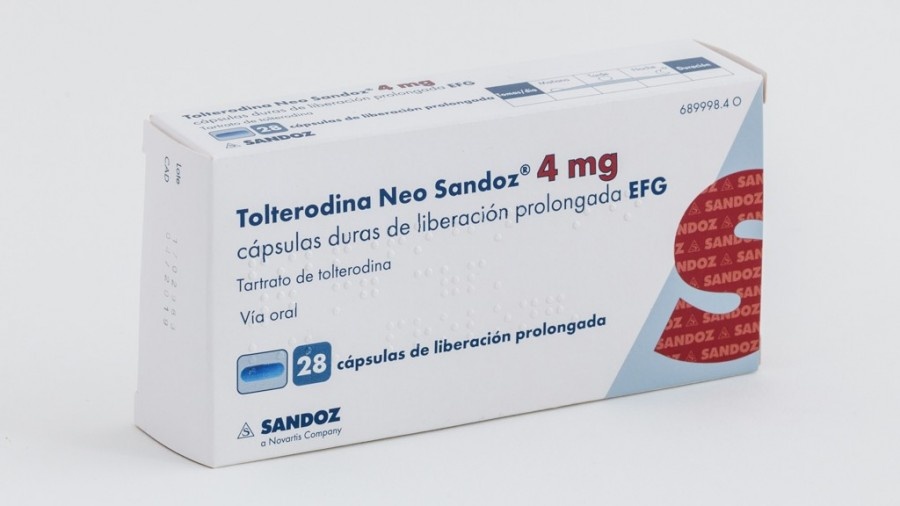
TOLTERODINA 4 mg Cápsulas Duras De Liberación Prolongada

Revisión de receta online
Un médico revisará tu caso y determinará si la prescripción es médicamente apropiada.

Habla con un médico sobre este medicamento
Comenta tus síntomas y las opciones de tratamiento en una consulta online.



Cómo usar TOLTERODINA NEO RATIOPHARM 4 MG CAPSULAS DURAS DE LIBERACION PROLONGADA EFG
Contenido del prospecto
- Introducción
- Qué es Tolterodina Neo ratiopharm y para qué se utiliza
- Qué necesita saber antes de empezar a tomar Tolterodina Neo ratiopharm
- Cómo tomar Tolterodina Neo ratiopharm
- Posibles efectos adversos
- Conservación de Tolterodina Neo ratiopharm
- Contenido del envase e información adicional
Introducción
Prospecto: información para el paciente
Tolterodina Neo ratiopharm 4 mg cápsulas duras de liberación prolongada EFG
tolterodina, tartrato
Lea todo el prospecto detenidamente antes de empezar a tomar este medicamento, porque contiene información importante para usted.
- Conserve este prospecto, ya que puede tener que volver a leerlo.
- Si tiene alguna duda, consulte a su médico o farmacéutico.
- Este medicamento se le ha recetado solamente a usted y no debe dárselo a otras personas, aunque tengan los mismos síntomas que usted, ya que puede perjudicarles.
- Si experimenta efectos adversos, consulte a su médico o farmacéutico, incluso si se trata de efectos adversos que no aparecen en este prospecto. Ver sección 4.
Contenido del prospecto
- Qué es Tolterodina Neo ratiopharm y para qué se utiliza
- Qué necesita saber antes de empezar a tomar Tolterodina Neo ratiopharm
- Cómo tomar Tolterodina Neo ratiopharm
- Posibles efectos adversos
- Conservación de Tolterodina Neo ratiopharm
- Contenido del envase e información adicional
1. Qué es Tolterodina Neo ratiopharm y para qué se utiliza
El principio activo en Tolterodina Neo ratiopharm es tolterodina. Tolterodina pertenece al grupo de medicamentos denominados antimuscarínicos.
Tolterodina Neo ratiopharm se utiliza para el tratamiento de los síntomas del síndrome de vejiga hiperactiva. Si usted tiene el síndrome de vejiga hiperactiva, puede notar que:
- no es capaz de controlar la orina de forma voluntaria
- siente una necesidad repentina y urgente de orinar sin aviso previo y/o que aumente el número de veces que orina durante el día.

¿No estás seguro de si este medicamento es adecuado para ti?
Comenta tus síntomas y tratamiento con un médico online.
2. Qué necesita saber antes de empezar a tomar Tolterodina Neo ratiopharm
No tome Tolterodina Neo ratiopharm
- si es alérgico a la tolterodina o a cualquiera de los demás componentes de este medicamento (incluidos en la sección 6).
- si no es capaz de eliminar la orina desde la vejiga (retención urinaria).
- si padece glaucoma de ángulo estrecho no controlado (alta presión intraocular con pérdida de campo de visión, que no está siendo tratada de forma adecuada).
- si padece miastenia gravis (excesiva debilidad en los músculos).
- si sufre colitis ulcerosa grave (ulceración e inflamación en el colon).
- si sufre de megacolon tóxico (dilatación aguda del colon).
Advertencias y precauciones
Consulte a su médico o farmacéutico antes de empezar a tomar Tolterodina Neo ratiopharm:
- si nota dificultades para la salida de orina y/u orina con chorro débil o lento.
- si padece un trastorno gastrointestinal que afecte al paso y/o a la digestión de los alimentos.
- si sufre problemas renales (insuficiencia renal).
- si tiene una enfermedad del hígado.
- si sufre desórdenes neuronales que afectan a su presión sanguínea, a la función intestinal o sexual (cualquier neuropatía del sistema nervioso autónomo).
- si tiene hernia de hiato (hernia en un órgano abdominal).
- si alguna vez nota disminución en los movimientos del intestino o padece estreñimiento grave (disminución en la motilidad gastrointestinal).
- si tiene una enfermedad cardíaca, tal como:
- registro cardiaco alterado (ECG)
- lentitud del ritmo cardíaco (bradicardia),
- enfermedades cardíacas preexistentes tales como: cardiomiopatía (debilidad del músculo cardíaco), isquemia miocárdica (disminución en el flujo sanguíneo que llega al corazón), arritmia (alteración del ritmo cardíaco), fallo cardiaco
- si tiene niveles en sangre anormalmente bajos de de potasio (hipopotasemia), calcio (hipocalcemia) o magnesio (hipomagnesemia).
Toma deTolterodina Neo ratiopharm conotros medicamentos
Informe a su médico o farmacéutico si está tomando, ha tomado recientemente o podría tener que tomar otros medicamentos.
Tolterodina, el principio activo de Tolterodina Neo ratiopharm puede interaccionar con otros medicamentos.
No se recomienda la toma de tolterodina en combinación con:
- algunos antibióticos (que contienen por ej.: eritromicina y claritromicina).
- medicamentos usados para el tratamiento de infecciones producidas por hongos (que contienen por ej.: ketoconazol e itraconazol).
- medicamentos usados para el tratamiento del VIH.
Tolterodina Neo ratiopharm debe usarse con precaución cuando se administra en combinación con:
- algunos medicamentos que afectan al tránsito de los alimentos (que contienen por ej.: metoclopramida y cisaprida).
- medicamentos para el tratamiento del ritmo cardíaco irregular (que contienen por ej.: amiodarona, sotalol, quinidina y procainamida.
- otros medicamentos que tienen un modo de acción similar a tolterodina (propiedades antimuscarínicas) o medicamentos que tienen un modo de acción opuesto a Tolterodina Neo ratiopharm (propiedades colinérgicas). La reducción de la motilidad gástrica producida por medicamentos antimuscarínicos puede afectar a la absorción de otros medicamentos.
Toma de Tolterodina Neo ratiopharm con alimentos
Tolterodina Neo ratiopharm puede tomarse antes, durante o después de una comida.
Embarazo y lactancia
Si está embarazada o en periodo de lactancia, cree que podría estar embarazada o tiene intención de quedarse embarazada, consulte a su médico o farmacéutico antes de utilizar este medicamento.
Embarazo
No debe tomar Tolterodina Neo ratiopharm si está embarazada.
Lactancia
Se desconoce si tolterodina se excreta en la leche materna. No se recomienda el uso de Tolterodina
Neo ratiopharm durante la lactancia materna.
Conducción y uso de máquinas
Tolterodina Neo ratiopharm puede hacerle sentir mareado, cansado o afectar a su vista. Si experimenta
alguno de estos síntomas no debe conducir ni manejar maquinaria pesada.
Tolterodina Neo ratiopharm contiene lactosa y sodio
Si su médico le ha indicado que padece una intolerancia a ciertos azúcares, consulte con su él antes de tomar este medicamento.
Este medicamento contiene menos de 23 mg de sodio (1 mmol) por cápsulas; esto es, esencialmente “exento de sodio”.
3. Cómo tomar Tolterodina Neo ratiopharm
Siga exactamente las instrucciones de administración de este medicamento indicadas por su médico. Consulte a su médico o farmacéutico si tiene dudas.
Adultos
La dosis recomendada es una cápsula dura de liberación prolongada de 4 mg al día.
Pacientes con problemas de hígado o riñón
En pacientes con problemas de hígado o riñón, el médico puede reducir la dosis a 2 mg de tolterodina al día.
Uso en niños
No se recomienda el uso de Tolterodina Neo ratiopharm en niños.
Forma de administración
Las cápsulas duras de liberación prolongada se toman por vía oral y deben tragarse enteras.
No mastique las cápsulas.
Duración del tratamiento
Su médico le indicará la duración del tratamiento con Tolterodina Neo ratiopharm. No interrumpa el tratamiento antes porque no observe un efecto inmediato. Su vejiga necesita un tiempo para adaptarse a éste. Termine el tratamiento con las cápsulas de liberación prolongada prescrito por su médico. Si no nota ningún efecto, consulte con su médico. El beneficio del tratamiento debe ser reevaluado tras 2-3 meses de usarlo.
Si toma más Tolterodina Neo ratiopharm del que debe
En caso de sobredosis o ingestión accidental, consulte inmediatamente a su médico o farmacéutico o llame al Servicio de Información Toxicológica, teléfono 91 562 04 20, indicando el medicamento y la cantidad ingerida. Se recomienda llevar el envase y el prospecto del medicamento al profesional sanitario.
Los síntomas de una sobredosis incluyen alucinaciones, excitación, aceleración de los latidos cardiacos, dilatación de la pupila e incapacidad para orinar o respirar con normalidad.
Si olvidó tomar Tolterodina Neo ratiopharm
Si olvidó tomar la dosis a la hora habitual, tómela tan pronto como se acuerde a menos que casi sea la hora de su próxima dosis. En ese caso, omita la dosis olvidada y siga con el horario habitual.
No tome una dosis doble para compensar la dosis olvidada.
Si interrumpe el tratamiento con Tolterodina Neo ratiopharm
Siempre consulte con su médico si está pensando abandonar el tratamiento.
Si tiene cualquier otra duda sobre el uso de este medicamento, pregunte a su médico o farmacéutico.

¿Has empezado a tomar el medicamento y tienes preguntas?
Comenta tus síntomas y tratamiento con un médico online.
4. Posibles efectos adversos
Al igual que todos los medicamentos, este medicamento puede producir efectos adversos, aunque no todas las personas los sufran.
Debe consultar a su médico inmediatamente o acudir al servicio de urgencias si experimenta síntomas de angioedema como:
- hinchazón de la cara, la lengua o la faringe.
- dificultad para tragar.
- urticaria y dificultad para respirar.
Además debe buscar atención médica si experimenta una reacción de hipersensibilidad (por ejemplo: picor, erupción, urticaria y dificultad al respirar). Esto ocurre con poca frecuencia (pueden afectar hasta 1 de cada 100 personas).
Informe a su médico inmediatamente o acuda al servicio de urgencias si experimenta:
- dolor en el pecho, dificultad al respirar o cansancio (incluso en reposo), dificultad al respirar por la noche, inflamación de las piernas.
Estos pueden ser síntomas de fallo cardíaco. Esto ocurre con poca frecuencia (pueden afectar hasta 1 de cada 100 personas).
Los siguientes efectos adversos se han observado durante el tratamiento con tolterodina, con las siguientes frecuencias:
Efectos adversos muy frecuentes(pueden afectar a más de 1 de cada 10 personas):
- Sequedad de boca
Efectos adversos frecuentes(pueden afectar hasta a 1 de cada 10 personas):
- Sinusitis
- Mareos, somnolencia, dolor de cabeza
- Sequedad de ojos, visión borrosa
- Dificultad en realizar la digestión (dispepsia), estreñimiento, dolor abdominal, excesiva cantidad de aire o gases en el estómago o el intestino
- Dolor o dificultad al orinar
- Diarrea
- Hinchazón por acumulación de líquidos (p. ej. en los tobillos)
- Cansancio
Efectos adversos poco frecuentes(pueden afectar hasta a 1 de cada 100 personas):
- Reacciones alérgicas
- Fallo cardiaco
- Nerviosismo
- Latido cardiaco irregular, palpitaciones
- Dolor en el pecho
- Incapacidad para vaciar la vejiga
- Sensación de hormigueo en los dedos de las manos y de los pies
- Vértigo
- Alteración de la memoria
Reacciones adicionales notificadas incluyen reacciones alérgicas graves, confusión, alucinaciones, aumento de la frecuencia cardiaca, piel enrojecida, ardor de estómago, vómitos, angioedema y sequedad de la piel y desorientación. Se han notificado casos de empeoramiento de los síntomas de demencia en pacientes que están en tratamiento para la demencia.
Comunicación de efectos adversos:
Si experimenta cualquier tipo de efecto adverso, consulte a su médico o farmacéutico, incluso si se trata de posibles efectos adversos que no aparecen en este prospecto. También puede comunicarlos directamente a través del Sistema Español de Farmacovigilancia de medicamentos de Uso Humano: https://www.notificaram.es. Mediante la comunicación de efectos adversos usted puede contribuir a proporcionar más información sobre la seguridad de este medicamento.
5. Conservación de Tolterodina Neo ratiopharm
Mantener este medicamento fuera de la vista y del alcance de los niños.
No utilice este medicamento después de la fecha de caducidad que aparece en el envase y en el blíster. La fecha de caducidad es el último día del mes que se indica.
No conservar a temperatura superior a 25°C.
Frasco de HDPE: el periodo de validez tras la primera apertura es 200 días.
Los medicamentos no se deben tirar por los desagües ni a la basura. Deposite los envases y los medicamentos que no necesita en el Punto SIGRE de la farmacia.Pregunte a su farmacéutico cómo deshacerse de los envases y de los medicamentos que ya no necesita. De esta forma ayudará a proteger el medio ambiente.
6. Contenido del envase e información adicional
Composición de Tolterodina Neo ratiopharm
- El principio activo es tartrato de tolterodina.
Cada cápsula dura de liberación prolongada contiene 4 mg de tartrato de tolterodina, equivalente a 2,74 mg de tolterodina.
- Los demás componentes son: lactosa monohidrato, celulosa microcristalina, acetato de polivinilo, povidona, sílice, laurilsulfato de sodio, docusato de sodio, estearato de magnesio, hidroxipropilmetilcelulosa.
Composición de la cápsula: carmín de Índigo (E132), dióxido de titanio (E171) y gelatina.
Composición del recubrimiento del comprimido interno: etilcelulosa, citrato de trietilo, ácido metacrílico - copolímero de acrilato de etilo, 1,2-propilenglicol.
Aspecto del producto y contenido del envase
Tolterodina Neo ratiopharm son cápsulas duras de liberación prolongada diseñadas para la administración de una capsula al día.
Las cápsulas duras de liberación prolongada de Tolterodina Neo ratiopharm 4 mg son de color azul claro opaco.
Tolterodina Neo ratiopharm 4 mg cápsulas duras de liberación prolongada está disponible en los siguientes tamaños de envases:
Blísteres de 7, 14, 28, 30, 49, 50, 80, 84, 90, 98, 100, 160, 200 y 280 cápsulas duras de liberación prolongada.
Frascos HDPE con 30, 60, 100 y 200 cápsulas.
Puede que solamente estén comercializados algunos tamaños de envase.
Titular de la autorización de comercialización y responsable de la fabricación
Titular de la autorización de comercialización
Teva Pharma, S.L.U.
C/Anabel Segura, 11 Edificio Albatros B, 1ª Planta
28108 Alcobendas, Madrid
Responsable de la fabricación
Pharmathen S.A
6, Dervenakion Str.,
153 51 Pallini Attiki
Grecia
Ó
Pharmathen International S.A
Sapes Industrial Park
Block 5, 69300 Rodopi
Grecia
Ó
MERCKLE GMBH
Ludwig-Merckle-Strasse, 3
D-89143 Blaubeuren, Alemania
Este medicamento está autorizado en los estados miembros del Espacio Económico Europeo con los siguientes nombres:
Reino Unido: Dengaff XL 4 mg prolonged-release capsules
Alemania: Tolterodin-CT 4 mg Retardkapseln
España: Tolterodina Neo ratiopharm 4 mg cápsulas duras de liberación prolongada EFG
Finlandia: Tolterodine Teva 4mg depotkapseli, kova
Fecha de la última revisión de este prospecto: Septiembre de 2020
La información detallada y actualizada de este medicamento está disponible en la página Web de la Agencia Española de Medicamentos y Productos Sanitarios (AEMPS) (http://www.aemps.gob.es/)
- País de registro
- Forma farmacéuticaCAPSULA LIBERACION MODIFICADA, 4 MG
- Código ATCG04BD07
- Precio medio en farmacia28.58 EUR
- Principio activo
- Requiere recetaSí
- Fabricante
- ComposiciónDOCUSATO DE SODIO (1.600 mg mg), ETANOL ANHIDRO (30.930 mg mg), PROPILENGLICOL (0.140 mg mg)
- Esta información es de carácter general y no sustituye la consulta con un profesional sanitario.
- Alternativas a TOLTERODINA NEO RATIOPHARM 4 MG CAPSULAS DURAS DE LIBERACION PROLONGADA EFGForma farmacéutica: COMPRIMIDO, 2 mgPrincipio activo: tolterodineFabricante: Farmasierra Laboratorios S.L.Requiere recetaForma farmacéutica: CAPSULA LIBERACION MODIFICADA, 4 mgPrincipio activo: tolterodineFabricante: Farmasierra Laboratorios S.L.Requiere recetaForma farmacéutica: CAPSULA LIBERACION MODIFICADA, 4 mgPrincipio activo: tolterodineFabricante: Aurovitas Spain, S.A.U.Requiere receta
Médicos online para TOLTERODINA NEO RATIOPHARM 4 MG CAPSULAS DURAS DE LIBERACION PROLONGADA EFG
Comenta la dosis, los posibles efectos secundarios, interacciones, contraindicaciones o la revisión de receta de TOLTERODINA NEO RATIOPHARM 4 MG CAPSULAS DURAS DE LIBERACION PROLONGADA EFG, sujeto a valoración médica y a la normativa local.

Obtén una receta de TOLTERODINA NEO RATIOPHARM 4 MG CAPSULAS DURAS DE LIBERACION PROLONGADA EFG online
Rellena un formulario de 2 minutos
Cuéntanos tus síntomas, historial y el medicamento que necesitas.
Elige un médico o nosotros te asignamos uno
Escoge un especialista o te conectamos con el próximo médico disponible.
El médico revisa tu caso
Normalmente en 30 minutos. Puede hacerte preguntas adicionales por chat.
Recógela en cualquier farmacia
Receta electrónica enviada a tu correo, válida en toda España.
Preguntas frecuentes
TOLTERODINA NEO RATIOPHARM 4 MG CAPSULAS DURAS DE LIBERACION PROLONGADA EFG requiere receta en España. Puedes confirmarlo con un médico online según tu caso.
El principio activo de TOLTERODINA NEO RATIOPHARM 4 MG CAPSULAS DURAS DE LIBERACION PROLONGADA EFG es tolterodine. Esta información ayuda a identificar medicamentos con la misma composición pero con diferentes nombres comerciales.
El precio medio en farmacia de TOLTERODINA NEO RATIOPHARM 4 MG CAPSULAS DURAS DE LIBERACION PROLONGADA EFG es de aproximadamente 28.58 EUR. Puede variar según el fabricante y la forma farmacéutica.
TOLTERODINA NEO RATIOPHARM 4 MG CAPSULAS DURAS DE LIBERACION PROLONGADA EFG es fabricado por Teva Pharma S.L.U.. La marca y el envase pueden variar según el distribuidor.
Los Médicos de familia, Psiquiatras, Dermatólogos, Cardiólogos, Endocrinólogos, Gastroenterólogos, Neumólogos, Nefrólogos, Reumatólogos, Hematólogos, Infectólogos, Alergólogos, Geriatras, Pediatras, Oncólogos pueden valorar la prescripción de TOLTERODINA NEO RATIOPHARM 4 MG CAPSULAS DURAS DE LIBERACION PROLONGADA EFG cuando esté clínicamente indicado. Puedes reservar una videoconsulta para comentar tu caso y las opciones de tratamiento.
España cuenta con una infraestructura sanitaria bien desarrollada en ciudades principales como Madrid, Barcelona, Valencia y Sevilla. Las farmacias están ampliamente disponibles y operan bajo estrictas regulaciones, garantizando el acceso a medicamentos con receta.
Puedes comprar TOLTERODINA NEO RATIOPHARM 4 MG CAPSULAS DURAS DE LIBERACION PROLONGADA EFG en Madrid, Barcelona, Sevilla o Valencia en cualquier farmacia local con una receta válida.
Para obtener una receta, puedes utilizar Oladoctor:
Otros medicamentos con el mismo principio activo (tolterodine) incluyen DETRUSITOL 2 mg COMPRIMIDOS RECUBIERTOS CON PELICULA, DETRUSITOL NEO 4 mg, CAPSULAS DURAS DE LIBERACION PROLONGADA, TOLTERODINA NEO AUROVITAS 4 MG CAPSULAS DURAS DE LIBERACION PROLONGADA EFG. Pueden tener diferentes nombres comerciales o formulaciones, pero contienen el mismo componente terapéutico. Consulta siempre con un médico antes de cambiar o iniciar un nuevo medicamento.
