



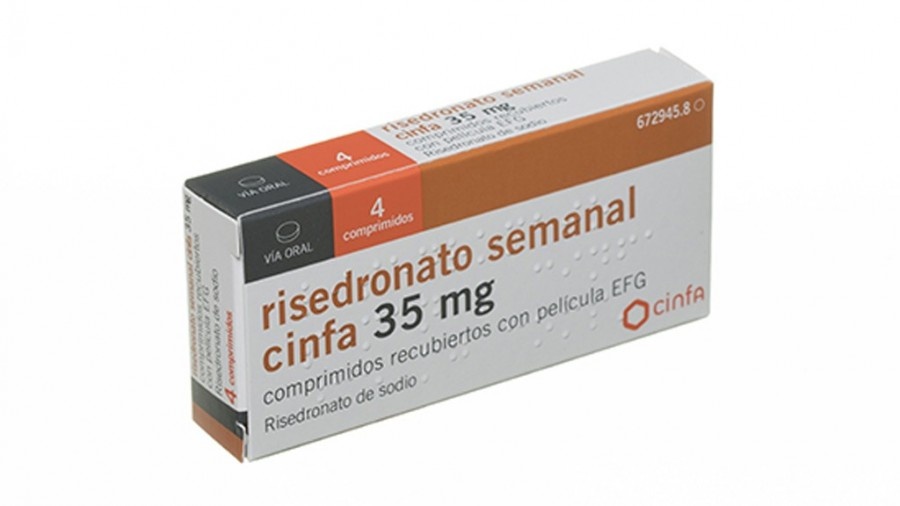
RISEDRONATO SEMANAL 35 mg Comprimidos recubiertos con película

Revisión de receta online
Un médico revisará tu caso y determinará si la prescripción es médicamente apropiada.

Habla con un médico sobre este medicamento
Comenta tus síntomas y las opciones de tratamiento en una consulta online.



Cómo usar RISEDRONATO SEMANAL VIATRIS 35 MG COMPRIMIDOS RECUBIERTOS CON PELICULA EFG
Contenido del prospecto
- Introducción
- Qué es Risedronato Semanal Viatris y para qué se utiliza
- Qué necesita saber antes de empezar a tomar Risedronato Semanal Viatris
- Cómo tomar Risedronato Semanal Viatris
- Posibles efectos adversos
- Conservación de Risedronato Semanal Viatris
- Contenido del envase e información adicional
Introducción
Prospecto: información para el usuario
Risedronato Semanal Viatris 35 mg comprimidosrecubiertos con películaEFG
Risedronato de sodio
Lea todo el prospecto detenidamente antes de empezar a tomar este medicamento, porque contiene información importante para usted.
- Conserve este prospecto, ya que puede tener que volver a leerlo.
- Si tiene alguna duda, consulte a su médico o farmacéutico.
- Este medicamento se le ha recetado solamente a usted y no debe dárselo a otras personas, aunque tengan los mismos síntomas, ya que puede perjudicarles.
- Si experimenta efectos adversos, consulte a su médico o farmacéutico, incluso si se trata de efectos adversos que no aparecen en este prospecto.
Contenido del prospecto
- Qué es Risedronato Semanal Viatris y para qué se utiliza
- Qué necesita saber antes de empezar a tomar Risedronato Semanal Viatris
- Cómo tomar Risedronato Semanal Viatris
- Posibles efectos adversos
- Conservación de Risedronato Semanal Viatris
- Contenido del envase e información adicional
1. Qué es Risedronato Semanal Viatris y para qué se utiliza
Qué esRisedronato Semanal Viatris
Risedronato Semanal Viatris pertenece a un grupo de medicamentos no hormonales denominados bifosfonatos, que se utilizan para el tratamiento de enfermedades de los huesos. Actúa directamente sobre los huesos fortaleciéndolos, y por tanto, reduce la probabilidad de fracturas.
El hueso es un tejido vivo. El hueso viejo del esqueleto está renovándose constantemente y reemplazándose por hueso nuevo.
La osteoporosis postmenopáusica aparece en mujeres después de la menopausia cuando el hueso empieza a debilitarse, es más frágil y son más probables las fracturas después de una caída o una torcedura.
La osteoporosis también la pueden padecer hombres debido a numerosas causas, incluyendo el envejecimiento y/o unos niveles bajos de la hormona masculina, testosterona.
Las fracturas óseas más probables son las de las vértebras, cadera y muñeca, si bien pueden producirse en cualquier hueso del cuerpo. Las fracturas asociadas a la osteoporosis también pueden producir dolor de espalda, disminución de altura y espalda curvada. Algunos pacientes con osteoporosis no tienen síntomas y puede que ni siquiera sepan que la padecen.
Para qué se utilizaRisedronato Semanal Viatris
Este medicamento se utiliza para el tratamiento de la osteoporosis:
- En mujeres después de la menopausia, incluso si la osteoporosis es grave. Reduce el riesgo de fracturas vertebrales y cadera.
En hombres.

¿No estás seguro de si este medicamento es adecuado para ti?
Comenta tus síntomas y tratamiento con un médico online.
2. Qué necesita saber antes de empezar a tomar Risedronato Semanal Viatris
No tomeRisedronato Semanal Viatris:
- Si es alérgicoa risedronato de sodio o a cualquiera de los demás componentes de este medicamento (incluidos en la sección 6).
- Si su médico le ha dicho que usted padece una enfermedad denominada hipocalcemia(presenta niveles bajos de calcio en sangre).
- Si cree que podría estar embarazada, está embarazadao tiene intención de quedarse embarazada.
- Si está usted en periodo de lactancia.
- Si tiene enfermedad grave del riñón.
- Si tiene menos de 18 años.
Advertencias y precauciones
Consulte a su médico o farmacéutico antes de empezar a tomar Risedronato Semanal Viatris:
- Si no puede permanecer en posición erguida (sentado o de pie) durante al menos 30 minutos.
- Si tiene problemas óseos o en el metabolismo de minerales (por ejemplo, deficiencia de vitamina D, alteraciones de la hormona paratiroidea, ambos producen un nivel bajo de calcio en sangre).
- Si en el pasado ha tenido problemas de esófago (el conducto que une la boca con el estómago). Por ejemplo, usted podría haber tenido dolor o dificultad en tragar la comida o puede haber comentado con anterioridad que tiene el esófago de Barrett (una condición asociada con cambios en las células que recubren el esófago inferior).
- Si su médico le ha indicado que padece intolerancia a ciertos azúcares (como la lactosa).
- Si ha tenido o tiene dolor, inflamación o “entumecimiento de la mandíbula”, dolor maxilar o pérdida de un diente.
- Si está en tratamiento dental o va a ser intervenido de cirugía dental, informe a su dentista que está en tratamiento con Risedronato Semanal Viatris.
Su médico le aconsejará sobre qué hacer si está tomando Risedronato Semanal Viatris y tiene alguno de los problemas mencionados anteriormente.
Niños y adolescentes
No se recomienda el uso de risedronato de sodio en niños ni en adolescentes (menores de 18 años) debido a que no existen suficientes datos de seguridad y eficacia.
Otros medicamentos yRisedronato Semanal Viatris
Informe a su médico o farmacéutico si está tomando, ha tomado recientemente o podría tener que tomar cualquier otro medicamento.
Los medicamentos que contienen alguna de las sustancias siguientes reducen el efecto de Risedronato Semanal Viatris cuando se toman al mismo tiempo:
- Calcio.
- Magnesio.
- Aluminio (por ejemplo algunos medicamentos para la indigestión).
- Hierro.
Tome estos medicamentos, al menos, 30 minutos después de haber tomado Risedronato Semanal Viatris.
Risedronato Semanal Viatriscon los alimentos y bebidas
Es muy importante que NO tome Risedronato Semanal Viatris con alimentos o bebidas (diferentes al agua del grifo). En particular, no tome este medicamento al mismo tiempo que productos lácteos (como la leche) ya que contienen calcio (ver sección 2, “Otros medicamentos y Risedronato Semanal Viatris”).
Tome los alimentos y bebidas (excepto agua del grifo), al menos, 30 minutos después de tomar Risedronato Semanal Viatris.
Embarazo y lactancia
NO tome Risedronato Semanal Viatris si usted pudiera estar embarazada, está embarazada o planea quedarse embarazada (ver sección 2, “No tome Risedronato Semanal Viatris”). El riesgo potencial asociado con el uso de risedronato de sodio (sustancia activa de Risedronato Semanal Viatris) en mujeres embarazadas es desconocido.
NO tome Risedronato Semanal Viatris si está usted en periodo de lactancia (ver sección 2, “No tome Risedronato Semanal Viatris”).
Conducción y uso de máquinas
Se desconoce si Risedronato Semanal Viatris afecta a la capacidad para conducir o usar máquinas.
Risedronato Semanal Viatris contiene Lactosa
Este medicamento contiene lactosa. Si su médico le ha indicado que padece una intolerancia a ciertos azúcares, consulte con él antes de tomar este medicamento (ver sección 2, “Advertencias y precauciones”).
3. Cómo tomar Risedronato Semanal Viatris
Posología
Siga exactamente las instrucciones de administración de Risedronato Semanal Viatris indicadas por su médico. Consulte a su médico o farmacéutico si tiene dudas.
La dosis recomendada es de UN comprimido de Risedronato Semanal Viatris (35 mg de risedronato de sodio) una vez a la semana.
Elija el día de la semana que mejor se adapte a su horario. Cada semana, tome el comprimido de Risedronato Semanal Viatris el día elegido.
Para facilitar la toma del comprimido el mismo día de cada semana, hay recuadros en el cartonaje. Marque el día de la semana que haya elegido para tomar el comprimido de Risedronato Semanal Viatris. También, escriba las fechas en las que se tomará el comprimido.
Cuándo tomar su comprimido deRisedronato Semanal Viatris:
Tome el comprimido de risedronato, al menos, 30 minutos antes de la primera comida, bebida del día (excepto en el caso de que esta bebida fuera agua del grifo) u otro medicamento del día.
Cómo tomar su comprimido deRisedronato Semanal Viatris:
- Tome el comprimido estando en posición erguida(ya sea sentado o de pie) para evitar la acidez de estómago.
- Trague el comprimidocon, al menos, un vaso(120 ml) de agua corriente (agua del grifo).
- Trague el comprimido entero(no chupe ni mastique el comprimido).
- No debe tumbarse, al menos, durante 30 minutos despuésde haber tomado el comprimido.
Su médico le indicará si debe tomar calcio y suplementos de vitamina D, si no está tomando suficiente en su dieta.
Si toma másRisedronato Semanal Viatrisdel que debiera
Si usted u otra persona han tomado accidentalmente más comprimidos de Risedronato Semanal Viatris de los prescritos, beban un vaso de leche llenoy acudan al médico.
En caso de sobredosis o ingestión accidental, consulte inmediatamente a su médico o farmacéutico o llame al Servicio de Información Toxicológica, teléfono 91 562 04 20, indicando el medicamento y la cantidad tomada.
Si olvidó tomarRisedronato Semanal Viatris
Si ha olvidado tomar el comprimido el día elegido, tómelo el día que se acuerde.
Después vuelva a tomar un comprimido una vez a la semana, el día que normalmente toma el comprimido.
NO tome una dosis doble para compensar las dosis olvidadas.
Si interrumpe el tratamiento conRisedronato Semanal Viatris
Si deja de tomar el tratamiento podría comenzar a perder masa ósea. Por favor, hable con su médico antes de interrumpir el tratamiento.
Si tiene cualquier otra duda sobre el uso de este medicamento, pregunte a su médico o farmacéutico.

¿Has empezado a tomar el medicamento y tienes preguntas?
Comenta tus síntomas y tratamiento con un médico online.
4. Posibles efectos adversos
Al igual que todos los medicamentos, Risedronato Semanal Viatris puede producir efectos adversos, aunque no todas las personas los sufran.
Suspenda el tratamiento con Risedronato Semanal Viatris e informe a su médico rápidamentesi experimenta algo de lo siguiente:
- Síntomas de reacción alérgica severa como:
- Hinchazón de cara, lengua o garganta.
- Dificultad para tragar.
- Habones y dificultad para respirar.
- Reacciones cutáneas graves que pueden incluir ampollas en la piel.
Informe a su médico de inmediatosi experimenta cualquiera de los siguientes efectos adversos:
- Inflamación de ojos, habitualmente con dolor, enrojecimiento y sensibilidad a la luz.
- Necrosis ósea de mandíbula (osteonecrosis) asociados con retraso en la cicatrización e infección, con frecuencia después de una extracción dental (ver sección 2, “Advertencias y precauciones”).
- Síntomas en el esófago como, dolor y dificultad al tragar, dolor en el pecho, y ardor o empeoramiento de ardor de estómago.
Sin embargo, en estudios clínicos los efectos adversos que se observaron fueron generalmente leves y no causaron que el paciente interrumpiera el tratamiento.
Efectos adversos frecuentes(pueden afectar hasta 1 de cada 10 personas):
Indigestión, náuseas, dolor de estómago, estómago revuelto o malestar, estreñimiento, sensación de plenitud, distensión abdominal, diarrea.
Dolores en los huesos, músculos o articulaciones.
Dolor de cabeza.
Efectos adversos poco frecuentes(pueden afectar hasta 1 de cada 100 personas):
Inflamación o úlcera del esófago (el conducto que une la boca con el estómago) causando dificultad y dolor al tragar (ver también sección 2 “Advertencias y precauciones”), inflamación de estómago y duodeno (intestino donde desemboca el estómago).
Inflamación de la parte coloreada del ojo (iris) (ojos enrojecidos doloridos con posibles cambios en la visión).
Efectos adversos raros(pueden afectar hasta 1 de cada 1.000 personas):
Inflamación de la lengua (hinchada, enrojecida, posiblemente con dolor), estrechamiento del esófago (conducto que une la boca con el estómago).
Se han comunicado pruebas anormales del hígado, que sólo puede ser diagnosticado mediante un análisis de sangre.
Efectos adversos muy raros(pueden afectar hasta 1 de cada 10.000 personas):
Hable con su médico si tiene dolor en los oídos, secreción en los oídos, y / o una infección de oído. Estos podrían ser signos de daño en los huesos de los oídos.
Durante la experiencia post-comercialización, se han notificado los siguientes efectos adversos (frecuencia no conocida):
Reacciones alérgicas como urticaria (ronchas), erupción cutánea, hinchazón de la cara, los labios, la lengua y/o el cuello, dificultades para tragar o respirar. Reacciones cutáneas graves, incluyendo vesículas (ampollas) bajo la piel, inflamación de los vasos sanguíneos pequeños, que se caracteriza por palpables manchas rojas en la piel (vasculitis leucocitoclástica), una enfermedad grave llamada Síndrome de Stevens-Johnson (SSJ), con ampollas en la piel, boca, ojos y otras superficies húmedas del cuerpo (genitales); una enfermedad grave denominada Necrólisis Epidérmica Tóxica (NET), que causa una erupción roja en muchas partes del cuerpo y/o pérdida de la capa externa de la piel.
Caída del cabello. Reacciones alérgicas (hipersensibilidad). Trastornos graves del hígado, sobre todo si está siendo tratado con otros medicamentos conocidos por causar problemas hepáticos. Inflamación del ojo que causa dolor y enrojecimiento.
Raramente, al inicio del tratamiento se ha observado una disminución leve de los niveles de fosfato y calcio en sangre en algunos pacientes. Estos cambios son habitualmente pequeños y no causan síntomas.
Fracturas atípicas del fémur (hueso del muslo) que pueden ocurrir en raras ocasiones sobre todo en pacientes en tratamiento prolongado para la osteoporosis. Informe a su médico si nota dolor, debilidad o molestias en el muslo, la cadera o la ingle, ya que pueden ser síntomas precoces e indicativos de una posible fractura del fémur.
Si considera que alguno de los efectos adversos que sufre es grave o si aprecia cualquier efecto adverso no mencionado en este prospecto, informe a su médico o farmacéutico.
Comunicación de efectos adversos:
Si experimenta cualquier tipo de efecto adverso, consulte a su médico o, farmacéutico o enfermero, incluso si se trata de posibles efectos adversos que no aparecen en este prospecto. También puede comunicarlos directamente a través del Sistema Español de Farmacovigilancia de medicamentos de Uso Humano:https://www.notificaram.es. Mediante la comunicación de efectos adversos usted puede contribuir a proporcionar más información sobre la seguridad de este medicamento.
5. Conservación de Risedronato Semanal Viatris
Mantener fuera del alcance y de la vista de los niños.
Este medicamento no requiere condiciones especiales de conservación.
No utilice este medicamento después de la fecha de caducidad que aparece en el blíster y envase después de CAD. La fecha de caducidad es el último día del mes que se indica.
Los medicamentos no se deben tirar por los desagües ni a la basura. Deposite los envases y los medicamentos que no necesita en el Punto SIGRE de la farmacia. En caso de duda pregunte a su farmacéutico cómo deshacerse de los envases y de los medicamentos que no necesita. De esta forma, ayudará a proteger el medio ambiente.
6. Contenido del envase e información adicional
Composición deRisedronato Semanal Viatris
- El principio activo es risedronato de sodio. Cada comprimido contiene 35 mg de risedronato de sodio (equivalentes a 32,5 mg de ácido risedrónico).
- Los demás componentes (excipientes) son:
Núcleo del comprimido: almidón de maíz pregelatinizado, celulosa microcristalina, crospovidona, estearato de magnesio.
Recubrimiento del comprimido:hipromelosa, lactosa monohidrato, dióxido de titanio (E171), macrogol 4000.
Aspecto del producto y contenido del envase
Risedronato Semanal Viatris son comprimidos recubiertos con película, biconvexos, redondos, blancos, con un diámetro de 11,2 mm, 5,0 mm de espesor y con “35” grabado en un lado.
Este medicamento se presenta en blísters que contienen 4, 12 comprimidos recubiertos con película y en blíster calendario de 4 comprimidos recubiertos con película.
Puede que solamente estén comercializados algunos tamaños de envases.
Titular de la autorización de comercialización:
Viatris Limited
Damastown Industrial Park
Mulhuddart, Dublín 15
Dublín
Irlanda
Responsable de la fabricación:
McDermott Laboratories Ltd. t/a Gerard Laboratories
35/36 Baldoyle Industrial Estate,
Grange Road, Dublin 13
Irlanda
O
Pharmathen International S.A.
Sapes Industrial Park
Block 5, 69300 Rodopi,
Grecia
O
Pharmathen, S.A.
6, Dervenakion str.
153 51 Pallini, Attiki,
Grecia
O
Mylan Hungary Kft.
Mylan Utca 1
Komárom, 2900
Hungría
Pueden solicitar más información respecto a este medicamento dirigiéndose al representante local del titular de la autorización de comercialización:
Viatris Pharmaceuticals, S.L.U.
C/ General Aranaz, 86
28027 - Madrid
España
Este medicamento está autorizado en los estados miembros del Espacio Económico Europeo con los siguientes nombres:
Dinamarca Vionate Mylan filmovertrukne tabletter 35 mg
España Risedronato Semanal Viatris 35 mg comprimidos recubiertos con película EFG
Italia Risedronato Mylan 35mg comprese rivestite con film
Portugal Vicendrolin
Reino Unido Risedronate Sodium 35mg film coated tablets
Fecha de la última revisión de este prospecto:Febrero 2016
La información detallada y actualizada de este medicamento está disponible en la página Web de la Agencia Española de Medicamentos y Productos Sanitarios (AEMPS) http://www.aemps.gob.es/
- País de registro
- Forma farmacéuticaCOMPRIMIDO, 35 mg
- Código ATCM05BA07
- Precio medio en farmacia19.84 EUR
- Principio activo
- Requiere recetaSí
- Fabricante
- ComposiciónLACTOSA MONOHIDRATO (2,00 mg mg), ALCOHOL ETILICO (ETANOL) (10,00 mg mg)
- Esta información es de carácter general y no sustituye la consulta con un profesional sanitario.
- Alternativas a RISEDRONATO SEMANAL VIATRIS 35 MG COMPRIMIDOS RECUBIERTOS CON PELICULA EFGForma farmacéutica: COMPRIMIDO, 75 mgPrincipio activo: risedronic acidFabricante: Theramex Ireland LimitedRequiere recetaForma farmacéutica: COMPRIMIDO, 35 mgPrincipio activo: risedronic acidFabricante: Theramex Ireland LimitedRequiere recetaForma farmacéutica: COMPRIMIDO, 30 mgPrincipio activo: risedronic acidFabricante: Theramex Ireland LimitedRequiere receta
Médicos online para RISEDRONATO SEMANAL VIATRIS 35 MG COMPRIMIDOS RECUBIERTOS CON PELICULA EFG
Comenta la dosis, los posibles efectos secundarios, interacciones, contraindicaciones o la revisión de receta de RISEDRONATO SEMANAL VIATRIS 35 MG COMPRIMIDOS RECUBIERTOS CON PELICULA EFG, sujeto a valoración médica y a la normativa local.


Obtén una receta de RISEDRONATO SEMANAL VIATRIS 35 MG COMPRIMIDOS RECUBIERTOS CON PELICULA EFG online
Rellena un formulario de 2 minutos
Cuéntanos tus síntomas, historial y el medicamento que necesitas.
Elige un médico o nosotros te asignamos uno
Escoge un especialista o te conectamos con el próximo médico disponible.
El médico revisa tu caso
Normalmente en 30 minutos. Puede hacerte preguntas adicionales por chat.
Recógela en cualquier farmacia
Receta electrónica enviada a tu correo, válida en toda España.
Preguntas frecuentes
RISEDRONATO SEMANAL VIATRIS 35 MG COMPRIMIDOS RECUBIERTOS CON PELICULA EFG requiere receta en España. Puedes confirmarlo con un médico online según tu caso.
El principio activo de RISEDRONATO SEMANAL VIATRIS 35 MG COMPRIMIDOS RECUBIERTOS CON PELICULA EFG es risedronic acid. Esta información ayuda a identificar medicamentos con la misma composición pero con diferentes nombres comerciales.
El precio medio en farmacia de RISEDRONATO SEMANAL VIATRIS 35 MG COMPRIMIDOS RECUBIERTOS CON PELICULA EFG es de aproximadamente 19.84 EUR. Puede variar según el fabricante y la forma farmacéutica.
RISEDRONATO SEMANAL VIATRIS 35 MG COMPRIMIDOS RECUBIERTOS CON PELICULA EFG es fabricado por Viatris Limited. La marca y el envase pueden variar según el distribuidor.
Los Médicos de familia, Psiquiatras, Dermatólogos, Cardiólogos, Endocrinólogos, Gastroenterólogos, Neumólogos, Nefrólogos, Reumatólogos, Hematólogos, Infectólogos, Alergólogos, Geriatras, Pediatras, Oncólogos pueden valorar la prescripción de RISEDRONATO SEMANAL VIATRIS 35 MG COMPRIMIDOS RECUBIERTOS CON PELICULA EFG cuando esté clínicamente indicado. Puedes reservar una videoconsulta para comentar tu caso y las opciones de tratamiento.
España cuenta con una infraestructura sanitaria bien desarrollada en ciudades principales como Madrid, Barcelona, Valencia y Sevilla. Las farmacias están ampliamente disponibles y operan bajo estrictas regulaciones, garantizando el acceso a medicamentos con receta.
Puedes comprar RISEDRONATO SEMANAL VIATRIS 35 MG COMPRIMIDOS RECUBIERTOS CON PELICULA EFG en Madrid, Barcelona, Sevilla o Valencia en cualquier farmacia local con una receta válida.
Para obtener una receta, puedes utilizar Oladoctor:
Otros medicamentos con el mismo principio activo (risedronic acid) incluyen ACREL 75 mg COMPRIMIDOS RECUBIERTOS CON PELICULA, ACREL SEMANAL 35 mg COMPRIMIDOS RECUBIERTOS CON PELICULA, ACTONEL 30 mg COMPRIMIDOS RECUBIERTOS CON PELICULA. Pueden tener diferentes nombres comerciales o formulaciones, pero contienen el mismo componente terapéutico. Consulta siempre con un médico antes de cambiar o iniciar un nuevo medicamento.
