






How to use QUOFENIX 450 mg TABLETS
Translated with AI
This page provides general information and does not replace a doctor’s consultation. Always consult a doctor before taking any medication. Seek urgent medical care if symptoms are severe.
Show originalContents of the leaflet
Introduction
Package Leaflet: Information for the Patient
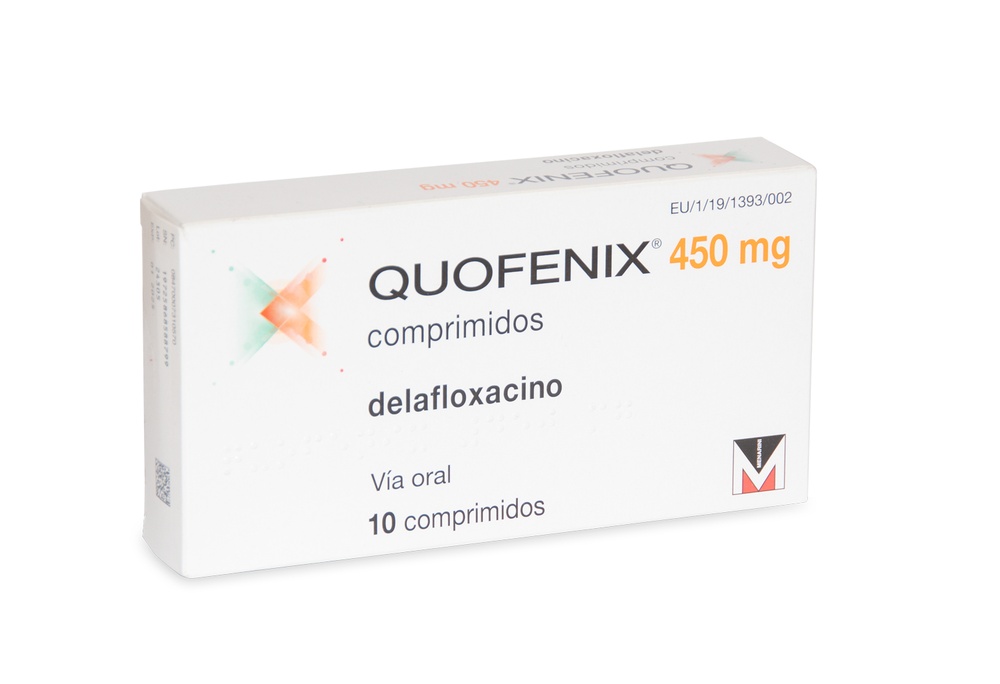
Quofenix 450 mg Tablets
delafloxacin
Read all of this leaflet carefully before you start taking this medicine because it contains important information for you.
- Keep this leaflet, you may need to read it again.
- If you have any further questions, ask your doctor, pharmacist, or nurse.
- This medicine has been prescribed for you only. Do not pass it on to others. It may harm them, even if their signs of illness are the same as yours.
- If you get any side effects, talk to your doctor, pharmacist, or nurse. This includes any possible side effects not listed in this leaflet. See section 4.
Contents of the Package Leaflet
- What is Quofenix and what is it used for
- What you need to know before you take Quofenix
- How to take Quofenix
- Possible side effects
- Storage of Quofenix
- Contents of the pack and other information
1. What is Quofenix and what is it used for
Quofenix is an antibiotic that contains the active substance delafloxacin. It belongs to a group of medicines called fluoroquinolones.
It is used for the treatment in adults of severe and short-term infections caused by certain bacteria, when usual antibiotics cannot be used or have not worked:
- infections of the skin and subcutaneous tissue
- lung infection called "pneumonia"
It blocks the enzymes that bacteria need to copy and repair their DNA. By blocking these enzymes, Quofenix kills the bacteria that cause the infection.

2. What you need to know before you take Quofenix
Do not take Quofenix
- If you are allergic to delafloxacin or any of the other ingredients of this medicine (listed in section 6).
- If you are allergic to any other antibacterial medicine of the fluoroquinolone or quinolone type.
- If you have ever had a tendon problem, such as tendinitis, related to treatment with "quinolone-type antibiotics". A tendon is the cord that connects the muscle to the skeleton.
- If you are pregnant, plan to become pregnant, or think you may be pregnant.
- If you are breast-feeding
- If you are a child or adolescent under 18 years of age.
Warnings and precautions
Before taking this medicine
Do not take fluoroquinolone or quinolone-type antibacterial medicines, including Quofenix, if you have experienced any serious side effect in the past when taking a quinolone or fluoroquinolone. In this case, inform your doctor as soon as possible.
When taking this medicine
- Rarely, pain and swelling in the joints, and inflammation or rupture of the tendons may occur. Your risk increases if you are an elderly patient (over 60 years of age), have received an organ transplant, have kidney problems, or are being treated with corticosteroids. Tendon inflammation and ruptures can occur within the first 48 hours of treatment and even up to several months after stopping treatment with Quofenix. At the first sign of pain or inflammation of a tendon (e.g., in the ankle, wrist, elbow, shoulder, or knee), stop taking Quofenix, contact your doctor, and rest the affected area. Avoid any unnecessary exercise, as this could increase the risk of tendon rupture.
- Rarely, symptoms of nerve damage (neuropathy) such as pain, burning, tingling, numbness, and/or weakness, especially in the feet and legs or hands and arms, may occur. If this happens, stop taking Quofenix and inform your doctor immediately to prevent the development of a potentially irreversible condition.
Tell your doctor or pharmacist or nurse before taking Quofenix if:
- You have been diagnosed with an enlargement or bulge of a large blood vessel (aortic or peripheral large vessel aneurysm).
- You have had a tear in the wall of the aorta (the main blood vessel of the heart) known as an aortic dissection.
- You have been diagnosed with a heart valve problem (heart valve regurgitation).
- If you have a family history of aortic aneurysm or aortic dissection, congenital heart valve disease, or other risk factors or predisposing conditions (e.g., connective tissue disorders such as Marfan syndrome or Ehlers-Danlos vascular syndrome, Turner syndrome, or Sjögren's syndrome (an autoimmune inflammatory disease), or vascular disorders such as Takayasu arteritis or giant cell arteritis, Behçet's disease, arterial hypertension, or atherosclerosis, rheumatoid arthritis (a joint disease), or endocarditis (a heart infection)).
- If you have had tendon problems during previous treatment with a fluoroquinolone or quinolone-type antibiotic.
- If you have or may have problems with your central nervous system (e.g., severe cerebral arteriosclerosis, epilepsy) or have other risk factors that may increase the risk of having seizures (fits). In these cases, your doctor will consider whether this treatment is the best option for you.
- If you suffer from myasthenia gravis (a type of muscle weakness), as symptoms may worsen.
- If you suffer from diarrhea or have previously suffered from diarrhea when taking antibiotics or up to 2 months after. Contact your doctor immediately if you have diarrhea during or after treatment. Do not take any medicine to treat diarrhea without first consulting your doctor.
- If you have kidney problems.
- If you have sometimes had prolonged treatment with antibiotics; this may mean that you contract another infection caused by other bacteria (superinfection) that cannot be treated with the antibiotic. Consult your doctor if you have any doubts or questions about this and about the use of Quofenix.
- If you may have a severe skin reaction, such as blisters or lesions.
- If you or a family member has a deficiency of glucose-6-phosphate dehydrogenase.
- If you suffer from diabetes. Fluoroquinolone-type antibiotics, including Quofenix, may cause blood glucose levels to increase or decrease too much. If you have diabetes, you must carefully monitor your blood glucose levels.
If you feel a sudden, severe pain in your abdomen, chest, or back, which may be symptoms of aortic dissection or aneurysm, go immediately to an emergency department. The risk may increase if you are receiving systemic corticosteroid treatment.
If you start to experience sudden onset of shortness of breath, especially when lying down, or if you notice swelling in your ankles, feet, or abdomen, or the appearance of heart palpitations (feeling of rapid or irregular heartbeat), you must inform your doctor immediately.
Severe, prolonged, disabling, and potentially irreversible side effects
Fluoroquinolone/quinolone-type antibacterial medicines have been associated with very rare but serious side effects, some of which are long-lasting (for months or years), disabling, or potentially irreversible. This includes pain in the tendons, muscles, and joints of the upper and lower limbs, difficulty walking, abnormal sensations such as tingling, prickling, numbness, or burning (paresthesia), sensory disorders such as impaired vision, taste, and smell, and hearing, depression, memory impairment, severe fatigue, and severe sleep disorders.
If you experience any of these side effects after taking Quofenix, contact your doctor immediately before continuing treatment. You and your doctor will decide whether to continue treatment, also considering an antibiotic of another class.
Children and adolescents
This medicine must not be used in children and adolescents, as it has not been sufficiently studied in these groups.
Other medicines and Quofenix
Tell your doctor or pharmacist if you are taking, have recently taken, or might take any other medicines.
Quofenix tablets should be taken at least 2 hours before or 6 hours after:
- an antacid, multivitamin, or other product containing magnesium, aluminum, iron, or zinc
- sucralfate
- buffered didanosine tablets for oral suspension or pediatric powder for oral solution
Pregnancy and breast-feeding
Quofenix must not be used if you are pregnant or breast-feeding. Quofenix must not be used in women of childbearing potential who are not using effective contraception.
If you are pregnant or breast-feeding, think you may be pregnant, or are planning to have a baby, ask your doctor for advice before taking this medicine.
If you could become pregnant, you must use effective contraception during treatment with Quofenix.
Driving and using machines
Quofenix may make you feel dizzy and lightheaded. Do not drive, use machines, or perform other activities that require mental alertness or coordination until you know how Quofenix affects you.
Quofenix contains sodium
This medicine contains 39 mg of sodium (a major component of cooking salt) in each tablet. This is equivalent to 2% of the maximum recommended daily intake of sodium for an adult.
3. How to take Quofenix
Always take this medicine exactly as your doctor or pharmacist has told you. If you are not sure, check with your doctor or pharmacist.
The recommended dose is 450 mg orally every 12 hours for a total duration of 5 to 14 days for skin infections and 5 to 10 days for pneumonia, as determined by your doctor. The tablets should be taken whole with a sufficient amount of water and can be taken with or without food.
If you take more Quofenix than you should
If you accidentally take more tablets than you should, talk to a doctor or go to a hospital immediately. Take the medicine pack with you.
If you forget to take Quofenix
If you forget to take a dose, take it as soon as you remember, but not later than 8 hours before the next scheduled dose. If there are less than 8 hours left before the next dose, wait until the next scheduled dose. Do not take a double dose to make up for a forgotten dose.
If you stop taking Quofenix
If you stop taking Quofenix without your doctor's advice, your symptoms may worsen. Talk to your doctor or pharmacist before stopping treatment with your medicine.
If you have any further questions on the use of this product, ask your doctor, pharmacist, or nurse.

4. Possible side effects
Like all medicines, Quofenix can cause side effects, although not everybody gets them.
Serious side effects
Please tell your doctor or nurse immediately if you get any of these symptoms, as treatment with the medicine must be stopped and you may need urgent medical attention:
- Difficulty swallowing or difficulty breathing and coughing; swelling of the lips, face, throat, or tongue; dry throat or narrowing of the throat and severe rash. These may be signs and symptoms of a hypersensitivity (allergic) reaction and can be life-threatening. These severe reactions are uncommon side effects that may affect up to 1 in 100 people.
- Low blood pressure; blurred vision; dizziness. This severe reaction is an uncommon side effect that may affect up to 1 in 100 people.
- Abdominal pain (stomach) with possible severe diarrhea, fever, and nausea. These may be signs of an intestinal infection, which should not be treated with medicines that stop the movement of the intestine. Intestinal infection (Clostridioides difficile infection) is an uncommon side effect that may affect up to 1 in 100 people.
Other side effects may include:
Common side effects (may affect up to 1 in 10 people):
- Fungal infection
- Headache
- Vomiting
- Increased levels of liver enzymes (transaminases) in the blood, which are shown in blood tests
- Itching
Uncommon side effects (may affect up to 1 in 100 people):
- Low white blood cell count (leucopenia)
- Low hemoglobin levels (anemia)
- Allergic reaction
- High blood glucose levels
- Decreased appetite
- Insomnia
- Muscle weakness in the limbs
- Sensations such as numbness, tingling, and prickling
- Decreased sense of touch
- Altered taste
- Feeling of heartbeats (palpitations)
- High blood pressure
- Redness (e.g., in the face or neck)
- Inflammation of the stomach lining, inflammation of the internal tissues of the mouth, abdominal pain, stomach discomfort or indigestion, dry mouth, flatulence
- Abnormal sweating
- Allergic skin reaction
- Red itchy rash
- Joint pain
- Pain and swelling of the tendons
- Musculoskeletal pain (e.g., pain in the limbs, back pain, neck pain), muscle weakness
- Increased levels of creatine phosphokinase in the blood (an indicator of muscle damage)
- Decreased kidney function
- Feeling of tiredness
- Abnormal blood test results related to liver function (increased alkaline phosphatase in the blood)
- Increased body temperature (pyrexia)
- Swelling of the lower limbs
Rare side effects (may affect up to 1 in 1000 people):
- Urinary tract infection
- Inflammation of the nasal mucosa
- Low white blood cell count (reduction in the number of blood cells)
- Decrease in a special type of blood cell necessary for blood clotting
- Changes in tests that measure how blood clotting works
- Seasonal allergy
- Low blood glucose levels
- High levels of uric acid
- High levels of potassium in the blood
- Low levels of potassium in the blood
- Hearing things that do not exist (auditory hallucinations)
- Anxiety
- Sleep disorders
- Confusion
- Drowsiness
- Feeling of dizziness or fainting, usually due to a drop in blood pressure
- Dry eyes
- Dizziness or loss of balance (vertigo)
- Ringing in the ears (tinnitus)
- Balance disorder
- Irregular or rapid heartbeat, decreased heart rate
- Swollen, red, and irritated veins (phlebitis)
- Blood clot, known as deep vein thrombosis
- Acid reflux, acid regurgitation
- Loss of sensation in the mouth
- Decreased sensation in the mouth
- Burning sensation in the mouth
- Change in the color of the stool
- Abnormal blood test results related to liver function (decreased albumin in the blood and increased gamma-glutamyltransferase)
- Cold sweat
- Nocturnal sweating
- Abnormal hair loss
- Muscle spasms
- Muscle inflammation/pain
- Joint inflammation, pain in hands or feet, back pain
- Blood in the urine
- Cloudy urine due to the presence of solid components
- Chills
- Worsening of wounds
- Peripheral edema
Very rare side effects (may affect less than 1 in 1000 people) have been associated with the administration of quinolone and fluoroquinolone antibiotics, in some cases independently of pre-existing risk factors, such as permanent or long-lasting (for months or years) reactions, including tendon inflammation, tendon rupture, joint pain, limb pain, difficulty walking, abnormal sensations such as tingling and prickling, burning, numbness, or pain (neuropathy), depression, fatigue, sleep disorders, memory impairment, as well as alterations in hearing, vision, taste, and smell.
There have been reports of increased size and weakening or tearing of the aortic wall (aneurysms and dissections), which could lead to rupture and be fatal, and heart valve problems in patients who have received fluoroquinolones. See also section 2.
Reporting of side effects
If you get any side effects, talk to your doctor, pharmacist, or nurse. This includes any possible side effects not listed in this leaflet. You can also report side effects directly via the national reporting system listed in Appendix V*. By reporting side effects, you can help provide more information on the safety of this medicine.
5. Storage of Quofenix
Keep this medicine out of the sight and reach of children.
Do not use this medicine after the expiry date which is stated on the carton or blister after EXP. The expiry date refers to the last day of the month shown.
This medicine does not require any special storage conditions.
Store in the original package to protect from light.
Medicines should not be disposed of via wastewater or household waste. Ask your pharmacist how to dispose of medicines no longer required. These measures will help protect the environment.
6. Package Contents and Additional Information
Quofenix Composition
- The active ingredient is delafloxacin. Each tablet contains 450 mg of delafloxacin (as meglumine)
- The other components (excipients) are microcrystalline cellulose, povidone, crospovidone, sodium hydrogen carbonate, sodium dihydrogen phosphate monohydrate, citric acid, magnesium stearate.
Product Appearance and Package Contents
Quofenix is a biconvex, oblong tablet, beige to mottled beige in color.
It is available in blister packs of 5 tablets in packs of 10, 20, 30, 50, 60 or 100 tablets.
Only some pack sizes may be marketed.
Marketing Authorization Holder and Manufacturer
- Menarini – Industrie Farmaceutiche Riunite – s.r.l.
Via Sette Santi 3
50131 Florence
Italy
Manufacturer
AlfaSigma
1 Via Enrico Fermi
65020 Alanno (PE)
Italy
or
Special Product’s Line S.p.A.
1 Via Fratta Rotonda Vado Largo
03012 Anagni (FR)
Italy
You can request more information about this medication by contacting the local representative of the marketing authorization holder:
Belgium Menarini Benelux NV/SA Tel: + 32 (0)2 721 4545 | Lithuania UAB “BERLIN-CHEMIE MENARINI BALTIC” Tel: +370 52 691 947 |
| Luxembourg Menarini Benelux NV/SA Tel: + 32 (0)2 721 4545 |
Czech Republic Berlin-Chemie/A.Menarini Ceska republika s.r.o. Tel: +420 267 199 333 | Hungary Berlin-Chemie/A. Menarini Kft. Tel.: +36 17997320 |
Denmark
Tel: +39-055 56801 | Malta
Tel: +39-055 56801 |
Germany Berlin-Chemie AG Tel: +49 (0) 30 67070 | Netherlands Menarini Benelux NV/SA Tel: +32 (0)2 721 4545 |
Estonia OÜ Berlin-Chemie Menarini Eesti Tel: +372 667 5001 | Norway
Tel: +39-055 56801 |
Greece MENARINI HELLAS AE Tel: +30 210 8316111-13 | Austria
Tel: +43 1 879 95 85-0 |
Spain Laboratorios Menarini S.A. Tel: +34-93 462 88 00 | Poland Berlin-Chemie/Menarini Polska Sp. z o.o. Tel.: +48 22 566 21 00 |
France MENARINI France Tel: +33 (0)1 45 60 77 20 | Portugal
Tel: +351 210 935 500 |
Croatia Berlin-Chemie Menarini Hrvatska d.o.o. Tel: + 385 1 4821 361 | Romania Berlin-Chemie A. Menarini S.R.L. Tel: +40 21 232 34 32 |
Ireland
Tel: +353 1 284 6744 | Slovenia Berlin-Chemie / A. Menarini Distribution Ljubljana d.o.o. Tel: +386 01 300 2160 |
Iceland
Tel: +39-055 56801 | Slovak Republic Berlin-Chemie / A. Menarini Distribution Slovakia s.r.o. Tel: +421 2 544 30 730 |
Italy
Tel: +39-055 56801 | Finland Berlin-Chemie/A.Menarini Suomi OY Tel: +358 403 000 760 |
Cyprus MENARINI HELLAS AE Tel: +30 210 8316111-13 | Sweden
Tel: +39-055 56801 |
Latvia SIA Berlin-Chemie/Menarini Baltic Tel: +371 67103210 | United Kingdom (Northern Ireland)
Tel: +44 (0)1628 856400 |

Date of Last Revision of this Leaflet:09/2024
Other Sources of Information
Detailed information on this medication is available on the European Medicines Agency website http://www.ema.europa.eu.
-

- Country of registration
- Dosage formTABLET, 450 mg
- ATC codeJ01MA23
- Active substance
- Prescription requiredYes
- Manufacturer
- This information is for reference only and does not constitute medical advice. Always consult a doctor before taking any medication. Oladoctor is not responsible for medical decisions based on this content.
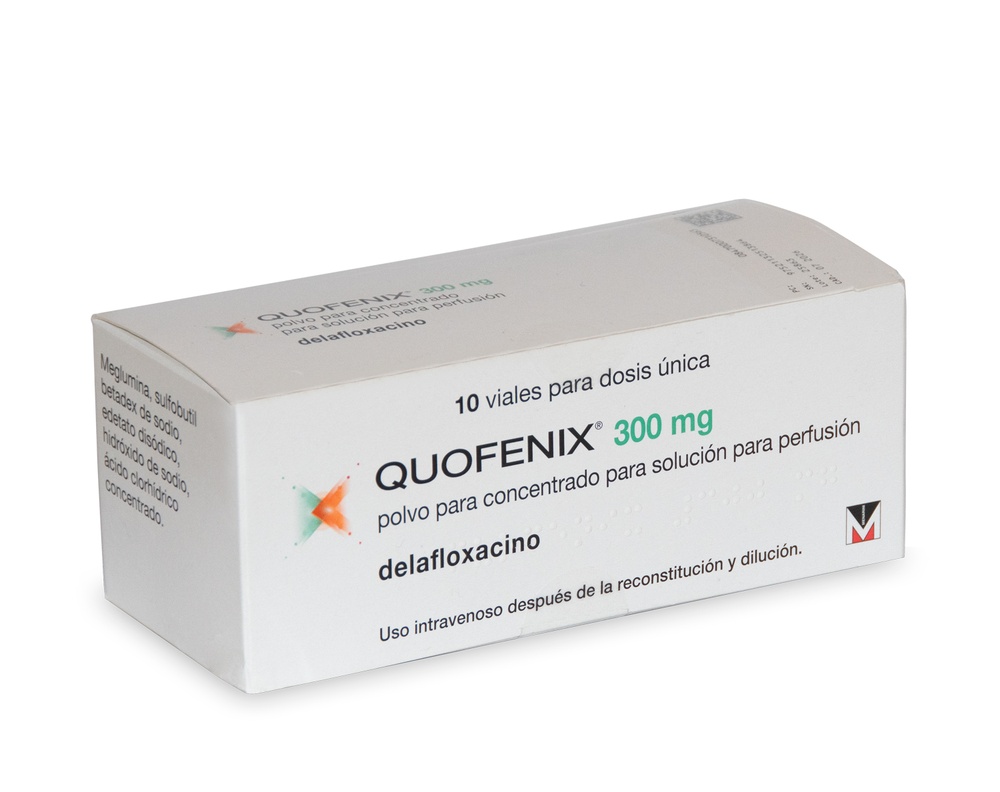
- Alternatives to QUOFENIX 450 mg TABLETSDosage form: INJECTABLE PERFUSION, 300 mgActive substance: delafloxacinManufacturer: A. Menarini Industrie Farmaceutiche Riunite S.R.L.Prescription requiredDosage form: INJECTABLE INFUSION, 400 mg/250 mlActive substance: moxifloxacinManufacturer: Bayer Hispania S.L.Prescription requiredDosage form: TABLET, 500 mgActive substance: levofloxacinManufacturer: Especialidades Farmaceuticas Centrum S.A.Prescription required

Online doctors for QUOFENIX 450 mg TABLETS
Discuss questions about QUOFENIX 450 mg TABLETS, including use, safety considerations and prescription review, subject to medical assessment and local regulations.









Get QUOFENIX 450 mg TABLETS Prescription Online
Fill in a 2-min form
Tell us your symptoms, history, and what medicine you're requesting.
Pick a doctor or let us assign
Choose a specialist or we'll match you with the next available doctor.
Doctor reviews your case
Usually within 30 minutes. They may ask follow-up questions via chat.
Collect from any pharmacy
Electronic prescription sent to your email — valid across Spain.
Frequently Asked Questions
QUOFENIX 450 mg TABLETS requires a prescription in Spain. You can check with a doctor online whether this medicine may be appropriate for your situation.
The active ingredient in QUOFENIX 450 mg TABLETS is delafloxacin. This information helps identify medicines with the same composition but different brand names.
QUOFENIX 450 mg TABLETS is manufactured by A. Menarini Industrie Farmaceutiche Riunite S.R.L.. Pharmacy brands and packaging may differ depending on the distributor.
Doctors such as Family doctors, Psychiatrists, Dermatologists, Cardiologists, Endocrinologists, Gastroenterologists, Pulmonologists, Nephrologists, Rheumatologists, Hematologists, Infectious disease physicians, Allergists, Geriatricians, Paediatricians, Oncologists may assess whether QUOFENIX 450 mg TABLETS is appropriate, depending on your situation and local regulations. You can book an online consultation to discuss your symptoms and possible next steps.
Spain has a well-developed healthcare infrastructure across major cities such as Madrid, Barcelona, Valencia, and Seville. Pharmacies are widely available and operate under strict regulations, ensuring access to prescribed medications.
You can buy QUOFENIX 450 mg TABLETS in Madrid, Barcelona, Seville, or Valencia at any local pharmacy with a valid prescription.
To obtain a prescription, you can use Oladoctor:
Other medicines with the same active substance (delafloxacin) include QUOFENIX 300 mg POWDER FOR CONCENTRATE FOR SOLUTION FOR INFUSION, ACTIRA 400 MG/ 250 ML SOLUTION FOR INFUSION, ASEY 500 mg FILM-COATED TABLETS. These may have different brand names or formulations but contain the same therapeutic ingredient. Always consult a doctor before switching or starting a new medicine.
