



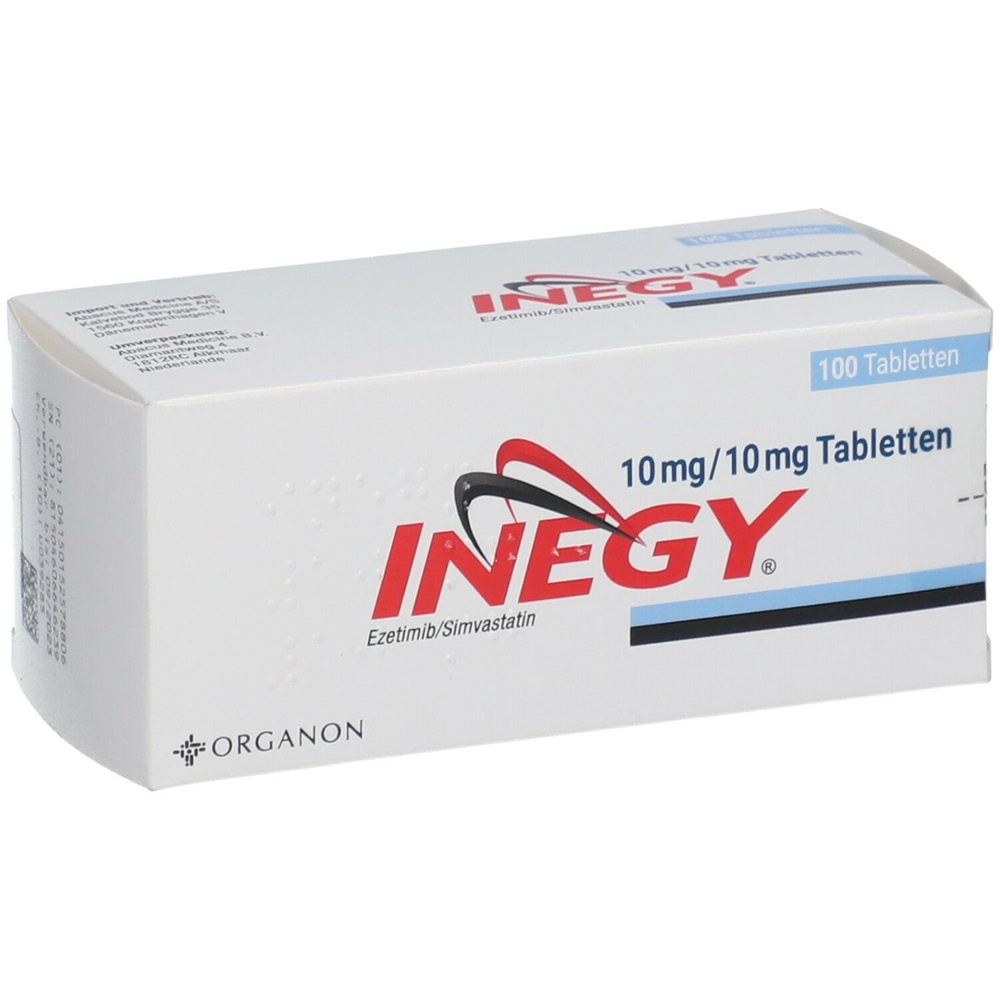
INEGY 10 mg/40 mg Tablets

Prescription review online
A doctor will review your case and decide whether a prescription is medically appropriate.

Talk to a doctor about this medicine
Discuss your symptoms and possible next steps in a quick online consultation.



How to use Inegi
Contents of the leaflet
- PATIENT INFORMATION LEAFLET
- Enclosed leaflet: patient information
- INEGY, 10 mg + 10 mg, tablets
- INEGY, 10 mg + 20 mg, tablets
- INEGY, 10 mg + 40 mg, tablets
- INEGY, 10 mg + 80 mg, tablets
- What INEGY is and what it is used for
- Important information before taking INEGY
- When not to take INEGY:
- Warnings and precautions
- Immediately contact a doctor if the patient experiences unexplained muscle pain, tenderness, or weakness. In rare cases, muscle problems can be serious, including muscle breakdown leading to
- Children and adolescents
- INEGY and other medicines
- Taking INEGY with fusidic acid may rarely lead to muscle weakness, tenderness, or pain (rhabdomyolysis).
- Additional information on rhabdomyolysis can be found in section 4.
- INEGY with food and drink
- Pregnancy and breastfeeding
- Driving and using machines
- INEGY contains lactose
- INEGY contains sodium
- How to take INEGY
- Possible side effects
- How to store INEGY
- Contents of the pack and other information
PATIENT INFORMATION LEAFLET
Enclosed leaflet: patient information

Not sure if this medicine is right for you?
Discuss your symptoms and treatment with a doctor online.
INEGY, 10 mg + 10 mg, tablets
INEGY, 10 mg + 20 mg, tablets

Started taking the medicine and have questions?
Discuss your symptoms and treatment with a doctor online.
INEGY, 10 mg + 40 mg, tablets
INEGY, 10 mg + 80 mg, tablets
Ezetimibe + Simvastatin
Read the leaflet carefully before taking the medicine, as it contains important information for the patient.
- Keep this leaflet, you may need to read it again.
- In case of any doubts, consult a doctor or pharmacist.
- This medicine has been prescribed specifically for you. Do not pass it on to others. The medicine may harm another person, even if their symptoms are the same.
- If the patient experiences any side effects, including any not listed in this leaflet, they should tell their doctor or pharmacist. See section 4.
Table of contents of the leaflet
- 1. What INEGY is and what it is used for
- 2. Important information before taking INEGY
- 3. How to take INEGY
- 4. Possible side effects
- 5. How to store INEGY
- 6. Contents of the pack and other information
1. What INEGY is and what it is used for
INEGY contains the active substances ezetimibe and simvastatin. INEGY is a medicine used to lower the level of total cholesterol, "bad" cholesterol (LDL cholesterol), and fatty substances called triglycerides in the blood. Additionally, INEGY increases the level of "good" cholesterol (HDL cholesterol).
INEGY works through two mechanisms that lower cholesterol levels. The active substance ezetimibe reduces the absorption of cholesterol in the gut. The active substance simvastatin, which belongs to a class of medicines called "statins", inhibits the production of cholesterol in the body.
Cholesterol is one of several fatty substances present in the blood. Total cholesterol consists mainly of LDL cholesterol and HDL cholesterol.
LDL cholesterol is often referred to as "bad" cholesterol because it can accumulate on the walls of arteries, forming plaques. Eventually, these plaques can cause narrowing of the arteries, resulting in restricted or blocked blood flow to vital organs such as the heart and brain. Restricted blood flow can lead to heart attack or stroke.
HDL cholesterol is often referred to as "good" cholesterol because it helps prevent the accumulation of bad cholesterol in the arteries and protects against heart disease.
Triglycerides are another type of fat present in the blood, which can contribute to an increased risk of heart disease.
INEGY is used in patients for whom diet alone is not sufficient to control cholesterol levels. During treatment with this medicine, a cholesterol-lowering diet should be followed.
INEGY is used as a supplement to a cholesterol-lowering diet in the following cases:
- high blood cholesterol (primary hypercholesterolemia [heterozygous familial or non-familial]) or high blood fat (mixed hyperlipidemia):
- when adequate improvement has not been achieved with statin therapy alone,
- when statin and ezetimibe have been taken in separate tablets.
- inherited disorder (homozygous familial hypercholesterolemia) that causes high blood cholesterol levels. Other treatment methods may also be used.
- heart disease. INEGY reduces the risk of heart attack, stroke, the need for surgical procedures to improve blood flow to the heart, or hospitalization due to chest pain.
INEGY does not affect weight loss.
2. Important information before taking INEGY
When not to take INEGY:
- if the patient is allergic to ezetimibe, simvastatin, or any of the other ingredients of this medicine (listed in section 6),
- if there are current liver problems,
- in case of pregnancy or breastfeeding,
- if the patient is taking any of the following medicines:
- itraconazole, ketoconazole, posaconazole, or voriconazole (used to treat fungal infections),
- erythromycin, clarithromycin, or telithromycin (used to treat infections),
- HIV protease inhibitors, such as indinavir, nelfinavir, ritonavir, and saquinavir (HIV protease inhibitors used to treat HIV infection),
- boceprevir or telaprevir (used to treat hepatitis C),
- nefazodone (used to treat depression),
- cobicistat,
- gemfibrozil (used to lower cholesterol),
- cyclosporine (often used in patients who have had organ transplants),
- danazol (a synthetic hormone used to treat endometriosis, a disease in which the lining of the uterus grows outside the uterus).
- if the patient is currently taking or has taken within the last 7 days a medicine called fusidic acid (an antibiotic) orally or by injection. Taking fusidic acid with INEGY may lead to serious muscle problems (rhabdomyolysis). Do not take INEGY in a dose greater than 10 mg + 40 mg if the patient is taking lomitapide (used to treat a rare genetic cholesterol disorder).
In case of doubt about taking any of the above-mentioned medicines, consult a doctor.
Warnings and precautions
Tell your doctor:
- about all conditions, including allergies,
- about consuming large amounts of alcohol or having a history of liver disease. Taking INEGY may not be suitable,
- about an upcoming surgical procedure. It may be necessary to stop taking INEGY for a short time,
- if the patient is of Asian origin, as a different dose may be suitable for the patient,
- if the patient has or has had myasthenia (a disease characterized by general muscle weakness, including in some cases muscles used during breathing) or myasthenia of the eye (a disease that causes muscle weakness of the eye), as statins may sometimes exacerbate the condition or lead to myasthenia (see section 4).
The doctor should perform a blood test before starting INEGY and during treatment if the patient has any liver problems. The purpose of the test is to assess liver function.
The doctor may also perform blood tests to assess liver function after starting INEGY.
During therapy, the doctor will closely monitor the patient's health if they have diabetes or are at risk of developing diabetes. The risk of developing diabetes is higher in people who have high blood sugar and fat levels, are overweight, and have high blood pressure.
Tell your doctor about any serious lung diseases.
Avoid taking INEGY and fibrates (certain cholesterol-lowering medicines) at the same time, as no studies have been conducted on the simultaneous use of INEGY and fibrates.
Immediately contact a doctor if the patient experiences unexplained muscle pain, tenderness, or weakness. In rare cases, muscle problems can be serious, including muscle breakdown leading to
kidney damage, and in very rare cases, death.
The risk of muscle damage is higher when taking higher doses of INEGY, particularly the 10 mg + 80 mg dose. The risk of muscle breakdown is also higher in some patients. Talk to your doctor:
- if the patient has kidney problems,
- if the patient has thyroid problems,
- if the patient is 65 years of age or older,
- if the patient is a girl or woman,
- if the patient has ever had muscle problems while taking cholesterol-lowering medicines called "statins" (such as simvastatin, atorvastatin, and rosuvastatin) or fibrates (such as gemfibrozil and bezafibrate),
- if the patient or a family member has a genetic muscle disorder.
Tell your doctor or pharmacist if muscle weakness persists. To diagnose and treat this condition, additional tests and medications may be necessary.
Children and adolescents
- INEGY is not recommended for children under 10 years of age.
INEGY and other medicines
Tell your doctor about all medicines the patient is currently taking or has recently taken, as well as any medicines the patient plans to take, including those containing any of the following active substances. Taking INEGY with any of the following medicines may increase the risk of muscle problems (some of which are listed in the "When not to take INEGY" section).
- If it is necessary to take fusidic acid orally for the treatment of a bacterial infection, it will be necessary to temporarily stop taking INEGY. The doctor will inform you when it is safe to restart INEGY.
Taking INEGY with fusidic acid may rarely lead to muscle weakness, tenderness, or pain (rhabdomyolysis).
Additional information on rhabdomyolysis can be found in section 4.
- cyclosporine (often used in patients who have had organ transplants),
- danazol (a synthetic hormone used to treat endometriosis, a disease in which the lining of the uterus grows outside the uterus),
- medicines containing active substances such as itraconazole, ketoconazole, fluconazole, posaconazole, or voriconazole (used to treat fungal infections),
- fibrates containing active substances such as gemfibrozil and bezafibrate (used to lower cholesterol),
- erythromycin, clarithromycin, or telithromycin (used to treat bacterial infections),
- HIV protease inhibitors, such as indinavir, nelfinavir, ritonavir, and saquinavir (used to treat AIDS),
- antiviral medicines used to treat hepatitis C, such as boceprevir, telaprevir, elbasvir, or grazoprevir (used to treat hepatitis C),
- nefazodone (used to treat depression),
- medicines containing the active substance cobicistat,
- amiodarone (used to treat heart rhythm disorders),
- verapamil, diltiazem, or amlodipine (used to treat high blood pressure, chest pain associated with heart disease, or other heart conditions),
- lomitapide (used to treat a rare genetic cholesterol disorder),
- daptomycin (a medicine used to treat complicated skin and soft tissue infections and bacteremia). It is possible that muscle-related side effects may be greater when this medicine is taken with simvastatin (e.g., INEGY). The doctor may decide to stop INEGY for a while,
- high doses (1 g or more per day) of niacin or nicotinic acid (also used to lower cholesterol),
- colchicine (used to treat gout).
Similarly, tell your doctor or pharmacist about all recently taken medicines, including those available without a prescription. In particular, tell your doctor if the patient is taking any of the following:
- medicines containing active substances that prevent blood clotting, such as warfarin, flindione, phenprocoumon, or acenocoumarol (anticoagulant medicines),
- cholestyramine (also used to lower cholesterol), as it affects the action of INEGY,
- fenofibrate (also used to lower cholesterol),
- rifampicin (used to treat tuberculosis),
- tikagrelor (an antiplatelet medicine).
Also, inform any doctor who prescribes a new medicine that the patient is taking INEGY.
INEGY with food and drink
Grapefruit juice contains one or more components that increase the metabolism of some medicines, including INEGY. Avoid drinking grapefruit juice, as it may increase the risk of muscle problems.
Pregnancy and breastfeeding
Do not take INEGY if the patient is pregnant, plans to become pregnant, or suspects they may be pregnant. If the patient becomes pregnant while taking INEGY, they should stop taking the medicine and contact their doctor immediately. Do not take INEGY while breastfeeding, as it is not known whether the medicine passes into breast milk.
Before taking any medicine, consult a doctor or pharmacist.
Driving and using machines
Do not expect INEGY to affect driving or using machines. However, consider that some people may experience dizziness after taking INEGY.
INEGY contains lactose
INEGY tablets contain sugar - lactose. If the patient has been diagnosed with intolerance to some sugars, they should contact their doctor before taking INEGY.
INEGY contains sodium
The medicine contains less than 1 mmol (23 mg) of sodium per tablet, which means it is essentially "sodium-free".
3. How to take INEGY
The doctor will determine the dose of INEGY suitable for the patient based on their current treatment and individual risk.
The tablets do not have a dividing line and should not be divided.
This medicine should always be taken as directed by the doctor or pharmacist. In case of doubt, consult a doctor or pharmacist.
- Before starting INEGY, the patient should follow a cholesterol-lowering diet.
- While taking INEGY, the patient should follow a cholesterol-lowering diet. Adults: the recommended dose is 1 tabletof INEGY orally, once a day.
Use in adolescents(10 to 17 years old): the recommended dose is 1 tabletof INEGY orally, once a day (do not exceed the maximum dose of 10 mg + 40 mg once a day).
The INEGY dose of 10 mg + 80 mg is recommended only for adult patients with very high cholesterol levels and a high risk of heart disease who have not achieved their target cholesterol level with a lower dose.
INEGY should be taken in the evening. It can be taken with or without food.
If the doctor has prescribed INEGY and another cholesterol-lowering medicine containing the active substance cholestyramine or another bile acid sequestrant, take INEGY at least 2 hours before or 4 hours after taking the bile acid sequestrant.
Taking a higher dose of INEGY than recommended:
- Contact a doctor or pharmacist.
Missing a dose of INEGY:
- Do not take a double dose to make up for a missed dose; take the usual dose of INEGY the next day at the usual time
Stopping INEGY:
- Consult a doctor or pharmacist, as cholesterol levels may rise again.
In case of further doubts about taking this medicine, consult a doctor or pharmacist.
4. Possible side effects
Like all medicines, INEGY can cause side effects, although not everybody gets them (see section 2: Important information before taking INEGY).
The following side effects have been reported frequently (may affect up to 1 in 10 people):
- muscle pain,
- increased liver enzyme values (aminotransferase activity) and/or muscle (creatine kinase activity, CK) in the blood.
The following side effects have been reported infrequently (may affect up to 1 in 100 people):
- increased liver enzyme values in the blood; increased uric acid levels in the blood; prolonged blood clotting time; presence of protein in the urine; weight loss,
- dizziness; headache; tingling sensation,
- abdominal pain; nausea; bloating; nausea; vomiting; abdominal distension; diarrhea; dry mouth; heartburn,
- rash; itching; hives,
- joint pain; muscle pain, tenderness, weakness, or cramps; neck pain; arm and leg pain; back pain,
- unusual fatigue or weakness; feeling tired; chest pain; swelling, especially of the hands and feet,
- sleep disorders; sleep problems.
The following side effects have been reported with an unknown frequency (frequency cannot be estimated from the available data):
- myasthenic syndrome (a disease that causes general muscle weakness, including in some cases muscles used during breathing),
- myasthenia of the eye (a disease that causes muscle weakness of the eye).
Contact a doctor if the patient experiences muscle weakness in the arms or legs that worsens after periods of activity, double vision, or drooping eyelids, difficulty swallowing, or shortness of breath.
Additionally, the following side effects have been observed in patients taking INEGY or medicines containing ezetimibe or simvastatin:
- decreased red blood cell count (anemia); decreased platelet count, which can lead to bruising/bleeding (thrombocytopenia),
- numbness or weakness of the arms and legs; memory impairment, memory loss, confusion,
- breathing problems, including persistent cough and/or shortness of breath or fever,
- constipation,
- pancreatitis, often with severe abdominal pain,
- liver inflammation with symptoms such as yellowing of the skin and eyes; itching, dark urine, or pale stools, fatigue, or weakness; loss of appetite; liver failure; gallstones or cholecystitis (which can cause abdominal pain, nausea, vomiting),
- hair loss; red, raised rash, sometimes with lesions in the shape of a target (erythema multiforme),
- blurred vision and vision disturbances (each of these symptoms may occur in fewer than 1 in 1000 people),
- rash that can occur on the skin or mouth ulcers (drug-induced lichenoid reactions) (each of these symptoms may occur in fewer than 1 in 10,000 people),
- allergic reactions, including facial, lip, tongue, and/or throat swelling, which can cause breathing or swallowing difficulties and require immediate treatment (angioedema), joint pain or inflammation, blood vessel inflammation, unusual bruising, skin damage, and swelling, hives, increased sensitivity to sunlight, fever, hot flashes, shortness of breath, and malaise, symptoms of a lupus-like syndrome (including rash, joint disorders, and effects on white blood cells). A severe, very rare allergic reaction (may occur in fewer than 1 in 10,000 people) that causes breathing difficulties or dizziness and requires immediate treatment (anaphylaxis) may occur.
- muscle pain, tenderness, or weakness; muscle breakdown; muscle damage (which may occur in fewer than 1 in 10,000 people); tendon disorders, sometimes complicated by tendon rupture,
- gynecomastia (breast enlargement in men) (which may occur in fewer than 1 in 10,000 people),
- decreased appetite,
- hot flashes with facial flushing,
- high blood pressure,
- pain,
- erectile dysfunction,
- depression,
- changes in some laboratory test parameters that assess liver function.
Additional possible side effects reported in patients taking some statins:
- sleep disorders, including nightmares,
- sexual dysfunction,
- diabetes. The risk of developing diabetes is higher if the patient has high blood sugar and fat levels, is overweight, and has high blood pressure. The doctor will monitor the patient's condition during treatment with this medicine,
- pain, tenderness, or persistent weakness of the muscles, which may not resolve after stopping INEGY (frequency unknown).
Immediately contact a doctor if the patient experiences unexplained muscle pain, tenderness, or weakness. In rare cases, muscle problems can be serious, including muscle breakdown leading to
kidney damage; in very rare cases, death.
Reporting side effects
If the patient experiences any side effects, including any not listed in this leaflet, they should tell their doctor or pharmacist.
Side effects can be reported directly to the Department of Drug Safety Monitoring of the Office for Registration of Medicinal Products, Medical Devices, and Biocidal Products:
Jerozolimskie Avenue 181C, 02-222 Warsaw, Tel.: +48 22 49 21 301, Fax: +48 22 49 21 309,
Website: https://smz.ezdrowie.gov.pl .
Side effects can also be reported to the marketing authorization holder.
Reporting side effects will help gather more information on the safety of this medicine.
5. How to store INEGY
- Keep the medicine out of the sight and reach of children.
- Do not use this medicine after the expiry date stated on the carton or container after: EXP.
- Do not store INEGY above 30 °C.
Blister packs: store in the original packaging to protect from moisture and light.
Bottles: store tightly closed to protect from moisture and light.
Medicines should not be disposed of via wastewater or household waste. Ask your pharmacist how to dispose of medicines that are no longer needed. This will help protect the environment.
6. Contents of the pack and other information
What INEGY contains
The active substances of INEGY are ezetimibe and simvastatin. Each tablet contains 10 mg of ezetimibe and 10 mg, 20 mg, 40 mg, or 80 mg of simvastatin.
The other ingredients are: butylhydroxyanisole, citric acid monohydrate, sodium croscarmellose, hypromellose, lactose monohydrate, magnesium stearate, microcrystalline cellulose, propyl gallate.
What INEGY looks like and contents of the pack
INEGY tablets are white or almost white, capsule-shaped, with the inscription "311", "312", "313", or "315" on one side. The tablets do not have a dividing line and should not be divided.
Packaging:
14, 28, collective packaging containing 98 (2 boxes of 49 tablets each) tablets.
Not all pack sizes may be marketed.
Marketing authorization holder
Organon Polska Sp. z o.o.
Marszałkowska Street 126/134
00-008 Warsaw
Tel.: +48 22 105 50 01
[email protected]
Manufacturer
Merck Sharp & Dohme B.V.
Waarderweg 39
2031 BN Haarlem
Netherlands
Organon Heist bv
Industriepark 30
2220 Heist-op-den-Berg
Belgium
This medicinal product is authorized in the Member States of the European Economic Area under the following names:
INEGY in Austria, Belgium, Cyprus, the Czech Republic, Denmark, Finland, France, Germany, Greece, Hungary, Iceland, Ireland, Italy, Luxembourg, the Netherlands, Norway, Poland, Portugal, Slovakia, Slovenia, Spain, Sweden, and the United Kingdom.
Vytorin in Germany, Italy, Portugal, and Spain.
Goltor in Germany and Italy.
Date of last revision of the leaflet: 07/2023
- Country of registration
- Dosage formTablets, 10 mg + 40 mg
- ATC codeC10BA02
- Active substance
- Prescription requiredYes
- Manufacturer
- ImporterMerck Sharp & Dohme B.V. Organon Heist bv
- This information is for reference only and does not constitute medical advice. Always consult a doctor before taking any medication. Oladoctor is not responsible for medical decisions based on this content.
- Alternatives to InegiDosage form: Tablets, 10 mg + 10 mgActive substance: simvastatin and ezetimibeManufacturer: Balkanpharma Dupnitsa AD SPECIAL PRODUCTS LINE S.p.A.Prescription requiredDosage form: Tablets, 10 mg + 20 mgActive substance: simvastatin and ezetimibeManufacturer: Balkanpharma Dupnitsa AD SPECIAL PRODUCTS LINE S.p.A.Prescription requiredDosage form: Tablets, 10 mg + 40 mgActive substance: simvastatin and ezetimibeManufacturer: Balkanpharma Dupnitsa AD SPECIAL PRODUCTS LINE S.p.A.Prescription required
Online doctors for Inegi
Discuss questions about Inegi, including use, safety considerations and prescription review, subject to medical assessment and local regulations.
Get Inegi Prescription Online
Fill in a 2-min form
Tell us your symptoms, history, and what medicine you're requesting.
Pick a doctor or let us assign
Choose a specialist or we'll match you with the next available doctor.
Doctor reviews your case
Usually within 30 minutes. They may ask follow-up questions via chat.
Collect from any pharmacy
Electronic prescription sent to your email — valid across Spain.
Frequently Asked Questions
Inegi requires a prescription in Poland. You can check with a doctor online whether this medicine may be appropriate for your situation.
The active ingredient in Inegi is simvastatin and ezetimibe. This information helps identify medicines with the same composition but different brand names.
Inegi is manufactured by Merck Sharp & Dohme B.V. Organon Heist bv. Pharmacy brands and packaging may differ depending on the distributor.
Doctors such as Family doctors, Psychiatrists, Dermatologists, Cardiologists, Endocrinologists, Gastroenterologists, Pulmonologists, Nephrologists, Rheumatologists, Hematologists, Infectious disease physicians, Allergists, Geriatricians, Paediatricians, Oncologists may assess whether Inegi is appropriate, depending on your situation and local regulations. You can book an online consultation to discuss your symptoms and possible next steps.
Spain has a well-developed healthcare infrastructure across major cities such as Madrid, Barcelona, Valencia, and Seville. Pharmacies are widely available and operate under strict regulations, ensuring access to prescribed medications.
You can buy Inegi in Madrid, Barcelona, Seville, or Valencia at any local pharmacy with a valid prescription.
To obtain a prescription, you can use Oladoctor:
Other medicines with the same active substance (simvastatin and ezetimibe) include Axocar, Axocar, Axocar. These may have different brand names or formulations but contain the same therapeutic ingredient. Always consult a doctor before switching or starting a new medicine.
