



DIURED 10 mg Tablets

Prescription review online
A doctor will review your case and decide whether a prescription is medically appropriate.

Talk to a doctor about this medicine
Discuss your symptoms and possible next steps in a quick online consultation.



How to use Diured
Contents of the leaflet
- Package Leaflet: Information for the Patient
- Diured, 5 mg, tablets
- Diured, 10 mg, tablets
- What is Diured and what is it used for
- Important information before taking Diured
- How to take Diured
- Possible side effects
- How to store Diured
- Contents of the pack and other information
Package Leaflet: Information for the Patient
Diured, 5 mg, tablets

Not sure if this medicine is right for you?
Discuss your symptoms and treatment with a doctor online.
Diured, 10 mg, tablets
Torasemide
Read the leaflet carefully before taking the medicine, as it contains important information for the patient.
- Keep this leaflet, you may need to read it again.
- In case of any doubts, consult a doctor or pharmacist.
- This medicine has been prescribed specifically for you. Do not pass it on to others. The medicine may harm another person, even if their symptoms are the same.
- If the patient experiences any side effects, including those not listed in this leaflet, they should inform their doctor, pharmacist, or nurse. See section 4.
Table of Contents of the Leaflet
- 1. What is Diured and what is it used for
- 2. Important information before taking Diured
- 3. How to take Diured
- 4. Possible side effects
- 5. How to store Diured
- 6. Contents of the pack and other information
1. What is Diured and what is it used for
Diured is a diuretic medicine belonging to the group of loop diuretics.
Indications:
- primary hypertension;
- edema caused by congestive heart failure, pulmonary edema, hepatic edema, and renal edema.

Started taking the medicine and have questions?
Discuss your symptoms and treatment with a doctor online.
2. Important information before taking Diured
When not to take Diured
- if the patient is allergic to torasemide, sulfonylurea derivatives (diabetes medications), or any other component of this medicine (listed in section 6);
- if the patient has renal function disorders with anuria;
- if the patient has hepatic coma and pre-coma states;
- if the patient has arterial hypotension;
- if the patient has cardiac arrhythmias;
- if the patient is taking aminoglycoside antibiotics and cephalosporins,
- if the patient is pregnant or breastfeeding.
Warnings and precautions
Before starting Diured, the patient should discuss it with their doctor or pharmacist:
- if the patient has urinary excretion disorders. Before starting treatment, the cause of these disorders should be eliminated and water-electrolyte balance restored;
- if torasemide therapy is long-term. During long-term treatment, regular monitoring of water-electrolyte balance, glucose, uric acid, creatinine, and lipid levels in the blood is recommended;
- if the patient has a tendency to increased uric acid levels in the blood;
- if the patient has latent or overt diabetes. In these patients, carbohydrate metabolism should be monitored.
Children and adolescents
There is a lack of clinical experience with torasemide in this age group.
Diured and other medicines
The patient should inform their doctor or pharmacist about all medicines they are currently taking or plan to take.
- When taking torasemide with cardiac glycosides(medicines that stimulate heart function, increasing the strength of heart contractions while reducing their frequency), the sensitivity of the heart muscle to these medicines may increase due to decreased potassium and (or) magnesium levels in the blood.
- In combination with mineralocorticosteroids(hormones regulating mineral and ion metabolism) and glucocorticosteroids(hormones regulating protein, carbohydrate, and fat metabolism) and laxatives, it may cause increased potassium excretion in the urine.
- Similar to other diuretic medicines, the blood pressure-lowering effect may be enhanced when taken with other antihypertensive medicines.
- Torasemide, especially in high doses, may increase the toxicity of aminoglycoside antibioticsand cisplatin(a medicine used in cancer chemotherapy), as well as the neurotoxicity of cephalosporinsand the cardiotoxicity and neurotoxicity of lithium(a medicine used in psychiatry).
- The effect of muscle relaxantscontaining curareand the effect of theophylline(a medicine used in respiratory diseases) may be enhanced when taken with torasemide.
- In patients taking high doses of salicylates(pain-relieving, anti-inflammatory, and antipyretic medicines), their toxicity may increase.
- The effect of antidiabetic medicinesmay be reduced.
- The use of angiotensin-converting enzyme inhibitors(medicines used to treat hypertension) after torasemide treatment, or the initiation of combination therapy with these medicines, may cause transient blood pressure drops. This effect can be minimized by reducing the initial dose of the angiotensin-converting enzyme inhibitor and (or) reducing the dose or temporarily discontinuing torasemide.
- Torasemide may increase the reactivity of blood vessels to vasoconstrictor medicines(e.g., adrenaline, noradrenaline).
- Nonsteroidal anti-inflammatory medicines(e.g., indomethacin) and probenecid(a medicine that increases uric acid excretion) may reduce the diuretic and blood pressure-lowering effects of torasemide.
- The concomitant administration of torasemide and cholestyramine (a medicine that binds bile acids in the gastrointestinal tract and increases their excretion) has not been studied in humans, but animal studies have shown reduced torasemide absorption.
Diured with food and drink
Diured should be taken in the morning, with a small amount of liquid (e.g., water), with or without food.
Pregnancy and breastfeeding
If the patient is pregnant or breastfeeding, or thinks they may be pregnant or plans to have a child, they should consult their doctor or pharmacist before taking this medicine.
Pregnancy:
Diured is contraindicated during pregnancy.
Breastfeeding:
Diured is contraindicated during breastfeeding.
Driving and using machines
As with other medicines that affect blood pressure, patients who experience dizziness or similar symptoms should not drive or operate machinery.
The medicine contains less than 1 mmol (23 mg) of sodium per recommended dose unit, which means the medicine is considered "sodium-free".
3. How to take Diured
This medicine should always be taken as directed by the doctor. In case of doubts, consult a doctor or pharmacist.
Primary hypertension
The recommended dose is 2.5 mg (half a Diured 5 mg tablet), taken orally once a day.
If necessary, the dose can be increased to 5 mg once a day. Studies have shown that doses greater than 5 mg per day do not lead to further blood pressure reduction.
The maximum therapeutic effect is achieved after approximately 12 weeks of treatment.
Edema
The recommended dose is 5 mg (one Diured 5 mg tablet or half a Diured 10 mg tablet), taken orally once a day. If necessary, the dose can be gradually increased to 20 mg once a day.
Diured 5 mg and Diured 10 mg tablets can be divided into two equal doses.
Using Diured in patients with liver function disorders
During torasemide treatment, patients with liver function disorders should be under special supervision due to the risk of increased torasemide levels in the blood.
Using Diured in elderly patients
In elderly patients, there is no need to change the dosage.
How to divide a Diured 5 mg tablet into two equal doses
To divide a Diured 5 mg tablet into two equal doses, place it on a hard, smooth surface, with the notch facing down, and press firmly with your finger, as shown in the diagram below:

Taking a higher dose of Diured than recommended
In case of taking a higher dose of Diured than recommended, consult a doctor or pharmacist immediately.
There is no specific antidote.
Patients with symptoms of overdose require dose reduction or discontinuation of the medicine, along with fluid and electrolyte administration.
Missing a dose of Diured
Do not take a double dose to make up for a missed dose.
Stopping Diured treatment
In case of any further doubts about taking this medicine, consult a doctor or pharmacist.
4. Possible side effects
Like all medicines, Diured can cause side effects, although not everybody gets them.
The frequency of side effects is defined as follows:
Very common (occurring in more than 1 in 10 people)
Common (occurring in 1 to 10 in 100 people)
Uncommon (occurring in 1 to 10 in 1,000 people)
Rare (occurring in 1 to 10 in 10,000 people)
Very rare (occurring in less than 1 in 10,000 people)
Common side effects:
- worsening of metabolic acidosis symptoms (excessive blood acidification),
- muscle cramps (especially at the start of therapy),
- increased uric acid and glucose levels, as well as lipids (triglycerides and cholesterol) in the blood, hypokalemia (decreased potassium levels in the blood) - especially with a low-potassium diet, with accompanying vomiting, diarrhea, and excessive use of laxatives, as well as in cases of liver function disorders, gastrointestinal disorders (e.g., decreased appetite, stomach pain, nausea, vomiting, diarrhea, constipation), especially at the start of treatment,
- increased activity of liver enzymes (e.g., gamma-GT) in the blood,
- headaches, dizziness,
- fatigue, weakness (especially at the start of treatment).
Uncommon side effects:
- increased urea and creatinine levels in the blood,
- dry mouth,
- paresthesia (tingling, burning, and numbness in the limbs).
In patients with urinary excretion disorders (e.g., in cases of prostate enlargement), urinary retention and bladder damage may occur.
Very rare side effects:
- thrombotic complications caused by blood thickening,
- circulatory disorders in coronary and central nervous system vessels (including heart and brain ischemia), which may lead to, for example, irregular heart rhythm, angina pectoris, heart attack, or fainting,
- disorientation,
- pancreatitis,
- allergic reactions (e.g., itching, rash, photosensitivity),
- severe skin reactions,
- decreased platelet, red, and (or) white blood cell count,
- vision disorders,
- tinnitus, hearing loss.
Diagnostic tests
Depending on the dose and duration of treatment, symptoms of electrolyte and fluid loss may appear, and in particular:
- oligemia (reduced blood volume in the vessels),
- hypokalemia and (or)
- hyponatremia (reduced sodium levels in the blood).
Reporting side effects
If any side effects occur, including those not listed in this leaflet, the patient should inform their doctor or pharmacist. Side effects can be reported directly to the Department of Monitoring of Adverse Reactions to Medicinal Products, Office for Registration of Medicinal Products, Medical Devices, and Biocidal Products:
Jerozolimskie Avenue 181C
02-222 Warsaw
Phone: +48 22 49 21 301
Fax: +48 22 49 21 309
Website: https://smz.ezdrowie.gov.pl
Side effects can also be reported to the marketing authorization holder.
Reporting side effects will help gather more information on the safety of the medicine.
5. How to store Diured
The medicine should be stored out of sight and reach of children.
Store in a temperature below 25°C.
Do not use this medicine after the expiration date stated on the carton and blister.
The expiration date refers to the last day of the specified month.
Medicines should not be disposed of via wastewater or household waste. Patients should ask their pharmacist how to dispose of unused medicines. This will help protect the environment.
6. Contents of the pack and other information
What Diured contains
- The active substance of the medicine is torasemide.
Diured, 5 mg, tablets
One tablet contains 5 mg of torasemide.
Diured, 10 mg, tablets
One tablet contains 10 mg of torasemide.
- The other ingredients of the medicine are: microcrystalline cellulose, cornstarch, sodium croscarmellose, colloidal silicon dioxide, and magnesium stearate.
What Diured looks like and contents of the pack
Diured, 5 mg, tablets: white, round tablets with a notch on one side.
Diured, 10 mg, tablets: white, round tablets with a notch on one side.
Diured tablets are packaged in PVC/Aluminum blisters, placed in a cardboard box.
The pack contains:
10 tablets (1 blister of 10)
30 tablets (3 blisters of 10)
60 tablets (6 blisters of 10)
Not all pack sizes may be marketed.
Marketing authorization holder and manufacturer
Biofarm Sp. z o.o.
Wałbrzyska Street 13
60-198 Poznań
Date of last revision of the leaflet:
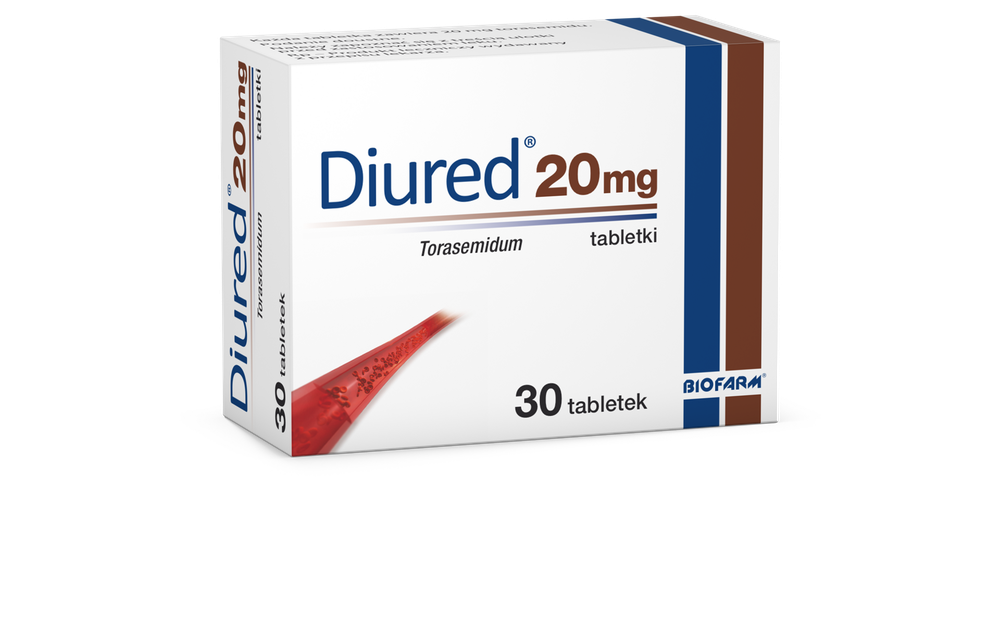
- Country of registration
- Dosage formTablets, 10 mg
- ATC codeC03CA04
- Active substance
- Prescription requiredYes
- Manufacturer
- ImporterBiofarm Sp. z o.o.
- This information is for reference only and does not constitute medical advice. Always consult a doctor before taking any medication. Oladoctor is not responsible for medical decisions based on this content.
- Alternatives to DiuredDosage form: Tablets, 5 mgActive substance: torasemideManufacturer: Polfarmex S.A.Prescription requiredDosage form: Tablets, 10 mgActive substance: torasemideManufacturer: Polfarmex S.A.Prescription requiredDosage form: Tablets, 20 mgActive substance: torasemideManufacturer: Polfarmex S.A.Prescription required
Online doctors for Diured
Discuss questions about Diured, including use, safety considerations and prescription review, subject to medical assessment and local regulations.
Get Diured Prescription Online
Fill in a 2-min form
Tell us your symptoms, history, and what medicine you're requesting.
Pick a doctor or let us assign
Choose a specialist or we'll match you with the next available doctor.
Doctor reviews your case
Usually within 30 minutes. They may ask follow-up questions via chat.
Collect from any pharmacy
Electronic prescription sent to your email — valid across Spain.
Frequently Asked Questions
Diured requires a prescription in Poland. You can check with a doctor online whether this medicine may be appropriate for your situation.
The active ingredient in Diured is torasemide. This information helps identify medicines with the same composition but different brand names.
Diured is manufactured by Biofarm Sp. z o.o.. Pharmacy brands and packaging may differ depending on the distributor.
Doctors such as Family doctors, Psychiatrists, Dermatologists, Cardiologists, Endocrinologists, Gastroenterologists, Pulmonologists, Nephrologists, Rheumatologists, Hematologists, Infectious disease physicians, Allergists, Geriatricians, Paediatricians, Oncologists may assess whether Diured is appropriate, depending on your situation and local regulations. You can book an online consultation to discuss your symptoms and possible next steps.
Spain has a well-developed healthcare infrastructure across major cities such as Madrid, Barcelona, Valencia, and Seville. Pharmacies are widely available and operate under strict regulations, ensuring access to prescribed medications.
You can buy Diured in Madrid, Barcelona, Seville, or Valencia at any local pharmacy with a valid prescription.
To obtain a prescription, you can use Oladoctor:
Other medicines with the same active substance (torasemide) include Astorid, Astorid, Astorid. These may have different brand names or formulations but contain the same therapeutic ingredient. Always consult a doctor before switching or starting a new medicine.
