



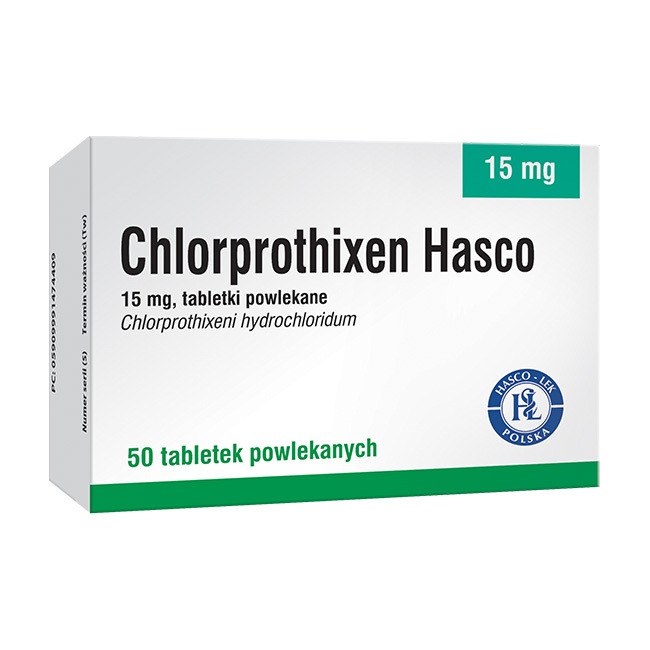
CHLORPROTHIXEN 50 mg Tablets

Prescription review online
A doctor will review your case and decide whether a prescription is medically appropriate.

Talk to a doctor about this medicine
Discuss your symptoms and possible next steps in a quick online consultation.



How to use Hlorprothixen Hasco
Contents of the leaflet
- Leaflet attached to the packaging: Patient information
- What Chlorprothixen Hasco is and what it is used for
- Important information before taking Chlorprothixen Hasco
- When not to take Chlorprothixen Hasco:
- Warnings and precautions
- Children and adolescents
- Elderly patients
- Chlorprothixen Hasco and other medications
- Chlorprothixen Hasco with food, drinks, and alcohol
- Pregnancy and breastfeeding
- Driving and operating machinery
- The medication contains lactose monohydrate
- The medication contains azo dyes
- How to take Chlorprothixen Hasco
- Possible side effects
- How to store Chlorprothixen Hasco
- Contents of the pack and other information
Leaflet attached to the packaging: Patient information
CHLORPROTHIXEN HASCO, 15 mg coated tablets
CHLORPROTHIXEN HASCO, 50 mg, coated tablets
Chlorprothixene hydrochloride
Read the leaflet carefully before taking the medicine, as it contains
important information for the patient.
- Keep this leaflet, so you can read it again if you need to.
- If you have any doubts, consult your doctor or pharmacist.
- This medicine has been prescribed specifically for you. Do not pass it on to others. The medicine may harm another person, even if their symptoms are the same.
- If the patient experiences any side effects, including any possible side effects not listed in this leaflet, they should tell their doctor or pharmacist. See section 4.
Table of contents of the leaflet
- 1. What Chlorprothixen Hasco is and what it is used for
- 2. Important information before taking Chlorprothixen Hasco
- 3. How to take Chlorprothixen Hasco
- 4. Possible side effects
- 5. How to store Chlorprothixen Hasco
- 6. Contents of the pack and other information
1. What Chlorprothixen Hasco is and what it is used for
Chlorprothixen Hasco is a medicine with a strong sedative effect, weak anti-emetic and anti-autistic effect, and a slight anti-depressive effect. It also has antihistamine and anti-emetic effects. In small doses, it has an anxiolytic effect. It does not cause a feeling of fatigue and drowsiness. It enhances the effect of alcohol, sleeping pills, and anesthetics. It lowers body temperature.
It is indicated for the treatment of endogenous and organic psychoses with motor agitation and aggression, anxiety and insomnia in neuroses and psychosomatic disorders, alcoholic psychoses, and also in surgery for premedication to calm the patient and reduce neurovegetative reactions, as well as to prevent postoperative vomiting.

Not sure if this medicine is right for you?
Discuss your symptoms and treatment with a doctor online.
2. Important information before taking Chlorprothixen Hasco
When not to take Chlorprothixen Hasco:
- if the patient is allergic (hypersensitive) to the active substance, other thioxanthene derivatives, or any of the other ingredients of this medicine (listed in section 6);
- if the patient has circulatory collapse, consciousness disorders regardless of the cause (e.g., alcohol, barbiturate, or opioid poisoning), coma;
- if the patient has a history of cardiovascular disorders (e.g., slow heart rate - bradycardia, recently experienced acute myocardial infarction, heart rhythm disorders, heart muscle hypertrophy), tachycardia with torsade de pointes;
- if the patient has a prolonged QT interval (visible on the ECG);
- if the patient is taking medications that prolong the QT interval;
1/8
- if the patient has hypokalemia (decreased potassium levels in the blood) or hypomagnesemia (decreased magnesium levels in the blood).
Warnings and precautions
Before starting treatment with Chlorprothixen Hasco, discuss it with your doctor or pharmacist.
In some disease states, special caution should be exercised when taking the medicine.
For this reason, inform your doctor about all diseases you are experiencing.
Special caution should be exercised when taking the medicine in patients with:
- pheochromocytoma,
- prolactin-dependent tumors,
- severe hypotension or orthostatic hypotension (related to a change in body position to upright),
- Parkinson's disease,
- cardiovascular diseases,
- hyperthyroidism,
- urination disorders, urinary retention,
- pyloric stenosis, intestinal obstruction,
- alcoholic disease or abusing opioids or sedating medications on the central nervous system;
- severe respiratory disorders (e.g., pneumonia, asthma, pulmonary emphysema),
- risk factors for stroke (concerns elderly patients)
- exposed to extreme temperatures and during electroconvulsive therapy;
- cardiovascular disease in history or prolonged QT interval in history.
As with other neuroleptic medications, caution should be exercised when taking chlorprothixene in patients with:
- organic brain damage,
- mental impairment,
- epilepsy,
- severe liver, kidney, and (or) heart function disorders,
- myasthenia (a disease characterized by muscle weakness),
- benign prostatic hyperplasia,
- diabetes (chlorprothixene may affect insulin and glucose levels in the blood, which requires correction of antidiabetic treatment).
Malignant neuroleptic syndrome
When taking any neuroleptic medication, there is a possibility of developing a malignant neuroleptic syndrome, the symptoms of which are: high fever, muscle stiffness, consciousness disorders, instability of the autonomic nervous system).
Glaucoma
In patients with a rare disease - a shallow anterior chamber of the eye and a narrow angle of filtration, acute glaucoma attacks may occur, caused by pupil dilation.
Venous thromboembolic disease
Special caution should be exercised if the patient or someone in their family has experienced venous thrombosis, as the use of antipsychotic medications (medications used to treat behavioral disorders) is associated with the formation of blood clots.
Priapism
When taking antipsychotic medications, cases of priapism (prolonged, usually painful erection, which may require surgical treatment) have been reported. Chlorprothixen Hasco belongs to the group of antipsychotic medications, and therefore, the risk of priapism cannot be excluded after its administration. If the patient experiences a prolonged or painful erection, they should immediately inform their doctor. There may be a need for immediate medical intervention.
Chlorprothixene may cause false-positive results in the immunological pregnancy test with urine, urine test for bilirubin.
Children and adolescents
It is not recommended to use Chlorprothixen Hasco in children and adolescents.
Elderly patients
Caution should be exercised when taking chlorprothixene in this group of patients. Elderly patients are particularly prone to orthostatic hypotension.
Chlorprothixene is not intended for the treatment of behavioral disorders associated with dementia. In elderly patients with dementia, an increased risk of cerebrovascular adverse events has been observed).
Chlorprothixen Hasco and other medications
Tell your doctor or pharmacist about all medications you are currently taking or have recently taken, as well as any medications you plan to take.
In particular, tell your doctor about the use of the following medications:
- blood pressure lowering medications (e.g., guanethidine and similar medications);
- antidepressants (e.g., tricyclics);
- sedatives (barbiturates and similar medications);
- medications used to treat epilepsy (neuroleptic medications and lithium compounds);
- medications used to treat Parkinson's disease (levodopa and similar medications);
- medications used to treat hyperprolactinemia (e.g., bromocriptine) - the doctor may change the dosage if necessary.
The following medications should not be taken at the same time as Chlorprothixen Hasco:
- medications that change heart action (e.g., quinidine, amiodarone, sotalol, dofetilide, erythromycin, terfenadine, astemizole, gatifloxacin, moxifloxacin, cisapride, lithium);
- other antipsychotic medications (e.g., thioridazine).
It is recommended to avoid:
- medications that disrupt water and electrolyte balance (e.g., thiazide diuretics);
- medications known to increase chlorprothixene levels in the blood (e.g., paroxetine, fluoxetine, chloramphenicol, disulfiram, isoniazid, MAO inhibitors, oral contraceptives, buspirone, sertraline, citalopram).
The risk of extrapyramidal symptoms (e.g., slowed movement, facial mimicry disorders, muscle stiffness, and tremors) increases when:
- metoclopramide (an anti-emetic medication) is used concurrently;
- phenothiazine derivatives, haloperidol, or reserpine (antipsychotic medications) are used concurrently;
- piperazine (an antiparasitic medication, effective against pinworms and human roundworms) is used concurrently.
Consuming alcohol, taking sedatives, antidepressants, anticonvulsants, painkillers, muscle relaxants, neuroleptics, or antihistamines (medications used to treat allergies) at the same time as chlorprothixene may enhance the inhibitory effect on the central nervous system.
The risk of enhanced anticholinergic effect (pupil dilation, dry mouth, bronchodilation, slowed intestinal peristalsis, hallucinations) increases when:
- medications used to treat urinary disorders (e.g., overactive bladder) are used concurrently (antimuscarinic, anticholinergic medications);
- medications used to treat allergies (antihistamines) are used concurrently;
- medications used to treat Parkinson's disease are used concurrently.
Concomitant use of adrenaline with chlorprothixene increases the risk of hypotension (lowered blood pressure, manifested by dizziness) and tachycardia (rapid heart rate).
Chlorprothixene may reduce or neutralize the alcohol/disulfiram reaction.
Thioxanthenes may mask the toxic effects of other medications on the ear (tinnitus, dizziness, etc.).
Chlorprothixen Hasco with food, drinks, and alcohol
Tablets should be taken with food and swallowed whole, washed down with a glass of water or milk, to avoid irritating the stomach.
Chlorprothixene may enhance the sedative effect of alcohol. Do not consume alcohol while taking the medication.
Pregnancy and breastfeeding
If you are pregnant or breastfeeding, think you may be pregnant, or plan to have a child, consult your doctor before taking this medication.
The safety of using the medication in pregnant women has not been confirmed. The medication should not be used during pregnancy unless the expected benefit to the mother outweighs the risk to the fetus.
In newborns whose mothers took antipsychotic medications (including chlorprothixene) in the last trimester of pregnancy (the last 3 months of pregnancy), the following symptoms may occur: tremors, muscle stiffness, and (or) weakness, drowsiness, agitation, breathing difficulties, and feeding problems. If your child experiences any of these symptoms, consult your doctor.
Chlorprothixene passes into breast milk in small amounts. It is not expected to affect the infant when the medication is taken in therapeutic doses. However, since compounds with a similar chemical structure affect the child, a woman can continue breastfeeding if it is clinically necessary, but it is recommended to monitor the infant, especially in the first 4 weeks after birth.
Driving and operating machinery
The medication may adversely affect the performance of tasks that require increased attention, coordination, and quick decision-making (e.g., driving, operating machinery, working at heights), especially at the beginning of treatment. Therefore, such activities can only be performed with the doctor's permission.
The medication contains lactose monohydrate
If you have previously been diagnosed with intolerance to some sugars, you should consult your doctor before taking the medication.
The medication contains azo dyes
Chlorprothixen Hasco, 15 mg contains orange yellow, aluminum lake (E 110).
Chlorprothixen Hasco, 50 mg contains cochineal red, aluminum lake (E 124).
4/8
The medication may cause allergic reactions.
3. How to take Chlorprothixen Hasco
This medication should always be taken as directed by your doctor. If you have any doubts, consult your doctor.
Dosage should be adjusted individually depending on the indications and patient tolerance.
Neuroses: the recommended dose is usually 15 mg one to three times a day.
Psychotic disorders: the usual dose is 50 mg to 100 mg two to four times a day. The daily dose should be divided so that the larger dose is taken before bedtime.
Premedication: the dosage is determined by the doctor individually for each patient.
Use in children and adolescents
It is not recommended to use chlorprothixene in children and adolescents.
Coated tablets should be taken with food and swallowed whole, washed down with a glass of water or milk, to avoid irritating the stomach.
Taking a higher dose of Chlorprothixen Hasco than recommended
The most likely symptoms of overdose are drowsiness, coma, convulsions, shock, movement disorders, significantly elevated or lowered body temperature, respiratory depression, lowered blood pressure, which may occur after several hours and last from 2 to 3 days. In severe cases, kidney damage. When these symptoms subside, seizures, excessive restlessness, and hematuria may occur.
There have also been reports of heart rhythm disorders or cardiac arrest when the medication was administered in excessive doses in combination with other medications known to affect the heart.
The doctor will provide symptomatic and supportive treatment: gastric lavage (as soon as possible after taking the medication), administration of activated charcoal, supportive treatment of respiratory and cardiovascular functions.
In case of malignant neuroleptic syndrome, the symptoms of which are: high fever, muscle stiffness, consciousness disorders, instability of the autonomic nervous system, the medication should be discontinued. The doctor will provide symptomatic and supportive treatment.
If an overdose or accidental ingestion of the medication by a child occurs, consult your doctor immediately.
Missing a dose of Chlorprothixen Hasco
Take the missed dose as soon as possible. If it is almost time for the next dose, do not take the missed dose.
Do not take a double dose to make up for the missed dose.
Stopping treatment with Chlorprothixen Hasco
Sudden discontinuation of chlorprothixene may be accompanied by withdrawal symptoms.
Most often, these are nausea, vomiting, anorexia, diarrhea, rhinorrhea, sweating, muscle pain, paresthesia, insomnia, anxiety, and agitation. Patients may also experience dizziness, increased sensation of heat or cold, and tremors. Symptoms usually start 1 to 4 days after discontinuing the medication and subside within 7-14 days.
5/8

Started taking the medicine and have questions?
Discuss your symptoms and treatment with a doctor online.
4. Possible side effects
Like all medications, this medication can cause side effects, although not everyone will experience them.
The risk of developing side effects increases with long-term use of high doses of chlorprothixene. This risk is higher in children and elderly patients.
The following side effects may occur, divided by frequency:
Very common (may occur more often than 1 in 10 people):drowsiness, dizziness, dry mouth, increased salivation.
Common (may occur no more often than 1 in 10 people):increased appetite, insomnia, nervousness, agitation, decreased libido, headache, dystonia (involuntary movements causing twisting or bending of different body parts), accommodation disorders, vision disturbances, rapid heart rate (especially after sudden discontinuation of treatment), palpitations (heart pounding), orthostatic hypotension (including dizziness, which usually occurs after sudden standing), constipation, nausea, vomiting, excessive sweating, muscle pain, chronic weakness, fatigue, weight gain.
Uncommon (may occur no more often than 1 in 100 people):decreased appetite, akathisia (inability to maintain a steady position), late dyskinesia (involuntary, uncoordinated muscle movements, especially of the face), parkinsonism, seizures, attacks of forced gaze with eye rotation, hypotension, heat strokes, vomiting, diarrhea, rash, itching, hypersensitivity to light, skin inflammation, muscle stiffness, urination disorders, urinary retention, ejaculation disorders, erectile dysfunction, weight loss, abnormal liver function test results.
Rare (may occur no more often than 1 in 1000 people):thrombocytopenia (decreased platelet count), leukopenia, neutropenia (decreased white blood cell count), agranulocytosis (decreased granulocyte count or absence of granulocytes in the blood), hypersensitivity, anaphylactic reaction, increased prolactin levels in the blood, increased glucose levels in the blood, impaired glucose tolerance, seizure-like attacks, prolonged QT interval on ECG, ventricular arrhythmias - atrial fibrillation, ventricular tachycardia, torsade de pointes, sudden unexplained death, rhinitis, dyspnea, skin flushing, rash, excessive breast tissue growth in men, galactorrhea, menstrual disorders, thermoregulation disorders.
Very rare (may occur no more often than 1 in 10,000 people):decreased red blood cell count (hemolytic anemia), thrombocytopenic purpura, pancytopenia (deficiency of all normal morphological blood elements), eosinophilia, malignant neuroleptic syndrome (very high fever, increased muscle tone, akinesia, coma), cardiac arrest, slow heart rate, venous thromboembolic disease, asthma, laryngeal edema, jaundice, lupus-like syndrome (an autoimmune inflammatory syndrome that can affect the skin, joints, and internal organs), increased uric acid levels in urine
After many years of treatment with high doses, pigmentary retinal degeneration, lens opacity, and deposits in the cornea may occur.
Frequency not known (cannot be determined from available data)
withdrawal syndrome in newborns, venous thrombosis (especially in the legs: swelling, pain, and redness), which can move through the bloodstream to the lungs, causing chest pain and breathing difficulties. If you experience any of these symptoms, consult your doctor immediately.
6/8
When taking antipsychotic medications, cases of priapism (prolonged, painful erection, which may lead to erectile dysfunction) have been reported.
Reporting side effects
If you experience any side effects, including any side effects not listed in the leaflet, tell your doctor, pharmacist, or nurse. Side effects can be reported directly to the Department of Monitoring of Adverse Reactions to Medicinal Products of the Office for Registration of Medicinal Products, Medical Devices, and Biocidal Products:
Jerozolimskie Avenue 181C, 02-222 Warsaw,
phone: 22 49-21-301, fax: 22 49-21-309,
Website: https://smz.ezdrowie.gov.pl
Side effects can also be reported to the marketing authorization holder.
By reporting side effects, you can help gather more information on the safety of the medication.
5. How to store Chlorprothixen Hasco
Store the medication in a place out of sight and reach of children.
Store at a temperature below 25°C. Store in the original packaging to protect from light.
Do not use this medication after the expiration date stated on the packaging. The expiration date refers to the last day of the specified month.
Medications should not be disposed of in wastewater or household waste. Ask your pharmacist how to dispose of medications that are no longer needed. This will help protect the environment.
6. Contents of the pack and other information
What Chlorprothixen Hasco contains
- The active substance of the medication is chlorprothixene hydrochloride. One coated tablet contains 15 mg or 50 mg of chlorprothixene hydrochloride.
- The other ingredients are: lactose monohydrate, microcrystalline cellulose, sodium carboxymethylcellulose (type A), corn starch, silicon dioxide, magnesium stearate.
Coating composition
Chlorprothixen Hasco, 15 mg (Opadry II Orange, 85F23368):
polyvinyl alcohol, talc, macrogol 3350, titanium dioxide (E 171), quinoline yellow, aluminum lake (E 104), orange yellow, aluminum lake (E 110).
Chlorprothixen Hasco, 50 mg (Opadry II Yellow, 85F32879):
polyvinyl alcohol, talc, macrogol 3350, titanium dioxide (E 171), quinoline yellow, aluminum lake (E 104), cochineal red, aluminum lake (E 124).
What Chlorprothixen Hasco looks like and what the pack contains
Chlorprothixen Hasco, 15 mg: orange, round, biconvex coated tablets with beveled edges.
Chlorprothixen Hasco, 50 mg: yellow, round, biconvex coated tablets with beveled edges.
7/8
Pack size: 50 coated tablets
Marketing authorization holder and manufacturer
“PRZEDSIĘBIORSTWO PRODUKCJI FARMACEUTYCZNEJ HASCO-LEK” S.A.
51-131 Wrocław, ul. Żmigrodzka 242 E
Medication information
phone: 22 742 00 22
e-mail: [email protected]
Date of last update of the leaflet:
8/8
- Country of registration
- Dosage formTablets, 50 mg
- ATC codeN05AF03
- Active substance
- Prescription requiredYes
- Manufacturer
- ImporterPrzedsiębiorstwo Produkcji Farmaceutycznej HASCO-LEK S.A.
- This information is for reference only and does not constitute medical advice. Always consult a doctor before taking any medication. Oladoctor is not responsible for medical decisions based on this content.
- Alternatives to Hlorprothixen HascoDosage form: Tablets, 15 mgActive substance: chlorprothixenePrescription requiredDosage form: Tablets, 50 mgActive substance: chlorprothixeneManufacturer: Zentiva, k.s.Prescription not requiredDosage form: Tablets, 15 mgActive substance: chlorprothixeneManufacturer: Zentiva, k.s.Prescription not required
Online doctors for Hlorprothixen Hasco
Discuss questions about Hlorprothixen Hasco, including use, safety considerations and prescription review, subject to medical assessment and local regulations.







Get Hlorprothixen Hasco Prescription Online
Fill in a 2-min form
Tell us your symptoms, history, and what medicine you're requesting.
Pick a doctor or let us assign
Choose a specialist or we'll match you with the next available doctor.
Doctor reviews your case
Usually within 30 minutes. They may ask follow-up questions via chat.
Collect from any pharmacy
Electronic prescription sent to your email — valid across Spain.
Frequently Asked Questions
Hlorprothixen Hasco requires a prescription in Poland. You can check with a doctor online whether this medicine may be appropriate for your situation.
The active ingredient in Hlorprothixen Hasco is chlorprothixene. This information helps identify medicines with the same composition but different brand names.
Hlorprothixen Hasco is manufactured by Przedsiębiorstwo Produkcji Farmaceutycznej HASCO-LEK S.A.. Pharmacy brands and packaging may differ depending on the distributor.
Doctors such as Family doctors, Psychiatrists, Dermatologists, Cardiologists, Endocrinologists, Gastroenterologists, Pulmonologists, Nephrologists, Rheumatologists, Hematologists, Infectious disease physicians, Allergists, Geriatricians, Paediatricians, Oncologists may assess whether Hlorprothixen Hasco is appropriate, depending on your situation and local regulations. You can book an online consultation to discuss your symptoms and possible next steps.
Spain has a well-developed healthcare infrastructure across major cities such as Madrid, Barcelona, Valencia, and Seville. Pharmacies are widely available and operate under strict regulations, ensuring access to prescribed medications.
You can buy Hlorprothixen Hasco in Madrid, Barcelona, Seville, or Valencia at any local pharmacy with a valid prescription.
To obtain a prescription, you can use Oladoctor:
Other medicines with the same active substance (chlorprothixene) include Hlorprothixen Hasco, Hlorprothixen Zentiva, Hlorprothixen Zentiva. These may have different brand names or formulations but contain the same therapeutic ingredient. Always consult a doctor before switching or starting a new medicine.
