


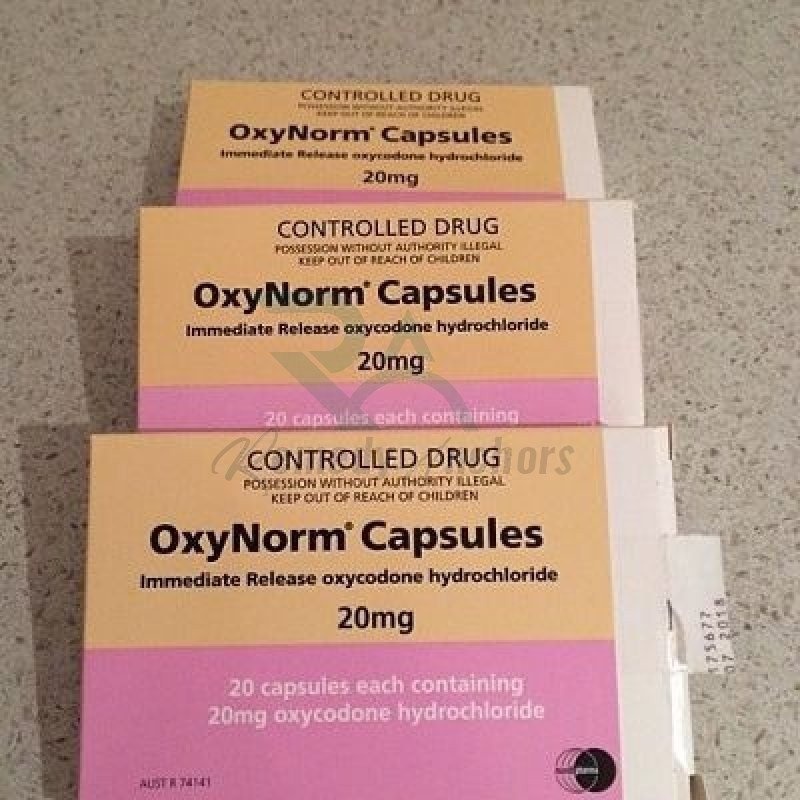
Oxynorm 20 mg cápsulas duras

Revisión de receta online
Un médico revisará tu caso y determinará si la prescripción es médicamente apropiada.

Habla con un médico sobre este medicamento
Comenta tus síntomas y las opciones de tratamiento en una consulta online.



Cómo usar OXYNORM 20 MG CAPSULAS DURAS
Contenido del prospecto
- Introducción
- Qué es OxyNorm y para qué se utiliza
- Qué necesita saber antes de empezar a tomar OxyNorm
- Cómo tomar OxyNorm
- Posibles efectos adversos
- Conservación de OxyNorm
- Contenido del envase e información adicional
Introducción
Prospecto: información para el usuario
OxyNorm 20 mg cápsulas duras
Oxicodona, hidrocloruro
Lea todo el prospecto detenidamente antes de empezar a tomar el medicamento, porque contiene información importante para usted.
- Conserve este prospecto ya que puede tener que volver a leerlo.
- Si tiene alguna duda, consulte a su médico o farmacéutico.
- Este medicamento se le ha recetado solamente a usted y no debe dárselo a otras personas, aunque tengan los mismos síntomas que usted, ya que puede perjudicarles.
- Si experimenta efectos adversos, consulte a su médico o farmacéutico, incluso si se trata de efectos adversos que no aparecen en este prospecto. Ver sección 4.
Contenido del prospecto
- Qué es OxyNorm y para qué se utiliza
- Qué necesita saber antes de empezar a tomar OxyNorm
- Cómo tomar OxyNorm
- Posibles efectos adversos
- Conservación de OxyNorm
- Contenido del envase e información adicional
1. Qué es OxyNorm y para qué se utiliza
OxyNorm es un analgésico fuerte o "calmante" y pertenece al grupo de los opioides.
OxyNorm se utiliza en adultos y adolescentes desde los 12 años para el alivio del dolor intenso, que sólo puede tratarse adecuadamente con analgésicos opioides.

¿No estás seguro de si este medicamento es adecuado para ti?
Comenta tus síntomas y tratamiento con un médico online.
2. Qué necesita saber antes de empezar a tomar OxyNorm
No tome OxyNorm si:
- es alérgico (hipersensible) a oxicodona o a cualquiera de los demás componentes de OxyNorm (incluidos en la sección 6. Información adicional) o ha tenido anteriormente alguna reacción alérgica al tomar otros analgésicos potentes (como morfina u otros analgésicos opioides);
- tiene problemas respiratorios, como enfermedad pulmonar obstructiva crónica, asma bronquial grave o depresión respiratoria grave. Los síntomas pueden incluir respiración entrecortada, tos o que la respiración sea más lenta o más débil de lo esperado;
- tiene alguna lesión en la cabeza que le produzca dolor de cabeza intenso o sensación de mareo, ya que este medicamento puede empeorar estos síntomas o enmascarar la extensión de la lesión;
- tiene una enfermedad en la que el intestino delgado no funciona adecuadamente (íleo paralítico), su estómago se vacía más lentamente de lo que debería (retraso del vaciado gástrico) o tiene dolor abdominal intenso;
- tiene un problema de corazón después de una larga enfermedad pulmonar (cor pulmonale).
Advertencias y precauciones
Consulte a su médico o farmacéutico antes de empezar a tomar OxyNorm si:
- tiene edad avanzada o está debilitado;
- tiene baja actividad de la glándula tiroides (hipotiroidismo);
- tiene mixedema (un trastorno tiroideo, con sequedad, frialdad e inflamación (hinchazón) de la piel, que afecta a la cara y a las extremidades);
- tiene dolor de cabeza intenso o sensación de mareo, ya que puede indicar que la presión en su cráneo está aumentada;
- tiene la tensión arterial baja (hipotensión);
- tiene inflamación del páncreas (que puede producir dolor agudo en el abdomen y la espalda) o problemas con su vesícula biliar o conductos biliares;
- tiene alguna enfermedad obstructiva o inflamatoria del intestino;
- tiene dolor abdominal tipo cólico o malestar;
- presenta un aumento anómalo del tamaño de la próstata, que causa dificultad en el paso de la orina (en el varón);
- tiene una pobre función de la glándula suprarrenal (su glándula adrenal no funciona adecuadamente); por ejemplo la enfermedad de Addison;
- tiene problemas respiratorios como la función respiratoria gravemente dañada, enfermedad obstructiva crónica de las vías respiratorias, enfermedad pulmonar grave o reserva respiratoria reducida. Los síntomas pueden ser respiración entrecortada y tos;
- tiene un problema de riñón o de hígado;
- ha sufrido síntomas de abstinencia como agitación, ansiedad, palpitaciones, temblores o sudoración al dejar de tomar alcohol o drogas;
- si usted o algún miembro de su familia tiene antecedentes de abuso o dependencia del alcohol, de medicamentos de venta con receta o de sustancias ilícitas (“adicción”);
- si fuma;
- si alguna vez ha tenido problemas con su estado de ánimo (depresión, ansiedad o un trastorno de la personalidad) o ha recibido tratamiento de un psiquiatra para otras enfermedades mentales;
- sufre espasmos, ataques o convulsiones;
- sufre mareos o desmayos;
- necesita aumentar la dosis de OxyNorm para conseguir el mismo nivel de analgesia (tolerancia);
- sufre un aumento en la sensibilidad del dolor;
- está tomando un tipo de medicamentos conocidos como inhibidores de la monoaminooxidasa (como por ejemplo tranilcipromina, fenelzina, isocarboxazida, moclobemida y linezolid), o si ha tomado este tipo de medicamentos en las últimas dos semanas;
- tiene estreñimiento.
Trastornos de la respiración relacionados con el sueño
OxyNorm puede causar trastornos respiratorios relacionados con el sueño como apnea del sueño (pausa de la respiración durante el sueño) e hipoxemia relacionada con el sueño (niveles bajos de oxígeno en la sangre). Los síntomas pueden incluir pausas en la respiración durante el sueño, despertares nocturnos debido a la dificultad para respirar, dificultad para mantener el sueño o somnolencia excesiva durante el día. Si usted u otra persona observa estos síntomas, consulte a su médico. Su médico puede considerar disminuir la dosis.
Si se va a someter a alguna operación quirúrgica, informe al médico del hospital que usted está tomando estas cápsulas.
Puede experimentar cambios hormonales mientras esté tomando estas cápsulas. Es posible que su médico quiera supervisar estos cambios.
El contenido de la cápsula nunca debe ser inyectado ya que esto puede llevar a efectos adversos graves con un desenlace fatal.
Los opioides no son la primera opción de tratamiento para el dolor no relacionado con el cáncer y no se recomiendan como único tratamiento. En el tratamiento del dolor crónico se deben usar otros medicamentos junto con los opioides. Su médico debe vigilarlo de cerca y hacer los ajustes necesarios a su dosis mientras esté tomando OxyNorm cápsulas para prevenir la adicción y el abuso.
Tolerancia, dependencia y adicción
Este medicamento contiene oxicodona, que es un opioide, y puede producir dependencia y/o adicción. |
Este medicamento contiene oxicodona, que es un medicamento opioide. El uso repetido de analgésicos opioides puede hacer que el medicamento sea menos eficaz (usted se acostumbra a él, lo que se conoce como tolerancia). El uso repetido de OxyNorm también puede causar dependencia, abuso y adicción, que puede provocar una sobredosis que ponga en riesgo su vida. El riesgo de estos efectos adversos puede aumentar con una dosis más alta y una duración de uso más prolongada.
La dependencia o la adicción pueden hacerle sentir que ya no tiene el control de la cantidad de medicamento que necesita tomar o con qué frecuencia debe tomarlo. Es posible que sienta que necesita seguir tomando el medicamento, incluso cuando no ayuda a aliviar su dolor.
El riesgo de convertirse en dependiente o adicto varía de persona a persona. Puede tener un mayor riesgo de convertirse en dependiente o adicto a OxyNorm:
- si usted o algún miembro de su familia tiene antecedentes de abuso o dependencia del alcohol, de medicamentos de venta con receta o de sustancias ilícitas (“adicción”).
- si fuma.
- si alguna vez ha tenido problemas con su estado de ánimo (depresión, ansiedad o un trastorno de la personalidad) o ha recibido tratamiento de un psiquiatra para otras enfermedades mentales.
Si nota alguno de los siguientes signos mientras toma OxyNorm, podría ser un signo de que se ha convertido en dependiente o adicto.
- Necesita tomar el medicamento durante más tiempo del recomendado por su médico.
- Necesita tomar más dosis de la recomendada.
- Está usando el medicamento por razones distintas a las prescritas, por ejemplo, “para mantenerse en calma” o “ayudarle a dormir”.
- Ha realizado intentos repetidos y sin éxito de dejar o controlar el uso del medicamento.
- No se encuentra bien cuando deja de tomar el medicamento y se siente mejor una vez que toma de nuevo el medicamento (“síntomas de abstinencia”).
Si nota alguno de estos signos, hable con su médico para analizar el mejor tratamiento para usted, incluido cuándo es apropiado dejar de tomarlo y cómo hacerlo de forma segura (ver sección 3, Si interrumpe el tratamiento con OxyNorm).
Póngase en contacto con su médico si tiene dolor intenso en el abdomen superior que posiblemente se extienda a la espalda, náuseas, vómitos o fiebre, puesto que estos pueden ser síntomas asociados a inflamación del páncreas (pancreatitis) y del sistema del tracto biliar.
Uso de OxyNorm con otros medicamentos
El uso concomitante de opioides, incluyendo oxicodona y medicamentos sedantes como benzodiazepinas o medicamentos relacionados, aumenta el riesgo de somnolencia, dificultades respiratorias (depresión respiratoria), coma y puede ser potencialmente mortal. Por ello, el uso concomitante sólo se debe considerar cuando no son posibles otras opciones de tratamiento.
Sin embargo, si su médico le receta OxyNorm junto con medicamentos sedantes, la dosis y la duración del tratamiento concomitante debe ser limitada por su médico.
Por favor informe a su médico acerca de todos los medicamentos sedantes que está tomando, y siga cuidadosamente las recomendaciones de dosis de su médico. Podría ser útil informar a amigos o familiares para que estén al tanto de los signos y síntomas mencionados anteriormente. Póngase en contacto con su médico si experimenta tales síntomas.
Informe a su médico o farmacéutico si está utilizando, ha utilizado recientemente o pudiera tener que utilizar cualquier otro medicamento, incluso los adquiridos sin receta. Si usa estas cápsulas con algunos medicamentos, su efecto o el de los otros medicamentos puede modificarse.
El riesgo de presentar efectos secundarios aumenta si se utilizan antidepresivos (como citalopram, duloxetina, escitalopram, fluoxetina, fluvoxamina, paroxetina, sertralina, venlafaxina). Estos medicamentos pueden interaccionar con la oxicodona y es posible que se presenten síntomas como contracciones rítmicas e involuntarias de los músculos, incluidos los músculos que controlan los movimientos oculares, agitación, sudor excesivo, temblor, exageración de los reflejos, aumento de la tensión muscular y temperatura corporal superior a 38 °C. Contácte con su médico si presenta dichos síntomas.
Informe a su médico o farmacéutico si está tomando:
- medicamentos denominados inhibidores de la monoamino oxidasa o los ha tomado en las últimas dos semanas (ver sección “Advertencias y precauciones”).
- medicamentos que le ayudan a dormir (por ejemplo hipnóticos o sedantes, incluyendo benzodiacepinas);
- medicamentos para tratar la depresión (por ejemplo paroxetina o fluoxetina);
- medicamentos para tratar trastornos psiquiátricos o mentales (como fenotiazinas o neurolépticos);
- medicamentos para tratar la epilepsia, el dolor, la ansiedad, como gabapentina y pregabalina;
- otros analgésicos fuertes;
- relajantes musculares;
- medicamentos para tratar la tensión arterial alta;
- quinidina (un medicamento para el tratamiento del ritmo cardíaco rápido);
- cimetidina (un medicamento para las úlceras de estómago, indigestión o ardor);
- medicamentos para tratar las infecciones por hongos (como ketoconazol, voriconazol, itraconazol o posaconazol);
- medicamentos usados para tratar infecciones bacterianas (como claritromicina, eritromicina o telitromicina);
- un tipo específico de medicamentos conocidos como inhibidores de la proteasa para tratar VIH (como por ejemplo boceprevir, ritonavir, indinavir, nelfinavir o saquinavir);
- rifampicina para tratar la tuberculosis;
- carbamazepina (un medicamento para tratar espasmos, ataques o convulsiones y determinadas situaciones que presentan dolor);
- fenitoína (un medicamento para tratar espasmos, ataques o convulsiones);
- una hierba medicinal llamada “hierba de San Juan” (también conocida como Hypericum perforatum);
- antihistamínicos;
- medicamentos para tratar la enfermedad de Parkinson.
Tambien informe a su médico si se le ha administrado recientemente algún anestésico.
Toma de OxyNorm con los alimentos, bebidas y alcohol
Estas cápsulas pueden tomarse con o sin alimentos.
La ingesta de alcohol durante el tratamiento con estas cápsulas puede producir somnolencia o aumentar el riesgo de graves efectos adversos como respiración entrecortada y riesgo de parada respiratoria y pérdida de conciencia. Se recomienda no beber alcohol mientras está tomando OxyNorm.
Debe evitar beber zumo de pomelo durante el tratamiento con OxyNorm.
Embarazo y lactancia:
Si está embarazada o en periodo de lactancia, cree que podría estar embarazada o tiene intención de quedarse embarazada, consulte a su médico o farmacéutico antes de utilizar este medicamento.
Embarazo
No debe utilizar estas cápsulas durante el embarazo y el parto a menos que su médico se lo haya especificado. Dependiendo de la dosis y duración del tratamiento con oxicodona pueden producirse respiración lenta y superficial (depresión respiratoria) o síndrome de abstinencia en recién nacidos.
Lactancia
Estas cápsulas no deben usarse durante el período de lactancia porque la sustancia activa puede pasar a la leche materna.
Conducción y uso de máquinas
Estas cápsulas pueden producir efectos adversos como mareo que pueden afectar a la capacidad para conducir y usar maquinaria (ver seccion 4. “Posibles efectos adversos”). Estos son más apreciables al inicio del tratamiento, o cuando se le aumente la dosis. Si le afecta, no debe conducir o utilizar máquinas.
OxyNorm contiene sodio
Este medicamento contiene 0,076 mg de laurilsulfato de sodio por cápsula, que es menos que 1 mmol de sodio (23 mg), es decir, prácticamente “libre de sodio”.
3. Cómo tomar OxyNorm
Siga exactamente las instrucciones de administración de este medicamento indicadas por su médico. En caso de duda, consulte de nuevo a su médico o farmacéutico. El etiquetado de su medicamento le dirá cómo puede tomar las cápsulas y con qué frecuencia.
Antes de iniciar el tratamiento y de forma periódica durante el tratamiento, su médico hablará con usted sobre lo que puede esperar del uso de oxicodona, cuándo y durante cuánto tiempo debe tomarlo, cuándo ponerse en contacto con su médico y cuándo debe dejar de tomarlo (ver también “Si interrumpe el tratamiento con OxyNorm”).
Hay diferentes dosis disponibles para este medicamento. Su médico decidirá qué dosis de este medicamento es más adecuada para usted.
No tome una dosis superior a la recomendada por su médico.
Las cápsulas deben tragarse enteras con un poco de agua. Debe tomar las cápsulas únicamente por vía oral (por la boca).
Adultos y adolescentes (a partir de 12 años de edad)
La dosis inicial habitual es de 5 mg cada 6 horas. El intervalo de dosificación de oxicodona puede reducirse a 4 horas si es necesario. Oxicodona no debe tomarse más de 6 veces al día. Sin embargo, su médico le prescribirá la dosis necesaria para tratar su dolor. Si continúa con dolor a pesar de tomar las cápsulas hable con su médico.
Uso en niños menores de 12 años de edad
La seguridad y eficacia de oxicodona no han sido suficientemente probadas en niños menores de 12 años. Por lo tanto, no se recomienda el tratamiento con oxicodona en niños menores de 12 años.
Pacientes con problemas del hígado o riñón
Informe a su médico si usted presenta problemas de riñón o hígado, su médico puede prescribirle un medicamento alternativo o le reducirá la dosis dependiendo de su situación.
Si toma más OxyNorm del que debe o si alguien accidentalmente ha tomado sus cápsulas,
En caso de sobredosis o ingestión accidental, consulte inmediatamente con su médico o farmacéutico o llame al Servicio de Información Toxicológica, Teléfono 91 562 04 20, indicando el medicamento y la cantidad ingerida, o dirigirse inmediatamente al hospital.
Una sobredosis puede producir:
- una disminución del tamaño de sus pupilas
- una respiración más lenta y débil de lo normal (depresión respiratoria)
- somnolencia o pérdida del conocimiento
- una disminución del tono muscular (hipotonía)
- una disminución del pulso
- una bajada de la presión sanguínea
- dificultad para respirar debido a tener líquido en los pulmones (edema pulmonar)
- un trastorno cerebral (conocido como leucoencefalopatía tóxica)
En casos graves de sobredosis pueden producirse pérdida del conocimiento o incluso muerte. Cuando necesite atención médica asegúrese de llevar este prospecto consigo y de que disponga las cápsulas para enseñárselo a su médico.
Si ha tomado muchas cápsulas en ningún caso debe ponerse en una situación que requiera que esté en alerta como conducir un coche.
Si olvidó tomar OxyNorm
No tome una dosis doble para compensar las dosis olvidadas. Si olvidó tomar una dosis debe tomar la siguiente dosis tan pronto como lo recuerde y después siga el tratamiento de manera habitual. No tome dos dosis en un intervalo de 4 horas.
Si interrumpe el tratamiento con OxyNorm
No debe dejar de tomar estas cápsulas repentinamente a menos que su médico se lo indique. Si quiere dejar de tomar este medicamento hable primero con su médico. Su médico le dirá como hacerlo, reduciendo la dosis de forma gradual y así evitará síntomas desagradables de abstinencia. Los síntomas de abstinencia como bostezos, dilatación anormal de las pupilas, alteración lagrimal, secreción nasal, inquietud, ansiedad, convulsiones, dificultad para dormir, palpitaciones, temblor o sudoración pueden aparecer si interrumpe bruscamente la toma de este medicamento.
Si tiene cualquier otra duda sobre el uso de este medicamento, pregunte a su médico o farmacéutico.

¿Has empezado a tomar el medicamento y tienes preguntas?
Comenta tus síntomas y tratamiento con un médico online.
4. Posibles efectos adversos
Al igual que todos los medicamentos, OxyNorm puede producir efectos adversos, aunque no todas las personas los sufran.
Este medicamento puede producir reacciones alérgicas, aunque las reacciones alérgicas graves comunicadas son raras. Informe a su médico inmediatamente si sufre jadeos repentinos, dificultad para respirar, hinchazón de los párpados, cara o labios, erupción o picor en la piel especialmente si cubre todo su cuerpo.
El efecto adverso más grave es cuando su respiración se hace más lenta o débil de lo normal (depresión respiratoria, reacción típica de una sobredosis de opioides).
Al igual que todos los analgésicos fuertes, existe un riesgo de adicción o dependencia de este medicamento.
Muy frecuentes
(Pueden afectar a más de 1 de cada 10 pacientes)
- Estreñimiento (su médico puede recetarle un laxante para tratar este problema).
- Sentirse mareado o con ganas de vomitar (estos síntomas normalmente desaparecen en unos días, sin embargo, su médico puede recetarle algún medicamento para evitar los vómitos si el problema continúa).
- Somnolencia (es más frecuente cuando empiece a tomar este medicamento o cuando se le aumente la dosis, pero desaparecerá en unos días).
- Mareos.
- Dolor de cabeza.
- Picor en la piel.
Frecuentes
(Pueden afectar hasta 1 de cada 10 pacientes)
- Sequedad de boca, pérdida del apetito, indigestión, dolor o molestias abdominales, diarrea.
- Confusión, depresión, sensación de debilidad no habitual, temblor, falta de energía, cansancio, ansiedad, nerviosismo, dificultad para dormir, sueños y pensamientos anómalos.
- Dificultad para respirar, pitos al respirar, falta de aire.
- Dificultad para orinar.
- Erupción.
- Sudoración, temperatura alta.
Poco frecuentes
(Pueden afectar hasta 1 de cada 100 pacientes)
- Un trastorno en el que su respiración es más lenta y débil de lo normal (depresión respiratoria).
- Dificultad para tragar, eructos, hipo, gases, trastornos intestinales en el que el intestino no funciona adecuadamente (íleo), inflamación del estómago, alteración del gusto, úlceras o llagas en la boca.
- Un trastorno que puede causar una producción anormal de la hormona antidiurética (síndrome de secreción inadecuada de hormona antidiurética).
- Sensación de mareo o “de dar vueltas” (vértigo), alucinaciones, cambios de humor, una sensación de felicidad extrema, agitación, sensación de malestar general, pérdida de memoria, dificultad para hablar, disminución de la sensibilidad al dolor o al tacto, hormigueo o entumecimiento, ataques, crisis epilépticas o convulsiones, forma o estilo de caminar anormal, sentirse fuera de uno mismo, ser excepcionalmente hiperactivo, mareos, reducción del nivel de consciencia, rigidez o laxitud muscular anormales, contracciones musculares involuntarias.
- Impotencia, disminución del impulso sexual, bajos niveles de hormonas sexuales en la sangre (hipogonadismo, visto en análisis de sangre).
- Enrojecimiento de la piel.
- Deshidratación, cambio de peso, sed, hinchazón de las manos, tobillos o pies.
- Sequedad en la piel.
- Trastornos en la producción de lágrimas, visión borrosa, reducción del tamaño de las pupilas del ojo.
- Necesidad de aumentar la dosis para alcanzar el mismo nivel de alivio del dolor (tolerancia).
- Timbres o zumbidos en los oídos.
- Hinchazón e irritación dentro de la nariz, hemorragias nasales, alteración de la voz.
- Escalofríos.
- Dolor en el pecho.
- Incapacidad para vaciar completamente la vejiga.
- Empeoramiento de las pruebas de la función hepática (observado en análisis sanguíneo).
- Síntomas de abstinencia (ver sección 3 Si interrumpe el tratamiento con OxyNorm).
Raros
(Pueden afectar hasta 1 de cada 1.000 pacientes)
- Sensación de “debilidad” especialmente estando de pie.
- Tensión arterial baja.
- Urticaria.
No conocida
(La frecuencia no puede estimarse a partir de los datos disponibles)
- Silbido repentino al respirar, dificultad para respirar, hinchazón de los párpados, cara o labios, erupción cutánea o picazón, especialmente los que cubren todo el cuerpo.
- Alteraciones dentales.
- Dolor abdominal tipo cólico o malestar.
- Un problema que afecta a una válvula del intestino, que puede causar dolor intenso en el abdomen superior (disfunción del esfínter de Oddi).
- Bloqueo en el flujo de la bilis desde el hígado. Esto puede producir picor en la piel, piel amarillenta, orina muy oscura y heces muy pálidas.
- Ausencia de períodos menstruales.
- Aumento en la sensibilidad del dolor.
- Apnea del sueño (interrupciones de la respiración durante el sueño).
- Agresividad.
- Tratamiento prolongado de OxyNorm durante el embarazo puede producir síndrome de retirada en recién nacidos con amenaza para su vida. Los síntomas vistos en los bebés incluyeron irritabilidad, hiperactividad y patrón de sueño anormal, llanto con gritos agudos, temblores, aspecto de enfermo, diarrea y sin aumento de peso.
Comunicación de efectos adversos
Si experimenta cualquier tipo de efectos adversos, consulte a su médico, farmacéutico o enfermero, incluso si se trata de posibles efectos adversos que no aparecen en este prospecto. También puede comunicarlos directamente a través del Sistema Español de Farmacovigilancia de Medicamentos de Uso Humano: www.notificaRAM.es.
Mediante la comunicación de efectos adversos usted puede contribuir a proporcionar más información sobre la seguridad de este medicamento.
5. Conservación de OxyNorm
Mantener fuera de la vista y del alcance de los niños. La sobredosis accidental de un niño es peligrosa y puede ser fatal. Conserve este medicamento en un lugar seguro y cerrado, donde otras personas no puedan acceder a él. Puede causar daños graves y ser mortal para las personas cuando no se les ha recetado.
No utilice el medicamento después de la fecha de caducidad que aparece en el blister y en el cartonaje. La fecha de caducidad es el último día del mes que se indica. Por ejemplo CAD 08 2020 quiere decir que no debe tomar el medicamento después del último día de ese mes, es decir, de agosto de 2020.
No conservar las cápsulas a temperatura superior a 25ºC.
Los medicamentos no se deben tirar por los desagües ni a la basura. Deposite los envases y los medicamentos que no necesita en el Punto SIGRE de la farmacia. En caso de duda pregunte a su farmacéutico cómo deshacerse de los envases y de los medicamentos que no necesita. De esta forma ayudará a proteger el medio ambiente.
6. Contenido del envase e información adicional
Composición de OxyNorm
El principio activo es hidrocloruro de oxicodona. Cada cápsula dura (cápsula) contiene 20 mg de hidrocloruro de oxicodona.
Los demás componentes son:
- celulosa microcristalina,
- estearato de magnesio,
- dióxido de titanio (E171),
- óxido de hierro (E172),
- índigo carmín (E132),
- laurilsulfato de sodio,
- gelatina.
La tinta de impresión contiene laca Shellac, óxido de hierro (E172) y propilenglicol.
Aspecto del producto y contenido del envase
Las cápsulas tienen una cubierta de gelatina dura marcadas con ONR y la concentración 20.
El color de la cápsula de 20 mg es rosa/beige.
Las cápsulas se acondicionan en blísteres y después se introducen en cajas. En cada envase hay 10, 28, 30, 56 o 112 cápsulas.
Puede que solamente estén comercializados algunos tamaños de envase.
Titular de la autorización de comercialización y responsable de la fabricación
Titular de la autorización:Mundipharma Pharmaceuticals S.L.
Bahía de Pollensa,11
28042 Madrid. España
Teléfono: 91 382 1870
Fax: 91 382 1871
Responsable de la fabricación:Mundipharma DC B.V.
Leusderend 16
3832 RC Leusden
Países Bajos
o
Fidelio Healthcare Limburg GmbH
Mundipharmastrasse 2,
65549 Limburg
Alemania
Este medicamento está autorizado en los estados miembros del Espacio Económico Europeo con los siguientes nombres:
Austria OxyNorm Kapseln
República de Irlanda OxyNorm Capsules
España OxyNorm 20 mg cápsulas duras
Fecha de la última revisión de este prospecto:Marzo 2025.
La información detallada de este medicamento está disponible en la página web de la Agencia Española de Medicamentos y Productos Sanitarios (AEMPS) (http://www.aemps.gob.es/)
- País de registro
- Forma farmacéuticaCAPSULA, 20 mg
- Código ATCN02AA05
- Precio medio en farmacia15.17 EUR
- Principio activo
- Requiere recetaSí
- Fabricante
- ComposiciónDODECIL SULFATO SODICO (0.07 mg mg)
- Esta información es de carácter general y no sustituye la consulta con un profesional sanitario.
- Alternativas a OXYNORM 20 MG CAPSULAS DURASForma farmacéutica: COMPRIMIDO LIBERACION MODIFICADA, 10 mgPrincipio activo: oxycodoneFabricante: Sandoz Farmaceutica S.A.Requiere recetaForma farmacéutica: COMPRIMIDO LIBERACION MODIFICADA, 20 mgPrincipio activo: oxycodoneFabricante: Sandoz Farmaceutica S.A.Requiere recetaForma farmacéutica: COMPRIMIDO LIBERACION MODIFICADA, 40 mgPrincipio activo: oxycodoneFabricante: Sandoz Farmaceutica S.A.Requiere receta
Médicos online para OXYNORM 20 MG CAPSULAS DURAS
Comenta la dosis, los posibles efectos secundarios, interacciones, contraindicaciones o la revisión de receta de OXYNORM 20 MG CAPSULAS DURAS, sujeto a valoración médica y a la normativa local.









Preguntas frecuentes
OXYNORM 20 MG CAPSULAS DURAS requiere receta en España. Puedes confirmarlo con un médico online según tu caso.
El principio activo de OXYNORM 20 MG CAPSULAS DURAS es oxycodone. Esta información ayuda a identificar medicamentos con la misma composición pero con diferentes nombres comerciales.
El precio medio en farmacia de OXYNORM 20 MG CAPSULAS DURAS es de aproximadamente 15.17 EUR. Puede variar según el fabricante y la forma farmacéutica.
OXYNORM 20 MG CAPSULAS DURAS es fabricado por Mundipharma Pharmaceuticals S.L.. La marca y el envase pueden variar según el distribuidor.
Los Médicos de familia, Psiquiatras, Dermatólogos, Cardiólogos, Endocrinólogos, Gastroenterólogos, Neumólogos, Nefrólogos, Reumatólogos, Hematólogos, Infectólogos, Alergólogos, Geriatras, Pediatras, Oncólogos pueden valorar la prescripción de OXYNORM 20 MG CAPSULAS DURAS cuando esté clínicamente indicado. Puedes reservar una videoconsulta para comentar tu caso y las opciones de tratamiento.
La receta la emite un médico tras valorar tu estado de salud. En España, OXYNORM 20 MG CAPSULAS DURAS se dispensa en las farmacias con esa receta médica. Una consulta online no garantiza su emisión: la decisión corresponde siempre al médico.
Para solicitar una valoración puedes usar Oladoctor:
Otros medicamentos con el mismo principio activo (oxycodone) incluyen OXICODONA SANDOZ 10 mg COMPRIMIDOS DE LIBERACION PROLONGADA EFG, OXICODONA SANDOZ 20 mg COMPRIMIDOS DE LIBERACION PROLONGADA EFG, OXICODONA SANDOZ 40 MG COMPRIMIDOS DE LIBERACION PROLONGADA EFG. Pueden tener diferentes nombres comerciales o formulaciones, pero contienen el mismo componente terapéutico. Consulta siempre con un médico antes de cambiar o iniciar un nuevo medicamento.
