



OXIGENO 99,5 % V/V Inhalación Pulmonar

Revisión de receta online
Un médico revisará tu caso y determinará si la prescripción es médicamente apropiada.

Habla con un médico sobre este medicamento
Comenta tus síntomas y las opciones de tratamiento en una consulta online.



Cómo usar OXIGENO MEDICINAL LIQUIDO ESTEVE TEIJIN, 99,5 % V/V GAS PARA INHALACION
Contenido del prospecto
- Introducción
- Qué es OXÍGENO MEDICINAL y para qué se utiliza
- Antes de usar OXÍGENO MEDICINAL
- Cómo usar OXÍGENO MEDICINAL
- Posibles efectos adversos
- Conservación de OXÍGENO MEDICINAL
- Información adicional
Introducción
Prospecto: información para el usuario
OXÍGENO MEDICINAL GAS ESTEVE TEIJIN 99,5% v/v gas para inhalación
Oxígeno
Lea todo el prospecto detenidamente antes de empezar a usar el medicamento.
- Conserve este prospecto, ya que puede tener que volver a leerlo.
- Si tiene alguna duda, consulte a su médico o farmacéutico.
- Este medicamento se le ha recetado a usted y no debe dárselo a otras personas, aunque tengan los mismos síntomas, ya que puede perjudicarles.
- Si considera que alguno de los efectos adversos que sufre es grave o si aprecia cualquier efecto adverso no mencionado en este prospecto, informe a su médico o farmacéutico.
Contenido del prospecto:
- 1. Qué es OXÍGENO MEDICINAL y para qué se utiliza
- 2. Antes de usar OXÍGENO MEDICINAL
- 3. Cómo usar OXÍGENO MEDICINAL
- 4. Posibles efectos adversos
- 5. Conservación de OXÍGENO MEDICINAL
- 6. Información adicional
1. Qué es OXÍGENO MEDICINAL y para qué se utiliza
El oxígeno pertenece a un grupo de medicamentos denominados gases medicinales. El tratamiento con oxígeno está indicado en los siguientes casos:
- Corrección de la falta de oxígeno de distintos orígenes que precisan la administración de oxígeno a presión normal o elevada.
- Alimentación de los respiradores en anestesia - reanimación.
- Administración mediante nebulizador de los medicamentos para inhalación.

¿No estás seguro de si este medicamento es adecuado para ti?
Comenta tus síntomas y tratamiento con un médico online.
2. Antes de usar OXÍGENO MEDICINAL
No use OXÍGENO MEDICINAL
Con materiales inflamables.
El oxígeno permite y acelera la combustión. El grado de incompatibilidad de los materiales con el oxígeno depende de las condiciones de presión de utilización del gas. No obstante, los riesgos de inflamación son más importantes en presencia de oxígeno, destacando los que se asocian a compuestos combustibles, especialmente los de naturaleza grasa (lubricantes, aceites) y a los materiales orgánicos (materiales plásticos, madera, papel, tejidos) que pueden inflamarse al entrar en contacto con el oxígeno, ya sea de forma espontánea o bajo el efecto de una chispa, una llama o un punto de ignición, o bajo los efectos de la compresión adiabática.
Por lo tanto no fume ni acerque el recipiente a fuentes de calor.
Tenga especial cuidado con OXÍGENO MEDICINAL
- En ciertos casos graves de falta de oxígeno. Tras 6 horas de exposición a una concentración de oxígeno del 100 %, o tras 24 horas de exposición a una concentración de oxígeno superior al 70%, puede aparecer toxicidad pulmonar o neurológica (ver apartado “Posibles efectos adversos”).
- Las concentraciones altas deben utilizarse durante el menor tiempo posible y controlarse mediante el análisis de los gases en la sangre arterial, al mismo tiempo que se mide la concentración de oxígeno inhalado; es conveniente utilizar en cualquier caso la dosis menor capaz para mantener la presión arterial parcial de oxígeno (PaO2) a 50-60 mm Hg (es decir, a 5,65-7,96 kPa) y, transcurridas 24 horas de exposición, procurar mantener, en la medida de lo posible, una concentración de oxígeno inferior al 45%.
Precauciones de empleo:
- En los lactantes, debido al riesgo de aparición de alteraciones en la retina (ver apartado “Uso en lactantes”).
- Oxigenoterapia hiperbárica: con el objeto de evitar riesgos de lesiones producidas por la elevada presión, en las cavidades del cuerpo que contienen aire y que están en comunicación con el exterior, la compresión y la descompresión deben ser lentas.
- El oxígeno líquido está a muy baja temperatura (en torno a -183ºC) pudiendo provocar quemaduras por congelación si entra en contacto con la piel, en caso de producirse, enjuagar abundantemente con agua (ver apartado “Instrucciones de uso/manipulación”).
Uso de otros medicamentosInforme a su médico o farmacéutico si está utilizando o ha utilizado recientemente otros medicamentos, incluso los adquiridos sin receta.
La toxicidad del oxígeno puede verse aumentada por: corticosteroides, algunos medicamentos para el cáncer, paraquat, simpaticomiméticos, rayos X, o en casos de hipertiroidismo o carencia de vitaminas C y E o de deficiencia de glutation.
Uso en lactantes
Para los lactantes que necesiten una concentración superior al 30%, la presión arterial parcial de oxígeno (PaO2) debe controlarse de forma regular para que no sobrepase los 100 mm Hg (es decir, 13,3 kPa) debido al riesgo de aparición de alteraciones en la retina (ver apartado “Posibles efectos adversos”).
Embarazo y lactancia
Consulte a su médico o farmacéutico antes de utilizar cualquier medicamento. Se ha utilizado ampliamente sin ningún efecto destacable.
Conducción y uso de máquinas
No hay datos sobre la acción de OXÍGENO MEDICINAL sobre la conducción y el uso de máquinas.
3. Cómo usar OXÍGENO MEDICINAL
Siga exactamente las instrucciones de administración de OXÍGENO MEDICINAL indicadas por su médico. Consulte a su médico o farmacéutico si tiene dudas.
El médico determinará la dosis correcta de OXÍGENO MEDICINAL y se lo administrará mediante un sistema adecuado a sus necesidades que garantizará el suministro de la cantidad correcta de oxígeno. Si estima que la acción de OXÍGENO MEDICINAL es demasiado fuerte o débil, comuníqueselo a su médico.
Si usa más OXÍGENO MEDICINAL del que debieraHay que disminuir la concentración de oxígeno inhalado y se recomienda tratamiento sintomático.
Si interrumpe el tratamiento con OXÍGENO MEDICINALSi tiene cualquier otra duda sobre el uso de este producto, pregunte a su médico o farmacéutico.

¿Has empezado a tomar el medicamento y tienes preguntas?
Comenta tus síntomas y tratamiento con un médico online.
4. Posibles efectos adversos
Al igual que todos los medicamentos, OXÍGENO MEDICINAL puede producir efectos adversos, aunque no todas las personas los sufran.
En la insuficiencia respiratoria crónica en particular, posibilidad de aparición de apnea (suspensión pasajera de la respiración).
La inhalación de altas concentraciones de oxígeno puede ser causa de pequeños colapsos en el pulmón.
La administración de oxígeno a altas presiones puede producir lesiones en el oído interno (pudiendo suponer un riesgo de ruptura de la membrana timpánica), los senos, los pulmones (pudiendo suponer un riesgo de neumotórax).
Se han registrado crisis convulsivas tras una administración de oxígeno con una concentración del 100 % durante más de 6 horas, en particular con administración a alta presión. Pueden producirse lesiones pulmonares tras una administración de concentraciones de oxígeno superiores al 80%.
En los recién nacidos, en particular si son prematuros, expuestos a fuertes concentraciones de oxígeno (FiO2 >40 %; PaO2 superior a 80 mm Hg (es decir, 10,64 kPa)) o de forma prolongada (más de 10 días a una concentración FiO2 > 30 %), existe el riesgo de retinopatías, que aparecen entre 3 y 6 semanas después del tratamiento, pudiendo experimentar una regresión o provocar un desprendimiento de retina, o incluso una ceguera permanente.
Los pacientes sometidos a altas presiones de oxígeno en cámaras pueden padecer crisis de claustrofobia.
Si considera que alguno de los efectos adversos que sufre es grave o si aprecia cualquier efecto adverso no mencionado en este prospecto, informe a su médico o farmacéutico.
5. Conservación de OXÍGENO MEDICINAL
Mantener fuera del alcance y de la vista de los niños.
No utilice OXÍGENO MEDICINAL después de la fecha de caducidad que aparece en el envase.
Deben seguirse todas las normas relativas a la manipulación de recipientes a presión.
En relación con el almacenamiento y el transporte debe tenerse en cuenta lo siguiente:
Almacenamiento de los recipientes:
Los recipientes deben almacenarse en un local aireado o ventilado, protegido de las inclemencias del tiempo, limpio, sin materiales inflamables, reservado al almacenamiento de gases de uso médico y que pueda cerrarse con llave. Los recipientes vacíos y los recipientes llenos deben almacenarse por separado. Los recipientes deben protegerse del riesgo de golpes o de caídas, así como de las fuentes de calor o de ignición, de las temperaturas iguales o superiores a 50ºC y también de los materiales combustibles y de las inclemencias del tiempo. Deben mantenerse en posición vertical, con los grifos cerrados.
Almacenamiento de los recipientes en el servicio al usuario y a domicilio:
El recipiente debe instalarse en una ubicación que permita protegerlo de los riesgos de golpes y de caídas (como un soporte con cadenas de fijación), de las fuentes de calor o de ignición, de temperaturas iguales o superiores a 50ºC, de materiales combustibles y de las inclemencias del tiempo, así como de fuentes de calor que provoquen su gasificación.
Debe evitarse todo almacenamiento excesivo.
Transporte de los recipientes:
No estacionar vehículos en el área de trasiego de oxígeno.
Los recipientes deben transportarse con ayuda de material adecuado (como una carretilla provista de cadenas, barreras o anillos) para protegerlos del riesgo de golpes o de caídas y que se mantengan en posición vertical.
Durante el transporte en vehículos, los recipientes deben estar sólidamente agrupados. Es obligatoria la ventilación permanente del vehículo y fumar debe estar prohibido terminantemente.
6. Información adicional
Composición de OXÍGENO MEDICINAL
El principio activo es Oxígeno 99,5% v/v.
Aspecto del producto y contenido del envase
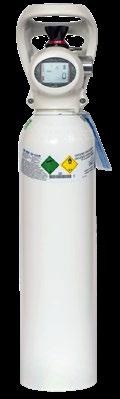
Los recipientes son recipientes criogénicos portátiles de acero inoxidable de diversas capacidades.
Recipiente Criogénico domiciliario:
Unidad estacionaria 20 de alrededor de 20 litros de oxígeno
Unidad estacionaria 21 de alrededor de 21 litros de oxígeno
Unidad estacionaria 30 de alrededor de 30 litros de oxígeno
Unidad estacionaria 31 de alrededor de 31 litros de oxígeno
Unidad estacionaria 36 de alrededor de 36 litros de oxígeno
Unidad estacionaria 37 de alrededor de 37 litros de oxígeno
Unidad estacionaria 41 de alrededor de 41 litros de oxígeno
Unidad estacionaria 45 de alrededor de 45 litros de oxígeno
Unidad estacionaria 46 de alrededor de 46 litros de oxígeno
Unidad estacionaria 60 de alrededor de 60 litros de oxígeno
Instrucciones de uso/manipulación
No fumar.
No acercar a una llama.
No engrasar.
Para el caso específico del oxígeno líquido, se deben considerar también unas particularidades adicionales del producto que se tienen que tener en cuenta como precauciones para su uso y manipulación:
- El oxígeno es un gas más pesado que el aire, que puede acumularse en puntos bajos tras la vaporización del líquido y volver la atmósfera peligrosa.
- El oxígeno a la presión atmosférica es un líquido a muy baja temperatura (en torno a -183ºC) pudiendo provocar quemaduras por congelación si entra en contacto con la piel ante salpicaduras o manipulación del líquido sin los equipos de protección adecuados. En caso de producirse una quemadura, enjuagar abundantemente con agua.
- Un litro de oxígeno líquido libera por vaporización y calentamiento a la temperatura ambiente 850 litros de gas. La expansión del oxígeno líquido por calentamiento es 850 veces su volumen de líquido y por tanto se deben tener las precauciones propias de sobrepresiones en volúmenes cerrados (equipos e instalaciones) y de sobreoxigenación de los materiales y la atmósfera de los recintos.
Los recipientes de oxígeno medicinal están reservados exclusivamente al uso terapéutico.
Para evitar cualquier incidente, es necesario respetar obligatoriamente las siguientes consignas:
- No introducir nunca este gas en un aparato que se sospeche pueda contener materias combustibles, en especial si son de naturaleza grasa.
- No limpiar nunca con productos combustibles, en especial si son de naturaleza grasa, ni los aparatos que contienen este gas ni los grifos, las juntas, las guarniciones, los dispositivos de cierre y las válvulas.
- No aplicar ninguna materia grasa (vaselina, pomadas, etc.) en el rostro de los pacientes.
- No utilizar aerosoles (laca, desodorante, etc.) ni disolventes (alcohol, perfume, etc.) sobre el material o cerca de él.
- Evitar la exposición a fuentes de calor (cocinas, radiadores, chimeneas, etc.) o al calentamiento solar prolongado.
- Ventilar si es posible el lugar de utilización, si se trata de ubicaciones reducidas (vehículos, domicilio).
- Verificar el buen estado del material antes de su utilización.
- Verificar en el momento de la entrega por parte del fabricante que el recipiente está provisto de un sistema de garantía de inviolabilidad intacto.
- Manipular el material con las manos limpias y libres de grasa.
- Para la manipulación de los recipientes criogénicos, se deben utilizar los equipos de protección indicados (gafas o viseras, guantes limpios destinados a ese uso, adecuación de la indumentaria, etc.) y seguir las instrucciones y precauciones descritas para la operación.
- Agrupar los recipientes y mantenerlos en posición vertical.
- Utilizar conexiones o elementos flexibles de conexión específicos para el oxígeno.
- Utilizar únicamente equipos específicamente aprobados para este producto y para la presión y temperatura de utilización.
- Prever dispositivos de seguridad contra las sobrepresiones en cada zona de circuito en donde puedan quedar restos de oxígeno líquido entre dos válvulas.
- No tocar nunca las partes frías o heladas de los aparatos.
- No utilizar conexiones intermedias para permitir la conexión de dos dispositivos que no encajan entre sí.
- Los recipientes criogénicos pequeños (Unidades Estacionarias) o sus equipos auxiliares (unidades portátiles o mochilas) pueden llevar acoplados elementos accesorios de utilización (vaso humidificador, caudalímetro, mascarilla o gafa nasal, etc.). Estos equipos se utilizarán según las condiciones de prescripción (caudales, dosis, etc.).
- Abrir las válvulas lentamente y cerrarlas cuando no se utilice el producto.
- No forzar nunca ninguna parte del recipiente criogénico ni intentar reparar válvulas defectuosas, en caso de tener problemas ponerse en contacto con el suministrador.
- Nunca utilizar un recipiente con fugas.
- Si la ropa se satura de oxígeno, alejarse de la fuente de oxígeno líquido y de los lugares que presenten riesgos de inflamación. Quitarse también dicha ropa.
- En caso de quemadura criogénica (por frío), enjuagar abundantemente con agua.
- No permitir el retroceso de sustancias hacia el interior del recipiente. Debe prevenirse la entrada de agua al interior del recipiente.
- No mantener la válvula del equipo abierta si no se está utilizando.
Titular de la autorización de comercialización:
ESTEVE TEIJIN HEALTHCARE, S.L.
Paseo del Ferrocarril, 369, Castelldefels,
08860 – Barcelona, España
Responsable de la fabricación:
ESTEVE TEIJIN HEALTHCARE, S.L.
Av. Diagonal, 579, Planta 8,
Barcelona, 08014. España
O
MESSER IBERICA DE GASES, S.A.U.
Autovía Tarragona-Salou Km 3,8
Vilaseca (Tarragona) España
O
S.E. DE CARBUROS METALICOS, S.A.
Barrio Chaco s/n, Arrigorriaga – Vizcaya,ESPAÑA
O
S.E. DE CARBUROS METALICOS, S.A.
Pol. Ind. Ca N'Estella. Doctor Fleming, 29, San Esteve de Sesrovires,
Barcelona – ESPAÑA
Este prospecto ha sido aprobado en ENERO 2011
La información detallada y actualizada de este medicamento está disponible en la página web de la Agencia Española de Medicamentos y Productos Sanitarios (AEMPS) http://www.aemps.gob.es/
- País de registro
- Forma farmacéuticaINHALACIÓN PULMONAR, 99,5% v/v
- Código ATCV03AN01
- Principio activo
- Requiere recetaSí
- Fabricante
- Esta información es de carácter general y no sustituye la consulta con un profesional sanitario.
- Alternativas a OXIGENO MEDICINAL LIQUIDO ESTEVE TEIJIN, 99,5 % V/V GAS PARA INHALACIONForma farmacéutica: INHALACIÓN PULMONAR, 21-22,5% v/vPrincipio activo: OxigenoFabricante: Nippon Gases Espana SluRequiere recetaForma farmacéutica: INHALACIÓN PULMONAR, Oxigeno 21,0% v/v al 22,5% v/vPrincipio activo: OxigenoFabricante: Oxigen Salud S.A.Requiere recetaForma farmacéutica: INHALACIÓN PULMONAR, 100 % oxigenoPrincipio activo: OxigenoFabricante: Linde Gas Espana S.A.U.Requiere receta
Médicos online para OXIGENO MEDICINAL LIQUIDO ESTEVE TEIJIN, 99,5 % V/V GAS PARA INHALACION
Comenta la dosis, los posibles efectos secundarios, interacciones, contraindicaciones o la revisión de receta de OXIGENO MEDICINAL LIQUIDO ESTEVE TEIJIN, 99,5 % V/V GAS PARA INHALACION, sujeto a valoración médica y a la normativa local.









Obtén una receta de OXIGENO MEDICINAL LIQUIDO ESTEVE TEIJIN, 99,5 % V/V GAS PARA INHALACION online
Rellena un formulario de 2 minutos
Cuéntanos tus síntomas, historial y el medicamento que necesitas.
Elige un médico o nosotros te asignamos uno
Escoge un especialista o te conectamos con el próximo médico disponible.
El médico revisa tu caso
Normalmente en 30 minutos. Puede hacerte preguntas adicionales por chat.
Recógela en cualquier farmacia
Receta electrónica enviada a tu correo, válida en toda España.
Preguntas frecuentes
OXIGENO MEDICINAL LIQUIDO ESTEVE TEIJIN, 99,5 % V/V GAS PARA INHALACION requiere receta en España. Puedes confirmarlo con un médico online según tu caso.
El principio activo de OXIGENO MEDICINAL LIQUIDO ESTEVE TEIJIN, 99,5 % V/V GAS PARA INHALACION es Oxigeno. Esta información ayuda a identificar medicamentos con la misma composición pero con diferentes nombres comerciales.
OXIGENO MEDICINAL LIQUIDO ESTEVE TEIJIN, 99,5 % V/V GAS PARA INHALACION es fabricado por Esteve Teijin Healthcare S.L.. La marca y el envase pueden variar según el distribuidor.
Los Médicos de familia, Psiquiatras, Dermatólogos, Cardiólogos, Endocrinólogos, Gastroenterólogos, Neumólogos, Nefrólogos, Reumatólogos, Hematólogos, Infectólogos, Alergólogos, Geriatras, Pediatras, Oncólogos pueden valorar la prescripción de OXIGENO MEDICINAL LIQUIDO ESTEVE TEIJIN, 99,5 % V/V GAS PARA INHALACION cuando esté clínicamente indicado. Puedes reservar una videoconsulta para comentar tu caso y las opciones de tratamiento.
España cuenta con una infraestructura sanitaria bien desarrollada en ciudades principales como Madrid, Barcelona, Valencia y Sevilla. Las farmacias están ampliamente disponibles y operan bajo estrictas regulaciones, garantizando el acceso a medicamentos con receta.
Puedes comprar OXIGENO MEDICINAL LIQUIDO ESTEVE TEIJIN, 99,5 % V/V GAS PARA INHALACION en Madrid, Barcelona, Sevilla o Valencia en cualquier farmacia local con una receta válida.
Para obtener una receta, puedes utilizar Oladoctor:
Otros medicamentos con el mismo principio activo (Oxigeno) incluyen AIRE MEDICINAL SINTETICO GAS NIPPON GASES 200 BAR, GAS COMPRIMIDO MEDICINAL, AIRE MEDICINAL SINTETICO OXIGEN SALUD 22% V/V GAS COMPRIMIDO MEDICINAL, CONOXIA 99,5% (v/v) GAS CRIOGENICO MEDICINAL EN TANQUE FIJO. Pueden tener diferentes nombres comerciales o formulaciones, pero contienen el mismo componente terapéutico. Consulta siempre con un médico antes de cambiar o iniciar un nuevo medicamento.
