



NORMODORM 25 mg Film-Coated Tablets

Prescription review online
A doctor will review your case and decide whether a prescription is medically appropriate.

Talk to a doctor about this medicine
Discuss your symptoms and possible next steps in a quick online consultation.



How to use NORMODORM 25 mg FILM-COATED TABLETS
Contents of the leaflet
- Introduction
- What is normodorm and what is it used for
- What you need to know before taking normodorm
- How to take normodorm
- Possible side effects
- Storage of normodorm
- Package Contents and Additional Information
Introduction
Package Leaflet: Information for the User
normodorm 25 mg film-coated tablets
Doxylamine, hydrogen succinate
Read the entire package leaflet carefully before starting to take this medication, as it contains important information for you.
Follow the administration instructions for the medication contained in this package leaflet or as indicated by your doctor or pharmacist.
- Keep this package leaflet, as you may need to read it again.
- If you need advice or more information, consult your pharmacist.
- If you experience side effects, consult your doctor or pharmacist, even if they are not listed in this package leaflet.
- You should consult a doctor if your symptoms worsen or do not improve after 7 days.
Contents of the Package Leaflet:
- What is normodorm and what is it used for
- What you need to know before taking normodorm
- How to take normodorm
- Possible side effects
- Storage of normodorm
- Package Contents and Additional Information
1. What is normodorm and what is it used for
Normodorm is a medication that contains the active ingredient doxylamine hydrogen succinate. Doxylamine belongs to a group of medications called antihistamines with sedative properties.
This medication is indicated for the symptomatic treatment of occasional insomnia in adults over 18 years of age.
You should consult a doctor if your symptoms worsen or do not improve after 7 days.

Not sure if this medicine is right for you?
Discuss your symptoms and treatment with a doctor online.
2. What you need to know before taking normodorm
- Do not take normodorm
- If you are allergic to doxylamine or any of the other components of this medication (listed in section 6).
- If you are allergic to other antihistamines (antiallergics).
- If you are pregnant or breastfeeding.
- Warnings and Precautions
Consult your doctor or pharmacist before starting to take normodorm.
You should consult a doctor before taking this medication if you have:
- Liver or kidney function disorders.
- Epilepsy.
- QT interval prolongation (a heart problem).
- Low potassium levels in the blood or other electrolyte disorders.
- Heart disease and high blood pressure.
- Asthma, chronic bronchitis (persistent inflammation of the bronchi), and pulmonary emphysema (a disease that affects the lungs, making breathing difficult).
- Glaucoma (increased eye pressure).
- Urinary retention.
- Prostatic hypertrophy (abnormal enlargement of the prostate).
- Peptic ulcer (erosion of the stomach or intestinal wall), pyloroduodenal obstruction (difficulty passing food from the stomach to the intestine), and vesical neck obstruction (a disease of the urinary tract).
If you experience daytime drowsiness, it may be necessary to reduce the dose or take it earlier to ensure that at least 8 hours pass until wake-up time.
Alcohol consumption should be avoided during treatment.
If you are over 65 years old, you may be more susceptible to experiencing side effects.
Normodorm can exacerbate dehydration and heat stroke symptoms due to decreased sweating.
- Taking normodorm with other medications
Inform your doctor or pharmacist if you are using, have recently used, or may need to use any other medication.
Do not take normodorm with the following medications, as their effects may be enhanced:
- Epinephrine (for treating low blood pressure).
- Medications that affect the heart, such as those used to treat arrhythmias, certain antibiotics, certain antimalarial medications, certain antihistamines, certain lipid-lowering medications, or certain neuroleptics (medications for treating mental disorders).
- Medications that decrease the elimination of others, such as azole derivatives or macrolides, as they may increase the effect of normodorm.
- Certain diuretics (medications that increase urine production).
- Central nervous system depressants (e.g., barbiturates, hypnotics, sedatives, anxiolytics, opioid analgesics, antipsychotics, or procarbazine).
- Antihypertensives (medications for treating high blood pressure) with a central nervous system effect, such as guanabenz, clonidine, or alpha-methyldopa.
- Other anticholinergic medications, such as those used to treat depression or Parkinson's disease, monoamine oxidase inhibitors (medications for depression), neuroleptics (medications for treating mental disorders), atropine-like medications for treating spasms, or disopyramide (for treating certain heart problems).
- If you are taking other medications that can cause ear toxicity, such as carboplatin or cisplatin (medications for treating cancer), chloroquine (a medication for treating or preventing malaria), or certain antibiotics (medications for treating infections) like erythromycin or injectable aminoglycosides, among others; normodorm may mask the toxic effects of these medications, so you should periodically review the condition of your ears.
- Interference with diagnostic tests
Doxylamine may interfere with skin allergy tests that use allergens. It is recommended to discontinue treatment with normodorm at least three days before starting such tests.
- Taking normodorm with food, beverages, and alcohol
Alcoholic beverages should not be consumed during treatment with normodorm. See section 3. How to take normodorm.
- Pregnancy, breastfeeding, and fertility
Do not take normodorm if you are pregnant, plan to become pregnant, or are breastfeeding.
There is no data available on the potential effects of normodorm on fertility.
- Driving and using machines
Normodorm's influence on the ability to drive and use machines is significant. Do not drive or use hazardous machinery while taking this medication, at least during the first few days of treatment, until you know how it affects you.
3. How to take normodorm
Follow the administration instructions for the medication contained in this package leaflet or as indicated by your doctor or pharmacist. If in doubt, ask your doctor or pharmacist.
Adults (over 18 years old)
The recommended dose is 1 tablet (25 mg) per day.
If daytime drowsiness occurs, it is recommended to reduce the dose to half a tablet (12.5 mg) per day or take it earlier to ensure that at least 8 hours pass until wake-up time.
Do not take more than 1 tablet (25 mg) per day.
Use in adults over 65 years old
Adults over 65 years old are more prone to suffering from other conditions that may recommend a dose reduction. If unwanted side effects occur, it is recommended to reduce the dose to half a tablet (12.5 mg) per day.
Use in patients with liver or kidney disease
These patients should take a different dose, adjusted to the degree of their disease, which will be determined by the doctor.
Use in children and adolescents
Normodorm is not recommended for use in children under 18 years old, so the medication should not be used in this population.
Route and method of administration
Oral route.
The tablet can be divided into equal doses.
Tablets should be taken 30 minutes before bedtime with a sufficient amount of liquid (preferably water).
Duration of treatment
The duration of treatment should be as short as possible. In general, the duration of treatment can range from a few days to a week.
It should not be administered for a period exceeding 7 days without consulting a doctor.
- If you take more normodorm than you should
Symptoms of an overdose are: drowsiness, depression or stimulation of the central nervous system, anticholinergic effects (dilated pupils, fever, dry mouth, decreased intestinal tone), flushing, increased or altered heart rate, increased blood pressure, nausea, vomiting, agitation, altered gait, dizziness, irritability, sedation, confusion, and hallucinations. Delirium, psychosis, decreased blood pressure, convulsions, decreased respiration, loss of consciousness, coma, and death may occur. A serious complication can be rhabdomyolysis (muscle damage), followed by kidney failure.
There is no specific antidote for antihistamine overdose, so treatment is symptomatic and supportive. Your doctor will assess the need to induce vomiting, perform stomach lavage, or prescribe medications to increase blood pressure if necessary.
In case of overdose or accidental ingestion, consult the Toxicology Information Service, phone: 91 562 04 20, indicating the medication and the amount ingested.
- If you forget to take normodorm
Do not take a double dose to make up for forgotten doses.
Take your dose at the usual time the next day.
If you have any other questions about the use of this medication, ask your doctor or pharmacist.

Started taking the medicine and have questions?
Discuss your symptoms and treatment with a doctor online.
4. Possible side effects
Like all medications, normodorm can cause side effects, although not everyone will experience them.
The side effects of doxylamine are generally mild and transient, being more frequent in the first few days of treatment.
Common side effects (may affect up to 1 in 10 people): drowsiness and effects such as dry mouth, constipation, blurred vision, urinary retention, increased bronchial secretion, vertigo, dizziness, headache, abdominal pain, fatigue, insomnia, and nervousness.
Uncommon side effects (may affect up to 1 in 100 people): asthenia (fatigue), peripheral edema (inflammation of arms and legs), nausea, vomiting, diarrhea, skin rash, tinnitus (ringing in the ears), orthostatic hypotension (decreased blood pressure due to posture changes), diplopia (double vision), dyspepsia (stomach disorders), feeling of relaxation, nightmares, and dyspnea (breathing difficulties).
Rare side effects (may affect up to 1 in 1,000 people): agitation (especially in children and the elderly), tremors, convulsions, or blood disorders such as hemolytic anemia, thrombocytopenia, leukopenia, or agranulocytosis (decrease in certain blood cells).
Side effects of unknown frequency (cannot be estimated from available data): general malaise.
Other side effects that have occurred with the use of antihistamines in general, although not observed with doxylamine, are the following: arrhythmia (heart rate alteration), palpitations, duodenogastric reflux, abnormal liver function (cholestatic jaundice), prolonged QT interval on the electrocardiogram (a cardiac disorder), decreased appetite, increased appetite, myalgia (muscle pain), abnormal coordination, extrapyramidal disorder (movement disorders), paresthesia (abnormal sensations), psychomotor activity impairment (coordination of senses and movement), depression, decreased bronchial secretion, alopecia (hair loss), allergic dermatitis, hyperhidrosis (excessive sweating), photosensitivity reaction, or hypotension (low blood pressure).
The frequency and magnitude of side effects can be reduced by decreasing the daily dose.
People over 65 years old have a higher risk of experiencing adverse reactions, as they may have other diseases or be taking other medications simultaneously. These individuals also have a higher risk of falls.
If you experience side effects, consult your doctor or pharmacist, even if they are not listed in this package leaflet.
5. Storage of normodorm
No special storage conditions are required.
Keep this medication out of sight and reach of children.
Do not use this medication after the expiration date shown on the packaging after "EXP". The expiration date is the last day of the month indicated.
Medications should not be disposed of through wastewater or household waste. Deposit the packaging and any unused medications in the pharmacy's SIGRE point. If in doubt, ask your pharmacist how to dispose of the packaging and any unused medications. This will help protect the environment.
6. Package Contents and Additional Information
Composition of normodorm
The active ingredient is doxylamine. Each tablet contains 25 mg of doxylamine hydrogen succinate.
The other components are:
Tablet core: microcrystalline cellulose, calcium hydrogen phosphate dihydrate, low-substitution hydroxypropylcellulose, colloidal silica, and magnesium stearate.
Tablet coating: hypromellose, titanium dioxide (E-171), macrogol 6000, talc, and indigo carmine lake (E-132).
Appearance of the product and package contents
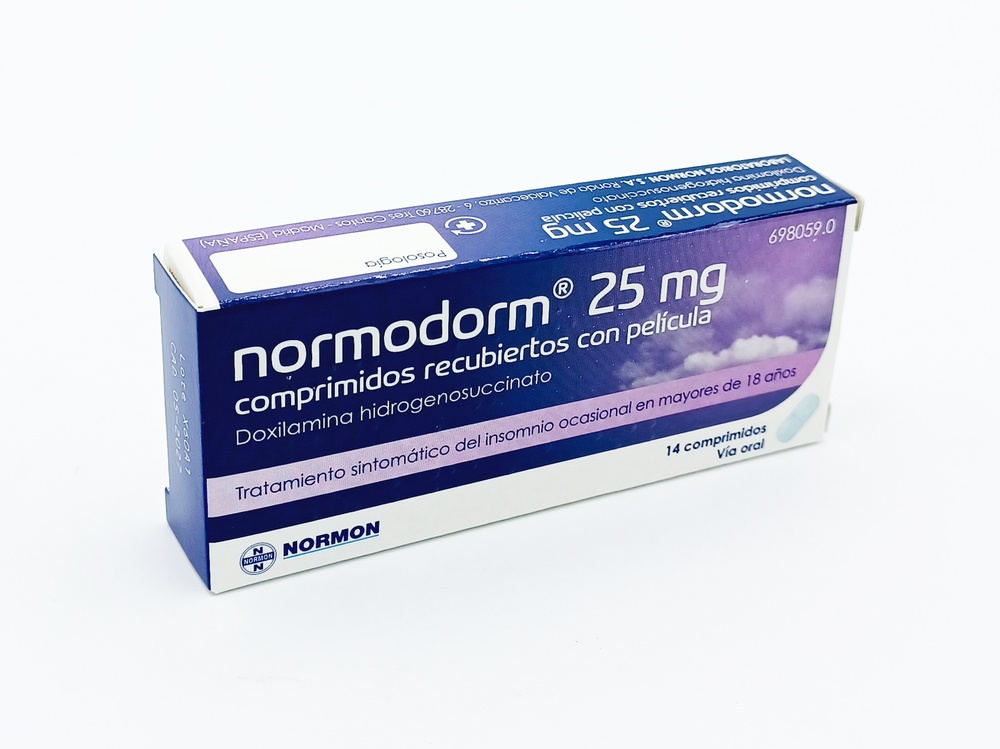
Normodorm 25 mg is presented in the form of film-coated tablets, blue in color, oblong, and scored. Each package contains 7 and 14 tablets.
Marketing Authorization Holder and Manufacturer
LABORATORIOS NORMON, S.A.
Ronda de Valdecarrizo, 6 – 28760 Tres Cantos – Madrid (SPAIN)
Date of the last revision of this package leaflet: May 2013
Detailed and updated information on this medication is available on the website of the Spanish Agency for Medicines and Health Products (AEMPS) http://www.aemps.gob.es/
- Country of registration
- Dosage formTABLET, 25 mg
- ATC codeR06AA09
- Active substance
- Prescription requiredNo
- Manufacturer
- This information is for reference only and does not constitute medical advice. Always consult a doctor before taking any medication. Oladoctor is not responsible for medical decisions based on this content.
- Alternatives to NORMODORM 25 mg FILM-COATED TABLETSDosage form: TABLET, 12.5 mgActive substance: doxylamineManufacturer: Esteve Pharmaceuticals S.A.Prescription not requiredDosage form: TABLET, 25 mgActive substance: doxylamineManufacturer: Esteve Pharmaceuticals S.A.Prescription not requiredDosage form: TABLET, 25 mgActive substance: doxylamineManufacturer: Tecnimede España Industria Farmaceutica S.A.Prescription not required
Online doctors for NORMODORM 25 mg FILM-COATED TABLETS
Discuss questions about NORMODORM 25 mg FILM-COATED TABLETS, including use, safety considerations and prescription review, subject to medical assessment and local regulations.









Get NORMODORM 25 mg FILM-COATED TABLETS Prescription Online
Fill in a 2-min form
Tell us your symptoms, history, and what medicine you're requesting.
Pick a doctor or let us assign
Choose a specialist or we'll match you with the next available doctor.
Doctor reviews your case
Usually within 30 minutes. They may ask follow-up questions via chat.
Collect from any pharmacy
Electronic prescription sent to your email — valid across Spain.
Frequently Asked Questions
NORMODORM 25 mg FILM-COATED TABLETS does not require a prescription in Spain. You can check with a doctor online whether this medicine may be appropriate for your situation.
The active ingredient in NORMODORM 25 mg FILM-COATED TABLETS is doxylamine. This information helps identify medicines with the same composition but different brand names.
NORMODORM 25 mg FILM-COATED TABLETS is manufactured by Laboratorios Normon S.A.. Pharmacy brands and packaging may differ depending on the distributor.
Doctors such as Family doctors, Psychiatrists, Dermatologists, Cardiologists, Endocrinologists, Gastroenterologists, Pulmonologists, Nephrologists, Rheumatologists, Hematologists, Infectious disease physicians, Allergists, Geriatricians, Paediatricians, Oncologists may assess whether NORMODORM 25 mg FILM-COATED TABLETS is appropriate, depending on your situation and local regulations. You can book an online consultation to discuss your symptoms and possible next steps.
Spain has a well-developed healthcare infrastructure across major cities such as Madrid, Barcelona, Valencia, and Seville. Pharmacies are widely available and operate under strict regulations, ensuring access to prescribed medications.
You can buy NORMODORM 25 mg FILM-COATED TABLETS in Madrid, Barcelona, Seville, or Valencia at any local pharmacy with a valid prescription.
To obtain a prescription, you can use Oladoctor:
Other medicines with the same active substance (doxylamine) include DORMIDINA DOXILAMINE 12.5 mg FILM-COATED TABLETS, DORMIDINA DOXILAMINE 25 mg FILM-COATED TABLETS, DORMIGEN 25 mg FILM-COATED TABLETS. These may have different brand names or formulations but contain the same therapeutic ingredient. Always consult a doctor before switching or starting a new medicine.
