



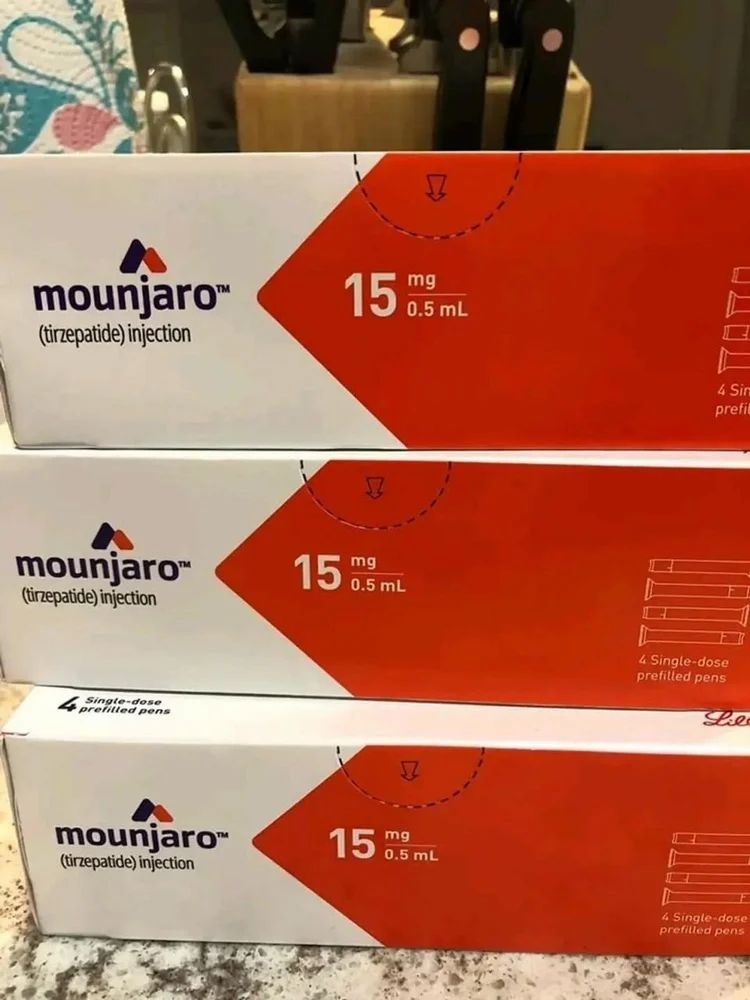
MOUNJARO 15 mg Solución Inyectable

Revisión de receta online
Un médico revisará tu caso y determinará si la prescripción es médicamente apropiada.

Habla con un médico sobre este medicamento
Comenta tus síntomas y las opciones de tratamiento en una consulta online.



Cómo usar MOUNJARO 15 MG SOLUCION INYECTABLE EN VIAL
Contenido del prospecto
- Introducción
- Qué es Mounjaro y para qué se utiliza
- Qué necesita saber antes de empezar a usar Mounjaro
- Cómo usar Mounjaro
- Posibles efectos adversos
- Conservación de Mounjaro
- Contenido del envase e información adicional
Introducción
Prospecto: información para el paciente
Mounjaro 2,5mg solución inyectable en vial
Mounjaro 5mg solución inyectable en vial
Mounjaro 7,5mg solución inyectable en vial
Mounjaro 10mg solución inyectable en vial
Mounjaro 12,5mg solución inyectable en vial
Mounjaro 15mg solución inyectable en vial
tirzepatida
- Este medicamento está sujeto a seguimiento adicional, lo que agilizará la detección de nueva información sobre su seguridad. Puede contribuir comunicando los efectos adversos que pudiera usted tener. La parte final de la sección 4 incluye información sobre cómo comunicar estos efectos adversos.
Lea todo el prospecto detenidamente antes de empezar a usar este medicamento, porque contiene información importante para usted.
- Conserve este prospecto, ya que puede tener que volver a leerlo.
- Si tiene alguna duda, consulte a su médico, enfermero o farmacéutico.
- Este medicamento se le ha recetado solamente a usted, y no debe dárselo a otras personas, aunque tengan los mismos síntomas que usted, ya que puede perjudicarles.
- Si experimenta efectos adversos, consulte a su médico, enfermero o farmacéutico, incluso si se trata de efectos adversos que no aparecen en este prospecto. Ver sección 4.
Contenido del prospecto
- Qué es Mounjaro y para qué se utiliza
- Qué necesita saber antes de empezar a usar Mounjaro
- Cómo usar Mounjaro
- Posibles efectos adversos
- Conservación de Mounjaro
- Contenido del envase e información adicional
1. Qué es Mounjaro y para qué se utiliza
Mounjaro contiene un principio activo llamado tirzepatida y se utiliza para tratar adultos con diabetes mellitus tipo 2. Mounjaro reduce el nivel de azúcar en el cuerpo solo cuando los niveles de azúcar están altos.
Mounjaro también se utiliza para tratar a adultos con obesidad o sobrepeso (con un IMC de al menos 27 kg/m2). Mounjaro influye en la regulación del apetito, lo que puede ayudarle a comer menos alimentos y a reducir su peso corporal.
En diabetes tipo 2, Mounjaro se utiliza:
- por sí solo cuando no pueda tomar metformina (otro medicamento para la diabetes).
- o en combinación con otros medicamentos para la diabetes cuando estos no son suficientes para controlar los niveles de azúcar en su sangre. Estos otros medicamentos pueden ser tomados por vía oral y/o puede ser una inyección de insulina.
Mounjaro también se utiliza junto con dieta y ejercicio para perder peso y ayudar a mantener el peso bajo control en adultos, que tienen:
- un IMC igual o superior a 30 kg/m² (obesidad) o
- un IMC de, al menos, 27 kg/m², pero inferior a 30 kg/m² (sobrepeso) y problemas de salud relacionados con el peso (como prediabetes, diabetes tipo 2, hipertensión arterial, niveles anormales de grasa en la sangre, problemas respiratorios durante el sueño denominados "apnea obstructiva del sueño" o antecedentes de infarto de miocardio, ictus o problemas vasculares)
El IMC (Índice de Masa Corporal) es una medida de su peso en relación con su estatura.
En pacientes con apnea obstructiva del sueño (AOS) y obesidad, Mounjaro se puede usar con o sin tratamiento de presión positiva en las vías respiratorias (PAP).
Es importante que mantenga los consejos sobre su alimentación y la actividad física que le proporcionen su médico, enfermero o farmacéutico.

¿No estás seguro de si este medicamento es adecuado para ti?
Comenta tus síntomas y tratamiento con un médico online.
2. Qué necesita saber antes de empezar a usar Mounjaro
No use Mounjaro
- si es alérgico a tirzepatida o a alguno de los demás componentes de este medicamento (incluidos en la sección 6).
Advertencias y precauciones
Consulte a su médico, enfermero o farmacéutico antes de empezar a usar Mounjaro si:
- tiene problemas graves con la digestión de la comida o la comida permanece en su estómago más tiempo de lo normal (incluyendo gastroparesia grave).
- alguna vez ha tenido pancreatitis (inflamación del páncreas, que puede provocar dolor intenso en el estómago y la espalda que no desaparece).
- si tiene algún problema en los ojos (retinopatía diabética o edema macular).
- está tomando una sulfonilurea (otro medicamento para la diabetes) o insulina para la diabetes, ya que puede ocurrir una bajada de azúcar en sangre (hipoglucemia). Su médico puede tener que cambiar la dosis de estos medicamentos para reducir este riesgo.
Al inicio del tratamiento con Mounjaro, podría experimentar en algunos casos pérdida de fluidos/deshidratación, como en caso de vómitos, náuseas y/o diarrea, que pueden provocar un descenso de la función renal. Para evitar la deshidratación, es importante la ingesta de abundantes líquidos. Contacte con su médico si tiene alguna pregunta o inquietud.
Si sabe que va a someterse a una intervención quirúrgica en la que se someterá a anestesia (estado de sueño), informe a su médico de que está tomando Mounjaro.
Niños y adolescentes
Este medicamento no se debe administrar a niños y adolescentes menores de 18 años porque no se ha estudiado en este grupo de edad.
Otros medicamentos y Mounjaro
Informe a su médico, enfermero o farmacéutico si está utilizando, ha utilizado recientemente o pudiera tener que utilizar cualquier otro medicamento.
Embarazo
Si está embarazada, cree que podría estar embarazada o tiene intención de quedarse embarazada, consulte a su médico antes de utilizar este medicamento. Este medicamento no debe usarse durante el embarazo ya que se desconocen los efectos de este medicamento en el feto. Por tanto, se recomienda utilizar métodos anticonceptivos mientras se usa este medicamento.
Lactancia
Se desconoce si tirzepatida pasa a la leche materna. No se puede descartar un riesgo para los recién nacidos/niños. Si está en periodo de lactancia o planea estarlo, consulte a su médico antes de utilizar este medicamento. Usted y su médico deben decidir si debe interrumpir la lactancia o retrasar el uso de Mounjaro.
Conducción y uso de máquinas
Es poco probable que este medicamento afecte a su capacidad para conducir y utilizar máquinas. Sin embargo, si usa Mounjaro en combinación con una sulfonilurea o insulina, puede producirse un nivel bajo de azúcar en sangre (hipoglucemia) que puede reducir su capacidad de concentración. Evite conducir o utilizar máquinas si tiene cualquier indicio de bajada de azúcar en sangre, por ejemplo, dolor de cabeza, somnolencia, debilidad, mareos, sensación de hambre, confusión, irritabilidad, latidos rápidos del corazón y sudoración (ver sección 4). Ver la sección 2, “Advertencias y precauciones” para obtener información sobre el aumento del riesgo de tener una bajada de azúcar en sangre. Consulte con su médico para obtener más información.
Mounjaro contiene sodio
Este medicamento contiene menos de 1 mmol de sodio (23 mg) por dosis; esto es, esencialmente “exento de sodio”.
3. Cómo usar Mounjaro
Siga exactamente las instrucciones de administración de este medicamento indicadas por su médico o farmacéutico. En caso de duda, consulte de nuevo a su médico o farmacéutico.
Cuánto hay que usar
- La dosis inicial es de 2,5 mg una vez a la semana durante cuatro semanas. Después de cuatro semanas, su médico le aumentará la dosis a 5 mg una vez a la semana.
- Su médico puede aumentar su dosis en incrementos de 2,5 mg hasta 7,5 mg, 10 mg, 12,5 mg o 15 mg una vez a la semana si lo necesita. En cada caso, su médico le indicará que permanezca en una dosis concreta durante al menos 4 semanas antes de pasar a una dosis más alta.
No cambie su dosis a menos que su médico se lo haya indicado.
Cada vial contiene una dosis de Mounjaro de 2,5 mg, 5 mg, 7,5 mg, 10 mg, 12,5 mg o 15 mg.
Elegir cuándo usar Mounjaro
Puede usar Mounjaro a cualquier hora del día, con o sin alimentos. Si puede, debe utilizarla el mismo día de cada semana. Para ayudarle a recordar cuándo usar Mounjaro, puede anotar el día de la semana cuando se inyecte su primera dosis en un calendario.
Si es necesario, puede cambiar el día de su inyección semanal de Mounjaro, siempre que hayan pasado al menos 3 días desde su última inyección. Después de seleccionar un nuevo día de dosificación, continúe con la administración una vez a la semana en ese nuevo día.
Cómo inyectar Mounjaro
Siga exactamente las instrucciones de administración de Mounjaro indicadas por su médico. Antes de empezar a usar Mounjaro, lea siempre atentamente las “Instrucciones de uso” que aparecen a continuación y consulte a su médico, enfermero o farmacéutico si no está seguro de cómo inyectarse Mounjaro correctamente.
Mounjaro se inyecta bajo la piel (inyección subcutánea) de la zona del abdomen o de la parte superior de la pierna (muslo) o del brazo. Es posible que necesite la ayuda de otra persona si desea inyectarse en la parte superior del brazo. Noinyecte Mounjaro directamente en una vena, ya que cambiaría su acción.
Si usted quiere, puede inyectarse en la misma zona de su cuerpo cada semana. Pero en este caso, asegúrese de elegir dentro de la misma zona diferentes sitios de inyección. Si también se inyecta insulina, elija un sitio de inyección diferente para esa inyección. Si es usted ciego o tiene deficiencias visuales, necesitará ayuda de alguien para realizar su inyección.
Instrucciones de uso
- En primer lugar, lávese las manos con agua y jabón.
- Compruebe que Mounjaro en el vial tiene un aspecto transparente e incoloro o ligeramente amarillo. No lo utilice si está congelado, turbio o tiene partículas.
- Quite la tapa protectora de plástico del vial, pero no retire el tapón de goma. Limpie el tapón del vial con un algodón y prepare una jeringa nueva. No comparta ni reutilice su aguja o jeringa.
- Introduzca una pequeña cantidad de aire en la jeringa. Introduce la aguja a través del tapón de goma en la parte superior del vial Mounjaro e inyecta el aire en el vial.
- Dé la vuelta al vial de Mounjaro y a la jeringa y tire lentamente del émbolo de la jeringa hacia abajo para extraer toda la solución de Mounjaro del vial. El vial está lleno para permitir la administración de una única dosis de 0,5 ml de Mounjaro.
- Si hay burbujas de aire en la jeringa, golpéela suavemente unas cuantas veces para que las burbujas suban a la parte superior. Empuje lentamente el émbolo hacia arriba hasta que no haya más aire en la jeringa.
- Extraiga la jeringa del tapón del vial.
- Antes de ponerse la inyección, límpiese la piel.
- Pellizque y sujete suavemente un pliegue de piel donde vaya a inyectar.
10.Inyecte bajo la piel, tal como se le ha indicado. Inyecte toda la solución de la jeringa para recibir una dosis completa. Después de la inyección, la aguja debe permanecer bajo la piel durante 5 segundos para asegurarse de que recibe la dosis completa.
11.Extraiga la aguja de la piel.
12.Tire el vial, la aguja usada y la jeringa inmediatamente después de cada inyección en un recipiente resistente a los pinchazos, o según le indique su médico, enfermero o farmacéutico.
Control de los niveles de glucosa en sangre
Si está utilizando Mounjaro con una sulfonilurea o insulina, es importante que controle sus niveles de glucosa en sangre siguiendo las instrucciones de su médico, enfermero o farmacéutico (ver sección 2, “Advertencias y precauciones”).
Si usa más Mounjaro del que debe
Si usa más Mounjaro del que debe, consulte a su médico inmediatamente. Demasiado medicamento puede hacer que la cantidad de azúcar en su sangre baje demasiado (hipoglucemia) y también puede hacer que tenga náuseas o vómitos.
Si olvidó usar Mounjaro
Si olvida inyectarse una dosis y,
- han pasado 4días o menosdesde que debería haber usado Mounjaro, úselo tan pronto como lo recuerde. Luego inyecte su próxima dosis como de costumbre en su día programado.
- Si han pasado más de 4díasdesde que debería haber usado Mounjaro, omita la dosis olvidada. Luego inyecte su próxima dosis como de costumbre en su día programado.
No se inyecte una dosis doble para compensar la dosis olvidada. El tiempo mínimo entre dos dosis debe ser de al menos 3 días.
Si interrumpe el tratamiento con Mounjaro
No interrumpa el uso de Mounjaro sin consultar con su médico. Si usted interrumpe el tratamiento con Mounjaro, y tiene diabetes tipo 2, los niveles de azúcar en su sangre pueden aumentar.
Si tiene cualquier otra duda sobre el uso de este medicamento, pregunte a su médico, enfermero o farmacéutico.

¿Has empezado a tomar el medicamento y tienes preguntas?
Comenta tus síntomas y tratamiento con un médico online.
4. Posibles efectos adversos
Al igual que todos los medicamentos, este medicamento puede producir efectos adversos, aunque no todas las personas los sufran.
Efectos adversos graves
Poco frecuentes(pueden afectar hasta 1 de cada 100 personas)
- Inflamación del páncreas (pancreatitis aguda) que podría causar dolor intenso en el estómago y la espalda que no desaparece. Acuda a su médico de forma inmediata si experimenta estos síntomas.
Raros(pueden afectar hasta 1 de cada 1 000 personas)
- Reacciones alérgicas graves (por ejemplo, reacción anafiláctica, angioedema). Debe obtener ayuda médica inmediata e informar a su médico si experimenta síntomas como problemas respiratorios, hinchazón rápida de los labios, la lengua y/o la garganta con dificultad para tragar y latidos cardíacos rápidos.
Otros efectos adversos
Muy frecuentes(pueden afectar a más de 1 de cada 10 personas)
- Náuseas
- Diarrea
- Dolor de estómago (abdominal) notificado en pacientes tratados para el control del peso
- Náuseas (vómitos) notificadas en pacientes tratados para el control del peso
- Estreñimiento notificado en pacientes tratados para el control del peso
Estos efectos adversos normalmente no son graves. Las náuseas, diarrea y vómitos son más frecuentes cuando se empieza a usar tirzepatida, pero disminuyen con el tiempo en la mayoría de los pacientes.
- Las bajadas de azúcar en sangre (hipoglucemia) son muy frecuentes cuando tirzepatida se usa junto con otros medicamentos que contienen una sulfonilurea y/o insulina. Si está tomando una sulfonilurea o insulina, para la diabetes tipo 2, puede que necesite que le reduzcan la dosis mientras usa tirzepatida (ver sección 2, “Advertencias y precauciones”). Los síntomas de una bajada de azúcar en sangre pueden incluir dolor de cabeza, somnolencia, debilidad, mareos, sensación de hambre, confusión, irritabilidad, latidos rápidos del corazón y sudoración. Su médico debe indicarle cómo puede tratar los niveles bajos de azúcar en sangre.
Frecuentes(puede afectar hasta 1 de cada 10 personas)
- Bajadas de azúcar en sangre (hipoglucemia) cuando tirzepatida se usa para diabetes tipo 2 con metformina junto con un inhibidor del cotransportador sodio-glucosa tipo 2 (otro medicamento para la diabetes)
- Reacción alérgica (hipersensibilidad) (por ejemplo, sarpullido, picor y eccema)
- Mareos notificados en pacientes tratados para el control del peso
- Presión arterial baja notificada en pacientes tratados para el control del peso
- Tener menos hambre (disminución del apetito) notificada en pacientes tratados para diabetes tipo 2
- Dolor de estómago (abdominal) notificado en pacientes tratados para diabetes tipo 2
- Vómitos notificados en pacientes tratados para diabetes tipo 2– normalmente disminuyen con el tiempo
- Indigestión (dispepsia)
- Estreñimiento notificado en pacientes tratados para diabetes tipo 2
- Hinchazón de estómago
- Eructos
- Gases (flatulencia)
- Reflujo o acidez estomacal (también llamado enfermedad por reflujo gastroesofágico – ERGE)– una enfermedad causada por la acidez del estómago que sube hacia el conducto que conecta el estómago con la boca
- Pérdida de cabello notificada en pacientes tratados para el control del peso
- Cansancio (fatiga)
- Reacciones en la zona de inyección (por ejemplo, picor o enrojecimiento)
- Pulso rápido
- Aumento de los niveles de enzimas pancreáticas (como la lipasa y la amilasa) en sangre.
- Aumento de los niveles de calcitonina en sangre en pacientes tratados para el control del peso.
Poco frecuentes(pueden afectar hasta 1 de cada 100 personas)
- Bajadas de azúcar en sangre (hipoglucemia) cuando tirzepatida se usa con metformina para diabetes tipo 2
- Piedras en la vesícula biliar
- Inflamación de la vesícula biliar
- Pérdida de peso notificada en pacientes tratados para diabetes tipo 2
- Dolor en la zona de inyección
- Aumento de los niveles de calcitonina en sangre en pacientes tratados para diabetes tipo 2 o para AOS con obesidad
- Sentido del gusto modificado
- Cambio en la sensibilidad de la piel
- Retraso en el vaciado del estómago
Comunicación de efectos adversos
Si experimenta cualquier tipo de efecto adverso, consulte a su médico, enfermero o farmacéutico, incluso si se trata de posibles efectos adversos que no aparecen en este prospecto. También puede comunicarlos directamente a través del Sistema Español de Farmacovigilancia de Medicamentos de Uso Humano: www.notificaRAM.es. Mediante la comunicación de efectos adversos usted puede contribuir a proporcionar más información sobre la seguridad de este medicamento.
5. Conservación de Mounjaro
Mantener este medicamento fuera de la vista y del alcance de los niños.
No utilice este medicamento después de la fecha de caducidad que aparece en la etiqueta del vial y en el embalaje después de CAD. La fecha de caducidad es el último día del mes que se indica.
Conservar en nevera (entre 2 ºC y 8 ºC). No congelar. Si el vial se ha congelado, NO LO USE.
Conservar en el envase original para protegerlo de la luz.
Mounjaro se puede almacenar sin refrigerar por debajo de 30 ºC hasta un máximo de 21 días consecutivos, después el vial debe desecharse.
No utilice este medicamento si observa que el vial, el precinto o el tapón están dañados, o si el medicamento está turbio, descolorido o contiene partículas.
Los medicamentos no se deben tirar por los desagües ni a la basura. Pregunte a su farmacéutico cómo deshacerse de los envases y de los medicamentos que ya no necesita. De esta forma, ayudará a proteger el medio ambiente.
6. Contenido del envase e información adicional
Composición de Mounjaro
El principio activo es tirzepatida.
- Mounjaro 2,5mg:Cada vial contiene 2,5 mg de tirzepatida en 0,5 ml de solución (5 mg/ml).
- Mounjaro 5mg:Cada vial contiene 5 mg de tirzepatida en 0,5 ml de solución (10 mg/ml).
- Mounjaro 7,5mg:Cada vial contiene 7,5 mg de tirzepatida en 0,5 ml de solución (15 mg/ml).
- Mounjaro 10mg:Cada vial contiene 10 mg de tirzepatida en 0,5 ml de solución (20 mg/ml).
- Mounjaro 12,5mg:Cada vial contiene 12,5 mg de tirzepatida en 0,5 ml de solución (25 mg/ml).
- Mounjaro 15mg:Cada vial contiene 15 mg de tirzepatida en 0,5 ml de solución (30 mg/ml).
Los demás componentes son hidrógeno fosfato disódico heptahidratado (E339), cloruro de sodio, hidróxido de sodio (para mayor información ver sección 2 “Mounjaro contiene sodio”), ácido clorhídrico concentrado y agua para preparaciones inyectables.
Aspecto del producto y contenido del envase
Mounjaro es una solución inyectable transparente, entre incolora y ligeramente amarilla, en vial.
Cada vial contiene 0,5 ml de solución.
El vial es de un solo uso.
Envases de 1 vial, 4 viales, 12 viales, envase múltiple de 4 viales (4 envases de 1) o envase múltiple de 12 viales (12 envases de 1). Puede que solamente estén comercializados algunos tamaños de envases.
Este envase no contiene agujas ni jeringa.
Titular de la autorización de comercialización
Eli Lilly Nederland B.V., Papendorpseweg 83, 3528 BJ Utrecht, Países Bajos.
Responsable de la fabricación
Eli Lilly Italia S.p.A.,Via Gramsci 731/733, 50019, Sesto Fiorentino, Florencia (FI), Italia.
Lilly S.A., Avda. de la Industria, 30, 28108 Alcobendas, Madrid, España.
Pueden solicitar más información respecto a este medicamento dirigiéndose al representante local del titular de la autorización de comercialización:
Belgique/België/Belgien Eli Lilly Benelux S.A./N.V. Tél/Tel: + 32-(0)2 548 84 84 | Lietuva Eli Lilly Lietuva Tel. +370 (5) 2649600 |
???????? ?? “??? ???? ?????????” ?.?. -–???????? ???. + 359 2 491 41 40 | Luxembourg/Luxemburg Eli Lilly Benelux S.A./N.V. Tél/Tel: + 32-(0)2 548 84 84 |
Ceská republika ELI LILLY CR, s.r.o. Tel: + 420 234 664 111 | Magyarország Lilly Hungária Kft. Tel: + 36 1 328 5100 |
Danmark Eli Lilly Danmark A/S Tlf.: +45 45 26 60 00 | Malta Charles de Giorgio Ltd. Tel: + 356 25600 500 |
Deutschland Lilly Deutschland GmbH Tel. + 49-(0) 6172 273 2222 | Nederland Eli Lilly Nederland B.V. Tel: + 31-(0) 30 60 25 800 |
Eesti Eli Lilly Nederland B.V. Tel: +372 6 817 280 | Norge Eli Lilly Norge A.S. Tlf: + 47 22 88 18 00 |
Ελλ?δα ΦΑΡΜΑΣΕΡΒ-ΛΙΛΛΥ Α.Ε.Β.Ε. Τηλ: +30 210 629 4600 | Österreich Eli Lilly Ges.m.b.H. Tel: + 43-(0) 1 20609 1270 |
España Lilly S.A. Tel: + 34-91 663 50 00 | Polska Eli Lilly Polska Sp. z o.o. Tel: +48 22 440 33 00 |
France Lilly France Tél: +33-(0) 1 55 49 34 34 | Portugal Lilly Portugal Produtos Farmacêuticos, Lda Tel: + 351-21-4126600 |
Hrvatska Eli Lilly Hrvatska d.o.o. Tel: +385 1 2350 999 | România Eli Lilly România S.R.L. Tel: + 40 21 4023000 |
Ireland Eli Lilly and Company (Ireland) Limited Tel: + 353-(0) 1 661 4377 | Slovenija Eli Lilly farmacevtska družba, d.o.o. Tel: +386 (0)1 580 00 10 |
Ísland Icepharma hf. Sími + 354 540 8000 | Slovenská republika Eli Lilly Slovakia s.r.o. Tel: + 421 220 663 111 |
Italia Eli Lilly Italia S.p.A. Tel: + 39- 055 42571 | Suomi/Finland Oy Eli Lilly Finland Ab Puh/Tel: + 358-(0) 9 85 45 250 |
Κ?προς Phadisco Ltd Τηλ: +357 22 715000 | Sverige Eli Lilly Sweden AB Tel: + 46-(0) 8 7378800 |
Latvija Eli Lilly (Suisse) S.A Parstavnieciba Latvija Tel: +371 67364000 |
Fecha de la última revisión de este prospecto:
Otras fuentes de información
La información detallada de este medicamento está disponible en la página web de la Agencia Europea de Medicamentos: http://www.ema.europa.eu, y en la página web de la Agencia Española de Medicamentos y Productos Sanitarios (AEMPS) (http://www.aemps.gob.es/).
- País de registro
- Forma farmacéuticaINYECTABLE, 15 mg
- Código ATCA10BX16
- Principio activo
- Requiere recetaSí
- Fabricante
- ComposiciónHIDROGENOFOSFATO DE SODIO HEPTAHIDRATO (1,34 mg/ml mg), CLORURO DE SODIO (8,18 mg/ml mg), HIDROXIDO DE SODIO (E 524) (c.s.p. 0,5 ml mg)
- Esta información es de carácter general y no sustituye la consulta con un profesional sanitario.
- Alternativas a MOUNJARO 15 MG SOLUCION INYECTABLE EN VIALForma farmacéutica: INYECTABLE, 10 MGPrincipio activo: TirzepatidaFabricante: Eli Lilly Nederland B.V.Requiere recetaForma farmacéutica: INYECTABLE, 10 mgPrincipio activo: TirzepatidaFabricante: Eli Lilly Nederland B.V.Requiere recetaForma farmacéutica: INYECTABLE, 10 MG/DOSISPrincipio activo: TirzepatidaFabricante: Eli Lilly Nederland B.V.Requiere receta
Médicos online para MOUNJARO 15 MG SOLUCION INYECTABLE EN VIAL
Comenta la dosis, los posibles efectos secundarios, interacciones, contraindicaciones o la revisión de receta de MOUNJARO 15 MG SOLUCION INYECTABLE EN VIAL, sujeto a valoración médica y a la normativa local.

Obtén una receta de MOUNJARO 15 MG SOLUCION INYECTABLE EN VIAL online
Rellena un formulario de 2 minutos
Cuéntanos tus síntomas, historial y el medicamento que necesitas.
Elige un médico o nosotros te asignamos uno
Escoge un especialista o te conectamos con el próximo médico disponible.
El médico revisa tu caso
Normalmente en 30 minutos. Puede hacerte preguntas adicionales por chat.
Recógela en cualquier farmacia
Receta electrónica enviada a tu correo, válida en toda España.
Preguntas frecuentes
MOUNJARO 15 MG SOLUCION INYECTABLE EN VIAL requiere receta en España. Puedes confirmarlo con un médico online según tu caso.
El principio activo de MOUNJARO 15 MG SOLUCION INYECTABLE EN VIAL es Tirzepatida. Esta información ayuda a identificar medicamentos con la misma composición pero con diferentes nombres comerciales.
MOUNJARO 15 MG SOLUCION INYECTABLE EN VIAL es fabricado por Eli Lilly Nederland B.V.. La marca y el envase pueden variar según el distribuidor.
Los Médicos de familia, Psiquiatras, Dermatólogos, Cardiólogos, Endocrinólogos, Gastroenterólogos, Neumólogos, Nefrólogos, Reumatólogos, Hematólogos, Infectólogos, Alergólogos, Geriatras, Pediatras, Oncólogos pueden valorar la prescripción de MOUNJARO 15 MG SOLUCION INYECTABLE EN VIAL cuando esté clínicamente indicado. Puedes reservar una videoconsulta para comentar tu caso y las opciones de tratamiento.
España cuenta con una infraestructura sanitaria bien desarrollada en ciudades principales como Madrid, Barcelona, Valencia y Sevilla. Las farmacias están ampliamente disponibles y operan bajo estrictas regulaciones, garantizando el acceso a medicamentos con receta.
Puedes comprar MOUNJARO 15 MG SOLUCION INYECTABLE EN VIAL en Madrid, Barcelona, Sevilla o Valencia en cualquier farmacia local con una receta válida.
Para obtener una receta, puedes utilizar Oladoctor:
Otros medicamentos con el mismo principio activo (Tirzepatida) incluyen MOUNJARO 10 MG SOLUCION INYECTABLE EN PLUMA PRECARGADA, MOUNJARO 10 MG SOLUCION INYECTABLE EN VIAL, MOUNJARO 10 MG/DOSIS KWIKPEN SOLUCION INYECTABLE EN PLUMA PRECARGADA. Pueden tener diferentes nombres comerciales o formulaciones, pero contienen el mismo componente terapéutico. Consulta siempre con un médico antes de cambiar o iniciar un nuevo medicamento.
