


Lysodren 500 mg comprimidos





Cómo usar LYSODREN 500 mg COMPRIMIDOS
Contenido del prospecto
- Introducción
- Qué es Lysodren y para qué se utiliza
- Qué necesita saber antes de empezar a tomar Lysodren
- Cómo tomar Lysodren
- Siga exactamente las instrucciones de administración de este medicamento indicadas por su médico. En caso de duda, consulte de nuevo a su médico o farmacéutico.
- Posibles efectos adversos
- Conservación de Lysodren
- Mantener este medicamento fuera de la vista y del alcance de los niños.
- Contenido del envase e información adicional
Introducción
Prospecto: información para el usuario
Lysodren 500 mg comprimidos
mitotano
Lea todo el prospecto detenidamente antes de empezar a tomar este medicamento, porque contiene información importante para usted.
- Conserve este prospecto, ya que puede tener que volver a leerlo.
- Si tiene alguna duda, consulte a su médico o farmacéutico.
- Este medicamento se le ha recetado solamente a usted y no debe dárselo a otras personas aunque tengan los mismos sintomas que usted, ya que puede perjudicarles.
- Si experimenta efectos adversos, consulte a su médico o farmacéutico, incluso si se trata de efectos adversos que no aparecen en este prospecto. Ver sección 4.
Lleve siempre consigo la Tarjeta del Paciente Lysodren que se adjunta al final de este prospecto.
Contenido del prospecto
- Qué es Lysodren y para qué se utiliza
- Qué necesita saber antes de empezar a tomar Lysodren
- Cómo tomar Lysodren
- Posibles efectos adversos
- Conservación de Lysodren
- Contenido del envase e información adicional
1. Qué es Lysodren y para qué se utiliza
Lysodren es un medicamento para el tratamiento del cáncer que contiene el principio activo mitotano.
Este medicamento se utiliza para el tratamiento sintomático de tumores malignos avanzados, no operables recidivantes o metastáticos de las glándulas suprarrenales.

¿No estás seguro de si este medicamento es adecuado para ti?
Comenta tus síntomas y tratamiento con un médico online.
2. Qué necesita saber antes de empezar a tomar Lysodren
No tome Lysodren
- si es alérgico al mitotano o a alguno de los demás componentes de este medicamento (incluidos en la sección 6).
- si está dando el pecho. No debe dar el pecho mientras tome Lysodren.
- si está usando medicamentos que contengan espironolactona (ver “Toma de Lysodren con otros medicamentos”).
Advertencias y precauciones
Consulte a su médico o farmacéutico antes de empezar a tomar Lysodren.
Debe informar a su médico si se encuentra en alguno de los siguientes casos:
- si sufre alguna lesión (shock, trauma grave), tiene una infección o sufre alguna enfermedad mientras esté tomando Lysodren. Informe inmediatamente a su médico que puede recomendarle que interrumpa el tratamiento temporalmente.
- si sufre problemas de hígado: Informe a su médico si desarrolla cualquiera de los siguientes signos y síntomas de problemas hepáticos durante el tratamiento con Lysodren: picor, color amarillento de la piel o los ojos, orina de color oscuro, y dolor o molestias en la parte superior derecha del estómago. Su médico debe realizarle análisis de sangre para comprobar su función hepática antes del tratamiento, durante el tratamiento con Lysodren y cuando esté clínicamente indicado. Su médico puede decidir interrumpir el tratamiento con Lysodren.
- si sufre trastornos graves de riñón.
- si utiliza alguno de los medicamentos indicados a continuación (ver “Otros medicamentos y Lysodren”).
- si tiene problemas ginecológicos como sangrado vaginal, trastornos menstruales y/o dolor pélvico.
No debe manipular este medicamento ninguna persona a excepción del paciente y de las personas que se ocupan de su cuidado, y especialmente no debe ser manipulado por mujeres embarazadas. Las personas que se ocupan del cuidado del paciente deberán utilizar guantes desechables cuando manipulen los comprimidos.
Durante el tratamiento con Lysodren
Lysodren puede disminuir temporalmente la cantidad de hormonas producidas por su glándula suprarrenal (cortisol), pero su médico corregirá esto utilizando la medicación hormonal adecuada (esteroides).
Lysodren puede causar sangrado que dura más tiempo de lo habitual. Si necesita someterse a una cirugía o procedimientos dentales durante el tratamiento con Lysodren, su profesional sanitario realizará análisis de sangre para comprobar el riesgo de sangrado prolongado.
Lleve siempre consigo la Tarjeta del Paciente Lysodren que se adjunta al final de este prospecto.
Otros medicamentos y Lysodren
Informe a su médico o farmacéutico si está utilizando o ha utilizado recientemente otros medicamentos, incluso los adquiridos sin receta.
No debe tomar Lysodren junto con medicamentos que contengan espironolactona, medicamento que frecuentemente se emplea como diuréticos para tratar enfermedades del corazón, del hígado o de los riñones.
Lysodren puede además interferir con otros medicamentos. Por lo tanto, si toma algún medicamento que contenga alguna de las siguientes sustancias activas debe decírselo a su médico:
- warfarin u otros anticoagulantes (diluyentes de la sangre) empleados para prevenir los coágulos de sangre. La dosis del anticoagulante puede necesitar un ajuste.
- medicamentos antiepilépticos
- rifabutina o rifampicina en tratamientos de la tuberculosis.
- griseofulvina en tratamientos de las infecciones por hongos.
- preparados de plantas medicinales que contengan hierba de San Juan o hipérico (Hypericumperforatum).
- sunitinib, etopósido: para tratar el cáncer.
- midazolam, utilizado como sedante.
Toma de Lysodren con alimentos y bebidas
Lysodren se tomará preferentemente durante las comidas, con alimentos ricos en grasa como la leche, el chocolate o el aceite.
Embarazo, lactancia y fertilidad
Lysodren puede dañar al feto. Si está embarazada, cree que podría estar embarazada o tiene intención de quedarse embarazada, informe a su médico lo antes posible para saber si debe interrumpir o continuar el tratamiento con Lysodren.
Las mujeres en edad fértil deben utilizar un método anticonceptivo eficaz durante el tratamiento con Lysodren, incluso una vez interrumpido el tratamiento. Debe consultar a su médico.
Debido al potencial de reacciones adversas graves en su bebé, no debe dar el pecho a su hijo si toma Lysodren, incluso después de interrumpir el tratamiento. Consulte con su médico.
Conducción y uso de máquinas
La influencia de Lysodren sobre la capacidad para conducir y utilizar máquinas es importante. Consulte con su médico.
3. Cómo tomar Lysodren

¿Has empezado a tomar el medicamento y tienes preguntas?
Comenta tus síntomas y tratamiento con un médico online.
Siga exactamente las instrucciones de administración de este medicamento indicadas por su médico. En caso de duda, consulte de nuevo a su médico o farmacéutico.
Dosificación y administración
La dosis normal al inicio del tratamiento es de 2 a 3 g (de 4 a 6 comprimidos) al día.
Su médico puede comenzar el tratamiento con dosis más altas como de 4 a 6 g (de 8 a 12 comprimidos).
Con el fin de seleccionar la dosis óptima para tratar su enfermedad, su médico controlará regularmente la cantidad de Lysodren que tiene en la sangre. Puede que su médico decida interrumpir el tratamiento con Lysodren temporalmente o reducir la dosis si sufre determinados efectos adversos.
Uso en niños y adolescentes
La dosis de Lysodren diaria de inicio es de 1,5 a 3,5 g/m2 de area de superficie corporal (su médico calculará la misma basándose en el peso y el tamaño del niño). La experiencia en pacientes de esta edad es muy reducida.
Forma de administración
Deberá ingerir los comprimidos con un vaso de agua, durante las comidas que contengan alimentos ricos en grasa. La dosis diaria total se puede administrar en dos o tres tomas.
Si toma más Lysodren del que debe
Contacte inmediatamente con su médico si toma accidentalmente más Lysodren del que debiera o si un niño ingiere algún comprimido accidentalmente.
Si olvidó tomar Lysodren
Si accidentalmente olvida tomarse una dosis, tome la siguiente dosis de acuerdo a la posología establecida. No tome una dosis doble para compensar la dosis olvidada.
Si tiene cualquier otra duda sobre el uso de este medicamento, pregunte a su médico o farmacéutico.
4. Posibles efectos adversos
Al igual que todos los medicamentos, este medicamento puede producir efectos adversos, aunque no todas las personas los sufran.
Avise a su médico inmediatamentesi sufre cualquiera de los siguientes efectos adversos:
- Insuficiencia suprarrenal: fatiga, dolor abdominal, náuseas, vómitos, diarrea, confusión
- Anemia: palidez, tendencia a la fatiga muscular, dificultad para respirar, vértigo especialmente al levantarse
- Alteraciones del hígado: color amarillento de la piel y los ojos (ictericia), picor, náuseas, diarrea, fatiga, orina de color oscuro
- Trastornos neurológicos: trastornos que afectan al movimiento y la coordinación, sensaciones extrañas como pinchazos o calambres, pérdida de la memoria, dificultad para concentrarse, dificultad para caminar, vértigo
Estos síntomas pueden indicar complicaciones, para las que puede ser apropiado recurrir a una medicación específica.
Estos efectos adversos pueden ocurrir con ciertas frecuencias que se definen a continuación:
- muy frecuentes: pueden afectar a más de 1 de cada 10 personas
- frecuentes: pueden afectar hasta 1 de cada 10 personas
- frecuencia no conocida: no puede estimarse a partir de los datos disponibles
Efectos adversos muy frecuentes
- vómitos, náusea (mareos), diarrea, dolor de tripa
- falta de apetito
- sensaciones extrañas como pinchazos o calambres
- trastornos que afectan al movimiento y la coordinación, vértigo, estado confusional
- somnolencia, fatiga, fatiga muscular (fatiga en los músculos al realizar esfuerzos)
- inflamación (hinchazón, calor, dolor) de las mucosas, irritaciones cutáneas
- trastornos circulatorios (aumento del tiempo de hemorragia)
- aumento del colesterol, triglicéridos (grasas) y enzimas hepáticas (en analíticas de
sangre)
- descenso del número de glóbulos blancos
- desarrollo del pecho en hombres
- insuficiencia suprarrenal (puede causar fatiga, dolor abdominal, náuseas, vómitos,
diarrea, confusión)
Efectos adversos frecuentes
- mareos, cefaleas
- trastornos del sistema nervioso periférico (conjunto de trastornos sensoriales, debilidad muscular y atrofia, descenso de los reflejos y síntomas vasomotores como rubor, sudoración y trastornos del sueño)
- discapacidad mental (como la pérdida de memoria, y la dificultad de concentración)
- trastorno motrices
- descenso del recuento de glóbulos rojos (anemia, con síntomas como palidez y fatiga), descenso en el recuento de plaquetas (puede aumentar su predisposición a los moratones y hemorragias)
- hepatitis (auto-inmune) (puede producir coloración amarillenta en la piel y en los ojos, orina de color oscuro)
- dificultad para coordinar los músculos
Frecuencia no conocida
- fiebre
- dolor generalizado
- rubor, presión sanguínea alta o baja, mareos/vértigos al incorporarse con rapidez
- aumento de la salivación
- trastornos oculares: deterioro de la visión, visión borrosa, visión doble, imágenes distorsionadas, deslumbramiento
- infección oportunista
- daño hepático (pueden causar coloración amarillenta de la piel o de los ojos, orina de
coloración oscura)
- descenso de ácido úrico en analíticas de sangre
- inflamación de la vejiga con hemorragia
- presencia de sangre en la orina, presencia de proteínas en la orina
- trastorno del equilibrio
- distorsión del sentido del gusto
- mala digestión
- macroquistes ováricos (con o sin síntomas como dolor pélvico, sangrado vaginal, trastornos menstruales)
- descenso de la androstenediona (precursor de hormonas sexuales) en análisis de sangre en mujeres
- descenso de la testosterona (hormona sexual) en análisis de sangre en mujeres
- aumento de la globulina fijadora de hormonas sexuales (una proteína que se une a hormonas sexuales) en los análisis de sangre
- aumento de la globulina fijadora de corticosteroides en los análisis de sangre
- aumento de la globulina fijadora de tiroxina en los análisis de sangre
- descenso de la testosterona libre (hormona sexual) en análisis de sangre en hombres
- hipogonadismo en hombres (con síntomas como desarrollo excesivo de los pechos, descenso de la libido, disfunción eréctil, trastornos de la fertilidad)
- reacciones alérgicas, picazón
En niños y adolescentes se han observado problemas tiroideos, neuropsicológicos, retraso en el crecimiento y un caso de encefalopatía. Además, se han observado algunos signos de cambios hormonales (como el desarrollo excesivo de las mamas en hombres y el sangrado vaginal y/o desarrollo temprano de las mamas en mujeres).
Comunicación de efectos adversos
Si experimenta cualquier tipo de efecto adverso, consulte a su médico o farmacéutico, incluso si se trata de posibles efectos adversos que no aparecen en este prospecto. También puede comunicarlos directamente a través del Sistema Español de Farmacovigilancia de Medicamentos de Uso Humano: https://www.notificaram.es. Mediante la comunicación de efectos adversos usted puede contribuir a proporcionar más información sobre la seguridad de este medicamento.
5. Conservación de Lysodren
Mantener este medicamento fuera de la vista y del alcance de los niños.
Conservar en el embalaje original. Una vez abierto: 1 año.
No utilice este medicamento después de la fecha de caducidad que aparece en la caja y en el frasco después de CAD.
La eliminación del medicamento no utilizado y de todos los materiales que hayan estado en contacto con él, se realizará de acuerdo con la normativa local para medicamentos citotóxicos.
Los medicamentos no se deben tirar por los desagües ni a la basura. Pregunte a su farmacéutico cómo deshacerse de los medicamentos que ya no necesita. De esta forma ayudará a proteger el medio ambiente.
6. Contenido del envase e información adicional
Composición de Lysodren
- El principio activo es mitotano. Cada comprimido contiene 500 mg de mitotano.
- Los demás componentes son almidón de maíz, celulosa microcristalina (E460),
macrogol 3350 y silicio coloidal anhidro.
Aspecto del producto y contenido del envase
Los comprimidos de Lysodren son blancos, biconvexos, redondos y ranurados.
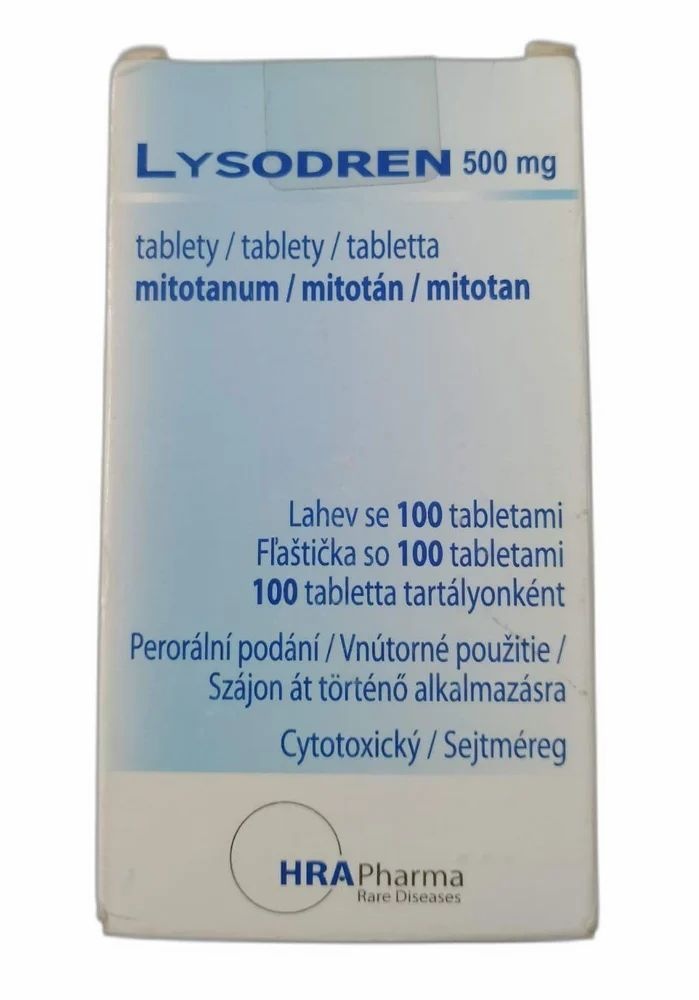
Lysodren se presenta en frascos de plástico de 100 comprimidos
Titular de la autorización de comercialización:
Esteve Pharmaceuticals, S.A.
Passeig de la Zona Franca 109 Planta 4
08038 Barcelona
España
+ 34 93 446 60 00
Responsable de la fabricación:
Latina Pharma S.p.A.
Via Murillo, 7
04013 Sermoneta (LT)
Italia
o
Centre Specialites Pharmaceutiques
76-78, avenue du Midi
63800 Cournon d’Auvergne
Francia
Fecha de la última revisión de este prospecto: 04.2025
Otras fuentes de información
La información detallada de este medicamento está disponible en la página web de la Agencia Europea de Medicamentos: http://www.ema.europa.eu. También existen enlaces a otras páginas web sobre enfermedades raras y medicamentos huérfanos.
En la página web de la Agencia Europea de Medicamentos puede encontrarse este prospecto en todas las lenguas de la Unión Europea/Espacio Económico Europeo.
- - - - - - - - - - - - - - - - - - - - - - - - - - - - - - - - - -
LYSODREN: TARJETA DEL PACIENTE
Estoybajotratamiento con Lysodren (mitotano) Tengo tendencia a la insuficiencia suprarrenal aguda Si necesitara atención sanitaria urgente, se deben tomar las precauciones adecuadas | El nombre de mi médico es: ……………………………………….. Teléfono: ………………………………. Para más información sobre el producto,póngase en contacto con: Esteve Pharmaceuticals, S.A. Tel.: + 34 93 446 60 00 |
- País de registro
- Forma farmacéuticaCOMPRIMIDO, 500 mg
- Código ATCL01XX23
- Principio activo
- Requiere recetaSí
- Fabricante
- Esta información es de carácter general y no sustituye la consulta con un profesional sanitario.
- Alternativas a LYSODREN 500 mg COMPRIMIDOSForma farmacéutica: CAPSULA, 0.5 mgPrincipio activo: AnagrelidaFabricante: Aurovitas Spain, S.A.U.Requiere recetaForma farmacéutica: CAPSULA, 0.5 mgPrincipio activo: AnagrelidaFabricante: Bluefish Pharmaceuticals Ab (Publ)Requiere recetaForma farmacéutica: CAPSULA, 0.5 mgPrincipio activo: AnagrelidaFabricante: Glenmark Arzneimittel GmbhRequiere receta
Médicos online para LYSODREN 500 mg COMPRIMIDOS
Comenta la dosis, los posibles efectos secundarios, interacciones, contraindicaciones o si una receta es apropiada para LYSODREN 500 mg COMPRIMIDOS, sujeto a valoración médica y a la normativa local.
Preguntas frecuentes
LYSODREN 500 mg COMPRIMIDOS requiere receta en España. Puedes confirmarlo con un médico online según tu caso.
El principio activo de LYSODREN 500 mg COMPRIMIDOS es Mitotano. Esta información ayuda a identificar medicamentos con la misma composición pero con diferentes nombres comerciales.
LYSODREN 500 mg COMPRIMIDOS es fabricado por Esteve Pharmaceuticals S.A.. La marca y el envase pueden variar según el distribuidor.
Los Médicos de familia, Psiquiatras, Dermatólogos, Cardiólogos, Endocrinólogos, Gastroenterólogos, Neumólogos, Nefrólogos, Reumatólogos, Hematólogos, Infectólogos, Alergólogos, Geriatras, Pediatras, Oncólogos pueden valorar la prescripción de LYSODREN 500 mg COMPRIMIDOS cuando esté clínicamente indicado. Puedes reservar una videoconsulta para comentar tu caso y las opciones de tratamiento.
La receta la emite un médico tras valorar tu estado de salud. En España, LYSODREN 500 mg COMPRIMIDOS se dispensa en las farmacias con esa receta médica. Una consulta online no garantiza su emisión: la decisión corresponde siempre al médico.
Para solicitar una valoración puedes usar Oladoctor:
Otros medicamentos con el mismo principio activo (Mitotano) incluyen ANAGRELIDA AUROVITAS 0.5 MG CAPSULAS DURAS EFG, ANAGRELIDA BLUEFISH 0,5 MG CAPSULAS DURAS EFG, ANAGRELIDA GLENMARK 0,5 MG CAPSULAS DURAS EFG. Pueden tener diferentes nombres comerciales o formulaciones, pero contienen el mismo componente terapéutico. Consulta siempre con un médico antes de cambiar o iniciar un nuevo medicamento.
