


Lacryvisc 3 mg/g gel oftálmico

Revisión de receta online
Un médico revisará tu caso y determinará si la prescripción es médicamente apropiada.

Habla con un médico sobre este medicamento
Comenta tus síntomas y las opciones de tratamiento en una consulta online.



Cómo usar LACRYVISC 3 mg/g GEL OFTALMICO
Contenido del prospecto
- Introducción
- Qué es Lacryvisc y para qué se utiliza
- Qué necesita saber antes de empezar a usar Lacryvisc
- Cómo usar Lacryvisc
- Posibles efectos adversos
- Conservación de Lacryvisc
- Contenido del envase e información adicional
Introducción
Prospecto: información para el usuario
LACRYVISC 3mg/g Gel oftálmico
Carbómero
Lea todo el prospecto detenidamenteantes de empezar a usar este medicamento,porque contiene información importante para usted.
Siga exactamente las instrucciones de administración del medicamento contenidas en este prospecto o las indicadas por su médico o farmacéutico.
- Conserve este prospecto, ya que puede tener que volver a leerlo.
- Si necesita consejo o más información, consulte a su farmacéutico.
- Si experimenta efectos adversos, consulte a su médico o farmacéutico, incluso si se trata de efectos adversos que no aparecen en este prospecto. Ver sección 4.
- Debe consultar a un médico si empeora o si no mejora después de 3 días.
Contenido del prospecto
- Qué es Lacryvisc y para qué se utiliza
- Qué necesita saber antes de empezar a usar Lacryvisc
- Cómo usar Lacryvisc
- Posibles efectos adversos
- Conservación de Lacryvisc
- Contenido del envase e información adicional
1. Qué es Lacryvisc y para qué se utiliza
Lacryvisc es un gel oftálmico líquido, que contiene el principio activo denominado carbómero, que es un lubricante ocular altamente viscoso, capaz de formar gotas. Después de su aplicación local sobre el ojo forma una película lubricante protectora de alta adherencia y larga duración.
Se utiliza para el alivio sintomático de la irritación y la sequedad de los ojos en adultos.
Debe consultar a un médico si empeora o si no mejora después de 3 días.

¿No estás seguro de si este medicamento es adecuado para ti?
Comenta tus síntomas y tratamiento con un médico online.
2. Qué necesita saber antes de empezar a usar Lacryvisc
No use Lacryvisc
Si es alérgico al carbómero o a cualquiera de los demás componentes de este medicamento (incluidos en la sección 6).
Advertencias y precauciones
Consulte a su médico o farmacéutico antes de empezar a usar Lacryvisc.
Solo utilice este gel en su(s) ojo(s).
La punta del envase no debe entrar en contacto con ninguna superficie incluyendo el ojo, ya que puede provocar una lesión en el ojo y el gel puede contaminarse.
No está recomendado llevar lentes de contacto durante el tratamiento con este medicamento. Ver sección “Lacryvisc contiene cloruro de benzalconio”.
En caso de inflamación del iris o enfermedades corneales, debe consultar al médico que será quien determine la posibilidad o no del uso de Lacryvisc como tratamiento.
Si aparece dolor en el ojo, cambios en la visión, irritación de los ojos, enrojecimiento continuado o si los síntomas empeoran o perduran más de 3 días, suspenda el tratamiento y consulte con el médico.
Niños y adolescentes hasta 18 años de edad
En la práctica clínica, se ha establecido la seguridad y eficacia de Lacryvisc en niños y adolescentes a la dosis recomendada en adultos, pero no se dispone de datos procedentes de ensayos clínicos.
Uso de Lacryvisc con otros medicamentos
Informe a su médico o farmacéutico si está utilizando, ha utilizado recientemente o podría tener que utilizar cualquier otro medicamento.
Embarazo, lactancia y fertilidad
Si está embarazada o en período de lactancia, cree que podría estar embarazada o tiene intención de quedarse embarazada, consulte a su médico o farmacéutico antes de utilizar este medicamento.
Este medicamento puede utilizarse durante el embarazo y la lactancia.
Conducción y uso de máquinas
Puede notar que su visión se vuelve borrosa durante un rato después de aplicarse el medicamento. Si esto le ocurre, espere hasta que dicho síntoma desaparezca y su visión sea nítida, antes de conducir vehículos o utilizar máquinas.
Lacryvisc contiene cloruro de benzalconio
Este medicamento contiene 0,001 mg de cloruro de benzalconio en cada dosis equivalente a 0,05 mg/ g.
El cloruro de benzalconio se puede absorber por las lentes de contacto blandas alterando su color. Retirar las lentes de contacto antes de usar este medicamento y esperar 15 minutos antes de volver a colocarlas.
El cloruro de benzalconio puede causar irritación ocular, especialmente si padece de ojo seco u otras enfermedades de la córnea (capa transparente de la zona frontal del ojo). Consulte a su médico si siente una sensación extraña, escozor o dolor en el ojo después de usar este medicamento.
3. Cómo usar Lacryvisc
Siga exactamente las instrucciones de administración del medicamentoindicadas por su médicoo farmacéutico. En caso de duda, consulte de nuevo a su médico o farmacéutico.
La dosis recomendada es de una gota en el ojo(s) de 2 a 4 veces al día, o cada vez que sienta molestias oculares asociadas con la sequedad del ojo.
En determinados casos y según las indicaciones de su médico, Lacryvisc puede aplicarse con mayor frecuencia.
Niños y adolescentes hasta 18 años de edad
En la práctica clínica, se ha establecido la seguridad y eficacia de Lacryvisc en niños y adolescentes a la dosis recomendada en adultos, pero no se dispone de datos procedentes de ensayos clínicos.
Pacientes de edad avanzada
Lacryvisc puede utilizarse en pacientes de edad avanzada (mayores de 65 años), y no es necesario ningún ajuste de la dosis.
Instrucciones de uso
Para la correcta administración de Lacryvisc, seguir los pasos que se describen a continuación:
|
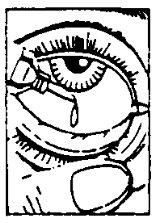
Por tratarse de un medicamento estéril, se recomienda seguir las siguientes instrucciones:
- Cada paciente utilizará su propio envase.
- La aplicación del gel debe realizarse con la máxima pulcritud, evitando en lo posible el contacto de la punta del tubo con cualquier superficie (incluyendo párpado, dedos, etc.).
- Después de cada aplicación cierre bien el envase.
- Lacryvisc no se debe usar después de 4 semanas tras la primera apertura del tubo y se debe desechar aunque no se haya consumido en su totalidad.
Si necesita aplicarse en los ojos cualquier otro medicamento además de Lacryvisc, espere al menos 5 minutos entre la aplicación de ambos medicamentos. Lacryvisc debe administrarse en último lugar.
Si usa más Lacryvisc del que debe
Dada su administración exclusivamente oftálmica, no se prevé la posibilidad de sobredosis.
En caso de sobredosis o ingestión accidental, consulte inmediatamente a su médico o llame al Servicio de Información Toxicológica, teléfono 91 562 04 20, indicando el medicamento y la cantidad ingerida.
Si olvidó usar Lacryvisc
No use una dosis doble para compensar las dosis olvidadas.
Si tiene cualquier otra duda sobre el uso de este medicamento, pregunte a su médico o farmacéutico.

¿Has empezado a tomar el medicamento y tienes preguntas?
Comenta tus síntomas y tratamiento con un médico online.
4. Posibles efectos adversos
Al igual que todos los medicamentos, este medicamento puede producir efectos adversos, aunque no todas las personas los sufran.
Pueden aparecer las siguientes reacciones en sus ojos:
Muy frecuentes(pueden afectar a más de 1 de cada 10 personas):visión borrosa.
Frecuentes(pueden afectar hasta 1de cada 10 personas):molestia en el ojo, costra en el párpado, irritación ocular.
Poco frecuentes(pueden afectar hasta 1de cada 100personas):hinchazón del ojo, dolor en el ojo, picor en el ojo, enrojecimiento del ojo, aumento en la producción de lágrimas.
O, reacciones en otras partes de su cuerpo:
Poco frecuentes(pueden afectar hasta 1de cada 100personas):inflamación de la piel.
Se han observado otros efectos adversos adicionales durante la experiencia postcomercialización con frecuencia no conocida(no puede estimarse a partir de los datos disponibles): alergia (hipersensibilidad).
Comunicación de efectos adversos
Si experimenta cualquier tipo de efecto adverso, consulte a su médico o farmacéutico, incluso si se trata de posibles efectos adversos que no aparecen en este prospecto. También puede comunicarlos directamente a través del Sistema Español de Farmacovigilancia de Medicamentos de Uso Humano: https://www.notificaRAM.es. Mediante la comunicación de efectos adversos usted puede contribuir a proporcionar más información sobre la seguridad de este medicamento.
5. Conservación de Lacryvisc
Mantener este medicamento fuera de la vista y del alcance de los niños.
No conservar a temperatura superior a 30ºC.
Mantener el envase perfectamente cerrado. El contenido del tubo es estéril hasta su primera apertura.
No utilice este medicamento después de la fecha de caducidad que aparece en el tubo y en la caja después de CAD. La fecha de caducidad es el último día del mes que se indica.
Para evitar infecciones, debe desechar el tubo 4 semanas después de haberlo abierto por primera vez.
Anote la fecha de apertura del tubo en el recuadro reservado para esta finalidad en la caja.
Los medicamentos no se deben tirar por los desagües ni a la basura. Deposite los envases y los medicamentos que no necesita en el Punto SIGRE de la farmacia. En caso de duda pregunte a su farmacéutico cómo deshacerse de los envases y de los medicamentos que no necesita. De esta forma, ayudará a proteger el medio ambiente.
6. Contenido del envase e información adicional
Composición de Lacryvisc
- El principio activo es carbómero. Cada gramo de gel contiene 3 mg de carbómero.
- Los demás componentes son cloruro de benzalconio, sorbitol (E-420), hidróxido de sodio y agua purificada.
Aspecto del producto y contenido del envase
Lacryvisc es un gel oftálmico líquido ligeramente opaco y ligeramente amarillento.
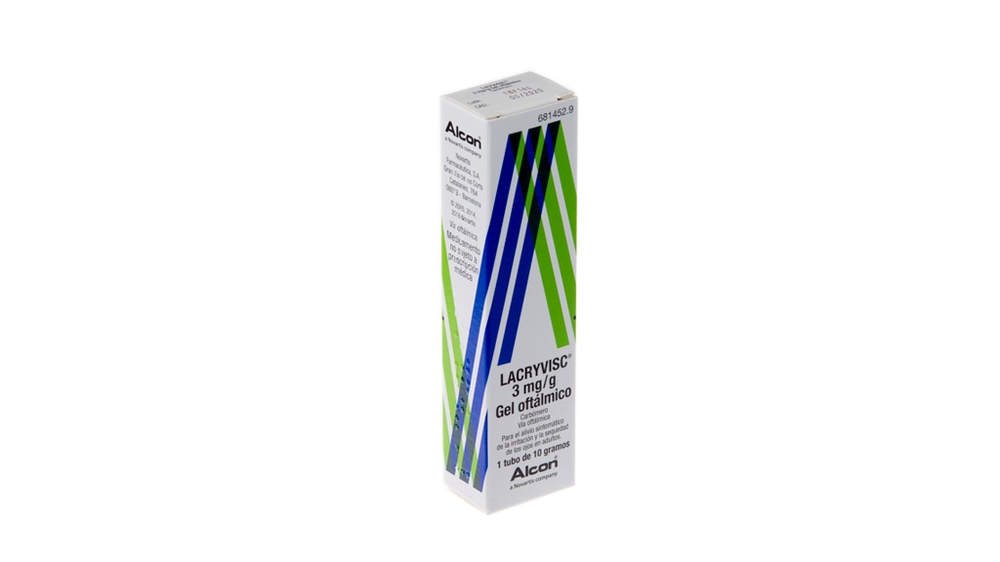
El gel se presenta en una caja que contiene un tubo de 10 g con punta dispensadora de plástico y tapón de plástico.
Titular de la autorización de comercialización
Alcon Healthcare S.A.
World Trade Center Almeda Park
Plaça de la Pau s/n, Edificio 6, planta 3
08940 - Cornellà de Llobregat (Barcelona)
Spain
Responsable de la fabricación
S.A. Alcon-Couvreur N.V.
Rijksweg 14, B-2870 Puurs,
Bélgica
o
Alcon Laboratories Belgium
Lichterveld 3
2870 Puurs-Sint-Amands
Belgium
Fecha de la última revisión de este prospecto:Febrero 2018
La información detallada y actualizada de este medicamento está disponible en la página Web de la Agencia Española de Medicamentos y Productos Sanitarios (AEMPS) http://www.aemps.gob.es/
- País de registro
- Forma farmacéuticaGEL OFTALMICO, 3 mg
- Código ATCS01XA20
- Principio activo
- Requiere recetaNo
- Fabricante
- ComposiciónBENZALCONIO, CLORURO DE (0,05 mg mg), HIDROXIDO DE SODIO (E 524) (0 Cantidad suficiente mg), SORBITOL (50 mg mg)
- Esta información es de carácter general y no sustituye la consulta con un profesional sanitario.
- Alternativas a LACRYVISC 3 mg/g GEL OFTALMICOForma farmacéutica: COLIRIO, 5,5 mg sodio cloruro;3 mg hipomelosa/mlPrincipio activo: artificial tears and other indifferent preparationsFabricante: Alcon Healthcare S.A.No requiere recetaForma farmacéutica: COLIRIO, 3,2 mg/mlPrincipio activo: artificial tears and other indifferent preparationsFabricante: Bausch & Lomb S.A.No requiere recetaForma farmacéutica: COLIRIO, 3,2 mg/mlPrincipio activo: artificial tears and other indifferent preparationsFabricante: Bausch & Lomb S.A.No requiere receta
Médicos online para LACRYVISC 3 mg/g GEL OFTALMICO
Comenta la dosis, los posibles efectos secundarios, interacciones, contraindicaciones o la revisión de receta de LACRYVISC 3 mg/g GEL OFTALMICO, sujeto a valoración médica y a la normativa local.









Preguntas frecuentes
LACRYVISC 3 mg/g GEL OFTALMICO no requiere receta en España. Puedes confirmarlo con un médico online según tu caso.
El principio activo de LACRYVISC 3 mg/g GEL OFTALMICO es artificial tears and other indifferent preparations. Esta información ayuda a identificar medicamentos con la misma composición pero con diferentes nombres comerciales.
LACRYVISC 3 mg/g GEL OFTALMICO es fabricado por Alcon Healthcare S.A.. La marca y el envase pueden variar según el distribuidor.
Los Médicos de familia, Psiquiatras, Dermatólogos, Cardiólogos, Endocrinólogos, Gastroenterólogos, Neumólogos, Nefrólogos, Reumatólogos, Hematólogos, Infectólogos, Alergólogos, Geriatras, Pediatras, Oncólogos pueden valorar la prescripción de LACRYVISC 3 mg/g GEL OFTALMICO cuando esté clínicamente indicado. Puedes reservar una videoconsulta para comentar tu caso y las opciones de tratamiento.
La receta la emite un médico tras valorar tu estado de salud. En España, LACRYVISC 3 mg/g GEL OFTALMICO se dispensa en las farmacias con esa receta médica. Una consulta online no garantiza su emisión: la decisión corresponde siempre al médico.
Para solicitar una valoración puedes usar Oladoctor:
Otros medicamentos con el mismo principio activo (artificial tears and other indifferent preparations) incluyen ACUOLENS 3 mg/ml + 5,5 mg/ml COLIRIO EN SOLUCION EN ENVASE UNIDOSIS, ARTIFIC 3,20 mg/ml COLIRIO EN SOLUCION EN ENVASE UNIDOSIS, ARTIFIC 3,20 mg/ml COLIRIO EN SOLUCION. Pueden tener diferentes nombres comerciales o formulaciones, pero contienen el mismo componente terapéutico. Consulta siempre con un médico antes de cambiar o iniciar un nuevo medicamento.
