







How to use GLUCOSA TRAVEL PHARMA 50% SOLUTION FOR INFUSION
Translated with AI
This page provides general information and does not replace a doctor’s consultation. Always consult a doctor before taking any medication. Seek urgent medical care if symptoms are severe.
Show originalContents of the leaflet
- Introduction
- What is Glucose Travel Pharma 50% Solution for Infusion and what is it used for
- Before using Glucose Travel Pharma 50% Solution for Infusion
- How to use Glucose Travel Pharma 50% Solution for Infusion
- Possible side effects
- Storage of Glucose Travel Pharma 50% Solution for Infusion
- Further information
Introduction
Package Leaflet: Information for the User
GLUCOSE TRAVEL PHARMA 50% Solution for Infusion
Read all of this leaflet carefully before you start using this medicine.
- Keep this leaflet, you may need to read it again.
- If you have any further questions, ask your doctor or pharmacist.
- This medicine has been prescribed for you, do not pass it on to others. It may harm them, even if their symptoms are the same as yours.
- If you experience any side effects, consult your doctor or pharmacist. This includes any possible side effects not listed in this leaflet.
Contents of the Package Leaflet:
- What GLUCOSE TRAVEL PHARMA 50% Solution for Infusion is and what it is used for.
- Before you use GLUCOSE TRAVEL PHARMA 50% Solution for Infusion.
- How to use GLUCOSE TRAVEL PHARMA 50% Solution for Infusion.
- Possible side effects.
- Storage of GLUCOSE TRAVEL PHARMA 50% Solution for Infusion.
- Further information.
1. What is Glucose Travel Pharma 50% Solution for Infusion and what is it used for
GLUCOSE TRAVEL PHARMA 50% Solution for Infusion belongs to the group of solutions for parenteral nutrition intended for the supply of water and energy.
It is indicated for the treatment of hypertonic dehydration (vomiting, diarrhea, profuse sweating), in alterations of carbohydrate metabolism (hypoglycemia, insulin coma, acetonemic vomiting).

2. Before using Glucose Travel Pharma 50% Solution for Infusion
Do not use GLUCOSE TRAVEL PHARMA 50% Solution for Infusion
- If you are allergic (hypersensitive) to the active ingredient or to any of the other components of GLUCOSE TRAVEL PHARMA 50% Solution for Infusion.
- If you have been diagnosed with hypotonic dehydration, loss of salts, or decreased urine volume.
- In the first 24 hours after a head injury.
- In states of hyperglycemia.
- In states of hyperhydration, generalized edema.
- If you have hyperlactacidemia.
- If you suffer from significant alterations in glucose tolerance, including hyperosmolar coma.
Be especially careful with GLUCOSE TRAVEL PHARMA 50% Solution for Infusion
- Blood glucose concentration should be carefully monitored in cases of intracranial hypertension.
- If you have suffered from acute ischemic attacks (decreased or absent circulation in arteries), since hyperglycemia has been related to an increase in ischemic brain damage and difficulty in recovery.
- In case of shock and acid-base balance disorders, patients should be treated by administering electrolytes before the administration of glucose solutions. In patients with sodium deficiency, the administration of sodium-free solutions may produce peripheral circulatory collapse and oliguria (low urine secretion).
- It is recommended that regular checks of blood glucose, serum electrolytes, water balance, and acid-base balance be performed, as frequent and massive administration of parenteral glucose solutions can cause fluid overload (hyperhydration) and significant ionic depletions. In this case, it will be necessary to administer electrolyte supplements.
- To avoid hypokalemia produced during prolonged parenteral nutrition with glucose, potassium may be added to the glucose solution as a safety measure.
- If you have malnutrition, you may have a vitamin B1 deficiency. This vitamin is essential for glucose metabolism, so if necessary, this deficiency should be corrected first.
- If you have diabetes. In this case, glucose solutions can be used as long as you have initially received the appropriate treatment (insulin). Blood glucose should be regularly monitored in diabetic patients and insulin requirements modified.
- Do not administer blood simultaneously using the same infusion equipment due to the risk of pseudoagglutination and/or hemolysis.
- When administered continuously in the same infusion site, thrombophlebitis (inflammation of the veins) may occur.
- Special attention should be paid if used in elderly patients, as they may have affected liver and/or kidney function.
- Do not administer intramuscularly.
Using other medicines
Tell your doctor or pharmacist if you are using or have recently used any other medicines, including those obtained without a prescription.
It is important that you inform your doctor if you are using any of the following medicines:
- Insulin or oral antidiabetics (biguanides, sulfonylureas): The intravenous administration of glucose in patients treated with insulin or oral antidiabetics may decrease their efficacy (antagonistic action).
- Corticosteroids: The intravenous administration of glucose solutions in patients treated with systemic corticosteroids with glucocorticoid activity (cortisol) may lead to a significant increase in plasma glucose levels due to the hyperglycemic action of these latter. As for corticosteroids with mineralocorticoid activity, they should be administered with caution due to their ability to retain water and sodium.
- Digitalis glycosides (digoxin): If the intravenous administration of glucose coincides with treatment with digitalis glycosides (digoxin), an increase in digitalis activity may occur, with the risk of developing intoxication with these medicines. This is due to the hypokalemia that may be caused by the administration of glucose, if potassium is not added to the solution.
In any case, the doctor should check the compatibility of the added medicines.
Pregnancy and breastfeeding
Consult your doctor or pharmacist before using any medicine.
In case of pregnancy, your doctor will decide on the convenience of using a 50% glucose solution, as it should be used with caution in this case. The administration of glucose intravenously during pregnancy may increase glucose and insulin levels as well as acidic components in the fetus's blood.
There is no evidence to suggest that 50% Glucose can cause adverse effects during the breastfeeding period in the newborn. However, it is recommended to use with caution during this period.
Driving and using machines
This is not applicable due to the characteristics of its use.
3. How to use Glucose Travel Pharma 50% Solution for Infusion
Follow exactly the administration instructions of GLUCOSE TRAVEL PHARMA 50% Solution for Infusion indicated by your doctor. Consult your doctor if you have doubts.
The normal dose is administered intravenously drop by drop according to your age, body weight, clinical situation, and metabolic state.
According to individual needs, 1.5-3.0 g of glucose per kilogram of body weight and day; or up to 0.5 g of glucose per kg of body weight and hour; recommended infusion rate 40-60 drops/minute.
If you use more GLUCOSE TRAVEL PHARMA 50% Solution for Infusion than you should:
In case of overdose, hyperglycemia, glucosuria, hyperhydration, or electrolyte disorders may appear. Administration will be suspended and symptomatic treatment will be resorted to.
If you are not hospitalized, go to the nearest hospital or consult the Toxicology Information Service. Phone: 91 562 04 20.

4. Possible side effects
Like all medicines, GLUCOSE TRAVEL PHARMA 50% Solution for Infusion can have side effects, although not everybody gets them.
Hyperglycemia, glucosuria (glucose in urine), or alterations in fluid or electrolyte balance may occur if administered too quickly or if the fluid volume is excessive, or in cases of metabolic insufficiency.
On the other hand, the hyperglycemia resulting from rapid or excessive infusion should be monitored in severe cases of diabetes mellitus, and can be avoided by decreasing the dose and infusion rate or by administering insulin.
A local reaction may occur at the injection site.
Whenever any of these adverse reactions occur, you should inform your doctor, who will assess the convenience of suspending the medication.
If used as a vehicle for the administration of other medicines, the nature of the added medicines will determine the likelihood of other adverse reactions.
If you consider that any of the side effects you are suffering from is serious, or if you notice any side effect not mentioned in this leaflet, inform your doctor or pharmacist.
5. Storage of Glucose Travel Pharma 50% Solution for Infusion
Keep out of the reach and sight of children.
Do not use GLUCOSE TRAVEL PHARMA 50% Solution for Infusion after the expiration date stated on the label. The expiration date is the last day of the month indicated.
No special storage conditions are required.
The solution should be transparent and not contain precipitates. Do not use in any other case. The contents of each vial are for single infusion; discard the unused fraction.
Medicines should not be disposed of via wastewater or household waste. Ask your pharmacist how to dispose of the packaging and medicines you no longer need. This will help protect the environment.
6. Further information
Composition of GLUCOSE TRAVEL PHARMA 50% Solution for Infusion
The active ingredient is glucose.
The other components are water for injection.
Appearance of the product and packaging contents
GLUCOSE TRAVEL PHARMA 50% Solution for Infusion is an injectable solution, colorless and translucent.
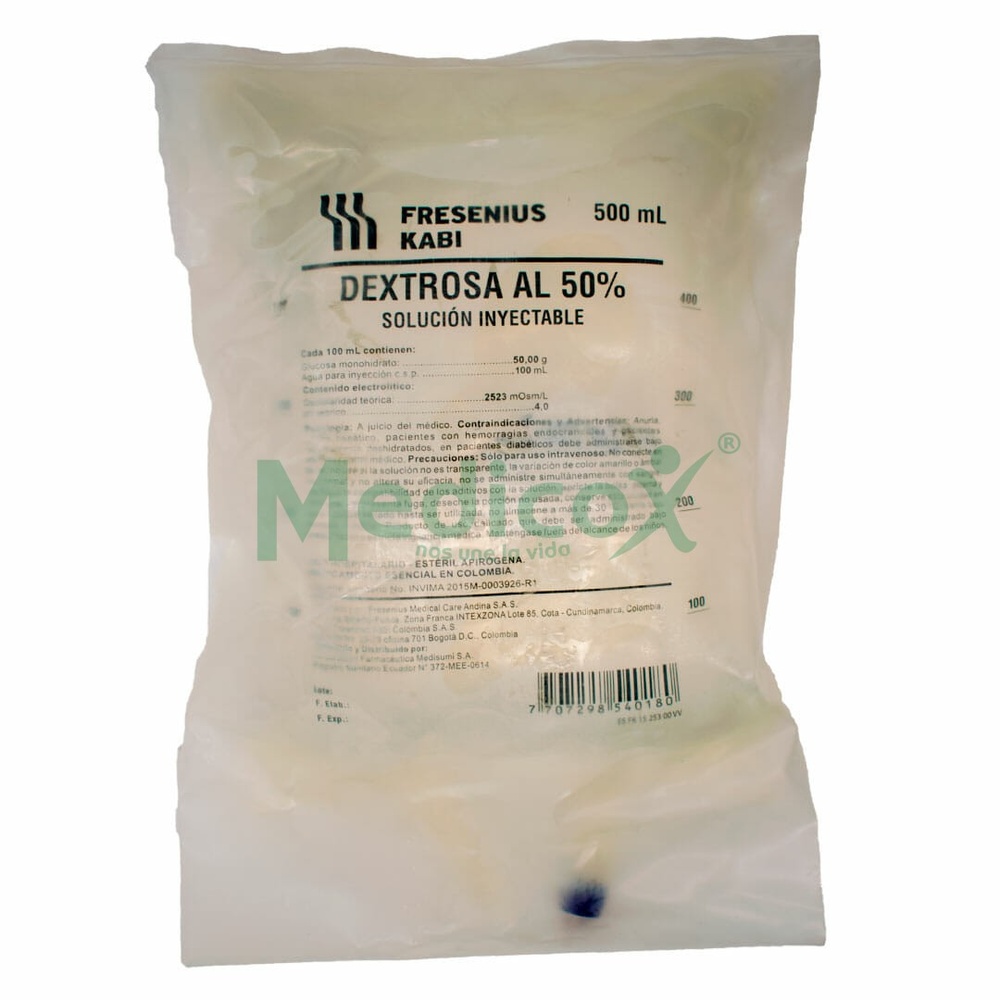
GLUCOSE TRAVEL PHARMA 50% Solution for Infusion is an intravenous infusion solution presented in 500 ml and 1000 ml containers.
Clinical packaging is also available for all presentations:
- 10 vials of 500 ml.
- 10 vials of 1000 ml.
Marketing authorization holder and manufacturer.
TRAVEL PHARMA COMPANY 28, S.L.
C/Marcelino González, nº 12 – bajo
Gijón (Asturias)
This information is intended only for healthcare professionals
Method of administration
This medicine will always be administered by specialized personnel. It will be administered by infusion, through a central or peripheral vein.
Precautions for use
Use an aseptic method to administer the solution and in case of preparation of mixtures.
Before adding medicines to the solution or administering them simultaneously with other medicines, it should be checked that there are no incompatibilities.
This leaflet was approved in March 2009
- Country of registration
- Dosage formINJECTABLE PERFUSION, 50%
- ATC codeB05BA03
- Active substance
- Prescription requiredYes
- Manufacturer
- This information is for reference only and does not constitute medical advice. Always consult a doctor before taking any medication. Oladoctor is not responsible for medical decisions based on this content.
- Alternatives to GLUCOSA TRAVEL PHARMA 50% SOLUTION FOR INFUSIONDosage form: INJECTABLE INFUSION, 50 g glucoseActive substance: carbohydratesManufacturer: Fresenius Kabi España, S.A.U.Prescription requiredDosage form: INJECTABLE PERFUSION, 11 gActive substance: carbohydratesManufacturer: Fresenius Kabi España, S.A.U.Prescription requiredDosage form: INJECTABLE INFUSION, Glucose Monohydrate 5.5 gActive substance: carbohydratesManufacturer: Fresenius Kabi España, S.A.U.Prescription required

Online doctors for GLUCOSA TRAVEL PHARMA 50% SOLUTION FOR INFUSION
Discuss questions about GLUCOSA TRAVEL PHARMA 50% SOLUTION FOR INFUSION, including use, safety considerations and prescription review, subject to medical assessment and local regulations.
Get GLUCOSA TRAVEL PHARMA 50% SOLUTION FOR INFUSION Prescription Online
Fill in a 2-min form
Tell us your symptoms, history, and what medicine you're requesting.
Pick a doctor or let us assign
Choose a specialist or we'll match you with the next available doctor.
Doctor reviews your case
Usually within 30 minutes. They may ask follow-up questions via chat.
Collect from any pharmacy
Electronic prescription sent to your email — valid across Spain.
Frequently Asked Questions
GLUCOSA TRAVEL PHARMA 50% SOLUTION FOR INFUSION requires a prescription in Spain. You can check with a doctor online whether this medicine may be appropriate for your situation.
The active ingredient in GLUCOSA TRAVEL PHARMA 50% SOLUTION FOR INFUSION is carbohydrates. This information helps identify medicines with the same composition but different brand names.
GLUCOSA TRAVEL PHARMA 50% SOLUTION FOR INFUSION is manufactured by Travel Pharma Company 28 S.L.. Pharmacy brands and packaging may differ depending on the distributor.
Doctors such as Family doctors, Psychiatrists, Dermatologists, Cardiologists, Endocrinologists, Gastroenterologists, Pulmonologists, Nephrologists, Rheumatologists, Hematologists, Infectious disease physicians, Allergists, Geriatricians, Paediatricians, Oncologists may assess whether GLUCOSA TRAVEL PHARMA 50% SOLUTION FOR INFUSION is appropriate, depending on your situation and local regulations. You can book an online consultation to discuss your symptoms and possible next steps.
Spain has a well-developed healthcare infrastructure across major cities such as Madrid, Barcelona, Valencia, and Seville. Pharmacies are widely available and operate under strict regulations, ensuring access to prescribed medications.
You can buy GLUCOSA TRAVEL PHARMA 50% SOLUTION FOR INFUSION in Madrid, Barcelona, Seville, or Valencia at any local pharmacy with a valid prescription.
To obtain a prescription, you can use Oladoctor:
Other medicines with the same active substance (carbohydrates) include DEXTROSE FRESENIUS KABI 50% SOLUTION FOR INFUSION, FREEFLEX GLUCOSA 10% SOLUTION FOR INFUSION, FREEFLEX GLUCOSA 5% SOLUTION FOR INFUSION. These may have different brand names or formulations but contain the same therapeutic ingredient. Always consult a doctor before switching or starting a new medicine.
