



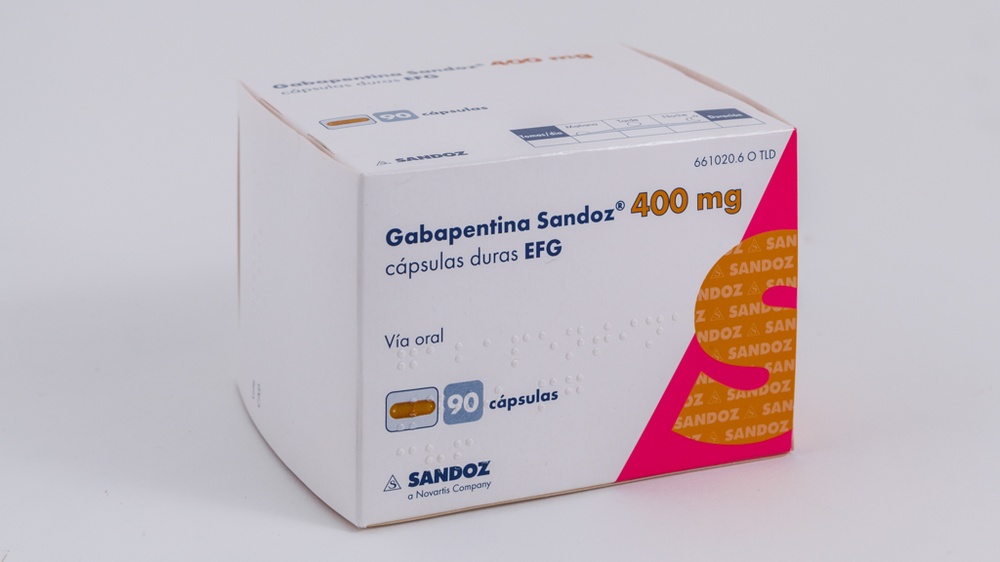
GABAPENTINA 400 mg Cápsulas Duras

Revisión de receta online
Un médico revisará tu caso y determinará si la prescripción es médicamente apropiada.

Habla con un médico sobre este medicamento
Comenta tus síntomas y las opciones de tratamiento en una consulta online.



Cómo usar GABAPENTINA SANDOZ 400 mg CAPSULAS DURAS EFG
Contenido del prospecto
- Introducción
- Qué es Gabapentina Sandoz y para qué se utiliza
- Qué necesita saber antes de empezar a tomar Gabapentina Sandoz
- Cómo tomar Gabapentina Sandoz
- Siga exactamente las instrucciones de administración de este medicamento indicadas por su médico o farmacéutico. En caso de duda, consulte de nuevo a su médico o farmacéutico. No tome una cantidad de medicamento superior a la prescrita.
- Posibles efectos adversos
- Conservación de Gabapentina Sandoz
- Contenido del envase e información adicional
Introducción
Prospecto: información para el paciente
GabapentinaSandoz300 mg cápsulas duras EFG
GabapentinaSandoz400 mg cápsulas duras EFG
gabapentina
Lea todo el prospecto detenidamente antes de empezar a tomar este medicamento,porque contiene información importante para usted.
- Conserve este prospecto, ya que puede tener que volver a leerlo.
- Si tiene alguna duda, consulte a su médico o farmacéutico.
- Este medicamento se le ha recetado solamente a usted y no debe dárselo a otras personas aunque tengan los mismos síntomas que usted, ya que puede perjudicarles.
- Si experimenta efectos adversos, consulte a su médico o farmacéutico, incluso si se trata de efectos adversos que no aparecen en este prospecto. Ver sección 4.
Contenido del prospecto
- Qué es Gabapentina Sandoz y para qué se utiliza
- Que necesita saber antes de empezar a tomar Gabapentina Sandoz
- Cómo tomar Gabapentina Sandoz
- Posibles efectos adversos
- Conservación de Gabapentina Sandoz
- Contenido del envase e información adicional
1. Qué es Gabapentina Sandoz y para qué se utiliza
Gabapentina Sandoz pertenece a un grupo de medicamentos que se utilizan para tratar la epilepsia y el dolor neuropático periférico (dolor crónico causado por daños en los nervios).
La sustancia activa en Gabapentina Sandoz es gabapentina.
Gabapentina Sandoz se utiliza para tratar:
Ciertas clases de epilepsia(crisis que están inicialmente limitadas a ciertas partes del cerebro, tanto si la crisis se extiende a otras partes del cerebro o no). El médico que le trate a usted o a su hijo de 6 años de edad o mayor le recetará gabapentina para ayudar a tratar su epilepsia cuando el tratamiento actual no controle totalmente la enfermedad. Usted o su hijo de 6 años de edad o mayor deben tomar gabapentina añadido a su tratamiento actual a menos que se le indique de otra manera. Gabapentina también se puede administrar como único medicamento en el tratamiento de adultos y niños mayores de 12 años.
Dolor neuropático periférico(dolor crónico causado por daños en los nervios). Hay diversas enfermedades que pueden causar dolor neuropático periférico (principalmente en piernas y/o brazos), como la diabetes o el herpes. La sensación de dolor se podría describir como calor, quemazón, dolor pulsátil, dolor fulgurante, dolor punzante, dolor agudo, espasmos, dolor continuo, hormigueo, entumecimiento y sensación de pinchazos, etc.

¿No estás seguro de si este medicamento es adecuado para ti?
Comenta tus síntomas y tratamiento con un médico online.
2. Qué necesita saber antes de empezar a tomar Gabapentina Sandoz
No tomeGabapentinaSandoz
- si es alérgico (hipersensible) a gabapentina o a alguno de los demás componentes de este medicamento (incluidos en la sección 6).
Advertencias y precauciones
Consulte a su médico o farmacéutico antes de empezar a tomar gabapentina:
- si padece problemas en los riñones, su médico puede que le recete un régimen de dosificación diferente,
- si está en hemodiálisis (para eliminar productos de desecho por insuficiencia renal), informe a su médico si presenta dolor muscular y/o debilidad,
- si desarrolla síntomas como dolor de estómago persistente, vómitos y náuseas, avise a su médico inmediatamente ya que estos pueden ser síntomas de pancreatitis aguda (páncreas inflamado),
- si tiene trastornos del sistema nervioso, trastornos respiratorios, o si tiene más de 65 años, su médico puede prescribirle un régimen de dosificación distinto,
- si alguna vez ha abusado o ha tenido dependencia del alcohol, de medicamentos recetados o de drogas ilegales; puede que tenga un mayor riesgo de desarrollar dependencia a gabapentina.
Se han notificado casos de abuso y dependencia de gabapentina a partir de la experiencia post-comercialización. Hable con su médico si tiene antecedentes de abuso o dependencia.
Dependencia
Algunas personas pueden desarrollar dependencia (necesidad de seguir tomando el medicamento) a gabapentina. Pueden tener síndrome de abstinencia cuando dejan de tomar gabapentina (ver sección 3, "Cómo tomar Gabapentina Sandoz" y "Si interrumpe el tratamiento con Gabapentina Sandoz"). Si le preocupa desarrollar dependencia a gabapentina, es importante que consulte a su médico.
Si experimenta alguno de los siguientes signos mientras toma gabapentina, puede ser indicativo de que ha desarrollado dependencia.
- Siente que necesita tomar el medicamento durante más tiempo del que le han prescrito.
- Siente que necesita tomar una dosis superior a la recomendada.
- Está tomando el medicamento por motivos diferentes a su prescripción.
- Ha intentado varias veces dejar de tomar el medicamento o controlar cómo lo toma, sin éxito.
- Cuando deja de tomar el medicamento se encuentra mal y se siente mejor cuando vuelve a tomarlo.
Si nota algo de lo anterior, hable con su médico para decidir cuál es la mejor vía de tratamiento para usted, incluyendo cuándo es apropiado dejar el tratamiento y cómo hacerlo de forma segura.
Un pequeño número de personas tratadas con antiepilépticos tales como gabapentina han tenido pensamientos de hacerse daño o de suicidarse. Si en cualquier momento presenta estos pensamientos, contacte con su médico lo antes posible.
Información importante acerca de reacciones potencialmente graves
Se han notificado erupciones cutáneas graves asociadas al uso de gabapentina, incluyendo síndrome de Stevens-Johnson, necrólisis epidérmica tóxica y erupción medicamentosa con eosinofilia y síntomas sistémicos (DRESS). Deje de tomar gabapentina y busque atención médica inmediatamente si nota cualquiera de los síntomas relacionados con estas reacciones cutáneas graves descritos en la sección 4.
Lea la descripción de estos síntomas en la sección 4 de este prospecto"Contacte con su médico inmediatamente si experimenta alguno de los siguientes síntomas después de tomar este medicamento, ya que pueden ser graves".
Debilidad muscular, sensibilidad o dolor a la palpación y especialmente, si al mismo tiempo se encuentra mal o tiene fiebre, podría ser debido a una ruptura anormal de las fibras musculares que puede dar lugar a problemas en los riñones y poner en peligro su vida. Puede que también experimente decoloración de la orina y cambios en los resultados de los análisis de sangre (aumento significativo de la creatinfosfoquinasa en sangre). Si experimenta cualquiera de estos signos o síntomas, por favor, contacte inmediatamente con su médico.
Otros medicamentos y Gabapentina Sandoz
Informe a su médico o farmacéutico si está tomando, ha tomado recientemente o pudiera tener que tomar cualquier otro medicamento. En particular, informe a su médico (o farmacéutico) si está tomando o ha tomado recientemente cualquier medicamento para convulsiones, trastornos del sueño, depresión, ansiedad o cualquier otro problema neurológico o psiquiátrico.
Medicamentos que contienen opioides como la morfina
Si está tomando algún medicamento que contenga opioides (como la morfina), informe a su médico o farmacéutico ya que los opioides pueden aumentar el efecto de gabapentina. Además, la combinación de gabapentina con opioides puede ocasionar síntomas como somnolencia y/o disminución de la respiración.
Antiácidos para la digestión
Si toma gabapentina al mismo tiempo que antiácidos que contienen aluminio o magnesio, se puede reducir la absorción en el estómago de gabapentina. Se recomienda, por tanto, que gabapentina se tome al menos dos horas después de tomar un antiácido.
Gabapentina Sandoz:
- no se espera que interaccione con otros medicamentos antiepilépticos o con la píldora anticonceptiva oral,
- puede interferir en algunas pruebas de laboratorio, por lo que si usted necesita un análisis de orina, informe a su médico o al hospital sobre qué está tomando.
Toma deGabapentinaSandozcon alimentos
Gabapentina Sandoz puede tomarse con o sin alimentos.
Embarazo lactancia y fertilidad
Si está embarazada o en periodo de lactancia, cree que podría estar embarazada o tiene intención de quedarse embarazada, consulte a su médico o farmacéutico antes de utilizar este medicamento.
Embarazo
No debe tomar gabapentina durante el embarazo, a menos que su médico se lo haya indicado. Se debe utilizar un método anticonceptivo eficaz en mujeres en edad fértil.
No hay estudios específicos del uso de gabapentina en mujeres embarazadas, pero en el caso de otros medicamentos empleados para tratar convulsiones se ha notificado un aumento del riesgo de daño al bebé en desarrollo, en particular cuando se emplea al mismo tiempo más de un medicamento para tratar las crisis. Si se toma durante el embarazo, gabapentina puede provocar síntomas de abstinencia en los recién nacidos. Este riesgo puede ser mayor cuando gabapentina se toma concomitantemente con analgésicos opioides (fármacos para el tratamiento del dolor intenso). Por tanto, siempre que sea posible, debe intentar tomar durante el embarazo tan solo un medicamento para las convulsiones y solo bajo consejo de su médico.
Contacte con su médico inmediatamente si se queda embarazada, si piensa que podría estarlo o si planea quedarse embarazada mientras está tomando gabapentina. No deje bruscamente de tomar este medicamento ya que esto puede originar una anticipación de la crisis, lo que podría tener serias consecuencias tanto para usted como para su bebé.
Lactancia
Gabapentina, el principio activo de Gabapentina Sandoz, pasa a la leche materna. No se recomienda dar lactancia materna mientras se esté tomando Gabapentina Sandoz, ya que se desconoce el efecto en el bebé.
Fertilidad
No hay efectos sobre la fertilidad en los estudios en animales.
Conducción y uso de máquinas
Gabapentina Sandoz puede producir mareo, somnolencia y cansancio. No debe conducir, manejar maquinaria pesada ni practicar otras actividades potencialmente peligrosas hasta que se sepa si este medicamento afecta a su capacidad para realizar estas actividades.
Gabapentina Sandoz contiene sodio
Este medicamento contiene menos de 1 mmol de sodio (23 mg) por cápsula, esto es, esencialmente “exento de sodio”.
3. Cómo tomar Gabapentina Sandoz

¿Has empezado a tomar el medicamento y tienes preguntas?
Comenta tus síntomas y tratamiento con un médico online.
Siga exactamente las instrucciones de administración de este medicamento indicadas por su médico o farmacéutico. En caso de duda, consulte de nuevo a su médico o farmacéutico. No tome una cantidad de medicamento superior a la prescrita.
Su médico determinará qué dosis es la adecuada para usted.
Epilepsia, la dosis recomendada es:
Adultos y adolescentes:
Tome el número de cápsulas que le haya indicado su médico. Normalmente su médico le irá incrementando su dosis gradualmente.
La dosis inicial será generalmente de 300 a 900 mg al día. A partir de ahí, la dosis se podrá aumentar, según le indique su médico, hasta una dosis máxima de 3.600 mg al día, que se divide en tres tomas iguales, por ejemplo, una por la mañana, una al medio día y una por la noche.
Niños de 6 años o más:
Su médico decidirá la dosis a administrar a su hijo en función del peso del niño.
El tratamiento comenzará con una dosis inicial baja, que será aumentada gradualmente durante un período aproximado de 3 días.
La dosis normal para controlar la epilepsia es de 25-35 mg/kg/día. La dosis normalmente se administra mediante ingesta de las cápsulas, repartida en 3 tomas iguales al día, normalmente una por la mañana, una al medio día y una por la noche.
No se recomienda el uso de gabapentina en niños menores de 6 años.
Dolor neuropático periférico, la dosis recomendada es:
Adultos
Tome el número de cápsulas que le haya indicado su médico. Normalmente su médico le irá aumentando la dosis gradualmente. La dosis inicial será generalmente de 300 a 900 mg al día. A partir de ahí, la dosis podrá aumentarse, según le indique su médico, hasta una dosis máxima de 3.600 mg al día, que se divide en tres tomas iguales, por ejemplo, una por la mañana, una al medio día y una por la noche.
Si tiene problemas en los riñones o si recibe tratamiento con hemodiálisis
Su médico puede prescribir otro régimen de dosificación y/o dosis diferente si tiene problemas en los riñones o si recibe tratamiento con hemodiálisis.
Si usted es un paciente de edad avanzada (mayor de 65 años de edad), debe tomar la dosis normal de gabapentina, excepto si tiene problemas en los riñones. Su médico puede prescribir otro régimen de dosificación o dosis diferentes si tiene problemas en los riñones.
Si considera que el efecto de gabapentina es demasiado fuerte o débil, comuníqueselo a su médico o farmacéutico lo antes posible.
Método de administración
Gabapentina se administra por vía oral. Trague siempre las cápsulas enteras con una cantidad suficiente de agua.
Continúe tomando gabapentina hasta que su médico le diga que deje de tomarlo.
Si toma másGabapentinaSandozdel que debe
Dosis superiores a las recomendadas pueden dar lugar a un incremento de los efectos adversos, incluyendo pérdida del conocimiento, mareo, visión doble, dificultad al hablar, adormecimiento y diarrea. En caso de sobredosis o ingestión accidental, consulte inmediatamente a su médico o farmacéutico o llame al Servicio de Información Toxicológica, teléfono 915 620 420, indicando el medicamento y la cantidad ingerida, o acuda al servicio de urgencias del hospital más cercano. Lleve consigo cualquier cápsula que no haya tomado, junto con el envase y el prospecto, de manera que el hospital pueda identificar fácilmente el medicamento que ha tomado.
Si olvidó tomarGabapentinaSandoz
Si olvidó tomar una dosis, tómela tan pronto como se acuerde a menos que sea el momento de la siguiente dosis. No tome una dosis doble para compensar las dosis olvidadas.
Si interrumpe el tratamiento conGabapentinaSandoz
No deje de tomar gabapentina repentinamente. Si desea dejar de tomar gabapentina, háblelo con su médico en primer lugar. Su médico le indicará como proceder. Si va a dejar el tratamiento, esto se debe hacer de forma gradual durante un mínimo de una semana. Debe saber que puede experimentar ciertos efectos adversos, llamados síndrome de abstinencia, tras interrumpir un tratamiento a corto o largo plazo con gabapentina. Entre ellos se incluyen convulsiones, ansiedad, dificultad para dormir, sensación de malestar (náuseas), dolor, sudoración, temblores, dolor de cabeza, depresión, sensación anormal, mareos y sensación general de malestar. Estos efectos ocurren habitualmente en las primeras 48 horas tras la interrupción del tratamiento con gabapentina. Si experimenta este síndrome de abstinencia, debe ponerse en contacto con su médico.
Si tiene cualquier otra duda sobre el uso de este medicamento, pregunte a su médico o farmacéutico.
4. Posibles efectos adversos
Al igual que todos los medicamentos, este medicamento puede producir efectos adversos, aunque no todas las personas los sufran.
Deje de tomar gabapentina y busque atención médica inmediatamente si nota cualquiera de estos síntomas:
- parches enrojecidos y sin relieve con forma de diana o circulares en el tronco, a menudo con ampollas en el centro; descamación de la piel, úlceras en la boca, garganta, nariz, genitales y ojos. Estas erupciones cutáneas graves pueden venir precedidas de fiebre y síntomas parecidos a la gripe (síndrome de Stevens-Johnson, necrólisis epidérmica tóxica),
- erupción expandida, temperatura corporal alta y aumento del tamaño de los ganglios linfáticos (síndrome DRESS o síndrome de hipersensibilidad al fármaco).
Contacte con su médico inmediatamente si experimenta alguno de los siguientes síntomas después de tomar este medicamento, ya que pueden ser graves:
- reacciones severas en la piel que requieren atención inmediata, inflamación de los labios y cara, erupción en la piel y enrojecimiento, y/o pérdida del cabello (pueden ser síntomas de una reacción alérgica grave),
- dolor de estómago persistente, vómitos y náuseas, ya que estos pueden ser síntomas de pancreatitis aguda (inflamación del páncreas),
- problemas respiratorios, que si son graves puede necesitar cuidados intensivos de emergencia para continuar respirando normalmente,
- gabapentina puede producir una reacción alérgica grave o potencialmente mortal que puede afectar a la piel o a otras partes del cuerpo como el hígado o las células sanguíneas. Puede o no haber aparecido erupción cuando se llega a este tipo de reacción. Esto puede requerir suspender gabapentina o incluso hospitalización. Contacte con su médico inmediatamente si tiene alguno de los siguientes síntomas:
- erupción cutánea,
- urticaria,
- fiebre,
- inflamación de las glándulas que no desaparecen,
- hinchazón de los labios y la lengua,
- color amarillento de la piel o del blanco de los ojos,
- sangrado o moratones inusuales,
- fatiga o debilidad severas,
- dolor muscular inesperado,
- infecciones frecuentes.
Estos síntomas pueden ser los primeros signos de una reacción grave. Deberá examinarle un médico para decidir si debe continuar tomando gabapentina.
Si está en hemodiálisis, informe a su médico si empieza a sentir dolor en los músculos y/o debilidad.
Otros efectos adversos incluyen:
Muy frecuentes (pueden afectar a más de 1 de cada 10 personas):
- infección por virus,
- sensación de sueño, mareo, descoordinación,
- sensación de cansancio, fiebre.
Frecuentes (pueden afectar hasta 1 de cada 10 personas):
- neumonía, infecciones respiratorias, infección urinaria, inflamación del oído u otras infecciones,
- bajo recuento de glóbulos blancos,
- anorexia, aumento del apetito,
- enfado hacia otros, confusión, cambios de humor, depresión, ansiedad, nerviosismo, dificultad al pensar,
- convulsiones, movimientos espasmódicos, dificultad al hablar, pérdida de memoria, temblor, dificultad para dormir, dolor de cabeza, piel sensible, disminución de la sensibilidad (entumecimiento), dificultad en la coordinación, movimientos inusuales de los ojos, aumento, disminución o ausencia de reflejos,
- visión borrosa, visión doble,
- vértigo,
- aumento de la tensión arterial, enrojecimiento o dilatación de los vasos sanguíneos,
- dificultad para respirar, bronquitis, dolor de garganta, tos, moqueo nasal,
- vómitos, náuseas, problemas con los dientes, encías inflamadas, diarrea, dolor de estómago, indigestión, estreñimiento, boca o garganta secas, flatulencia,
- hinchazón de la cara, cardenales, erupción, picor, acné,
- dolor articular, dolor muscular, dolor de espalda, sacudidas,
- dificultades en la erección (impotencia),
- hinchazón en las piernas y brazos, dificultad al andar, debilidad, dolor, sensación de malestar, síntomas similares a los de la gripe,
- disminución de leucocitos, aumento de peso,
- lesiones accidentales, fracturas, rozaduras.
Además, en los ensayos clínicos en niños se notificaron como efectos adversos frecuentes el comportamiento agresivo y movimientos espasmódicos.
Poco frecuentes (pueden afectar hasta 1 de cada 100 personas):
- agitación (un estado de inquietud crónica y movimientos involuntarios y sin propósito),
- reacciones alérgicas como urticaria,
- disminución del movimiento,
- aceleración del latido del corazón,
- hinchazón que puede afectar a la cara, tronco y extremidades,
- resultados anormales en los análisis de sangre que pueden ser indicativos de problemas en el hígado,
- daño mental progresivo,
- caída,
- aumento de los niveles de glucosa en sangre (observada con mayor frecuencia en pacientes con diabetes),
- dificultad para tragar.
Raras (pueden afectar hasta 1 de cada 1.000 personas):
- disminución de los niveles de glucosa en sangre (observada con mayor frecuencia en pacientes con diabetes),
- pérdida de conciencia,
- problemas respiratorios, respiración superficial (depresión respiratoria).
Tras la comercialización, se han comunicado los siguientes efectos adversos:
Frecuencia no conocida (no puede estimarse a partir de los datos disponibles):
- descenso de plaquetas (células de coagulación de la sangre),
- alucinaciones,
- pensamientos suicidas,
- problemas de movimientos anormales tales como contorsiones, movimientos espasmódicos y rigidez,
- zumbido en los oídos,
- aspecto amarillento de la piel y ojos (ictericia), inflamación del hígado,
- insuficiencia renal aguda, incontinencia,
- incremento del tejido mamario, aumento de las mamas,
- efectos adversos tras la interrupción brusca del tratamiento con gabapentina (ansiedad, dificultad para dormir, sensación de mareo, dolor y sudoración), dolor de pecho,
- ruptura de las fibras musculares (rabdomiolisis),
- cambios en los resultados de los análisis de sangre (creatinina fosfoquinasa elevada),
- problemas con la actividad sexual, como la incapacidad de alcanzar el orgasmo y la eyaculación retardada,
- bajos niveles de sodio en sangre,
- anafilaxia (reacción alérgica grave, potencialmente mortal, que incluye dificultad para respirar, hinchazón de labios, garganta y lengua, e hipotensión que requieren tratamiento urgente),
- desarrollar dependencia a gabapentina (“dependencia del fármaco”).
Debe saber que puede experimentar ciertos efectos adversos, llamados síndrome de abstinencia, tras interrumpir un tratamiento a corto o largo plazo con gabapentina (consulte "Si interrumpe el tratamiento con Gabapentina Sandoz").
Comunicación de efectos adversos
Si experimenta cualquier tipo de efecto adverso, consulte a su médico o farmacéutico, incluso si se trata de posibles efectos adversos que no aparecen en este prospecto. También puede comunicarlos directamente a través del Sistema Español de Farmacovigilancia de medicamentos de Uso Humano: https://www.notificaram.es. Mediante la comunicación de efectos adversos usted puede contribuir a proporcionar más información sobre la seguridad de este medicamento.
5. Conservación de Gabapentina Sandoz
Mantener este medicamento fuera de la vista y del alcance de los niños.
No utilice este medicamento después de la fecha de caducidad que aparece en el envase después de “CAD/EXP”. La fecha de caducidad es el último día del mes que se indica.
Conservar por debajo de 25ºC.
Blíster: Conservar en el embalaje original para protegerlo de la humedad.
Frasco: Mantener el frasco perfectamente cerrado para protegerlo de la humedad.
Los medicamentos no se deben tirar por los desagües ni a la basura. Deposite los envases y los medicamentos que no necesita en el Punto SIGRE de la farmacia. En caso de duda pregunte a su farmacéutico cómo deshacerse de los envases y de los medicamentos que no necesita. De esta forma, ayudará a proteger el medio ambiente.
6. Contenido del envase e información adicional
Composición deGabapentinaSandoz
- El principio activo es gabapentina.
Cada cápsula dura contiene 300 mg o 400 mg de gabapentina.
- Los demás componentes son:
- Contenido de la cápsula: almidón de maíz pregelatinizado, almidón de maíz, talco y sílice coloidal anhidra.
- Cápsula: consta de gelatina, laurilsulfato de sodio, coloreada con dióxido de titanio (E 171), óxido de hierro amarillo (E 172) y óxido de hierro rojo (E 172) (solo las cápsulas de 400 mg).
Aspecto deGabapentinaSandozy contenido del envase
Gabapentina Sandoz 300 mg son cápsulas de gelatina dura con cuerpo y tapa de color amarillo opaco.
Gabapentina Sandoz 400 mg son cápsulas de gelatina dura con cuerpo y tapa de color marrón opaco.
Las cápsulas duras están envasadas en blísteres de PVC/PE/PVDC//Alu o en frascos de HDPE con cierre a prueba de niños, dentro de un envase de cartón.
Tamaños de envase:
Blíster: 20, 30, 50, 60, 90, 100, 200 y 500 cápsulas duras.
Frasco: 50 y 100 cápsulas duras.
Puede que solamente estén comercializados algunos tamaños de envases.
Titular de la autorización de comercialización y responsable de la fabricación
Titular de la autorización de comercialización
Sandoz Farmacéutica, S.A.
Centro Empresarial Parque Norte
Edificio Roble
C/ Serrano Galvache, 56
28033 Madrid
España
Responsable de la fabricación
Sandoz GmbH
Biochemiestrasse 10
6250 Kundl
Austria
ó
Lek S.A.
Ul. Domaniewska 50 C,
02-672 Varsovia
Polonia
ó
Salutas Pharma GmbH
Otto-von-Guericke Allee 1
39179 Barleben
Alemania
ó
Lek Pharmaceuticals d.d
Verovskova 57
SLO - 1526 Ljubljana
Eslovenia
ó
Lek Pharmaceutical d.d.
Trimlini 2D, 9220
Lendava,
Eslovenia
Este medicamento está autorizado en los estados miembros del Espacio Económico Europeo y en el Reino Unido (Irlanda del Norte)con los siguientes nombres:
Austria:Gabapentin Sandoz 300 mg – HartKapseln
Gabapentin Sandoz 400 mg – HartKapseln
Bélgica: Gabapentine Sandoz 300 mg harde capsules
Gabapentine Sandoz 400 mg harde capsules
República Checa: Gabanox 300 mg tvrde tobolky
Gabanox 400 mg tvrde tobolky
Dinamarca: Gabapentin Sandoz 300 mg hårde kapsler
Finlandia: Gabapentin Sandoz 300 mg kapseli, kova
Gabapentin Sandoz 400 mg kapseli, kova
Islandia: Gabapentin Sandoz 300 mg hörð hylki
Gabapentin Sandoz 400 mg hörð hylki
Italia: Gabapentin Sandoz GmbH 300 mg capsule rigide
Gabapentin Sandoz GmbH 400 mg capsule rigide
Holanda: Gabapentine Sandoz 300 mg, capsules, hard
Gabapentine Sandoz 400 mg, capsules, hard
Suecia: Gabapentin 1A-Farma 300 mg, hårda kapslar
Gabapentin 1A-Farma 400 mg, hårda kapslar
Reino Unido: Gabapentin 300 mg Capsules
Gabapentin 400 mg Capsules
Fecha de la última revisión de este prospecto:mayo 2023
La información detallada de este medicamento está disponible en la página web de la Agencia Española de Medicamentos y Productos Sanitarios (AEMPS) http://www.aemps.gob.es/
- País de registro
- Forma farmacéuticaCAPSULA, 400 mg
- Código ATCN02BF01
- Precio medio en farmacia12.3 EUR
- Principio activo
- Requiere recetaSí
- Fabricante
- ComposiciónLAURILSULFATO DE SODIO (0.08 % mg)
- Esta información es de carácter general y no sustituye la consulta con un profesional sanitario.
- Alternativas a GABAPENTINA SANDOZ 400 mg CAPSULAS DURAS EFGForma farmacéutica: CAPSULA, 300 mgPrincipio activo: GabapentinaFabricante: Almus Farmaceutica S.A.U.Requiere recetaForma farmacéutica: CAPSULA, 400 mgPrincipio activo: GabapentinaFabricante: Almus Farmaceutica S.A.U.Requiere recetaForma farmacéutica: COMPRIMIDO, 600 mgPrincipio activo: GabapentinaFabricante: Almus Farmaceutica S.A.U.Requiere receta
Médicos online para GABAPENTINA SANDOZ 400 mg CAPSULAS DURAS EFG
Comenta la dosis, los posibles efectos secundarios, interacciones, contraindicaciones o la revisión de receta de GABAPENTINA SANDOZ 400 mg CAPSULAS DURAS EFG, sujeto a valoración médica y a la normativa local.









Obtén una receta de GABAPENTINA SANDOZ 400 mg CAPSULAS DURAS EFG online
Rellena un formulario de 2 minutos
Cuéntanos tus síntomas, historial y el medicamento que necesitas.
Elige un médico o nosotros te asignamos uno
Escoge un especialista o te conectamos con el próximo médico disponible.
El médico revisa tu caso
Normalmente en 30 minutos. Puede hacerte preguntas adicionales por chat.
Recógela en cualquier farmacia
Receta electrónica enviada a tu correo, válida en toda España.
Preguntas frecuentes
GABAPENTINA SANDOZ 400 mg CAPSULAS DURAS EFG requiere receta en España. Puedes confirmarlo con un médico online según tu caso.
El principio activo de GABAPENTINA SANDOZ 400 mg CAPSULAS DURAS EFG es Gabapentina. Esta información ayuda a identificar medicamentos con la misma composición pero con diferentes nombres comerciales.
El precio medio en farmacia de GABAPENTINA SANDOZ 400 mg CAPSULAS DURAS EFG es de aproximadamente 12.3 EUR. Puede variar según el fabricante y la forma farmacéutica.
GABAPENTINA SANDOZ 400 mg CAPSULAS DURAS EFG es fabricado por Sandoz Farmaceutica S.A.. La marca y el envase pueden variar según el distribuidor.
Los Médicos de familia, Psiquiatras, Dermatólogos, Cardiólogos, Endocrinólogos, Gastroenterólogos, Neumólogos, Nefrólogos, Reumatólogos, Hematólogos, Infectólogos, Alergólogos, Geriatras, Pediatras, Oncólogos pueden valorar la prescripción de GABAPENTINA SANDOZ 400 mg CAPSULAS DURAS EFG cuando esté clínicamente indicado. Puedes reservar una videoconsulta para comentar tu caso y las opciones de tratamiento.
España cuenta con una infraestructura sanitaria bien desarrollada en ciudades principales como Madrid, Barcelona, Valencia y Sevilla. Las farmacias están ampliamente disponibles y operan bajo estrictas regulaciones, garantizando el acceso a medicamentos con receta.
Puedes comprar GABAPENTINA SANDOZ 400 mg CAPSULAS DURAS EFG en Madrid, Barcelona, Sevilla o Valencia en cualquier farmacia local con una receta válida.
Para obtener una receta, puedes utilizar Oladoctor:
Otros medicamentos con el mismo principio activo (Gabapentina) incluyen GABAPENTINA ALMUS 300 mg CAPSULAS DURAS EFG, GABAPENTINA ALMUS 400 mg CAPSULAS DURAS EFG, GABAPENTINA ALMUS 600 mg COMPRIMIDOS RECUBIERTOS CON PELICULA EFG. Pueden tener diferentes nombres comerciales o formulaciones, pero contienen el mismo componente terapéutico. Consulta siempre con un médico antes de cambiar o iniciar un nuevo medicamento.
