



FORXIGA 10 mg Comprimidos Recubiertos Con Película

Revisión de receta online
Un médico revisará tu caso y determinará si la prescripción es médicamente apropiada.

Habla con un médico sobre este medicamento
Comenta tus síntomas y las opciones de tratamiento en una consulta online.



Cómo usar FORXIGA 10 MG COMPRIMIDOS RECUBIERTOS CON PELICULA
Contenido del prospecto
- Introducción
- Qué es Forxiga y para qué se utiliza
- Qué necesita saber antes de empezar a tomar Forxiga
- Cómo tomar Forxiga
- Posibles efectos adversos
- Conservación de Forxiga
- Contenido del envase e información adicional
Introducción
Prospecto: información para el paciente
Forxiga 5 mg comprimidos recubiertos con película
Forxiga 10 mg comprimidos recubiertos con película
dapagliflozina
Lea todo el prospecto detenidamente antes de empezar a tomar este medicamento, porque contiene información importante para usted.
- Conserve este prospecto, ya que puede tener que volver a leerlo.
- Si tiene alguna duda, consulte a su médico, farmacéutico o enfermero.
- Este medicamento se le ha recetado solamente a usted, y no debe dárselo a otras personas aunque tengan los mismos síntomas que usted, ya que puede perjudicarles.
- Si experimenta efectos adversos, consulte a su médico o farmacéutico, incluso si se trata de efectos adversos que no aparecen en este prospecto. Ver sección 4
Contenido del prospecto
- Qué es Forxiga y para qué se utiliza
- Antes de tomar Forxiga
- Cómo tomar Forxiga
- Posibles efectos adversos
- Conservación de Forxiga
- Información adicional
1. Qué es Forxiga y para qué se utiliza
Qué es Forxiga
Forxiga contiene el principio activo dapagliflozina. Pertenece a un grupo de medicamentos que se denominan "inhibidores del cotransportador de sodio glucosa 2 (SGLT2)". Funcionan bloqueando la proteína SGLT2 en el riñón. Al bloquear esta proteína, el azúcar en la sangre (glucosa), la sal (sodio) y el agua se eliminan del cuerpo a través de la orina.
Para qué se utiliza Forxiga
Forxiga se utiliza para tratar:
- Diabetes tipo 2
- en adultos y niños de 10 años de edad o más.
- si su diabetes tipo 2 no se puede controlar con la dieta y el ejercicio.
- Forxiga se puede utilizar solo o junto con otros medicamentos para tratar la diabetes.
- es importante que continúe siguiendo las recomendaciones sobre dieta y ejercicio que le facilite su médico, farmacéutico o enfermero.
- Insuficiencia cardíaca
- en adultos (de 18 años de edad o más) cuando el corazón no bombea la sangre todo lo bien que debería.
- Enfermedad renal crónica
- en adultos con función renal reducida.
¿Qué es la diabetes tipo 2 y cómo ayuda Forxiga?
- En la diabetes de tipo 2 su cuerpo no produce suficiente insulina o no es capaz de utilizar adecuadamente la insulina que produce. Esto conduce a un alto nivel de azúcar en sangre. Esto puede provocar problemas graves como enfermedades cardíacas o renales, ceguera y mala circulación en brazos y piernas.
- Forxiga funciona eliminando el exceso de azúcar de su cuerpo. También puede ayudar a prevenir enfermedades del corazón.
¿Qué es la insuficiencia cardíaca y cómo ayuda Forxiga?
- Este tipo de insuficiencia cardíaca se produce cuando el corazón no bombea la sangre a los pulmones y al resto del cuerpo todo lo bien que debería. Esto puede conducir a problemas médicos graves y necesidad de atención hospitalaria.
- Los síntomas más comunes de la insuficiencia cardíaca son la sensación de falta de aire, sensación de cansancio constante e hinchazón de los tobillos.
- Forxiga ayuda a proteger el corazón para que no empeore y mejora sus síntomas. Puede disminuir la necesidad de ir al hospital y puede ayudar a algunos pacientes a vivir más tiempo.
¿Qué es la enfermedad renal crónica y cómo ayuda Forxiga?
- Cuando tiene enfermedad renal crónica, sus riñones pueden perder su función gradualmente. Esto quiere decir que no serán capaces de limpiar y filtrar su sangre como deberían. La pérdida de la función renal puede conducir a problemas médicos graves y la necesidad de ir al hospital.
- Forxiga ayuda a proteger sus riñones en la pérdida de su funcionalidad. Esto puede ayudar a algunos pacientes a vivir más tiempo.

¿No estás seguro de si este medicamento es adecuado para ti?
Comenta tus síntomas y tratamiento con un médico online.
2. Qué necesita saber antes de empezar a tomar Forxiga
No tome Forxiga
- si es alérgico a dapagliflozina o a cualquiera de los demás componentes de este medicamento (incluidos en la sección 6).
Advertencias y precauciones
Contacte con un médico o con el hospital más cercano inmediatamente
Cetoacidosis diabética:
- Si tiene diabetes y experimenta náuseas o vómitos, tiene dolor de estómago, sed excesiva, respiración rápida y profunda, confusión, somnolencia o cansancio poco habitual, olor dulce en su aliento, un sabor dulce o metálico en la boca, o un olor diferente en su orina o sudor o una pérdida de peso rápida.
- Los síntomas anteriores pueden ser señal de “cetoacidosis diabética” – un problema raro pero grave, en ocasiones potencialmente mortal que ocurre con la diabetes debido a un incremento de “cuerpos cetónicos” en su orina o sangre, que se detecta en los análisis.
- El riesgo de desarrollar una cetoacidosis diabética se puede incrementar con el ayuno prolongado, consumo excesivo de alcohol, deshidratación, reducciones bruscas en la dosis de insulina, o una necesidad mayor de insulina debido a una cirugía importante o una enfermedad grave.
- Cuando está en tratamiento con Forxiga, puede ocurrir una cetoacidosis diabética aun cuando su glucosa en sangre sea normal.
Si sospecha que tiene una cetoacidosis diabética, contacte con un médico o el hospital más cercano de inmediato y no tome este medicamento.
Fascitis necrosante del perineo:
- Consulte con su médico de forma inmediata si presenta una combinación de síntomas de dolor, dolor a la palpación, enrojecimiento o inflamación de los genitales o de la zona entre los genitales y el ano, con fiebre o malestar general. Estos síntomas podrían ser un signo de una infección rara pero grave, incluso potencialmente mortal, denominada fascitis necrosante del perineo o gangrena de Fournier, que destruye el tejido bajo la piel. La gangrena de Fournier se debe tratar inmediatamente.
Contacte con un médico, farmacéutico o enfermero antes de empezar a tomar Forxiga
- si tiene “diabetes tipo 1” - el tipo que aparece normalmente cuando se es joven y su organismo no produce nada de insulina. Forxiga no se debe utilizar para tratar esta enfermedad.
- si tiene diabetes y tiene algún problema de riñón - su médico podrá pedirle que tome un fármaco adicional u otro distinto para controlar el azúcar en sangre.
- si tiene algún problema de hígado – su médico puede empezar con una dosis menor.
- si está tomando medicamentos para disminuir su presión arterial (antihipertensivos) o tiene antecedentes de presión arterial baja (hipotensión). Se incluye más información más adelante en Toma de Forxiga con otros medicamentos.
- si tiene niveles muy altos de azúcar en sangre que pueden provocarle deshidratación (perder demasiado líquido del organismo). Los posibles signos de la deshidratación se enumeran en la sección 4. Informe a su médico antes de empezar a tomar Forxiga si presenta alguno de estos signos.
- si tiene o desarrolla náuseas (ganas de vomitar), vómitos o fiebre o no es capaz de comer o beber. Estos trastornos pueden provocar deshidratación. Su médico puede pedirle que deje de tomar Forxiga hasta que se recupere para prevenir deshidratación.
- si presenta infecciones urinarias a menudo.
Si alguna de las situaciones anteriores le aplica (o no está seguro), hable con su médico, farmacéutico o enfermero antes de tomar Forxiga.
Diabetes y el cuidado de los pies
Si tiene diabetes, es importante que vigile sus pies de forma regular y siga cualquier otro consejo referente al cuidado de los pies que le haya proporcionado su profesional sanitario.
Glucosa en orina
Debido a cómo actúa Forxiga, su orina dará positivo en glucosa mientras esté tomando este medicamento.
Niños y adolescentes
Forxiga se puede usar en niños de 10 años de edad o más para el tratamiento de la diabetes tipo 2. No hay datos disponibles en niños menores de 10 años de edad.
Forxiga no está recomendado en niños ni adolescentes menores de 18 años de edad para el tratamiento de la insuficiencia cardíaca o para el tratamiento de la enfermedad renal crónica, debido a que no ha sido estudiado en estos pacientes.
Toma de Forxiga con otros medicamentos
Informe a su médico, farmacéutico o enfermero si está tomando, ha tomado recientemente o podría tener que tomar cualquier otro medicamento.
Especialmente informe a su médico:
- si está tomando un medicamento empleado para eliminar líquido del organismo (diurético).
- si está tomando otros medicamentos que reducen la cantidad de azúcar en la sangre, como insulina o un medicamento tipo “sulfonilurea”. Puede que su médico decida reducir la dosis de estos medicamentos para evitar que presente una bajada de los niveles de azúcar en sangre (hipoglucemia).
- si está tomando litio, ya que Forxiga puede reducir la cantidad de litio en su sangre.
Embarazo y lactancia
Si está embarazada o en periodo de lactancia, cree que podría estar embarazada o tiene intención de quedarse embarazada, solicite consejo a su médico o farmacéutico antes de tomar este medicamento. Debe dejar de tomar este medicamento si se queda embarazada, debido a que no se recomienda su uso durante el segundo y tercer trimestre del embarazo. Consulte a su médico sobre la mejor forma de controlar la glucemia durante el embarazo.
Consulte a su médico si quiere dar o está dando el pecho antes de tomar este medicamento. No use Forxiga durante la lactancia. Se desconoce si este medicamento pasa a la leche materna humana.
Conducción y uso de máquinas
Forxiga ejerce una influencia nula o insignificante sobre la capacidad de conducir o usar máquinas.
Tomar este medicamento con otros medicamentos llamados sulfonilureas o con insulina, puede provocar niveles muy bajos de azúcar en sangre (hipoglucemia), que puede provocar síntomas tales como temblor, sudoración y alteraciones de la visión que pueden afectar a su capacidad para conducir o usar máquinas.
No conduzca ni use herramientas ni máquinas si siente mareos mientras tome Forxiga.
Forxiga contiene lactosa
Forxiga contiene lactosa. Si su médico le ha indicado que padece una intolerancia a ciertos azúcares, consulte con él antes de tomar este medicamento.
3. Cómo tomar Forxiga
Siga exactamente las instrucciones de administración de este medicamento indicadas por su médico. En caso de duda, consulte de nuevo a su médico, farmacéutico o enfermero.
Qué cantidad debe tomar
- La dosis recomendada es de un comprimido de 10 mg al día.
- Su médico puede empezar con una dosis de 5 mg si tiene un problema de hígado.
- Su médico le recetará la dosis adecuada para usted.
Cómo tomar este medicamento
- Trague el comprimido entero con medio vaso de agua.
- Puede tomar el comprimido con o sin alimentos.
- Puede tomar el comprimido a cualquier hora del día. Sin embargo, procure tomarlo a la misma hora cada día. Esto le ayudará a acordarse de tomarlo.
Su médico puede recetarle Forxiga junto con otro(s) medicamento(s). Recuerde tomar estos otro(s) medicamento(s) siguiendo las instrucciones de su médico. Esto ayudará a obtener los mejores resultados para su salud.
La dieta y el ejercicio puede ayudar a su cuerpo a utilizar mejor el azúcar en sangre. Si tiene diabetes, es importante que cumpla cualquier dieta y programa de ejercicios que le recomiende su médico mientras toma Forxiga.
Si toma más Forxiga del que debe
Si toma más comprimidos de Forxiga de los debidos, consulte a su médico o acuda a un hospital inmediatamente. Lleve consigo el envase del medicamento.
Si olvidó tomar Forxiga
Lo que debe hacer si olvidó tomar un comprimido, depende de cuánto tiempo falta hasta su siguiente dosis.
- Si quedan 12 horas o más hasta su próxima dosis, tome una dosis de Forxiga en cuanto se acuerde. Después tome la siguiente dosis a la hora habitual.
- Si quedan menos de 12 horas hasta la dosis siguiente, sáltese la dosis olvidada. Tome la siguiente dosis a la hora habitual.
- No tome una dosis doble de Forxiga para compensar las dosis olvidadas.
Si interrumpe el tratamiento con Forxiga
No deje de tomar Forxiga sin antes consultar a su médico. Si tiene diabetes, el azúcar en su sangre puede aumentar sin este medicamento.
Si tiene cualquier otra duda sobre el uso de este producto, pregunte a su médico, farmacéutico o enfermero.

¿Has empezado a tomar el medicamento y tienes preguntas?
Comenta tus síntomas y tratamiento con un médico online.
4. Posibles efectos adversos
Al igual que todos los medicamentos, Forxiga puede producir efectos adversos, aunque no todas las personas los sufran.
Contacte con un médico o con el hospital más cercano inmediatamente si usted presenta alguno de los siguientes efectos adversos:
- angioedema, visto muy raramente (puede afectar hasta 1 de cada 10.000 personas).
Éstos son los signos de angioedema:
- hinchazón de la cara, lengua o garganta
- dificultades para tragar
- urticaria y problemas para respirar
- cetoacidosis diabética, esto es raro en pacientes con diabetes tipo 2 (puede afectar hasta 1 de cada 1.000 personas)
Éstos son los signos de cetoacidosis diabética (ver también la sección 2 Advertencias y precauciones):
- aumento de los niveles de “cuerpos cetónicos” en su orina o sangre.
- tener náuseas o vómitos
- dolor de estómago
- sed excesiva
- respiración rápida y profunda
- confusión
- somnolencia y cansancio poco habituales
- olor dulce en su aliento, un sabor dulce o metálico en la boca, o un olor diferente en su orina o sudor.
- pérdida de peso rápida
Esto puede ocurrir independientemente de los niveles de azúcar en sangre. Su médico debe decidir si interrumpe de forma temporal o permamente su tratamiento con Forxiga.
- fascitis necrosante del perineoo gangrena de Fournier, una infección grave de los tejidos blandos de los genitales o de la zona entre los genitales y el ano, vista muy raramente.
Deje de tomar Forxiga y consulte a un médico inmediatamente si advierte alguno de estos efectos adversos graves:
- infección del tracto urinario, ocurre frecuentemente (puede afectar hasta 1 de cada 10 personas).
Estos son los signos de una infección grave del tracto urinario:
- fiebre y/o escalofríos
- sensación de escozor al miccionar (orinar)
- dolor de espalda o en el costado.
Aunque no es muy frecuente, si observa sangre en la orina, informe a su médico inmediatamente.
Contacte a su médico lo antes posible si presenta alguno de los siguientes efectos adversos:
- disminución de los niveles de azúcar en sangre(hipoglucemia), muy frecuentes (pueden afectar a más de 1 de cada 10 personas) en pacientes con diabetes que toman este medicamento junto con una sulfonilurea o insulina
Los signos de una disminución del azúcar en sangre son:
- escalofríos, sudoración, sensación de gran ansiedad, latido cardíaco rápido
- sensación de hambre, dolor de cabeza, alteraciones de la visión
- cambio del estado de ánimo o sensación de confusión.
Su médico le explicará cómo tratar la disminución de los niveles de azúcar en sangre y qué hacer si sufre alguno de los signos anteriores.
Otros efectos adversos del tratamiento con Forxiga:
Frecuentes
- infecciones genitales (candidiasis) del pene o la vagina (los signos pueden incluir irritación, picor y flujo u olor anormal)
- dolor de espalda
- mayor cantidad de orina de lo normal o necesidad de orinar más frecuentemente
- cambios en los niveles de colesterol o lípidos en la sangre (observado en los análisis).
- aumentos en la cantidad de glóbulos rojos en sangre (observado en los análisis)
- disminuciones en el aclaramiento renal de creatinina (observado en los análisis) al inicio del tratamiento
- mareos
- erupción
Poco frecuentes (puede afectar hasta 1 de cada 100 personas)
- pérdida excesiva de líquidos del organismo (deshidratación, los signos pueden ser una boca muy seca o pegajosa, micciones escasas o nulas; o latidos cardíacos rápidos)
- sed
- estreñimiento
- despertares nocturnos por necesidad de orinar
- sequedad de boca
- disminución de peso
- aumento en la creatinina (observado en los análisis de sangre) al inicio del tratamiento
- aumento en la urea (observado en los análisis de sangre)
Muy raros
- inflamación de los riñones (nefritis tubulointersticial)
Comunicación de efectos adversos
Si experimenta cualquier tipo de efecto adverso, consulte a su médico, farmacéutico o enfermero, incluso si se trata de posibles efectos adversos que no aparecen en este prospecto. También puede comunicarlos directamente a través del sistema nacional de notificación incluido en el Apéndice V. Mediante la comunicación de efectos adversos usted puede contribuir a proporcionar más información sobre la seguridad de este medicamento.
5. Conservación de Forxiga
Mantener este medicamento fuera de la vista y del alcance de los niños.
No utilice este medicamento después de la fecha de caducidad que aparece en el blíster o el envase después de EXP/CAD. La fecha de caducidad es el último día del mes que se indica.
No requiere condiciones especiales de conservación.
Los medicamentos no se deben tirar por los desagües ni a la basura. Pregunte a su farmacéutico cómo deshacerse de los envases y de los medicamentos que ya no necesita. De esta forma, ayudará a proteger el medio ambiente.
6. Contenido del envase e información adicional
Composición de Forxiga
- El principio activo es dapagliflozina.
Cada comprimido recubierto con película (comprimido) de Forxiga 5 mg contiene dapagliflozina propanodiol monohidrato equivalente a 5 mg de dapagliflozina.
Cada comprimido recubierto con película (comprimido) de Forxiga 10 mg contiene dapagliflozina propanodiol monohidrato equivalente a 10 mg de dapagliflozina.
- Los demás componentes son:
- núcleo del comprimido: celulosa microcristalina (E460i), lactosa (ver sección 2 “Forxiga contiene lactosa”), crospovidona (E1202), dióxido de silicio (E551), estearato de magnesio (E470b).
- película de recubrimiento: alcohol polivinílico (E1203), dióxido de titanio (E171), macrogol 3350 (E1521), talco (E553b), óxido de hierro amarillo (E172).
Aspecto del producto y contenido del envase
Los comprimidos recubiertos con película de Forxiga 5 mg son amarillos y redondos con un diámetro de 0,7 cm. Llevan “5” grabado en una cara y “1427” en la otra.
Los comprimidos recubiertos con película de Forxiga 10 mg son amarillos y con forma de rombo de 1,1 x 0,8 cm aproximadamente en diagonal. Llevan “10” grabado en una cara y “1428” en la otra.
Forxiga 5 mg comprimidos están disponibles en blísters de aluminio en tamaños de envase de 14, 28 o 98 comprimidos recubiertos con película en blísters calendario no precortados y en envases de 30x1 o 90x1 comprimidos recubiertos con película en blísters precortados unidosis.
Forxiga 10 mg comprimidos están disponibles en blísters de aluminio en tamaños de envase de 14, 28 o 98 comprimidos recubiertos con película en blísters calendario no precortados y en envases de 10x1, 30x1 o 90x1 comprimidos recubiertos con película en blísters precortados unidosis.
Puede que solamente estén comercializados algunos tamaños de envases en su país.
Titular de la autorización de comercialización
AstraZeneca AB
SE-151 85 Södertälje
Suecia
Responsable de la fabricación
AstraZeneca AB
Gärtunavägen
SE-152 57 Södertälje
Suecia
AstraZeneca UK Limited
Silk Road Business Park
Macclesfield
SK10 2NA
Reino Unido
Pueden solicitar más información respecto a este medicamento dirigiéndose al representante local del titular de la autorización de comercialización:
België/Belgique/Belgien AstraZeneca S.A./N.V. Tel: +32 2 370 48 11 | Lietuva UAB AstraZeneca Lietuva Tel: +370 5 2660550 |
| Luxembourg/Luxemburg AstraZeneca S.A./N.V. Tél/Tel: +32 2 370 48 11 |
Ceská republika AstraZeneca Czech Republic s.r.o. Tel: +420 222 807 111 | Magyarország AstraZeneca Kft. Tel.: +36 1 883 6500 |
Danmark AstraZeneca A/S Tlf: +45 43 66 64 62 | Malta Associated Drug Co. Ltd Tel: +356 2277 8000 |
Deutschland AstraZeneca GmbH Tel: +49 40 809034100 | Nederland AstraZeneca BV Tel: +31 85 808 9900 |
Eesti AstraZeneca Tel: +372 6549 600 | Norge AstraZeneca AS Tlf: +47 21 00 64 00 |
Ελλáδα AstraZeneca A.E. Τηλ: +30 2 106871500 | Österreich AstraZeneca Österreich GmbH Tel: +43 1 711 31 0 |
España AstraZeneca Farmacéutica Spain, S.A. Tel: +34 91 301 91 00 | Polska AstraZeneca Pharma Poland Sp. z o.o. Tel.: +48 22 245 73 00 |
France AstraZeneca Tél: +33 1 41 29 40 00 | Portugal AstraZeneca Produtos Farmacêuticos, Lda. Tel: +351 21 434 61 00 |
Hrvatska AstraZeneca d.o.o. Tel: +385 1 4628 000 | România AstraZeneca Pharma SRL Tel: +40 21 317 60 41 |
Ireland AstraZeneca Pharmaceuticals (Ireland) DAC Tel: +353 1609 7100 | Slovenija AstraZeneca UK Limited Tel: +386 1 51 35 600 |
Ísland Vistor hf. Sími: +354 535 7000 | Slovenská republika AstraZeneca AB, o.z. Tel: +421 2 5737 7777 |
Italia AstraZeneca S.p.A. Tel: +39 02 00704500 | Suomi/Finland AstraZeneca Oy Puh/Tel: +358 10 23 010 |
Κúπρος Αλéκτωρ ΦaρµaκeυτικnΛτδ Τηλ: +357 22490305 | Sverige AstraZeneca AB Tel: +46 8 553 26 000 |
Latvija SIA AstraZeneca Latvija Tel: +371 67377100 | United Kingdom (Northern Ireland) AstraZeneca UK Ltd Tel: +44 1582 836 836 |
Fecha de la última revisión de este prospecto:
Otras fuentes de información
La información detallada de este medicamento está disponible en la página web de la Agencia Europea de Medicamentos: http://www.ema.europa.eu/.
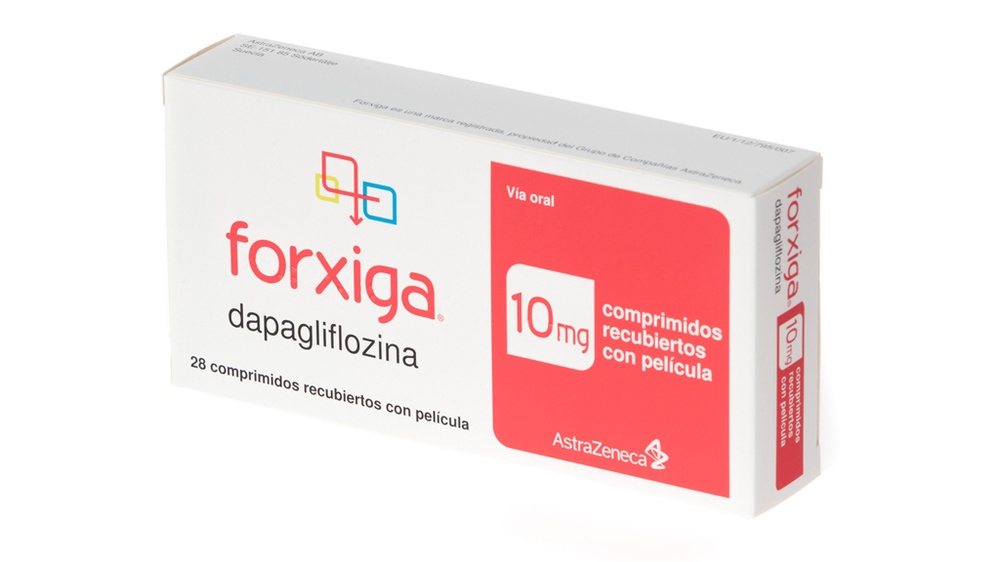
- País de registro
- Forma farmacéuticaCOMPRIMIDO, 10 mg
- Código ATCA10BK01
- Precio medio en farmacia46.02 EUR
- Principio activo
- Requiere recetaSí
- Fabricante
- ComposiciónLACTOSA ANHIDRA (50 mg mg)
- Esta información es de carácter general y no sustituye la consulta con un profesional sanitario.
- Alternativas a FORXIGA 10 MG COMPRIMIDOS RECUBIERTOS CON PELICULAForma farmacéutica: COMPRIMIDO, 10 mgPrincipio activo: dapagliflozinFabricante: Viatris LimitedRequiere recetaForma farmacéutica: COMPRIMIDO, 5 mgPrincipio activo: dapagliflozinFabricante: Viatris LimitedRequiere recetaForma farmacéutica: COMPRIMIDO, 10 mgPrincipio activo: dapagliflozinFabricante: Krka D.D. Novo MestoRequiere receta
Médicos online para FORXIGA 10 MG COMPRIMIDOS RECUBIERTOS CON PELICULA
Comenta la dosis, los posibles efectos secundarios, interacciones, contraindicaciones o la revisión de receta de FORXIGA 10 MG COMPRIMIDOS RECUBIERTOS CON PELICULA, sujeto a valoración médica y a la normativa local.

Obtén una receta de FORXIGA 10 MG COMPRIMIDOS RECUBIERTOS CON PELICULA online
Rellena un formulario de 2 minutos
Cuéntanos tus síntomas, historial y el medicamento que necesitas.
Elige un médico o nosotros te asignamos uno
Escoge un especialista o te conectamos con el próximo médico disponible.
El médico revisa tu caso
Normalmente en 30 minutos. Puede hacerte preguntas adicionales por chat.
Recógela en cualquier farmacia
Receta electrónica enviada a tu correo, válida en toda España.
Preguntas frecuentes
FORXIGA 10 MG COMPRIMIDOS RECUBIERTOS CON PELICULA requiere receta en España. Puedes confirmarlo con un médico online según tu caso.
El principio activo de FORXIGA 10 MG COMPRIMIDOS RECUBIERTOS CON PELICULA es dapagliflozin. Esta información ayuda a identificar medicamentos con la misma composición pero con diferentes nombres comerciales.
El precio medio en farmacia de FORXIGA 10 MG COMPRIMIDOS RECUBIERTOS CON PELICULA es de aproximadamente 46.02 EUR. Puede variar según el fabricante y la forma farmacéutica.
FORXIGA 10 MG COMPRIMIDOS RECUBIERTOS CON PELICULA es fabricado por Astrazeneca Ab. La marca y el envase pueden variar según el distribuidor.
Los Médicos de familia, Psiquiatras, Dermatólogos, Cardiólogos, Endocrinólogos, Gastroenterólogos, Neumólogos, Nefrólogos, Reumatólogos, Hematólogos, Infectólogos, Alergólogos, Geriatras, Pediatras, Oncólogos pueden valorar la prescripción de FORXIGA 10 MG COMPRIMIDOS RECUBIERTOS CON PELICULA cuando esté clínicamente indicado. Puedes reservar una videoconsulta para comentar tu caso y las opciones de tratamiento.
España cuenta con una infraestructura sanitaria bien desarrollada en ciudades principales como Madrid, Barcelona, Valencia y Sevilla. Las farmacias están ampliamente disponibles y operan bajo estrictas regulaciones, garantizando el acceso a medicamentos con receta.
Puedes comprar FORXIGA 10 MG COMPRIMIDOS RECUBIERTOS CON PELICULA en Madrid, Barcelona, Sevilla o Valencia en cualquier farmacia local con una receta válida.
Para obtener una receta, puedes utilizar Oladoctor:
Otros medicamentos con el mismo principio activo (dapagliflozin) incluyen DAFORBIS 10 MG COMPRIMIDOS RECUBIERTOS CON PELICULA EFG, DAFORBIS 5 MG COMPRIMIDOS RECUBIERTOS CON PELICULA EFG, DAPAGLIFLOZINA KRKA 10 MG COMPRIMIDOS RECUBIERTOS CON PELÍCULA EFG. Pueden tener diferentes nombres comerciales o formulaciones, pero contienen el mismo componente terapéutico. Consulta siempre con un médico antes de cambiar o iniciar un nuevo medicamento.
