



EBASTINA 10 mg Comprimidos Bucodispersables

Revisión de receta online
Un médico revisará tu caso y determinará si la prescripción es médicamente apropiada.

Habla con un médico sobre este medicamento
Comenta tus síntomas y las opciones de tratamiento en una consulta online.



Cómo usar EBASTINA SANDOZ 10 MG COMPRIMIDOS BUCODISPERSABLES EFG
Contenido del prospecto
- Introducción
- Qué es Ebastina Sandoz y para qué se utiliza
- Qué necesita saber antes de empezar a tomar Ebastina Sandoz
- Cómo tomar Ebastina Sandoz
- Posibles efectos adversos
- Conservación de Ebastina Sandoz
- Contenido del envase e información adicional
Introducción
Prospecto: información para el paciente
Ebastina Sandoz 10 mg comprimidos bucodispersables EFG
Ebastina Sandoz 20 mg comprimidos bucodispersables EFG
Lea todo el prospecto detenidamente antes de empezar a tomar este medicamento, porque contiene información importante para usted.
- Conserve este prospecto, ya que puede tener que volver a leerlo.
- Si tiene alguna duda, consulte a su médico o farmacéutico.
- Este medicamento se le ha recetado solamente a usted, y no debe dárselo a otras personas, aunque tengan los mismos síntomas que usted, ya que puede perjudicarles.
- Si experimenta efectos adversos, consulte a su médico o farmacéutico, incluso si se trata de efectos adversos que no aparecen en este prospecto. Ver sección 4.
Contenido del prospecto
- Qué es Ebastina Sandoz y para qué se utiliza
- Qué necesita saber antes de empezar a tomar Ebastina Sandoz
- Cómo tomar Ebastina Sandoz
- Posibles efectos adversos
- Conservación de Ebastina Sandoz
- Contenido del envase e información adicional
1. Qué es Ebastina Sandoz y para qué se utiliza
Ebastina es un antihistamínico que ayuda a aliviar los síntomas de la alergia tales como: ganas de estornudar, moqueo, lagrimeo, picores a causa de sarpullido en la piel.
Ebastina se utiliza en adultos y niños mayores de 12 años de edad para aliviar los síntomas de la rinitis alérgica primaveral (fiebre del heno) y rinitis alérgica perenne, incluyendo los casos con conjuntivitis alérgica.
Ebastina comprimidos de 10 mg también se utiliza en adultos mayores de 18 años de edad para aliviar los síntomas de los picores y el desarrollo de habones en aquellos casos de urticaria (ronchas).

¿No estás seguro de si este medicamento es adecuado para ti?
Comenta tus síntomas y tratamiento con un médico online.
2. Qué necesita saber antes de empezar a tomar Ebastina Sandoz
No tome Ebastina Sandoz:
- Si es alérgico a ebastina o a alguno de los demás componentes de este medicamento (incluidos en la sección 6).
Advertencias y precauciones
Consulte a su médico o farmacéutico antes de empezar a tomar Ebastina Sandoz si:
- ya está tomando ciertos antibióticos o medicamentos utilizados para tratar infecciones por hongos: ver sección “Toma deEbastina Sandoz conotros medicamentos”más adelante,
- tienelafunción del hígado gravemente alterada (insuficiencia hepática).
Niños y adolescentes
Este medicamento sólo se debe usar en niños a partir de 12 años de edad. No administre este medicamento a niños menores de 12 años ya que no se ha establecido la seguridad y eficacia en este grupo de pacientes.
Toma de Ebastina Sandoz con otros medicamentos
Informe a su médico o farmacéutico si está tomando, ha tomado recientemente o pudiera tener que tomar cualquier otro medicamento.
Si toma ebastina junto con eritromicina (antibiótico), ketoconazol o itraconazol (principios activos para el tratamiento de las infecciones fúngicas), puede aumentar los niveles en sangre de ebastina.
La administración concomitante de ebastina y rifampicina (agente antituberculoso) puede dar lugar a una disminución de los niveles de ebastina en sangre y por lo tanto a una disminución del efecto.
No está recomendado el uso de ebastina al mismo tiempo que claritromicina o josamicina (antibióticos).
Toma de Ebastina Sandoz con los alimentos y bebidas
Ebastina Sandoz se puede tomar con o sin alimentos.
Embarazo, lactancia y fertilidad
No existen datos suficientes a fecha de hoy acerca de la seguridad para el feto del uso de este medicamento en humanos. Por esta razón, tan sólo se debe tomar ebastina durante el embarazo en aquellos casos en los que su médico considere que el beneficio supera los posibles riesgos.
No tome ebastina si está en periodo de lactancia, ya que se desconoce si el principio activo se excreta en la leche materna.
Si está embarazada o en periodo de lactancia, cree que podría estar embarazada o tiene intención de quedarse embarazada, consulte a su médico o farmacéutico antes de utilizar este medicamento.
Conducción y uso de máquinas
La mayoría de los pacientes que toman ebastina pueden conducir o llevar a cabo otras actividades que requieren capacidad para reaccionar. No obstante, tal y como sucede con otros medicamentos, debe comprobar su reacción individual tras tomar ebastina antes de conducir o llevar a cabo actividades complicadas, algunos pacientes pueden experimentar somnolencia o mareos.
Ebastina Sandoz contiene lactosa, aspartamo y sodio.
Este medicamento contiene lactosa. Si su médico le ha indicado que padece una intolerancia a ciertos azúcares, consulte con él antes de tomar este medicamento.
Este medicamento contiene 2,5 mg de aspartamo (E951) por comprimido de 10 mg y 5 mg de aspartamo (E951) por comprimido de 20 mg. El aspartamo contiene una fuente de fenilalanina que puede ser perjudicial en caso de padecer fenilcetonuria (FCN), una enfermedad genética rara en la que la fenilalanina se acumula debido a que el organismo no es capaz de eliminarla correctamente.
Este medicamento contiene menos de 23 mg de sodio (1 mmol) por comprimido bucodispersable, esto es, esencialmente “exento de sodio”.
3. Cómo tomar Ebastina Sandoz
Siga exactamente las instrucciones de administración de este medicamento indicadas por su médico o farmacéutico. En caso de duda, consulte de nuevo a su médico o farmacéutico.
La dosis recomendada es:
Indicación | Edad | Dosis |
Rinitis alérgica En caso de síntomas intensos | Niños a partir de 12 años de edad y adultos | Un comprimido de ebastina 10 mg (10 mg de ebastina) una vez al día. Dos comprimidos de ebastina 10 mg o un comprimido de ebastina 20 mg (20 mg de ebastina) una vez al día. |
Urticaria | Adultos mayores de 18 años de edad | Un comprimido de ebastina 10 mg (10 mg de ebastina) una vez al día. |
En pacientes con la función renal alterada, no es necesario realizar un ajuste de la dosis.
En pacientes con alteración leve o moderada de la función hepática, no es necesario realizar un ajuste de la dosis.
No existe experiencia a dosis mayores de 10 mg en pacientes con insuficiencia hepática grave, por lo tanto la dosis no debe exceder los 10 mg en este tipo de pacientes.
No presione el comprimido para sacarlo del alvéolo, ya que se puede romper.
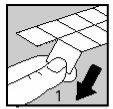
Cada blíster contiene los comprimidos por separado en alvéolos separados por una línea de perforación.
Corte uno de los alvéolos por la línea de puntos (Figura 1)
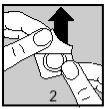
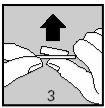
A continuación, retire con cuidado la lámina de aluminio, separándola por la esquina que viene indicada por una flecha (Figuras 2 y 3).
Mantenga sus manos secas para sacar el comprimido fuera del alvéolo.
Ponga su comprimido sobre su lengua donde se disuelve en cuestión de segundos, no es necesario tomar agua o cualquier otro líquido.
Ebastina se puede tomar con o sin alimentos
Su médico le indicará la duración del tratamiento.
Si toma más Ebastina Sandoz del que debe
No existe ningún antídoto especial para el principio activo ebastina.
En caso de sobredosis con ebastina, por favor, consulte con su médico. Dependiendo de la gravedad de la intoxicación, su médico iniciará las medidas pertinentes (monitorización de las funciones vitales del cuerpo, incluyendo monitorización ECG durante al menos 24 horas, tratamiento sintomático y lavado gástrico) si es necesario.
En caso de sobredosis o ingestión accidental, consulte inmediatamente a su médico o farmacéutico o llame al Servicio de Información Toxicología, teléfono: 91 562 04 20, indicando el medicamento y la cantidad ingerida.
Si olvidó tomar Ebastina Sandoz
No tome una dosis doble para compensar las dosis olvidadas.
Si tiene cualquier otra duda sobre el uso de este medicamento, pregunte a su médico o farmacéutico.

¿Has empezado a tomar el medicamento y tienes preguntas?
Comenta tus síntomas y tratamiento con un médico online.
4. Posibles efectos adversos
Al igual que todos los medicamentos, este medicamento puede producir efectos adversos, aunque no todas las personas los sufran.
Deje de tomar Ebastina Sandoz y contacte con su médico inmediatamente o diríjase al hospital más cercano si ocurre lo siguiente:
Reacción alérgica grave que causa picor e hinchazón en la cara, lengua o garganta y que puede causar dificultad para tragar o respirar.
Las reacciones adversas alérgicas graves con ebastina son raras (pueden afectar hasta 1 de cada 1000 personas).
Otros efectos adversos incluyen:
Efectos adversos muy frecuentespueden afectar a más de 1 de cada 10 personas
- dolor de cabeza.
Efectos adversos frecuentespueden afectar hasta 1 de cada 10 personas
- somnolencia
- sequedad de boca.
Efectos adversos rarospueden afectar hasta 1 de cada 1.000 personas
- nerviosismo, insomnio,
- mareo, disminución de la sensación del tacto, alteración del gusto,
- palpitaciones, pulso acelerado,
- dolor abdominal, vómitos, náuseas, indigestión,
- inflamación del hígado (hepatitis), problemas con la eliminación de bilis (colestasis), pruebas analíticas del funcionamiento del hígado anómalas,
- erupción cutánea, ronchas, inflamación de la piel,
- trastornos menstruales,
- edema (hinchazón por acumulación de líquido en los tejidos), debilidad (astenia).
Frecuencia no conocida: no puede estimarse a partir de los datos disponibles
- incremento de peso,
- incremento del apetito.
Comunicación de efectos adversos
Si experimenta cualquier tipo de efecto adverso, consulte a su médico o farmacéutico, incluso si se trata de posibles efectos adversos que no aparecen en este prospecto. También puede comunicarlos directamente a través del Sistema Español de Farmacovigilancia de medicamentos de Uso Humano: http://www.notificaram.es. Mediante la comunicación de efectos adversos usted puede contribuir a proporcionar más información sobre la seguridad de este medicamento.
5. Conservación de Ebastina Sandoz
Mantener este medicamento fuera de la vista y del alcance de los niños.
No utilice este medicamento después de la fecha de caducidad que aparece en el blíster y en el envase después de CAD. La fecha de caducidad es el último día del mes que se indica.
Conservar en el embalaje original para protegerlo de la luz.
Los medicamentos no se deben tirar por los desagües ni a la basura. Deposite los envases y los medicamentos que no necesita en el Punto SIGRE de la farmacia. En caso de duda pregunte a su farmacéutico cómo deshacerse de los envases y de los medicamentos que no necesita. De esta forma, ayudará a proteger el medio ambiente.
6. Contenido del envase e información adicional
Composición de Ebastina Sandoz
- El principio activo es ebastina.
- Ebastina Sandoz 10 mg: cada comprimido bucodispersable contiene 10 mg de ebastina.
- Ebastina Sandoz 20 mg: cada comprimido bucodispersable contiene 20 mg de ebastina.
- Los demás componentes son celulosa microcristalina, lactosa monohidrato, almidón de maíz, croscarmelosa sódica, aspartamo (E951), aroma de menta, sílice coloidal anhidra y estearato de magnesio.
Aspecto del producto y contenido del envase
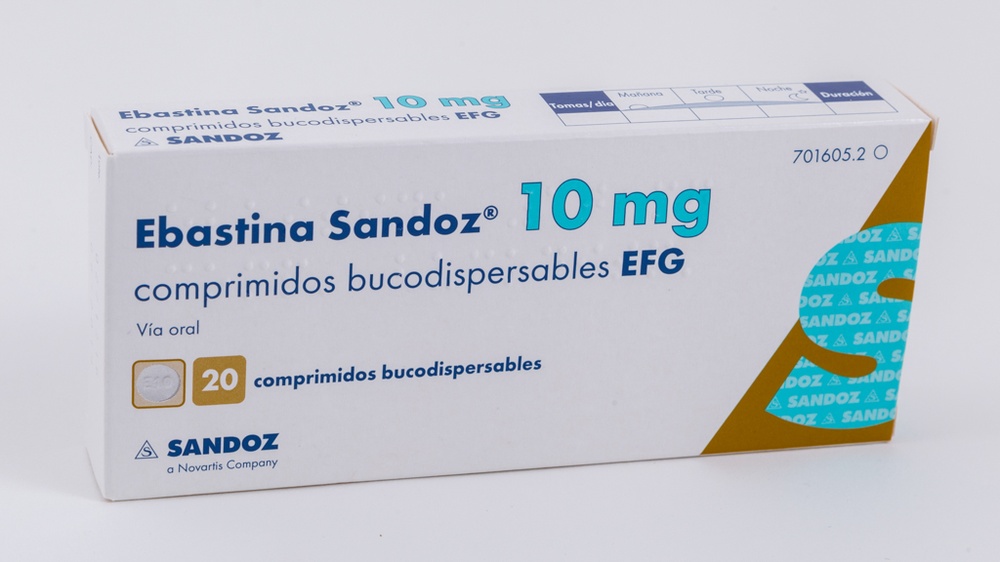
Comprimido bucodispersable.
Ebastina Sandoz 10 mg:
Comprimidos blancos, biconvexos, redondos, de aproximadamente 6,7 mm de diámetro, marcados con “E10” en una de las caras y lisa en otra de las caras.
Ebastina Sandoz 20 mg:
Comprimidos blancos, biconvexos, redondos, de aproximadamente 9,2 mm de diámetro, marcados con “E20” en una de las caras y lisa en otra de las caras.
Los comprimidos se acondicionan en blísteres de OPA/Alu/PVC/Alu acondicionados en envases de cartón.
Tamaños de envase:
Ebastina Sandoz 10 mg:
10, 20, 30, 40, 50, 90, 98 o 100 comprimidos bucodispersables.
Ebastina Sandoz 20 mg:
10, 15, 20, 30, 40, 50, 98 o 100 comprimidos bucodispersables.
Puede que solamente estén comercializados algunos tamaños de envase.
Titular de la autorización de comercialización y responsable de la fabricación
Titular de la autorización de fabricación
Sandoz Farmacéutica, S.A.
Centro Empresarial Parque Norte
Edificio Roble
C/ Serrano Galvache, 56
28033 Madrid
España
Responsable de la fabricación
Lek Pharmaceuticals d.d.
Verovškova 57,
1526 Ljubljana
Eslovenia
TEVA Pharmaceutical Works Private Limited Company
Pallagi út 13, 4042 Debrecen
Hungria
o
Teva Pharma, S.L.U.
C/Anabel segura 11, Edificio Albatros B, 1a planta, Alcobendas, 28108
Madrid
España
Este medicamento está autorizado en los estados miembros del Espacio Económico Europeo con lossiguientes nombres:
Bélgica: Ebastine Sandoz 10 mg orodispergeerbare tabletten
Italia: Ebastina Sandoz
Suecia: Ebastine Sandoz, 10 mg munsönderfallande tablett
Ebastine Sandoz, 20 mg munsönderfallande tablett
Fechadelaúltimarevisióndeesteprospecto:agosto de 2020
La información detallada de este medicamento está disponible en la página web de la Agencia Española de Medicamentos y Productos Sanitarios (AEMPS) http://www.aemps.gob.es/
- País de registro
- Forma farmacéuticaCOMPRIMIDO BUCODISPERSABLE/LIOTAB, 10 mg
- Código ATCR06AX22
- Precio medio en farmacia4.4 EUR
- Principio activo
- Requiere recetaSí
- Fabricante
- ComposiciónLACTOSA MONOHIDRATO (29.7 mg mg), CROSCARMELOSA SODICA (15.0 mg mg), ASPARTAMO (E-951) (2.5 mg mg)
- Esta información es de carácter general y no sustituye la consulta con un profesional sanitario.
- Alternativas a EBASTINA SANDOZ 10 MG COMPRIMIDOS BUCODISPERSABLES EFGForma farmacéutica: COMPRIMIDO, 10 mg ebastinaPrincipio activo: EbastinaFabricante: Laboratorios Almirall S.L.No requiere recetaForma farmacéutica: COMPRIMIDO BUCODISPERSABLE/LIOTAB, 10 mgPrincipio activo: EbastinaFabricante: Laboratorios Almirall S.L.No requiere recetaForma farmacéutica: COMPRIMIDO, 20 mg ebastinaPrincipio activo: EbastinaFabricante: Laboratorios Almirall S.L.No requiere receta
Médicos online para EBASTINA SANDOZ 10 MG COMPRIMIDOS BUCODISPERSABLES EFG
Comenta la dosis, los posibles efectos secundarios, interacciones, contraindicaciones o la revisión de receta de EBASTINA SANDOZ 10 MG COMPRIMIDOS BUCODISPERSABLES EFG, sujeto a valoración médica y a la normativa local.









Obtén una receta de EBASTINA SANDOZ 10 MG COMPRIMIDOS BUCODISPERSABLES EFG online
Rellena un formulario de 2 minutos
Cuéntanos tus síntomas, historial y el medicamento que necesitas.
Elige un médico o nosotros te asignamos uno
Escoge un especialista o te conectamos con el próximo médico disponible.
El médico revisa tu caso
Normalmente en 30 minutos. Puede hacerte preguntas adicionales por chat.
Recógela en cualquier farmacia
Receta electrónica enviada a tu correo, válida en toda España.
Preguntas frecuentes
EBASTINA SANDOZ 10 MG COMPRIMIDOS BUCODISPERSABLES EFG requiere receta en España. Puedes confirmarlo con un médico online según tu caso.
El principio activo de EBASTINA SANDOZ 10 MG COMPRIMIDOS BUCODISPERSABLES EFG es Ebastina. Esta información ayuda a identificar medicamentos con la misma composición pero con diferentes nombres comerciales.
El precio medio en farmacia de EBASTINA SANDOZ 10 MG COMPRIMIDOS BUCODISPERSABLES EFG es de aproximadamente 4.4 EUR. Puede variar según el fabricante y la forma farmacéutica.
EBASTINA SANDOZ 10 MG COMPRIMIDOS BUCODISPERSABLES EFG es fabricado por Sandoz Farmaceutica S.A.. La marca y el envase pueden variar según el distribuidor.
Los Médicos de familia, Psiquiatras, Dermatólogos, Cardiólogos, Endocrinólogos, Gastroenterólogos, Neumólogos, Nefrólogos, Reumatólogos, Hematólogos, Infectólogos, Alergólogos, Geriatras, Pediatras, Oncólogos pueden valorar la prescripción de EBASTINA SANDOZ 10 MG COMPRIMIDOS BUCODISPERSABLES EFG cuando esté clínicamente indicado. Puedes reservar una videoconsulta para comentar tu caso y las opciones de tratamiento.
España cuenta con una infraestructura sanitaria bien desarrollada en ciudades principales como Madrid, Barcelona, Valencia y Sevilla. Las farmacias están ampliamente disponibles y operan bajo estrictas regulaciones, garantizando el acceso a medicamentos con receta.
Puedes comprar EBASTINA SANDOZ 10 MG COMPRIMIDOS BUCODISPERSABLES EFG en Madrid, Barcelona, Sevilla o Valencia en cualquier farmacia local con una receta válida.
Para obtener una receta, puedes utilizar Oladoctor:
Otros medicamentos con el mismo principio activo (Ebastina) incluyen BACTIL 10 mg COMPRIMIDOS RECUBIERTOS CON PELICULA, BACTIL FLAS 10 MG LIOFILIZADOS ORALES, BACTIL FORTE 20 mg COMPRIMIDOS RECUBIERTOS CON PELICULA. Pueden tener diferentes nombres comerciales o formulaciones, pero contienen el mismo componente terapéutico. Consulta siempre con un médico antes de cambiar o iniciar un nuevo medicamento.
