



DOVATO 50 mg/300 mg Comprimidos Recubiertos Con Pelicula

Revisión de receta online
Un médico revisará tu caso y determinará si la prescripción es médicamente apropiada.

Habla con un médico sobre este medicamento
Comenta tus síntomas y las opciones de tratamiento en una consulta online.



Cómo usar DOVATO 50 MG/300 MG COMPRIMIDOS RECUBIERTOS CON PELICULA
Contenido del prospecto
- Introducción
- Qué es Dovato y para qué se utiliza
- Qué necesita saber antes de empezar a tomar Dovato
- Cómo tomar Dovato
- Posibles efectos adversos
- Conservación de Dovato
- Contenido del envase e información adicional
Introducción
Prospecto: información para el paciente
Dovato50mg/300mg comprimidos recubiertos con película
dolutegravir/lamivudina
Lea todo el prospecto detenidamente antes de empezar a tomar este medicamento, porque contiene información importante para usted.
- Conserve este prospecto, ya que puede tener que volver a leerlo.
- Si tiene alguna duda, consulte a su médico o farmacéutico.
- Este medicamento se le ha recetado solamente a usted, y no debe dárselo a otras personas aunque tengan los mismos síntomas que usted, ya que puede perjudicarles.
- Si experimenta efectos adversos, consulte a su médico o farmacéutico, incluso si se trata de efectos adversos que no aparecen en este prospecto. Ver sección 4.
Contenido del prospecto
- Qué es Dovato y para qué se utiliza
- Qué necesita saber antes de empezar a tomar Dovato
- Cómo tomar Dovato
- Posibles efectos adversos
- Conservación de Dovato
- Contenido del envase e información adicional
1. Qué es Dovato y para qué se utiliza
Dovato es un medicamento que contiene dos principios activos usados para tratar la infección por el virus de la inmunodeficiencia humana (VIH): dolutegravir y lamivudina. Dolutegravir pertenece al grupo de medicamentos antirretrovirales llamados inhibidores de la integrasa(INI) y lamivudina pertenece a un grupo de medicamentos antirretrovirales denominados inhibidores de la transcriptasa inversa análogos de nucleósido(ITIAN).
Dovato se usa para tratar la infección por el VIH en adultos y adolescentes mayores de 12 años de edad que pesan al menos 40 kg.
Dovato no cura la infección por el VIH; mantiene la cantidad de virus en su cuerpo en un nivel bajo. Esto ayuda a mantener el número de células CD4 en la sangre. Las células CD4 son un tipo de glóbulos blancos que son importantes para ayudar a su cuerpo a combatir las infecciones.
No todas las personas responden al tratamiento con Dovato de la misma manera. Su médico vigilará la efectividad de su tratamiento.

¿No estás seguro de si este medicamento es adecuado para ti?
Comenta tus síntomas y tratamiento con un médico online.
2. Qué necesita saber antes de empezar a tomar Dovato
No tome Dovato
- si es alérgico(hipersensible) a dolutegravir o lamivudina o a alguno de los demás componentes de este medicamento (incluidos en la sección 6)
- si está tomando un medicamento llamado fampridina(también conocido como dalfampridina; utilizado para tratar la esclerosis múltiple).
- Si cree que algo de esto le aplica, consulte a su médico.
Advertencias y precauciones
Algunas personas que toman Dovato u otros tratamientos combinados frente al VIH tienen un mayor riesgo de desarrollar efectos adversos graves que otras. Usted necesita saber que hay un mayor riesgo:
- si tiene una enfermedad hepática moderada o grave
- si alguna vez ha tenido una enfermedad hepática, incluyendo hepatitis B o C (si tiene hepatitis B no deje de tomar Dovato sin el consejo de su médico, ya que podría empeorar)
- si tiene un problema de riñón.
- Consulte a su médico antes de empezar a tomar Dovatosi le aplica alguna de estas condiciones. Puede necesitar pruebas adicionales, incluyendo análisis de sangre, mientras toma este medicamento. Para más información, ver sección 4.
Reacciones alérgicas
Dovato contiene dolutegravir. Dolutegravir puede producir una reacción alérgica grave conocida como reacción de hipersensibilidad.Usted necesita saber a qué signos y síntomas importantes debe estar atento mientras esté tomando Dovato.
Lea la información“Reacciones alérgicas” en la sección 4 de este prospecto.
Esté atento a los síntomas importantes
Algunas personas que toman medicamentos para la infección por el VIH desarrollan otros trastornos, que pueden ser graves. Estos incluyen:
- síntomas de infecciones e inflamación
- dolor en las articulaciones, rigidez y problemas de huesos.
Usted necesita saber a qué signos y síntomas importantes debe estar atento mientras esté tomando Dovato.
- Lea la información sobre “Otros posibles efectos adversos” en la sección 4de este prospecto.
Niñosy adolescentes
Este medicamento no está indicado en niños menores de 12 años y adolescentes que pesen menos de 40 kg, porque no ha sido estudiado en estos pacientes.
Otros medicamentos y Dovato
Informe a su médico si está tomando, ha tomado recientemente o pudiera tener que tomar cualquier otro medicamento.
No tome Dovato con el siguiente medicamento:
- fampridina (también conocido como dalfampridina), utilizado para tratar la esclerosis múltiple.
Algunos medicamentos pueden afectar al funcionamiento de Dovato o aumentar la probabilidad de sufrir efectos adversos. Dovato también puede afectar al funcionamiento de algunos otros medicamentos.
Informe a su médicosi está tomando alguno de los siguientes medicamentos:
- metformina, para tratar la diabetes
- medicamentos llamados antiácidos, para tratar la indigestióny el ardor de estómago. No tome un antiácidodurante las 6 horas antes de tomar Dovato, o por lo menos 2 horas después de tomarlo (ver también sección 3, “Cómo tomar Dovato”).
- suplementos o multivitamínicos que contienen calcio, hierro o magnesio. Si toma Dovato con comida, puede tomar los suplementos o multivitamínicos que contengan calcio, hierro o magnesio a la vez que Dovato. Si no toma Dovato con comida, no puede tomar un suplemento o multivitamínico que contenga calcio, hierro o magnesiodurante las 6 horas antes de tomar Dovato, o por lo menos 2 horas después de tomarlo (ver también sección 3, “Cómo tomar Dovato”).
- emtricitabina, etravirina, efavirenz, nevirapina o tipranavir/ritonavir, para tratar la infección por el VIH
- medicamentos (generalmente líquidos) que contengan sorbitol y otros polialcoholes (como xilitol, manitol, lactitol o maltitol), si se toman con regularidad
- cladribina, utilizada para tratar la leucemiao la esclerosis múltiple
- rifampicina, para tratar la tuberculosis (TB) y otras infecciones bacterianas
- fenitoína y fenobarbital, para tratar la epilepsia
- oxcarbazepina y carbamazepina, para tratar la epilepsiao el trastorno bipolar
- hierba de San Juan(Hypericum perforatum), un medicamento a base de plantas para tratar la depresión.
- Informe a su médico o farmacéuticosi está tomando alguno de estos medicamentos. Su médico puede decidir ajustar su dosis o que usted necesite chequeos adicionales.
Embarazo
Si está embarazada, cree que podría estar embarazada o tiene intención de quedarse embarazada:
- Consulte a su médicosobre los riegos y beneficios de tomar Dovato.
Informe a su médico de inmediato si se queda embarazada o tiene intención de quedarse embarazada. Su médico revisará su tratamiento. No interrumpa el tratamiento con Dovato sin consultar a su médico, ya que esto podría dañarles a usted y a su hijo.
Lactancia
No se recomiendaque las mujeres que conviven con el VIH den el pecho porque la infección por VIH puede transmitirse al bebé a través de la leche materna.
Una pequeña cantidad de los componentes de Dovato también pueden pasar a la leche materna.
Si está dando el pecho o piensa en dar el pecho, debe consultar con su médico lo antes posible.
Conducción y uso de máquinas
Dovato puede hacer que se sienta mareado y puede tener otros efectos adversos que reduzcan su atención.
- No conduzca ni maneje maquinaria, a menos que esté seguro que no está afectado.
Dovato contiene sodio
Este medicamento contiene menos de 1 mmol de sodio (23 mg) por comprimido; esto es, esencialmente “exento de sodio”.
3. Cómo tomar Dovato
Siga exactamente las instrucciones de administración de este medicamento indicadas por su médico. En caso de duda, consulte de nuevo a su médico o farmacéutico.
- La dosis recomendada de Dovato es un comprimido una vez al día.
Trague el comprimido con un poco de líquido. Dovato se puede tomar con o sin alimentos.
El envase de Dovato en blíster para 30 días; contiene cuatro blísteres de 7 comprimidos y un blíster de 2 comprimidos. Para ayudarle a realizar el seguimiento de la toma del medicamento durante 30 días, los blísteres de 7 comprimidos incluyen los días impresos de la semana y el blíster de 2 comprimidos incluye dos recuadros vacíos en los que se puede escribir el día que corresponda.
Uso enadolescentes
Los adolescentes de entre 12 y 17 años y que pesen por lo menos 40 kg pueden tomar la dosis de adultos de un comprimido una vez al día.
Medicamentos antiácidos
Los antiácidos para tratar la indigestión y el ardor de estómago pueden hacer que Dovato no sea absorbido por su cuerpo y hacerlo menos efectivo.
No tome un antiácido durante las 6 horas antes de tomar Dovato, o por lo menos 2 horas después de tomarlo.
Otros medicamentos que disminuyen la acidez, como ranitidina y omeprazol, pueden tomarse al mismo tiempo que Dovato.
- Consulte con su médico para que le aconseje sobre qué medicamentos contra la acidez puede tomar con Dovato.
Suplementos o multivitamínicos que contienen calcio, hierro o magnesio
Los suplementos o multivitamínicos que contengan calcio, hierro o magnesio pueden hacer que Dovato no sea absorbido en su cuerpo y hacerlo menos efectivo.
Si toma Dovato con comida, puede tomar los suplementos o multivitamínicos que contengan calcio, hierro o magnesio a la vez que Dovato. Si no toma Dovato con comida, no puede tomar un suplemento o multivitamínico que contenga calcio, hierro o magnesio durante las 6 horas antes de tomar Dovato, o por lo menos 2 horas después de tomarlo.
- Consulte con su médico para que le aconseje sobre cómo tomar suplementos o multivitamínicos que contengan calcio, hierro o magnesio con Dovato.
Si toma másDovatodel que debe
Si excede el número de comprimidos de Dovato, contacte con su médico o farmacéutico para que le aconseje. Si es posible, muéstreles la caja de Dovato.
Si olvidó tomarDovato
Si olvida una dosis, tómela tan pronto como lo recuerde. Pero si quedan menos de 4 horas para su próxima dosis, sáltese esa dosis que olvidó y tome la siguiente a la hora habitual. Luego continúe su tratamiento como antes.
- No tome una dosis doblepara compensar las dosis olvidadas.
No interrumpa el tratamiento con Dovato sin la recomendación de su médico
Tome Dovato hasta que su médico se lo indique. No deje de tomarlo a menos que su médico se lo aconseje. La interrupción del tratamiento con Dovato puede afectar a su salud y al funcionamiento futuro del tratamiento.
Si tiene cualquier otra duda sobre el uso de este medicamento, pregunte a su médico o farmacéutico.

¿Has empezado a tomar el medicamento y tienes preguntas?
Comenta tus síntomas y tratamiento con un médico online.
4. Posibles efectos adversos
Al igual que todos los medicamentos, este medicamento puede producir efectos adversos, aunque no todas las personas los sufran, por lo que es muy importante que le comente a su médico cualquier cambio en su estado de salud.
Reacciones alérgicas
Dovato contiene dolutegravir. Dolutegravir puede producir una reacción alérgica grave conocida como reacción de hipersensibilidad.Esta es una reacción poco frecuente (puede afectar hasta 1 de cada 100 personas) en personas que toman dolutegravir. Si tiene alguno de los siguientes síntomas:
- erupción cutánea
- una temperatura alta (fiebre)
- falta de energía (cansancio)
- hinchazón, a veces de la cara o la boca (angioedema), que causa dificultad para respirar
- dolores musculares o articulares.
- Acuda a un médico inmediatamente.Su médico puede decidir realizar pruebas hepáticas, de riñón o sanguíneas y puede que le indique que deje de tomar Dovato.
Efectos adversos muy frecuentes
Estos pueden afectar a más de 1 de cada 10personas:
- dolor de cabeza
- diarrea
- náuseas.
Efectos adversos frecuentes
Estos pueden afectar hasta 1 de cada 10personas:
- depresión (sensación de tristeza profunda y falta de autoestima)
- erupción cutánea
- picor (prurito)
- vómitos
- dolor o molestias en el estómago (abdominal)
- aumento de peso
- gases (flatulencia)
- mareo
- somnolencia
- dificultad para conciliar el sueño (insomnio)
- sueños anormales
- falta de energía (cansancio)
- pérdida de cabello
- ansiedad
- dolor articular
- dolor muscular.
Los efectos adversos frecuentes que pueden aparecer en los análisis de sangre son:
- aumento en el nivel de las enzimas del hígado (aminotransferasas)
- aumento en el nivel de las enzimas producidas en los músculos (creatinfosfoquinasa).
Efectos adversos poco frecuentes
Estos pueden afectar hasta 1 de cada 100personas:
- inflamación del hígado (hepatitis)
- intento de suicidio (especialmente en pacientes que anteriormente han tenido depresión o problemas de salud mental)
- pensamientos suicidas (especialmente en pacientes que anteriormente han tenido depresión o problemas de salud mental)
- crisis de angustia.
Los efectos adversos poco frecuentes que pueden aparecer en los análisis de sangre son:
- una disminución de las células involucradas en la coagulación sanguínea (trombocitopenia)
- un recuento bajo de glóbulos rojos (anemia) o recuento bajo de glóbulos blancos (neutropenia).
Efectos adversos raros
Estos pueden afectar hasta1 de cada 1000personas:
- insuficiencia hepática (los signos pueden incluir coloración amarillenta de la piel y del blanco de los ojos u orina inusualmente oscura)
- hinchazón, a veces de la cara o la boca (angioedema), causando dificultad para respirar
- inflamación del páncreas (pancreatitis)
- rotura del tejido muscular
- suicidio (especialmente en pacientes que anteriormente han tenido depresión o problemas de salud mental).
- Informe a su médico de inmediatosi experimenta algún problema de salud mental (consulte también otros problemas de salud mental que aparecen más arriba).
Los efectos adversos raros que pueden aparecer en los análisis de sangre son:
- aumento de bilirrubina (prueba de función del hígado)
- aumento de una enzima llamada amilasa.
Efectos adversos muy raros
Estos pueden afectar hasta1 de cada 10000personas:
- acidosis láctica (exceso de ácido láctico en la sangre)
- entumecimiento, sensación de hormigueo en la piel (pinchazos)
- sensación de debilidad en las extremidades.
Los efectos adversos muy raros que pueden aparecer en los análisis de sangre son:
- un fallo de la médula ósea en producir nuevos glóbulos rojos (aplasia pura de glóbulos rojos).
Otros posibles efectos adversos
Las personas que toman un tratamiento de combinación para el VIH pueden tener otros efectos adversos.
Síntomas de infección e inflamación
Las personas con infección por el VIH avanzada (SIDA) tienen un sistema inmunitario debilitado y es más probable que desarrollen infecciones graves (infecciones oportunistas). Tales infecciones pueden haberse desarrollado de manera "silenciosa", no siendo detectadas por el sistema inmunitario debilitado antes de que el tratamiento se iniciara. Después de iniciar el tratamiento, el sistema inmunitario se vuelve más fuerte y puede luchar contra estas infecciones, lo que puede causar síntomas de infección o inflamación. Los síntomas generalmente incluyen fiebre, además de algunos de los siguientes:
- dolor de cabeza
- dolor de estómago
- dificultad para respirar.
En casos raros, como el sistema inmunitario se vuelve más fuerte, también puede atacar tejidos sanos (trastornosautoinmunes). Los síntomas de los trastornos autoinmunes pueden aparecer muchos meses después de comenzar a tomar medicamentos para tratar la infección por el VIH. Los síntomas pueden incluir:
- palpitaciones (latido cardíaco rápido o irregular) o temblor
- hiperactividad (excesiva inquietud y movimiento)
- debilidad que empieza en las manos y pies y que asciende hacia el tronco del cuerpo.
Si tiene cualquier síntoma de infeccióno si nota cualquiera de los síntomas anteriores:
- Consulte a su médico inmediatamente. No tome otros medicamentos para la infección sin consultar antes con su médico.
Dolor en las articulaciones, rigidez y problemas de huesos
Algunas personas en tratamiento combinado para el VIH desarrollan osteonecrosis. En esta afección, partes del tejido óseo se dañan permanentemente debido al menor aporte de sangre a los huesos. Las personas pueden ser más propensas a padecer esta afección:
- si han tomado un tratamiento combinado durante un largo tiempo
- si también están tomando medicamentos antiinflamatorios llamados corticosteroides
- si beben alcohol
- si su sistema inmunitario está muy debilitado
- si tienen sobrepeso.
Los signos de la osteonecrosis incluyen:
- rigidez en las articulaciones
- molestias y dolores en las articulaciones (especialmente en la cadera, rodilla u hombro)
- dificultad de movimiento.
Si nota alguno de estos síntomas:
- Informe a su médico.
Efectos en el peso, los lípidos y la glucosa en sangre:
Durante el tratamiento frente al VIH puede haber un aumento en el peso y en los niveles de lípidos y glucosa en la sangre. Esto está parcialmente relacionado con la recuperación de la salud y el estilo de vida y, a veces, con los propios medicamentos para tratar el VIH. Su médico evaluará estos cambios.
Comunicación de efectos adversos
Si experimenta cualquier tipo de efecto adverso, consulte a su médico o farmacéutico, incluso si se trata de posibles efectos adversos que no aparecen en este prospecto. También puede comunicarlos directamente a través del sistema nacional de notificación incluido en el Apéndice V. Mediante la comunicación de efectos adversos usted puede contribuir a proporcionar más información sobre la seguridad de este medicamento
5. Conservación de Dovato
Mantener este medicamento fuera de la vista y del alcance de los niños.
No utilice este medicamento después de la fecha de caducidad que aparece en la caja y el frasco o blíster después de CAD. La fecha de caducidad es el último día del mes que se indica.
Este medicamento no requiere ninguna condición especial de conservación.
Los medicamentos no se deben tirar por los desagües ni a la basura. Pregunte a su farmacéutico cómo deshacerse de los envases y de los medicamentos que ya no necesita. De esta forma, ayudará a proteger el medio ambiente.
6. Contenido del envase e información adicional
Composición de Dovato
- Los principios activos son dolutegravir y lamivudina. Cada comprimido contiene dolutegravir sódico equivalente a 50 mg de dolutegravir y 300 mg de lamivudina.
- Los demás componentes son celulosa microcristalina, carboximetilalmidón sódico, estearato de magnesio, manitol (E421), povidona (K29/32), fumarato estearilo de sodio, hipromelosa (E464), macrogol, dióxido de titanio (E171).
Aspecto del producto y contenido del envase
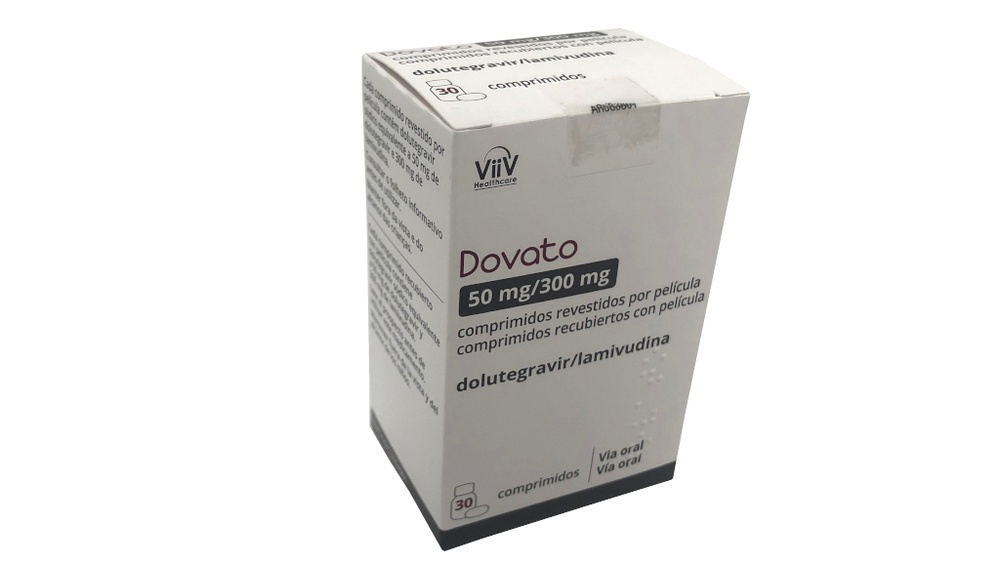
Los comprimidos recubiertos con película de Dovato son ovalados, biconvexos, blancos con "SV 137" grabado en una cara.
Los comprimidos recubiertos con película se suministran en frascos con cierre a prueba de niños o en blíster a prueba de niños.
Frasco
Cada frasco contiene 30 comprimidos recubiertos con película.
También están disponibles los envases clínicos que contienen 90 comprimidos recubiertos con película (3 envases de 30 comprimidos recubiertos con película, en frasco).
Blíster
Cada envase contiene 30 comprimidos recubiertos con película y consta de 4 blísteres con 7 comprimidos recubiertos con película y 1 blíster con 2 comprimidos recubiertos con película. Solo para el blíster de 2 comprimidos, se incluye intencionadamente un recuadro vacío en cada mitad del blíster.
También están disponibles los envases clínicos que contienen 90 comprimidos recubiertos con película (3 envases de 30 comprimidos recubiertos con película, en blíster).
Puede que solamente estén comercializados algunos tamaños de envases.
Titular de la autorización de comercialización
ViiV Healthcare BV
Van Asch van Wijckstraat 55H
3811 LP Amersfoort
Países Bajos
Responsable de la fabricación
Glaxo Wellcome, S.A.
Avda. Extremadura, 3
09400 Aranda de Duero (Burgos)
España
Pueden solicitar más información respecto a este medicamento dirigiéndose al representante local del titular de la autorización de comercialización:
België/Belgique/Belgien ViiV Healthcare srl/bv Tél/Tel: + 32 (0) 10 85 65 00 | Lietuva ViiV Healthcare BV Tel: + 370 80000334 |
| Luxembourg/Luxemburg ViiV Healthcare srl/bv Belgique/Belgien Tél/Tel: + 32 (0) 10 85 65 00 |
Ceská republika GlaxoSmithKline, s.r.o. Tel: + 420 222 001 111 | Magyarország ViiV Healthcare BV Tel.: + 36 80088309 |
Danmark GlaxoSmithKline Pharma A/S Tlf: + 45 36 35 91 00 | Malta ViiV Healthcare BV Tel: + 356 80065004 |
Deutschland ViiV Healthcare GmbH Tel.: + 49 (0)89 203 0038-10 | Nederland ViiV Healthcare BV Tel: + 31 (0)33 2081199 |
Eesti ViiV Healthcare BV Tel: + 372 8002640 | Norge GlaxoSmithKline AS Tlf: + 47 22 70 20 00 |
Ελλáδα GlaxoSmithKline Μονοπρóσωπη A.E.B.E. Τηλ: + 30 210 68 82 100 | Österreich GlaxoSmithKline Pharma GmbH Tel: + 43 (0)1 97075 0 |
España Laboratorios ViiV Healthcare, S.L. Tel: + 34 900 923 501 | Polska GSK Services Sp. z o.o. Tel.: + 48 (0)22 576 9000 |
France ViiV Healthcare SAS Tél.: + 33 (0)1 39 17 69 69 | Portugal VIIVHIV HEALTHCARE, UNIPESSOAL, LDA Tel: + 351 21 094 08 01 |
Hrvatska ViiV Healthcare BV Tel: + 385 800787089 | România ViiV Healthcare BV Tel: + 40800672524 |
Ireland GlaxoSmithKline (Ireland) Limited Tel: + 353 (0)1 4955000 | Slovenija ViiV Healthcare BV Tel: + 386 80688869 |
Ísland Vistor hf. Sími: +354 535 7000 | Slovenská republika ViiV Healthcare BV Tel: + 421 800500589 |
Italia ViiV Healthcare S.r.l Tel: + 39 (0)45 7741600 | Suomi/Finland GlaxoSmithKline Oy Puh/Tel: + 358 (0)10 30 30 30 |
Κúπρος ViiV Healthcare BV Τηλ: + 357 80070017 | Sverige GlaxoSmithKline AB Tel: + 46 (0)8 638 93 00 |
Latvija ViiV Healthcare BV Tel: + 371 80205045 | United Kingdom(Northern Ireland) ViiV Healthcare BV Tel: + 44 (0)800 221441 |
Fecha de la última revisión de este prospecto:MM/AAAA
Otras fuentes de información
La información detallada de este medicamento está disponible en la página web de la Agencia Europea de Medicamentos: http://www.ema.europa.eu/.
- País de registro
- Forma farmacéuticaCOMPRIMIDO, 50 mg/300 mg
- Código ATCJ05AR25
- Principio activo
- Requiere recetaSí
- Fabricante
- ComposiciónMANITOL (E-421) (145.4 mg mg), FUMARATO DE ESTEARILO Y SODIO (6 mg mg)
- Esta información es de carácter general y no sustituye la consulta con un profesional sanitario.
- Alternativas a DOVATO 50 MG/300 MG COMPRIMIDOS RECUBIERTOS CON PELICULAForma farmacéutica: COMPRIMIDO, 600 mg /300 mgPrincipio activo: lamivudine and abacavirFabricante: Aurovitas Spain, S.A.U.Requiere recetaForma farmacéutica: COMPRIMIDO, 600 mg/300 mgPrincipio activo: lamivudine and abacavirFabricante: Reddy Pharma Iberia S.A.Requiere recetaForma farmacéutica: COMPRIMIDO, 600 mg/300 mgPrincipio activo: lamivudine and abacavirFabricante: Glenmark Arzneimittel GmbhRequiere receta
Médicos online para DOVATO 50 MG/300 MG COMPRIMIDOS RECUBIERTOS CON PELICULA
Comenta la dosis, los posibles efectos secundarios, interacciones, contraindicaciones o la revisión de receta de DOVATO 50 MG/300 MG COMPRIMIDOS RECUBIERTOS CON PELICULA, sujeto a valoración médica y a la normativa local.









Obtén una receta de DOVATO 50 MG/300 MG COMPRIMIDOS RECUBIERTOS CON PELICULA online
Rellena un formulario de 2 minutos
Cuéntanos tus síntomas, historial y el medicamento que necesitas.
Elige un médico o nosotros te asignamos uno
Escoge un especialista o te conectamos con el próximo médico disponible.
El médico revisa tu caso
Normalmente en 30 minutos. Puede hacerte preguntas adicionales por chat.
Recógela en cualquier farmacia
Receta electrónica enviada a tu correo, válida en toda España.
Preguntas frecuentes
DOVATO 50 MG/300 MG COMPRIMIDOS RECUBIERTOS CON PELICULA requiere receta en España. Puedes confirmarlo con un médico online según tu caso.
El principio activo de DOVATO 50 MG/300 MG COMPRIMIDOS RECUBIERTOS CON PELICULA es lamivudine and dolutegravir. Esta información ayuda a identificar medicamentos con la misma composición pero con diferentes nombres comerciales.
DOVATO 50 MG/300 MG COMPRIMIDOS RECUBIERTOS CON PELICULA es fabricado por Viiv Healthcare B.V.. La marca y el envase pueden variar según el distribuidor.
Los Médicos de familia, Psiquiatras, Dermatólogos, Cardiólogos, Endocrinólogos, Gastroenterólogos, Neumólogos, Nefrólogos, Reumatólogos, Hematólogos, Infectólogos, Alergólogos, Geriatras, Pediatras, Oncólogos pueden valorar la prescripción de DOVATO 50 MG/300 MG COMPRIMIDOS RECUBIERTOS CON PELICULA cuando esté clínicamente indicado. Puedes reservar una videoconsulta para comentar tu caso y las opciones de tratamiento.
España cuenta con una infraestructura sanitaria bien desarrollada en ciudades principales como Madrid, Barcelona, Valencia y Sevilla. Las farmacias están ampliamente disponibles y operan bajo estrictas regulaciones, garantizando el acceso a medicamentos con receta.
Puedes comprar DOVATO 50 MG/300 MG COMPRIMIDOS RECUBIERTOS CON PELICULA en Madrid, Barcelona, Sevilla o Valencia en cualquier farmacia local con una receta válida.
Para obtener una receta, puedes utilizar Oladoctor:
Otros medicamentos con el mismo principio activo (lamivudine and dolutegravir) incluyen ABACAVIR/LAMIVUDINA AUROVITAS 600 MG/300 MG COMPRIMIDOS RECUBIERTOS CON PELICULA EFG, ABACAVIR/LAMIVUDINA DR. REDDYS 600 MG/300 MG COMPRIMIDOS RECUBIERTOS CON PELICULA EFG, ABACAVIR/LAMIVUDINA GLENMARK 600 MG/300 MG COMPRIMIDOS RECUBIERTOS CON PELICULA EFG. Pueden tener diferentes nombres comerciales o formulaciones, pero contienen el mismo componente terapéutico. Consulta siempre con un médico antes de cambiar o iniciar un nuevo medicamento.
