



DIUREX 20 mg Comprimidos

Revisión de receta online
Un médico revisará tu caso y determinará si la prescripción es médicamente apropiada.

Habla con un médico sobre este medicamento
Comenta tus síntomas y las opciones de tratamiento en una consulta online.



Cómo usar DIUREX 20 mg COMPRIMIDOS
Contenido del prospecto
- Introducción
- Prospecto: información para el usuario
- Diurex 20 mg comprimidos
- xipamida
- Lea todo el prospecto detenidamente antes de empezar a tomar el medicamento, porque contiene información importante para usted.
- Qué es Diurex y para qué se utiliza
- Qué necesita saber antes de empezar a tomar Diurex
- No tome Diurex
- Advertencias y precauciones
- Niños y adolescentes
- Uso de Diurex con otros medicamentos
- Toma de Diurex con alimentos, bebidas y alcohol
- Uso en deportistas
- Embarazo y lactancia
- Conducción y uso de máquinas
- Información importante sobre alguno de los componentes de Diurex
- Cómo tomar Diurex
- Instrucciones para la correcta administración del preparado
- Si toma más Diurex del que debe
- Si olvidó tomar Diurex
- Posibles efectos adversos
- Conservación de Diurex
- Contenido del envase e información adicional
- Composición de Diurex
- Aspecto del producto y contenido del envase
- Titular de la autorización de comercialización y responsable de la fabricación
- Fecha de la última revisión de este prospecto:11/2020
Introducción
Prospecto: información para el usuario

¿No estás seguro de si este medicamento es adecuado para ti?
Comenta tus síntomas y tratamiento con un médico online.
Diurex 20 mg comprimidos
xipamida

¿Has empezado a tomar el medicamento y tienes preguntas?
Comenta tus síntomas y tratamiento con un médico online.
Lea todo el prospecto detenidamente antes de empezar a tomar el medicamento, porque contiene información importante para usted.
? Conserve este prospecto, ya que puede tener que volver a leerlo.
? Si tiene alguna duda, consulte a su médico o farmacéutico.
? Este medicamento se le ha recetado solamente a usted, y no debe darlo a otras personas aunque tengan los mismos síntomas que usted, ya que puede perjudicarles.
? Si experimenta efectos adversos, consulte a su médico o farmacéutico, incluso si se trata de efectos adversos que no aparecen en este prospecto. Ver sección 4.
Contenido del prospecto
1.- Qué es Diurex y para qué se utiliza
2.- Qué necesita saber antes de empezar a tomar Diurex
3.- Cómo tomar Diurex
4.- Posibles efectos adversos
5.- Conservación de Diurex
6.- Contenido del envase e información adicional
1. Qué es Diurex y para qué se utiliza
Diurex pertenece a un grupo de medicamentos denominados diuréticos. Los diuréticos hacen que aumente su necesidad de orinar disminuyendo a la vez la cantidad de agua y sal en el cuerpo. Su utilización ayuda a disminuir y controlar la presión arterial.
Diurex se utiliza para tratar la presión arterial elevada (hipertensión), así como para eliminar la excesiva cantidad de líquido acumulada en el cuerpo por diversas causas (edemas).
2. Qué necesita saber antes de empezar a tomar Diurex
No tome Diurex
? Si es alérgico a la xipamida, a otros derivados de la sulfonamida o de las tiazidas, o a alguno de los demás componentes de este medicamento (incluidos en la sección 6).
? Si padece una enfermedad grave del hígado.
? Si padece insuficiencia renal severa
? Si usted sufre alguna de las siguientes alteraciones en sangre: disminución del potasio o del sodio así como aumento del calcio aunque esté en tratamiento.
? Si usted tiene gota, enfermedad caracterizada por un exceso de ácido úrico en la sangre.
? Si está usted embarazada o en periodo de lactancia (ver “Embarazo y lactancia”).
Advertencias y precauciones
? Si padece alguna enfermedad del hígado o del riñón póngalo en conocimiento de su médico antes de tomar este medicamento.
? Si usted padece alguno de los siguientes trastornos, deje de tomar el medicamento y contacte con su médico:
- Alteraciones de la presión arterial al ponerse de pie.
- Reacciones alérgicas.
- Molestias repetidas de estómago.
- Inflamación aguda del páncreas (pancreatitis) o de la vesícula biliar (colecistitis).
- Empeoramiento de alteraciones musculares previas.
- Inflamación de los vasos sanguíneos (vasculitis).
- Enfermedades del sistema nervioso.
- Alteraciones de la sangre (anemia, leucopenia, trombocitopenia).
- Enfermedad de Addison.
? Si es usted diabético o tiene niveles elevados de ácido úrico en la sangre, puede ser necesaria una mayor vigilancia por parte de su médico e incluso tener que pasar exámenes periódicos de control.
? Su médico puede pedirle un control de los niveles de sodio y de potasio antes y durante el tratamiento con este medicamento, especialmente si tiene más de 65 años, padece de alguna enfermedad del corazón o del hígado o está en tratamiento con otros medicamentos.
? Informe previamente a su médico si padece una alteración de la función paratirodea, por ejemplo hiperparatiroidismo.
? Si experimenta una disminución de la visión o dolor ocular, podrían ser síntomas de acumulación de líquido en la capa vascular del ojo (derrame coroideo) o un aumento de la presión en el ojo y se pueden producir en un plazo de entre unas horas y una semana después de tomar Diurex.
Niños y adolescentes
No se ha establecido la eficacia y seguridad de uso en niños. Por tanto, no se recomienda el empleo de Diurex en niños y adolescentes (menores de 18 años).
Uso de Diurex con otros medicamentos
Informe a su médico o farmacéutico si está utilizando, ha utilizado recientemente o pudiera tener que utilizar cualquier otro medicamento, incluso los adquiridos sin receta médica, homeopáticos, plantas medicinales y otros productos relacionados con la salud, ya que puede ser necesario interrumpir el tratamiento o ajustar la dosis de alguno de ellos.
Es especialmente importante que informe a su médico si toma alguno de los siguientes medicamentos:
? Betabloqueantes, inhibidores de la ECA y otros diuréticos (empleados para tratar la presión arterial elevada).
? Litio, para el tratamiento del trastorno maníaco-depresivo.
? Amiodarona, quinidina y otros fármacos para el tratamiento de las arritmias.
? Glucósidos cardiacos, nitratos orgánicos y vasodilatadores (empleados en enfermedades del corazón).
? Salicilatos y antiinflamatorios no esteroideos, para el alivio del dolor y la inflamación.
? Fenotiazinas y antidepresivos tricíclicos para el tratamiento de los trastornos de la personalidad y de la depresión.
? Ciclosporina, tacrolimus (utilizados en trasplantes de órganos).
? Colestiramina y colestipol (empleados para reducir la cantidad de colesterol y otras sustancias grasas en la sangre).
? Citostáticos (medicamentos para el tratamiento de las neoplasias).
? Relajantes musculares.
? Corticoesteroides.
? Metformina y otros antidiabéticos orales.
? Medios de contraste yodados.
? Calcio y sus sales.
? Anfotericina (antibiótico para el tratamiento de las infecciones producidas por hongos).
? Laxantes.
Toma de Diurex con alimentos, bebidas y alcohol
Los comprimidos de Diurex se administran por vía oral, tragándolos enteros, sin masticar, con ayuda de un vaso de agua, y se pueden tomar tanto en ayunas como con alimentos (ver también “Instrucciones para la correcta administración del preparado”).
Durante el tratamiento con este medicamento no debe tomar alcohol, ya que podría producirse un descenso de la presión arterial con mareos y/o desmayos.
Uso en deportistas
Se informa a los deportistas que este medicamento contiene un componente que puede producir un resultado positivo en las pruebas de control de dopaje.
Embarazo y lactancia
Consulte a su médico o farmacéutico antes de utilizar cualquier medicamento.
Diurex no deberá tomarse durante el embarazo y la lactancia. Por consiguiente, si está embarazada o en periodo de lactancia, cree que podría estar embarazada o tiene intención de quedarse embarazada, deje de tomar este medicamento y comuníqueselo a su médico lo antes posible.
Conducción y uso de máquinas
Al inicio del tratamiento con este medicamento puede verse reducida su capacidad para conducir vehículos y utilizar máquinas como consecuencia de una disminución de sus reflejos, lo cual podría potenciarse si al mismo tiempo consume alcohol. Por tanto, no conduzca ni utilice maquinaria potencialmente peligrosa hasta que compruebe como tolera el medicamento.
Información importante sobre alguno de los componentes de Diurex
Diurex contiene lactosa. Si su médico le ha indicado que padece una intolerancia a ciertos azúcares, consulte con él antes de tomar este medicamento.
Este medicamento contiene menos de 23 mg de sodio (1mmol) por comprimido; esto es, esencialmente” exento de sodio”
3. Cómo tomar Diurex
Siga exactamente las instrucciones de administración de este medicamento indicadas por su médico o farmacéutico. En caso de duda consulte de nuevo a su médico o farmacéutico. La dosis recomendada es:
? Presión arterial elevada (hipertensión): 1 comprimido al día.
? Acumulación excesiva de líquido (edema): 2 comprimidos al día.
Se recomienda tomar el medicamento por las mañanas durante o después del desayuno.
En situaciones especiales (insuficiencia renal y/o hepática, insuficiencia cardiaca congestiva) es posible que se requiera una adecuación de la dosis. Consulte con su médico para que le explique la conducta a seguir en estos casos.
Instrucciones para la correcta administración del preparado
Trague los comprimidos enteros, sin masticar, con la ayuda de una cantidad suficiente de líquido (por ejemplo, un vaso de agua). Recuerde tomar su medicamento.
Su médico le indicará la duración de su tratamiento con Diurex y podrá también ajustarle la dosis si lo cree necesario. No cambie la dosis indicada por su médico, no suspenda el tratamiento sin antes habérselo consultado y nunca lo haga bruscamente, puesto que puede ser perjudicial para su salud.
Si estima que la acción de Diurex es demasiado fuerte o débil, comuníqueselo a su médico o farmacéutico.
Si toma más Diurex del que debe
Si por algún motivo tomó más comprimidos de Diurex de lo que debiera, puede que padezca de signos y síntomas como: náuseas, vómitos, disminución de la presión arterial, calambres, mareo, somnolencia y trastornos urinarios (aumento, disminución o supresión de la emisión de orina).
En caso de sobredosis o ingestión accidental, consulte inmediatamente a con su médico o farmacéutico o llame al Servicio de Información Toxicológica, teléfono 91 562 04 20, indicando el medicamento y la cantidad ingerida.
Si olvidó tomar Diurex
Si olvidó tomar una dosis, no se preocupe; espere hasta la siguiente dosis para tomar su próximo comprimido y continúe luego su régimen de dosificación habitual. No tome una dosis doble para compensar las dosis olvidadas.
Si tiene cualquier otra duda sobre el uso de este medicamento, pregunte a su médico o farmacéutico.
4. Posibles efectos adversos
Al igual que todos los medicamentos, este medicamento puede producir efectos adversos, aunque no todas las personas los sufran.
Se han referido los siguientes efectos adversos para Diurex. En tales casos debe informar a su médico cuanto antes:
Efectos adversos muy frecuentes (puden afectar a más de 1 de cada 10 personas):
- disminución del potasio en sangre que puede manifestarse por la aparición de náuseas, vómitos, disminución de la fuerza muscular, alteraciones del ritmo del corazón y cambios en el electrocardiograma
- disminución de la eliminación urinaria de magnesio.
Efectos adversos frecuentes (pueden afectar hasta 1 de cada 10 personas):
- dolor de cabeza
- vértigo
- indiferencia afectiva (apatía)
- ansiedad
- agitación
- palpitaciones
- disminución de la presión arterial al ponerse de pie
- calambres musculares
- molestias o dolor abdominal
- diarrea
- estreñimiento
- boca seca
- sudoración
- fatiga
- aumento de ácido úrico con episodios de gota
- disminución de sodio y magnesio en sangre
- deshidratación.
Efectos adversos raros (pueden afectar hasta 1 de cada 1.000 personas):
- enrojecimiento de la piel
- picor y/o urticaria
- aumento anormal de la sensibilidad a la luz solar
- alteraciones de la visión y agravamiento de la miopía existente
- reacciones alérgicas graves
- inflamación hemorrágica del páncreas
- aumento de las grasas en la sangre
- inflamación de la vesícula biliar.
Efectos adversos muy raros (pueden afectar hasta 1 de cada 10.000 personas):
- coloración amarilla de la piel y de las mucosas (ictericia)
- nefritis intersticial aguda (inflamación de los túbulos renales)
- alteraciones en los análisis de sangre, como reducciones de los glóbulos rojos y/o de los glóbulos blancos y de las plaquetas (trombocitopenia, leucopenia, agranulocitosis, anemia aplástica).
Efectos adversos de frecuencia no conocida (no pueden estimarse a partir de los datos disponibles):
- disminución de la visión o dolor en los ojos debido a una presión elevada [signos posibles de acumulación de líquido en la capa vascular del ojo (derrame coroideo) o glaucoma agudo de ángulo cerrado
Si considera que alguno de los efectos adversos que sufre es grave o si aprecia cualquier efecto adverso no mencionado en este prospecto, consulte a su médico o farmacéutico.
Comunicación de efectos adversos
Si experimenta cualquier tipo de efecto adverso, consulte a su médico o farmacéutico, incluso si se trata de posibles efectos adversos que no aparecen en este prospecto. También puede comunicarlos directamente a través del Sistema Español de Farmacovigilancia de Medicamentos de Uso Humano. Website: www.notificaram.es
Mediante la comunicación de efectos adversos usted puede contribuir a proporcionar más información sobre la seguridad de este medicamento.
5. Conservación de Diurex
Mantener este medicamento fuera de la vista y del alcance de los niños.
No se requieren condiciones especiales de conservación.
No utilice este medicamento después de la fecha de caducidad que aparece en el envase y el blíster después de “CAD:”. La fecha de caducidad es el último día del mes que se indica.
Los medicamentos no se deben tirar por los desagües ni a la basura. Deposite los envases y los medicamentos que no necesita en el Punto Sigre de la farmacia. En caso de duda pregunte a su farmacéutico cómo deshacerse de los envases y de los medicamentos que no necesita. De esta forma ayudará a proteger el medio ambiente.
6. Contenido del envase e información adicional
Composición de Diurex
El principio activo es la xipamida. Cada comprimido contiene 20 mg de xipamida.
Los demás componentes (excipientes) son: lactosa monohidrato, celulosa microcristalina, povidona, talco, carboximetilalmidón sódico de patata, sílice coloidal anhidra, estearato de magnesio, palmitoestearato de glicerina.
Aspecto del producto y contenido del envase
Diurex son comprimidos de color blanco, planos, redondos y ranurados. La ranura sirve únicamente para partir el comprimido si le resulta dificil tragarlo entero, pero no para dividir el comprimido en dosis iguales. Existen envases con 30, 60, y 500 (envase clínico) comprimidos.
Puede que no esten comercializados todos los tamaños de envase.
Titular de la autorización de comercialización y responsable de la fabricación
LACER, S.A. - Boters, 5
08290 Cerdanyola del Vallès
Barcelona – España
Fecha de la última revisión de este prospecto:11/2020
La información detallada y actualizada de este medicamento está disponible en la página web de
la Agencia Española de Medicamentos y Productos Sanitarios (AEMPS) http://www.aemps.gob.es/
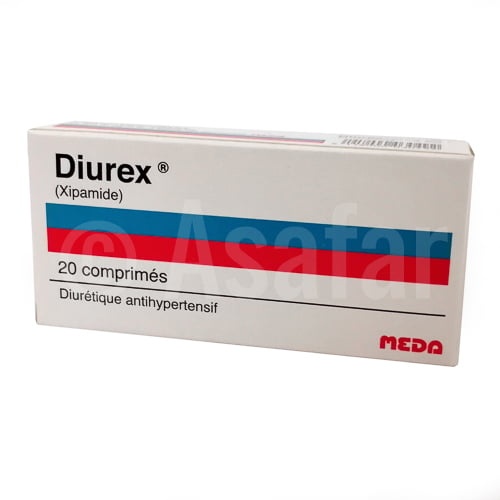
- País de registro
- Forma farmacéuticaCOMPRIMIDO, 20 mg xipamida
- Código ATCC03BA10
- Precio medio en farmacia3.12 EUR
- Principio activo
- Requiere recetaSí
- Fabricante
- ComposiciónLACTOSA HIDRATADA (7,50 mg mg), CARBOXIMETILALMIDON SODICO (1,00 mg mg)
- Esta información es de carácter general y no sustituye la consulta con un profesional sanitario.
- Alternativas a DIUREX 20 mg COMPRIMIDOSForma farmacéutica: COMPRIMIDO, 50 mgPrincipio activo: clortalidonaFabricante: Glenmark Arzneimittel GmbhRequiere recetaForma farmacéutica: COMPRIMIDO, 50 mg clortalidonaPrincipio activo: clortalidonaFabricante: Amdipharm LimitedRequiere recetaForma farmacéutica: COMPRIMIDO, 2,5 mgPrincipio activo: IndapamidaFabricante: Laboratorios Normon S.A.Requiere receta
Médicos online para DIUREX 20 mg COMPRIMIDOS
Comenta la dosis, los posibles efectos secundarios, interacciones, contraindicaciones o la revisión de receta de DIUREX 20 mg COMPRIMIDOS, sujeto a valoración médica y a la normativa local.
Obtén una receta de DIUREX 20 mg COMPRIMIDOS online
Rellena un formulario de 2 minutos
Cuéntanos tus síntomas, historial y el medicamento que necesitas.
Elige un médico o nosotros te asignamos uno
Escoge un especialista o te conectamos con el próximo médico disponible.
El médico revisa tu caso
Normalmente en 30 minutos. Puede hacerte preguntas adicionales por chat.
Recógela en cualquier farmacia
Receta electrónica enviada a tu correo, válida en toda España.
Preguntas frecuentes
DIUREX 20 mg COMPRIMIDOS requiere receta en España. Puedes confirmarlo con un médico online según tu caso.
El principio activo de DIUREX 20 mg COMPRIMIDOS es xipamida. Esta información ayuda a identificar medicamentos con la misma composición pero con diferentes nombres comerciales.
El precio medio en farmacia de DIUREX 20 mg COMPRIMIDOS es de aproximadamente 3.12 EUR. Puede variar según el fabricante y la forma farmacéutica.
DIUREX 20 mg COMPRIMIDOS es fabricado por Lacer S.A.. La marca y el envase pueden variar según el distribuidor.
Los Médicos de familia, Psiquiatras, Dermatólogos, Cardiólogos, Endocrinólogos, Gastroenterólogos, Neumólogos, Nefrólogos, Reumatólogos, Hematólogos, Infectólogos, Alergólogos, Geriatras, Pediatras, Oncólogos pueden valorar la prescripción de DIUREX 20 mg COMPRIMIDOS cuando esté clínicamente indicado. Puedes reservar una videoconsulta para comentar tu caso y las opciones de tratamiento.
España cuenta con una infraestructura sanitaria bien desarrollada en ciudades principales como Madrid, Barcelona, Valencia y Sevilla. Las farmacias están ampliamente disponibles y operan bajo estrictas regulaciones, garantizando el acceso a medicamentos con receta.
Puedes comprar DIUREX 20 mg COMPRIMIDOS en Madrid, Barcelona, Sevilla o Valencia en cualquier farmacia local con una receta válida.
Para obtener una receta, puedes utilizar Oladoctor:
Otros medicamentos con el mismo principio activo (xipamida) incluyen CLORTALIDONA GLENMARK 50 MG COMPRIMIDOS EFG, HIGROTONA 50 mg comprimidos, INDAPAMIDA NORMON 2,5 mg COMPRIMIDOS RECUBIERTOS EFG. Pueden tener diferentes nombres comerciales o formulaciones, pero contienen el mismo componente terapéutico. Consulta siempre con un médico antes de cambiar o iniciar un nuevo medicamento.
