


Ceplene 0,5 mg/0,5 ml solución inyectable

Revisión de receta online
Un médico revisará tu caso y determinará si la prescripción es médicamente apropiada.

Habla con un médico sobre este medicamento
Comenta tus síntomas y las opciones de tratamiento en una consulta online.



Cómo usar CEPLENE 0,5 mg/0,5 ml SOLUCION INYECTABLE
Contenido del prospecto
- Introducción
- Qué es Ceplene y para qué se utiliza
- Qué necesita saber antes de empezar a usar Ceplene
- Cómo usar Ceplene
- Posibles efectos adversos
- Conservación de Ceplene
- Contenido del envase e información adicional
Introducción
Prospecto: información para el usuario
Ceplene 0,5 mg/0,5 ml solución inyectable
dihidrocloruro de histamina
Este medicamento está sujeto a seguimiento adicional, lo que agilizará la detección de nueva información sobre su seguridad. Puede contribuir comunicando los efectos adversos que pudiera usted tener. La parte final de la sección 4 incluye información sobre cómo comunicar estos efectos adversos.
Lea todo el prospecto detenidamente antes de empezar a usar este medicamento, porque contiene información importante para usted.
- Conserve este prospecto, ya que puede tener que volver a leerlo.
- Si tiene alguna duda, consulte a su médico, farmacéutico o enfermero.
- Este medicamento se le ha recetado solamente a usted y no debe dárselo a otras personas, aunque tengan los mismos síntomas que usted, ya que puede perjudicarles.
- Si experimenta efectos adversos, consulte a su médico o farmacéutico incluso si se trata de efectos adversos que no aparecen en este prospecto. Ver sección 4.
Contenido del prospecto
- Qué es Ceplene y para qué se utiliza.
- Qué necesita saber antes de empezar a usar Ceplene.
- Cómo usar Ceplene.
- Posibles efectos adversos.
- Conservación de Ceplene.
- Contenido del envase e información adicional.
1. Qué es Ceplene y para qué se utiliza
Ceplene pertenece a un grupo de medicamentos denominados inmunomoduladores. Estos medicamentos ayudan al sistema inmunitario del cuerpo a luchar contra enfermedades como el cáncer, ya que mejoran la capacidad natural del sistema inmunitario para luchar contra las enfermedades. El principio activo de Ceplene es el dihidrocloruro de histamina, idéntico a una sustancia producida de forma natural por el cuerpo. Se administra junto con dosis bajas de interleucina-2 (IL-2), otro medicamento que ayuda al sistema inmunitario a luchar contra enfermedades como el cáncer.
Ceplene se utiliza en adultos, junto con la IL-2 para tratar un tipo específico de leucemia denominado leucemia mieloide aguda (LMA), un tipo de cáncer de la sangre que genera células en la médula ósea. Se usa para mantener la remisión (el periodo en el que la enfermedad es menos grave o cuando no se detecta). Ceplene, administrado junto con IL-2, ayudará a su sistema inmunitario a atacar las células cancerígenas que permanecen tras un tratamiento anterior del cáncer.
Durante el tratamiento, utilizará siempre IL-2 Y Ceplene. Consulte a su médico si tiene cualquier pregunta sobre Ceplene o sobre la IL-2.

¿No estás seguro de si este medicamento es adecuado para ti?
Comenta tus síntomas y tratamiento con un médico online.
2. Qué necesita saber antes de empezar a usar Ceplene
No use Ceplene
- si es alérgico (hipersensible) a la histamina o a alguno de los demás componentes de este medicamento (incluidos en la sección 6).
- si tiene problemas cardiacos graves.
- si toma alguno de los siguientes medicamentos:
- esteroides, como prednisona y dexametasona; se usan para inhibir la actividad del sistema inmunitario (inmunodepresor) y reducir la inflamación.
- clonidina, un medicamento utilizado para reducir la presión sanguínea.
- antihistamínicos H2 como la cimetidina, ranitidina, famotidina o nizatidina, que se utilizan para tratar úlceras gastrointestinales, indigestión (dispepsia) o el ardor de estómago.
- si ha recibido un trasplante de hemocitoblastos (un tipo de trasplante de médula ósea) de un donante.
- si está embarazada.
- durante la lactancia.
Advertencias y precauciones
Consulte a su médico o farmacéutico antes de empezar a usar Ceplene.
No se deben inyectar al mismo tiempo Ceplene y la IL-2. Se debe inyectar la IL-2 en primer lugar. La dosis de Ceplene se debe inyectar entre 1 y 3 minutos después.
Ceplene debe inyectarse lentamente en la capa de tejido situada bajo la piel (en la zona subcutánea) durante un periodo aproximado de 5 a 15 minutos. Una inyección rápida puede provocar un descenso de la tensión arterial y causarle una sensación de debilidad, e incluso provocarle un desmayo.
Deberá empezar el tratamiento con Ceplene en el centro clínico, bajo la supervisión de un médico. Se le realizará un seguimiento para comprobar su respuesta al tratamiento. El médico comprobará su tensión arterial, el ritmo cardiaco y la actividad pulmonar. Además, realizará algunos análisis de sangre durante el tratamiento.
Si ha tenido alguna de las siguientes enfermedades se le realizará un seguimiento en el hospital durante los siguientes días o ciclos de tratamiento:
- úlceras sangrantes,
- infarto cerebral,
- estenosis de las arterias (arteriopatía periférica sistémica),
- cardiopatía (para problemas cardiacos agudos ver más arriba el apartado «No use Ceplene»),
- antecedentes de enfermedad autoinmunitaria (una enfermedad en la que el sistema inmunitario ataca las propias células o tejidos del cuerpo, como el lupus sistémico, la artritis reumatoide, enteropatía inflamatoria o soriasis).
Si está tomando algún otro medicamento mencionado en «Otros medicamentos y Ceplene»o si próximamente se le va a practicar alguna operación o alguna exploración con rayos X que requiera la aplicación de una inyección, consulte a su médico.
Si tiene alguna infección, su médico prestará especial atención a su seguimiento. Si ha tenido alguna infección en los 14 días anteriores al comienzo de este tratamiento que le obligue a tomar medicamentos contra infecciones (antibióticos, antifúngicos o antivíricos), su médico prestará especial atención a su seguimiento.
Si tiene afecciones del riñón, consulte a su médico antes de tomar este medicamento. Puede producirse una bajada de tensión.
Si tiene problemas del hígado, consulte a su médico antes de tomar este medicamento. Es posible que su médico cambie la dosis.
Niños y adolescentes
No se recomienda usar Ceplene en niños y adolescentes, dado que no se dispone de información sobre el uso de este medicamento en este grupo de edad.
Otros medicamentos y Ceplene
Informe a su médico o farmacéutico si está utilizando o ha utilizado recientemente o pudiera tener que utilizar cualquier otro medicamento, incluso los adquiridos sin receta.
Si está utilizando alguno de los siguientes medicamentos, asegúrese de consultar a su médico o farmacéutico antes de usar Ceplene. Algunos de ellos son incompatibles con el tratamiento con Ceplene, mientras que otros requieren precauciones especiales:
- Esteroides,como prednisona y dexametasona; se usan para inhibir la actividad del sistema inmunitario (inmunodepresor) y reducir la inflamación (ver más arriba el apartado «No use Ceplene»).
- Antihistamínicos H2como la cimetidina, ranitidina, famotidina o nizatidina. Estos se utilizan para tratar úlceras gastrointestinales, indigestión (dispepsia) o el ardor de estómago (ver más arriba el apartado «No use Ceplene»).
- Antihistaminasempleadas para tratar alergias.
- Determinados antipsicóticoscomo la clorpromacina, flupentixol, tioridacina, clozapina y risperidona; se usan para tratar afecciones psíquicas.
- Antidepresivos tricíclicoscomo la amitriptilina, imipramina, o inhibidores de monoaminoxidasas, como fenelcina, isocarboxacida, tranilcipromina o moclobemida. Se usan para tratar la depresión.
- Anti-maláricos o medicamentos usados para tratar infecciones causantes de la narcolepsia.
- Betabloqueantes,como el propranolol, metoprolol, atenolol. Estos son usados para la angina de pecho y alteraciones del ritmo cardiaco.
- Cualquier tratamiento para la hipertensión(por ejemplo, diuréticos tiacídicos [bendrofluacida], IECA [captoprilo], antagonistas cálcicos [nifedipina] y bloqueantes α [prazosina]).
Asimismo, en el caso de que vaya a someterse próximamente a alguna operacióno a alguna exploración especial con rayos Xque requiera la aplicación de una inyección, asegúrese antes de que su médico sepa que está utilizando Ceplene. Algunos medicamentos utilizados en una operación (por ejemplo, antagonistas neuromusculares y analgésicos narcóticos) o tintes utilizados para ciertas pruebas radiológicas pueden interferir con este medicamento.
Embarazo y lactancia
No hay información sobre el uso de Ceplene en mujeres embarazadas. Por consiguiente, no debe aplicarse el tratamiento con Ceplene e IL-2 durante el embarazo.
Los pacientes sometidos a este tratamiento, ya sean hombres o mujeres, deberán emplear un método anticonceptivo eficaz, ya que es fundamental evitar la concepción de un niño durante el tratamiento con Ceplene e IL-2.
Se desconoce si Ceplene se excreta en la leche materna. Por lo tanto, no deben usarse Ceplene ni IL-2 durante la lactancia.
Consulte a su médico o farmacéutico antes de utilizar cualquier medicamento.
Conducción y uso de máquinas
No conduzca ni use máquinas en la hora siguiente a la administración de una inyección de Ceplene, ya que este medicamento puede bajar la tensión y provocar mareos, ligeros aturdimientos y visión borrosa. Todo ello puede afectar a su capacidad para conducir o manejar máquinas.
3. Cómo usar Ceplene
Siga exactamente las instrucciones de administración de Ceplene indicadas por su médico. En caso de duda, consulte de nuevo a su médico, farmacéutico o enfermero.
Este tratamiento deberá ser prescrito y supervisado por un médico con conocimientos especializados sobre la leucemia mieloide aguda.
Dosis recomendada
Puesto que va a utilizar IL-2 y Ceplene en un tratamiento combinado, se ofrece información sobre ambas dosis:
Interleucina 2 (IL-2)
La IL-2 se inyecta dos veces al día mediante una inyección subcutánea (en la capa de tejido inmediatamente debajo de la piel) entre 1 y 3 minutos antes de la inyección de Ceplene. La dosis se calcula en función de su peso corporal. Su médico le indicará a cuánto corresponde esta cantidad y cómo se debe inyectar la dosis.
Ceplene
La dosis habitual de Ceplene es de 0,5 ml de solución dos veces al día administrada mediante una inyección subcutánea lenta (en la capa de tejido inmediatamente debajo de la piel).
La dosis de Ceplene se debe inyectar entre 1 a 3 minutos después de la dosis de IL-2.
Se deben inyectar ambos medicamentos, IL-2 y Ceplene, dos veces al día, con un intervalo mínimo de 6 horas entre las inyecciones.
Periodos con y sin tratamiento:
El tratamiento con IL-2 y Ceplene dura 81 semanas y es cíclico.
- Durante las 18 primeras semanas: usará la IL-2 y Ceplene a diario durante 3 semanas y después descansará otras 3 semanas (sin administración de ningún tratamiento).
- Durante las otras 63 semanas: usará la IL-2 y Ceplene a diario durante 3 semanas y después descansará otras 6 semanas (sin administración de ningún tratamiento).
Si se inyecta la dosis de Ceplene usted mismo/a:
Su médico podría decidir que es más conveniente que se inyecte la IL-2 y Ceplene usted mismo/a.
Su médico o enfermero le enseñarán a hacerlo. No intente ponerse las inyecciones si no le ha enseñado cómo hacerlo un profesional cualificado.
Se recomienda que esté siempre acompañado cuando se inyecte este medicamento, por un familiar adulto, un amigo o un cuidador que le puedan ayudar en caso de notar mareos o de desmayo.
Para obtener más instrucciones sobre cómo inyectarse este medicamento usted mismo/a, lea la sección «INSTRUCCIONES PARA INYECTARSE CEPLENE» al final de este prospecto.
Puede que su médico le recomiende usar una bomba de inyección para regular la inyección de Ceplene. Si usa una bomba de inyección, debe consultar las instrucciones del fabricante de la bomba y atender a las indicaciones de su médico o enfermero.
Si usa más Ceplene del que debe
Debe usar la cantidad exacta de medicamento que le hayan recetado. Si por accidente se inyecta más de lo que debiera, póngase en contacto con su médico o farmacéutico inmediatamente.
Si olvidó usar Ceplene
No se administre ninguna dosis extra para compensar las dosis olvidadas. Siga el tratamiento tal y como se le recetó. Si se ha olvidado de alguna de las dosis diarias, póngase en contacto con su médico o farmacéutico.
Si interrumpe el tratamiento con Ceplene
Si desea interrumpir su tratamiento con Ceplene debe consultarlo con un médico. Informe a su médico inmediatamente si interrumpe el uso de Ceplene por decisión propia.
Si tiene cualquier otra duda sobre el uso de este medicamento, pregunte a su médico o farmacéutico.

¿Has empezado a tomar el medicamento y tienes preguntas?
Comenta tus síntomas y tratamiento con un médico online.
4. Posibles efectos adversos
Al igual que todos los medicamentos, este medicamento puede producir efectos adversos, aunque no todas las personas los sufran.
Efectos adversos observados cuando se usa Ceplene tal y como se describe en este prospecto:
Muy frecuentemente puede producirse hipotensión (presión sanguínea baja) pudiendo dar lugar a aturdimiento y desmayos. Si advierte un descenso importante de la presión sanguínea después del uso de Ceplene, contacte inmediatamente con su médico o al menos previamente a una nueva inyección de Ceplene.
Efectos adversos muy frecuentes(pueden afectar a más de 1 de cada 10 personas)
- Infecciones del tracto respiratorio superior
- Incremento del número de cierto tipo de glóbulos blancos en la sangre (eosinofilia) y descenso del número de plaquetas (trombocitopenia).
- Cefaleas y mareos.
- Alteración del gusto (disgeusia).
- Aceleración del ritmo cardiaco (taquicardia).
- Rubores.
- Tos, dificultad respiratoria (disnea).
- Náuseas, indigestión (dispepsia) y diarrea.
- Erupción.
- Dolor muscular y de las articulaciones (mialgia y artralgia).
- Piel inflamada y granulada en la zona de inyección, fatiga, fiebre (pirexia), enrojecimiento de la zona de inyección, sensación de calor, reacción en la zona de inyección, picores en la zona de inyección, síntomas similares a los de la gripe, escalofríos (estremecimiento), hinchazón en la zona de inyección y dolor.
Efectos adversos frecuentes(pueden afectar hasta 1 de cada 10 personas)
- Reducción en el número de células blancas de la sangre (leucopenia).
- Reducción en el número de cierto tipo de células blancas de la sangre (neutropenia).
- Inflamación del pulmón (neumonía).
- Pérdida de apetito (anorexia).
- Dificultad para conciliar el sueño (insomnio).
- Sensación de los propios latidos (palpitaciones).
- Congestión nasal.
- Vómitos, dolor en la parte superior del abdomen (dolor abdominal) y sequedad de boca.
- Inflamación del estómago (gastritis).
- Hinchazón del abdomen (distensión abdominal).
- Enrojecimiento anormal de la piel (eritema), incremento de los sudores (hiperhidrosis), sudores nocturnos y picores (prurito).
- Dolor lumbar y en las extremidades.
- Ronchas, moratones, erupción e hinchazón de la zona de inyección, debilidad (astenia) y dolor de pecho.
Efectos adversos adicionales observados cuando se usó Ceplene en otro tipo de tratamiento:
Efectos adversos muy frecuentes(pueden afectar a más de 1 de cada 10 personas)
- Sequedad de la piel.
- Ansiedad.
- Sensación general de incomodidad o molestias.
- Retención de líquidos en el cuerpo, especialmente en las piernas (edema).
- Pérdida de peso.
Efectos adversos frecuentes(pueden afectar hasta 1 de cada 10 personas)
- Sensación de mareo (vértigo).
- Su cuerpo no produce suficiente tiroxina, un tipo de sustancia química del cuerpo conocido como hormona (hipotiroidismo).
- Reducción del número de glóbulos rojos (anemia).
- Pérdida de agua corporal (deshidratación).
- Depresión.
- Hormigueo, picores o entumecimiento de la piel (parestesia).
- Sofocos.
- Sibilancias.
- Estreñimiento, estómago hinchado, boca inflamada.
- Dolor y formación de tejido adicional en la piel situada en torno al lugar de la inyección.
Comunicaciónde efectos adversos
Si experimenta cualquier tipo de efecto adverso, consulte a su médico, farmacéutico o enfermero, incluso si se trata de posibles efectos adversos que no aparecen en este prospecto. También puede comunicarlos directamente a través del sistema nacional de notificación incluido en el Apéndice V. Mediante la comunicación de efectos adversos usted puede contribuir a proporcionar más información sobre la seguridad de este medicamento.
5. Conservación de Ceplene
Mantener este medicamento fuera de la vista y del alcance de los niños.
No utilice Ceplene después de la fecha de caducidad que aparece en la caja y la etiqueta del vial. La fecha de caducidad es el último día del mes que se indica.
No congelar.
Antes de la administración, revisar visualmente la solución en busca de partículas y decoloración. La solución debe ser transparente e incolora.
Los medicamentos no se deben tirar por los desagües ni a la basura. Pregunte a su farmacéutico cómo deshacerse de los envases y de los medicamentos que ya no necesita. De esta forma, ayudará a proteger el medio ambiente.
6. Contenido del envase e información adicional
Composición de Ceplene
- El principio activo es dihidrocloruro de histamina. Cada vial contiene 0,5 mg de dihidrocloruro de histamina en una solución de 0,5 ml.
- Los demás ingredientes son agua para inyectables y cloruro sódico. También puede contener hidróxido sódico y/o ácido clorhídrico para ajustar el pH.
Aspecto de Ceplene y contenido del envase
Ceplene es un líquido transparente e incoloro. Se comercializa en un vial de vidrio con un tapón de goma gris y una protección flip-offazul de aluminio que se distingue claramente sobre el precinto.
Ceplene está disponible en envases de 14 viales.
Titular de la autorización de comercialización
Laboratoires Delbert
49 Rue Rouelle
75015 Paris
Francia
Fabricante
Labiana Pharmaceuticals, S.L.U.
C/ Casanova, 27-31
08757 Corbera de Llobregat (Barcelona)
España
Pueden solicitar más información respecto a este medicamento dirigiéndose al representante local del titular de la autorización de comercialización:
België/Belgique/Belgien Meda Pharma S.A./N.V. Chaussée de la Hulpe 166 Terhulpsesteenweg 166 B-1170 Brussels Tél/Tel: +32 (0)2 5 04 08 11 | Lietuva Meda Pharma SIA Ukmerges g. 369A LT-12142 Vilnius Tel.: +370 52059367 |
???????? ?? ???? ?????????????? ??. ????? 71-75, ??.2, ?? 7 1303 ????? ???.: +359 2 4177977 | Luxembourg/Luxemburg Meda Pharma S.A./N.V. Chaussée de la Hulpe 166 Terhulpsesteenweg 166 B-1170 Brussels Belgique / Belgien Tél/Tel: +32 (0)2 5 04 08 11 |
Ceská republika MEDA Pharma s.r.o. Kodanská 1441 / 46 CZ-100 10 Praha 10 Tel: +420 234 064 201 | Magyarország MEDA Pharma Hungary Kereskedelmi Kft. H-1139 Budapest Váci ut 91 Tel: +36 1 236 3410 |
Danmark Meda AS Solvang 8 DK-3450 Allerød Tlf: +45 44 52 88 88 | Malta Alfred Gera & Sons Ltd. 10 Triq Il Masgar Qormi MT-3217 Qrm Tel: +356 21 446205 |
Deutschland MEDA Pharma GmbH & Co. KG Benzstraße 1 D-61352 Bad Homburg Tel: +49 (0) 6172 888 01 | Nederland MEDA Pharma B.V. Krijgsman 20 NL-1186 DM Amstelveen Tel: +31 (0)20 751 65 00 |
Eesti Meda Pharma SIA Parda tn 4 EE-10151 Tallinn Tel: +372 62 61 025 | Norge Meda A/S Askerveien 61 N-1384 Asker Tlf: +47 66 75 33 00 |
Ελλ?δα MEDA Pharmaceuticals A.E. Ευρυταν?ας, 3 GR-15231 Χαλ?νδρι-Αττικ? Τηλ: +30 210 6 77 5690 | Österreich MEDA Pharma GmbH Guglgasse 15 A-1110 Wien Tel: + 43 (0)1 86 390 0 |
España Laboratoires Delbert 49 Rue Rouelle 75015 Paris Francia | Polska Meda Pharmaceuticals Sp.z.o.o. ul. Domaniewska 39A PL-02-672 Warszawa Tel: +48 22 697 7100 |
France MEDA Pharma 40-44 rue Washington F-75016 Paris Tél: +33 (0)1 56 64 10 70 | Portugal MEDA Pharma - Produtos Farmacêuticos, S.A. Rua do Centro Cultural, 13 P-1749-066 Lisboa Tel: +351 21 842 0300 |
Hrvatska Medical Intertrade d.o.o. Dr. Franje Tudmana 3 10431 Sveta Nedelja Tel: +385 1 3374 010 | România Meda Pharmaceuticals Switzerland GmbH, Reprezentatei Calea Floreasca, Primul District 141-143 – RO Bucuresti Tel.: +40212309030 |
Ireland Meda Health Sales Ireland Ltd. 34/35 Blok A Dunboyne Business Park Dunboyne IRL-Co Meath Tel: +353 1 802 66 24 | Slovenija MEDA Pharmaceuticals Switzerland GmbH, Podružnica Ljubljana Cesta 24. junija 23 SI-1231 Ljubljana Tel: +386 (0)59 096 951 |
Ísland Meda AB Box 906 S-170 09 Solna Svíþjóð Sími: +46 8 630 1900 | Slovenská republika MEDA Pharma spol. s. r.o. Trnavská cesta 50 SK-821 02 Bratislava Tel: +421 2 4914 0172 |
Italia Meda Pharma S.p.A. Via Felice Casati, 20 I-20124 Milano Tel: + 39 039 73901 | Suomi/Finland Meda Oy Vaisalantie 4/Vaisalavägen 4 FI-02130 Espoo/Esbo Puh/Tel: +358 20 720 9550 |
Κ?προς MEDA Pharmaceuticals A.E. Ευρυταν?ας, 3 GR-15231 Χαλ?νδρι-Αττικ? Τηλ: +30 210 6 77 5690 Ελλ?δα | Sverige Meda AB Box 906 S-170 09 Solna Tel: +46 (0)8 630 1900 |
Latvija Meda Pharma SIA Ojara Vacieša iela 13 LV-1004 Riga Talr: +371 7 805 140 | United Kingdom Meda Pharmaceuticals Ltd. Skyway House Parsonage Road Takeley Bishop´s Stortford CM22 6PU - UK Tel.: + 44 845 460 0000 |
Fecha de la última revisión de este prospecto:
Este medicamento se ha autorizado en «Circunstancias excepcionales». Esta modalidad de aprobación significa que debido a la rareza de su enfermedad no ha sido posible obtener información completa de este medicamento. La Agencia Europea de Medicamentos revisará anualmente la información nueva de este medicamento que pueda estar disponible y este prospecto se actualizará cuando sea necesario.
La información detallada de este medicamento está disponible en la página web de la Agencia Europea de Medicamentos: http://www.ema.europa.eu. También existen enlaces con otras páginas web sobre enfermedades raras y medicamentos huérfanos.
INSTRUCCIONES PARA AUTO-INYECTARSE CEPLENE
Esta sección contiene información sobre cómo inyectarse Ceplene a uno mismo.
Para información sobre dosis y cómo usar Ceplene y la IL-2, consulte la sección 3, «Cómo usar Ceplene».
Lea las siguientes instrucciones con atención. Es importante que no intente ponerse la inyección a no ser que su médico o enfermero le hayan explicado cómo se hace. Si no está seguro de cómo ponerse la inyección o si tiene dudas, pregunte a su médico o enfermero.
Si se siente débil o mareado durante o después de las inyecciones, dígaselo a su médico antes de inyectarse la siguiente dosis. Puede que su médico quiera incrementar el tiempo que dura la inyección o cambiarle la dosis.
Tendrá que inyectar las dosis de Ceplene y de IL-2 dos veces al día mediante una inyección subcutánea (en la capa de tejido inmediatamente debajo de la piel), siguiendo las indicaciones de su médico.
Siempre inyecte primero la IL-2. Debe inyectar la dosis de Ceplene entre 1 y 3 minutos después.
No se debe mezclar Ceplene con ningún otro producto ni diluirlo.
Su médico le explicará cómo preparar e inyectar la IL-2.
Se recomienda que siempre tenga a alguien con usted cuando se inyecte Ceplene, como un familiar adulto, un amigo o un cuidador que le pueda ayudar si siente mareos o se desmaya.
PREPARACIÓN PARA LA INYECCIÓN DE CEPLENE
Para preparar una dosis de Ceplene necesitará lo siguiente:
- 1 vial de solución de Ceplene (0,5 ml).
- 1 jeringa estéril graduada con aguja.
- 1 toallita empapada en alcohol.
Método
- Saque un vial de la caja. Compruebe la fecha de caducidad (CAD) en la etiqueta del vial.
- No lo use si ya ha pasado el último día del mes que aparece en la etiqueta.
- Lávese las manos concienzudamente con agua y jabón.
- Vuelva a comprobar la etiqueta del vial para asegurarse de que está usando el medicamento adecuado. La solución debe tener una apariencia transparente e incolora. Si no lo es, use otro vial e informe a su médico o farmacéutico.
- Retire la tapa de plástico del vial, dejando a la vista el tapón con el círculo interior de goma.
- Use una toallita empapada en alcohol para limpiar la parte de goma del tapón. No toque el tapón con las manos.
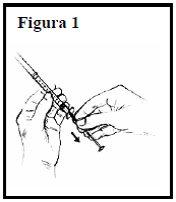
- Coja la jeringa estéril. Fíjese en las marcas numeradas que hay en ella. Cada marca (0,1, 0,2, 0,3, etc.) representa una décima de mililitro (0,1 ml). Sin quitar la tapa de la aguja, tire del émbolo y coja aire en la jeringa hasta el nivel (número de mililitros) que le haya indicado su médico. Ver Figura 1.
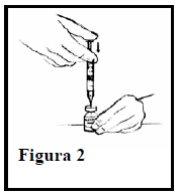
- Saque la tapa de la aguja. Con el vial sobre una superficie plana, inserte la aguja en el vial a través del tapón de goma.
- Presione el émbolo de la jeringa para inyectar aire en el vial. Ver Figura 2.
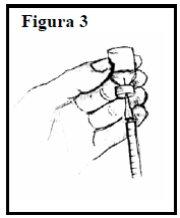
- Sujetando tanto el vial como la jeringa, ponga el vial boca abajo. Ajuste la jeringa de tal forma que la punta de la aguja sobresalga ligeramente por encima del tapón de goma, pero siempre dentro de la solución. Ver Figura 3.
- Tire lentamente del émbolo para pasar la solución a la jeringa, llenándola hasta el nivel (número de mililitros) indicado por su médico. Si aparecen burbujas en la jeringa, vuelva a introducir lentamente la solución en el vial y vuelva a extraer la solución.
- Saque la aguja del vial. No deje la jeringa boca abajo ni permita que la aguja entre en contacto con ningún objeto o sustancia.
- Vuelva a colocar la tapa de la aguja. Coloque la jeringa en una superficie limpia y plana.
- Puede que quede una pequeña cantidad de solución en el vial. Debe devolvérsela al farmacéutico para que la recicle.
NOTA: El vial de Ceplene contiene un sobrenadante para facilitar la extracción de 0.5 ml de dosis individual.
- Vuelva a comprobar la jeringa para asegurarse de haber extraído la cantidad adecuada.
- Sujete la jeringa y siga las «INSTRUCCIONES PARA LA INYECCIÓN» que se ofrecen a continuación.
INSTRUCCIONES PARA LA INYECCIÓN
Normalmente se inyectará dos dosis de 0,5 ml al día, a no ser que su médico le haya recetado una dosis menor.
Para la inyección necesitará lo siguiente:
- 1 jeringa preparada para la inyección de IL-2 (consulte el prospecto de IL-2 y las instrucciones sobre la dosis que le haya dado su médico).
- 1 jeringa preparada que contenga la dosis de Ceplene.
- Una o varias toallitas empapadas en alcohol.
- Un cronómetro o reloj con segundero.
- Un recipiente a prueba de pinchazos para que pueda desechar las jeringas usadas de forma segura.
Método
- Busque un lugar cómodo y bien iluminado en el que se pueda sentar y reclinarse. Sitúe al alcance de su mano las jeringas previamente preparadas con IL-2 y Ceplene, y una toallita empapada en alcohol. Por su propia seguridad, es importante que se siente en un lugar en el que pueda reclinarse o tumbarse cuando se ponga las inyecciones.
- Inyéctese la IL-2 tal y como le han explicado.
- Espere entre 1 y 3 minutos.
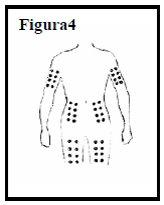
- Decida la parte del cuerpo en la que se inyectará Ceplene. Puede elegir entre el interior o el exterior de los muslos, los brazos o el estómago. No debe inyectarse Ceplene y la IL-2 en la misma zona.Por ejemplo, si se inyecta la IL-2 en el brazo izquierdo, podría inyectarse Ceplene en el muslo izquierdo o derecho, en el estómago o en el brazo derecho. Siempre cambie el sitio en el que se inyecta. En la Figura 4se muestran las zonas en las que puede pincharse.
- Asegúrese de que la zona de piel que escoge está a la vista. Use una toallita empapada en alcohol para limpiarla. Deje que la zona se seque durante 10 segundos.
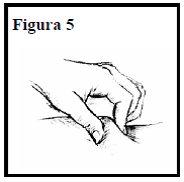
- Coja una sección de la piel que ha limpiado entre el pulgar y el índice, sin apretarla. Ver Figura 5.
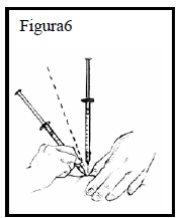
- Sujete la aguja verticalmente (90°) o en un ángulo de 45° con respecto a la piel y en un movimiento rápido insértela bajo la piel hasta donde llegue. Debe insertar la aguja bajo la piel, pero no en un vaso sanguíneo. Véase Figura 6.
- Presione lentamente el émbolo. Si aparece sangre, no inyecte Ceplene porque esto significará que la aguja ha entrado en un vaso sanguíneo.Saque la jeringa y deshágase de ella como le habrán enseñado. Reúna lo que necesita y empiece el proceso de nuevo, aunque hayan pasado los 3 minutos tras la inyección de IL-2.
- Fíjese en las marcas numeradas de la jeringa. Cada marca (0,1, 0,2, 0,3, etc.) representa una décima de mililitro (0,1 ml).
- Presione el émbolo de la jeringa e inyecte un décimo de mililitro (0,1 ml) por minuto, o más lentamente si así se lo ha indicado su médico. Ver Figura 7.
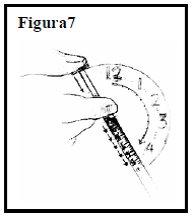
- Nunca inyecte Ceplene deprisa ni de una vez.
- Cuando la jeringa esté vacía, saque la aguja de la piel.
- Presione suavemente con una toallita empapada en alcohol en el lugar de la inyección, sin frotar.
- Permanezca sentado o acostado durante 20 minutostras inyectarse la dosis de Ceplene.
- Deseche la jeringa en el recipiente a prueba de pinchazos tal y como le habrán explicado.
- País de registro
- Forma farmacéuticaINYECTABLE, 0,5 MG histamina dihidrocloruro/0,5 ML
- Código ATCL03AX14
- Principio activo
- Requiere recetaSí
- Fabricante
- ComposiciónCLORURO DE SODIO (4,3 mg mg), HIDROXIDO DE SODIO (E 524) (AJUSTE PH - mg)
- Esta información es de carácter general y no sustituye la consulta con un profesional sanitario.
- Alternativas a CEPLENE 0,5 mg/0,5 ml SOLUCION INYECTABLEForma farmacéutica: INYECTABLE, DesconocidaPrincipio activo: TasonerminaFabricante: Belpharma S.A.Requiere recetaForma farmacéutica: INYECTABLE, 20 mg acetato glatiramero/ mlPrincipio activo: Glatiramero acetatoFabricante: Teva GmbhRequiere recetaForma farmacéutica: INYECTABLE, 40 mg/mlPrincipio activo: Glatiramero acetatoFabricante: Teva GmbhRequiere receta
Médicos online para CEPLENE 0,5 mg/0,5 ml SOLUCION INYECTABLE
Comenta la dosis, los posibles efectos secundarios, interacciones, contraindicaciones o la revisión de receta de CEPLENE 0,5 mg/0,5 ml SOLUCION INYECTABLE, sujeto a valoración médica y a la normativa local.









Preguntas frecuentes
CEPLENE 0,5 mg/0,5 ml SOLUCION INYECTABLE requiere receta en España. Puedes confirmarlo con un médico online según tu caso.
El principio activo de CEPLENE 0,5 mg/0,5 ml SOLUCION INYECTABLE es diclorhidrato de histamina. Esta información ayuda a identificar medicamentos con la misma composición pero con diferentes nombres comerciales.
CEPLENE 0,5 mg/0,5 ml SOLUCION INYECTABLE es fabricado por Laboratoires Delbert. La marca y el envase pueden variar según el distribuidor.
Los Médicos de familia, Psiquiatras, Dermatólogos, Cardiólogos, Endocrinólogos, Gastroenterólogos, Neumólogos, Nefrólogos, Reumatólogos, Hematólogos, Infectólogos, Alergólogos, Geriatras, Pediatras, Oncólogos pueden valorar la prescripción de CEPLENE 0,5 mg/0,5 ml SOLUCION INYECTABLE cuando esté clínicamente indicado. Puedes reservar una videoconsulta para comentar tu caso y las opciones de tratamiento.
La receta la emite un médico tras valorar tu estado de salud. En España, CEPLENE 0,5 mg/0,5 ml SOLUCION INYECTABLE se dispensa en las farmacias con esa receta médica. Una consulta online no garantiza su emisión: la decisión corresponde siempre al médico.
Para solicitar una valoración puedes usar Oladoctor:
Otros medicamentos con el mismo principio activo (diclorhidrato de histamina) incluyen BEROMUN 1 mg POLVO PARA SOLUCION PARA PERFUSION, COPAXONE 20 mg/ml SOLUCION INYECTABLE EN JERINGA PRECARGADA, COPAXONE 40 MG/ML SOLUCION INYECTABLE EN JERINGA PRECARGADA. Pueden tener diferentes nombres comerciales o formulaciones, pero contienen el mismo componente terapéutico. Consulta siempre con un médico antes de cambiar o iniciar un nuevo medicamento.
