



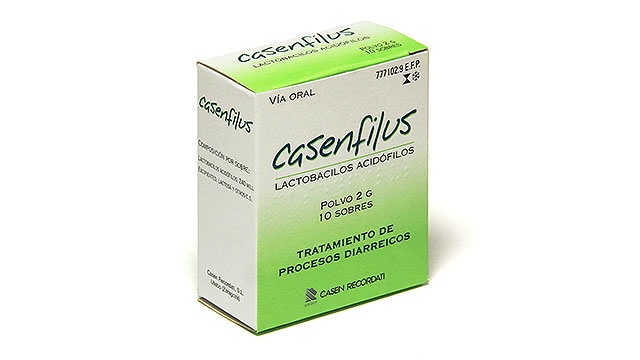
CASENFILUS 120 MILLION GERMS SOLUCIÓN/SUSPENSIÓN ORAL

Revisión de receta online
Un médico revisará tu caso y determinará si la prescripción es médicamente apropiada.

Habla con un médico sobre este medicamento
Comenta tus síntomas y las opciones de tratamiento en una consulta online.



Cómo usar CASENFILUS POLVO
Contenido del prospecto
- Introducción
- Qué es Carvedilol TecniGen y para qué se utiliza
- Qúe necesita saber antes de empezar a tomar Carvedilol TecniGen
- Cómo tomar Carvedilol TecniGen
- Posibles efectos adversos
- Conservación de Carvedilol TecniGen
- Contenido del envase e información adicional / Información adicional
Introducción
Prospecto: información para el usuario
Carvedilol TecniGen 6,25 mg comprimidos EFG
Lea todo el prospecto detenidamente antes de empezar a tomar este medicamento, porque contiene información importante para usted.
- Conserve este prospecto, ya que puede tener que volver a leerlo.
- Si tiene alguna duda, consulte a su médico o farmacéutico.
- Este medicamento se le ha recetado solamente a usted, y no debe dárselo a otras personas aunque tengan los mismos síntomas que usted, ya que puede perjudicarles.
- Si experimenta efectos adversos, consulte a su médico o farmacéutico, incluso si se trata de efectos adversos que no aparecen en este prospecto. Ver sección 4.
Contenido del prospecto
- Qué es Carvedilol TecniGen y para qué se utiliza
- Qué necesita saber antes de empezar a tomar Carvedilol TecniGen
- Cómo tomar Carvedilol TecniGen
- Posibles efectos adversos
- Conservación de Carvedilol TecniGen
- Contenido del envase e información adicional
1. Qué es Carvedilol TecniGen y para qué se utiliza
Carvedilol pertenece a un grupo de medicamentos conocidos como bloqueantes de los receptores alfa y beta. Este medicamento tiene propiedades antioxidantes, antihipertensivas (disminución de la tensión arterial), vasodilatadoras y antianginosas. Además disminuye el gasto cardiaco, y tiene efectos favorables sobre la circulación sanguínea a nivel del corazón.
Carvedilol está indicado en el tratamiento de:
- Insuficiencia cardiaca congestiva sintomática (el corazón ha perdido parte de la capacidad para bombear sangre) de moderada a grave, de origen isquémico o no isquémico.
- Hipertensión esencial (tensión arterial elevada).
- Cardiopatía isquémica (llega poca sangre y oxígeno al corazón).

¿No estás seguro de si este medicamento es adecuado para ti?
Comenta tus síntomas y tratamiento con un médico online.
2. Qúe necesita saber antes de empezar a tomar Carvedilol TecniGen
No tome Carvedilol TecniGen
- Si es alérgico al carvedilol o a alguno de los demás componentes de este medicamento (incluidos en la sección 6).
- Si tiene un tipo de insuficiencia cardiaca descompensada de la llamada clase IV (incapacidad del corazón para realizar su función de bombeo ante la actividad física y en reposo).
- Si tiene enfermedad pulmonar obstructiva crónica (EPOC) con los bronquios obstruidos (dificultad para respirar).
- Si su hígado no funciona bien.
- Asma bronquial.
- Enfermedad del corazón que consiste en bloqueo auriculoventricular (A-V) de segundo y tercer grado (a menos que se haya implantado un marcapasos permanente).
- Si su corazón late lento (menos de 50 latidos por minuto).
- Fallo del corazón (o shock, estado en el cual el corazón ha estado tan dañado que es incapaz de suministrarle suficiente sangre a los órganos del cuerpo).
- Enfermedad del corazón que consiste en bloqueo del nódulo sino-auricular.
- Tensión arterial muy baja (presión sistólica de menos de 85 mmHg).
Advertencias y precauciones
Consulte a su médico o farmacéutico antes de empezar a tomar carvedilol.
Informe a su médico si tiene alguna enfermedad de las citadas a continuación:
- Si presenta alguna enfermedad pulmonar.
- Si es diabético.
- Si presenta una enfermedad del corazón.
- Si toma otros medicamentos para el corazón, especialmente si está tomando alguno de los siguientes medicamentos debe informar a su médico: digitálicos (aumentan la fuerza del latido del corazón), diuréticos (aumentan la cantidad de orina), inhibidor de la ECA (medicamento antihipertensivo), antagonistas del calcio (medicamento antihipertensivo) y antiarrítmicos (actúan sobre el ritmo del corazón).
- Si tiene algún problema de tiroides.
- Si es alérgico y recibe algún tratamiento para su alergia.
- Si tiene problemas de circulación o fenómeno de Raynaud.
- Si tiene programada una intervención quirúrgica, informe a su médico de que está en tratamiento con carvedilol.
- Si padece una enfermedad llamada feocromocitoma.
- Si tiene psoriasis (enfermedad de la piel).
- Si tiene angina de Prinzmetal (dolor en el pecho que comienza durante el descanso sin causas obvias).
- Si va a someterse a una operación con anestesia. Debe informar a su médico responsable de la anestesia.
- Si utiliza lentes de contacto. Carvedilol puede reducir la producción de lágrimas.
- Si padece reacciones cutáneas adversas graves (p.ej. necrólisis epidérmica tóxica, síndrome de Stevens-Johnson).
Como ocurre con todos los medicamentos con actividad beta-bloqueante, no debe interrumpir el tratamiento con carvedilol de forma brusca. La dosis se debe reducir gradualmente según las indicaciones de su médico.
Uso en deportistas:
Este medicamento contiene carvedilol que puede producir un resultado positivo en las pruebas de control de dopaje.
Niños y adolescentes
No se recomienda el uso de carvedilol en niños y adolescentes menores de 18 años debido a que los datos de seguridad y eficacia son insuficientes.
Otros medicamentos y Carvedilol TecniGen
Informe a su médico o farmacéutico si está tomando, ha tomado recientemente o pudiera tener que tomar cualquier otro medicamento.
Esto es muy importante, porque tomar varios medicamentos a la vez puede aumentar o disminuir su efecto. Por lo tanto, no debe tomar carvedilol con ningún otro medicamento, a no ser que lo haya permitido su médico.
Tenga en cuenta que estas instrucciones pueden ser también de aplicación a medicamentos que se hayan utilizado antes o puedan utilizarse después.
Es importante que informe a su médico si está tomando o ha tomado recientemente alguno de los siguientes medicamentos:
- Fluoxetina y paroxetina (medicamentos para la depresión).
- Ciclosporina y tacrolimus (medicamentos utilizados para evitar los rechazos en los trasplantes).
- Digoxina, verapamilo, diltiazem y medicamentos antiarrítmicos (medicamentos utilizados para tratar problemas del corazón y de la tensión arterial).
- Amiodarona (medicamento utilizado para tratar ciertos problemas del corazón).
- Determinados analgésicos del tipo de la Aspirina e Ibuprofeno (AINE).
- Otros medicamentos para la tensión, barbitúricos, fenotiazinas, antidepresivos tricíclicos, agentes vasodilatadores y alcohol.
- Medicamentos para la diabetes (incluida la insulina y los antidiabéticos orales).
- Clonidina (medicamento utilizado para controlar la tensión arterial o la migraña).
- Rifampicina (medicamento para tratar infecciones).
- Cimetidina (medicamento para tratar problemas gástricos).
- Inductores o inhibidores del metabolismo hepático (medicamentos que modifican la eliminación de otros medicamentos del organismo).
- Inhibidores de la monoaminooxidasa (medicamentos para la depresión).
- Broncodilatadores β-agonistas (medicamentos que se usan para mejorar la capacidad respiratoria, como por ejemplo en el asma).
- Adrenalina/epinefrina (utilizada para tratar reacciones alérgicas graves).
Toma de Carvedilol TecniGen con alimentos, bebidas y alcohol
Debe evitarse tomar carvedilol simultánea o inmediatamente después de tomar pomelo o zumo de pomelo. El pomelo o zumo de pomelo pueden dar lugar a un aumento del ingrediente activo carvedilol en sangre y causar efectos adversos impredecibles. También se debe evitar el consumo excesivo y simultáneo o puntual de alcohol porque el alcohol influye en el efecto de carvedilol.
Su médico o farmacéutico le informará acerca de las comidas con las que debería tomar el medicamento.
Embarazo y lactancia
Si está embarazada o en periodo de lactancia, cree que podría estar embarazada o tiene intención de quedarse embarazada, consulte a su médico o farmacéutico antes de utilizar este medicamento.
No se recomienda el uso de carvedilol durante el embarazo y la lactancia.
Carvedilol puede provocar la muerte del feto dentro del útero, así como partos prematuros. Además, pueden producirse efectos adversos en el feto y en el recién nacido. Tras el nacimiento, el recién nacido tiene un mayor riesgo de sufrir problemas en el corazón y en los pulmones.
Carvedilol pasa a la leche materna por lo que no se recomienda su uso durante la lactancia.
Conducción y uso de máquinas
En ocasiones carvedilol puede dificultarle la capacidad para conducir o para manipular máquinas. Esto sucede especialmente cuando se comienza o se cambia el tratamiento y cuando se toma conjuntamente con alcohol.
Carvedilol TecniGen contiene lactosa y sacarosa
Si su médico le ha indicado que padece una intolerancia a ciertos azúcares, consulte con él antes de tomar este medicamento.
3. Cómo tomar Carvedilol TecniGen
Siga exactamente las instrucciones de administración de este medicamento indicadas por su médico o farmacéutico. En caso de duda, consulte de nuevo a su médico o farmacéutico.
Hipertensión esencial
Adultos:
Vía oral. La dosis recomendada para iniciar el tratamiento es de 12,5 mg una vez al día durante los dos primeros días. A continuación, la dosis recomendada es de 25 mg una vez al día. Si fuera necesario su médico podrá aumentar la dosis que usted recibe (a intervalos de al menos dos semanas) hasta 50 mg una vez al día o en dos veces al día de 25 mg cada una.
Pacientes de edad avanzada:
Vía oral. La dosis recomendada para iniciar la terapia es de 12,5 mg una vez al día, que ha proporcionado un control satisfactorio en algunos pacientes. Si la respuesta no fuese la adecuada, su médico le ajustará la dosis (a intervalos de al menos dos semanas).
Cardiopatía isquémica
Adultos:
Vía oral. La dosis recomendada para iniciar el tratamiento es de 12,5 mg dos veces al día (en total 25 mg al día) durante los dos primeros días. A continuación, la dosis recomendada es de 25 mg dos veces al día (en total 50 mg al día). Si fuera necesario su médico podrá aumentar la dosis que usted recibe (a intervalos de al menos dos semanas) hasta 50 mg dos veces al día (en total 100 mg al día).
Pacientes de edad avanzada:
Vía oral. La dosis máxima recomendada para pacientes de edad avanzada es de 50 mg administrados en dosis divididas (dos veces al día).
Tratamiento de la insuficiencia cardiaca congestiva sintomática
Adultos y pacientes de edad avanzada:
Vía oral. Su médico le dirá de manera individual la dosis que debe tomar, vigilándole atentamente durante el ajuste a las dosis más altas.
En caso de estar usando medicamentos para enfermedades del corazón (digitálicos) o del control de la tensión arterial (diuréticos y/o inhibidores de la ECA) y antes de iniciar el tratamiento con carvedilol, su médico ajustará la cantidad de medicamentos de este tipo que debe tomar.
En cualquier caso, la dosis recomendada para el inicio del tratamiento con carvedilol en el tratamiento de la insuficiencia cardiaca congestiva sintomática es de 3,125 mg dos veces al día (en total 6,25 mg al día) durante dos semanas. Si tolera bien esta dosis puede aumentarse posteriormente (a intervalos de al menos dos semanas) hasta 6,25 mg dos veces al día (en total 12,5 mg al día). Su médico podrá recetarle posteriormente (pasadas dos semanas al menos) dosis más altas de carvedilol.
Si usted pesa menos de 85 kg la dosis máxima recomendada es de 25 mg dos veces al día (en total 50 mg al día). Si su peso es superior a 85 kg la dosis máxima recomendada es de 50 mg dos veces al día (100 mg al día).
Su médico le indicará la duración de su tratamiento con carvedilol.
Como norma general, independientemente de su enfermedad, la retirada de carvedilol debe hacerse poco a poco a lo largo de unos cuantos días, o bien reducir la dosis a la mitad cada tres días.
Uso en niños y adolescentes
Carvedilol no está recomendado para uso en niños y adolescentes menores de 18 años debido a que no existen datos suficientes sobre seguridad y eficacia.
Normas para la correcta administración
Tome los comprimidos con una cantidad suficiente de líquido, un vaso de agua.
Si padece insuficiencia cardiaca congestiva (su corazón ha perdido un poco de la capacidad para bombear la sangre y puede producir dificultad para respirar, debilidad y acumulación de líquidos), debe tomar carvedilol mientras come, para así evitar la sensación de mareo al levantarse.
Recuerde tomar su medicamento.
El comprimido se puede partir en dosis iguales.
Si toma más Carvedilol TecniGen del que debe
Si usted toma más carvedilol del que debe, contacte rápidamente con su médico o acuda al centro hospitalario más cercano. Lleve con usted el medicamento.
En caso de sobredosis o ingestión accidental, consulte inmediatamente a su médico o farmacéutico o llame al Servicio de Información Toxicológica, teléfono: 91 562 04 20, indicando el medicamento y la cantidad ingerida.
Si olvidó tomar Carvedilol TecniGen
No tome una dosis doble para compensar las dosis olvidadas.
Si interrumpe el tratamiento con Carvedilol TecniGen
El tratamiento con carvedilol no debe interrumpirse bruscamente, especialmente si usted sufre cardiopatía isquémica, enfermedad que causa que el corazón no bombee bien la sangre. Su médico le irá reduciendo la dosis poco a poco durante unos días hasta que deje de tomar carvedilol por completo.
Si tiene cualquier otra duda sobre el uso de este medicamento, pregunte a su médico o farmacéutico.

¿Has empezado a tomar el medicamento y tienes preguntas?
Comenta tus síntomas y tratamiento con un médico online.
4. Posibles efectos adversos
Al igual que todos los medicamentos, este medicamento puede producir efectos adversos, aunque no todas las personas los sufran.
Los efectos se clasifican en: muy frecuentes (pueden afectar a más de 1 de cada 10 personas), frecuentes (pueden afectar hasta 1 de cada 10 personas), poco frecuentes (pueden afectar hasta 1 de cada 100 personas), raros (pueden afectar hasta 1 de cada 1.000 personas), muy raros (pueden afectar hasta 1 de cada 10.000 personas) y frecuencia no conocida (no puede estimarse a partir de los datos disponibles).
Infecciones e infestaciones
Frecuentes: Bronquitis, neumonía, infecciones de las vías respiratorias altas, infecciones de las vías urinarias.
Trastornos del sistema nervioso
Muy frecuentes: Dolor de cabeza, mareos y debilidad que suelen ser leves y se producen principalmente al comienzo del tratamiento.
Frecuentes: Presíncope, síncope (desmayo), especialmente al principio del tratamiento.
Poco frecuentes: Parestesias (sensación de hormigueo).
Trastornos psiquiátricos
Frecuentes: Estado de ánimo deprimido, depresión.
Poco frecuentes: Trastornos del sueño.
Frecuencia no conocida: Alucinaciones.
Trastornos cardiacos
Muy frecuentes: Aumento de la insuficiencia cardiaca (el corazón ha perdido parte de la capacidad para bombear sangre).
Frecuentes: Bradicardia (disminución de la frecuencia de los latidos del corazón), sobrecarga de fluidos, aumento del volumen de sangre en el cuerpo.
Poco frecuentes: Bloqueo auriculoventricular (AV) (problemas de corazón), y angina de pecho (dolor en la zona del pecho).
Frecuencia no conocida: Parada sinusal (una afección que hace que los latidos del corazón se vuelvan muy lentos o se detengan), especialmente en pacientes de edad avanzada o pacientes con otros problemas del ritmo cardíaco.
Trastornos vasculares
Muy frecuente: Tensión arterial baja.
Frecuente: Hipotensión postural (sensación de mareo al levantarse o cambiar la posición del cuerpo), trastornos de la circulación periférica (manos y pies fríos), aumento de los síntomas en pacientes con claudicación intermitente (aumento del dolor en las piernas al caminar) o fenómeno de Raynaud (disminución de la sangre en los dedos de las manos y de los pies, las orejas y la nariz), hipertensión.
Trastornos respiratorios, torácicos y mediastínicos
Frecuentes: Asma y dificultad para respirar en pacientes predispuestos, acumulación de líquido en los pulmones.
Raras: Congestión nasal.
Trastornos gastrointestinales
Frecuentes: Molestias gastrointestinales con síntomas como náuseas, diarrea, dolor abdominal, indigestión, vómitos.
Poco frecuentes: Estreñimiento.
Raras: Sequedad de boca.
Trastornos de la piel y del tejido subcutáneo
Poco frecuentes: Reacciones cutáneas (p.ej. exantema alérgico, dermatitis, urticaria, picor, psoriasis, lesiones cutáneas de tipo liquen plano).
Frecuencia no conocida: Caída del cabello, reacciones adversas cutáneas graves (ej. necrólisis epidérmica tóxica, Síndrome de Stevens-Johnson), sudoración excesiva (hiperhidrosis).
Trastornos de la sangre y del sistema linfático
Frecuentes: Disminución del número de glóbulos rojos en sangre (anemia).
Raras: Reducción del número de plaquetas en sangre (trombocitopenia).
Muy raras: Reducción del número de glóbulos blancos en sangre (leucopenia).
Trastornos hepatobiliares
Muy raras: Alteraciones en las transaminasas séricas (cambios en la cantidad de ciertas enzimas del hígado en la sangre).
Trastornos oculares
Frecuentes: Disminución del lagrimeo (ojo seco), irritación de los ojos, alteraciones en la visión.
Trastornos renales y urinarios
Frecuentes: Insuficiencia renal aguda (el riñón no funciona bien) y trastornos de la función del riñón en pacientes con enfermedad vascular difusa y/o función renal alterada.
Raras: Problemas al orinar.
Frecuencia no conocida: Incontinencia urinaria en mujeres (desaparece al dejar de tomar la medicación).
Trastornos del sistema inmunológico
Muy raras: Reacciones alérgicas.
Trastornos musculoesqueléticos y del tejido conjuntivo
Frecuentes: Dolor en las extremidades.
Trastornos del aparato reproductor y de la mama
Poco frecuentes: Impotencia.
Trastornos del metabolismo y de la nutrición
Frecuentes: Empeoramiento del control de la cantidad de azúcar en la sangre en pacientes con diabetes (hiperglucemia, hipoglucemia), aumento de peso, aumento del colesterol en sangre.
Frecuencia no conocida: Es posible que se manifieste una diabetes mellitus latente, o que una diabetes existente se agrave.
Trastornos generales y alteraciones en el lugar de administración
Muy frecuentes: Fatiga.
Frecuentes: Dolor, edema (retención de líquido, hinchazón de las piernas, tobillos y pies).
Si considera que alguno de los efectos adversos que sufre es grave o si aprecia cualquier efecto adverso no mencionado en este prospecto, informe a su médico o farmacéutico.
Comunicación de efectos adversos
Si experimenta cualquier tipo de efecto adverso, consulte a su médico o farmacéutico, incluso si se trata de posibles efectos adversos que no aparecen en este prospecto. También puede comunicarlos directamente a través del Sistema Español de Farmacovigilancia de Medicamentos de Uso Humano: https://www.notificaram.es. Mediante la comunicación de efectos adversos usted puede contribuir a proporcionar más información sobre la seguridad de este medicamento.
5. Conservación de Carvedilol TecniGen
Mantener este medicamento fuera de la vista y del alcance de los niños.
No conservar a temperatura superior a 30ºC. Conservar en el envase original.
No utilice este medicamento después de la fecha de caducidad que aparece en el envase después de CAD. La fecha de caducidad es el último día del mes que se indica.
Los medicamentos no se deben tirar por los desagües ni a la basura. Deposite los envases y los medicamentos que no necesita en el Punto SIGRE de la farmacia. En caso de duda pregunte a su farmacéutico cómo deshacerse de los envases y de los medicamentos que no necesita. De esta forma, ayudará a proteger el medio ambiente.
6. Contenido del envase e información adicional / Información adicional
Composición de Carvedilol TecniGen
El principio activo es carvedilol. Cada comprimido contiene 6,25 mg de carvedilol.
Los demás componentes son:
Sacarosa, lactosa monohidrato, povidona, sílice coloidal anhidra, crospovidona y estearato de magnesio.
Aspecto del producto y contenido del envase
Comprimidos de color blanco, redondos y ranurados en una cara. Se acondicionan en blísteres de PVC/PVdC/Al/PVdC en envases conteniendo 10, 28 o 60 comprimidos.
Puede que solamente estén comercializados algunos tamaños de envases.
Titular de la autorización de comercialización
Tecnimede España Industria Farmacéutica, S.A.
Avda. de Bruselas, 13, 3º D. Edificio América. Polígono Arroyo de la Vega,
28108 Alcobendas (Madrid), España
Responsable de la fabricación
Atlantic Pharma – Produções Farmacêutica, S.A.
Rua da Tapada Grande nº 2, Abrunheira
2710-228 Sintra, Portugal
Fecha de la última revisión de este prospecto: mayo 2025
La información detallada de este medicamento está disponible en la página web de la Agencia Española de Medicamentos y Productos Sanitarios (AEMPS) (http://www.aemps.gob.es/).
- País de registro
- Forma farmacéuticaSOLUCIÓN/SUSPENSIÓN ORAL, 120 MILLONES GERMENES
- Código ATCA07FA01
- Principio activo
- Requiere recetaNo
- Fabricante
- ComposiciónLACTOSA (800 mg mg), SACARINA SODICA (0,15 mg mg)
- Esta información es de carácter general y no sustituye la consulta con un profesional sanitario.
- Alternativas a CASENFILUS POLVOForma farmacéutica: CAPSULA, 250 mgPrincipio activo: Saccharomyces boulardiiFabricante: BiocodexNo requiere recetaForma farmacéutica: SOLUCIÓN/SUSPENSIÓN ORAL, 250 mgPrincipio activo: Saccharomyces boulardiiFabricante: BiocodexNo requiere recetaForma farmacéutica: SOLUCIÓN/SUSPENSIÓN ORAL, 250 mgPrincipio activo: Saccharomyces boulardiiFabricante: BiocodexNo requiere receta
Médicos online para CASENFILUS POLVO
Comenta la dosis, los posibles efectos secundarios, interacciones, contraindicaciones o la revisión de receta de CASENFILUS POLVO, sujeto a valoración médica y a la normativa local.









Obtén una receta de CASENFILUS POLVO online
Rellena un formulario de 2 minutos
Cuéntanos tus síntomas, historial y el medicamento que necesitas.
Elige un médico o nosotros te asignamos uno
Escoge un especialista o te conectamos con el próximo médico disponible.
El médico revisa tu caso
Normalmente en 30 minutos. Puede hacerte preguntas adicionales por chat.
Recógela en cualquier farmacia
Receta electrónica enviada a tu correo, válida en toda España.
Preguntas frecuentes
CASENFILUS POLVO no requiere receta en España. Puedes confirmarlo con un médico online según tu caso.
El principio activo de CASENFILUS POLVO es lactic acid producing organisms. Esta información ayuda a identificar medicamentos con la misma composición pero con diferentes nombres comerciales.
CASENFILUS POLVO es fabricado por Casen Recordati S.L.. La marca y el envase pueden variar según el distribuidor.
Los Médicos de familia, Psiquiatras, Dermatólogos, Cardiólogos, Endocrinólogos, Gastroenterólogos, Neumólogos, Nefrólogos, Reumatólogos, Hematólogos, Infectólogos, Alergólogos, Geriatras, Pediatras, Oncólogos pueden valorar la prescripción de CASENFILUS POLVO cuando esté clínicamente indicado. Puedes reservar una videoconsulta para comentar tu caso y las opciones de tratamiento.
España cuenta con una infraestructura sanitaria bien desarrollada en ciudades principales como Madrid, Barcelona, Valencia y Sevilla. Las farmacias están ampliamente disponibles y operan bajo estrictas regulaciones, garantizando el acceso a medicamentos con receta.
Puedes comprar CASENFILUS POLVO en Madrid, Barcelona, Sevilla o Valencia en cualquier farmacia local con una receta válida.
Para obtener una receta, puedes utilizar Oladoctor:
Otros medicamentos con el mismo principio activo (lactic acid producing organisms) incluyen ULTRA-LEVURA 250 MG CAPSULAS DURAS, ULTRA-LEVURA 250 MG POLVO PARA SUSPENSION ORAL, ULTRA-LEVURA 250 MG POLVO Y DISOLVENTE PARA SUSPENSION ORAL. Pueden tener diferentes nombres comerciales o formulaciones, pero contienen el mismo componente terapéutico. Consulta siempre con un médico antes de cambiar o iniciar un nuevo medicamento.
