



BYDUREON 2 mg Injectable Suspension

Prescription review online
A doctor will review your case and decide whether a prescription is medically appropriate.

Talk to a doctor about this medicine
Discuss your symptoms and possible next steps in a quick online consultation.



How to use BYDUREON 2 mg POWDER AND DILUENT FOR PROLONGED-RELEASE INJECTABLE SUSPENSION IN A PRE-FILLED PEN
Contents of the leaflet
- Introduction
- What is Bydureon and what is it used for
- What you need to know before you use Bydureon
- How to use Bydureon
- Possible side effects
- Storage of Bydureon
- Container contents and additional information
Introduction
Package Leaflet: Information for the User
Bydureon 2 mg powder and solvent for prolonged-release suspension for injection in pre-filled pen
exenatide
Read all of this leaflet carefully before you start using this medicine because it contains important information for you.
- Keep this leaflet, you may need to read it again.
- If you have any further questions, ask your doctor, pharmacist, or diabetes nurse.
- This medicine has been prescribed for you only. Do not pass it on to others. It may harm them, even if their signs of illness are the same as yours.
- If you get any side effects, talk to your doctor, pharmacist, or diabetes nurse. This includes any possible side effects not listed in this leaflet. See section 4.
Contents of the pack
- What is Bydureon and what is it used for
- What you need to know before you use Bydureon
- How to use Bydureon
- Possible side effects
- Storage of Bydureon
- Contents of the pack and other information
1. What is Bydureon and what is it used for
Bydureon contains the active substance exenatide. It is an injectable medicine used to improve blood sugar control in adults, adolescents, and children aged 10 years and older with type 2 diabetes mellitus.
This medicine is used in combination with the following diabetes medicines: metformin, sulfonylureas, thiazolidinediones (combination therapy with thiazolidinediones was only studied in adult patients), SGLT2 inhibitors, and/or long-acting insulin. Your doctor has prescribed this medicine as an additional medicine to help you control your blood sugar level. Continue with your diet and exercise plan.
You have diabetes because your body does not produce enough insulin to control your blood sugar levels or your body is not able to use insulin properly. This medicine helps your body increase insulin production when your blood sugar is high.

Not sure if this medicine is right for you?
Discuss your symptoms and treatment with a doctor online.
2. What you need to know before you use Bydureon
Do not use Bydureon:
- If you are allergic to exenatide or any of the other ingredients of this medicine (listed in section 6).
Warnings and precautions
Talk to your doctor, pharmacist, or diabetes nurse before you start using Bydureon about the following:
- If you use this medicine in combination with a sulfonylurea, as low blood sugar (hypoglycemia) may occur. Check your blood sugar levels regularly. Ask your doctor, pharmacist, or diabetes nurse if you are not sure if any of your other medicines contain a sulfonylurea.
- If you have type 1 diabetes or diabetic ketoacidosis, as this medicine should not be used.
- How to inject this medicine. It must be injected into the skin and not into a vein or muscle.
- The use of this medicine is not recommended if you have severe problems with emptying your stomach (including gastroparesis) or with food digestion. The active substance in this medicine delays stomach emptying, so food passes more slowly through your stomach.
- If you have ever had pancreatitis (inflammation of the pancreas) (see section 4).
- Tell your doctor if you lose weight too quickly (more than 1.5 kg per week), as this can cause problems such as gallstones.
- If you have severe kidney disease or are on dialysis, as the use of this medicine is not recommended.
Bydureon is not an insulin, so it should not be used as a substitute for insulin.
Children and adolescents
Bydureon can be used in adolescents and children aged 10 years and older. There is no data available on the use of this medicine in children under 10 years of age.
Using Bydureon with other medicines
Tell your doctor or pharmacist if you are using, have recently used, or might use any other medicines, especially:
- other medicines used to treat type 2 diabetes, such as medicines that work like Bydureon (e.g., liraglutide or other medicines that contain exenatide), as it is not recommended to use these medicines with Bydureon.
- medicines used to thin the blood (anticoagulants), e.g., warfarin, as you may need closer monitoring of changes in your INR (a measure of blood clotting) during the start of therapy with this medicine.
- a medicine that contains a sulfonylurea, as low blood sugar (hypoglycemia) may occur when combined with Bydureon.
- if you are receiving insulin, your doctor will tell you how to reduce your insulin dose and recommend that you check your blood sugar level more often to avoid high blood sugar (hyperglycemia) and diabetic ketoacidosis (a complication of diabetes that occurs when the body cannot break down glucose because there is not enough insulin).
Pregnancy and breastfeeding
It is not known if this medicine can harm your unborn baby, so you should not use it during pregnancy or for at least 3 months before a planned pregnancy.
It is not known if exenatide passes into breast milk. You should not use this medicine during breastfeeding.
If you are pregnant or breastfeeding, think you may be pregnant, or plan to become pregnant, ask your doctor or pharmacist for advice before using this medicine.
You should use contraception if you could become pregnant during treatment with this medicine.
Driving and using machines
If you use this medicine in combination with a sulfonylurea, low blood sugar (hypoglycemia) may occur. Hypoglycemia can reduce your ability to concentrate. Please be aware of this possible problem in situations where you could put yourself or others at risk (e.g., driving a car or using machines).
Important information about some of the ingredients of Bydureon
This medicine contains less than 1 mmol (23 mg) of sodium per dose, which is essentially "sodium-free".
3. How to use Bydureon
Follow the instructions for administration of this medicine exactly as told by your doctor, pharmacist, or diabetes nurse. If you are not sure, talk to your doctor, pharmacist, or diabetes nurse again.
You should inject this medicine once a week, at any time of day, with or without food.
You should inject this medicine into the skin (subcutaneous injection) in the area around your stomach (abdomen), in the upper part of your leg (thigh), or in the upper back part of your arm. Do not inject into a vein or muscle.
You can use the same area each week. Make sure to choose a different injection site within that area.
Never mix insulin and Bydureon in the same injection. If you need to administer both at the same time, use two separate injections. You can inject both in the same area (e.g., in the area around your stomach) but do not inject one next to the other.
Check your blood sugar levels regularly, especially if you are using a sulfonylurea.
To inject Bydureon, follow the "Instructions for the User" included in the pack.
Your doctor or diabetes nurse should teach you how to inject this medicine before you use it for the first time.
Take a pen out of the refrigerator and let it sit at room temperature for at least 15 minutes. Before you start, check that the liquid in the pen is clear and free of particles. After you mix the liquid with the powder, use the suspension only if the mixture is between white and off-white and cloudy. If you see dry powder clumps on the sides of the pen, the medicine is NOT mixed well. Tap the pen firmly again until it is well mixed.
You should inject this medicine immediately after mixing the powder and solvent.
Use a new pen for each injection. You should dispose of the pen safely, with the needle still attached, after use, as your doctor or diabetes nurse has told you.
If you use more Bydureon than you should
If you use more of this medicine than you should, talk to your doctor before taking any more. You may need medical treatment. Too much of this medicine can cause nausea, vomiting, dizziness, or low blood sugar symptoms (see section 4).
If you forget to use Bydureon
You might find it helpful to set a specific day to take your Bydureon injection each week.
If you forget a dose and there are 3 days or more until your next scheduled dose, take the missed dose as soon as possible. For your next injection, you can go back to your usual day.
If you forget a dose and there are only 1 or 2 days until your next scheduled dose, skip the missed dose and take your next dose on the scheduled day. You can also change the day you take your injection, as long as the last dose was given 3 or more days before.
Do not take two doses of Bydureon if there are less than 3 days between them.
If you are not sure if you have taken your full dose of Bydureon:
If you are not sure if you took your full dose, do not take another dose of this medicine. Just take your next dose at the scheduled time.
If you stop using Bydureon
If you think you need to stop using this medicine, talk to your doctor first. If you stop using this medicine, it may affect your blood sugar levels.
If you have any other questions about using this medicine, ask your doctor, pharmacist, or diabetes nurse.

Started taking the medicine and have questions?
Discuss your symptoms and treatment with a doctor online.
4. Possible side effects
Like all medicines, this medicine can cause side effects, although not everybody gets them.
Severe allergic reactions(anaphylaxis) have been reported rarely (may affect up to 1 in 1,000 people).
See your doctor immediately if you experience symptoms such as
- Swelling of the face, tongue, or throat (angioedema)
- Hypersensitivity (rash, itching, and rapid swelling of the tissues of the neck, face, mouth, or throat)
- Difficulty swallowing
- Hives and difficulty breathing
Cases of pancreatitis(inflammation of the pancreas) have been reported uncommonly (may affect up to 1 in 100 people) in patients treated with this medicine. Pancreatitis can be a serious medical condition that can be life-threatening.
- Tell your doctor if you have had pancreatitis, gallstones, alcoholism, or very high triglycerides. These medical conditions may increase the risk of pancreatitis or make it worse, whether or not you are taking this medicine.
- Stop taking this medicine and contact your doctor immediatelyif you have severe and persistent stomach pain, with or without vomiting, as you may have pancreatitis.
Very common side effects(may affect more than 1 in 10 people)
- nausea (nausea is more common when starting treatment with this medicine but decreases over time in most patients)
- diarrhea
- low blood sugar (hypoglycemia) when used with a sulfonylurea
When this medicine is used with a sulfonylurea, episodes of low blood sugar (hypoglycemia, usually mild to moderate) may occur. It may be necessary to reduce the dose of your sulfonylurea medicine while using this medicine. The signs and symptoms of low blood sugar can include headache, drowsiness, weakness, dizziness, confusion, irritability, hunger, rapid heartbeat, sweating, and a feeling of nervousness. Your doctor should tell you how to treat low blood sugar.
Common side effects(may affect up to 1 in 10 people)
- low blood sugar (hypoglycemia) when used with insulin
- dizziness
- headache
- vomiting
- lack of energy and strength
- fatigue
- constipation
- stomach pain
- swelling
- indigestion
- flatulence (gas)
- heartburn
- decreased appetite
This medicine may reduce your appetite, the amount of food you eat, and your weight. Tell your doctor if you lose weight too quickly (more than 1.5 kg per week), as this can cause problems such as gallstones.
- injection site reactions
If you experience an injection site reaction (redness, rash, or itching), you can talk to your doctor about something to help relieve any signs or symptoms. After injection, you may see or feel a small lump under your skin; this should disappear after 4 to 8 weeks. You should not need to stop your treatment.
Uncommon side effects
- decreased kidney function
- dehydration, sometimes with decreased kidney function
- intestinal obstruction (blockage in the intestine)
- belching
- unusual taste in the mouth
- increased sweating
- hair loss
- sleepiness
- delayed gastric emptying
- inflamed gallbladder
- gallstones
Rare side effects
- nervousness
Not known(frequency cannot be estimated from the available data)
In addition, the following other adverse reactionshave been reported:
- bleeding or bruising more easily than normal due to a low level of platelets in the blood.
- changes in INR (a measure of blood clotting) have been reported when used with warfarin.
- skin reactions at the injection site after injection of exenatide. These include: a pocket of pus (abscess) and an area of swollen, red, hot, and painful skin (cellulitis).
Reporting of side effects
If you experience any side effects, talk to your doctor, pharmacist, or diabetes nurse, even if they are not listed in this leaflet. You can also report side effects directly via the national reporting system listed in Appendix V. By reporting side effects, you can help provide more information on the safety of this medicine.
5. Storage of Bydureon
Keep this medicine out of the sight and reach of children.
Do not use this medicine after the expiry date which is stated on the label and carton after EXP. The expiry date refers to the last day of the month shown.
Store in a refrigerator (between 2°C and 8°C). Do not freeze.
The pen can be stored for up to 4 weeks below 30°C before use.
Store in the original package to protect from light.
Discard any Bydureon pen that has been frozen.
Medicines should not be disposed of via wastewater or household waste. Ask your pharmacist how to dispose of medicines no longer required. This will help protect the environment.
6. Container contents and additional information
Composition of Bydureon
- The active ingredient is exenatide. Each preloaded pen contains 2 mg of exenatide. After suspension, a dose of 2 mg/0.65 ml is obtained.
- The other components are:
- In the powder: poly (D, L-lactide-co-glycolide) and sucrose.
- In the solvent: sodium carmellose; sodium chloride; polysorbate 20; sodium dihydrogen phosphate monohydrate; disodium phosphate heptahydrate, water for injectable preparations, and sodium hydroxide (for pH adjustment).
Appearance of the product and container contents
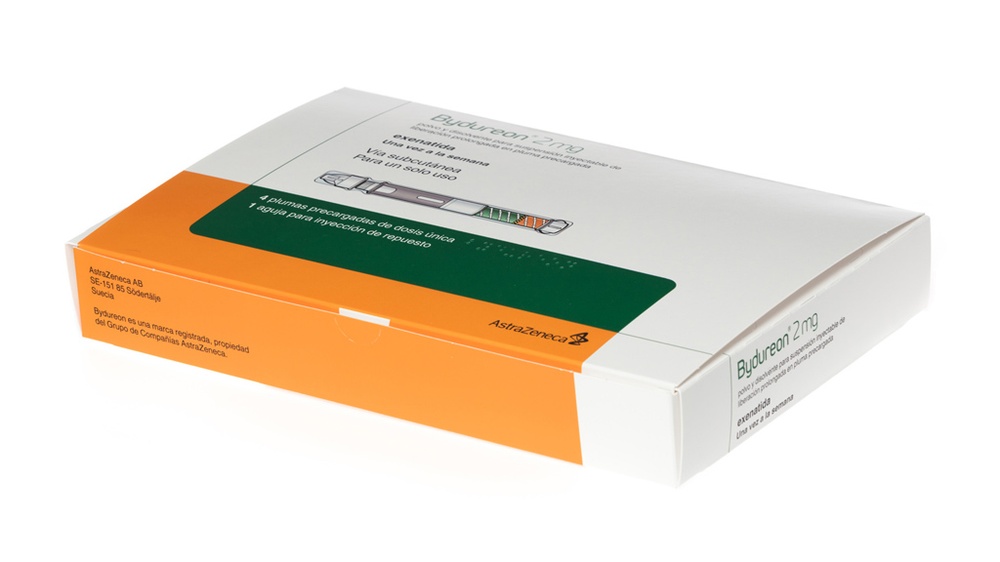
This medication is supplied as a powder and solvent (liquid) for injectable suspension in a preloaded pen. The powder (2 mg), contained in one of the chambers, is white to off-white in color, and the solvent (0.65 ml), contained in the other chamber, is a clear, colorless to pale yellow, to pale brown solution. Each single-dose preloaded pen is supplied with a measured dose needle. Each container also includes a spare needle.
This medication is available in a package of 4 single-dose preloaded pens and a multiple package containing 12 (3 packages of 4) single-dose preloaded pens. Only certain package sizes may be marketed.
Marketing authorization holder:
AstraZeneca AB
SE-151 85 Södertälje
Sweden
Manufacturer:
AstraZeneca AB
Gärtunavägen
SE-151 85 Södertälje
Sweden
AstraZeneca UK Limited
Silk Road Business Park,
Macclesfield, Cheshire, SK10 2NA
United Kingdom
Swords Laboratories T/A Lawrence Laboratories
Unit 12 Distribution Centre, Shannon Industrial Estate, Shannon, Co. Clare
Ireland
You can request more information about this medication by contacting the local representative of the marketing authorization holder:
Belgium AstraZeneca S.A./N.V. Tel: +32 2 370 48 11 | Lithuania UAB AstraZeneca Lietuva Tel: +370 5 2660550 |
| Luxembourg AstraZeneca S.A./N.V. Tél/Tel: +32 2 370 48 11 |
Czech Republic AstraZeneca Czech Republic s.r.o. Tel: +420 222 807 111 | Hungary AstraZeneca Kft. Tel.: +36 1 883 6500 |
Denmark AstraZeneca A/S Tlf: +45 43 66 64 62 | Malta Associated Drug Co. Ltd Tel: +356 2277 8000 |
Germany AstraZeneca GmbH Tel: +49 40 809034100 | Netherlands AstraZeneca BV Tel: +31 79 363 2222 |
Estonia AstraZeneca Tel: +372 6549 600 | Norway AstraZeneca AS Tlf: +47 21 00 64 00 |
Greece AstraZeneca A.E. Τηλ: +30 210 6871500 | Austria AstraZeneca Österreich GmbH Tel: +43 1 711 31 0 |
Spain AstraZeneca Farmacéutica Spain, S.A. Tel: +34 91 301 91 00 | Poland AstraZeneca Pharma Poland Sp. z o.o. Tel.: +48 22 245 73 00 |
France AstraZeneca Tél: +33 1 41 29 40 00 | Portugal AstraZeneca Produtos Farmacêuticos, Lda. Tel: +351 21 434 61 00 |
Croatia AstraZeneca d.o.o. Tel: +385 1 4628 000 | Romania AstraZeneca Pharma SRL Tel: +40 21 317 60 41 |
Ireland AstraZeneca Pharmaceuticals (Ireland) DAC Tel: +353 1609 7100 | Slovenia AstraZeneca UK Limited Tel: +386 1 51 35 600 |
Iceland Vistor hf. Sími: +354 535 7000 | Slovak Republic AstraZeneca AB, o.z. Tel: +421 2 5737 7777 |
Italy AstraZeneca S.p.A. Tel: +39 02 00704500 | Finland AstraZeneca Oy Puh/Tel: +358 10 23 010 |
| Sweden AstraZeneca AB Tel: +46 8 553 26 000 |
Latvia SIA AstraZeneca Latvija Tel: +371 67377100 | United Kingdom (Northern Ireland) AstraZeneca UK Ltd Tel: +44 1582 836 836 |
Date of the last revision of this prospectus:
Other sources of information
Detailed information about this medication is available on the European Medicines Agency website http://www.ema.europa.eu/.
- Country of registration
- Dosage formINJECTABLE, 2 mg
- ATC codeA10BJ01
- Active substance
- Prescription requiredYes
- Manufacturer
- CompositionCLORURO DE SODIO (4,1 mg mg), POLISORBATO 20 (0,63 mg mg), FOSFATO DE SODIO MONOBASICO MONOHIDRATADO (0,61 mg mg), HIDROGENOFOSFATO DE SODIO HEPTAHIDRATO (0,51 mg mg), HIDROXIDO DE SODIO (E 524) (0,36 mg mg), SACAROSA (0,8 mg mg)
- This information is for reference only and does not constitute medical advice. Always consult a doctor before taking any medication. Oladoctor is not responsible for medical decisions based on this content.
- Alternatives to BYDUREON 2 mg POWDER AND DILUENT FOR PROLONGED-RELEASE INJECTABLE SUSPENSION IN A PRE-FILLED PENDosage form: INJECTABLE, 2 mg exenatideActive substance: exenatideManufacturer: Astrazeneca AbPrescription requiredDosage form: INJECTABLE, 2 mg injectable 0.85 mlActive substance: exenatideManufacturer: Astrazeneca AbPrescription requiredDosage form: INJECTABLE, 0.25 mgActive substance: exenatideManufacturer: Astrazeneca AbPrescription required
Online doctors for BYDUREON 2 mg POWDER AND DILUENT FOR PROLONGED-RELEASE INJECTABLE SUSPENSION IN A PRE-FILLED PEN
Discuss questions about BYDUREON 2 mg POWDER AND DILUENT FOR PROLONGED-RELEASE INJECTABLE SUSPENSION IN A PRE-FILLED PEN, including use, safety considerations and prescription review, subject to medical assessment and local regulations.

Get BYDUREON 2 mg POWDER AND DILUENT FOR PROLONGED-RELEASE INJECTABLE SUSPENSION IN A PRE-FILLED PEN Prescription Online
Fill in a 2-min form
Tell us your symptoms, history, and what medicine you're requesting.
Pick a doctor or let us assign
Choose a specialist or we'll match you with the next available doctor.
Doctor reviews your case
Usually within 30 minutes. They may ask follow-up questions via chat.
Collect from any pharmacy
Electronic prescription sent to your email — valid across Spain.
Frequently Asked Questions
BYDUREON 2 mg POWDER AND DILUENT FOR PROLONGED-RELEASE INJECTABLE SUSPENSION IN A PRE-FILLED PEN requires a prescription in Spain. You can check with a doctor online whether this medicine may be appropriate for your situation.
The active ingredient in BYDUREON 2 mg POWDER AND DILUENT FOR PROLONGED-RELEASE INJECTABLE SUSPENSION IN A PRE-FILLED PEN is exenatide. This information helps identify medicines with the same composition but different brand names.
BYDUREON 2 mg POWDER AND DILUENT FOR PROLONGED-RELEASE INJECTABLE SUSPENSION IN A PRE-FILLED PEN is manufactured by Astrazeneca Ab. Pharmacy brands and packaging may differ depending on the distributor.
Doctors such as Family doctors, Psychiatrists, Dermatologists, Cardiologists, Endocrinologists, Gastroenterologists, Pulmonologists, Nephrologists, Rheumatologists, Hematologists, Infectious disease physicians, Allergists, Geriatricians, Paediatricians, Oncologists may assess whether BYDUREON 2 mg POWDER AND DILUENT FOR PROLONGED-RELEASE INJECTABLE SUSPENSION IN A PRE-FILLED PEN is appropriate, depending on your situation and local regulations. You can book an online consultation to discuss your symptoms and possible next steps.
Spain has a well-developed healthcare infrastructure across major cities such as Madrid, Barcelona, Valencia, and Seville. Pharmacies are widely available and operate under strict regulations, ensuring access to prescribed medications.
You can buy BYDUREON 2 mg POWDER AND DILUENT FOR PROLONGED-RELEASE INJECTABLE SUSPENSION IN A PRE-FILLED PEN in Madrid, Barcelona, Seville, or Valencia at any local pharmacy with a valid prescription.
To obtain a prescription, you can use Oladoctor:
Other medicines with the same active substance (exenatide) include BYDUREON 2 mg POWDER AND SOLVENT FOR PROLONGED-RELEASE INJECTABLE SUSPENSION, BYDUREON 2 mg PROLONGED-RELEASE INJECTABLE SUSPENSION IN PRE-FILLED PEN, BYETTA 10 micrograms injectable solution in a prefilled pen. These may have different brand names or formulations but contain the same therapeutic ingredient. Always consult a doctor before switching or starting a new medicine.
