



BUPRENORFINA STADA 52,5 MICROGRAMOS/HORA PARCHE TRANSDERMICO 96 HORAS

Revisión de receta online
Un médico revisará tu caso y determinará si la prescripción es médicamente apropiada.

Habla con un médico sobre este medicamento
Comenta tus síntomas y las opciones de tratamiento en una consulta online.



Cómo usar BUPRENORFINA STADA 52,5 MICROGRAMOS/HORA PARCHE TRANSDERMICO 96 HORAS EFG
Contenido del prospecto
- Introducción
- Qué es Buprenorfina Stada y para qué se utiliza
- Qué necesita saber antes de empezar a usar Buprenorfina Stada
- Cómo usar Buprenorfina Stada
- Posibles efectos adversos
- Conservación de Buprenorfina Stada
- Contenido del envase e información adicional
Introducción
Prospecto:información para el usuario
Buprenorfina Stada 35 microgramos/hora parche transdérmico 96 horas EFG
Buprenorfina Stada 52,5 microgramos/hora parche transdérmico 96 horas EFG
Buprenorfina Stada 70 microgramos/hora parche transdérmico 96 horas EFG
Lea todo el prospecto detenidamente antes de empezar a usar este medicamento, porque contiene información importante para usted.
- Conserve este prospecto, ya que puede tener que volver a leerlo.
- Si tiene alguna duda, consulte a su médico o farmacéutico.
- Este medicamento se le ha recetado solamente a usted, y no debe dárselo a otras personas aunque tengan los mismos síntomas que usted, ya que puede perjudicarles.
- Si experimenta efectos adversos, consulte a su médico o farmacéutico, incluso si se trata de efectos adversos que no aparecen en este prospecto. Ver sección 4.
Contenido del prospecto
- Qué es Buprenorfina Stada y para qué se utiliza
- Qué necesita saber antes de empezar a usar Buprenorfina Stada
- Cómo usar Buprenorfina Stada
- Posibles efectos adversos
- Conservación de Buprenorfina Stada
- Contenido del envase e información adicional
1. Qué es Buprenorfina Stada y para qué se utiliza
La sustancia activa de Buprenorfina Stada es buprenorfina.
Buprenorfina es un analgésico (un medicamento para el alivio del dolor) indicado para el alivio del dolor moderado a severo oncológico y del dolor severo que no responda a otros tipos de analgésicos. Buprenorfina actúa a través de la piel. La buprenorfina es un opioide (medicamento para el alivio del dolor intenso) que reduce el dolor actuando sobre el sistema nervioso central (en células nerviosas específicas en la médula espinal y en el cerebro). El efecto del parche transdérmico dura hasta un máximo de cuatro días. Buprenorfina no es idóneo para el tratamiento del dolor agudo (de corta duración).

¿No estás seguro de si este medicamento es adecuado para ti?
Comenta tus síntomas y tratamiento con un médico online.
2. Qué necesita saber antes de empezar a usar Buprenorfina Stada
No use Buprenorfina Stada
- si es alérgico a la buprenorfina o a cualquiera de los demás componentes de este medicamento (incluidos en la sección 6);
- si es adicto a analgésicos potentes (opioides);
- si padece una enfermedad en la que tiene gran dificultad para respirar o en la que esto puede ocurrirle;
- si está tomando inhibidores de la MAO (ciertos medicamentos para el tratamiento de la depresión) o los ha tomado en las dos últimas semanas (ver “Uso de Buprenorfina Stada con otros medicamentos”);
- en caso de miastenia gravis (un tipo de debilidad muscular severa);
- en caso de delirium tremens (confusión y temblor causados por la abstinencia de alcohol tras una ingesta excesiva habitual del mismo o durante un episodio de consumo elevado de alcohol);
- en caso de embarazo.
Buprenorfina no se debe utilizar para tratar el síndrome de abstinencia en drogodependientes.
Advertencias y precauciones
Consulte a su médico o farmacéutico antes de empezar a usar Buprenorfina Stada
- si ha bebido mucho alcohol recientemente,
- si tiene crisis epilépticas o convulsiones (ataques),
- si tiene la consciencia alterada (sensación de mareo o desmayo), por causa desconocida,
- si está en estado de shock (un signo podría ser el sudor frío),
- si tiene la presión craneal elevada (por ejemplo, después de traumatismo craneoencefálico o en enfermedad cerebral), sin la posibilidad de respiración artificial,
- si tiene dificultad para respirar o está tomando otra medicación que puede hacerle respirar más lenta o débilmente (ver “Uso de Buprenorfina Stada con otros medicamentos”),
- si tiene problemas hepáticos,
- si tiene tendencia al abuso de medicamentos o drogas.
- si tiene depresión u otras enfermedades que se tratan con antidepresivos.
El uso de estos medicamentos junto con buprenorfina puede provocar síndrome serotoninérgico, una enfermedad potencialmente mortal (ver «Uso de Buprenorfina Stada con otros medicamentos»).
Tenga en cuenta también las siguientes precauciones:
? Algunas personas pueden llegar a depender de analgésicos potentes tales como buprenorfina cuando los utilizan durante mucho tiempo. Estos pacientes pueden tener efectos después de que dejen de utilizarlos (ver “Si interrumpe el tratamiento con Buprenorfina Stada”).
? La fiebre y el calor ambiental pueden dar lugar a cantidades mayores que las normales de buprenorfina en sangre. También, el calor ambiental puede impedir que el parche transdérmico se pegue adecuadamente. Por lo tanto, consulte a su médico si tiene fiebre y no se exponga a fuentes de calor (p. ej.: sauna, lámparas infrarrojas, mantas eléctricas o bolsas de agua caliente).
Se debe advertir a los deportistas que este medicamento puede dar un resultado positivo en las pruebas de control del dopaje.
Niños y adolescentes
Buprenorfina no se debe utilizar en personas menores de 18 años, porque no se tiene experiencia hasta el momento en este grupo de edad.
Trastornos respiratorios relacionados con el sueño
Buprenorfina puede causar trastornos respiratorios relacionados con el sueño tales como apnea de sueño (pausas respiratorias durante el sueño) e hipoxemia relacionada con el sueño (niveles bajos de oxígeno en sangre). Los síntomas pueden incluir pausas respiratorias durante el sueño, despertares nocturnos debidos a la dificultad para respirar, dificultad para mantener el sueño o somnolencia excesiva durante el día. Contacte con su médico si usted u otra persona observa estos síntomas. Su médico podría considerar una reducción de la dosis.
Tolerancia, dependencia y adicción
Este medicamento contiene buprenorfina, que es un medicamento opioide. El uso repetido de opioides puede hacer que el fármaco sea menos eficaz (el organismo se acostumbra a él, lo que se conoce como tolerancia farmacológica). El uso repetido de buprenorfina también puede provocar dependencia, abuso y adicción, lo que podría dar lugar a una sobredosis potencialmente mortal. El riesgo de estos efectos adversos puede ser mayor con una dosis más alta y un uso más prolongado.
La dependencia o la adicción pueden provocar la sensación de falta de control sobre la cantidad de medicamento que debe usar o sobre la frecuencia con la que debe usarlo.
El riesgo de dependencia o adicción varía de una persona a otra. El riesgo de volverse dependiente o adicto a buprenorfina puede ser mayor si:
- Usted o cualquier miembro de su familia han abusado del alcohol o experimentado dependencia de él, de medicamentos con receta o de drogas ilegales («adicción»).
- Es fumador.
- Ha tenido alguna vez problemas con el estado de ánimo (depresión, ansiedad o un trastorno de la personalidad) o ha seguido el tratamiento de un psiquiatra por otras enfermedades mentales.
Si observa cualquiera de los siguientes síntomas mientras utiliza buprenorfina, podría ser un signo de dependencia o adicción:
- Necesita usar el medicamento durante más tiempo del indicado por su médico.
- Necesita usar una dosis superior a la recomendada.
- Necesita usar el medicamento incluso cuando no ayuda a aliviar el dolor.
- Está utilizando el medicamento por motivos distintos a los prescritos, por ejemplo, «para estar tranquilo» o «para ayudarle a dormir».
- Ha realizado intentos repetidos e infructuosos de dejar de usar el medicamento o controlar su uso.
- Se siente indispuesto cuando deja de usar el medicamento, y se siente mejor una vez que vuelve a tomarlo («efectos de abstinencia»).
Si nota cualquiera de estos signos, consulte a su médico para determinar la mejor modalidad de tratamiento para usted, cuándo es apropiado suspender el medicamento y cómo hacerlo de forma segura (ver sección 3, si interrumpe el tratamiento con Buprenorfina Stada).
Otros medicamentos y Buprenorfina Stada
Comunique a su médico o farmacéutico si está utilizando, ha utilizado recientemente o podría tener que utilizar cualquier otro medicamento.
Algunos medicamentos pueden aumentar los efectos secundarios de buprenorfina y en ocasiones pueden provocar reacciones muy graves. No tome ningún otro medicamento mientras esté tomando buprenorfina sin consultar primero a su médico, especialmente:
? Antidepresivos como moclobemida, tranilcipromina, citalopram, escitalopram, fluoxetina, fluvoxamina, paroxetina, sertralina, duloxetina, venlafaxina, amitriptilina, doxepina o trimipramina. Estos medicamentos pueden interactuar con buprenorfina y puede experimentar síntomas como contracciones musculares rítmicas involuntarias, incluidos los músculos que controlan el movimiento de los ojos, agitación, alucinaciones, coma, sudoración excesiva, temblores, exageración de los reflejos, aumento de la tensión muscular, temperatura corporal superior a 38 °C. Póngase en contacto con su médico si sufre estos síntomas.
? Buprenorfina no se debe utilizar junto con inhibidores de la MAO (ciertos medicamentos para el tratamiento de la depresión), o si los ha tomado en las dos últimas semanas.
? Buprenorfina puede producir en algunos pacientes somnolencia, vómitos, mareos o hacerles respirar más lenta o débilmente. Estos efectos adversos pueden intensificarse si se toman al mismo tiempo otros medicamentos que pueden producir los mismos efectos. Estos otros medicamentos incluyen otros analgésicos potentes (opioides), ciertos medicamentos para dormir, anestésicos y medicamentos para el tratamiento de ciertas enfermedades psicológicas (tranquilizantes, antidepresivos y neurolépticos).
- El uso concomitante de buprenorfina con medicamentos sedantes tales como benzodiacepinas o medicamentos relacionados aumenta el riesgo de sufrir sedación, depresión respiratoria, coma o incluso muerte. Debido a esto, el uso concomitante solo debe considerarse cuando no son posibles otras opciones de tratamiento. Sin embargo, si su médico le receta buprenorfina junto con sedantes, la dosis y la duración del tratamiento concomitante deberá ser limitada por su médico.
Informe a su médico sobre todos los medicamentos sedantes que esté tomando y siga de cerca la recomendación de dosificación de su médico. Podría ser útil informar a amigos o parientes para que tengan conocimiento de los signos y síntomas indicados anteriormente. Contacte con su médico cuando experimente dichos síntomas.
- Si buprenorfina se utiliza junto con algunos medicamentos, la acción del parche transdérmico se puede intensificar. Estos medicamentos incluyen por ejemplo ciertos antiinfecciosos y antifúngicos (p. ej.: aquellos que contienen eritromicina o ketoconazol) o medicamentos para el VIH (p. ej.: aquellos que contienen ritonavir).
- Si buprenorfina se utiliza junto con otros medicamentos, la acción del parche transdérmico puede reducirse. Estos medicamentos incluyen por ejemplo dexametasona, ciertos productos para el tratamiento de la epilepsia (p. ej.: aquellos que contienen carbamazepina o fenitoína) o medicamentos que se utilizan para el tratamiento de la tuberculosis (p. ej.: rifampicina).
- Gabapentina o pregabalina para tratar la epilepsia o el dolor debido a problemas nerviosos (dolor neuropático)
- Medicamentos para tratar alergias, mareos o náuseas (antihistamínicos o antieméticos)
- Medicamentos para tratar trastornos psiquiátricos (antipsicóticos o neurolépticos)
- Relajantes musculares
- Medicamentos para tratar la enfermedad de Parkinson
Uso de Buprenorfina Stada con alimentos, bebidas y alcohol
No debe beber alcohol mientras utilice buprenorfina. El alcohol puede intensificar ciertos efectos adversos del parche transdérmico y puede que no se encuentre bien.
Embarazo, lactancia y fertilidad
Si está embarazada o en periodo de lactancia, cree que podría estar embarazada o tiene intención de quedarse embarazada, consulte a su médico o farmacéutico antes de utilizar este medicamento.
No existe experiencia suficiente del uso de buprenorfina hasta el momento en mujeres embarazadas. Por lo tanto, buprenorfina no se debe utilizar durante el embarazo.
Buprenorfina, el principio activo contenido en el parche transdérmico, pasa a la leche materna e inhibe la producción de la misma. Por lo tanto, no debe utilizarse buprenorfina durante la lactancia.
Conducción y uso de máquinas
Buprenorfina puede hacer que se sienta mareado, somnoliento o tener visión doble o borrosa y puede alterar sus reflejos de forma que no reaccione adecuadamente o lo suficientemente rápido en el caso de situaciones súbitas o inesperadas. Esto se aplica especialmente:
- al principio del tratamiento
- cuando cambie la dosis
- cuando cambie de otro medicamento a buprenorfina
- si usted toma también otros medicamentos que actúan en el cerebro
- si usted bebe alcohol
Si está afectado, no debería conducir o manejar máquinas mientras utiliza buprenorfina. Esto también se aplica al final del tratamiento con buprenorfina. No conduzca o maneje máquinas por lo menos durante las 24 horas posteriores a la retirada del parche.
En caso de duda consulte con su médico o farmacéutico.
3. Cómo usar Buprenorfina Stada
Siga exactamente las instrucciones de administración de este medicamento indicadas por su médico. En caso de duda, consulte de nuevo a su médico o farmacéutico.
Antes de iniciar el tratamiento y de forma regular durante el mismo, su médico también le explicará lo que puede esperar del uso de buprenorfina, cuándo y durante cuánto tiempo debe usarlo, cuándo debe ponerse en contacto con su médico y cuándo debe suspender el uso (ver también, Si interrumpe el tratamiento con Buprenorfina Stada).
Buprenorfina Stada se encuentra disponible en tres dosis: buprenorfina 35 microgramos/hora parche transdérmico 96 horas, buprenorfina 52,5 microgramos/hora parche transdérmico 96 horas y buprenorfina 70 microgramos/hora parche transdérmico 96 horas.
Su médico ha elegido este parche de buprenorfina, como el más adecuado para usted.
Durante el tratamiento, su médico puede cambiar el parche transdérmico que utiliza por otro menor o mayor si es necesario.
No corte ni divida el parche.
La dosis recomendada es:
Adultos
Siga estas instrucciones a menos que su médico le haya dado otras indicaciones distintas.
Aplíquese buprenorfina (como se detalla abajo) y cámbieselo después de cuatro días, como máximo. Para facilitar su uso, puede cambiar el parche 2 veces a la semana en días fijos, p. ej.: “siempre los lunes por la mañana y los jueves por la tarde”. Para ayudarle a recordar cuándo debe cambiar el parche transdérmico, anótelo en el cartonaje. Si su médico le ha indicado que tome otros analgésicos además del parche transdérmico, siga estrictamente las instrucciones de su médico, si no usted no se beneficiará completamente del tratamiento con buprenorfina.
Pacientes de edad avanzada
No se requiere ajuste de la dosis en pacientes de edad avanzada.
Pacientes con alteraciones renales/pacientes sometidos a diálisis
En pacientes con alteración renal y pacientes sometidos a diálisis, no se necesita ajuste de la dosis.
Pacientes con alteración hepática
En pacientes con alteración hepática, la intensidad y duración de la acción de buprenorfina puede verse afectada. Si usted pertenece a este grupo de pacientes, su médico se lo controlará con mayor cuidado.
Uso en niños y adolescentes
Buprenorfina no se debe utilizar en personas menores de 18 años porque hasta el momento no se tiene experiencia en ese grupo de edad.
Vía de administración
Aplicar vía transdérmica.
Cuando el parche transdérmico es aplicado sobre la piel, el principio activo buprenorfina la atraviesa para llegar a la sangre.
Forma de administración
Antes de aplicar un parche transdérmico
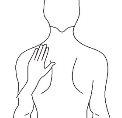
? Elija una zona de la piel lisa y sin vello en la parte superior de su cuerpo, preferiblemente debajo de la clavícula en el pecho o en la parte superior de la espalda (ver figura contigua). Pida ayuda si usted mismo no puede aplicarse el parche transdérmico. |
|
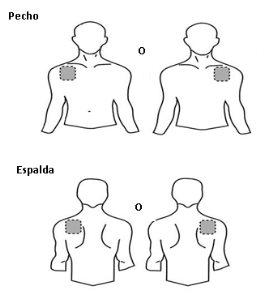
? Si la zona elegida tiene vello, córtelo con un par de tijeras. ¡No lo afeite!
? Evite áreas de la piel enrojecidas, irritadas o que tengan cualquier otro tipo de manchas, por ejemplo, grandes cicatrices.
? La zona de la piel que elija debe estar seca y limpia. Si fuera necesario lávela con agua fría o tibia. No utilice jabón u otros detergentes. Después de un baño caliente o ducha espere hasta que su piel esté completamente seca y fría. No aplique lociones, cremas o pomadas en el área elegida. Esto podría impedir que el parche transdérmico se pegue adecuadamente.
Aplicación del parche transdérmico:
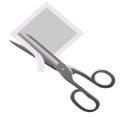
Paso 1: Cada parche transdérmico está precintado en un sobre. Justo antes de su uso, corte el sobre con un par de tijeras por el borde sellado. Coja el parche transdérmico. |
|
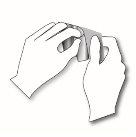
Paso 2: El lado adhesivo del parche transdérmico está cubierto por una lámina protectora transparente. Despegue cuidadosamente una partede la lámina. Intente no tocar la parte adhesiva del parche transdérmico. |
|
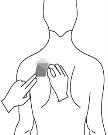
Paso 3: Pegue el parche transdérmico en el área de la piel que haya elegido y retire el resto de la lámina. |
|
Paso 4: Presione el parche transdérmico contra su piel con la palma de su mano entre 30 y 60 segundos. Asegúrese de que todo el parche transdérmico está en contacto con su piel, especialmente los bordes. |
|
Paso 5: Lávese las manos después de utilizar el parche transdérmico. No utilice ningún producto de limpieza. |
Mientras lleve el parche transdérmico
Puede llevar el parche transdérmico como máximo 4 días. Si se ha aplicado el parche transdérmico correctamente, el riesgo de que se despegue es bajo. Usted puede ducharse, bañarse o nadar mientras lo lleva. Sin embargo, no exponga el parche transdérmico a calor extremo (p. ej.: sauna, lámparas infrarrojas, mantas eléctricas o bolsas de agua caliente).
En el caso improbable de que su parche transdérmico se cayera antes de que necesitara cambiarse, no utilice el mismo parche transdérmico de nuevo. Pegue uno nuevo inmediatamente (ver “Cambio del parche transdérmico” debajo).
Cambio del parche transdérmico
- Retire con cuidado el parche viejo.
- Dóblelo por la mitad con el lado adhesivo hacia dentro.
- Deséchelo con precaución.
- Pegue un nuevo parche transdérmico sobre una zona distinta de la piel (como se describe antes). Debe transcurrir al menos 1 semana antes de poder aplicar un parche nuevo en la misma área de la piel.
Duración del tratamiento
Su médico le indicará la duración de su tratamiento con buprenorfina. No suspenda el tratamiento por su cuenta, ya que el dolor puede volver a aparecer y puede sentirse mal (ver también “Si interrumpe el tratamiento con Buprenorfina Stada”).
Si estima que el efecto de buprenorfina es demasiado fuerte o débil, comuníqueselo a su médico o farmacéutico.
Si usa más Buprenorfina Stada del que debe
En caso de sobredosis o ingestión accidental, consulte inmediatamente a su médico o farmacéutico, o llame al Servicio de Información Toxicológica, teléfono: 91 562 04 20, indicando el medicamento y la cantidad ingerida. Se recomienda llevar el envase y el prospecto del medicamento al profesional sanitario.
Si esto ocurre pueden existir signos de una sobredosificación por buprenorfina. Una sobredosificación puede intensificar los efectos adversos de buprenorfina tales como somnolencia, náuseas y vómitos. Puede tener las pupilas puntiformes y la respiración puede llegar a ser lenta y débil. Usted también podría sufrir un colapso cardiovascular.
Tan pronto como se dé cuenta de que ha utilizado más parches transdérmicos de buprenorfina de los que debe, quítese los parches transdérmicos en exceso y consulte inmediatamente a su médico o a su farmacéutico.
Si olvidó usar Buprenorfina Stada
Si usted olvidó una aplicación, pegue un parche transdérmico nuevo tan pronto como se dé cuenta.
Esto hará que usted cambie su rutina, p. ej.: si normalmente se aplicaba su parche transdérmico los lunes y los jueves, pero lo olvidó y no se puso el nuevo parche transdérmico hasta el miércoles, a partir de ahora necesitará cambiar sus parches transdérmicos los miércoles y los sábados. Anote el nuevo par de días en el calendario del cartonaje. Si cambia el parche transdérmico demasiado tarde, el dolor puede aparecerle de nuevo. En este caso consulte con su médico.
¡Nunca se aplique más de un parche transdérmico para compensar el que se olvidó!
Si interrumpe el tratamiento con Buprenorfina Stada
Si interrumpe o finaliza el tratamiento con buprenorfina demasiado pronto, el dolor le reaparecerá. Si desea suspender el tratamiento debido a los efectos adversos desagradables, consulte a su médico. Su médico le dirá lo que puede hacer y si pueden administrarse otros medicamentos.
Algunas personas pueden tener efectos después de haber utilizado analgésicos potentes durante mucho tiempo, al dejar de utilizarlos. El riesgo de tener efectos después de suspender la aplicación de buprenorfina es muy bajo. Sin embargo, si se siente agitado, ansioso, nervioso, o tembloroso, si está hiperactivo, tiene dificultad para dormir o problemas de digestión, consulte con su médico.
Si tiene cualquier otra duda sobre el uso de este medicamento, pregunte a su médico o farmacéutico.

¿Has empezado a tomar el medicamento y tienes preguntas?
Comenta tus síntomas y tratamiento con un médico online.
4. Posibles efectos adversos
Al igual que todos los medicamentos, este medicamento puede producir efectos adversos, aunque no todas las personas los sufran.
Si experimenta inflamación de las manos, pies, rodillas, cara, labios, boca o garganta, la cual puede causar dificultad al tragar o respirar, habones urticariales, desvanecimiento, color amarillento de la piel y ojos (también llamada ictericia), quítese el parche transdérmico y consulte con su médico o acuda al hospital más próximo inmediatamente. Estos pueden ser síntomas de una reacción alérgica grave muy rara.
Se ha informado de los siguientes efectos adversos:
Muy frecuentes(pueden afectar a más de 1 de cada 10 personas):
- náuseas (sensación de mareo)
- eritema, prurito
Frecuentes(pueden afectar hasta 1 de cada 10 personas):
- mareo, dolor de cabeza
- falta de aliento
- vómitos, estreñimiento
- cambios en la piel (exantema, generalmente por uso repetido), aumento de la sudoración
- edema (tumefacción de las piernas), cansancio
Poco frecuentes(pueden afectar hasta 1 de cada 100 personas):
- confusión, trastornos del sueño, inquietud
- diferentes grados de sedación (serenidad), que van desde cansancio a confusión
- trastornos circulatorios (tales como hipotensión o raramente colapso circulatorio)
- sequedad de boca
- erupciones
- retención urinaria (menos orina de lo normal), alteraciones de la micción
- debilidad
Raros(pueden afectar hasta 1 de cada 1.000 personas):
- pérdida de apetito
- ilusiones así como alucinaciones, ansiedad, pesadillas, disminución del deseo sexual
- dificultad en la concentración, trastornos del habla, confusión, alteraciones del equilibrio, sensaciones anormales en la piel (sensación de calor, hormigueo o entumecimiento)
- alteraciones de la visión, visión borrosa, hinchazón de los párpados
- sofocos
- dificultad para respirar (depresión respiratoria)
- acidez de estómago
- urticaria
- dificultades en la erección
- síntomas de abstinencia (ver después), reacciones en el lugar de administración
Muy raros(pueden afectar hasta 1 de cada 10.000 personas):
- reacciones alérgicas graves (ver después)
- dependencia, cambios de humor
- contracción muscular, alteraciones del gusto
- pupilas pequeñas
- dolor de oído
- respiración anormalmente rápida, hipo
- arcadas
- pústulas, vesículas
- dolor en el pecho
Frecuencia no conocida(La frecuencia no puede estimarse a partir de los datos disponibles):
- dermatitis de contacto (erupción cutánea con inflamación, que puede incluir sensación de quemazón), decoloración de la piel.
Si nota alguno de los efectos adversos anteriormente mencionados, consulte con su médico lo antes posible.
En algunos casos tienen lugar reacciones alérgicas locales tardías con marcados signos de inflamación. En estos casos se debe interrumpir el tratamiento con buprenorfina, después de haberlo consultado con su médico.
Algunas personas pueden tener síntomas de retirada del tratamiento tras haber usado analgésicos potentes por un período de tiempo prolongado y dejar de utilizarlos. Después del tratamiento con buprenorfina, el riesgo de padecer síntomas de abstinencia es bajo. Sin embargo, si siente agitación, ansiedad, nerviosismo, hiperactividad, trastornos en el sueño, o problemas digestivos, consulte a su médico.
Comunicación de efectos adversos
Si experimenta cualquier tipo de efecto adverso, consulte a su médico o farmacéutico, incluso si se trata de posibles efectos adversos que no aparecen en este prospecto. También puede comunicarlos directamente a través del Sistema Español de Farmacovigilancia de Medicamentos de Uso Humano: https://www.notificaram.es. Mediante la comunicación de efectos adversos usted puede contribuir a proporcionar más información sobre la seguridad de este medicamento.
5. Conservación de Buprenorfina Stada
Mantener este medicamento fuera de la vista y del alcance de los niños.
No utilice este medicamento después de la fecha de caducidad que aparece en el envase y en el sobre después de CAD. La fecha de caducidad es el último día del mes que se indica.
Conserve este medicamento en un lugar seguro y protegido, al que no puedan acceder otras personas. Este medicamento puede causar daños graves e incluso ser mortal para las personas que lo puedan usar por accidente o intencionadamente cuando no les haya sido recetado.
Este medicamento no requiere condiciones especiales de conservación.
Después de retirar el parche dóblelo por la mitad con las superficies adhesivas hacia dentro y presione fuerte. Introduzca de nuevo el parche en el sobre y deseche de manera segura.
Los medicamentos no se deben tirar por los desagües ni a la basura. Deposite los envases y los medicamentos que no necesita en el Punto SIGRE de la farmacia. Pregunte a su farmacéutico cómo deshacerse de los envases y de los medicamentos que ya no necesita. De esta forma, ayudará a proteger el medio ambiente.
6. Contenido del envase e información adicional
Composición de Buprenorfina Stada
- El principio activo es buprenorfina.
Buprenorfina Stada 35 microgramos/hora: cada parche transdérmico de 25 cm2 contiene 20 mg de buprenorfina y libera 35 microgramos de buprenorfina por hora.
Buprenorfina Stada 52,5 microgramos/hora: cada parche transdérmico de 37,5 cm2 contiene 30 mg de buprenorfina y libera 52,5 microgramos de buprenorfina por hora.
Buprenorfina Stada 70 microgramos/hora: cada parche transdérmico de 50 cm2 contiene 40 mg de buprenorfina y libera 70 microgramos de buprenorfina por hora.
- Los demás componentes son:
Matriz adhesiva (que contiene buprenorfina): povidona K90, ácido levulínico, oleíl oleato, poli[ácido acrílico-co-butilacrilato-co-(2-etilhexil)acrilato-co-vinilacetato] (5:15:75:5).
Matriz adhesiva (sin buprenorfina): poli[2-etilexil)acrilato-co-glicidilmetilacrilato-co-(2-hidroxietil) acrilato-co-vinilacetato] (68:0,15:5:27).
Lámina separadora entre las matrices adhesivas con y sin buprenorfina: lámina de poli (etilentereftalato).
Lámina de soporte: poliester.
Revestimiento desprendible (en la parte anterior cubriendo la matriz adhesiva que contiene buprenorfina): Lámina de polietileno tereftalato siliconizada.
Tinta de impresión azul.
Aspecto del producto y contenido del envase
Buprenorfina Stada 35 microgramos/hora: los parches transdérmicos son de color carne con esquinas redondeadas y van impresos con “Buprenorphin” y “35 μg/h”.
Buprenorfina Stada 52,5 microgramos/hora: los parches transdérmicos son de color carne con esquinas redondeadas y van impresos con “Buprenorphin” y “52,5 μg/h”.
Buprenorfina Stada 70 microgramos/hora: los parches transdérmicos son de color carne con esquinas redondeadas y van impresos con “Buprenorphin” y “70 μg/h”.
Cada parche transdérmico está precintado individualmente en un sobre a prueba de niños. Los parches se presentan en envases que contienen 3, 4, 5, 6, 8, 10, 12, 16, 18, 20 o 24 parches transdérmicos.
Puede que solamente estén comercializados algunos tamaños de envases.
Titular de la autorización de comercialización y responsable de la fabricación
Titular de la autorización de comercialización
Laboratorio STADA, S.L.
Frederic Mompou, 5
08960 Sant Just Desvern (Barcelona)
España
Responsable de la fabricación
Labtec GmbH
Heykenaukamp 10
21147 Hamburg
Alemania
o
STADA Arzneimittel AG
Stadastraße 2-18
61118 Bad Vilbel
Alemania
o
STADA Arzneimittel GmbH
Muthgasse 36
1190 Viena
Austria
o
Laboratori Fundacio Dau
Calle Lletra C De La Zona Franca 12 – 14
Polígono Industrial De La Zona Franca De Barcelona
08040 Barcelona
España
Este medicamento está autorizado en los estados miembros del Espacio Económico Europeo con los siguientes nombres:
Alemania: Buprenorphin AL 35 Mikrogamm/Stunde, Transdermales Pflaster
Buprenorphin AL 52,5 Mikrogamm/Stunde, Transdermales Pflaster
Buprenorphin AL 70 Mikrogamm/Stunde, Transdermales Pflaster
Austria: Buprenorphin STADA 35 Mikrogamm/h, Transdermales Pflaster
Buprenorphin STADA 52,5 Mikrogamm/h, Transdermales Pflaster
Buprenorphin STADA 70 Mikrogamm/h, Transdermales Pflaster
Dinamarca: Buprenorphin STADA
España: Buprenorfina STADA 35 microgramos/hora parche transdérmico 96 horas EFG
Buprenorfina Stada 52,5 microgramos/hora parche transdérmico 96 horas EFG
Buprenorfina Stada 70 microgramos/hora parche transdérmico 96 horas EFG
Holanda: Buprenorfine CF 35 microgram/uur, pleister voor transdermaal gebruik
Buprenorfine CF 52,5 microgram/uur, pleister voor transdermaal gebruik
Buprenorfine CF 70 microgram/uur, pleister voor transdermaal gebruik
Portugal: Buprenorfina Ciclum
Fecha de la última revisión de este prospecto:octubre 2024
La información detallada y actualizada de este medicamento está disponible en la página web de la Agencia Española de Medicamentos y Productos Sanitarios (AEMPS) http://www.aemps.gob.es
- País de registro
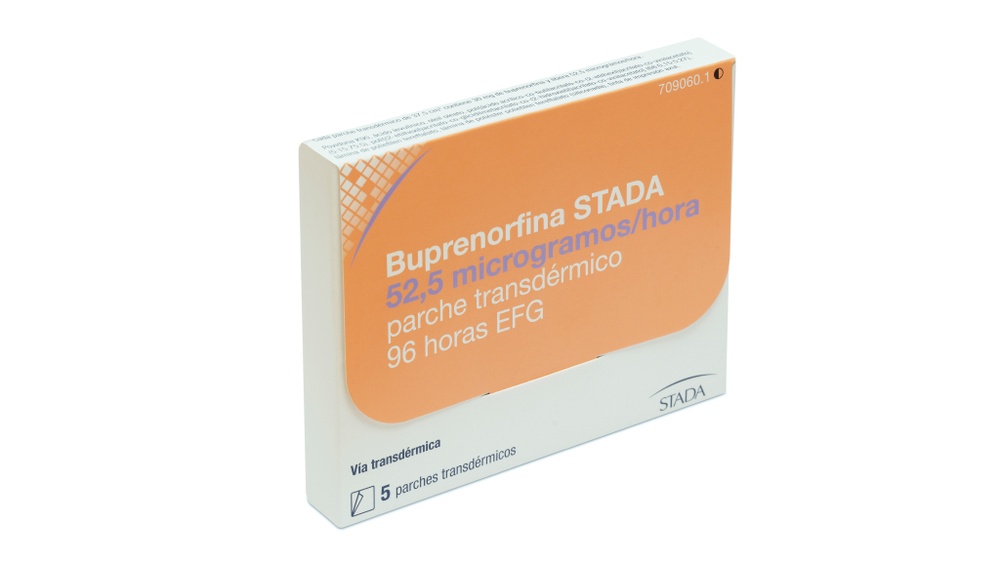
- Forma farmacéuticaPARCHE TRANSDERMICO, 52,5 mcg/h
- Código ATCN02AE01
- Precio medio en farmacia32.28 EUR
- Principio activo
- Requiere recetaSí
- Fabricante
- Esta información es de carácter general y no sustituye la consulta con un profesional sanitario.
- Alternativas a BUPRENORFINA STADA 52,5 MICROGRAMOS/HORA PARCHE TRANSDERMICO 96 HORAS EFGForma farmacéutica: PARCHE TRANSDERMICO, 35 microgramos/hPrincipio activo: BuprenorfinaFabricante: Andromaco Pharma S.L.Requiere recetaForma farmacéutica: PARCHE TRANSDERMICO, 52,5 microgramos/hPrincipio activo: BuprenorfinaFabricante: Andromaco Pharma S.L.Requiere recetaForma farmacéutica: PARCHE TRANSDERMICO, 70 microgramos/hPrincipio activo: BuprenorfinaFabricante: Andromaco Pharma S.L.Requiere receta
Médicos online para BUPRENORFINA STADA 52,5 MICROGRAMOS/HORA PARCHE TRANSDERMICO 96 HORAS EFG
Comenta la dosis, los posibles efectos secundarios, interacciones, contraindicaciones o la revisión de receta de BUPRENORFINA STADA 52,5 MICROGRAMOS/HORA PARCHE TRANSDERMICO 96 HORAS EFG, sujeto a valoración médica y a la normativa local.









Obtén una receta de BUPRENORFINA STADA 52,5 MICROGRAMOS/HORA PARCHE TRANSDERMICO 96 HORAS EFG online
Rellena un formulario de 2 minutos
Cuéntanos tus síntomas, historial y el medicamento que necesitas.
Elige un médico o nosotros te asignamos uno
Escoge un especialista o te conectamos con el próximo médico disponible.
El médico revisa tu caso
Normalmente en 30 minutos. Puede hacerte preguntas adicionales por chat.
Recógela en cualquier farmacia
Receta electrónica enviada a tu correo, válida en toda España.
Preguntas frecuentes
BUPRENORFINA STADA 52,5 MICROGRAMOS/HORA PARCHE TRANSDERMICO 96 HORAS EFG requiere receta en España. Puedes confirmarlo con un médico online según tu caso.
El principio activo de BUPRENORFINA STADA 52,5 MICROGRAMOS/HORA PARCHE TRANSDERMICO 96 HORAS EFG es Buprenorfina. Esta información ayuda a identificar medicamentos con la misma composición pero con diferentes nombres comerciales.
El precio medio en farmacia de BUPRENORFINA STADA 52,5 MICROGRAMOS/HORA PARCHE TRANSDERMICO 96 HORAS EFG es de aproximadamente 32.28 EUR. Puede variar según el fabricante y la forma farmacéutica.
BUPRENORFINA STADA 52,5 MICROGRAMOS/HORA PARCHE TRANSDERMICO 96 HORAS EFG es fabricado por Laboratorio Stada S.L.. La marca y el envase pueden variar según el distribuidor.
Los Médicos de familia, Psiquiatras, Dermatólogos, Cardiólogos, Endocrinólogos, Gastroenterólogos, Neumólogos, Nefrólogos, Reumatólogos, Hematólogos, Infectólogos, Alergólogos, Geriatras, Pediatras, Oncólogos pueden valorar la prescripción de BUPRENORFINA STADA 52,5 MICROGRAMOS/HORA PARCHE TRANSDERMICO 96 HORAS EFG cuando esté clínicamente indicado. Puedes reservar una videoconsulta para comentar tu caso y las opciones de tratamiento.
España cuenta con una infraestructura sanitaria bien desarrollada en ciudades principales como Madrid, Barcelona, Valencia y Sevilla. Las farmacias están ampliamente disponibles y operan bajo estrictas regulaciones, garantizando el acceso a medicamentos con receta.
Puedes comprar BUPRENORFINA STADA 52,5 MICROGRAMOS/HORA PARCHE TRANSDERMICO 96 HORAS EFG en Madrid, Barcelona, Sevilla o Valencia en cualquier farmacia local con una receta válida.
Para obtener una receta, puedes utilizar Oladoctor:
Otros medicamentos con el mismo principio activo (Buprenorfina) incluyen BUPRENORFINA ANDROMACO 35 MICROGRAMOS/HORA PARCHE TRANSDERMICO EFG, BUPRENORFINA ANDROMACO 52,5 MICROGRAMOS/HORA PARCHE TRANSDERMICO EFG, BUPRENORFINA ANDROMACO 70 MICROGRAMOS/HORA PARCHE TRANSDERMICO EFG. Pueden tener diferentes nombres comerciales o formulaciones, pero contienen el mismo componente terapéutico. Consulta siempre con un médico antes de cambiar o iniciar un nuevo medicamento.
