



AYVAKYT 200 mg Comprimidos Recubiertos Con Película

Revisión de receta online
Un médico revisará tu caso y determinará si la prescripción es médicamente apropiada.

Habla con un médico sobre este medicamento
Comenta tus síntomas y las opciones de tratamiento en una consulta online.



Cómo usar AYVAKYT 200 MG COMPRIMIDOS RECUBIERTOS CON PELICULA
Contenido del prospecto
- Introducción
- Qué es AYVAKYT y para qué se utiliza
- Qué necesita saber antes de empezar a tomar AYVAKYT
- Cómo tomar AYVAKYT
- Posibles efectos adversos
- Conservación de AYVAKYT
- Contenido del envase e información adicional
Introducción
Prospecto: información para el paciente
AYVAKYT 200 mg comprimidos recubiertos con película
avapritinib
Este medicamento está sujeto a seguimiento adicional, lo que agilizará la detección de nueva información sobre su seguridad. Puede contribuir comunicando los efectos adversos que pudiera usted tener. La parte final de la sección 4 incluye información sobre cómo comunicar estos efectos adversos.
Lea todo el prospecto detenidamente antes de empezar a tomar este medicamento, porque contiene información importante para usted.
- Conserve este prospecto, ya que puede tener que volver a leerlo.
- Si tiene alguna duda, consulte a su médico o farmacéutico.
- Este medicamento se le ha recetado solamente a usted, y no debe dárselo a otras personas aunque tengan los mismos síntomas que usted, ya que puede perjudicarles.
- Si experimenta efectos adversos, consulte a su médico o farmacéutico, incluso si se trata de efectos adversos que no aparecen en este prospecto. Ver sección 4.
Contenido del prospecto
- Qué es AYVAKYT y para qué se utiliza
- Qué necesita saber antes de empezar a tomar AYVAKYT
- Cómo tomar AYVAKYT
- Posibles efectos adversos
- Conservación de AYVAKYT
- Contenido del envase e información adicional
1. Qué es AYVAKYT y para qué se utiliza
Qué es AYVAKYT
AYVAKYT es un medicamento que contiene el principio activo avapritinib.
Para qué se utiliza AYVAKYT
AYVAKYT se usa para tratar a adultos con:
- Un tipo de cáncer del aparato digestivo llamado tumor del estroma gastrointestinal (GIST) cuando no se puede tratar con cirugía (irresecable) o se ha diseminado a otras partes del cuerpo (metastásico) y que tiene una mutación específica (D842V) en el gen responsable de la proteína cinasa llamada receptor alfa del factor de crecimiento derivado de plaquetas (PDGFRA).
- Mastocitosis sistémica agresiva (MSA), mastocitosis sistémica con neoplasia hematológica asociada (MS-NHA) o leucemia mastocítica (LM), después de haber recibido al menos un tratamiento sistémico. Se trata de trastornos en los que el organismo produce demasiados mastocitos, un tipo de leucocito. Se producen síntomas cuando entran demasiados mastocitos en diversos órganos del cuerpo, como el hígado, la médula ósea o el bazo. Estos mastocitos también liberan sustancias, como la histamina, que producen varios síntomas generales que usted puede tener, además de dañar los órganos en cuestión.
En conjunto, la MSA, la MS-NHA y la LM se denominan mastocitosis sistémica avanzada (MSAv).
Cómo funciona AYVAKYT
AYVAKYT frena la actividad de un grupo de proteínas del organismo llamadas cinasas. Los mastocitos de los pacientes con MSAv o las células que componen el cáncer suelen experimentar cambios (mutaciones) en los genes implicados en la elaboración de cinasas específicas asociadas con el crecimiento y la diseminación de estas células.
Si tiene alguna pregunta sobre cómo funciona AYVAKYT o por qué este medicamento se le ha recetado a usted, consulte a su médico.

¿No estás seguro de si este medicamento es adecuado para ti?
Comenta tus síntomas y tratamiento con un médico online.
2. Qué necesita saber antes de empezar a tomar AYVAKYT
No tome AYVAKYT
si es alérgico a avapritinib o a alguno de los demás componentes de este medicamento (incluidos en la sección 6).
Advertencias y precauciones
Consulte a su médico o farmacéutico antes de empezar a tomar AYVAKYT:
- si ha sufrido un aneurisma vascular(abultamiento y debilitamiento de la pared de un vaso sanguíneo) o sangrado en el cerebroen el último año;
- si tiene un recuento de plaquetas bajo;
- si está tomando un medicamento que diluye la sangre para prevenir la formación de coágulos, como warfarina o fenoprocumón
Tenga especial cuidado con este medicamento:
- Puede desarrollar síntomas como dolor de cabeza intenso, problemas de visión, somnolencia intensa o debilidad intensa en un lado del cuerpo (signos de hemorragia en el cerebro).Si esto ocurre, póngase en contacto con su médico de inmediato e interrumpa temporalmente el tratamiento. En el caso de los pacientes con MSAv, el médico evaluará sus recuentos de plaquetas antes de empezar el tratamiento y los vigilará según sea necesario durante su tratamiento con avapritinib.
- El tratamiento con este medicamento puede provocar un mayor riesgo de hemorragia.Avapritinib puede causar hemorragias en el aparato digestivo, como el estómago, el recto o el intestino. En los pacientes con TEGI, avapritinib también puede provocar hemorragias en el hígado, así como sangrado del tumor. Informe a su médico si ha tenido o tiene problemas de hemorragia. Antes de empezar a tomar avapritinib su médico puede decidir hacer análisis de sangre. Obtenga ayuda médica de inmediato, si tiene los siguientes síntomas: sangre en las heces o heces de color negro, dolor de estómago, tos o vómitos con sangre.
- También puede desarrollar pérdida de memoria, cambios en la memoria o confusión (signos de un efecto cognitivo).En ocasiones, avapritinib puede cambiar la forma de pensar y de recordar la información. Póngase en contacto con su médico si experimenta estos síntomas o en caso de que un miembro de la familia, cuidador o alguien que le conozca advierta que se está volviendo olvidadizo o confuso.
- Durante el tratamiento con este medicamento, informe a su médico inmediatamente si aumenta de peso de forma muy rápida, desarrolla hinchazón de la cara o las extremidades, tiene dificultad para respirar o falta de aliento. Este medicamento puede provocar retención de agua (retención de líquidos intensa).
- Avapritinib puede causar anomalías en el ritmo de su corazón. Su médico puede realizar pruebas para evaluar estos problemas durante su tratamiento con avapritinib. Informe a su médico si se siente mareado, se desmaya o tiene latidos cardiacos anormales mientras esté tomando este medicamento.
- Puede presentar problemas de estómago e intestinales intensos (diarrea, náuseas y vómitos).Obtenga ayuda médica de inmediato si experimenta estos síntomas.
- Puede desarrollar mayor sensibilidad al solmientras esté tomando este medicamento. Es importante que cubra las áreas de la piel expuestas al sol y utilice protector solar con un factor de protección solar (FPS) alto.
Mientras esté tomando avapritinib, su médico le pedirá que se realice análisis de sangre periódicos. También se le pesará con regularidad.
Consulte la sección 4 para obtener más información.
Niños y adolescentes
AYVAKYT no se ha estudiado en niños y adolescentes menores de 18 años. Este medicamento no se debe administrar a niños o adolescentes menores de 18 años.
Otros medicamentos y AYVAKYT
Informe a su médico o farmacéutico si está tomando, ha tomado recientemente o pudiera tener que tomar cualquier otro medicamento, AYVAKYT puede afectar a la manera en que funcionan otros medicamentos, y algunos otros medicamentos pueden afectar a cómo funciona este medicamento.
Informe a su médico o farmacéutico antes de tomar AYVAKYT si está tomando cualquiera de los siguientes medicamentos:
Los siguientes medicamentos pueden aumentar los efectos de avapritinib y pueden aumentar sus efectos adversos:
- Boceprevir: utilizado para tratar la hepatitis C.
- Cobicistat, indinavir, lopinavir, nelfinavir, ritonavir, saquinavir: utilizados para tratar la infección por el VIH/SIDA.
- Claritromicina, eritromicina, telitromicina: utilizados para tratar infecciones bacterianas.
- Itraconazol, ketoconazol, posaconazol, voriconazol: utilizados para tratar infecciones fúngicas graves.
- Conivaptán: utilizado para tratar niveles bajos de sodio en sangre (hiponatremia).
Los siguientes medicamentos pueden reducir los efectos de avapritinib:
- Rifampicina: utilizado para tratar la tuberculosis (TB) y algunas otras infecciones bacterianas.
- Carbamazepina, fenitoína, fosfenitoína, primidona, fenobarbital: utilizados para tratar la epilepsia.
- Hierba de San Juan (Hypericum perforatum): un medicamento a base de plantas que se usa para la depresión.
- Bosentán: utilizado para tratar la tensión arterial alta.
- Efavirenz y etravirina: utilizados para tratar la infección por el VIH/SIDA.
- Modafinilo: utilizado para tratar trastornos del sueño.
- Dabrafenib: utilizado para tratar determinados tipos de cáncer.
- Nafcilina: utilizado para tratar ciertas infecciones bacterianas.
- Dexametasona: utilizado para reducir la inflamación.
Este medicamento puede afectar al funcionamiento de los siguientes medicamentos o aumentar sus efectos adversos:
- Alfentanilo: utilizado para controlar el dolor durante las operaciones y los procedimientos médicos.
- Atazanavir: utilizado para tratar la infección por el VIH/SIDA.
- Midazolam: utilizado para la anestesia, la sedación o para disminuir la ansiedad.
- Simvastatina: utilizado para tratar el colesterol alto.
- Sirolimus, tacrolimus: utilizados para evitar el rechazo de trasplantes de órganos.
Pregunte a su médico o farmacéutico antes de tomar cualquier medicamento.
Uso de AYVAKYT con alimentos y bebidas
No debe beber zumo de pomelo ni comer pomelo durante el tratamiento con AYVAKYT.
Embarazo, lactancia y fertilidad
Si está embarazada o en periodo de lactancia, cree que podría estar embarazada o tiene intención de quedarse embarazada, consulte a su médico o farmacéutico antes de utilizar este medicamento.
Embarazo
Este medicamento no está recomendado para su uso durante el embarazo, a menos que sea claramente necesario. Evite quedarse embarazada mientras recibe tratamiento con este medicamento ya que puede dañar al bebé en gestación. Su médico comentará con usted los posibles riesgos de tomar AYVAKYT durante el embarazo.
Su médico puede comprobar si está embarazada antes de que comience el tratamiento con este medicamento.
Las mujeres en edad fértil deben utilizar métodos anticonceptivos efectivos durante el tratamiento y durante al menos 6 semanas después de finalizar el tratamiento. Los varones con parejas de sexo femenino en edad fértil deben utilizar métodos anticonceptivos efectivos durante el tratamiento y durante al menos 2 semanas después de finalizar el tratamiento. Hable con su médico sobre métodos anticonceptivos efectivos que pueden ser adecuados para usted.
Lactancia
Informe a su médico si está en periodo de lactancia o tiene intención de amamantar. Se desconoce si AYVAKYT pasa a la leche materna. No debe dar el pecho durante el tratamiento con este medicamento ni durante al menos 2 semanas después de la última dosis. Hable con su médico acerca de la mejor forma de alimentar al bebé durante este periodo.
Fertilidad
AYVAKYT puede producir problemas de fertilidad en hombres y mujeres. Consulte a su médico si esto le preocupa.
Conducción y uso de máquinas
AYVAKYT puede causar síntomas que afectan a la capacidad para concentrarse y reaccionar (ver sección 4). Por lo tanto, AYVAKYT puede influir en la capacidad para conducir y utilizar máquinas. Tenga especial cuidado al conducir un automóvil o utilizar máquinas si experimenta estos efectos adversos.
AYVAKYT contiene sodio.
Este medicamento contiene menos de 1 mmol de sodio (23 mg) por comprimido; esto es, esencialmente “exento de sodio”.
3. Cómo tomar AYVAKYT
Siga exactamente las instrucciones de administración de este medicamento indicadas por su médico o farmacéutico. En caso de duda, consulte de nuevo a su médico o farmacéutico.
Qué concentración de AYVAKYT utilizar
La dosis recomendada de AYVAKYT dependerá de su enfermedad: consulte la información siguiente. AYVAKYT se comercializa en comprimidos de concentraciones diferentes. Estas concentraciones son 25 mg, 50 mg, 100 mg, 200 mg y 300 mg. El médico le aconsejará sobre la concentración y el número de comprimidos que debe tomar.
Tratamiento del TEGI
La dosis recomendada es de 300 mg por vía oral una vez al día.
Tratamiento de la MSAv
La dosis recomendada es de 200 mg por vía oral una vez al día.
Si tiene problemas de hígado, su médico puede comenzar su tratamiento con una dosis más baja de AYVAKYT.
Si experimenta efectos adversos, su médico puede cambiar su dosis, interrumpir temporalmente, o suspender permanentemente el tratamiento. No cambie su dosis ni deje de tomar AYVAKYT, a menos que se lo indique su médico.
Trague el comprimido o comprimidos de AYVAKYT enteros con un vaso de agua, con el estómago vacío. No coma durante al menos 2 horas antes y al menos 1 hora después de tomar AYVAKYT.
Si vomita después de tomar una dosis de AYVAKYT, no tome una dosis adicional. Tome la siguiente dosis a su hora programada.
Si toma más AYVAKYT del que debe
Si ha tomado demasiados comprimidos de forma accidental, hable con su médico de inmediato. Puede requerir atención médica.
Si olvidó tomar AYVAKYT
Si omite una dosis de AYVAKYT, tómela tan pronto como lo recuerde a menos que su próxima dosis programada sea en un plazo de 8 horas. Tome la siguiente dosis a su hora habitual. No tome una dosis doble en el plazo de 8 horas para compensar las dosis olvidadas.

¿Has empezado a tomar el medicamento y tienes preguntas?
Comenta tus síntomas y tratamiento con un médico online.
4. Posibles efectos adversos
Al igual que todos los medicamentos, este medicamento puede producir efectos adversos, aunque no todas las personas los sufran.
Efectos adversos más graves
Algunos efectos adversos pueden ser graves. Informe a su médico inmediatamente si experimenta cualquiera de los siguientes(ver también sección 2):
- dolor de cabeza intenso, problemas de visión, somnolencia intensa o debilidad intensa en un lado del cuerpo (signos de hemorragia en el cerebro);
- pérdida de memoria, cambios en la memoria o confusión (signos de un efecto cognitivo).
Otros efectos adversos en los pacientes con TEGI pueden incluir
Muy frecuentes(pueden afectar a más de 1 persona de cada 10):
- disminución del apetito;
- pérdida de memoria, cambios en la memoria o confusión (efectos cognitivos);
- mareos;
- alteración del gusto;
- aumento de la producción de lágrimas;
- dolor abdominal (en el vientre);
- náuseas, arcadas y vómitos;
- diarrea;
- sequedad que afecta a los ojos, los labios, la boca y la piel;
- ardor de estómago;
- cambio de color del pelo;
- erupción;
- hinchazón (p. ej., pies, tobillos, cara, ojos, articulación);
- cansancio;
- análisis de sangre que muestran disminución de los glóbulos rojos (anemia) y glóbulos blancos;
- análisis de sangre que muestran un aumento del estrés en el hígado y niveles elevados de bilirrubina, una sustancia producida por el hígado.
Frecuentes(pueden afectar hasta 1 de cada 10 personas):
- ojo rojo o doloroso, visión borrosa;
- deshidratación;
- niveles bajos de albúmina en sangre;
- depresión;
- ansiedad;
- problemas para quedarse dormido (insomnio);
- sangrado en el cerebro;
- disminución de la sensibilidad, entumecimiento, hormigueo o aumento de la sensibilidad al dolor en brazos y piernas;
- sensación de debilidad o somnolencia inusual;
- trastorno del habla o voz ronca;
- trastorno de movimiento;
- dolor de cabeza;
- temblor;
- sangrado en el ojo;
- aumento de la sensibilidad a la luz;
- aumento de la tensión arterial;
- falta de aliento;
- nariz tapada;
- tos, incluida tos que produce mucosidad;
- sangrado gastrointestinal;
- aumento de líquido en el abdomen;
- estreñimiento, flatulencia (gases);
- dificultad para tragar;
- dolor en la boca, los labios o la lengua, candidiasis;
- aumento de la producción de saliva;
- enrojecimiento o picor en la piel;
- cambio de color de la piel;
- pérdida de cabello;
- dolor;
- espasmos musculares;
- sangre en la orina;
- fiebre o sensación de malestar general;
- cambios en la actividad eléctrica del corazón;
- pérdida o aumento de peso;
- análisis de sangre que muestran plaquetas bajas, con frecuencia asociadas a formación de hematomas con facilidad o hemorragia;
- análisis de sangre que muestran cantidades alteradas de minerales en la sangre;
- análisis de sangre que muestran una disminución del funcionamiento de los riñones;
- análisis de sangre que muestran mayor descomposición de los músculos.
Poco frecuentes(pueden afectar hasta 1 de cada 100 personas):
- hemorragia en el tumor;
- líquido alrededor del corazón;
- hemorragia en el hígado.
Otros efectos adversos en los pacientes con MSAv pueden incluir
Muy frecuentes(pueden afectar a más de 1 persona de cada 10):
- alteración del gusto;
- pérdida de memoria, cambios en la memoria o confusión (efectos cognitivos);
- diarrea;
- náuseas, arcadas y vómitos;
- cambio de color del pelo;
- hinchazón (p. ej., pies, tobillos, cara, ojos, articulaciones);
- cansancio;
- análisis de sangre que muestran plaquetas bajas, con frecuencia asociadas a formación de hematomas o hemorragia con facilidad;
- análisis de sangre que muestran disminución de los glóbulos rojos (anemia) y de los glóbulos blancos.
Frecuentes(pueden afectar hasta 1 de cada 10 personas):
- dolor de cabeza;
- mareos;
- disminución de la sensibilidad, entumecimiento, hormigueo o aumento de la sensibilidad al dolor en brazos y piernas;
- sangrado en el cerebro;
- aumento de la producción de lágrimas;
- sangrado por la nariz;
- falta de aliento;
- ardor de estómago;
- aumento de líquido en el abdomen;
- sequedad que afecta a los ojos, los labios, la boca y la piel;
- estreñimiento, flatulencia (gases);
- dolor abdominal (en el vientre);
- sangrado gastrointestinal;
- erupción;
- pérdida de cabello;
- dolor;
- aumento de peso;
- cambios en la actividad eléctrica del corazón;
- moratones;
- análisis de sangre que muestran un aumento del estrés en el hígado y niveles elevados de bilirrubina, una sustancia producida por el hígado.
Poco frecuentes(pueden afectar hasta 1 de cada 100 personas):
- líquido alrededor del corazón;
- enrojecimiento o picor en la piel;
- análisis de sangre que muestran una disminución del funcionamiento de los riñones.
Comunicación de efectos adversos
Si experimenta cualquier tipo de efecto adverso, consulte a su médico o farmacéutico, incluso si se trata de posibles efectos adversos que no aparecen en este prospecto. También puede comunicarlos directamente a través del sistema nacional de notificación incluido en el Apéndice V. Mediante la comunicación de efectos adversos usted puede contribuir a proporcionar más información sobre la seguridad de este medicamento.
5. Conservación de AYVAKYT
Mantener este medicamento fuera de la vista y del alcance de los niños.
No utilice este medicamento después de la fecha de caducidad que aparece en la etiqueta del frasco y en la caja exterior después de “CAD”. La fecha de caducidad es el último día del mes que se indica.
Este medicamento no requiere condiciones especiales de conservación.
No utilice este medicamento si observa que el frasco está dañado o muestra signos de manipulación.
Los medicamentos no se deben tirar por los desagües ni a la basura. Pregunte a su farmacéutico cómo deshacerse de los envases y de los medicamentos que ya no necesita. De esta forma, ayudará a proteger el medio ambiente.
6. Contenido del envase e información adicional
Composición de AYVAKYT
- El principio activo es avapritinib. Cada comprimido recubierto con película contiene 200 mg de avapritinib.
- Los demás componentes son:
- El núcleo del comprimido contiene: celulosa microcristalina, copovidona, croscarmelosa sódica y estearato de magnesio (ver sección 2 “AYVAKYT contiene sodio”).
- El recubrimiento del comprimido contiene: talco, macrogol 3350, alcohol poli(vinílico) y dióxido de titanio (E171).
- La tinta de impresión contiene: goma laca 45 % (20 % esterificada) en etanol, azul brillante FCF (E133), dióxido de titanio (E171), óxido de hierro negro (E172) y propilenglicol.
Aspecto del producto y contenido del envase
AYVAKYT 200 mg comprimidos recubiertos con película son comprimidos blancos y ovalados de 16 mm de largo y 8 mm de ancho, con “BLU” impreso en tinta azul en un lado y “200” en el otro
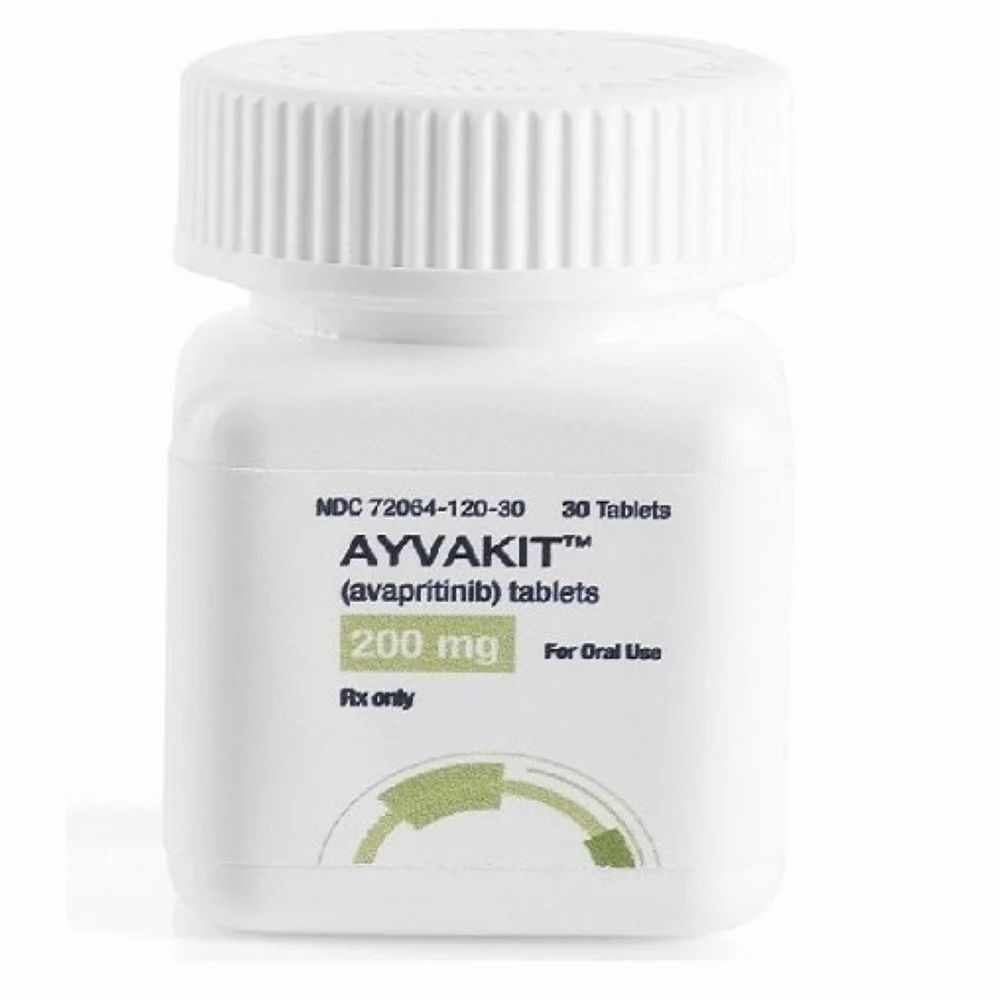
AYVAKYT se suministra en un frasco con 30 comprimidos recubiertos con película. Cada caja contiene un frasco.
Mantener el desecante en el frasco.
Titular de la autorización de comercialización y responsable de la fabricación
Blueprint Medicines (Netherlands) B.V.
Gustav Mahlerplein 2
1082 MA Amsterdam
Países Bajos
Pueden solicitar más información respecto a este medicamento dirigiéndose al representante local del titular de la autorización de comercialización:
België/Belgique/Belgien, ????????, Ceská republika, Danmark, Deutschland, Eesti, España, France, Hrvatska, Ireland, Ísland, Italia, Latvija, Lietuva, Luxembourg/Luxemburg, Magyarország, Malta, Nederland, Norge, Österreich, Polska, Portugal, România, Slovenija, Slovenská republika, Suomi/Finland, Sverige, United Kingdom (Northern Ireland) Blueprint Medicines (Netherlands) B.V., NL Tel/ Tél/ Teπ/ Tlf/ Sími/ Puh: +31 85 064 4001 Correo electrónico: | Ελλáδα, Κúπρος Swixx Biopharma S.M.S.A. Τηλ: +30 214 444 9670 |
Fecha de la última revisión de este prospecto:
Este medicamento se ha autorizado con una «aprobación condicional». Esta modalidad de aprobación significa que se espera obtener más información de este medicamento.
La Agencia Europea de Medicamentos revisará la información nueva de este medicamento al menos una vez al año y este prospecto se actualizará cuando sea necesario.
Otras fuentes de información
La información detallada de este medicamento está disponible en la página web de la Agencia Europea de Medicamentos: http://www.ema.europa.eu/.
- País de registro
- Forma farmacéuticaCOMPRIMIDO, 200 mg
- Código ATCL01EX18
- Principio activo
- Requiere recetaSí
- Fabricante
- ComposiciónCROSCARMELOSA SODICA (25 mg mg), PROPILENGLICOL (q.s. mg mg)
- Esta información es de carácter general y no sustituye la consulta con un profesional sanitario.
- Alternativas a AYVAKYT 200 MG COMPRIMIDOS RECUBIERTOS CON PELICULAForma farmacéutica: COMPRIMIDO, 100 mgPrincipio activo: AvapritinibFabricante: Blueprint Medicines (Netherlands) B.V.Requiere recetaForma farmacéutica: COMPRIMIDO, 25 mgPrincipio activo: AvapritinibFabricante: Blueprint Medicines (Netherlands) B.V.Requiere recetaForma farmacéutica: COMPRIMIDO, 300 mgPrincipio activo: AvapritinibFabricante: Blueprint Medicines (Netherlands) B.V.Requiere receta
Médicos online para AYVAKYT 200 MG COMPRIMIDOS RECUBIERTOS CON PELICULA
Comenta la dosis, los posibles efectos secundarios, interacciones, contraindicaciones o la revisión de receta de AYVAKYT 200 MG COMPRIMIDOS RECUBIERTOS CON PELICULA, sujeto a valoración médica y a la normativa local.
Obtén una receta de AYVAKYT 200 MG COMPRIMIDOS RECUBIERTOS CON PELICULA online
Rellena un formulario de 2 minutos
Cuéntanos tus síntomas, historial y el medicamento que necesitas.
Elige un médico o nosotros te asignamos uno
Escoge un especialista o te conectamos con el próximo médico disponible.
El médico revisa tu caso
Normalmente en 30 minutos. Puede hacerte preguntas adicionales por chat.
Recógela en cualquier farmacia
Receta electrónica enviada a tu correo, válida en toda España.
Preguntas frecuentes
AYVAKYT 200 MG COMPRIMIDOS RECUBIERTOS CON PELICULA requiere receta en España. Puedes confirmarlo con un médico online según tu caso.
El principio activo de AYVAKYT 200 MG COMPRIMIDOS RECUBIERTOS CON PELICULA es Avapritinib. Esta información ayuda a identificar medicamentos con la misma composición pero con diferentes nombres comerciales.
AYVAKYT 200 MG COMPRIMIDOS RECUBIERTOS CON PELICULA es fabricado por Blueprint Medicines (Netherlands) B.V.. La marca y el envase pueden variar según el distribuidor.
Los Médicos de familia, Psiquiatras, Dermatólogos, Cardiólogos, Endocrinólogos, Gastroenterólogos, Neumólogos, Nefrólogos, Reumatólogos, Hematólogos, Infectólogos, Alergólogos, Geriatras, Pediatras, Oncólogos pueden valorar la prescripción de AYVAKYT 200 MG COMPRIMIDOS RECUBIERTOS CON PELICULA cuando esté clínicamente indicado. Puedes reservar una videoconsulta para comentar tu caso y las opciones de tratamiento.
España cuenta con una infraestructura sanitaria bien desarrollada en ciudades principales como Madrid, Barcelona, Valencia y Sevilla. Las farmacias están ampliamente disponibles y operan bajo estrictas regulaciones, garantizando el acceso a medicamentos con receta.
Puedes comprar AYVAKYT 200 MG COMPRIMIDOS RECUBIERTOS CON PELICULA en Madrid, Barcelona, Sevilla o Valencia en cualquier farmacia local con una receta válida.
Para obtener una receta, puedes utilizar Oladoctor:
Otros medicamentos con el mismo principio activo (Avapritinib) incluyen AYVAKYT 100 MG COMPRIMIDOS RECUBIERTOS CON PELICULA, AYVAKYT 25 MG COMPRIMIDOS RECUBIERTOS CON PELICULA, AYVAKYT 300 MG COMPRIMIDOS RECUBIERTOS CON PELICULA. Pueden tener diferentes nombres comerciales o formulaciones, pero contienen el mismo componente terapéutico. Consulta siempre con un médico antes de cambiar o iniciar un nuevo medicamento.
