



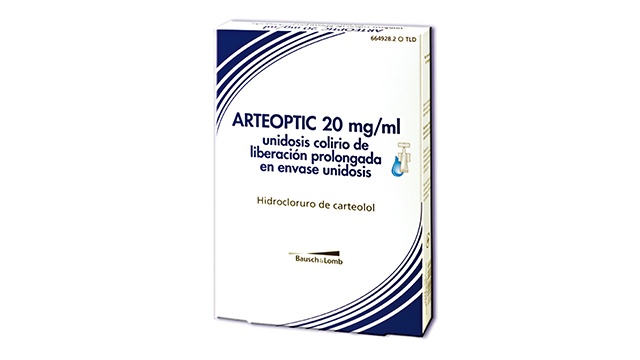
ARTEOPTIC 20 mg /Ml Unidosis Colirio De Liberacion Prolongada En Envase Unidosis

Revisión de receta online
Un médico revisará tu caso y determinará si la prescripción es médicamente apropiada.

Habla con un médico sobre este medicamento
Comenta tus síntomas y las opciones de tratamiento en una consulta online.



Cómo usar ARTEOPTIC 20 mg/ml UNIDOSIS COLIRIO DE LIBERACION PROLONGADA EN ENVASE UNIDOSIS
Contenido del prospecto
- Introducción
- Qué es ARTEOPTIC en envase unidosis y para qué se utiliza
- Qué necesita saber antes de empezar a usar ARTEOPTIC en envase unidosis
- Cómo usar ARTEOPTIC en envase unidosis
- Posibles efectos adversos
- Conservación de ARTEOPTIC en envase unidosis
- Contenido del envase e información adicional
Introducción
Prospecto: información para el usuario
ARTEOPTIC 20 mg/ml unidosis colirio de liberación prolongada en envase unidosis
Hidrocloruro de carteolol
Lea todo el prospecto detenidamente antes de empezar a usar este medicamento, porque contiene información importante para usted.
- Conserve este prospecto, ya que puede tener que volver a leerlo.
- Si tiene alguna duda, consulte a su médico o farmacéutico.
- Este medicamento se le ha recetado solamente a usted, y no debe dárselo a otras personas, aunque tengan los mismos síntomas que usted, ya que puede perjudicarles.
- Si experimenta efectos adversos, consulte a su médico o farmacéutico, incluso si se trata de efectos adversos que no aparecen en este prospecto. Ver sección 4.
Contenido del prospecto
- Qué es ARTEOPTIC en envase unidosis y para qué se utiliza
- Qué necesita saber antes de empezar a usar ARTEOPTIC en envase unidosis.
- Cómo usar ARTEOPTIC en envase unidosis
- Posibles efectos adversos
- Conservación de ARTEOPTIC en envase unidosis.
- Contenido del envase e información adicional
1. Qué es ARTEOPTIC en envase unidosis y para qué se utiliza
ARTEOPTIC pertenece a una clase de medicamentos llamada beta-bloqueantes.
Se utiliza para el tratamiento local de las siguientes enfermedades oculares:
- Cierta forma de glaucoma (glaucoma crónico de ángulo abierto).
- Aumento de la presión en los ojos (hipertensión intraocular).

¿No estás seguro de si este medicamento es adecuado para ti?
Comenta tus síntomas y tratamiento con un médico online.
2. Qué necesita saber antes de empezar a usar ARTEOPTIC en envase unidosis
No debe utilizar ARTEOPTIC en envase unidosis
- Si padece alergia al hidrocloruro de carteolol o a cualquiera de los demás componentes de este medicamento (incluidos en la sección 6).
- Si padece o ha padecido en el pasado de enfermedades respiratorias tales como asma, bronquitis obstructiva crónica grave (enfermedad grave de los pulmones que puede producir sibilancias, dificultad para respirar y/o tos a largo plazo).
- Si padece latido cardiaco lento, fallo cardiaco o alteraciones del ritmo cardiaco (latido cardiaco irregular)
- Si tiene bradicardia (pulso menor de 45 - 50 latidos por minuto).
- Si tiene un feocromocitoma no tratado (producción excesiva de hormonas que causa un aumento de la tensión arterial grave).
Advertencias y precauciones
Consulte a su médico, farmacéutico o enfermero antes de empezar a usar ARTEOPTIC. Si tiene o ha tenido en el pasado:
- Enfermedad coronaria (síntomas que pueden incluir dolor de pecho o debilidad, fatiga o asfixia), fallo cardiaco, disminución de la presión sanguínea,
- alteraciones de las fases cardiacas tales como bradicardia (latido cardiaco lento),
- problemas respiratorios, asma o enfermedad pulmonar obstructiva crónica (enfermedad pulmonar que puede causar sibilancias, dificultad en respirar y/o tos a largo plazo),
- alteración de la circulación periférica (enfermedad de Raynaud o síndrome de Raynaud),
- diabetes dado que carteolol puede enmascarar los signos y síntomas de un nivel bajo de azúcar en sangre,
- la diabetes puede enmascarar los signos y síntomas de un nivel bajo de azúcar en sangre (hipoglucemia),
- el carteolol puede enmascarar los signos y síntomas de la hiperactividad de la glándula tiroides,
- feocromocitoma tratado,
- psoriasis,
- enfermedad corneal,
- historial de reacciones alérgicas,
- enfermedad renal o hepática
Informe a su médico que está tomando ARTEOPTIC antes de someterse a una anestesia dado que el carteolol puede cambiar los efectos de algunos medicamentos durante la anestesia.
Para controlar que no está desarrollando una resistencia a la eficacia terapéutica de este producto, cuando use este medicamento debe ser sometido a exámenes oftalmológicos periódicos al comienzo del tratamiento y posteriormente, aproximadamente cada 4 semanas. Además, en caso de tratamiento a largo plazo, los exámenes deben controlar si se produce un fracaso del tratamiento (pérdida de eficacia del medicamento).
Si utiliza lentes de contacto: una inhibición de la producción de lágrimas posiblemente relacionada con esta clase de medicamentos puede producir un riesgo de intolerancia en los usuarios de lentes de contacto.
Si sufre daño grave en la córnea (la capa transparente de la parte frontal del ojo), el tratamiento con fosfatos, en caso muy raros, puede causar visión borrosa por acumulación de calcio.
El principio activo de este medicamento puede producir un resultado positivo en las pruebas de control antidopaje.
Niños y adolescentes
Este colirio no debe ser utilizado en bebés prematuros o recién nacidos, ni en niños ni adolescentes.
Uso de ARTEOPTIC en envase unidosis con otros medicamentos
ARTEOPTIC puede afectar o ser afectado por otros medicamentos cuando se están utilizando, incluyendo otros colirios para el tratamiento del glaucoma.
- Si está utilizando otros medicamentos de aplicación en el ojo, debe:
- aplicarse el otro medicamento oftálmico
- esperar 15 minutos
- aplicarse ARTEOPTIC el último
- Su médico puede también prescribirle un colirio miótico para el tratamiento de cierto tipo de glaucoma (como el glaucoma de ángulo cerrado).
- Es necesario un seguimiento oftalmológico si utiliza un colirio de adrenalina/epinefrina al mismo tiempo que ARTEOPTIC (debido al riesgo de dilatación de la pupila).
- Si toma beta-bloqueantes orales al mismo tiempo, a menudo es necesario ajustar la dosis de ARTEOPTIC.
Aunque la cantidad de beta-bloqueante que llega a la sangre tras la aplicación en los ojos es baja, debe tener en cuenta las interacciones que se han observado con los beta-bloqueantes orales:
- No se recomienda la utilización de amiodarona (utilizada para el tratamiento de las alteraciones del ritmo cardiaco), de ciertos antagonistas del calcio (utilizados para el tratamiento de la hipertensión, como diltiazem, fingolimod, ozanimod y verapamilo) o de otros beta-bloqueantes (utilizados para el tratamiento de la insuficiencia cardiaca).
- Todos los beta-bloqueantes pueden enmascarar ciertos síntomas de hipoglucemia: palpitaciones y taquicardia.
- Puede aumentar el nivel en sangre de Lidocaína (administrada por vía IV), lo que aumentaría el riesgo de efectos adversos cardiacos y neurológicos.
Cuando se utilice más de un medicamento oftálmico tópico, las administraciones de fármacos deben espaciarse al menos 15 minutos. Las pomadas oculares deben administrarse en último lugar.
Informe a su médico si está utilizando o va a utilizar medicamentos para disminuir la presión sanguínea, medicamentos para el corazón, medicamentos para tratar la diabetes o esclerósis múltiple.
Informe a su médico o farmacéutico si está utilizando o ha utilizado recientemente otros medicamentos, incluso los adquiridos sin receta. Ellos le harán un seguimiento específico si fuera necesario.
Embarazo y lactancia
Si está embarazada o en periodo de lactancia, cree que podría estar embarazada o tiene intención de quedarse embarazada, consulte a su médico o farmacéutico antes de utilizar este medicamento.
Embarazo
No utilice ARTEOPTIC si está embaraza a no ser que su médico considere que es necesario.
No existen datos adecuados sobre el uso de Hidrocloruro de Carteolol en mujeres embarazadas.
Para disminuir la absorción sistémica ver sección 3.
Lactancia
No utilice ARTEOPTIC si está amantando. El hidrocloruro de carteolol puede pasar a la leche materna.
Los betabloqueantes se excretan por la leche materna. Sin embargo, a las dosis terapéuticas del colirio de Hidrocloruro de Carteolol, no es probable que haya cantidades suficientes en la leche materna como para producir síntomas clínicos de betabloqueos en niños. Para reducir la absorción sistémica ver sección 3.
Pregunte a su médico antes de tomar cualquier medicamento durante la lactancia.
Conducción y uso de máquinas
Tras la aplicación de este producto en los ojos puede aparecer visión borrosa.
No conduzca ni utilice máquinas hasta que haya recobrado la visión normal.
ARTEOPTIC en envase unidosis contiene tampón fosfato
Este medicamento contiene 0,049 mg de fosfatos en cada gota que equivalen a 1,4 mg/ml.
3. Cómo usar ARTEOPTIC en envase unidosis
Este medicamento debe ser administrado en los ojos (vía oftálmica).
Siga exactamente las instrucciones de administración de este medicamento indicadas por su médico. En caso de duda pregunte a su médico o farmacéutico.
ARTEOPTIC contiene un excipiente específico que posee unas propiedades físicas que permiten una única administración al día.
La dosis recomendada es una gota en el ojo o los ojos afectados, una vez al día, por la mañana.
Sin embargo, su doctor puede decidir ajustar la dosis, especialmente si está tomando beta-bloqueantes orales (por la boca) al mismo tiempo (vea sección 2 “Uso de otros medicamentos”).
Instrucciones de uso
- Si lleva lentes de contacto, debe quitárselas antes de aplicarse ARTEOPTIC y esperar 15 minutos antes de volver a ponérselas.
- Para una administración correcta de ARTEOPTIC:
- Lávese las manos cuidadosamente antes de aplicarse las gotas.
- Antes de cada nueva utilización, separe un envase unidosis de la tira.
- Gire el extremo del vial para abrir el envase unidosis. Coloque el envase unidosis boca abajo, golpee ligeramente el cuerpo del vial unidosis para hacer que la solución se desplace hacia la abertura.
- Evite tocar el ojo o el párpado con el borde del envase.
- Para el tratamiento, tire suavemente del párpado inferior e instile una gota mientras mira hacia arriba.
- Tras la administración, cierre el ojo durante unos segundos.
- Con el ojo cerrado limpie suavemente cualquier cantidad en exceso.
- Tras la administración de ARTEOPTIC, presione con el dedo en el ángulo del ojo cercano a la nariz durante 2 minutos. Esto evita que la sustancia activa (carteolol) pase al resto del organismo.
- Con los ojos cerrados, descarte cualquier exceso de medicamento.
- Deseche el envase unidosis inmediatamente después de su utilización.
- No use el contenido de envases unidosis ya abiertos o empezados.
- La cantidad de gotas de un envase es suficiente para el tratamiento de los dos ojos.
Separar Girar el tapón para abrirlo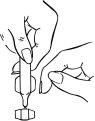
Invierta el envase completamente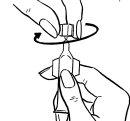 Instile en el ojo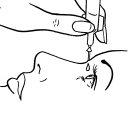
Tire a la basura tras su uso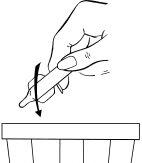
- Si está utilizando otro medicamento que se aplique en el ojo, debe:
- Administrarse primero el otro medicamento oftálmico
- Esperar 15 minutos
- Por último, aplicar ARTEOPTIC
- Si su médico le ha prescrito ARTEOPTIC en sustitución de otro medicamento, debe interrumpir la utilización del otro colirio al final de un día completo de tratamiento.
- Comience el tratamiento con ARTEOPTIC al día siguiente, a la dosificación que le haya indicado su médico.
- Si estima que la acción de ARTEOPTIC es demasiado fuerte o débil, comuníqueselo a su médico o farmacéutico.
No inyectar ni tragar.
Duración del tratamiento
Siga las instrucciones de su médico. Él le dirá cuanto tiempo tiene que utilizar ARTEOPTIC. No interrumpa el tratamiento antes.
Si usa más ARTEOPTIC en envase unidosis del que debe:
Si se administra demasiadas gotas en los ojos, lávelos con agua limpia.
En caso de administración oral accidental del contenido del envase, pueden aparecer ciertos efectos secundarios tales como sensación de cabeza hueca, dificultad para respirar o impresión de que su pulso es más lento.
En caso de sobredosis o ingestión accidental, consulte inmediatamente con su médico o farmacéutico o llame al Servicio de Información Toxicológica Tel. (91) 562 04 20.
Si olvidó utilizarARTEOPTIC en envase unidosis
No utilice una dosis doble para compensar la dosis olvidada.
Si interrumpe el tratamiento con ARTEOPTIC en envase unidosis
Si interrumpe el tratamiento puede aumentar la presión intraocular de sus ojos y provocarle visión borrosa.
No interrumpa nunca el tratamiento sin consultar primero con su médico o farmacéutico.
Si tiene alguna otra duda sobre el uso de este medicamento, pregunte a su médico o farmacéutico.

¿Has empezado a tomar el medicamento y tienes preguntas?
Comenta tus síntomas y tratamiento con un médico online.
4. Posibles efectos adversos
Al igual que todos los medicamentos, este medicamento puede producir efectos adversos, aunque no todas las personas los sufran.
Generalmente puede seguir aplicando el colirio, a menos que los efectos sean graves. Si está preocupado, consulte a su médico o farmacéutico. No deje de utilizar ARTEOPTIC sin informar a su médico.
Al igual que otros medicamentos administrados en los ojos (medicamentos oftálmicos administrados tópicamente), ARTEOPTIC puede absorberse y pasar a la sangre. Esto puede producir los efectos secundarios que se observan con beta-bloqueantes sistémicos. La frecuencia de efectos adversos tras la administración tópica en los ojos es inferior que con otros medicamentos administrados por vía oral o inyectable. Los efectos adversos listados a continuación incluyen reacciones adversas vistas con otros agentes beta-bloqueantes oftálmicos:
La frecuencia de los siguientes efectos adversos es frecuente (puede afectar hasta 1 de cada 10 personas)
- Signos y síntomas de irritación ocular (por ej. quemazón), dolor en el ojo (por ej. escozor), sensación de picor, hinchazón, lagrimeo, ojos rojos, enrojecimiento de la conjuntiva, conjuntivitis, irritación o sensación de tener algo extraño en el ojo (queratitis).
- Alteraciones del gusto.
La frecuencia de los siguientes efectos adversos es poco frecuente (puede afectar hasta 1 de cada 100 personas).
- Mareos
- Debilidad muscular o dolor no producido por ejercicio (mialgia), calambres musculares.
La frecuencia de los siguientes efectos adversos es rara (puede afectar hasta 1 de cada 1.000 personas)
- Resultados positivos de anticuerpos antinucleares.
En casos muy raros, algunos pacientes con daños graves sobre la capa trasparente de la parte frontal del ojo (córnea) han desarrollado opacificidad corneal debido a depósitos de calcio durante el tratamiento.
La frecuencia de los siguientes efectos adversos es desconocida ( la frecuencia no puede ser estimada a partir de los datos disponibles
- Reacciones alérgicas incluyendo hinchazón repentina de la cara, labios, boca, lengua o garganta que pueden causar problemas para respirar o tragar, sarpullido, rash localizado y generalizado, picazón , reacción alérgica que pone la vida en peligro de modo repentino.
- Bajos niveles de azúcar en sangre
- Dificultad para dormir (insomnio), depresión, pesadillas, disminución de la líbido.
- Desmayo, infarto, disminución del flujo sanguíneo en algunas partes del cerebro, aumento en signos y síntomas de miastenia gravis (alteración muscular), hormigueo o adormecimiento de las manos y pies, cosquilleos, dolor de cabeza, pérdida de memoria.
- Párpados hinchados (blefaritis), visión borrosa, sensibilidad corneal disminuida tras una operación oftálmica (desprendimiento coroidal tras cirugía de filtración), disminución de la sensibilidad corneal, ojos secos, daño en la capa frontal del globo ocular (erosión corneal), caída del párpado superior o inferior, doble visión, cambios en la refracción (a veces debido a la retirada del tratamiento con gotas mióticas).
- Latido cardiaco lento, palpitaciones, cambios en el ritmo o en la velocidad del latido cardiaco, enfermedad cardiaca con dificultad para respirar e hinchazón de los pies y piernas debido a acumulación de líquido (fallo cardiaco congestivo), condición cardiaca (bloqueo atrioventricular), ataque al corazón, insuficiencia cardiaca.
- Baja presión sanguínea Fenómeno de Raynaud, manos y pies fríos, calambres y/o dolor de piernas al andar (claudicación).
- Broncoespasmo (dificultad para respirar o silbidos - predominantemente en pacientes con enfermedad broncoespástica pre-existente), falta de aliento (disnea), tos.
- Nauseas, indigestión, diarrea, sequedad de boca, dolor abdominal, vómitos.
- Caída del cabello, rash cutáneo con apariencia de color plata blanquecino (rash psoriforme) o empeoramiento de la psoriasis, erupciones cutáneas.
- Lupus sistémico eritematoso.
- Disfunción sexual, impotencia.
- Debilidad muscular inusual o dolor no producido por el ejercicio (astenia) o cansancio, dolor de pecho, acumulación de líquido (edema).
Comunicación de efectos adversos:
Si experimenta cualquier tipo de efecto adverso, consulte con su médico, farmacéutico o enfermero, incluso si se trata de posibles efectos adversos que no aparecen en este prospecto. También puede comunicarlos directamente a través del sistema Español de Farmacovigilancia de medicamentos de Uso Humano: https://www.noficaram.es.Mediante la comunicación de efectos adversos usted puede contribuir a proporcionar más información sobre la seguridad de este medicamento.
5. Conservación de ARTEOPTIC en envase unidosis
- Mantener este medicamento fuera de la vista y del alcance de los niños.
- No utilice este medicamento después de la fecha de caducidad que aparece en el envase después de “EXP”(siglas en inglés de caducidad). La fecha de caducidad es el último día del mes que se indica.
- No conservar a temperatura superior a 25ºC.
- Debe desecharse después de 28 días de la primera apertura del frasco.
- No utilizar si el cierre está deteriorado.
Los medicamentos no se deben tirar por los desagües ni a la basura. Deposite los envases y los medicamentos que no necesita en el Punto SIGRE de la farmacia. En caso de duda pregunte a su farmacéutico cómo deshacerse de los envases y de los medicamentos que no necesita. De esta forma, ayudará a proteger el medio ambiente.
6. Contenido del envase e información adicional
Composición de ARTEOPTIC 2% colirio de liberación prolongada en envase unidosis
- El principio activo es:hidrocloruro de carteolol.
ARTEOPTIC 20 mg/ml: cada ml de colirio contiene 20 mg de hidrocloruro de carteolol o cada envase unidosis (0,2 ml) contiene 4 mg de hidrocloruro de carteolol.
- Los demás componentes son:dihidrogenofosfato de sodio dihidrato, fosfato disódico dodecahidrato, cloruro de sodio, ácido algínico, hidróxido de sodio (para ajustar el pH) y agua purificada.
Aspecto del producto y contenido del envase
Este medicamento es un beta-bloqueante de uso ocular.
ARTEOPTIC 20 mg/ml colirio de liberación prolongada se presentan en forma de solución transparente y ligeramente amarillo-marrón envasada en tiras de envases unidosis de 0,2 ml y acondicionadas en un sobre (poliéster/ aluminio/ polietileno).
Envase de 30 envases unidosis.
Puede que solamente estén comercializados algunos tamaños de envases
Titular de la autorización de comercialización y responsable de la fabricación
Titular de la autorización de comercialización:
BAUSCH + LOMB IRELAND LIMITED
3013 Lake Drive
Citywest Business Campus
Dublin 24, D24PPT3
Irlanda
Responsable de la fabricación:
Laboratoire CHAUVIN
Zone Industrielle Ripotier Haut - 07200 Aubenas
Francia
Representante local:
Bausch&Lomb S.A.
Avda. Valdelaparra nº4
28108 Alcobendas (Madrid)
Este medicamento está autorizado en los Estados Miembros del Espacio Económico Europeo con los siguientes nombres:
Francia: Carteol L.P 1% y Carteol L.P 2% collyres à libération prolongée en récipient unidose
Portugal: Physioglau 1% y Physioglau 2% colírio de libertação prolongada, recipiente para dose única.
Italia: Fortinol 1% & 2% monodose, collirio a rilascio prolungato, contenitore monodose.
España: ARTEOPTIC 20 mg/ml, colirio de liberación prolongada, envases unidosis.
Fecha de la última revisión de este prospecto:Febrero 2023
La información detallada y actualizada en este medicamento está disponible en la página Web de la Agencia Española del Medicamento y Productos Sanitarios (AEMPS) http://www.aemps.gob.es/
- País de registro
- Forma farmacéuticaCOLIRIO DE LIBERACION PROLONGADA, 20 mg/ml (i.e. 2% p/v)
- Código ATCS01ED05
- Precio medio en farmacia3.81 EUR
- Disponibilidad en farmaciasProblema de suministro reportado
- Principio activo
- Requiere recetaSí
- Fabricante
- ComposiciónDIHIDROGENOFOSFATO DE SODIO DIHIDRATO (0,08 mg mg), HIDROGENOFOSFATO DE SODIO DODECAHIDRATO (0,20 mg mg), HIDROXIDO DE SODIO (E 524) (0,35 A 0,37 mg mg), CLORURO DE SODIO (0,872 mg mg)
- Esta información es de carácter general y no sustituye la consulta con un profesional sanitario.
- Alternativas a ARTEOPTIC 20 mg/ml UNIDOSIS COLIRIO DE LIBERACION PROLONGADA EN ENVASE UNIDOSISForma farmacéutica: COLIRIO DE LIBERACION PROLONGADA, 10 mg carteolol hidrocloruro/mlPrincipio activo: carteololFabricante: Bausch + Lomb Ireland LimitedRequiere recetaForma farmacéutica: COLIRIO DE LIBERACION PROLONGADA, 20 MG/MLPrincipio activo: carteololFabricante: Bausch + Lomb Ireland LimitedRequiere recetaForma farmacéutica: NULL, 20 mg/mlPrincipio activo: carteololFabricante: Bausch + Lomb Ireland LimitedRequiere receta
Médicos online para ARTEOPTIC 20 mg/ml UNIDOSIS COLIRIO DE LIBERACION PROLONGADA EN ENVASE UNIDOSIS
Comenta la dosis, los posibles efectos secundarios, interacciones, contraindicaciones o la revisión de receta de ARTEOPTIC 20 mg/ml UNIDOSIS COLIRIO DE LIBERACION PROLONGADA EN ENVASE UNIDOSIS, sujeto a valoración médica y a la normativa local.









Obtén una receta de ARTEOPTIC 20 mg/ml UNIDOSIS COLIRIO DE LIBERACION PROLONGADA EN ENVASE UNIDOSIS online
Rellena un formulario de 2 minutos
Cuéntanos tus síntomas, historial y el medicamento que necesitas.
Elige un médico o nosotros te asignamos uno
Escoge un especialista o te conectamos con el próximo médico disponible.
El médico revisa tu caso
Normalmente en 30 minutos. Puede hacerte preguntas adicionales por chat.
Recógela en cualquier farmacia
Receta electrónica enviada a tu correo, válida en toda España.
Preguntas frecuentes
ARTEOPTIC 20 mg/ml UNIDOSIS COLIRIO DE LIBERACION PROLONGADA EN ENVASE UNIDOSIS requiere receta en España. Puedes confirmarlo con un médico online según tu caso.
El principio activo de ARTEOPTIC 20 mg/ml UNIDOSIS COLIRIO DE LIBERACION PROLONGADA EN ENVASE UNIDOSIS es carteolol. Esta información ayuda a identificar medicamentos con la misma composición pero con diferentes nombres comerciales.
El precio medio en farmacia de ARTEOPTIC 20 mg/ml UNIDOSIS COLIRIO DE LIBERACION PROLONGADA EN ENVASE UNIDOSIS es de aproximadamente 3.81 EUR. Puede variar según el fabricante y la forma farmacéutica.
ARTEOPTIC 20 mg/ml UNIDOSIS COLIRIO DE LIBERACION PROLONGADA EN ENVASE UNIDOSIS es fabricado por Bausch + Lomb Ireland Limited. La marca y el envase pueden variar según el distribuidor.
Los Médicos de familia, Psiquiatras, Dermatólogos, Cardiólogos, Endocrinólogos, Gastroenterólogos, Neumólogos, Nefrólogos, Reumatólogos, Hematólogos, Infectólogos, Alergólogos, Geriatras, Pediatras, Oncólogos pueden valorar la prescripción de ARTEOPTIC 20 mg/ml UNIDOSIS COLIRIO DE LIBERACION PROLONGADA EN ENVASE UNIDOSIS cuando esté clínicamente indicado. Puedes reservar una videoconsulta para comentar tu caso y las opciones de tratamiento.
España cuenta con una infraestructura sanitaria bien desarrollada en ciudades principales como Madrid, Barcelona, Valencia y Sevilla. Las farmacias están ampliamente disponibles y operan bajo estrictas regulaciones, garantizando el acceso a medicamentos con receta.
Puedes comprar ARTEOPTIC 20 mg/ml UNIDOSIS COLIRIO DE LIBERACION PROLONGADA EN ENVASE UNIDOSIS en Madrid, Barcelona, Sevilla o Valencia en cualquier farmacia local con una receta válida.
Para obtener una receta, puedes utilizar Oladoctor:
Otros medicamentos con el mismo principio activo (carteolol) incluyen ARTEOPTIC 1% COLIRIO DE LIBERACION PROLONGADA, ARTEOPTIC 2% COLIRIO DE LIBERACION PROLONGADA, ARTEOPTIC PF 2% COLIRIO EN SOLUCION DE LIBERACION PROLONGADA. Pueden tener diferentes nombres comerciales o formulaciones, pero contienen el mismo componente terapéutico. Consulta siempre con un médico antes de cambiar o iniciar un nuevo medicamento.
