



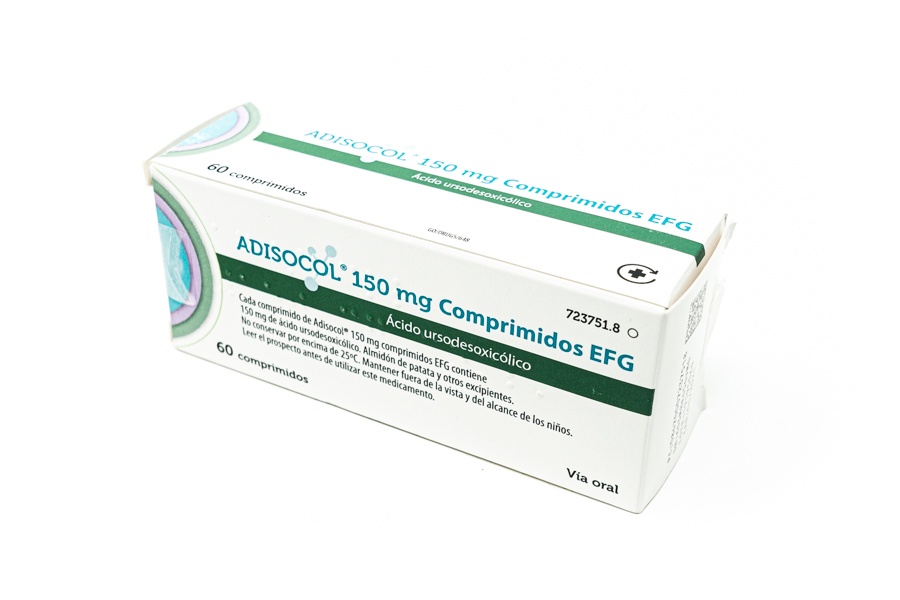
ADISOCOL 150 mg Comprimidos

Revisión de receta online
Un médico revisará tu caso y determinará si la prescripción es médicamente apropiada.

Habla con un médico sobre este medicamento
Comenta tus síntomas y las opciones de tratamiento en una consulta online.



Cómo usar ADISOCOL 150 MG COMPRIMIDOS EFG
Contenido del prospecto
- Introducción
- Qué es Adisocol y para qué se utiliza
- Qué necesita saber antes de empezar a tomar Adisocol
- Cómo tomar Adisocol
- Posibles efectos adversos
- Conservación de Adisocol
- Contenido del envase e información adicional
Introducción
Prospecto: información para el paciente
Adisocol 150 mg comprimidos EFG
ácido ursodesoxicólico
Lea todo el prospecto detenidamente antes de empezar a tomar este medicamento, porque contiene información importante para usted.
- Conserve este prospecto, ya que puede tener que volver a leerlo.
- Si tiene alguna duda, consulte a su médico o farmacéutico.
- Este medicamento se le ha recetado solamente a usted, y no debe dárselo a otras personas aunque tengan los mismos síntomas que usted, ya que puede perjudicarles.
- Si experimenta efectos adversos, consulte a su médico o farmacéutico, incluso si se trata de efectos adversos que no aparecen en este prospecto. Ver sección 4.
Contenido del prospecto
- Qué es Adisocol y para qué se utiliza
- Qué necesita saber antes de empezar a tomar Adisocol
- Cómo tomar Adisocol
- Posibles efectos adversos
- Conservación de Adisocol
- Contenido del envase e información adicional
1. Qué es Adisocol y para qué se utiliza
Ácido ursodesoxicólico influye en la composición de la bilis, la cual disuelve los cálculos biliares de colesterol. El efecto del ácido ursodesoxicólico en colangitis biliar primaria y fibrosis quística se puede explicar por varios mecanismos, como un efecto protector en las células hepáticas y un efecto en el sistema inmune.
- Ácido ursodesoxicólico se usa en pacientes:
- con pequeños cálculos biliares,
- que no desean someterse a cirugía o no son elegibles para la cirugía de cálculos biliares
- en quienes se ha encontrado demasiado colesterol en la bilis.
- Ácido ursodesoxicólico se usa en pacientes con colangitis biliar primaria. La colangitis biliar primaria es una enfermedad en la que el tejido hepático está dañado por un drenaje defectuoso de la bilis.
- Ácido ursodesoxicólico se usa en niños de entre 6 y 18 años con problemas hepáticos y biliares causado por la fibrosis quística. La fibrosis quística, también conocida como mucoviscidosis, es una enfermedad hereditaria en la que las mucosas están particularmente rígidas en todo el cuerpo. Esto puede causar, entre otras condiciones, obstrucciones e inflamación del hígado y de los conductos biliares.

¿No estás seguro de si este medicamento es adecuado para ti?
Comenta tus síntomas y tratamiento con un médico online.
2. Qué necesita saber antes de empezar a tomar Adisocol
No tome Adisocol:
- Si sufre una inflamación aguda de la vesícula biliar o los conductos biliares.
- Si sufre una oclusión o bloqueo del tracto biliar.
- Si sufre a menudo calambres dolorosos en la parte superior del abdomen (cólico biliar).
- Si tiene cálculos biliares calcificados que no transmiten rayos X.
- Si tiene una vesícula biliar que ya no puede contraerse adecuadamente.
- Si es alérgico a los ácidos biliares o a alguno de los demás componentes de este medicamento (incluidos en la sección 6).
- Si tiene úlcera gástrica o duodenal activa.
Niños
En niños con drenaje biliar interrumpido debido a la producción de tejido conectivo en el conducto biliar (atresia biliar) en los que el flujo de bilis no se ha restaurado por curación o mediante un conducto biliar artificial (portoenterostomía).
Advertencias y precauciones
Este medicamento se debe tomar bajo supervisión médica.
Su médico debe examinar su hígado cada 4 semanas durante los primeros tres meses de tratamiento. Tras esto debe hacerlo cada 3 meses. Aparte de permitir la identificación de los pacientes que están siendo tratados de colangitis biliar primaria entre los que responden y los que no responden, esta monitorización debería también permitir una detección temprana del potencial deterioro hepático particularmente en pacientes con colangitis biliar primaria avanzada.
Cuando se usa para disolver cálculos biliares:
Para ser capaces de evaluar la progresión terapéutica de la disolución de los cálculos biliares y para identificar a tiempo la posible calcificación de los cálculos, la vesícula biliar, dependiendo del tamaño de las piedras, se deben visualizar de 6 a 10 meses tras el inicio del tratamiento (colescistografía oral) con imagen total y oclusiones y en posición en pie y acostado (control por ultrasonido).
Si la vesícula biliar no se puede visualizar con rayos X, o en casos en los que los cálculos biliares estén calcificados, en contractilidad dañada de la vesícula biliar o episodios frecuentes de cólicos biliares, se debe interrumpir el tratamiento con ácido ursodesoxicólico.
Cuando se usa para el tratamiento de la colangitis biliar primaria avanzada
En casos muy raros se observa descompensación de la cirrosis hepática lo que disminuye parcialmente tras la interrupción del tratamiento.
Las mujeres que toman Adisocol para disolver los cálculos biliares deben dejar de tomar la píldora anticonceptiva y otros métodos para prevenir el embarazo, porque las hormonas de la píldora anticonceptiva pueden desencadenar la producción de cálculos biliares.
En la fase final de la colangitis biliar primaria puede ocurrir en casos muy raros que su función hepática este altamente reducida. La función hepática se recuperará parcialmente tras la interrupción del tratamiento.
Si experimenta problemas con diarrea, su médico reducirá la dosis. Si la diarrea persiste, su médico puede decidir interrumpir el tratamiento.
Consulte a su médico o farmacéutico antes de empezar a tomar este medicamento.
Otros medicamentos y Adisocol
Informe a su médico o farmacéutico si está tomando, ha tomado recientemente o pudiera tener que tomar cualquier otro medicamento. Esto también es aplicable a medicamentos no sujetos a prescripción médica.
Los efectos de los siguientes medicamentos pueden estar influenciados (interacciones):
Es posible que se produzca un efecto reducidode los siguientes medicamentos:
- Medicamentos que se unen al ácido del estómago que contienen hidróxido de aluminio y sustancias que se unen a los ácidos biliares (colestiramina, colestipol) que pueden unirse al ácido ursodesoxicólico y así evitar su absorción.
Por tanto, estos medicamentos no se pueden tomar simultáneamente con ácido ursodesoxicólico, pero si siempre dos horas antes o después.
- El ácido ursodesoxicólico puede reducir la absorción de ciprofloxacino, dapsona (antibióticos) y nitrendipina (agente antihipertensivo) del intestino. Cuando una de estos medicamentos se utiliza simultáneamente con Adisocol su médico debe supervisarle con atención.
Es posible que se produzca un efecto intensificadode los siguientes medicamentos cuando usa ácido ursodesoxicólico:
- El ácido ursodesoxicólico puede incrementar la absorción de ciclosporina del intestino: si es necesario, se debe ajustar en sangre la dosis en función de la concentración de ciclosporina.
Los estrógenos, anticonceptivos orales (“la píldora”) y los agentes reductores de colesterol (como clofibratos) pueden desencadenar la formación de cálculos biliares y pueden contrarrestar el efecto del tratamiento de los cálculos biliares con ácido ursodesoxicólico.
Informe a su médico o farmacéutico si está tomando o ha tomado otros medicamentos. Esto también aplica a medicamentos no sujetos a prescripción médica.
Embarazo y lactancia
Si está embarazada o en periodo de lactancia, cree que podría estar embarazada o tiene intención de quedarse embarazada, consulte a su médico o farmacéutico antes de utilizar este medicamento.
Embarazo
No debe tomar este medicamento mientras esté embarazada a menos que su médico considere que es absolutamente necesario.
Mujeres en edad fértil
Incluso si no está embarazada, debe discutir esta posibilidad con su médico, porque las mujeres en edad fértil sólo pueden ser tratadas si están utilizando un método anticonceptivo fiable. Se recomiendan anticonceptivos no hormonales o contracepción con baja dosis de estrógenos. No obstante, si utiliza este medicamento para el tratamiento de cálculos biliares, solo puede utilizar contracepción no hormonal porque la anticoncepción hormonal desencadena la formación de cálculos biliares.
Lactancia
Informe a su médico si está en periodo de lactancia o a punto de empezarlo. De acuerdo a unos pocos casos documentados de mujeres en periodo de lactancia los niveles en leche de ácido ursodesoxicólico son muy bajos y probablemente no se esperan reacciones adversas en lactantes.
Conducción y uso de máquinas
La influencia de ácido ursodesoxicólico para conducir y utilizar máquinas es nula o insignificante.
3. Cómo tomar Adisocol
Siga exactamente las instrucciones de administración de este medicamento indicadas por su médico o farmacéutico. En caso de duda, consulte de nuevo a su médico o farmacéutico.
Su médico determinará la dosis en base a su peso.
Tome los comprimidos tras una comida con un vaso de leche o un tentempié. Tome el número de comprimidos prescrito distribuidos a lo largo del día.
- Disolución de los cálculos biliares:
De cuatro a seis comprimidos de 150 mg, de dos a tres comprimidos de 300 mg o dos comprimidos o 450 mg al día (600-900 mg de ácido ursodesoxicólico al día).
Se deben tomar siempre dos comprimidos tras la cena.
Cuando tome una dosis dos o tres veces al día: por ejemplo, un comprimido tras la comida y dos comprimidos tras la cena.
Cuando tome una dosis de dos comprimidos al día: tome ambos comprimidos preferiblemente dos horas tras la cena y una hora antes de irse a dormir.
- Colangitis biliar primaria (daño del tejido hepático por un flujo dañado de la bilis):
- Fase I-III:
De cuatro a ocho comprimidos de 150 mg, de dos a cuatro comprimidos de 300 mg, o dos comprimidos de 450 mg al día (600-1200 mg de ácido ursodesoxicólico al día).
Tome la dosis prescrita en dos o tres tomas al día tras las comidas.
- Fase IV:
En base al examen de la función hepática su médico determinará si se le prescribe una dosis normal, como en fase I-III, o la mitad de esta dosis.
Niños de entre 6 a 18 años con fibrosis quística
- Enfermedades del hígado y del tracto biliar causadas por fibrosis quística (mucoviscidosis):
De cuatro a diez comprimidos de 150 mg, de dos a cinco comprimidos de 300 mg, o de dos a tres comprimidos de 450 mg al día (600-1500 mg de ácido ursodesoxicólico al día).
Tome los comprimidos con un vaso de leche o un tentempié. Tome la dosis prescrita en dos o tres tomas al día tras las comidas.
Los comprimidos ranurados se pueden dividir si tiene problemas para tragar debido al tamaño del comprimido, de tal forma que se tome de forma secuencial medio comprimido en dos veces.
Si nota que este medicamento es demasiado fuerte o al contrario demasiado débil, consulte a su médico o farmacéutico.
Si toma más Adisocol del que debe
Debe informar a su médico si ha tomado más ácido ursodesoxicólico del que debe. Es poco probable que note algún problema pero puede experimentar diarrea.
Si olvidó tomar Adisocol
Tome la cantidad prescrita en la siguiente toma.
No tome una dosis doble para compensar las dosis olvidadas.
¿Cuánto tiempo debe tomar Adisocol?
La duración del tratamiento depende del tamaño del cálculo biliar, pero es habitualmente no inferior a 3 a 4 meses. El tratamiento no debe interrumpirse prematuramente, incluso si los síntomas han desaparecido. Sólo un escáner de rayos X o ultrasonido puede mostrar que los cálculos biliares se han disuelto completamente. Después si se ha visto con la ayuda de un ecograma que los cálculos biliares han desaparecido completamente, el tratamiento debe continuarse todavía durante tres o cuatro meses.
El tratamiento con Adisocol para la colangitis biliar primaria y trastornos del hígado y del sistema biliar como resultado de la fibrosis quística se continuará para que el efecto protector del Adisocol se mantenga.
Si tiene cualquier otra duda sobre el uso de este medicamento, pregunte a su médico o farmacéutico.

¿Has empezado a tomar el medicamento y tienes preguntas?
Comenta tus síntomas y tratamiento con un médico online.
4. Posibles efectos adversos
Al igual que todos los medicamentos, este medicamento puede producir efectos adversos, aunque no todas las personas los sufran.
Efectos adversos frecuentes(ocurren en menos de 1 de cada 10 pacientes pero en más de 1 de cada 100 pacientes)
- heces pastosas o diarrea
Efectos adversos raros(pueden afectar hasta a 1 de cada 10.000 pacientes)
- en el tratamiento de la colangitis biliar primaria: dolor agudo en la parte alta derecha del abdomen, deterioro grave (descompensación) de la cirrosis hepática que disminuye parcialmente tras el cese del tratamiento;
- calcificación de los cálculos biliares;
- urticaria (sarpullido).
Comunicación de efectos adversos
Si experimenta cualquier tipo de efecto adverso, consulte a su médico o farmacéutico, incluso si se trata de posibles efectos adversos que no aparecen en este prospecto. También puede comunicarlos directamente a través del Sistema Español de Farmacovigilancia de Medicamentos de Uso Humano: https://www.notificaram.es. Mediante la comunicación de efectos adversos usted puede contribuir a proporcionar más información sobre la seguridad de este medicamento.
5. Conservación de Adisocol
Mantener este medicamento fuera de la vista y del alcance de los niños.
No utilice este medicamento después de la fecha de caducidad que aparece en el envase después de (CAD).La fecha de caducidad es el último día del mes que se indica.
No conservar a temperatura superior a 25ºC.
Los medicamentos no se deben tirar por los desagües ni a la basura. Deposite los envases y los medicamentos que no necesita en el Punto Sigre de la farmacia. Pregunte a su farmacéutico cómo deshacerse de los envases y de los medicamentos que ya no necesita. De esta forma, ayudará a proteger el medio ambiente.
6. Contenido del envase e información adicional
Composición de Adisocol
- El principio activo es ácido ursodesoxicólico
- Los demás excipientes son celulosa microcristalina (Microcel 101) (E460), polivinil pirrolidona (Plasdona K-90) (E1201), estearato magnésico (E572), carboximetilalmidón sódico Tipo A (Primojel).
Aspecto del producto y contenido del envase
Adisocol 150 mg son comprimidos sin película blancos a casi blancos, redondos de aproximadamente 9,5 mm de tamaño con una ranura y “G” “442” grabado en una cara y liso en la otra.
Titular de la autorización de comercialización y responsable de la fabricación
Titular de la autorización de comercialización:
Glenmark Arzneimittel GmbH
Industriestr. 31
82194 Gröbenzell
Alemania
Responsable de la fabricación:
Glenmark Pharmaceuticals s.r.o.
Fibichova 143
566 17 VysokeMyto
República Checa
Pueden solicitar más información respecto a este medicamento dirigiéndose al representante local del titular de la autorización de comercialización:
Glenmark Farmacéutica, S.L.U.
C/ Retama 7, 7ª planta
28045 Madrid
España
Este medicamento está autorizado en los estados miembros del Espacio Económico Europeo con los siguientes nombres:
País | Nombre del medicamento |
Países Bajos | Ursodeoxycholzuur Glenmark 150 mg tabletten |
España | Adisocol 150 mg comprimidos EFG |
Fecha de la última revisión de este prospecto:Abril 2018
La información detallada de este medicamento está disponible en la página web de la Agencia Española de Medicamentos y Productos Sanitarios (AEMPs) (http://www.aemps.gob.es/).
- País de registro
- Forma farmacéuticaCOMPRIMIDO, 150 mg
- Código ATCA05AA02
- Precio medio en farmacia7.15 EUR
- Principio activo
- Requiere recetaSí
- Fabricante
- Esta información es de carácter general y no sustituye la consulta con un profesional sanitario.
- Alternativas a ADISOCOL 150 MG COMPRIMIDOS EFGForma farmacéutica: CAPSULA, 250 mgPrincipio activo: ácido ursodesoxicólicoFabricante: Grindeks AsRequiere recetaForma farmacéutica: CAPSULA, 250 MGPrincipio activo: ácido ursodesoxicólicoFabricante: Glenmark Arzneimittel GmbhRequiere recetaForma farmacéutica: COMPRIMIDO, 300 mgPrincipio activo: ácido ursodesoxicólicoFabricante: Glenmark Arzneimittel GmbhRequiere receta
Médicos online para ADISOCOL 150 MG COMPRIMIDOS EFG
Comenta la dosis, los posibles efectos secundarios, interacciones, contraindicaciones o la revisión de receta de ADISOCOL 150 MG COMPRIMIDOS EFG, sujeto a valoración médica y a la normativa local.









Obtén una receta de ADISOCOL 150 MG COMPRIMIDOS EFG online
Rellena un formulario de 2 minutos
Cuéntanos tus síntomas, historial y el medicamento que necesitas.
Elige un médico o nosotros te asignamos uno
Escoge un especialista o te conectamos con el próximo médico disponible.
El médico revisa tu caso
Normalmente en 30 minutos. Puede hacerte preguntas adicionales por chat.
Recógela en cualquier farmacia
Receta electrónica enviada a tu correo, válida en toda España.
Preguntas frecuentes
ADISOCOL 150 MG COMPRIMIDOS EFG requiere receta en España. Puedes confirmarlo con un médico online según tu caso.
El principio activo de ADISOCOL 150 MG COMPRIMIDOS EFG es ácido ursodesoxicólico. Esta información ayuda a identificar medicamentos con la misma composición pero con diferentes nombres comerciales.
El precio medio en farmacia de ADISOCOL 150 MG COMPRIMIDOS EFG es de aproximadamente 7.15 EUR. Puede variar según el fabricante y la forma farmacéutica.
ADISOCOL 150 MG COMPRIMIDOS EFG es fabricado por Glenmark Arzneimittel Gmbh. La marca y el envase pueden variar según el distribuidor.
Los Médicos de familia, Psiquiatras, Dermatólogos, Cardiólogos, Endocrinólogos, Gastroenterólogos, Neumólogos, Nefrólogos, Reumatólogos, Hematólogos, Infectólogos, Alergólogos, Geriatras, Pediatras, Oncólogos pueden valorar la prescripción de ADISOCOL 150 MG COMPRIMIDOS EFG cuando esté clínicamente indicado. Puedes reservar una videoconsulta para comentar tu caso y las opciones de tratamiento.
España cuenta con una infraestructura sanitaria bien desarrollada en ciudades principales como Madrid, Barcelona, Valencia y Sevilla. Las farmacias están ampliamente disponibles y operan bajo estrictas regulaciones, garantizando el acceso a medicamentos con receta.
Puedes comprar ADISOCOL 150 MG COMPRIMIDOS EFG en Madrid, Barcelona, Sevilla o Valencia en cualquier farmacia local con una receta válida.
Para obtener una receta, puedes utilizar Oladoctor:
Otros medicamentos con el mismo principio activo (ácido ursodesoxicólico) incluyen ACIDO URSODESOXICOLICO GRINDEKS 250 MG CAPSULAS DURAS EFG, ADISOCOL 250 MG CAPSULAS DURAS EFG, ADISOCOL 300 MG COMPRIMIDOS EFG. Pueden tener diferentes nombres comerciales o formulaciones, pero contienen el mismo componente terapéutico. Consulta siempre con un médico antes de cambiar o iniciar un nuevo medicamento.
