






How to use KERIZET 75 micrograms FILM-COATED TABLETS
Translated with AI
This page provides general information and does not replace a doctor’s consultation. Always consult a doctor before taking any medication. Seek urgent medical care if symptoms are severe.
Show originalContents of the leaflet
Introduction
Package Leaflet: Information for the User
Kerizet 75 micrograms film-coated tablets EFG
Desogestrel
Read this package leaflet carefully before you start taking this medicine because it contains important information for you.
- Keep this package leaflet, you may need to read it again.
- If you have any further questions, ask your doctor or pharmacist.
- This medicine has been prescribed for you only. Do not pass it on to others. It may harm them, even if their signs of illness are the same as yours.
- If you get any side effects, talk to your doctor or pharmacist. This includes any possible side effects not listed in this leaflet. See section 4.
Contents of the package leaflet:
- What is Kerizet and what is it used for
- What you need to know before you take Kerizet
- How to take Kerizet
- Possible side effects
- Storage of Kerizet
- Contents of the pack and other information
1. What is Kerizet and what is it used for
Kerizet is used to prevent pregnancy. Kerizet contains a small amount of a type of female sex hormone, the progestogen desogestrel. For this reason, Kerizet is known as a progestogen-only pill. Unlike combined pills, the mini-pill does not contain estrogen hormones in addition to the progestogen.
Most progestogen-only pills work mainly by preventing sperm from entering the uterus, but they do not always prevent the egg from ripening, which is the main action of combined pills. Kerizet is different from most progestogen-only pills because it has a dose that is high enough to prevent the egg from ripening in most cases. Therefore, Kerizet provides high contraceptive efficacy.
Unlike the combined pill, Kerizet can be taken by women who cannot tolerate estrogens and by breastfeeding women. A disadvantage is that you may experience irregular vaginal bleeding during the use of Kerizet. You may also not bleed at all.

2. What you need to know before you take Kerizet
Kerizet, like other hormonal contraceptives, does not protect against HIV infection (AIDS) or any other sexually transmitted infection.
Do not take Kerizet
- if you are allergic to desogestrel, soy, peanut, or any of the other ingredients of this medicine (listed in section 6).
- if you have a thrombosis. Thrombosis is the formation of a blood clot in a blood vessel [e.g. in the legs (deep vein thrombosis) or in the lungs (pulmonary embolism)].
- if you have or have ever had jaundice (yellowing of the skin) or severe liver disease and your liver is not yet working normally.
- if you have or suspect you may have a steroid-related cancer, such as certain types of breast cancer.
- if you have unexplained vaginal bleeding.
Tell your doctor before using Kerizet if any of these conditions apply to you. Your doctor may recommend that you use a non-hormonal method of birth control.
Consult your doctor immediately if any of these conditions occur for the first time while using Kerizet.
Warnings and precautions
Consult your doctor or pharmacist before starting to take Kerizet.
Tell your doctor before starting to use Kerizet if:
- you have ever had breast cancer;
- you have liver cancer, as it cannot be ruled out that Kerizet may have an effect;
- you have ever had a thrombosis;
- you have diabetes;
- you suffer from epilepsy (see section “Use of other medicines”);
- you suffer from tuberculosis (see section “Use of other medicines”);
- you have high blood pressure;
- you have or have had chloasma (yellowish-brown spots on the skin, particularly on the face); in this case, you should avoid very intense sun exposure or ultraviolet radiation.
If you use Kerizet in any of the situations described, you should remain under medical supervision. Your doctor can explain what you should do.
Breast cancer
Examine your breasts regularly and contact your doctor as soon as possible if you notice any lump in your breasts.
Breast cancer has been observed with a slightly higher frequency in women taking the pill than in women of the same age who do not take it. If the woman stops taking the pill, the risk decreases gradually, so that 10 years after stopping it, the risk is the same as that of women who have never taken it. Breast cancer is rare before the age of 40, but the risk increases as the woman gets older. Therefore, the additional number of breast cancers diagnosed is higher the older the age at which the pill was stopped. The duration of pill use is not as important.
Of 10,000 women who have taken the pill for up to 5 years and stop taking it around the age of 20, there will be less than one additional case of breast cancer observed up to 10 years after stopping the pill, which will be added to the 4 cases normally diagnosed in this age group. Similarly, of 10,000 women who have taken the pill for up to 5 years and stop taking it around the age of 30, there will be 5 additional cases to the 44 cases normally diagnosed. In 10,000 women who have taken the pill for up to 5 years and stop taking it around the age of 40, there will be 20 additional cases to the 160 cases normally diagnosed.
It is believed that the risk of breast cancer in users of progestogen-only pills like Kerizet is similar to that of women taking the combined pill, although the data do not allow for clear conclusions to be drawn.
The breast cancers found in women taking the pill seem to be less advanced than the breast cancers found in women who do not take it. It is not known if the difference in breast cancer risk is due to the pill. It could be that women are monitored more frequently, so that breast cancer is detected earlier.
Thrombosis
Contact your doctor immediately if you notice possible signs of thrombosis (see also “Regular checks”).
Thrombosis is the formation of a blood clot that can block a blood vessel. Thrombosis sometimes occurs in the deep veins of the legs (deep vein thrombosis). If the clot becomes dislodged from the veins where it has formed, it can reach and block the arteries of the lungs, causing what is known as a “pulmonary embolism”. This can lead to fatal situations. Deep vein thrombosis is rare. It can develop whether or not you are taking the pill. It can also appear if you become pregnant.
The risk of thrombosis is higher in pill users than in non-users. It is believed that the risk in users of progestogen-only pills like Kerizet is lower than in users of pills that also contain estrogens (combined pills).
Psychiatric disorders
Some women who use hormonal contraceptives, including Kerizet, have reported depression or depressed mood. Depression can be severe and sometimes lead to suicidal thoughts. If you experience mood changes and depressive symptoms, contact your doctor for medical advice as soon as possible.
Children and adolescents
There are no clinical data available on the safety and efficacy in children and adolescents under 18 years of age.
Use of Kerizet with other medicines
Tell your doctor or pharmacist if you are taking, have recently taken, or might take any other medicines or herbal remedies. Also, inform any other doctor or dentist that you are taking Kerizet. They can tell you if you need to take any additional contraceptive measures (e.g. use a condom) and if so, for how long, or if you need to modify the use of the other medicine.
Some medicines
- may influence Kerizet levels in the blood
- may make Kerizet less effective in preventing pregnancy
- may cause unexpected bleeding
These include medicines used to treat:
- epilepsy (e.g. primidone, phenytoin, carbamazepine, oxcarbazepine, felbamate, topiramate, and phenobarbital),
- tuberculosis (e.g. rifampicin, rifabutin),
- HIV infection (e.g. ritonavir, nelfinavir, nevirapine, efavirenz)
- Hepatitis C virus infection (e.g. boceprevir, telaprevir)
- other infectious diseases (e.g. griseofulvin),
- high blood pressure in the blood vessels of the lungs (bosentan),
- depressive mood (products containing the herbal remedy St. John's Wort).
- certain bacterial infections (e.g. clarithromycin, erythromycin),
- fungal infections (e.g. ketoconazole, itraconazole, fluconazole),
- high blood pressure (hypertension), angina, or certain heart rhythm disorders (e.g. diltiazem).
If you are taking medicines or herbal remedies that may make Kerizet less effective, you should also use a barrier contraceptive method. Since the effect of another medicine on Kerizet can last up to 28 days after stopping the medicine, during this time, you should use the additional barrier contraceptive method. Your doctor can tell you if you need to take any additional contraceptive measures and if so, for how long.
Kerizet may also interfere with the effect of other medicines, causing an increase in effect (e.g. medicines containing cyclosporin) or a decrease in effect (e.g. lamotrigine).
Consult your doctor or pharmacist before taking any medicine.
Pregnancy, breastfeeding, and fertility
Pregnancy
Do not use Kerizet if you are pregnant or think you may be pregnant.
Breastfeeding
Kerizet can be used during breastfeeding. Kerizet does not appear to affect milk production or the quality of breast milk. However, it has been rarely reported that milk production decreases during the use of Kerizet. A small amount of the active substance of Kerizet passes into breast milk.
The health of breastfed children whose mothers used desogestrel has been studied for 7 months, until the children were 2.5 years old. No effects on the growth or development of the children have been observed.
If you are breastfeeding and want to use Kerizet, consult your doctor.
Driving and using machines
There is no indication that the use of Kerizet has any effect on alertness or the ability to concentrate.
Kerizet contains lactose and soybean oil
Kerizet contains lactose. If your doctor has told you that you have an intolerance to some sugars, consult them before taking this medicine.
If you are allergic to peanuts or soy, do not use this medicine.
Regular checks
During treatment with Kerizet, your doctor will require you to undergo regular checks. In general, the frequency and characteristics of these checks will depend on your personal situation.
Contact your doctor as soon as possible in the following cases:
|
3. How to take Kerizet
When and how to take Kerizet
Follow the instructions for taking this medicine exactly as indicated by your doctor or pharmacist. If you are unsure, consult your doctor or pharmacist again.
The Kerizet blister pack contains 28 tablets. There are arrows printed on the front of the blister pack, between the tablets. If you turn the blister pack over and look at the back, you will see the days of the week printed on the foil. Each day corresponds to one tablet.
Every time you start a new Kerizet blister pack, take a tablet from the top row, but not just any tablet. For example, if you start on a Wednesday, you should take the tablet from the top row that is marked (on the back) “WED”. Continue taking one tablet a day until the blister pack is empty, always following the direction of the arrows. Looking at the back of the blister pack, you can easily check if you have already taken your tablet on a given day.
Take your tablet every day at about the same time.
Swallow it whole with water. You may experience some bleeding during the use of Kerizet, but you should continue taking the tablets normally. When you finish a blister pack, start a new one the next day, so without leaving any gap and without waiting for a bleed to occur.
Starting the first pack of Kerizet
- When you have not used hormonal contraception in the previous month
Wait until you have your period and on the first day of your period, take the first Kerizet tablet.
This way, you do not need to take any additional contraceptive precautions.
You can also start on days 2 to 5 of your cycle, but in this case, make sure to use a barrier contraceptive method (e.g. condom) during the first 7 days of treatment with the tablets.
- When changing from a combined pill, vaginal ring, or transdermal patch
You can start taking Kerizet the day after you take the last tablet from your current pack or the day you remove the vaginal ring or transdermal patch (this means you do not need to leave a gap between the tablets, ring, or patch). If your current pill contains inactive tablets, you can start taking Kerizet the day after you take the last active tablet (if you are unsure, consult your doctor or pharmacist). Following these instructions, you do not need to take any additional contraceptive precautions.
You can also start the day after the pill-free interval, ring-free interval, or patch-free interval of your current contraceptive. If you follow these instructions, make sure to use a barrier contraceptive method (e.g. condom) during the first 7 days of tablet-taking.
- When changing from another progestogen-only pill
You can stop your current preparation at any time and start Kerizet immediately. You do not need to take any additional contraceptive precautions.
- When changing from an injectable, implant, or intrauterine progestogen release system (IUS)
Start using Kerizet at the time you would have received the next injection or the day the implant or IUS is removed. You do not need to take any additional contraceptive precautions.
- After childbirth
You can start with Kerizet between 21 and 28 days after the birth of your baby. If you start later, make sure to use a barrier contraceptive method (e.g. condom) during the first 7 days you take the tablets.
However, if you have already had sexual intercourse, you should rule out pregnancy before starting to take Kerizet. You can find more information about breastfeeding in the section “Pregnancy and breastfeeding” in point 2. Your doctor can also advise you.
- After a miscarriage or premature termination of pregnancy
Your doctor will advise you.
If you forget to take Kerizet
- If it has been less than 12 hourssince the usual time of intake, the efficacy of Kerizet is maintained. Take the forgotten tablet as soon as you remember and the following tablets at the usual time
- If it has been more than 12 hourssince the usual time of intake, the efficacy may be reduced. The more consecutive tablets you have forgotten, the greater the risk that the contraceptive efficacy has decreased. Take the last forgotten tablet as soon as you remember and continue with the following tablets at the usual time, using a barrier contraceptive method (e.g. condom) during the next 7 days.
If you forget one or more tablets in the first week of starting treatment and have had sexual intercourse during the week before forgetting the tablets, there is a possibility that you may have become pregnant. Consult your doctor.
If you experience gastrointestinal disorders (e.g. vomiting, severe diarrhea)
Follow the instructions for forgetting tablets. If you vomit or use activated charcoal within 3-4 hours after taking your Kerizet tablet or have severe diarrhea, it is possible that the active substance has not been fully absorbed.
If you take more Kerizet than you should
No serious harmful effects have been reported due to taking too many Kerizet tablets at once. The symptoms that may occur are nausea, vomiting, and in young women, slight vaginal bleeding.
For more information, consult your doctor.
If you stop taking Kerizet
You can stop taking Kerizet at any time you want. From the day you stop taking it, you will no longer be protected against pregnancy.
If you have any other questions about the use of this product, ask your doctor or pharmacist.

4. Possible Adverse Effects
Like all medicines, Kerizet can cause adverse effects, although not all people will experience them.
Severe adverse effects that may be associated with the use of Kerizet are explained in the sections "Breast Cancer" and "Thrombosis" in point 2. "What you need to know before taking Kerizet". Read this point to know the information in detail and consult your doctor immediately if you consider it necessary.
You should go to your doctor immediately if you experience allergic reactions (hypersensitivity), including swelling of the face, lips, tongue, and/or throat that causes difficulty breathing or swallowing (angioedema and/or anaphylaxis).
Irregular vaginal bleeding may occur during the use of Kerizet, which can be a slight spotting that may not even require a pad or more intense bleeding, which is quite similar to a scarce menstruation and requires the use of sanitary protection. It may also happen that you never have bleeding. Irregular bleeding is not a sign that the contraceptive protection of Kerizet decreases. In general, you don't need to do anything, just continue taking Kerizet. However, if the bleeding is intense or prolonged, consult your doctor.
Users of desogestrel have reported the following adverse effects:
- Frequent (may affect up to 1 in 10 users): mood changes, depressed mood, decreased sexual desire (libido), headache, nausea, acne, breast pain, irregular menstruation or absence of menstruation, weight gain.
- Infrequent (may affect up to 1 in 100 users): vaginal infection, discomfort with contact lens use, vomiting, hair loss, painful menstruation, ovarian cysts, fatigue.
- Rare (may affect up to 1 in 1,000 users): rash, hives, purple and painful bumps on the skin (erythema nodosum), are adverse effects on the skin.
- Unknown (cannot be estimated from the available data): allergic reaction
Besides these adverse effects, breast secretion may appear.
Reporting of Adverse Effects
If you experience any type of adverse effect, consult your doctor, pharmacist, or nurse, even if it is a possible adverse effect that does not appear in this prospectus. You can also report them directly through the Spanish Pharmacovigilance System for Human Use Medicines: https://www.notificaram.es. By reporting adverse effects, you can contribute to providing more information on the safety of this medicine.
5. Storage of Kerizet
Keep this medicine out of the sight and reach of children.
Do not use this medicine after the expiration date that appears on the box after CAD. The expiration date is the last day of the month.
Kerizet does not require special storage conditions.
The active substance shows an environmental risk for fish.
Medicines should not be thrown away through the sewers or in the trash. Deposit the packages and medicines you no longer need in the SIGRE Point of the pharmacy. In case of doubt, ask your pharmacist how to dispose of the packages and medicines you no longer need. This way, you will help protect the environment.
6. Package Contents and Additional Information
Composition of Kerizet
The active ingredient is desogestrel (75 micrograms). One tablet contains 75 micrograms of desogestrel.
The other components (excipients) are lactose, cornstarch, povidone K30 (E1201), d-α-tocopherol, soybean oil, colloidal anhydrous silica, colloidal hydrated silica, stearic acid, hypromellose, polyethylene glycol (E1521), and titanium dioxide (E 171); lactose monohydrate, soybean oil.
Appearance of the Product and Package Contents
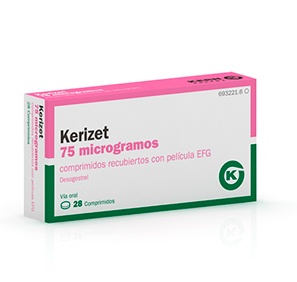
A blister pack of Kerizet contains 28 round film-coated tablets of white color. Each box contains 1, 3, or 6 blister packs.
Not all package sizes may be available.
Marketing Authorization Holder and Manufacturer
Marketing Authorization Holder:
Kern Pharma, S.L.
Venus, 72 - Pol. Ind. Colón II
08228 Terrassa - Barcelona
Spain
Manufacturer:
Laboratorios León Farma, S.A.
Pol. Ind. Navatejera.
C/ La Vallina s/n
24193 - Villaquilambre, León.
Spain
This medicine is authorized in the member states of the European Economic Area with the following names:
Austria: Grystella 75 Mikrogramm Filmtabletten
Spain: Kerizet 75 micrograms film-coated tablets EFG
Poland: Limetic
United Kingdom (Northern Ireland): Desogestrel 75 microgram film-coated tablets
Date of the Last Revision of this Prospectus: May 2024
Detailed and updated information on this medicine is available on the website of the Spanish Agency for Medicines and Health Products (AEMPS) www.aemps.gob.es
-

- Country of registration
- Dosage formTABLET, 75 micrograms
- ATC codeG03AC09
- Average pharmacy price3.98 EUR
- Active substance
- Prescription requiredYes
- Manufacturer
- This information is for reference only and does not constitute medical advice. Always consult a doctor before taking any medication. Oladoctor is not responsible for medical decisions based on this content.
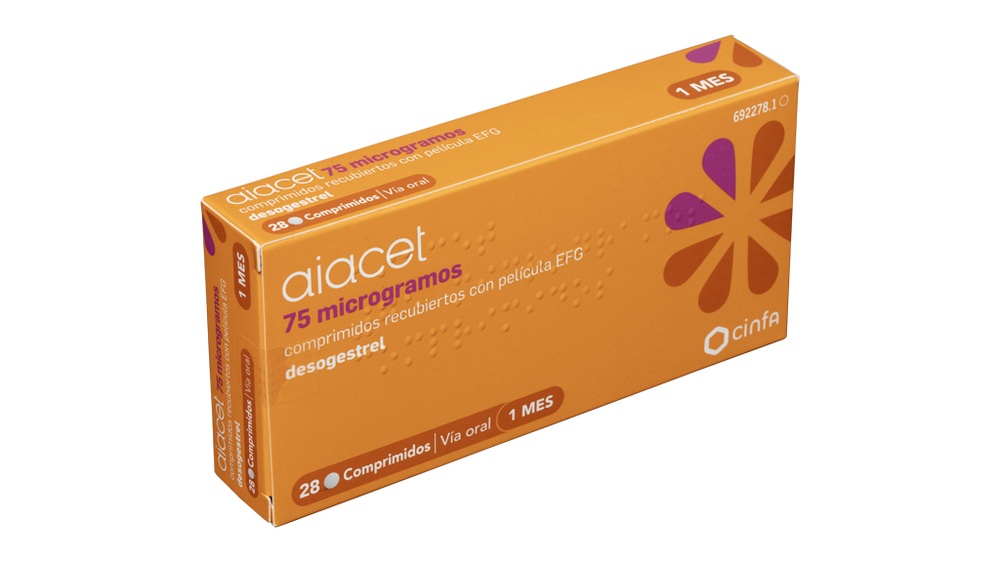
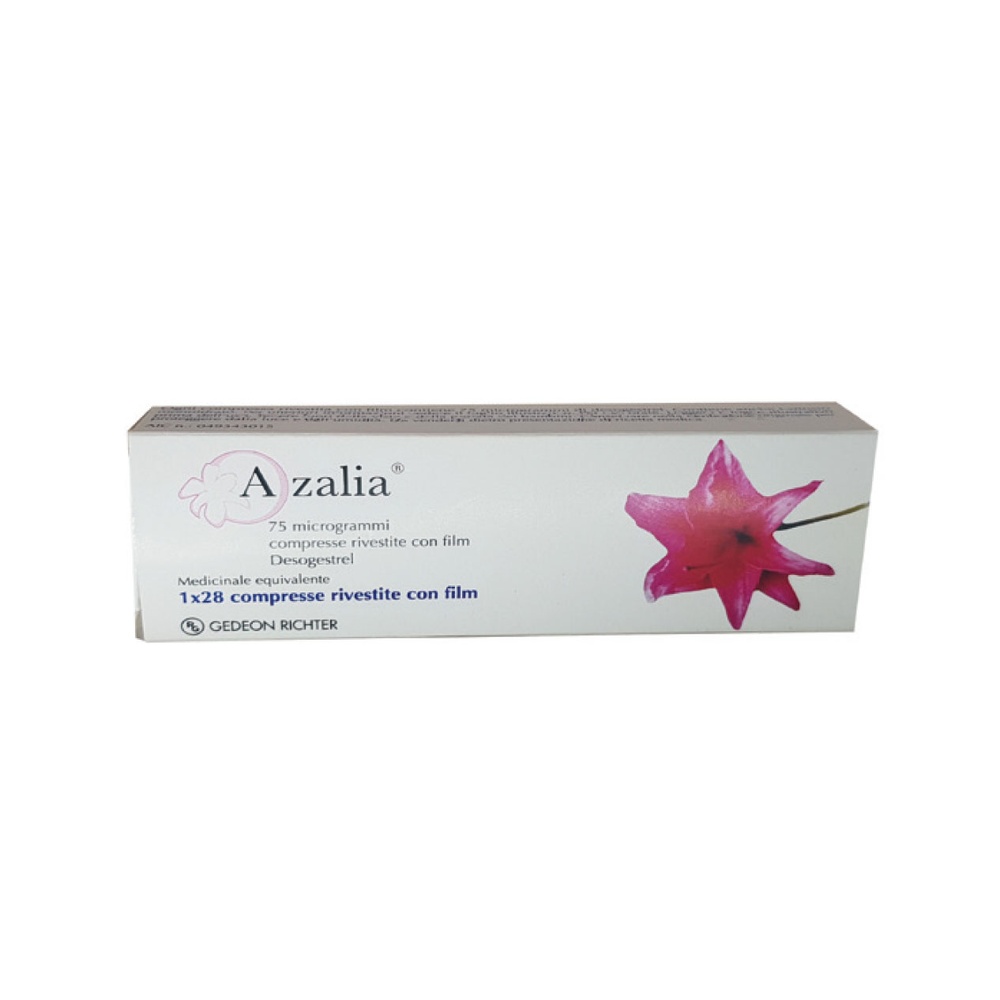
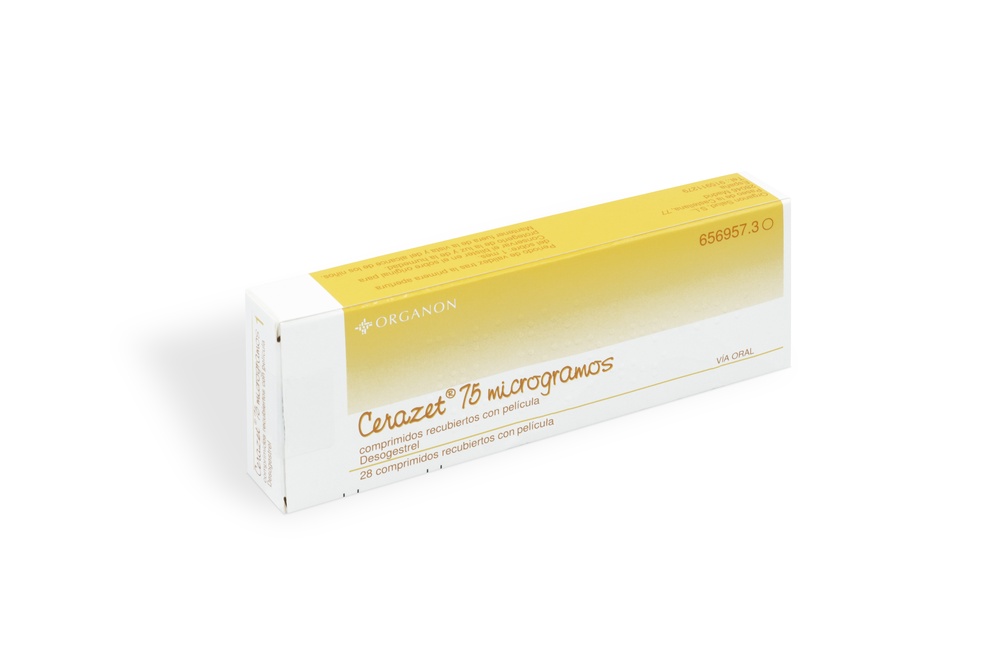
- Alternatives to KERIZET 75 micrograms FILM-COATED TABLETSDosage form: TABLET, 75 microgramsActive substance: desogestrelManufacturer: Laboratorios Cinfa S.A.Prescription requiredDosage form: TABLET, 75 µgActive substance: desogestrelManufacturer: Gedeon Richter Plc.Prescription requiredDosage form: TABLET, 75 µgActive substance: desogestrelManufacturer: Organon Salud S.L.Prescription required
Online doctors for KERIZET 75 micrograms FILM-COATED TABLETS
Discuss questions about KERIZET 75 micrograms FILM-COATED TABLETS, including use, safety considerations and prescription review, subject to medical assessment and local regulations.




Get KERIZET 75 micrograms FILM-COATED TABLETS Prescription Online
Fill in a 2-min form
Tell us your symptoms, history, and what medicine you're requesting.
Pick a doctor or let us assign
Choose a specialist or we'll match you with the next available doctor.
Doctor reviews your case
Usually within 30 minutes. They may ask follow-up questions via chat.
Collect from any pharmacy
Electronic prescription sent to your email — valid across Spain.
Frequently Asked Questions
KERIZET 75 micrograms FILM-COATED TABLETS requires a prescription in Spain. You can check with a doctor online whether this medicine may be appropriate for your situation.
The active ingredient in KERIZET 75 micrograms FILM-COATED TABLETS is desogestrel. This information helps identify medicines with the same composition but different brand names.
The average pharmacy price for KERIZET 75 micrograms FILM-COATED TABLETS is around 3.98 EUR. Prices may vary depending on the manufacturer and dosage form.
KERIZET 75 micrograms FILM-COATED TABLETS is manufactured by Kern Pharma S.L.. Pharmacy brands and packaging may differ depending on the distributor.
Doctors such as Family doctors, Psychiatrists, Dermatologists, Cardiologists, Endocrinologists, Gastroenterologists, Pulmonologists, Nephrologists, Rheumatologists, Hematologists, Infectious disease physicians, Allergists, Geriatricians, Paediatricians, Oncologists may assess whether KERIZET 75 micrograms FILM-COATED TABLETS is appropriate, depending on your situation and local regulations. You can book an online consultation to discuss your symptoms and possible next steps.
Spain has a well-developed healthcare infrastructure across major cities such as Madrid, Barcelona, Valencia, and Seville. Pharmacies are widely available and operate under strict regulations, ensuring access to prescribed medications.
You can buy KERIZET 75 micrograms FILM-COATED TABLETS in Madrid, Barcelona, Seville, or Valencia at any local pharmacy with a valid prescription.
To obtain a prescription, you can use Oladoctor:
Other medicines with the same active substance (desogestrel) include AIACET 75 micrograms FILM-COATED TABLETS, AZALIA 75 micrograms FILM-COATED TABLETS, CERAZET 75 micrograms FILM-COATED TABLETS. These may have different brand names or formulations but contain the same therapeutic ingredient. Always consult a doctor before switching or starting a new medicine.
