


Zolpidem Sandoz 10 mg comprimidos recubiertos con película

Prescription request online
A doctor will review your case and decide whether a prescription is medically appropriate.

Talk to a doctor about this medicine
Discuss your symptoms and possible next steps in a quick online consultation.



How to use ZOLPIDEM SANDOZ 10 mg FILM-COATED TABLETS
Contents of the leaflet
- Introduction
- What is Zolpidem Sandoz and what is it used for
- What you need to know before taking Zolpidem Sandoz
- How to take Zolpidem Sandoz
- Possible side effects
- Storage of Zolpidem Sandoz
- Package contents and additional information
Introduction
Package Leaflet: Information for the Patient
Zolpidem Sandoz 10 mg film-coated tablets EFG
zolpidem tartrate
Read the entire package leaflet carefully before starting to take this medication, as it contains important information for you.
- Keep this package leaflet, as you may need to read it again.
- If you have any questions, consult your doctor or pharmacist.
- This medication has been prescribed to you only, and you should not give it to others, even if they have the same symptoms as you, as it may harm them.
- If you experience side effects, consult your doctor or pharmacist, even if they are not listed in this package leaflet. See section 4.
Contents of the package leaflet:
- What is Zolpidem Sandoz and what is it used for
- What you need to know before taking Zolpidem Sandoz
- How to take Zolpidem Sandoz
- Possible side effects
- Storage of Zolpidem Sandoz
- Contents of the pack and further information
1. What is Zolpidem Sandoz and what is it used for
Zolpidem is used for the short-term treatment of insomnia in adults.
Do not take this medication for a long time. The duration of treatment should be as short as possible, as the risk of dependence increases with the duration of treatment.
It is only used when sleep disorders are severe, disabling, or cause extreme distress to the patient.

Not sure if this medicine is right for you?
Discuss your symptoms and treatment with a doctor online.
2. What you need to know before taking Zolpidem Sandoz
Do not take Zolpidem Sandoz
- if you are allergic to zolpidem or any of the other ingredients of this medication (listed in section 6),
- if you have severe muscle weakness (myasthenia gravis),
- if you have brief pauses in breathing during sleep (sleep apnea syndrome),
- if you have acute and/or severe respiratory weakness (respiratory failure),
- if you have severe liver problems (liver failure),
- if you have experienced sleepwalking or other unusual behaviors while sleeping after taking zolpidem or other medications containing zolpidem. This may include driving, eating, making phone calls, or having sex without being fully awake.
Warnings and precautions
Consult your doctor or pharmacist before starting to take Zolpidem Sandoz.
General
Before treatment with zolpidem
- the cause of sleep disturbances should be clarified and the possibility of treating it without medication should be considered,
- any underlying disease should be treated.
If your sleep problems do not stop after 7 to 14 days of treatment with zolpidem, your doctor will identify, whenever possible, your sleep problem and the factors that cause it.
Tolerance
Repeated use of hypnotics for several weeks can lead to loss of efficacy(tolerance).
Dependence
Taking zolpidem can lead to the development of abuse and/or physical or psychological dependence. The risk of dependence is higher when zolpidem is used for more than 4 weeks. The risk of abuse and dependence is higher in patients with a history of mental disorders and/or alcohol, illicit substance, or drug abuse. Inform your doctor if you have had any mental disorder or problems with abuse or dependence on alcohol, substances, or drugs.
Withdrawal symptoms
If physical dependence has developed, sudden interruption of treatment may be accompanied by withdrawal symptoms such as headache, muscle pain, anxiety, and unusual tension, restlessness, confusion, and irritability. In severe cases, loss of sense of reality, personality disorders, auditory disturbances (hyperacusis), numbness and tingling in the limbs, hypersensitivity to light, noise, and physical contact, hallucinations, or epileptic seizures may occur. Therefore, it is recommended to discontinue treatment by gradually reducing the dose. Zolpidem may cause withdrawal symptoms even within the dose interval.
When stoppingtreatment, temporary withdrawal symptomsmay appear, and symptoms that were present before treatment may reappear, and accompanying reactions may increase, including mood changes, anxiety, and restlessness. Since the risk of withdrawal symptoms or interruption is higher after sudden interruption of treatment, it is recommended to discontinue treatment by gradually reducing the dose.
When taking zolpidem according to the recommended dosage and duration of use, as well as precautions and warnings, the occurrence of withdrawal symptoms or interruption at the end of treatment is minimal.
Zolpidem is not recommended for the basic treatment of certain mental illnesses (psychosis).
Depression
Like other hypnotic or sedative medications, zolpidem should be used with caution in patients with symptoms of depressionor anxiety accompanied by depression. In certain circumstances, it may increase depressive symptoms if there is no adequate treatment of the underlying disease with appropriate medications (antidepressants). This may increase the risk of suicide in these patients. Depression that was previously unrecognized may appear due to zolpidem. Some studies show a higher incidence of suicide or attempted suicide in patients taking certain sleep aids or sedatives, including zolpidem.
However, it has not been established whether this is due to medical treatment or if it may have other causes.
Inform your doctor immediately if you have suicidal thoughts (thoughts of harming yourself or committing suicide) or suicidal behavior.
Memory loss (amnesia)
Hypnotic medications can induce limited, temporary memory loss (anterograde amnesia). This means that (usually a few hours) after taking this medication, you may take actions that you will not be able to remember later. This may also include inappropriate behavior. This risk depends on the dose level. To minimize this risk, you should ensure that you can sleep uninterrupted for 8 hours.
Psychiatric and "paradoxical" reactions
Zolpidem may cause, especially in elderly patients, psychiatric reactions and so-called "paradoxical" reactions, such as inner restlessness, increased sleep disturbances, agitation, irritability, aggression, delirium (false beliefs), tantrums, nightmares, hallucinations (seeing, hearing, or feeling things that are not there), abnormal behavior, and other behavioral disorders (see section 4). If this occurs, treatment with zolpidem should be discontinued (see section 4).
Somnambulism
Cases of sleepwalking and associated behaviors have also been reported in patients who had taken zolpidem and were not fully awake. This includes "sleep-driving", preparing and eating food, making phone calls, or having sex while patients are not able to remember these actions when they wake up. If you observe any of the above behaviors, discontinue treatment with zolpidem immediately and contact your doctor, as this sleep behavior can put you and others at serious risk of injury. Drinking alcohol or using other medications at the same time that cause drowsiness may increase the risk of this sleep pattern.
Psychomotor impairment
Psychomotor impairment the next day (see also "Driving and use of machines")
Like other hypnotic or sedative medications, zolpidem has a depressant effect on the central nervous system.
The day after taking zolpidem, the risk of psychomotor impairment, including impaired driving ability, may increase if:
- you take this medication less than 8 hours before performing activities that require your alertness,
- you take a higher dose than the recommended dose,
- you take zolpidem while already taking another central nervous system depressant or other medications that increase zolpidem in your blood, or while drinking alcohol, or while taking drugs or medications.
Take the full dose immediately at bedtime.
Do not take another dose during the same night.
The use of zolpidem has been associated with an increased risk of falls. Falls can be caused by side effects such as coordination problems, muscle weakness, dizziness, drowsiness, and fatigue. The risk of falls is higher in elderly patients and if a higher dose than recommended is used.
Impairment of respiratory and hepatic function.
Patients with chronic respiratory failure or hepatic function disordersshould be treated with caution, and your doctor may prescribe a lower dose of zolpidem (see also section 3).
Due to the risk of brain damage, patients with severe hepatic dysfunction should not receive treatment with zolpidem.
Conduction disorder
Patients with a certain congenital conduction disorder ("long QT syndrome") should be treated with caution. Your doctor will carefully weigh the benefits against the risks before treatment with zolpidem.
Elderly and debilitated patients
Should receive a lower dose (see section 3). In elderly patients, caution is required due to the risk of falls, especially when getting up at night.
Children and adolescents
The use of zolpidem is not recommended in children and adolescents under 18 years of age, as there are insufficient clinical data available for its use in this age group.
Other medications and Zolpidem Sandoz
Inform your doctor or pharmacist if you are taking, have recently taken, or may take any other medication.
The following medications may influence the effect of zolpidem or be influenced in their effect:
When taking zolpidem with the following medications, drowsiness and psychomotor impairment the next day, including impaired driving ability, may increase the next day:
- medications for certain mental disorders(antipsychotics),
- medications for sleep disorders(hypnotics),
- medications to reduce or alleviate anxiety,
- medications for depression,
- medications for moderate to severe pain (narcotic analgesics),
- medications for epilepsy,
- anesthetic medications,
- medications for allergic rhinitis, skin rash, or other allergies that may cause drowsiness (sedating antihistamines).
The concomitant use of zolpidem and opioids (potent analgesics, substitution therapy medications, or certain cough medications) increases the risk of drowsiness, breathing difficulties (respiratory depression), coma, and may be life-threatening. Due to this, concomitant use should only be considered when no other treatment options are possible.
However, if your doctor prescribes zolpidem together with opioids, your doctor should limit the dose and duration of concomitant treatment.
Inform your doctor about all opioid medications you are taking and strictly follow your doctor's dosage recommendations. It may be helpful to inform friends or family members to be aware of the signs and symptoms mentioned above. Contact your doctor when you experience such symptoms.
The combination with opioid-type analgesics (narcotic analgesics) may also lead to accelerated development of dependence.
When taking zolpidem with antidepressants such as bupropion, desipramine, fluoxetine, sertraline, and venlafaxine, you may see things that are not real (hallucinations).
It is not recommended to take zolpidem with fluvoxamine or ciprofloxacin.
With the simultaneous administration of muscle relaxants, their effect may increase, especially in elderly patients and at higher doses (risk of falls!).
Medications that increase the activity of certain liver enzymes (in particular, the P450 CYP3A4 isoenzyme) may weaken the effect of zolpidem (e.g., rifampicin, carbamazepine, phenytoin, St. John's Wort). Concomitant use of zolpidem with St. John's Wort is not recommended.
On the other hand, certain antifungal medications (azolic antifungals, e.g., ketoconazole) and certain antibiotics (macrolide antibiotics), which reduce the effect of these liver enzymes, may increase the effect of zolpidem.
Taking Zolpidem Sandoz with food, drinks, and alcohol
You should not consume alcohol during treatment, as it may unpredictably change and intensify the effect of zolpidem. The ability to perform tasks that require increased concentration may also be affected. Grapefruit juice may increase the effect of zolpidem.
Pregnancy, breastfeeding, and fertility
Pregnancy
The use of zolpidem during pregnancy is not recommended. If you are pregnant or breastfeeding, or think you may be pregnant, or plan to become pregnant, consult your doctor.
If used during pregnancy, there is a risk that the baby may be affected.
Some studies have shown an increased risk of cleft lip and palate (sometimes called "hare lip" in newborns.
Reduced fetal movement and fetal heart rate variability may occur after taking zolpidem during the second and/or third trimester of pregnancy.
If you take zolpidem in the last months of pregnancy or during childbirth, your baby may experience muscle weakness, decreased body temperature, and moderate respiratory failure (respiratory depression).
If you take this medication regularly at the end of pregnancy, your baby may develop symptoms of physical dependence and may be at risk of developing withdrawal symptoms such as agitation or tremors. In this case, the newborn should be closely monitored after birth.
Breastfeeding
Since zolpidem passes into breast milk only in small amounts, zolpidem should not be taken during breastfeeding.
Fertility
There are no available data on the effect on fertility.
Driving and use of machines
Zolpidem has a significant effect on the ability to drive and use machines, such as "driving while drowsy" or driving with excessive fatigue "driving while asleep". The day after taking zolpidem (as with other sleep aids), you should consider the following:
- you may feel drowsy, sleepy, dizzy, or confused,
- you may take longer to make decisions,
- you may experience blurred or double vision,
- your alertness may be reduced.
In order to reduce the aforementioned effects, a minimum interval of 8 hours is recommended between the administration of zolpidem and driving, using machinery, or performing any work at heights.
Do not consume alcohol or any other psychoactive substance while taking zolpidem, as this may increase the aforementioned effects.
Zolpidem Sandoz contains lactose and sodium
This medication contains lactose. If your doctor has told you that you have an intolerance to certain sugars, consult with them before taking this medication.
This medication contains less than 1 mmol of sodium (23 mg) per film-coated tablet, i.e., it is essentially "sodium-free".
3. How to take Zolpidem Sandoz
Follow the administration instructions of this medication as indicated by your doctor. Consult your doctor or pharmacist if you have any doubts.
The recommended dose is:
Adults
The recommended dose is 1 tablet of zolpidem every 24 hours (10 mg of zolpidem tartrate). In some patients, a lower dose may be prescribed. The tablets should be taken:
- as a single dose,
- right before bedtime.
Make sure that after taking this medication, you wait at least 8 hours before engaging in activities that require your attention.
Do not exceed the dose of 10 mg every 24 hours.
Elderly and debilitated patients
A dose of 1/2 film-coated tablet (5 mg) of zolpidem is recommended for the elderly or debilitated patients who may be particularly sensitive to zolpidem. This dose should only be increased to 10 mg (1 film-coated tablet) if the effect is insufficient and the medication is well tolerated.
Respiratory dysfunction or hepatic impairment
In patients with respiratory dysfunction or hepatic impairment, the dose should be 1/2 film-coated tablet (5 mg) of zolpidem.
Children and adolescents
The use of zolpidem is not recommended in children and adolescents under 18 years of age, as there is insufficient clinical data available for its use in this age group.
Method of administration
Zolpidem should be taken with some liquid (water) immediately before bedtime or in bed.
The tablet can be divided into equal doses.
How long should you take Zolpidem Sandoz?
The duration of treatment should be as short as possible. In general, it should be from a few days to 2 weeks and should not exceed 4 weeks, including the gradual withdrawal phase.
In individual cases, treatment may be necessary for a longer period. However, this should not be done without a medical reevaluation of your condition.
If you take more Zolpidem Sandoz than you should
In case of overdose, consult a doctor immediately.
The signs of overdose (mild) may include drowsiness, dizziness, blurred vision, difficulty speaking, decreased blood pressure, unsteady gait and movement, muscle weakness, mental confusion, and hallucinations. In cases of severe poisoning, it can range from deep sleep to unconsciousness, agitation, respiratory dysfunction, and circulatory collapse. Cases of overdose with zolpidem (alone or in combination with other central depressants, including alcohol) with serious consequences (including fatal events) have been reported.
If you have taken more Zolpidem Sandoz than you should, consult your doctor immediately or call the Toxicology Information Service, phone: 91 562 04 20, indicating the medication and the amount used.
If you forget to take Zolpidem Sandoz
Do not take a double dose to make up for forgotten doses. Continue taking zolpidem as prescribed by your doctor.
If you stop taking Zolpidem Sandoz
If you want to stop treatment, talk to your doctor first. Do not stop the medication on your own without medical advice. Since the risk of withdrawal symptoms is higher after sudden treatment interruption, your doctor will advise you to finish the treatment by gradually reducing the dose, consult the section 2 Warnings and precautions, Withdrawal.
If you have any other questions about the use of this medication, ask your doctor or pharmacist.
Started taking the medicine and have questions?
Discuss your symptoms and treatment with a doctor online.
4. Possible side effects
Like all medications, this medication can cause side effects, although not everyone will experience them.
Stop taking zolpidem and consult a doctor or go to the hospital immediately if:
You have an allergic reaction (angioedema). These signs may include: itchy skin rash, urticaria or hives, swelling of hands, feet, ankles, face, lips, or throat that can cause difficulty swallowing or breathing.
There is evidence of dose-dependent side effects, especially those affecting the central nervous system. To reduce these side effects, zolpidem should be taken directly before bedtime or in bed, as recommended. Side effects are more common in elderly patients.
Inform your doctor as soon as possible if you experience any of the following side effects:
Common(may affect up to 1 in 10 people):
- drowsiness,
- increased insomnia,
- nightmares,
- fatigue,
- headache,
- feeling dizzy,
- cognitive disorders such as temporary memory loss (anterograde amnesia, which may be associated with inappropriate behavior),
- hallucinations,
- increased activity,
- depression,
- diarrhea,
- feeling sick (nausea) or being sick (vomiting),
- abdominal pain,
- upper respiratory tract infection,
- lower respiratory tract infection,
- back pain.
Uncommon(may affect up to 1 in 100 people):
- appetite disorder,
- confusion,
- irritability,
- restlessness,
- aggression,
- sleepwalking or other unusual behaviors during sleep, such as driving, eating, talking on the phone, or having sex during sleep without being fully awake (see the section "Warnings and precautions").
- euphoric mood,
- sensory disorder such as tingling or numbness (paresthesia),
- tremor,
- attention deficit,
- speech disorder,
- double vision,
- blurred vision,
- elevated liver enzymes,
- rash,
- itching (pruritus),
- excessive sweating (hyperhidrosis),
- joint pain,
- muscle pain,
- muscle cramps,
- neck pain,
muscle weakness.
Rare(may affect up to 1 in 1,000 people)
- sexual dysfunction,
- vision impairment,
- liver damage (hepatocellular, cholestatic, or mixed) (see also section 2 "what you need to know before taking Zolpidem Sandoz" and section 3),
- hives (urticaria),
- unsteadiness while walking,
- risk of falls (especially in elderly patients or if Zolpidem is not taken as prescribed).
- clouding of consciousness.
Very rare(may affect less than 1 in 10,000 people):
- thinking things that are not true (delusions),
- dependence (withdrawal symptoms or interruption may occur after treatment completion),
- breathing impairment (respiratory depression).
Frequency not known(frequency cannot be estimated from available data):
- tantrums,
- abnormal behavior,
- development of tolerance,
- persistent swelling of the skin and mucous membranes (angioedema),
- abuse.
Reporting of side effects:
If you experience any side effects, consult your doctor or pharmacist, even if it is a possible side effect not listed in this leaflet. You can also report them directly through the Spanish Pharmacovigilance System for human use medications: https://www.notificaram.es. By reporting side effects, you can help provide more information on the safety of this medication.
5. Storage of Zolpidem Sandoz
Keep this medication out of the reach and sight of children.
Do not use this medication after the expiration date shown on the packaging and blister after "CAD/EXP". The expiration date is the last day of the month indicated.
Store in the original packaging to protect it from light.
This medication does not require any special storage temperature.
Medications should not be thrown away through wastewater or household waste. Deposit the packaging and medications you no longer need at the SIGRE point in the pharmacy. If in doubt, ask your pharmacist how to dispose of the packaging and medications you no longer need. This way, you will help protect the environment.
6. Package contents and additional information
Zolpidem Sandoz composition
- The active ingredient is zolpidem tartrate. Each film-coated tablet contains 10 mg of zolpidem tartrate.
- The other ingredients are:
Tablet core:succinic acid, sodium starch glycolate (type A), microcrystalline cellulose, lactose monohydrate, magnesium stearate, anhydrous colloidal silica.
Tablet coating:lactose monohydrate, macrogol 4000, hypromellose, titanium dioxide (E 171).
Product appearance and package contents
White, glossy, oblong, biconvex film-coated tablets with a score line on one side.
The film-coated tablets are presented in PVC/Aluminum blisters and packaged in a cardboard box.
The packages contain 10, 14, 20, 28, 30, 30x1, 50, 98, 100 film-coated tablets.
Only some package sizes may be marketed.
Marketing authorization holder and manufacturer
Marketing authorization holder:
Sandoz Farmacéutica, S.A.
Centro Empresarial Parque Norte
Edificio Roble
C/ Serrano Galvache, 56
28033 Madrid
Spain
Manufacturer:
Salutas Pharma GmbH
Otto-von-Guericke-Alle 1
39179 Barleben
Germany
or
Rowa Pharmaceuticals Ltd
Newton, Bantry
Co. Cork
Ireland
This medication is authorized in the Member States of the European Economic Area under the following names:
Belgium: Zolpidem Sandoz 10 mg filmomhulde tabletten
Denmark: Zolpidem "Hexal" filmovertrukne tabletter
Germany: Zolpidem HEXAL 10 mg Filmtabletten
Ireland: Zolnod 10 mg film-coated tablets
Italy: ZOLPIDEM SANDOZ 10 mg compresse rivestite con film
Netherlands: ZOLPIDEMTARTRAAT SANDOZ 10 MG, FILMOMHULDE TABLETTEN
Sweden: Zolpidem Hexal 10 mg filmdragerad tablett
Date of the last revision of this leaflet:February 2022
Detailed and updated information on this medication is available on the website of the Spanish Agency for Medicines and Health Products (AEMPS) http://www.aemps.gob.es.
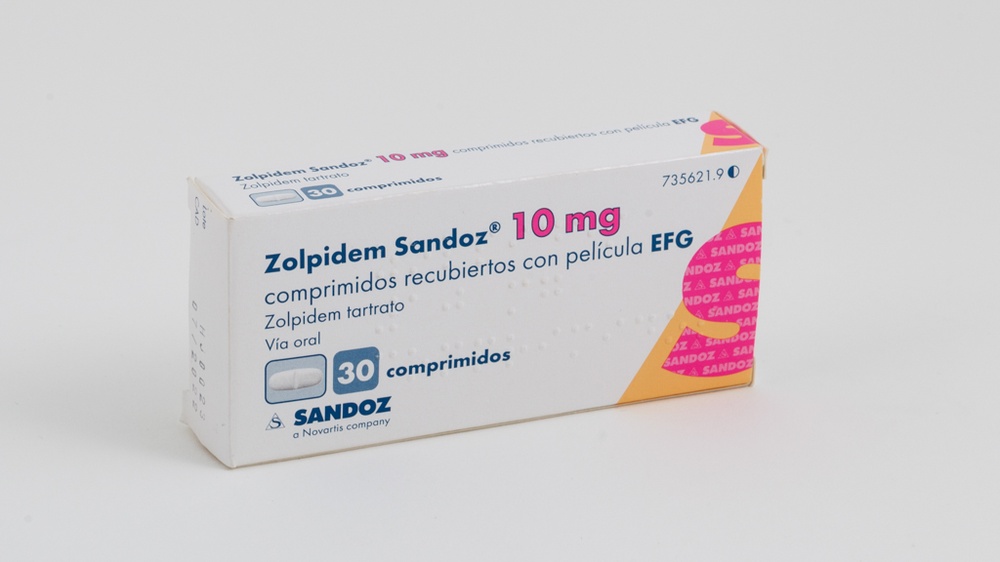
Illustrative image Image: AEMPS – CIMA - Country of registration
- Dosage formTABLET, 10 mg zolpidem
- ATC codeN05CF02
- Average pharmacy price2.78 EUR
- Active substance
- Prescription requiredYes
- Manufacturer
- CompositionLACTOSA MONOHIDRATO (55,0 mg mg), CARBOXIMETILALMIDON SODICO (5,0 mg mg), LACTOSA MONOHIDRATO (2,16 mg mg)
- This information is for reference only and does not constitute medical advice. Always consult a doctor before taking any medication. Oladoctor is not responsible for medical decisions based on this content.
- Alternatives to ZOLPIDEM SANDOZ 10 mg FILM-COATED TABLETS
 DAGAN 10 mg ORALLY DISPERSIBLE TABLETSIllustrative imageDosage form: ORALLY DISINTEGRATING TABLET/LIOTAB, 10 mgActive substance: zolpidemManufacturer: Meiji Pharma Spain S.A.Prescription requiredDAGAN 5 mg ORALLY DISINTEGRATING TABLETSIllustrative imageDosage form: ORALLY DISINTEGRATING TABLET/LIOTAB, 5 mgActive substance: zolpidemManufacturer: Meiji Pharma Spain S.A.Prescription requiredDALPARAN 10 mg FILM-COATED TABLETSIllustrative imageDosage form: TABLET, 10 mg zolpidem tartrateActive substance: zolpidemManufacturer: Sanofi Aventis S.A.Prescription required
Online doctors for ZOLPIDEM SANDOZ 10 mg FILM-COATED TABLETS
Discuss questions about ZOLPIDEM SANDOZ 10 mg FILM-COATED TABLETS, including use, safety considerations and whether a prescription is appropriate, subject to medical assessment and local regulations.









Frequently Asked Questions
ZOLPIDEM SANDOZ 10 mg FILM-COATED TABLETS requires a prescription in Spain. You can check with a doctor online whether this medicine may be appropriate for your situation.
The active ingredient in ZOLPIDEM SANDOZ 10 mg FILM-COATED TABLETS is zolpidem. This information helps identify medicines with the same composition but different brand names.
The average pharmacy price for ZOLPIDEM SANDOZ 10 mg FILM-COATED TABLETS is around 2.78 EUR. Prices may vary depending on the manufacturer and dosage form.
ZOLPIDEM SANDOZ 10 mg FILM-COATED TABLETS is manufactured by Sandoz Farmaceutica S.A.. Pharmacy brands and packaging may differ depending on the distributor.
Doctors such as Psychiatrists, Neurologists, General medicine doctors, Pain medicine doctors, Anaesthesiologists may assess whether ZOLPIDEM SANDOZ 10 mg FILM-COATED TABLETS is appropriate, depending on your situation and local regulations. You can book an online consultation to discuss your symptoms and possible next steps.
The prescription is issued by a doctor after assessing your health. In Spain, ZOLPIDEM SANDOZ 10 mg FILM-COATED TABLETS is then dispensed in pharmacies with that prescription. An online consultation does not guarantee that a prescription will be issued: the decision always rests with the doctor.
To request an assessment, you can use Oladoctor:
Other medicines with the same active substance (zolpidem) include DAGAN 10 mg ORALLY DISPERSIBLE TABLETS, DAGAN 5 mg ORALLY DISINTEGRATING TABLETS, DALPARAN 10 mg FILM-COATED TABLETS. These may have different brand names or formulations but contain the same therapeutic ingredient. Always consult a doctor before switching or starting a new medicine.
