



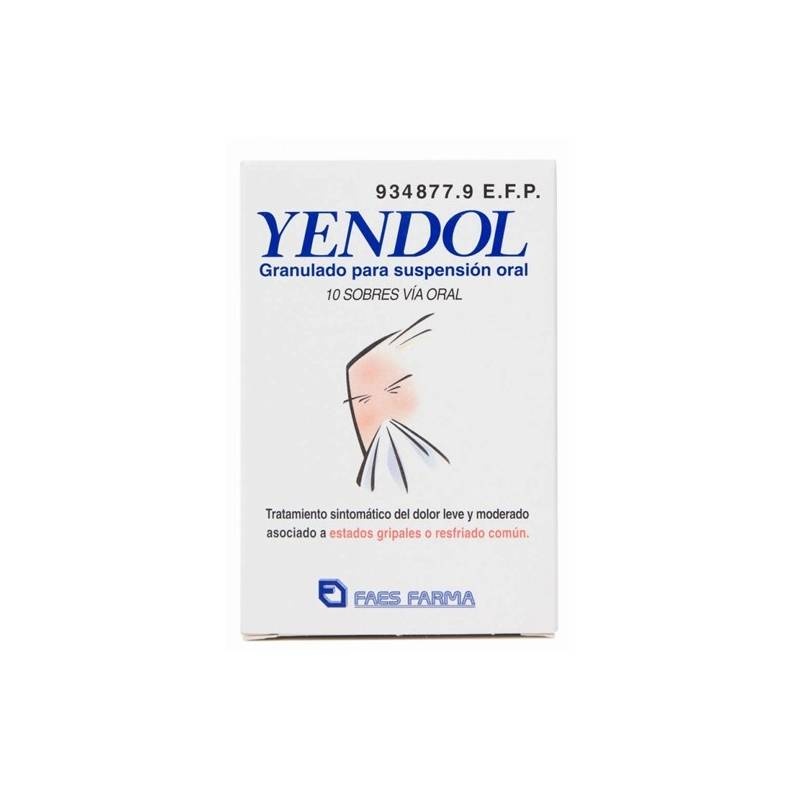
YENDOL 0.500 g/0.200 g/0.030 g/0.0030 g Oral Solution/Suspension

Prescription review online
A doctor will review your case and decide whether a prescription is medically appropriate.

Talk to a doctor about this medicine
Discuss your symptoms and possible next steps in a quick online consultation.



How to use YENDOL GRANULADO FOR ORAL SUSPENSION
Contents of the leaflet
- Introduction
- What Yendol is and what it is used for
- What you need to know before taking Yendol
- How to take Yendol
- Possible Adverse Effects
- Conservation of Yendol
- Package contents and additional information
Introduction
Package Leaflet: Information for the User
Yendol Granules for Oral Suspension
paracetamol / salicylamide / chlorphenamine maleate / anhydrous caffeine
Read the entire package leaflet carefully before starting to take this medication, as it contains important information for you.
Follow the administration instructions for the medication contained in this package leaflet or as indicated by your doctor or pharmacist.
- Keep this package leaflet, as you may need to read it again.
- If you need advice or more information, consult your pharmacist.
- If you experience side effects, consult your doctor or pharmacist, even if they are not listed in this package leaflet. See section 4.
- You should consult a doctor if your condition worsens or does not improve after 5 days of treatment or if the fever persists for more than 3 days.
Contents of the Package Leaflet
- What Yendol is and what it is used for
- What you need to know before taking Yendol
- How to take Yendol
- Possible side effects
- Storage of Yendol
- Package contents and additional information
1. What Yendol is and what it is used for
This medication achieves its effects thanks to the combination of different active ingredients: paracetamol and salicylamide (reduce pain and fever), chlorphenamine (relieves nasal secretion), and caffeine (counteracts the state of depression).
Yendol is used in adults and adolescents over 16 years old for the relief of symptoms in catarrhal and flu-like conditions that involve fever, mild or moderate pain, headache, and nasal secretion.
You should consult a doctor if your condition worsens or does not improve after 5 days of treatment or if the fever persists for more than 3 days.

Not sure if this medicine is right for you?
Discuss your symptoms and treatment with a doctor online.
2. What you need to know before taking Yendol
Do not take Yendol
- If you are allergic to paracetamol, salicylamide, chlorphenamine, caffeine, or any of the other components of this medication (listed in section 6).
- If you have ever had allergic reactions when taking acetylsalicylic acid, xanthines (such as aminophylline, theophylline, etc.), any non-steroidal anti-inflammatory drug (medications used to relieve inflammation, pain, and reduce fever), or a dye called tartrazine.
- If you are under 16 years old, as the use of salicylates (such as salicylamide) has been linked to Reye's syndrome, a rare but serious disease.
- If you have chronic or recurrent ulcers in the upper part of the intestine (duodenal ulcer) or stomach (gastric ulcer).
- If you have a history of bleeding (blood loss) or gastric perforation after treatment with acetylsalicylic acid, salicylamide, or other non-steroidal anti-inflammatory drugs.
- If you have asthma or nasal polyps associated with asthma that are induced or exacerbated by acetylsalicylic acid.
- If you have blood coagulation disorders such as hemophilia (blood coagulation defect) or hypoprothrombinemia (abnormal decrease in the amount of prothrombin in the blood, which predisposes to the appearance of bleeding).
- If you have severe kidney and/or liver problems (severe renal and/or hepatic insufficiency).
- If you have any liver disease (with or without hepatic insufficiency) or viral hepatitis, as it increases the risk of paracetamol hepatotoxicity.
- If you are being treated with medications to prevent blood coagulation (oral anticoagulants).
- If you are in the third trimester of pregnancy.
Warnings and precautions
Consult your doctor or pharmacist before starting to take Yendol. It is especially important to consult your doctor if you:
- Suffer from certain respiratory diseasessuch as emphysema (a disorder that affects the lungs and causes difficulty breathing), chronic bronchitis, bronchial asthma, or when the cough is accompanied by excessive secretion, or in cases where your symptoms are due to the presence of rhinitis (inflammation and swelling of the nasal mucous membrane characterized by nasal secretion and congestion).
- Suffer from glaucomaof narrow angle (sudden and episodic elevations of ocular pressure), pyloricduodenal obstruction(in the muscular valve between the stomach and the small intestine), obstruction of the bladder neckor prostatic hyperplasia(difficulty urinating or prostate disease), as your symptoms may worsen.
- Are allergicto certain medications called antihistamines(medications that treat the symptoms of allergic rhinitis and/or urticaria).
- Have cardiac arrhythmias, have hyperthyroidism, suffer from anxietyepisodes.
- Are being treated with anti-inflammatory medications or other types of medications (antiplatelet agents, corticosteroids, certain antidepressants), as they may interact with Yendol and increase the risk of adverse effects (see the section "Other medications and Yendol").
- Are an elderly patient (over 65 years old), as you are at greater risk of experiencing adverse effects.
- Suffer from kidney or liver disease, as a dose adjustment may be necessary.
- Have a glucose-6-phosphate dehydrogenase deficiency (6GPD) (can cause hemolytic anemia).
During treatment with Yendol, inform your doctor immediately if you have serious diseases, such as severe renal insufficiency or sepsis (when bacteria and their toxins circulate in the blood, causing damage to organs), or if you suffer from malnutrition, chronic alcoholism, or are also taking flucloxacillin (an antibiotic). A serious disease called metabolic acidosis (an anomaly in the blood and fluids) has been reported in patients in these situations when paracetamol is used at regular doses for a prolonged period or when paracetamol is taken with flucloxacillin. The symptoms of metabolic acidosis may include: severe breathing difficulties with deep and rapid breathing, drowsiness, feeling of discomfort (nausea) and vomiting.
Interrupt treatment with this medication and consult your doctor if you detect blood in stools or vomit, or if you suffer from excessive fatigue, as they may be symptoms of stomach bleeding.
Avoid using this medication if you have recently undergone or are scheduled to undergo any surgical intervention or dental extractionwithin the next 7 days.
This medication should not be used regularly to prevent possible discomfort caused by vaccinations.
Do not take more medication than recommended in section 3 "How to take Yendol".
Special attention should be paid to the simultaneous use of this medication with others that contain any of its active ingredients.
The simultaneous use of this medication with other medications that contain paracetamol should be avoided, as high doses can lead to liver damage. If another medication that contains paracetamol is administered, the maximum dose of paracetamol should not be exceeded (3 g every 24 hours, with a maximum dose in chronic alcoholics of 2 g/day), taking into account the content of all medications that contain paracetamol.
If you consume alcoholic beverages or are taking sedatives or tranquilizers, you should be especially careful when taking this medication, as they can increase its adverse effects.
Children and Adolescents
Do not use in children or adolescents under 16 years old (see section "Do not take Yendol").
Other medications and Yendol
Inform your doctor or pharmacist if you are using, have recently used, or may need to use any other medication.
Certain medications may interact with Yendol; in these cases, it may be necessary to change the dose or interrupt treatment with one of the medications, so you should not combine their use without consulting your doctor first.
This is especially important in the case of:
- Other pain relief or anti-inflammatory medications (analgesics or anti-inflammatory drugs), such as non-steroidal anti-inflammatory drugs and corticosteroids, as they can increase the risk of gastrointestinal bleeding or ulceration.
- Medications for blood coagulation (oral anticoagulants, heparin). See section "Do not take Yendol".
- Thrombolytics and antiplatelet agents used for the elimination and prevention of thrombus formation.
- Medications to lower blood sugar levels (oral antidiabetics, insulin).
- Sedatives or tranquilizers, for treating sleep disorders, anxiety, etc.
- Medications used to decrease or inhibit stomach acid (antacids) such as cimetidine and ranitidine.
- Antiepileptics (phenytoin, barbiturates such as phenobarbital and methylphenobarbital, valproic acid, carbamazepine, lamotrigine, primidone).
- Oral contraceptives (medication taken orally to prevent pregnancy or other disorders related to female hormone levels).
- Medications used to increase urine elimination (diuretics) such as loop diuretics.
- Medications for treating depression (lithium, tricyclic antidepressants, maprotiline, monoamine oxidase inhibitors, selective serotonin reuptake inhibitors).
- Medications used to treat hypertension or heart disease (digoxin, mexiletine, beta-blockers, angiotensin-converting enzyme inhibitors (ACE inhibitors) or angiotensin II receptor antagonists).
- Medications for treating asthma (adrenergic bronchodilators and theophylline).
- Methotrexate (used for the treatment of cancer and autoimmune diseases such as rheumatoid arthritis).
- Antibiotics such as sulfonamides, isoniazid, chloramphenicol, flucloxacillin; quinolones such as oxolinic acid, ciprofloxacin; erythromycin, vancomycin.
- Medications used for the treatment of gout (probenecid, benzobromarone).
- Zidovudine (used in the treatment of HIV infections).
- Medications used to prevent rejection in transplants (cyclosporin).
- Medications used for the relief of spasms or contractions of the stomach, intestine, and bladder (anticholinergics).
- Medications used for the treatment of nausea and vomiting (such as domperidone, metoclopramide, tropisetron, granisetron, 5HT3 antagonists).
- Ion exchange resins such as cholestyramine (used to prevent increased cholesterol levels).
- Disulfiram, a medication used for the treatment of chronic alcoholism.
- Sympathomimetics (medications used for the treatment of asthma, or medications to accelerate heart rate).
- Thyroxine, a medication used for the treatment of thyroid diseases.
- Ephedrine, a medication used as a cardiac stimulant.
- Iron supplements for the treatment of anemia.
- Antihistamines, used for the treatment of symptoms of allergic rhinitis and/or urticaria.
- Drugs that are metabolized by cytochrome P450 1A2 (e.g., theophylline, propranolol)
- Ototoxic medications (which can damage the ear).
- Photosensitizing medications (which can cause allergic skin reactions when exposed to sunlight).
Inform your doctor or pharmacist if you are taking flucloxacillin (an antibiotic), due to a serious risk of alteration of blood and fluids (called metabolic acidosis) that requires urgent treatment (see section 2).
Taking Yendol with food, beverages, and alcohol
Taking this medication simultaneously with beverages that contain caffeine may cause nervousness, irritability, or insomnia.
Alcoholic beverages should not be consumed during treatment with this medication. Simultaneous consumption of alcohol during treatment with this medication can increase the risk of adverse effects, both gastrointestinal and on the central nervous system. If you habitually consume alcohol (three or more alcoholic beverages - beer, wine, liquor - per day), taking Yendol may cause stomach bleeding.
Pregnancy and breastfeeding
If you are pregnant or breastfeeding, think you may be pregnant, or plan to become pregnant, consult your doctor or pharmacist before using this medication.
The use of this medication during pregnancy or breastfeeding may be hazardous to the embryo, fetus, or breastfed infant and should be monitored by your doctor.
Pregnancy
Do not take Yendol if you are in the last 3 months of pregnancy, as it may harm the fetus or cause problems during delivery. It may cause kidney and heart problems in your fetus. It may affect your tendency and that of your baby to bleed and delay or prolong delivery more than expected. You should not take Yendol during the first 6 months of pregnancy unless it is clearly necessary and as indicated by your doctor. If you need treatment during this period or while trying to become pregnant, you should take the minimum dose for the shortest possible time. From the 20th week of pregnancy, salicylamide may cause kidney problems in your fetus if taken for more than a few days, which may cause low levels of amniotic fluid surrounding the baby (oligohydramnios) or narrowing of a blood vessel (ductus arteriosus) in the baby's heart. If you need treatment for more than a few days, your doctor may recommend additional checks.
Breastfeeding
It is not recommended to take this medication during breastfeeding without consulting your doctor first. Yendol is excreted in breast milk.
Driving and using machines
Do not drive or operate tools or machines if you feel drowsy or have decreased reaction time until you verify that your ability to perform these activities is not affected by taking this medication.
Yendol contains sucrose
This medication contains 6.56 g of sucrose per dose. Patients with hereditary fructose intolerance (HFI), glucose or galactose absorption problems, or sucrase-isomaltase insufficiency should not take this medication.
Patients with diabetes mellitus should note that this medication contains 6.56 g of sucrose per dose.
Interference with laboratory tests
If you are going to have any diagnostic tests (including blood tests, urine tests, etc.), inform your doctor that you are taking this medication, as it may alter the results.
Athletes
Athletes are informed that this medication contains some components that may result in a positive doping test.
3. How to take Yendol
Follow the administration instructions for the medication contained in this package leaflet or as indicated by your doctor or pharmacist. In case of doubt, ask your doctor or pharmacist.
Always use the lowest effective dose. The administration of the medication depends on whether you have painful or febrile symptoms. As these symptoms disappear, you should stop taking this medication.
The recommended doses are:
- Adults and adolescents over 16 years old:
1 sachet every 8 hours. Do not exceed 5 sachets every 24 hours.
Do not take more than 3 grams of paracetamol every 24 hours (see section "Warnings and precautions").
- Patient with reduced functions (insufficiency) in the liver, kidney, or heart:
Do not take this medication without consulting your doctor first, as the dose should be reduced according to the patient's condition.
- Patient with hyperthyroidism or anxiety
Do not take this medication without consulting your doctor first, as the dose should be reduced.
- Elderly patients (over 65 years old)
Do not take this medication without consulting your doctor first, as they are more prone to experiencing adverse effects.
This medication is administered only orally.
Pour the contents of the sachet into a half glass of water, milk, or juice and stir. Take the medication with meals or with food, especially if you notice digestive discomfort.
Use in children and adolescents
Children under 16 years old should not take this medication.
If you take more Yendol than you should
There is a greater risk of overdose in elderly patients, patients with liver disease (hepatic disease), chronic alcoholics, patients with chronic malnutrition, and patients taking certain medications.
The main symptoms of overdose are: headache, dizziness, ringing in the ears, blurred vision, drowsiness, excessive sweating, nausea, vomiting, and occasionally diarrhea. Jaundice (yellowing of the skin and eyes), loss of appetite, or abdominal pain may also appear.
In relation to paracetamol, overdose can also cause coagulation disorders (blood clots and bleeding).
In case of overdose or accidental ingestion, consult your doctor or pharmacist immediately or go to a medical center immediately or call the Toxicology Information Service, phone: 91 562 04 20, indicating the medication and the amount ingested.
If you forget to take Yendol
Do not take a double dose to make up for forgotten doses.
If you have any other doubts about the use of this medication, ask your doctor or pharmacist.

Started taking the medicine and have questions?
Discuss your symptoms and treatment with a doctor online.
4. Possible Adverse Effects
Like all medicines, this medicine can cause adverse effects, although not all people suffer from them.
Below are the adverse effects associated with each active ingredient of the medicine.
Adverse effects associated with chlorphenamine:
Very common adverse effects (may affect more than 1 in 10 patients):
- drowsiness (feeling of sleep), dizziness and muscle weakness, facial dyskinesia (presence of abnormal and involuntary movements in the facial muscles), motor incoordination, tremor, paresthesia (tingling sensation on the skin),
- blurred vision, diplopia (double vision),
- dryness of the nose and throat, thickening of mucus,
- dry mouth, loss of appetite, alterations in taste or smell, gastrointestinal disorders (nausea, vomiting, diarrhea, constipation, epigastric pain) that can be reduced by taking the medicine with food,
- increased sweating,
- urinary retention or difficulty urinating.
Adverse effects of unknown frequency (cannot be estimated from the available data):
- blood dyscrasias (blood disorders) that can appear with symptoms of hemorrhage (bleeding), sore throat or fatigue,
- hypersensitivity reactions, anaphylactic or allergic acute reaction (cough, difficulty swallowing, palpitations, itching, swelling of eyelids or around the eyes, face, tongue, dyspnea, fatigue), photosensitivity,
- paradoxical excitement (characterized by restlessness, insomnia, tremors, nervousness, delirium, palpitations, and even convulsions), especially at high doses and in children or the elderly,
- tinnitus (perception of noises or buzzing in the ear), acute labyrinthitis (inflammation of the inner ear),
- irregular heartbeats (cardiac arrhythmias, palpitations, tachycardia), usually with overdose,
- hypotension, hypertension, edema (swelling),
- feeling of oppression in the chest, wheezing (high-pitched sounds, like whistling, that occur during breathing when the airways are partially blocked),
- cholestasis (stoppage of bile in its exit to the duodenum), hepatitis or other liver function disorders (with stomach or abdominal pain, dark urine, etc.),
- impotence, premature menstruation.
Adverse effects associated with salicylamide:
Common adverse effects (may affect up to 1 in 10 people)
- paroxysmal bronchospasm (contraction of the bronchial muscle), severe dyspnea (severe breathing difficulty), rhinitis (inflammation of the nasal mucosa characterized by symptoms such as nasal mucosity, sneezing, nasal congestion and/or nasal itching),
- gastric ulcer, duodenal ulcer, gastrointestinal bleeding (bleeding through the mouth and expulsion of blood through the rectum), dyspepsia (indigestion), nausea, vomiting,
- urticaria, exanthematic eruption (rash), angioedema (swelling of the skin and mucous membranes).
Uncommon adverse effects (may affect up to 1 in 100 people)
- hepatitis (inflammation of the liver), especially in people with juvenile arthritis (inflammation of the joints).
Adverse effects of unknown frequency (cannot be estimated from the available data)
- confusion, dizziness, vertigo, headache (headache),
- tinnitus (perception of noises or buzzing in the ear), deafness,
- sweating,
- kidney problems such as renal failure and acute interstitial nephritis (kidney disorder that makes the kidney not function properly),
- anaphylactic or anaphylactoid reactions (sudden, generalized, potentially severe allergic reactions).
Stop taking Yendol immediately if you experience any type of hearing loss (deafness), tinnitus(noises or buzzing in the ear), dizziness or headache.
Adverse effects associated with paracetamol:
Rare adverse effects (may affect up to 1 in 1,000 people)
- high levels of liver transaminases (evaluate liver function).
Very rare adverse effects (may affect up to 1 in 10,000 people)
- blood disorders such as thrombocytopenia (decrease in the number of circulating platelets in the blood), agranulocytosis (blood disease that occurs when the blood cell count is low), leukopenia (low production of white blood cells), neutropenia (abnormally low number of neutrophils [a type of white blood cell] in the blood), hemolytic anemia (decrease in the number of red blood cells due to rupture of the red blood cell),
- hypoglycemia (low blood sugar level),
- hepatotoxicity (yellowing of the skin and the white part of the eyes),
- severe skin reactions,
- sterile pyuria (cloudy urine), kidney function disorders,
- hypersensitivity reactions, skin rash, urticaria or the appearance of anaphylactic shock (severe acute allergic reaction).
Stop taking Yendol if you experience anaphylactic shock (severe acute allergic reaction that can manifest with difficulty breathing, or decrease in blood pressure).
Adverse effects of unknown frequency (cannot be estimated from the available data)
- a serious disease that can make the blood more acidic (called metabolic acidosis) in patients with severe disease using paracetamol (see section 2).
Adverse effects associated with caffeine:
Adverse effects of unknown frequency (cannot be estimated from the available data)
- hypoglycemia or hyperglycemia (low or high blood sugar level),
- insomnia, agitation, excitement (nervousness), headache, tinnitus(noises or buzzing in the ear), disorientation, anxiety neurosis (at high doses),
- extrasystoles (premature heartbeat), palpitations, tachycardias, cardiac arrhythmia,
- tachypnea (increased respiratory rate),
- polyuria (increased urine volume).
Other adverse effects in children and adolescents
Adverse effects associated with chlorphenamine:
Adverse effects of unknown frequency (cannot be estimated from the available data): In children, it can cause a paradoxical reaction characterized by excitement, restlessness, irritability, and insomnia.
Adverse effects associated with salicylamide:
Rare adverse effects (up to 1 in 1,000 people): Reye's syndrome (serious disease that causes intense vomiting, loss of consciousness, propensity to anger, convulsions...) in children under 16 years of age who are recovering from a viral illness such as flu or chickenpox. See "Do not take Yendol" section.
Reporting of adverse effects
If you experience any type of adverse effect, consult your doctor or pharmacist, even if it is a possible adverse effect that does not appear in this prospectus. You can also report them directly through the Spanish Pharmacovigilance System for Human Use Medicines: https://www.notificaRAM.es/. By reporting adverse effects, you can contribute to providing more information on the safety of this medicine.
5. Conservation of Yendol
Keep this medicine out of sight and reach of children.
No special storage conditions are required.
Do not use this medicine after the expiration date that appears on the packaging after CAD. The expiration date is the last day of the month indicated.
Medicines should not be thrown away through the sewers or in the trash. Deposit the packaging and medicines that you no longer need in the SIGRE Point of the pharmacy. In case of doubt, ask your pharmacist how to dispose of the packaging and medicines that you no longer need. This way, you will help protect the environment.
6. Package contents and additional information
Composition of Yendol
- The active ingredients are: paracetamol, salicylamide, chlorphenamine maleate, and anhydrous caffeine. Each sachet contains 200 mg of paracetamol, 500 mg of salicylamide, 3 mg of chlorphenamine maleate, and 30 mg of anhydrous caffeine.
- The other components are: citric acid monohydrate, sodium saccharin, sucrose, sodium lauryl sulfate, orange flavor, and quinoline yellow colorant (E-104).
Appearance of the product and package contents
Yendol is a yellow oral suspension granule with an orange odor. It is presented in packages of 10 sachets.
Marketing authorization holder
Faes Farma, S.A.
Autonomia Etorbidea, 10
48940 Leioa (Bizkaia)
Spain
Manufacturer
Faes Farma, S.A.
Maximo Agirre Kalea, 14
48940 Leioa (Bizkaia)
Spain
Date of the last revision of this prospectus:July 2023
Detailed and updated information on this medicine is available on the website of the Spanish Agency for Medicines and Health Products (AEMPS) http://www.aemps.gob.es/
- Country of registration
- Dosage formORAL SOLUTION/SUSPENSION, 0.500 g / 0.200 g / 0.030 g / 0.0030 g
- Prescription requiredNo
- Manufacturer
- CompositionSACARINA SODICA (0,010 g mg), LAURILSULFATO DE SODIO (0,010 g mg), SACAROSA (6,556 g mg)
- This information is for reference only and does not constitute medical advice. Always consult a doctor before taking any medication. Oladoctor is not responsible for medical decisions based on this content.
- Alternatives to YENDOL GRANULADO FOR ORAL SUSPENSIONDosage form: ORAL SOLUTION/SUSPENSION, 7 mg/mlActive substance: Hederae helicis foliumManufacturer: Engelhard Arzneimittel Gmbh & Co. KgPrescription not requiredDosage form: EFFERVESCENT TABLET, 600 mgActive substance: acetylcysteineManufacturer: Kern Pharma S.L.Prescription not requiredDosage form: EFFERVESCENT TABLET, 600 mgActive substance: acetylcysteineManufacturer: Laboratorios Alter S.A.Prescription required
Online doctors for YENDOL GRANULADO FOR ORAL SUSPENSION
Discuss questions about YENDOL GRANULADO FOR ORAL SUSPENSION, including use, safety considerations and prescription review, subject to medical assessment and local regulations.









Get YENDOL GRANULADO FOR ORAL SUSPENSION Prescription Online
Fill in a 2-min form
Tell us your symptoms, history, and what medicine you're requesting.
Pick a doctor or let us assign
Choose a specialist or we'll match you with the next available doctor.
Doctor reviews your case
Usually within 30 minutes. They may ask follow-up questions via chat.
Collect from any pharmacy
Electronic prescription sent to your email — valid across Spain.
Frequently Asked Questions
YENDOL GRANULADO FOR ORAL SUSPENSION does not require a prescription in Spain. You can check with a doctor online whether this medicine may be appropriate for your situation.
YENDOL GRANULADO FOR ORAL SUSPENSION is manufactured by Faes Farma S.A.. Pharmacy brands and packaging may differ depending on the distributor.
Doctors such as Family doctors, Psychiatrists, Dermatologists, Cardiologists, Endocrinologists, Gastroenterologists, Pulmonologists, Nephrologists, Rheumatologists, Hematologists, Infectious disease physicians, Allergists, Geriatricians, Paediatricians, Oncologists may assess whether YENDOL GRANULADO FOR ORAL SUSPENSION is appropriate, depending on your situation and local regulations. You can book an online consultation to discuss your symptoms and possible next steps.
Spain has a well-developed healthcare infrastructure across major cities such as Madrid, Barcelona, Valencia, and Seville. Pharmacies are widely available and operate under strict regulations, ensuring access to prescribed medications.
You can buy YENDOL GRANULADO FOR ORAL SUSPENSION in Madrid, Barcelona, Seville, or Valencia at any local pharmacy with a valid prescription.
To obtain a prescription, you can use Oladoctor:
Other medicines with the same active substance () include ABRILAR SYRUP, ACETYLCYSTEINE ABEX 600 mg EFFERVSCENT TABLETS, ACETYLCYSTEINE ALTER 600 mg EFFERVSCENT TABLETS. These may have different brand names or formulations but contain the same therapeutic ingredient. Always consult a doctor before switching or starting a new medicine.
