


VOLTAREN RETARD 100 mg MODIFIED-RELEASE TABLETS
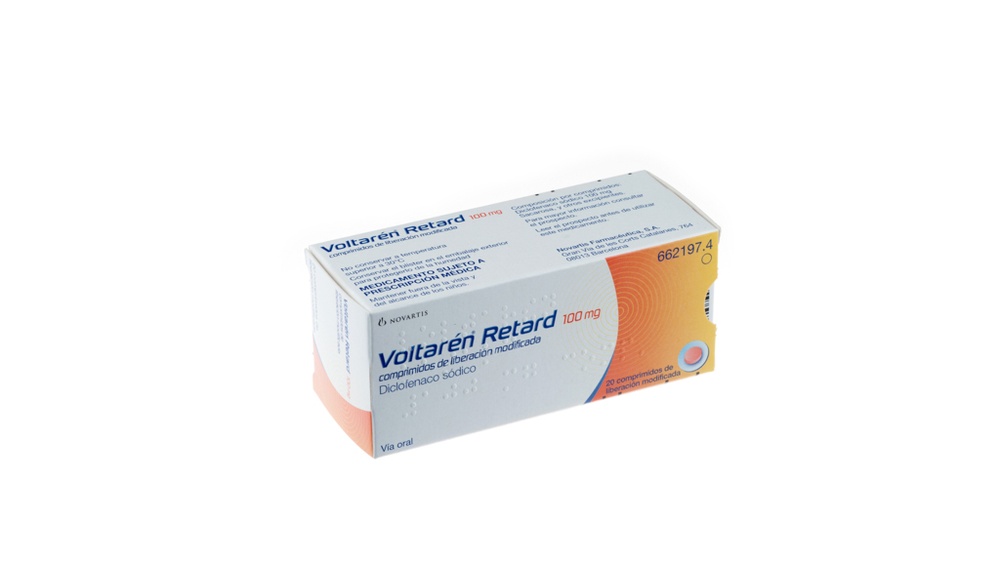



How to use VOLTAREN RETARD 100 mg MODIFIED-RELEASE TABLETS
Translated with AI
This page provides general information and does not replace a doctor’s consultation. Always consult a doctor before taking any medication. Seek urgent medical care if symptoms are severe.
Show originalContents of the leaflet
- Introduction
- What is Voltarén Retard 100 mg and what is it used for
- What you need to know before you take Voltarén Retard 100 mg
- How to take Voltarén Retard 100 mg
- In case of overdose or accidental ingestion, consult your doctor or pharmacist immediately or call the toxicology information service. telephone 91.562.04.20.
- Possible Adverse Effects
- Storage of Voltarén Retard 100 mg
- Keep this medicine out of sight and reach of children.
- Package Contents and Additional Information
Introduction
Package Leaflet: Information for the User
Voltarén Retard 100 mg Modified Release Tablets
diclofenac sodium
Read all of this leaflet carefully before you start taking this medicine because it contains important information for you.
- Keep this leaflet, you may need to read it again.
- If you have any further questions, ask your doctor or pharmacist.
- This medicine has been prescribed for you only. Do not pass it on to others. It may harm them, even if their signs of illness are the same as yours.
- If you get any side effects, talk to your doctor or pharmacist. This includes any possible side effects not listed in this leaflet. See section 4.
Contents of the pack
- What is Voltarén Retard 100 mg and what is it used for
- What you need to know before you take Voltarén Retard 100 mg
- How to take Voltarén Retard 100 mg
- Possible side effects
- Storing Voltarén Retard 100 mg
- Contents of the pack and other information
1. What is Voltarén Retard 100 mg and what is it used for
Diclofenac sodium, the active substance in Voltarén Retard, belongs to a group of medicines called non-steroidal anti-inflammatory drugs (NSAIDs), used to treat pain and inflammation.
Voltarén Retard is used to treat the following conditions:
- Chronic inflammatory rheumatic diseases (rheumatoid arthritis, ankylosing spondylitis, osteoarthritis),
- Extra-articular rheumatism,
- Acute attacks of gout,
- Menstrual pain,
- Post-traumatic inflammation.

2. What you need to know before you take Voltarén Retard 100 mg
It is important that you use the smallest dose that relieves or controls your pain and do not take this medicine for longer than necessary to control your symptoms.
Do not take Voltarén Retard
- if you are allergic to diclofenac sodium or any of the other ingredients of this medicine (listed in section 6).
- if you are allergic or have had allergic reactions to acetylsalicylic acid or other similar painkillers (medicines to treat pain). Reactions can include asthma (difficulty breathing), chest pain, hives (allergic reaction on the skin with itching) acute rhinitis (inflammation of the nasal mucosa) or swelling of the face, lips, tongue, throat and/or limbs (signs of angioedema). If you think you may be allergic, consult your doctor.
- if you have had a stomach or duodenal bleeding or have suffered from two or more occasions, a perforation of the digestive tract while taking a non-steroidal anti-inflammatory drug.
- if you currently have or have had more than one occasion, an ulcer or stomach or duodenal bleeding
- if you suffer from active Crohn's disease or ulcerative colitis (diseases that produce diarrhea with or without blood and abdominal pain).
- if you have severe kidney disease.
- if you have severe liver disease.
- if you have established heart disease and/or cerebrovascular disease, for example, if you have had a heart attack, stroke, mini-stroke (TIA) or blockages in the blood vessels of the heart or brain, or have had surgery to remove a blockage or have a coronary bypass.
- if you have had problems with blood circulation (peripheral arterial disease).
- if you are in the third trimester of pregnancy.
- if you have blood coagulation disorders.
Make sure your doctor knows before taking diclofenac:
- if you smoke
- if you have diabetes
- if you have angina, blood clots, high blood pressure, high cholesterol or high triglycerides
Side effects can be minimized by using the lowest effective dose for the shortest possible duration.
Warnings and precautions
Consult your doctor or pharmacist before starting to take Voltarén Retard:
- if you have had or developed an ulcer, bleeding or perforation in the stomach or duodenum, which may be manifested by severe or persistent abdominal pain and/or black stools or even without previous warning symptoms.
This risk is greater when high doses and prolonged treatments are used in patients with a history of peptic ulcer and in the elderly. In these cases, your doctor will consider the possibility of associating a stomach protective medication.
- if you suffer from any of the following conditions: asthma, mild heart disease, liver or kidney disease, high blood pressure (hypertension), bleeding disorders or other blood disorders including hepatic porphyria.
- if you are taking medications for blood pressure or cyclosporin, as it increases the risk of kidney damage (see "Other medicines and Voltarén Retard").
- if you take medications that alter blood coagulation or increase the risk of ulcers, such as oral anticoagulants or antiplatelet agents of the type of acetylsalicylic acid. You should also discuss the use of other medications that could increase the risk of such bleeding, such as other anti-inflammatory medications, corticosteroids, and antidepressants that are selective inhibitors of serotonin reuptake (see "Other medicines and Voltarén Retard").
- if you have Crohn's disease or ulcerative colitis, as medications of the Voltarén type can worsen these conditions.
- if you have high blood pressure, high cholesterol or triglycerides, diabetes, or are a smoker (cardiovascular risk factors), your doctor should periodically reassess whether you should continue treatment with this medication, especially if you have been treated for more than 4 weeks.
- if you have liver or kidney failure, or blood disorders, you will need to have frequent blood tests during your treatment. This will allow your doctor to monitor the functioning of your liver (transaminase levels) or kidneys (creatinine levels) or blood (lymphocyte, erythrocyte, and platelet levels). With this, your doctor can decide to interrupt or change the dose of this medication.
- if you have recently undergone or are going to undergo surgical intervention in the stomach or intestine before taking this medication, as this medication can sometimes worsen the healing of wounds in the intestine after surgery.
- if you have ever had a severe skin rash or skin peeling or blisters in the mouth after taking Voltarén Retard or other painkillers.
Patients with cardiovascular problems
Medicines like Voltarén Retard can be associated with an increased risk of heart attacks ("myocardial infarction") or strokes, especially when used in high doses and prolonged treatments. Do not exceed the recommended dose or duration of treatment.
If you have heart problems, a history of strokes, or think you may be at risk of having them (for example, you have high blood pressure, diabetes, high cholesterol or triglycerides, or are a smoker) and your doctor decides to treat you with this medication, you should not take more than 100 mg per day if the treatment lasts more than 4 weeks.
Also, this type of medication can cause fluid retention, especially in patients with heart disease and/or high blood pressure (hypertension).
In general, it is very important to take the lowest effective dose of this medication for the shortest possible time that relieves your pain and/or inflammation to reduce the risk of cardiovascular side effects.
If you experience chest pain, shortness of breath, weakness, or difficulty speaking while taking this medication, contact your doctor immediately.
Other medicines and Voltarén Retard
Tell your doctor or pharmacist if you are taking, have recently taken, or might take any other medicines.
Certain medicines can interfere with Voltarén Retard; in these cases, it may be necessary to change the dose or interrupt treatment with one of them.
It is important that you inform your doctor if you are taking or have recently taken any of the following medicines:
- medicines that contain lithium or serotonin reuptake inhibitors (to treat some types of depression),
- medicines that contain methotrexate (to treat rheumatoid arthritis and cancer),
- medicines that contain cyclosporin, tacrolimus (after transplants),
- medicines that contain trimethoprim (to prevent and treat urinary tract diseases),
- medicines to treat heart problems (digoxin, calcium antagonists such as verapamil or isradipine),
- medicines used to treat diabetes, except insulin,
- medicines to control blood pressure (diuretics, beta blockers, and ACE inhibitors),
- medicines to prevent blood clots,
- medicines that contain quinolone or ceftriaxone (to treat infections),
- other medicines of the same group as Voltarén (non-steroidal anti-inflammatory drugs), such as acetylsalicylic acid or ibuprofen,
- corticosteroids (medicines that reduce inflammation and the action of the immune system),
- medicines that contain voriconazole (a medicine used to treat fungal infections),
- medicines that contain phenytoin (a medicine used to treat epileptic seizures),
- medicines that contain misoprostol (to treat stomach ulcers),
- medicines that contain cholestyramine and colestipol to decrease cholesterol levels in the blood),
- medicines that contain pentazocine (to relieve pain),
- antibiotic medicine used to treat bacterial infections (rifampicin).
Taking Voltarén Retard with food, drinks, and alcohol
You can take this medicine with or without food, as food does not affect the effect of this medicine.
Consuming alcoholic beverages with the use of this medicine may increase its toxicity.
Children and adolescents
The use of this medicine is not recommended in children and adolescents.

Elderly patients
Elderly patients, especially those who are frail or have low body weight, may be more sensitive to the effects of this medicine than other adults. Therefore, it is especially important that elderly patients immediately inform their doctor of any side effects that occur.
Pregnancy, breastfeeding, and fertility
If you are pregnant or breastfeeding, think you may be pregnant, or are planning to have a baby, ask your doctor or pharmacist for advice before taking this medicine.
Pregnancy
Do not take this medicine if you are in the last 3 months of pregnancy, as it may harm your baby or cause problems during delivery. It can cause kidney and heart problems in your baby. It can affect your tendency and that of your baby to bleed and delay or prolong delivery more than expected. You should not take this medicine during the first 6 months of pregnancy unless it is clearly necessary and as your doctor indicates. If you need treatment during this period or while trying to become pregnant, you should take the minimum dose for the shortest possible time. If you take it for more than a few days from the 20th week of pregnancy, this medicine can cause kidney problems in your baby, which can cause low levels of amniotic fluid surrounding the baby (oligohydramnios) or narrowing of a blood vessel (ductus arteriosus) in the baby's heart. If you need treatment for more than a few days, your doctor may recommend additional checks.
Breastfeeding
Small amounts of diclofenac may appear in breast milk, so you should not take this medicine if you are breastfeeding.
Fertility
For women of childbearing age, it should be noted that medicines of the Voltarén Retard type have been associated with a decrease in fertility.
Driving and using machines
The influence of diclofenac on the ability to drive and use machines is zero or insignificant. However, patients who experience visual disturbances, dizziness, vertigo, drowsiness, or other central nervous system disorders while taking Voltarén Retard should avoid driving vehicles or operating machinery.
Voltarén Retard contains saccharose and sodium.
This medicine contains saccharose; if your doctor has told you that you have an intolerance to certain sugars, consult with them before taking this medicine.
This medicine contains less than 23 mg of sodium (1 mmol) per tablet; this is, essentially "sodium-free".
3. How to take Voltarén Retard 100 mg
Follow exactly the administration instructions of this medicine indicated by your doctor or pharmacist. In case of doubt, consult your doctor or pharmacist again.
Remember to take your medicine.
Use in adults
The normal dose in mild cases or in prolonged treatments is 1 tablet of 100 mg per day.
In menstrual pain, the daily dose, which should be individually adjusted, is 50-200 mg of diclofenac (1 to 2 tablets of Voltarén Retard 100 mg). An initial dose of 50-100 mg of diclofenac (1 tablet of Voltarén Retard 100 mg) will be administered, and if necessary, it will be increased in subsequent menstrual cycles. Treatment should be started when the first symptoms appear. Depending on the intensity, it will be continued for a few days. For a dose of 50 mg, the use of Voltarén 50 mg gastro-resistant tablets is recommended, and for doses of 75 and 150 mg, Voltarén Retard 75 mg.
Method of administration
You can take this medicine with or without food (see "Taking Voltarén Retard with food, drinks, and alcohol").
The tablets should be swallowed whole with a glass of water or other liquid, without dividing or chewing them.
If you take more Voltarén Retard than you should
In case of overdose or accidental ingestion, consult your doctor or pharmacist immediately or call the toxicology information service. telephone 91.562.04.20.
If you forget to take Voltarén Retard
Do not take a double dose to make up for forgotten doses.
If you forget to take a dose, take it as soon as you can, unless it is almost time for the next dose; then return to your regular dosing schedule. If you forget several doses, consult your doctor.
If you have any other questions about the use of this medicine, ask your doctor or pharmacist.
If you stop taking Voltarén Retard
Your doctor will indicate the duration of your treatment with this medicine. Do not stop treatment before.
4. Possible Adverse Effects
Like all medicines, this medicine can cause adverse effects, although not all people suffer from them.
Some adverse effects can be serious.
Stop using this medicine and immediately inform your doctor if you notice: Mild abdominal cramps and abdominal pain on palpation that begins shortly after starting treatment with this medicine, followed by rectal bleeding or bloody diarrhea, usually observed within 24 hours after the onset of abdominal pain (frequency not known, cannot be determined from available data).
Chest pain, which can be a sign of a potentially serious allergic reaction called Kounis syndrome.
Severe skin allergic reaction, which can include large, generalized red or dark patches, skin swelling, blisters, and itching (generalized fixed drug eruption).
Other adverse effects that have been reported with the use of this medicine are:
Frequent Adverse Effects(may affect up to 1 in 10people) | |
Nervous System Disorders | |
| |
Ear and Labyrinth Disorders | |
| |
Gastrointestinal Disorders | |
| |
Hepatobiliary Disorders | |
| |
Skin and Subcutaneous Tissue Disorders | |
| |
Infrequent Adverse Effects(may affect up to 1 in 100people): | |
Cardiac Disorders(at high doses during prolonged treatments)
If these symptoms appear, consult your doctor immediately | |
Rare Adverse Effects(may affect up to 1 in 1,000people): | |
Immune System Disorders | |
If these symptoms appear, consult your doctor immediately | |
Nervous System Disorders | |
| |
Respiratory, Thoracic, and Mediastinal Disorders | |
| |
Gastrointestinal Disorders | |
| |
Hepatobiliary Disorders | |
| |
Skin and Subcutaneous Tissue Disorders | |
| |
General Disorders and Administration Site Conditions | |
| |
Very Rare Adverse Effects(may affect up to 1 in 10,000people): | |
Blood and Lymphatic System Disorders | |
If these symptoms appear, consult your doctor immediately | |
Immune System Disorders | |
| |
Psychiatric Disorders | |
| |
Nervous System Disorders | |
| |
Eye Disorders | |
| |
Ear and Labyrinth Disorders | |
| |
Vascular Disorders | |
| |
Respiratory, Thoracic, and Mediastinal Disorders | |
If these symptoms appear, consult your doctor immediately | |
Gastrointestinal Disorders | |
| |
Skin and Subcutaneous Tissue Disorders | |
| |
Renal and Urinary Disorders | |
If these symptoms appear, consult your doctor immediately | |
Frequency Not Known (cannot be estimated from available data) | |
| |
Isolated Cases | |
Hepatobiliary Disorders | |
If these symptoms appear, consult your doctor immediately | |
Reporting of Adverse Effects:
If you experience any adverse effects, consult your doctor or pharmacist, even if they are possible adverse effects that do not appear in this leaflet. You can also report them directly through the Spanish Pharmacovigilance System for Human Use Medicines: http://www.notificaram.es. By reporting adverse effects, you can contribute to providing more information on the safety of this medicine.
5. Storage of Voltarén Retard 100 mg
Keep this medicine out of sight and reach of children.
Do not store above 30°C. Keep the blister pack in the outer packaging to protect it from moisture.
Do not use this medicine after the expiration date that appears on the packaging after CAD. The expiration date is the last day of the month indicated.
Medicines should not be disposed of via wastewater or household waste. Deposit the packaging and medicines you no longer need at the SIGRE collection point in your pharmacy. If in doubt, ask your pharmacist how to dispose of the packaging and medicines you no longer need. This will help protect the environment.
6. Package Contents and Additional Information
Voltarén Retard Composition
- The active ingredient is diclofenac sodium. Each tablet contains 100 mg of diclofenac sodium.
- The other ingredients (excipients) are sucrose, cetyl alcohol, anhydrous colloidal silica (E-551), povidone (E-1201), magnesium stearate (E-470b), hypromellose (E-464), polysorbate 80, titanium dioxide (E-171), red iron oxide (E-172), talc (E-553b), and polyethylene glycol 8000 (E-1521).
Appearance of Voltarén Retard and Package Contents
Modified-release tablets, round, pink, with "CG" on one side and "CGC" on the other, in Al/PVC/PE/PVDC blisters, in packs of 20 tablets.
Marketing Authorization Holder
Novartis Farmacéutica, S.A.
Gran Via de les Corts Catalanes, 764
08013 Barcelona – Spain
Manufacturer
Novartis Farma S.p.A.
Via Provinciale Schito, 131 (Torre Annunziata)
Naples – Italy
Novartis Farmacéutica, S.A.
Gran Via de les Corts Catalanes, 764
08013 Barcelona – Spain
Novartis Pharma GmbH
Roonstrasse 25
DE-90429 Nuremberg
Germany
Date of Last Revision of this Leaflet:11/2023
Detailed and updated information on this medicine is available on the website of the Spanish Agency for Medicines and Health Products (AEMPS) http://www.aemps.gob.es/
- Country of registration
- Dosage formMODIFIED-RELEASE TABLET, 100 mg
- ATC codeM01AB05
- Average pharmacy price2.5 EUR
- Active substance
- Prescription requiredYes
- Manufacturer
- This information is for reference only and does not constitute medical advice. Always consult a doctor before taking any medication. Oladoctor is not responsible for medical decisions based on this content.
- Alternatives to VOLTAREN RETARD 100 mg MODIFIED-RELEASE TABLETSDosage form: INJECTABLE, 25 mgActive substance: diclofenacManufacturer: Ibsa Farmaceutici Italia S.R.L.Prescription requiredDosage form: INJECTABLE, 50 mgActive substance: diclofenacManufacturer: Ibsa Farmaceutici Italia S.R.L.Prescription requiredDosage form: INJECTABLE, 75 mgActive substance: diclofenacManufacturer: Ibsa Farmaceutici Italia S.R.L.Prescription required

Online doctors for VOLTAREN RETARD 100 mg MODIFIED-RELEASE TABLETS
Discuss questions about VOLTAREN RETARD 100 mg MODIFIED-RELEASE TABLETS, including use, safety considerations and prescription review, subject to medical assessment and local regulations.






.jpg)




Frequently Asked Questions
