


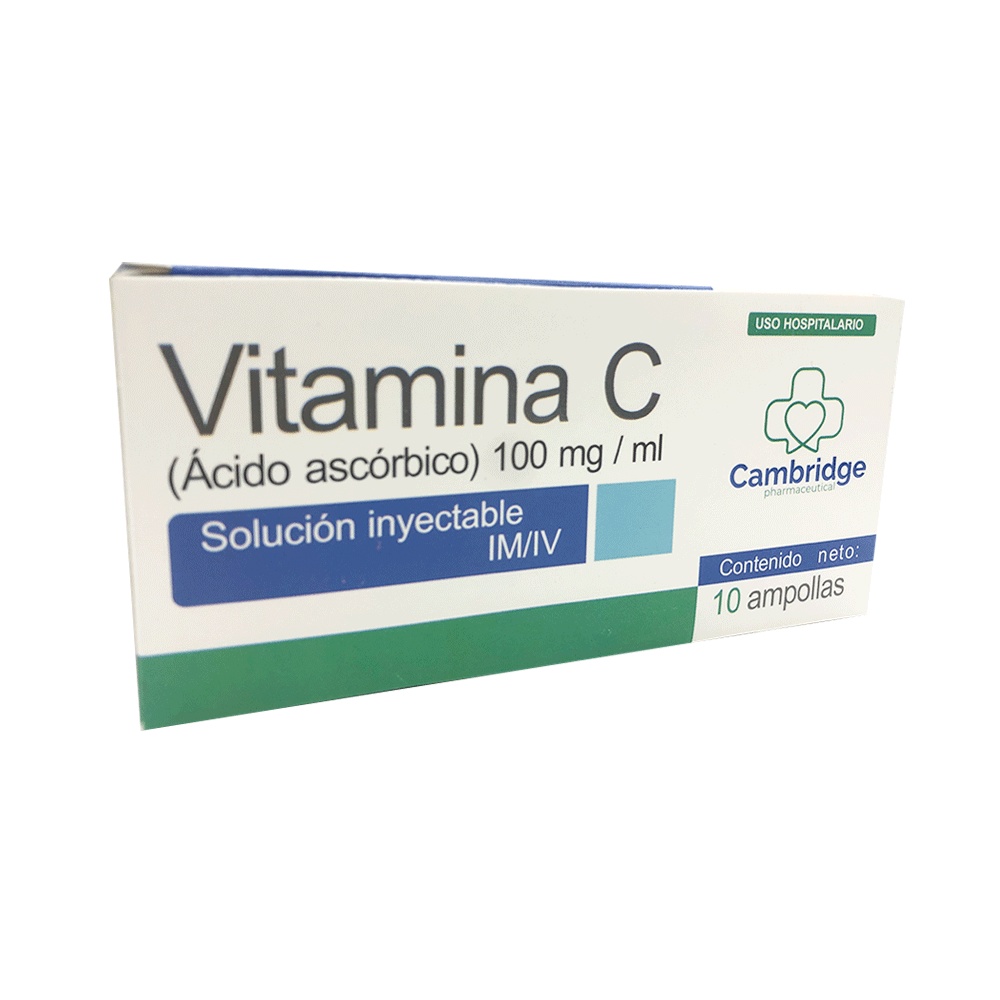
Vitamina 100 mg/ml injectable solution

Prescription review online
A doctor will review your case and decide whether a prescription is medically appropriate.

Talk to a doctor about this medicine
Discuss your symptoms and possible next steps in a quick online consultation.



How to use VITAMIN C BASE 100 mg/mL INJECTABLE SOLUTION
Contents of the leaflet
- Introduction
- What Vitamin C Basi is and what it is used for
- What you need to know before you use Vitamin C Basi
- How to use Vitamin C Basi
- Possible side effects
- Storage of Vitamin C Basi
- Packaging Content and Additional Information
Introduction
Package Leaflet: Information for the User
Vitamin C Basi 100 mg/ml Solution for Injection
Ascorbic Acid
Read all of this leaflet carefully before you start using this medicine because it contains important information for you.
- Keep this leaflet, you may need to read it again.
- If you have any further questions, ask your doctor or pharmacist.
- This medicine has been prescribed for you only. Do not pass it on to others. It may harm them, even if their signs of illness are the same as yours.
- If you get any side effects, talk to your doctor or pharmacist. This includes any possible side effects not listed in this leaflet. See section 4.
Contents of the pack
- What Vitamin C Basi is and what it is used for
- What you need to know before you use Vitamin C Basi
- How to use Vitamin C Basi
- Possible side effects
- Storage of Vitamin C Basi
- Contents of the pack and further information
1. What Vitamin C Basi is and what it is used for
Vitamin C is a water-soluble vitamin that participates in many vital processes of the body.
Vitamin C is used for the treatment of scurvy and for the prophylaxis of ascorbic acid (vitamin C) deficiency. Vitamin C Basi is used when oral use is not possible or absorption after oral intake is insufficient in all age groups.
Vitamin C may also be used as an alternative for the treatment of methemoglobinemia, a disorder characterized by the presence of a higher than normal level of methemoglobin in the body.

Not sure if this medicine is right for you?
Discuss your symptoms and treatment with a doctor online.
2. What you need to know before you use Vitamin C Basi
Do not use Vitamin C Basi
- if you are allergic to ascorbic acid or any of the other ingredients of this medicine (listed in section 6).
- if you have kidney stones or a history of kidney stones (type of stones in the kidney or bladder) or hyperoxaluria (increased amount of oxalates in the urine).
Warnings and precautions
Consult your doctor or nurse before starting to use Vitamin C
- if you have kidney disease, including kidney stones;
- if you are prone to gout;
- if you have been advised to follow a low-salt diet (sodium). 1 ampoule of 5 ml contains approximately 62.84 mg of sodium;
- if you have had breathing difficulties in the past, such as bronchospasm or lung disease. If this applies to you, your doctor will choose a lower initial dose;
- if you need to undergo certain laboratory tests (such as glucose, uric acid, creatinine, inorganic phosphate). Ascorbic acid may affect the results of the tests and thus give rise to false results;
- if you suffer from an iron storage disorder/iron overload (e.g. thalassemia, hemochromatosis, sideroblastic anemia, erythrocyte concentrate transfusions);
- if you have a glucose-6-phosphate dehydrogenase deficiency (hereditary disorder of red blood cell metabolism);
- if you are pregnant.
Intravenous administration of ascorbic acid can be painful and rarely may cause thrombosis. Rapid intravenous injection of ascorbic acid should be avoided and care should be taken to avoid extravasation during perfusion.
In patients with disorders of the venous vascular system, thrombophlebitis or anticoagulant therapy (anticoagulant products) and predisposition to thrombosis (blood clot), intramuscular administration of the product is recommended.
Note for diabetic patients:
Ascorbic acid administered parenterally interferes with the glucose determination assay.
During your treatment with Vitamin C Basi, it is important that you pay attention to your daily water intake (approximately 1.5 - 2 liters per day).
To reduce the risk of kidney stone or urinary stone formation, it is recommended to avoid any additional oxalate-rich food (e.g. rhubarb, spinach, beetroot, etc.) during treatment with this medicine.
If you have suffered from recurrent kidney stones in the past, you should not exceed a maximum daily dose of 200 mg of vitamin C, as there is a higher risk of calcium oxalate stone formation.
Children and adolescents
Vitamin C Basi is administered in adolescents under 18 years, children, infants, and newborns.
Other medicines and Vitamin C Basi
Tell your doctor or pharmacist if you are using, have recently used or might use any other medicines.
The active ingredient of Vitamin C Basi is ascorbic acid, also known as vitamin C. Its concomitant use with other medicines may affect its action, or these may affect the action of Vitamin C Basi.
Tell your doctor or nurse if you are taking any of the following medicines:
- corticosteroids, as they increase the oxidation of vitamin C.
- anticoagulant medicines, as vitamin C may affect the intensity and duration of the action of coumarin anticoagulants (e.g. warfarin, bishydroxycoumarin).
- oral contraceptives, as they reduce serum vitamin C levels. When used concomitantly with estrogen-containing medicines, vitamin C may increase estrogen concentrations.
- iron-containing medicines, as vitamin C may increase iron absorption in the gastrointestinal tract.
- deferoxamine (for the treatment of iron or aluminum overload in the body) - vitamin C may increase iron excretion when taken concomitantly with deferoxamine. However, cases of adverse cardiac effects have occurred in patients receiving concomitant treatment. It is possible that ascorbic acid mobilizes iron from the spleen and other reticuloendothelial tissues, resulting in increased iron deposition in visceral organs.
- isoprenaline (a medicine used in the treatment of cardiac block and cardiac arrest), as concomitant administration with vitamin C decreases the effect of isoprenaline.
- disulfiram (as support for the treatment of alcoholism), as chronic or high-dose use of vitamin C may interfere with the disulfiram-alcohol interaction.
- mexiletine (for the treatment of irregular heartbeats), as high doses of vitamin C may accelerate the urinary excretion of mexiletine.
- barbiturates or primidone (for the treatment of seizures), as concomitant administration increases the urinary excretion of vitamin C.
- flufenazine and other phenothiazine derivatives (for the treatment of schizophrenia), as concomitant administration with vitamin C reduces their therapeutic effect.
- amphetamines (central nervous system stimulants) and tricyclic antidepressants (for the treatment of depression), as vitamin C decreases the reabsorption of amphetamines and tricyclic antidepressants in the renal tubules.
- aluminum-containing medicines, as vitamin C may increase aluminum absorption and potentiate adverse effects.
- cyclosporin, as ascorbic acid may reduce cyclosporin levels and, consequently, its therapeutic effect.
Vitamin C interferes with numerous laboratory tests. The degree of interference with laboratory tests depends on several factors. Specialized references should be consulted for specific information on the interference in laboratory tests caused by vitamin C.
This medicine in high doses may compromise the results of transaminase, lactate dehydrogenase, and bilirubin tests.
Vitamin C, as a redox compound, influences various reduction-oxidation tests for glucose determination in urine and serum. Administration of Vitamin C Basi should be suspended 1-2 days before these tests. Diabetic patients taking more than 500 mg of vitamin C per day may obtain false readings in their urine glucose test.
It has been reported that ascorbic acid interferes with paracetamol detection tests in urine, resulting in negative detection tests in the presence of paracetamol.
High doses of Vitamin C Basi (e.g. more than 500 mg per day) may interfere with carbamazepine levels when measured with the Ames ARIS(R) method. The use of vitamin C (more than 1 g per day) may result in a false negative result in the guaiacol test for occult blood in feces. Treatment with Vitamin C Basi should be suspended if interference with a guaiacol test is suspected.
Ascorbic acid is incompatible in solution with aminophylline, bleomycin, erythromycin, lactobionate, nafcillin, sodium nitrofurantoin, conjugated estrogens, sodium bicarbonate, sulfafurazole diethanolamine, sodium succinate of chloramphenicol, sodium chlorothiazide, and sodium succinate of hydrocortisone.
Ascorbic acid is rapidly oxidized in alkaline media in the presence of copper and iron ions, as well as other oxidants.
Using Vitamin C Basi with food, drinks, and alcohol
Alcohol reduces vitamin C levels.
Pregnancy, breastfeeding, and fertility
If you are pregnant or breastfeeding, think you may be pregnant or are planning to have a baby, ask your doctor or pharmacist for advice before using this medicine.
Pregnancy
Administration of Vitamin C solution for injection to pregnant women should be considered only when absolutely necessary.
Breastfeeding
Vitamin C is excreted in breast milk, so breastfeeding mothers should be treated with caution.
Fertility
There are no data on the effect of ascorbic acid on fertility.
Driving and using machines
Vitamin C Basi has no influence on the ability to drive and use machines.
Vitamin C Basi contains sodium and sodium metabisulfite
Rarely, sodium metabisulfite can cause severe hypersensitivity reactions and bronchospasm.
This medicine contains 62.84 mg of sodium (main component of table/cooking salt) in each 5 ml ampoule. This is equivalent to 3.14% of the maximum recommended daily sodium intake for an adult.
3. How to use Vitamin C Basi
Follow exactly the administration instructions of this medicine as indicated by your doctor. In case of doubt, consult your doctor or nurse again.
Vitamin C is administered by intramuscular or intravenous route. Intramuscular administration is recommended. The dose and duration of treatment will be determined by your doctor. Intravenous administration must be performed by a doctor or qualified healthcare professional (nurse).
The recommended dose is
Adults (including elderly patients)
Treatment of scurvy | 250 mg (2.5 ml) once or twice a day for 2 to 21 days (until skeletal changes and hemorrhagic disorders are reversed) |
Prophylaxis of ascorbic acid deficiency | The usual dose is: 50 mg (0.5 ml) to 200 mg (2 ml) per day |
Treatment of methemoglobinemia | 1,000 mg of ascorbic acid intravenously once. If necessary, the application can be repeated. |
The duration of treatment should be individualized, according to the therapeutic response and the severity of the disease. |
Adults (including elderly patients) with renal insufficiency
In patients with recurrent kidney stone formation, the daily dose of vitamin C should not exceed 200 mg (2 ml).
Patient with severe renal insufficiency or end-stage renal disease (patients on dialysis) should not receive more than 50 mg (0.5 ml) to 100 mg (1 ml) per day.
Use in children and adolescents
Vitamin C is administered in adolescents under 18 years, children, infants, and newborns. The dose and duration of treatment will be determined by your doctor.
Treatment of scurvy | 100 mg (1 ml) to 300 mg (3 ml) in divided doses, for 7 to 10 days |
Prophylaxis of ascorbic acid deficiency | 25-75 mg (0.25 - 0.75 ml) per day |
Treatment of methemoglobinemia | Single dose of 500-1,000 mg of ascorbic acid intravenously. Repeat the application in the same dose if necessary. |
Patient should be treated with lower doses adapted individually. |
Adolescents under 18 years, children, infants, and newborns with renal impairment
Patient should be treated with lower doses adjusted individually.
Method of administration
Preparation and administration of intramuscular injection
The required dose of Vitamin C is injected slowly into the upper part of the gluteal muscle, 5 cm below the iliac crest. Alternate injection sites for subsequent injections.
Preparation and administration of intravenous injection
Rapid intravenous injection of the drug can cause temporary dizziness and should be avoided. Since the undiluted solution is hypertonic, it is recommended to dilute Vitamin C Basi before intravenous injection in at least an equal volume of liquid, such as a 9 mg/ml (0.9%) sodium chloride solution or a 50 mg/ml (5%) glucose solution, and inject slowly intravenously.
Preparation and administration of intravenous infusion
Add 100 ml of 9 mg/ml (0.9%) sodium chloride solution or 50 mg/ml (5%) glucose solution to the required dose of Vitamin C Basi and administer by intravenous infusion over 15 to 30 minutes. The solution should be administered immediately after mixing.
If you are given more Vitamin C Basi than you should
No cases of acute overdose with serious consequences have been reported.
Very high doses of Vitamin C may cause allergic reactions. In case of massive overdose of ascorbic acid, renal insufficiency may occur.
Overdose of ascorbic acid may cause acidosis (increase in blood acidity) and hemolytic anemia (abnormal breakdown of red blood cells) in predisposed individuals, e.g. in patients with glucose-6-phosphate dehydrogenase deficiency. Ascorbic acid is eliminated by hemodialysis.
If you think you have been given too much medicine, inform your doctor.
In case of overdose or accidental ingestion, consult your doctor or pharmacist immediately or call the Toxicology Information Service, phone 91 562 04 20, indicating the medicine and the amount ingested.
If you miss a dose of Vitamin C Basi (omit a dose)
If you think you have missed a dose, inform your doctor or nurse.
If you have any further questions on the use of this medicine, ask your doctor, pharmacist, or nurse.

Started taking the medicine and have questions?
Discuss your symptoms and treatment with a doctor online.
4. Possible side effects
Like all medicines, this medicine can cause side effects, although not everybody gets them.
Vitamin C is well tolerated. In rare cases, it may cause side effects.
Rare (may affect up to 1 in 1,000 people):
- Nausea;
- Vomiting;
- Abdominal colic;
- Diarrhea;
- At high doses may cause an allergic reaction;
- Increased urine excretion;
- Kidney stone formation;
- In some patients with pre-existing kidney disease, renal insufficiency has been reported after treatment with high doses of ascorbic acid;
- Mild and transient pain and hardening at the site of intramuscular injection.
Frequency not known (cannot be estimated from the available data):
- Headache;
- Insomnia;
- Temporary fainting or dizziness (as a result of too rapid intravenous administration);
- Flushing;
- Fatigue;
- A rebound effect in the form of vitamin C deficiency after discontinuation of treatment with high doses.
Reporting of side effects
If you experience any side effects, talk to your doctor, even if it is possible side effects not listed in this leaflet. You can also report side effects directly through the Spanish Pharmacovigilance System for Human Use Medicines: https://www.notificaram.es. By reporting side effects, you can help provide more information on the safety of this medicine.
5. Storage of Vitamin C Basi
Keep this medicine out of the sight and reach of children.
Store below 25°C.
Do not use this medicine after the expiry date which is stated on the carton after EXP. The expiry date is the last day of the month shown.
Medicines should not be disposed of via wastewater or household waste. Return any unused medicine to your pharmacist. Ask your pharmacist how to dispose of medicines no longer required. This will help protect the environment.
6. Packaging Content and Additional Information
Vitamin C Basi Composition
- The active ingredient is ascorbic acid. 1 ml of injectable solution contains 100 mg of ascorbic acid. Each 5 ml ampoule contains 500 mg of ascorbic acid.
- The other components are Sodium Hydrogen Carbonate, Sodium Metabisulfite (E223), Disodium Edetate, Sodium Hydroxide, and Water for Injectable Preparations.
Product Appearance and Packaging Content
Transparent solution, from colorless to yellow, free of visible particles, packaged in 5 ml Type I amber glass ampoules containing 5 ml of injectable solution.
Vitamin C Basi is available in packs of 6, 10, and 50 ampoules.
Only some pack sizes may be marketed.
Marketing Authorization Holder
Laboratórios Basi – Indústria Farmacêutica, S.A.
Parque Industrial Manuel Lourenço Ferreira, Lote 15
3450-232 Mortágua
Portugal
Tel.: + 351 231 920 250 | Fax: + 351 231 921 055
E-mail: [email protected]
Manufacturer
Laboratórios Basi - Indústria Farmacêutica, S.A.
Parque Industrial Manuel Lourenço Ferreira, Lotes 8, 15, 16
3450-232 Mortágua
Portugal
Local Representative
LAPHYSAN, S.A.U.
Anabel Segura 11, Edificio A, Planta 4, Puerta D,
28108 Alcobendas - Madrid
Spain
Date of Last Revision of this Prospectus: 03/2024
Detailed information on this medicinal product is available on the website of the Spanish Agency for Medicines and Health Products (AEMPS) http://www.aemps.gob.es
- Country of registration
- Dosage formINJECTABLE, 100 mg/ml
- ATC codeA11GA01
- Active substance
- Prescription requiredYes
- Manufacturer
- CompositionHIDROGENOCARBONATO DE SODIO (45 mg/ml mg), SODIO, METABISULFITO DE (E 223) (1 mg/ml mg), EDETATO DE DISODIO (0,05 mg/ml mg), HIDROXIDO DE SODIO (E 524) (c.s.p. 5,5 pH mg)
- This information is for reference only and does not constitute medical advice. Always consult a doctor before taking any medication. Oladoctor is not responsible for medical decisions based on this content.
- Alternatives to VITAMIN C BASE 100 mg/mL INJECTABLE SOLUTIONDosage form: INJECTABLE, 1g ascorbic acid / 5mlActive substance: ascorbic acid (vit C)Manufacturer: Bayer Hispania S.L.Prescription requiredDosage form: CAPSULE, 25,000 IUActive substance: colecalciferolManufacturer: Laboratorios Alter S.A.Prescription requiredDosage form: CAPSULE, 50,000 IUActive substance: colecalciferolManufacturer: Laboratorios Alter S.A.Prescription required
Online doctors for VITAMIN C BASE 100 mg/mL INJECTABLE SOLUTION
Discuss questions about VITAMIN C BASE 100 mg/mL INJECTABLE SOLUTION, including use, safety considerations and prescription review, subject to medical assessment and local regulations.









Frequently Asked Questions
VITAMIN C BASE 100 mg/mL INJECTABLE SOLUTION requires a prescription in Spain. You can check with a doctor online whether this medicine may be appropriate for your situation.
The active ingredient in VITAMIN C BASE 100 mg/mL INJECTABLE SOLUTION is ascorbic acid (vit C). This information helps identify medicines with the same composition but different brand names.
VITAMIN C BASE 100 mg/mL INJECTABLE SOLUTION is manufactured by Laboratorios Basi Industria Farmaceutica S.A.. Pharmacy brands and packaging may differ depending on the distributor.
Doctors such as Family doctors, Psychiatrists, Dermatologists, Cardiologists, Endocrinologists, Gastroenterologists, Pulmonologists, Nephrologists, Rheumatologists, Hematologists, Infectious disease physicians, Allergists, Geriatricians, Paediatricians, Oncologists may assess whether VITAMIN C BASE 100 mg/mL INJECTABLE SOLUTION is appropriate, depending on your situation and local regulations. You can book an online consultation to discuss your symptoms and possible next steps.
The prescription is issued by a doctor after assessing your health. In Spain, VITAMIN C BASE 100 mg/mL INJECTABLE SOLUTION is then dispensed in pharmacies with that prescription. An online consultation does not guarantee that a prescription will be issued: the decision always rests with the doctor.
To request a review, you can use Oladoctor:
Other medicines with the same active substance (ascorbic acid (vit C)) include ASCORBIC ACID BAYER 1000 mg/5 ml INJECTABLE SOLUTION, ALDEXINA 25,000 IU HARD CAPSULES, ALDEXINA 50,000 IU HARD CAPSULES. These may have different brand names or formulations but contain the same therapeutic ingredient. Always consult a doctor before switching or starting a new medicine.
