



VIMPAT 10 mg /Ml Oral Solution/Suspension

Prescription review online
A doctor will review your case and decide whether a prescription is medically appropriate.

Talk to a doctor about this medicine
Discuss your symptoms and possible next steps in a quick online consultation.



How to use VIMPAT 10 mg/ml SYRUP
Contents of the leaflet
- Introduction
- What is Vimpat and what is it used for
- What you need to know before you take Vimpat
- How to take Vimpat
- Possible Adverse Effects
- Storage of Vimpat
- Package Contents and Additional Information
Introduction
Package Leaflet: Information for the Patient
Vimpat 10 mg/ml Oral Solution
lacosamide
Read all of this leaflet carefully before you start taking this medicine because it contains important information for you.
- Keep this leaflet, you may need to read it again.
- If you have any further questions, ask your doctor or pharmacist.
- This medicine has been prescribed for you only. Do not pass it on to others. It may harm them, even if their signs of illness are the same as yours.
- If you get any side effects, talk to your doctor or pharmacist. This includes any possible side effects not listed in this leaflet. See section 4.
Contents of the pack
- What is Vimpat and what is it used for
- What you need to know before you take Vimpat
- How to take Vimpat
- Possible side effects
- Storage of Vimpat
- Contents of the pack and other information
1. What is Vimpat and what is it used for
What is Vimpat
Vimpat contains lacosamide, which belongs to a group of medicines called “antiepileptic medicines”. These medicines are used to treat epilepsy.
- You have been prescribed this medicine to reduce the number of seizures you are having.
What is Vimpat used for
- Vimpat is used:
- on its own and with other antiepileptic medicines in adults, adolescents and children from 2 years of age to treat a certain type of epilepsy that causes seizures that start in one part of the brain, with or without generalisation to other parts of the brain. In this type of epilepsy, the seizures affect only one side of the brain. However, they can then spread to larger areas on both sides of the brain;
- with other antiepileptic medicines in adults, adolescents and children from 4 years of age to treat primary generalised tonic-clonic seizures (grand mal seizures, with loss of consciousness) in patients with idiopathic generalised epilepsy (a type of epilepsy that is believed to have a genetic origin).

Not sure if this medicine is right for you?
Discuss your symptoms and treatment with a doctor online.
2. What you need to know before you take Vimpat
Do not take Vimpat
- if you are allergic to lacosamide or any of the other ingredients of this medicine (listed in section 6). If you are not sure, talk to your doctor.
- if you have a heart problem called second or third degree AV block.
Do not take Vimpat if any of the above applies to you. If you are not sure, talk to your doctor or pharmacist before taking this medicine.
Warnings and precautions
Talk to your doctor before you start taking Vimpat if:
- you have thoughts of harming yourself or suicide. A small number of people being treated with antiepileptics such as lacosamide have had thoughts of harming themselves or suicide. If at any time you have these thoughts, contact your doctor immediately.
- you have a heart problem that affects your heart beat and your pulse is often especially slow, fast or irregular (such as an AV block, atrial fibrillation or atrial flutter)
- you have severe heart disease such as heart failure or have had a heart attack.
- You often feel dizzy or faint. Vimpat may cause dizziness, which could increase the risk of accidental injury or falls. This means you should be careful until you are used to the effects of this medicine.
If any of the above applies to you (or you are not sure), talk to your doctor or pharmacist before taking Vimpat.
If you are taking Vimpat, talk to your doctor if you experience a new type of seizure or worsening of existing seizures.
If you are taking Vimpat and experience symptoms of abnormal heart beat (such as slow, fast or irregular heart beat, palpitations, shortness of breath, feeling dizzy, fainting), contact your doctor immediately (see section 4).
Children
Vimpat is not recommended in children under 2 years of age with epilepsy that causes seizures that start in one part of the brain, and is not recommended for children under 4 years of age with primary generalised tonic-clonic seizures. This is because it is not yet known if it is effective and safe for children of this age group.
Other medicines and Vimpat
Tell your doctor or pharmacist if you are taking, have recently taken or might take any other medicines.
In particular, tell your doctor or pharmacist if you are taking any of the following medicines that affect the heart, as Vimpat may also affect the heart:
- medicines for heart problems;
- medicines that may increase the “PR interval” in a heart test (ECG or electrocardiogram) such as epilepsy or pain medicines called carbamazepine, lamotrigine or pregabalin;
- medicines used to treat certain types of irregular heart beats or heart failure.
If any of the above applies to you (or you are not sure), talk to your doctor or pharmacist before taking Vimpat.
Tell your doctor or pharmacist if you are taking any of the following medicines, as they may also increase or decrease the effect of Vimpat in your body:
- medicines for fungal infections such as fluconazole, itraconazole or ketoconazole;
- HIV medicines such as ritonavir;
- medicines for bacterial infections such as clarithromycin or rifampicin;
- a herbal medicine used to treat mild anxiety and depression called St. John’s Wort.
If any of the above applies to you (or you are not sure) talk to your doctor or pharmacist before taking Vimpat.
Taking Vimpat with alcohol
As a precaution, do not take Vimpat with alcohol.
Pregnancy and breast-feeding
Women of childbearing potential should discuss the use of contraceptives with their doctor.
If you are pregnant or breast-feeding, think you may be pregnant or are planning to have a baby, ask your doctor or pharmacist for advice before taking this medicine.
Vimpat should not be taken during pregnancy, as it is not known what effect it may have on the pregnancy or the baby.
Breast-feeding is not recommended while taking Vimpat, as Vimpat passes into breast milk.
Ask your doctor for advice immediately if you are pregnant or plan to become pregnant. Your doctor will help you decide if you should take Vimpat or not.
Do not stop treatment without first talking to your doctor, as this may increase the risk of seizures (fits). Worsening of your disease may also harm the baby.
Driving and using machines
You should not drive, ride a bicycle or use any tools or machines until you know if this medicine affects your ability to perform these activities. This is because Vimpat may cause dizziness or blurred vision.
Vimpat contains sorbitol, sodium, methyl parahydroxybenzoate, aspartame, propylene glycol and potassium
- Sorbitol (a type of sugar). This medicine contains 187 mg of sorbitol in each ml. Sorbitol is a source of fructose. If your doctor has told you that you (or your child) have an intolerance to some sugars, or if you have been diagnosed with a rare genetic disorder called hereditary fructose intolerance (HFI), in which the patient cannot break down fructose, talk to your doctor before taking or receiving (or giving your child) this medicine. Sorbitol may cause gastrointestinal upset and a mild laxative effect.
- Sodium (salt). This medicine contains 1.42 mg of sodium (a major component of cooking/table salt) in each ml. This is equivalent to 0.07% of the maximum recommended daily intake of sodium for an adult.
- Methyl parahydroxybenzoate (E219) may cause allergic reactions (which may be delayed).
- Aspartame (E951). This medicine contains 0.032 mg of aspartame in each ml. Aspartame is a source of phenylalanine, which may be harmful if you have phenylketonuria (PKU), a rare genetic disorder in which phenylalanine accumulates because the body cannot eliminate it properly.
- Propylene glycol (E1520). This medicine contains 2.14 mg of propylene glycol in each ml.
- Potassium. This medicine contains potassium, less than 1 mmol (39 mg) per 60 ml; i.e., it is “essentially potassium-free”.
3. How to take Vimpat
Follow your doctor's or pharmacist's administration instructions for this medication exactly. If in doubt, consult your doctor or pharmacist again.
Taking Vimpat
- Take Vimpat twice a day, with an interval of approximately 12 hours.
- Try to take it more or less at the same time every day.
- You can take Vimpat with or without food.
Normally, you will start by taking a low dose every day and your doctor will gradually increase the dose over several weeks. When you reach the dose that works well for you, called the "maintenance dose," you will take the same amount every day. Vimpat is used as long-term treatment.
You should continue taking Vimpat until your doctor tells you to stop.
How much to take
The following are the usual recommended doses of Vimpat for different age groups and weights.
Your doctor may prescribe a different dose if you have kidney or liver problems.
Use the 10 ml oral syringe (black graduation marks) or the 30 ml measuring cup supplied in the outer box, as appropriate, according to the necessary dose. See the instructions for use below.
Adolescents and children who weigh 50 kg or more and adults
When taking Vimpat alone:
The usual starting dose is 50 mg (5 ml), twice a day.
Your doctor may prescribe a starting dose of 100 mg (10 ml) of Vimpat twice a day.
Your doctor may increase the dose you take twice a day by 50 mg (5 ml) each week, until you reach a maintenance dose between 100 mg (10 ml) and 300 mg (30 ml) twice a day.
When taking Vimpat with other antiepileptic medications
The usual starting dose is 50 mg (5 ml) twice a day.
Your doctor may increase the dose you take twice a day by 50 mg (5 ml) each week, until you reach a maintenance dose between 100 mg (10 ml) and 200 mg (20 ml) twice a day.
If you weigh 50 kg or more, your doctor may decide to start Vimpat treatment with a single "loading dose" of 200 mg (20 ml). Then you would start taking the continuous maintenance dose 12 hours later.
Children and adolescents who weigh less than 50 kg
- In the treatment of partial onset seizures: note that Vimpat is not recommended for children under 2 years of age.
- In the treatment of primary generalized tonic-clonic seizures: note that Vimpat is not recommended for children under 4 years of age.
When taking Vimpat alone.
- Your doctor will decide the dose of Vimpat based on your body weight.
- The usual starting dose is 1 mg (0.1 ml) per kilogram (kg) of body weight, twice a day.
- Your doctor may increase the dose you take twice a day by 1 mg (0.1 ml) per kg of body weight, each week, until you reach the maintenance dose.
- The following dosing tables show the maximum recommended dose.
- These doses are for informational purposes only. Your doctor will calculate the correct dose for you.
To be taken twice a dayby children from 2 years of age who weigh between 10 kg and less than 40 kg
Weight | Week 1 Initial dose: 0.1 ml/kg | Week 2 0.2 ml/kg | Week 3 0.3 ml/kg | Week 4 0.4 ml/kg | Week 5 0.5 ml/kg | Week 6 Maximum recommended dose: 0.6 ml/kg |
Use of the 10 ml syringe (black graduation marks) for a volume between 1 ml and 20 ml
| ||||||
10 kg | 1 ml | 2 ml | 3 ml | 4 ml | 5 ml | 6 ml |
15 kg | 1.5 ml | 3 ml | 4.5 ml | 6 ml | 7.5 ml | 9 ml |
20 kg | 2 ml | 4 ml | 6 ml | 8 ml | 10 ml | 12 ml |
25 kg | 2.5 ml | 5 ml | 7.5 ml | 10 ml | 12.5 ml | 15 ml |
30 kg | 3 ml | 6 ml | 9 ml | 12 ml | 15 ml | 18 ml |
35 kg | 3.5 ml | 7 ml | 10.5 ml | 14 ml | 17.5 ml | 21 ml* |
To be taken twice a dayfor adolescents and children who weigh between 40 kg and less than 50 kg
Weight | Week 1 Initial dose: 0.1 ml/kg | Week 2 0.2 ml/kg | Week 3 0.3 ml/kg | Week 4 0.4 ml/kg | Week 5 Maximum recommended dose: 0.5 ml/kg |
Use of the 10 ml syringe (black graduation marks) for a volume between 1 ml and 20 ml
| |||||
40 kg | 4 ml | 8 ml | 12 ml | 16 ml | 20 ml |
45 kg | 4.5 ml | 9 ml | 13.5 ml | 18 ml | 22.5 ml* |
When taking Vimpat with other antiepileptic medications
- Your doctor will decide the dose of Vimpat based on your body weight.
- The usual initial dose is 1 mg (0.1 ml) per kilogram (kg) of body weight, twice a day.
- Your doctor may increase the dose you take twice a day by 1 mg (0.1 ml) per kg of body weight, each week, until you reach the maintenance dose.
- The following dosing tables show the maximum recommended dose.
- These doses are for informational purposes only. Your doctor will calculate the correct dose for you.
To be taken twice a dayfor children from 2 years of age who weigh between 10 kg and less than 20 kg
Week | Week 1 Initial dose: 0.1 ml/kg | Week 2 0.2 ml/kg | Week 3 0.3 ml/kg | Week 4 0.4 ml/kg | Week 5 0.5 ml/kg | Week 6 Maximum recommended dose: 0.6 ml/kg |
Use of the 10 ml syringe (black graduation marks) for a volume between 1 ml and 20 ml | ||||||
10 kg | 1 ml | 2 ml | 3 ml | 4 ml | 5 ml | 6 ml |
12 kg | 1.3 ml | 2.4 ml | 3.6 ml | 4.8 ml | 6 ml | 7.2 ml |
14 kg | 1.4 ml | 2.8 ml | 4.2 ml | 5.6 ml | 7 ml | 8.4 ml |
15 kg | 1.5 ml | 3 ml | 4.5 ml | 6 ml | 7.5 ml | 9 ml |
16 kg | 1.6 ml | 3.2 ml | 4.8 ml | 6.4 ml | 8 ml | 9.6 ml |
18 kg | 1.8 ml | 3.6 ml | 5.4 ml | 7.2 ml | 9 ml | 10.8 ml |
To be taken twice a day, for adolescents and children who weigh between 20 kg and less than 30 kg:
Weight | Week 1 Initial dose: 0.1 ml/kg | Week 2 0.2 ml/kg | Week 3 0.3 ml/kg | Week 4 0.4 ml/kg | Week 5 Maximum recommended dose: 0.5 ml/kg |
Use of the 10 ml syringe (black graduation marks) for a volume between 1 ml and 20 ml | |||||
20 kg | 2 ml | 4 ml | 6 ml | 8 ml | 10 ml |
22 kg | 2.2 ml | 4.4 ml | 6.6 ml | 8.8 ml | 11 ml |
24 kg | 2.4 ml | 4.8 ml | 7.2 ml | 9.6 ml | 12 ml |
25 kg | 2.5 ml | 5 ml | 7.5 ml | 10 ml | 12.5 ml |
26 kg | 2.6 ml | 5.2 ml | 7.8 ml | 10.4 ml | 13 ml |
28 kg | 2.8 ml | 5.6 ml | 8.4 ml | 11.2 ml | 14 ml |
To be taken twice a day, for adolescents and children who weigh between 30 kg and less than 50 kg
Weight | Week 1 Initial dose: 0.1 ml/kg | Week 2 0.2 ml/kg | Week 3 0.3 ml/kg | Week 4 Maximum recommended dose: 0.4 ml/kg |
Use of the 10 ml syringe (black graduation marks) for a volume between 1 ml and 20 ml | ||||
30 kg | 3 ml | 6 ml | 9 ml | 12 ml |
35 kg | 3.5 ml | 7 ml | 10.5 ml | 14 ml |
40 kg | 4 ml | 8 ml | 12 ml | 16 ml |
45 kg | 4.5 ml | 9 ml | 13.5 ml | 18 ml |
Instructions for use
It is important that you use the correct device to measure your dose. Your doctor or pharmacist will indicate which device you should use based on the dose prescribed for you.
10 ml oral syringe | 30 ml measuring cup |
The 10 ml oral syringe has black graduations in increments of 0.25 ml. If the necessary dose is between 1 ml and 10 ml, you should use the 10 ml oral syringe and the adapter provided in this package. If the necessary dose is between 10 ml and 20 ml, you should use the 10 ml syringe twice. | The 30 ml measuring cup has black graduations in increments of 5 ml. If the necessary dose is more than 20 ml, you should use the 30 ml measuring cup included in this package. |
Instructions for use: measuring cup
- Shake the bottle well before use.
- Fill the measuring cup to the graduation mark of the milliliters (ml) prescribed by your doctor.
- Swallow the dose of syrup.
- Then drink a little water.
Instructions for use: oral syringe
Your doctor will show you how to use the oral syringe before you use it for the first time. If you have any questions, consult your doctor or pharmacist.
Shake the bottle well before using it.
Open the bottle by pressing the cap while turning it counterclockwise (figure 1).
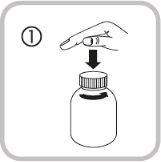
Follow these steps the first time you take Vimpat:
- Remove the adapter from the oral syringe (figure 2).
- Place the adapter on top of the bottle (figure 3). Make sure it is well fixed. You do not need to remove the adapter after use.
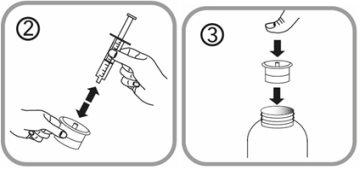
Follow these steps each time you take Vimpat:
- Place the oral syringe in the adapter opening (figure 4).
- Place the bottle upside down (figure 5).
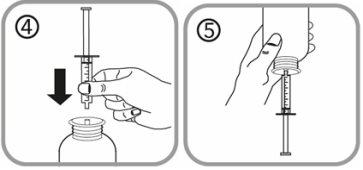
- Hold the bottle upside down with one hand and use the other to fill the oral syringe.
- Pull the plunger down to fill the oral syringe with a small amount of solution (figure 6).
- Press the plunger up to eliminate any possible bubbles (figure 7).
- Pull the plunger down to the dose mark that corresponds to the milliliters (ml) prescribed by your doctor (figure 8). It is possible that the plunger will return to its original position in the first dose. Therefore, make sure it remains in its position until the oral syringe is disconnected from the bottle.
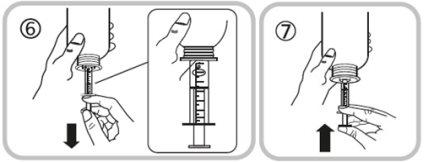
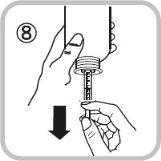
- Turn the bottle to the correct position (figure 9).
- Remove the oral syringe from the adapter (figure 10).
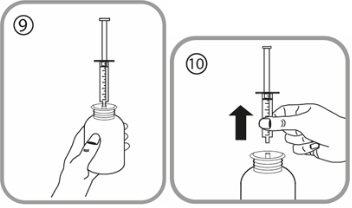
There are two ways you can choose to take the medication:
- Empty the contents of the oral syringe into a little water by pressing the plunger to the bottom of the oral syringe (figure 11) – in which case you will need to drink all the water (add just enough water to make it easier to drink) or
- Take the solution directly from the oral syringe without water (figure 12) – drink all the contents of the oral syringe.
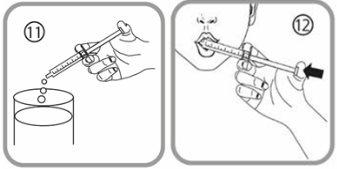
- Close the bottle with the plastic screw cap (you do not need to remove the adapter).
- To clean the oral syringe, rinse it only with cold water, moving the plunger several times up and down to collect and expel the water, without separating the two components of the syringe (figure 13).
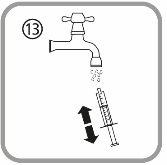
- Store the bottle, oral syringe, and leaflet in the box.
If you take more Vimpat than you should
If you have taken more Vimpat than you should, consult your doctor immediately. Do not try to drive. You may experience:
- Dizziness.
- Feeling nauseous (nausea) or being nauseous (vomiting).
- Seizures, heart rhythm problems such as slow, fast, or irregular pulse, coma, or low blood pressure with tachycardia and sweating.
If you forget to take Vimpat
- If you have forgotten to take a dose within the next 6 hours after the scheduled dose, take it as soon as you remember.
- If you have forgotten to take a dose after the next 6 hours after the scheduled dose, do not take the missed dose. Instead, take Vimpat the next time you normally would.
- Do not take a double dose to make up for missed doses.
If you stop treatment with Vimpat
- Do not stop taking Vimpat without telling your doctor, as epilepsy may appear again or may worsen.
- If your doctor decides to stop your treatment with Vimpat, they will give you instructions on how to gradually decrease the dose.
If you have any other questions about the use of this product, ask your doctor or pharmacist.

Started taking the medicine and have questions?
Discuss your symptoms and treatment with a doctor online.
4. Possible Adverse Effects
Like all medicines, this medicine can cause adverse effects, although not all people suffer from them.
Adverse effects on the nervous system, such as dizziness, may be greater after a single "loading" dose.
Tell your doctor or pharmacist if you experience any of the following effects:
Very common: may affect more than 1 in 10 patients
- Headache;
- Feeling dizzy or sick (nausea);
- Double vision (diplopia).
Common: may affect up to 1 in 10 patients
- Brief muscle or muscle group twitches (myoclonic jerks);
- Difficulty coordinating movements or walking;
- Difficulty maintaining balance, agitation (tremor), tingling (paresthesia) or muscle spasms, easy falling and bruising;
- Memory problems, difficulty thinking or finding words, confusion;
- Rapid, uncontrolled eye movements (nystagmus);
- Blurred vision;
- Dizzy sensation (vertigo), sensation of drunkenness;
- Being dizzy (vomiting), dry mouth, constipation, indigestion, excessive gas in the stomach or intestine, diarrhea;
- Decreased sensitivity, difficulty articulating words, attention disorder;
- Noise in the ears like buzzing, ringing or whistling;
- Irritability, sleep problems, depression;
- Somnolence, fatigue or weakness (asthenia);
- Itching, rash.
Uncommon: may affect up to 1 in 100 patients
- Decreased heart rate, palpitations, irregular pulse or other changes in heart electrical activity (conduction disorder);
- Exaggerated feeling of well-being, seeing and/or hearing things that are not real;
- Allergic reaction to taking the medicine, hives;
- Blood tests may show liver function abnormalities, liver damage;
- Thoughts of self-harm or suicide or attempted suicide: inform your doctor immediately;
- Feeling angry or agitated; abnormal thoughts and/or loss of sense of reality;
- Severe allergic reactions, which cause swelling of the face, throat, hands, feet, ankles or lower legs;
- Fainting;
- Abnormal involuntary movements (dyskinesia).
Frequency not known: cannot be estimated from the available data
- Abnormally fast heartbeat (ventricular tachyarrhythmia);
- Sore throat, elevated temperature and frequent infections. Blood tests may show a severe decrease in a specific class of white blood cells (agranulocytosis);
- Severe skin reaction, which may include elevated temperature and other flu-like symptoms, rash on the face, generalized rash with lymph node inflammation (enlarged lymph nodes). Blood tests may show an increase in liver enzyme levels and an increase in a type of white blood cell (eosinophilia);
- A generalized rash with blisters and skin peeling, especially around the mouth, nose, eyes, and genitals (Stevens-Johnson syndrome) and a more severe form that causes skin peeling on more than 30% of the body surface (toxic epidermal necrolysis).
- Seizures.
Other adverse effects in children
Additional adverse effects observed in children were fever (pyrexia), runny nose (nasopharyngitis), sore throat (pharyngitis), decreased appetite, behavioral changes, abnormal behavior, and lack of energy (lethargy). Drowsiness (somnolence) is a very common side effect in children and may affect more than 1 in 10 children.
Reporting of adverse effects
If you experience any type of adverse effect, consult your doctor or pharmacist, even if it is a possible adverse effect that is not listed in this leaflet. You can also report them directly through the national reporting system included in Appendix V. By reporting adverse effects, you can contribute to providing more information on the safety of this medicine.
5. Storage of Vimpat
Keep this medicine out of the sight and reach of children.
Do not use this medicine after the expiration date that appears on the box and on the bottle, after CAD/EXP. The expiration date is the last day of the month indicated.
Do not refrigerate.
No special storage conditions are required.
Once the syrup bottle is opened, do not use it after 6 months.
Medicines should not be thrown away through wastewater or household waste. Ask your pharmacist how to dispose of the packaging and medicines you no longer need. This will help protect the environment.
6. Package Contents and Additional Information
Vimpat Composition
- The active ingredient is lacosamide. 1 ml of Vimpat syrup contains 10 mg of lacosamide.
- The other components are: glycerol (E422), carmellose sodium, sorbitol liquid (crystallizable) (E420), polyethylene glycol 4000, sodium chloride, citric acid (anhydrous), acesulfame potassium (E950), methylparaben sodium (E219), strawberry flavor (contains propylene glycol, maltol), flavor masker (contains propylene glycol, aspartame (E951), acesulfame potassium (E950), maltol, and purified water).
Product Appearance and Package Contents
- Vimpat 10 mg/ml syrup is a clear, colorless to light brown viscous solution.
- Vimpat is available in a 200 ml bottle.
The Vimpat syrup box includes a 30 ml polypropylene measuring cup (black graduation marks) and a 10 ml oral syringe made of polyethylene/polypropylene (black graduation marks) with its polyethylene adapter.
- The measuring cup is suitable for doses over 20 ml. Each graduation mark (5 ml) on the measuring cup corresponds to 50 mg of lacosamide (for example, 2 graduation marks correspond to 100 mg).
The 10 ml oral syringe is suitable for doses between 1 ml and 20 ml. A full 10 ml oral syringe corresponds to 100 mg of lacosamide. The minimum extractable volume is 1 ml, which corresponds to 10 mg of lacosamide. After this, each graduation mark (0.25 ml) corresponds to 2.5 mg of lacosamide (for example, 4 graduation marks correspond to 10 mg).
Marketing Authorization Holder
UCB Pharma S.A., Allée de la Recherche 60, B-1070 Bruxelles, Belgium.
Manufacturer
Aesica Pharmaceuticals GmbH, Alfred-Nobel Strasse 10, D-40789 Monheim am Rhein, Germany
or
UCB Pharma SA, Chemin du Foriest, B-1420, Braine-l’Alleud, Belgium.
You can request more information about this medicine by contacting the local representative of the marketing authorization holder:
België/Belgique/Belgien UCB Pharma SA/NV Tel: + 32 / (0)2 559 92 00 | Lietuva UCB Pharma Oy Finland Tel: + 358 9 2514 4221 (Suomija) |
| Luxembourg/Luxemburg UCB Pharma SA/NV Tél/Tel: + 32 / (0)2 559 92 00 (Belgique/Belgien) |
Ceská republika UCB s.r.o. Tel: + 420 221 773 411 | Magyarország UCB Magyarország Kft. Tel.: + 36-(1) 391 0060 |
Danmark UCB Nordic A/S Tlf: + 45 / 32 46 24 00 | Malta Pharmasud Ltd. Tel: + 356 / 21 37 64 36 |
Deutschland UCB Pharma GmbH Tel: + 49 /(0) 2173 48 4848 | Nederland UCB Pharma B.V. Tel.: + 31 / (0)76-573 11 40 |
Eesti UCB Pharma Oy Finland Tel: + 358 9 2514 4221 (Soome) | Norge UCB Nordic A/S Tlf: + 47 / 67 16 5880 |
Ελλάδα UCB Α.Ε. Τηλ: + 30 / 2109974000 | Österreich UCB Pharma GmbH Tel: + 43 (0) 1291 80 00 |
España UCB Pharma, S.A. Tel: + 34 / 91 570 34 44 | Polska UCB Pharma Sp. z o.o. / VEDIM Sp. z o.o. Tel.: + 48 22 696 99 20 |
France UCB Pharma S.A. Tél: + 33 / (0)1 47 29 44 35 | Portugal UCB Pharma (Produtos Farmacêuticos), Lda Tel: + 351 21 302 5300 |
Hrvatska Medis Adria, d.o.o. Tel: +385 (0) 1 230 34 46 | România UCB Pharma Romania S.R.L. Tel: + 40 21 300 29 04 |
Ireland UCB (Pharma) Ireland Ltd. Tel: + 353 / (0)1-46 37 395 | Slovenija Medis, d.o.o. Tel: + 386 1 589 69 00 |
Ísland Vistor hf. Simi: + 354 535 7000 | Slovenská republika UCB s.r.o., organizačná zložka Tel: + 421 (0) 2 5920 2020 |
Italia UCB Pharma S.p.A. Tel: + 39 / 02 300 791 | Suomi/Finland UCB Pharma Oy Finland Puh/Tel: + 358 9 2514 4221 |
Κύπρος Lifepharma (Z.A.M.) Ltd Τηλ: + 357 22 05 63 00 | Sverige UCB Nordic A/S Tel: + 46 / (0) 40 29 49 00 |
Latvija UCB Pharma Oy Finland Tel: + 358 9 2514 4221 (Somija) | United Kingdom (Northern Ireland) UCB (Pharma) Ireland Ltd Tel: + 353 / (0)1-46 37 395 |
Date of last revision of this leaflet:{month/YYYY}.
Other sources of information
Detailed information about this medicine is available on the European Medicines Agency website: http://www.ema.europa.eu/.
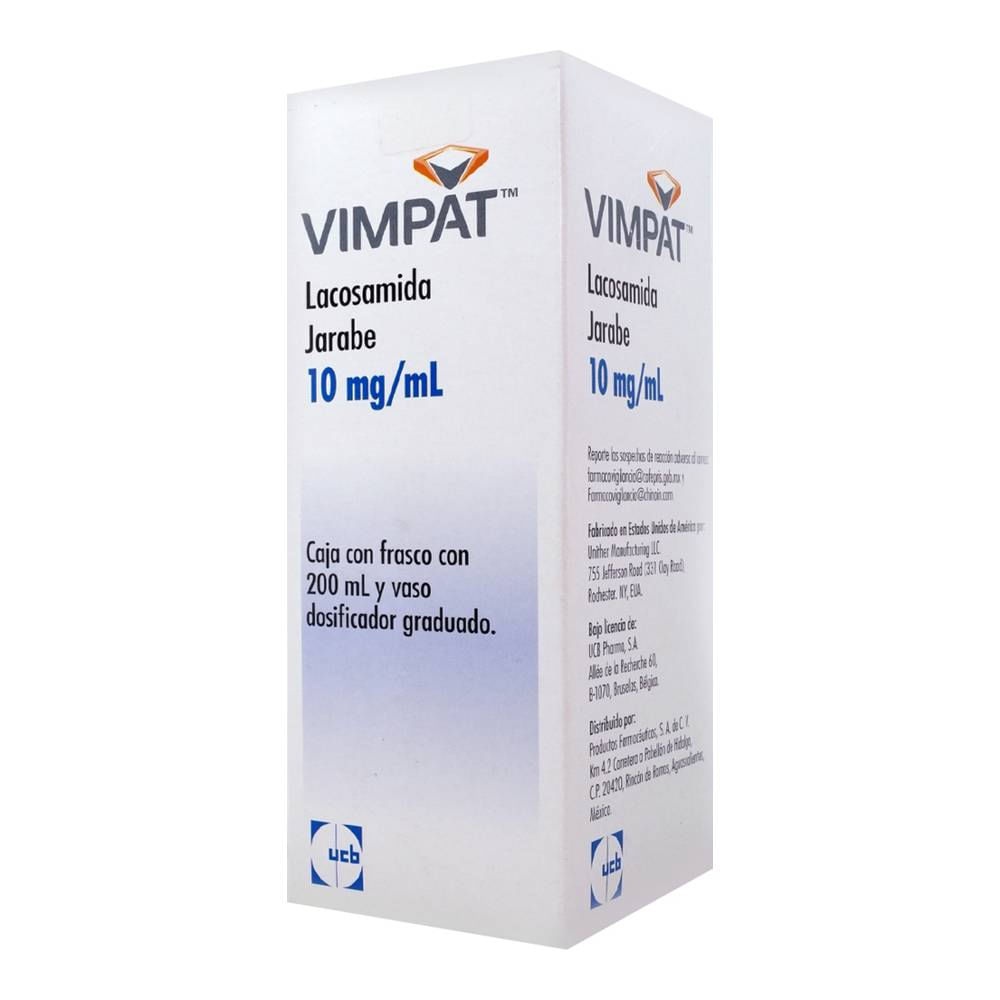
- Country of registration
- Dosage formORAL SOLUTION/SUSPENSION, 10 mg/ml
- ATC codeN03AX18
- Average pharmacy price23.49 EUR
- Active substance
- Prescription requiredYes
- Manufacturer
- CompositionGLICEROL (E 422) (85 mg mg), CARBOXIMETILAMILOPECTINA SODICA (3,33 mg mg), SORBITOL LIQUIDO CRISTALIZABLE (266,67 mg mg), CLORURO DE SODIO (2 mg mg), ACESULFAMO POTASICO (2,67 mg mg), PARAHIDROXIBENZOATO DE METILO SODICO (E-219) (2,60 mg mg)
- This information is for reference only and does not constitute medical advice. Always consult a doctor before taking any medication. Oladoctor is not responsible for medical decisions based on this content.
- Alternatives to VIMPAT 10 mg/ml SYRUPDosage form: TABLET, 100 mgActive substance: lacosamideManufacturer: Intas Third Party Sales 2005 S.L.Prescription requiredDosage form: TABLET, 150 mgActive substance: lacosamideManufacturer: Intas Third Party Sales 2005 S.L.Prescription requiredDosage form: TABLET, 200 mgActive substance: lacosamideManufacturer: Intas Third Party Sales 2005 S.L.Prescription required
Online doctors for VIMPAT 10 mg/ml SYRUP
Discuss questions about VIMPAT 10 mg/ml SYRUP, including use, safety considerations and prescription review, subject to medical assessment and local regulations.



Get VIMPAT 10 mg/ml SYRUP Prescription Online
Fill in a 2-min form
Tell us your symptoms, history, and what medicine you're requesting.
Pick a doctor or let us assign
Choose a specialist or we'll match you with the next available doctor.
Doctor reviews your case
Usually within 30 minutes. They may ask follow-up questions via chat.
Collect from any pharmacy
Electronic prescription sent to your email — valid across Spain.
Frequently Asked Questions
VIMPAT 10 mg/ml SYRUP requires a prescription in Spain. You can check with a doctor online whether this medicine may be appropriate for your situation.
The active ingredient in VIMPAT 10 mg/ml SYRUP is lacosamide. This information helps identify medicines with the same composition but different brand names.
The average pharmacy price for VIMPAT 10 mg/ml SYRUP is around 23.49 EUR. Prices may vary depending on the manufacturer and dosage form.
VIMPAT 10 mg/ml SYRUP is manufactured by Ucb Pharma. Pharmacy brands and packaging may differ depending on the distributor.
Doctors such as Family doctors, Psychiatrists, Dermatologists, Cardiologists, Endocrinologists, Gastroenterologists, Pulmonologists, Nephrologists, Rheumatologists, Hematologists, Infectious disease physicians, Allergists, Geriatricians, Paediatricians, Oncologists may assess whether VIMPAT 10 mg/ml SYRUP is appropriate, depending on your situation and local regulations. You can book an online consultation to discuss your symptoms and possible next steps.
Spain has a well-developed healthcare infrastructure across major cities such as Madrid, Barcelona, Valencia, and Seville. Pharmacies are widely available and operate under strict regulations, ensuring access to prescribed medications.
You can buy VIMPAT 10 mg/ml SYRUP in Madrid, Barcelona, Seville, or Valencia at any local pharmacy with a valid prescription.
To obtain a prescription, you can use Oladoctor:
Other medicines with the same active substance (lacosamide) include BALMID 100 mg FILM-COATED TABLETS, BALMID 150 mg FILM-COATED TABLETS, BALMID 200 mg FILM-COATED TABLETS. These may have different brand names or formulations but contain the same therapeutic ingredient. Always consult a doctor before switching or starting a new medicine.
