



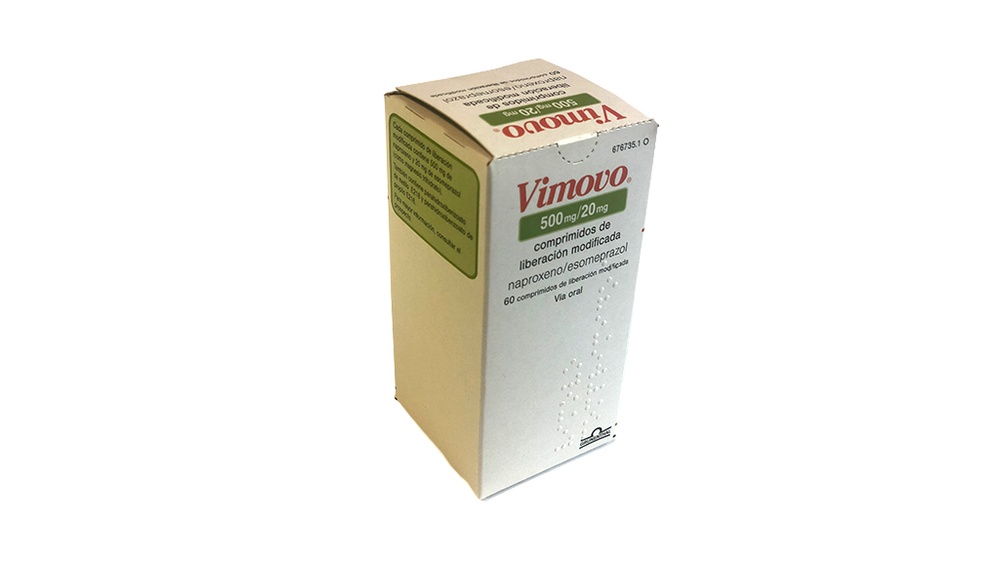
VIMOVO 500 mg/20 mg Modified-Release Tablets

Prescription review online
A doctor will review your case and decide whether a prescription is medically appropriate.

Talk to a doctor about this medicine
Discuss your symptoms and possible next steps in a quick online consultation.



How to use VIMOVO 500 mg/20 mg MODIFIED-RELEASE TABLETS
Contents of the leaflet
- Introduction
- What is VIMOVO and what is it used for
- What you need to know before you take VIMOVO
- How to take VIMOVO
- Possible Adverse Effects
- Storage of VIMOVO
- Package contents and additional information
Introduction
Package Leaflet: Information for the User
VIMOVO 500mg/20mg modified-release tablets
naproxen and esomeprazol
Read all of this leaflet carefully before you start taking this medicine because it contains important information for you.
- Keep this leaflet, you may need to read it again.
- If you have any further questions, ask your doctor or pharmacist.
- This medicine has been prescribed for you only. Do not pass it on to others. It may harm them, even if their signs of illness are the same as yours.
- If you get any side effects, talk to your doctor or pharmacist. This includes any possible side effects not listed in this leaflet. See section 4.
Contents of the pack
- What is VIMOVO and what is it used for
- What you need to know before you take VIMOVO
- How to take VIMOVO
- Possible side effects
- Storage of VIMOVO
- Contents of the pack and other information
1. What is VIMOVO and what is it used for
What is VIMOVO
VIMOVO contains two different medicines called naproxen and esomeprazol. Each of these medicines works in a different way.
- Naproxen belongs to a group of medicines called “non-steroidal anti-inflammatory drugs” (NSAIDs). It reduces pain and inflammation.
- Esomeprazol belongs to a group of medicines called “proton pump inhibitors”. It reduces the amount of acid in your stomach.
Esomeprazol helps to reduce the risk of ulcers and stomach problems that can occur in patients who need to take NSAIDs.
What is VIMOVO used for
VIMOVO is used in adults for the relief of symptoms of:
- Osteoarthritis.
- Rheumatoid arthritis.
- Ankylosing spondylitis.
VIMOVO helps to reduce pain, swelling, redness, and heat (inflammation).
You will receive this medicine if it is considered unlikely that a lower dose of an NSAID will relieve your pain and you are at risk of developing a stomach ulcer or an ulcer in the first part of the small intestine (duodenum) while taking an NSAID.

Not sure if this medicine is right for you?
Discuss your symptoms and treatment with a doctor online.
2. What you need to know before you take VIMOVO
Do not take VIMOVO:
- If you are allergic (hypersensitive) to naproxen.
- If you are allergic to esomeprazol or other proton pump inhibitors.
- If you are allergic to any of the other ingredients of this medicine (listed in Section 6).
- If you are taking a medicine called “atazanavir” or “nelfinavir” (used to treat HIV infection).
- If acetylsalicylic acid (e.g. aspirin), naproxen, or other NSAIDs such as ibuprofen, diclofenac, or COX-2 inhibitors (e.g. celecoxib, etoricoxib) have ever caused you to have asthma (wheezing), an allergic reaction such as itching or skin rash (urticaria).
- If you are in the last 3 months of pregnancy.
- If you have severe liver, kidney, or heart problems.
- If you have a stomach ulcer or intestinal ulcer.
- If you have any bleeding disorder or have had significant or unexplained bleeding.
Do not take VIMOVO if you are in any of the above situations. If you are not sure, consult your doctor or pharmacist before taking VIMOVO.
Warnings and precautions
Consult your doctor or pharmacist before starting to take VIMOVO.
Do not take VIMOVO and consult your doctor immediately if you experience any of the following episodes before or during treatment with VIMOVO, as this medicine may mask the symptoms of another illness:
- if you lose a lot of weight without reason and have difficulty swallowing.
- if you vomit food or blood.
- if your stools are black (blood-stained).
If you are in any of these situations (or are unsure), consult your doctor or pharmacist before taking this medicine.
Consult your doctor or pharmacist before taking this medicine if:
- You have inflammation of the intestines (Crohn's disease or ulcerative colitis).
- You have other liver or kidney problems or if you are elderly.
- You are taking medicines such as oral corticosteroids, warfarin, clopidogrel, Selective Serotonin Reuptake Inhibitors (SSRIs), acetylsalicylic acid (aspirin), or NSAIDs including COX-2 inhibitors (see section Taking VIMOVO with other medicines).
- If you have ever had a skin reaction after treatment with a medicine similar to VIMOVO to reduce stomach acid.
- If you are scheduled to have a specific blood test (Chromogranin A).
If you are in any of these situations (or are unsure), consult your doctor or pharmacist before taking this medicine.
If you have had a stomach ulcer or bleeding before, inform your doctor. You will be asked to inform your doctor of any unusual stomach symptoms (e.g. pain).
Some medicines like VIMOVO may be associated with a small increased risk of heart attack (myocardial infarction) or stroke. The risk is always greater with higher doses and longer treatment. Do not exceed the recommended dose or duration of treatment.
VIMOVO contains the NSAID naproxen. As with all NSAIDs, naproxen should be used at the lowest effective dose with the shortest possible treatment duration to reduce the risk of unwanted effects. Your doctor will therefore regularly assess whether VIMOVO is still suitable for you.
VIMOVO is not suitable for rapid relief of acute pain, as it takes several hours for the analgesic naproxen to reach the bloodstream.
Consult your doctor before taking this medicine if you have any heart problems, a history of stroke, or think you are at risk of these problems. You may be at risk of these problems if:
- you have high blood pressure;
- you have circulation or coagulation problems;
- you are diabetic;
- you have high cholesterol levels;
- you are a smoker.
Taking a proton pump inhibitor (which is one of the components of VIMOVO), especially for more than a year, may slightly increase the risk of fractures of the hip, wrist, or spine. Inform your doctor if you have osteoporosis or are taking corticosteroids (which may increase the risk of osteoporosis).
If you experience a skin rash, especially in areas of the skin exposed to the sun, consult your doctor as soon as possible, as it may be necessary to interrupt treatment with VIMOVO. Remember to mention any other symptoms you may notice, such as joint pain.
Severe skin rashes have occurred in patients taking esomeprazol (see also section 4). The rash may include ulcers in the mouth, throat, nose, genitals, and conjunctivitis (red and swollen eyes). These severe skin rashes usually occur after symptoms similar to those of the flu, such as fever, headache, and body aches. The rash may cover large areas of the body with blisters and peeling skin.
If at any time during treatment (even after several weeks) you develop a rash or any of these skin symptoms, stop taking this medicine and contact your doctor immediately.
During treatment with VIMOVO, kidney inflammation may occur. The signs and symptoms may include decreased urine volume or blood in the urine and/or hypersensitivity reactions such as fever, skin rash, and joint stiffness. You should inform your doctor of these signs.
Children and adolescents
VIMOVO is not recommended for use in children or adolescents under 18 years of age.
Taking VIMOVO with other medicines
Inform your doctor or pharmacist if you are taking, have recently taken, or might take any other medicines, including those obtained without a prescription, including herbal medicines. This is because VIMOVO may affect the way other medicines work. There are also some medicines that may affect the way VIMOVO works.
Do not take this medicine and inform your doctor or pharmacist if you are taking:
- A medicine called “atazanavir” or “nelfinavir” (used to treat HIV infection).
Inform your doctor or pharmacist if you are taking any of these medicines:
- Acetylsalicylic acid (aspirin) (used as a pain reliever or to prevent blood clots). If you are taking low doses of acetylsalicylic acid (aspirin), you may still be able to take VIMOVO.
- Other NSAIDs (including COX-2 inhibitors).
- Certain medicines such as ketoconazole, itraconazole, posaconazole, or voriconazole (used to treat fungal infections).
- Erlotinib (or another anticancer medicine of the same class).
- Colestyramine (used to reduce cholesterol).
- Clarithromycin (used to treat infections).
- “Quinolone antibiotics” (for infections), such as ciprofloxacin or moxifloxacin.
- Diazepam (used to treat anxiety, relax muscles, or in epilepsy).
- Hydantoins such as phenytoin (used to treat epilepsy).
- Lithium (used to treat certain types of depression).
- Methotrexate (used to treat rheumatoid arthritis, psoriasis, and cancer).
- Probenecid (used for gout).
- “Selective Serotonin Reuptake Inhibitors” (SSRIs) (used to treat severe depression and anxiety disorders).
- Cyclosporin or tacrolimus (medicines used to reduce the body's immune reactions).
- Digoxin (used to treat heart problems).
- Sulfonylureas such as glimepiride (oral medicines used to control blood sugar levels in diabetes).
- Medicines used to treat high blood pressure that are called diuretics (such as furosemide or hydrochlorothiazide), ACE inhibitors (such as enalapril), angiotensin II receptor antagonists (such as losartan), and beta-blockers (such as propranolol).
- Corticosteroid medicines such as hydrocortisone or prednisolone (used as anti-inflammatory medicines).
- Medicines to prevent blood clotting, such as warfarin, dicumarol, heparin, or clopidogrel.
- Rifampicin (used to treat tuberculosis).
- St. John's Wort (Hypericum perforatum) (used to treat mild depression).
- Cilostazol (used for leg pain due to poor blood flow).
If you are in any of these situations (or are unsure), consult your doctor or pharmacist before taking VIMOVO.
Taking VIMOVO with food and drinks
Do not take VIMOVO with food, as it may reduce and/or delay the effect of VIMOVO. Take the tablets at least 30 minutes before meals.
Pregnancy, breastfeeding, and fertility
If you are pregnant or breastfeeding, think you may be pregnant, or are planning to have a baby, ask your doctor or pharmacist for advice before taking this medicine.
Pregnancy
Do not take VIMOVO if you are in the last 3 months of pregnancy, as it may harm the fetus or cause problems during delivery. It may cause kidney and heart problems in the fetus. It may affect bleeding tendency, yours and your baby's, and that delivery may be delayed or prolonged more than expected. You should not use VIMOVO during the first 6 months of pregnancy unless it is absolutely necessary and your doctor advises you to do so. If you need treatment during this period or while trying to become pregnant, you should use the lowest dose for the shortest possible time. If you take it for more than a few days from the 20th week of pregnancy, VIMOVO may cause kidney problems in the fetus that can lead to low levels of the fluid that surrounds the baby (oligohydramnios) or narrowing of a blood vessel (ductus arteriosus) in the baby's heart. If you need to prolong treatment for more than a few days, your doctor may recommend additional monitoring.
Breastfeeding
Do not breastfeed if you are taking VIMOVO, as small amounts may pass into breast milk. If you are planning to breastfeed, do not take VIMOVO.
Fertility
VIMOVO may make it harder for you to become pregnant. You should inform your doctor if you are planning a pregnancy or are having difficulty becoming pregnant.
Driving and using machines
You may feel dizzy or experience blurred vision during treatment with VIMOVO. If this happens, do not drive or use tools or machines.
VIMOVO containsmethyl parahydroxybenzoate (E218) and propyl parahydroxybenzoate (E216)
These ingredients may cause allergic reactions. These reactions can be delayed.
VIMOVO contains less than 1 mmol of sodium (23mg) per tablet, i.e., it is essentially “sodium-free”.
3. How to take VIMOVO
Follow the instructions for administration of this medicine exactly as indicated by your doctor. If you are unsure, consult your doctor or pharmacist again.
How to take this medicine
- Swallow the tablets whole with water. Do not break, chew, or crush the tablets. It is important that you swallow the tablets whole for the medicine to work correctly.
- Take the tablets at least 30 minutes before meals. Food may reduce the protective effect of VIMOVO on your stomach and intestines. Food may also cause a significant delay in the relief of pain and inflammation.
- If you have been taking this medicine for a long time, your doctor will want to perform checks (especially if you have been taking it for more than a year).
How much to take
- Take one tablet twice a day for the time indicated by your doctor.
- VIMOVO is only available as 500 mg/20 mg. If your doctor thinks this dose is not suitable for you, they may prescribe another treatment.
If you take more VIMOVO than you should
If you take more VIMOVO than you should, consult your doctor or pharmacist immediately. The symptoms of an overdose may include lethargy, dizziness, drowsiness, abdominal pain and/or discomfort, heartburn, indigestion, nausea, liver problems (which can be seen in a blood test), kidney problems that can be severe, high levels of acid in your blood, disorientation, vomiting, stomach or intestinal bleeding, high blood pressure, breathing difficulties, coma, sudden allergic reactions (which can include shortness of breath, skin rashes, swelling of the face and/or throat, and/or collapse), and uncontrolled body movements.
In case of overdose or accidental ingestion, consult your doctor or pharmacist immediately or call the Toxicology Information Service, phone: 91 562 04 20, indicating the medicine and the amount taken.
If you forget to take VIMOVO
- If you forget to take a dose, take it as soon as you remember. However, if it is almost time for the next dose, skip the missed dose.
- Do not take a double dose (two doses at the same time) to make up for missed doses.
If you have any further questions on the use of this product, ask your doctor or pharmacist.

Started taking the medicine and have questions?
Discuss your symptoms and treatment with a doctor online.
4. Possible Adverse Effects
Like all medicines, this medicine can cause adverse effects, although not all people suffer from them. The following adverse effects may occur with this medicine.
Stop taking VIMOVO and consult a doctor immediately if you notice any of the following serious adverse effects - you may need urgent medical treatment:
- Sudden ringing, swelling of the lips, tongue, and throat or body, skin rash, fainting, or difficulty swallowing (severe allergic reaction).
- Sudden appearance of a severe skin rash or redness with blistering or peeling, even after several weeks of treatment. Severe blisters and bleeding may also appear on the lips, eyes, mouth, nose, and genitals. Skin rashes can become severe and widespread skin damage (exfoliation of the epidermis and superficial mucous membranes) with potentially fatal consequences. This could be a "multiform erythema", "Stevens-Johnson syndrome", "toxic epidermal necrolysis", or "drug reaction with eosinophilia and systemic symptoms". These effects are very rare and may affect up to 1 in 10,000 people.
- Yellowing of the skin or whites of the eyes, dark urine, and fatigue, which may be symptoms of liver problems.
- Medicines like VIMOVO may be associated with a small increased risk of having a heart attack (myocardial infarction) or stroke. The signs are chest pain radiating to the neck and shoulders and down the left arm, confusion, or numbness or muscle weakness that may affect only one side of the body.
- Dark, pasty stools or bloody diarrhea.
- Vomiting blood or dark particles that resemble coffee grounds.
Tell your doctor as soon as possible if you experience any of the following symptoms:
In rare cases, VIMOVO may affect the white blood cells in the blood, leading to immunosuppression.
If you have an infection with symptoms such as fever with a severe worsening of your general health or fever with symptoms of local infection such as neck, throat, or mouth pain or difficulty urinating, you should consult your doctor as soon as possible to rule out a lack of white blood cells (agranulocytosis) through a blood test. It is essential that you report your medication at that time.
Other adverse effects are:
Common (may affect up to 1 in 10 people)
- Headache.
- Feeling of fatigue.
- Feeling of thirst.
- Feeling of depression.
- Feeling of shortness of breath.
- Increased sweating.
- Itching of the skin and skin rash.
- Feeling that everything is spinning (vertigo).
- Red or purple spots, bruises, or patches on the skin.
- Nausea or vomiting.
- Feeling of heart palpitations.
- Sleep disturbance or insomnia.
- Hearing problems or ringing in the ears.
- Dizziness, feeling of drowsiness, or feeling of lightheadedness.
- Swelling of the hands, feet, and ankles (edema).
- Inflammation inside the mouth.
- Vision problems.
- Diarrhea, stomach pain, acidity, indigestion, constipation, belching, or gas (flatulence).
- Stomach ulcers or ulcers in the first part (duodenum) of the small intestine.
- Inflammation of the stomach lining (gastritis).
- Benign polyps in the stomach.
Uncommon, rare, or very rare (may affect up to 1 in 100 people or less)
- Sores or ulcers in the mouth.
- Vision problems such as blurred vision, conjunctivitis, or eye pain.
- Strange dreams.
- Feeling of sleepiness.
- Increased blood sugar (glucose) levels. Symptoms may include feeling thirsty and urinating more frequently.
- Low blood sugar (glucose) levels. Symptoms may include feeling hungry or weak, sweating, and an increased heart rate.
- Coma.
- Inflammation of blood vessels.
- Perforation (hole) in the stomach or intestine.
- Systemic lupus erythematosus (SLE), a disease in which the immune system attacks the body, causing joint pain, skin rashes, and fever.
- Enlargement of lymph nodes.
- Fracture of the hip, wrist, or spine (if VIMOVO is used in high doses and for extended periods).
- Fever.
- Fainting.
- Dry mouth.
- Aggression.
- Hearing loss.
- Asthma attack.
- Tremors or convulsions.
- Menstrual problems.
- Weight changes.
- Hair loss (alopecia).
- Skin rash with blisters.
- Joint pain (arthralgia).
- Enlargement of breast tissue in males.
- Pain or swelling of the tongue.
- Muscle spasms or tremors.
- Appetite problems or altered taste.
- Weakness or muscle pain (myalgia).
- Blood may take longer to clot.
- Difficulty becoming pregnant if you are a woman.
- Fever, redness, or other signs of infection.
- Irregular, slow, or very rapid heartbeats.
- Feeling of tingling.
- Difficulty with memory or concentration.
- Feeling of restlessness, confusion, anxiety, or nervousness.
- Feeling of general malaise, weakness, and lack of energy.
- Edema or pain in some parts of the body due to fluid retention.
- High or low blood pressure. You may experience dizziness or fainting.
- Skin rash or blistering, or increased sensitivity of the skin to the sun.
- Seeing, feeling, or hearing things that do not exist (hallucinations).
- Changes in blood test results, such as those done to check liver function. Your doctor can explain this better.
- Infection called "candidiasis" that can affect the intestine and is caused by a fungus.
- Presence of blood in the urine or other kidney problems. You may have back pain.
- Difficulty breathing, which can worsen slowly. It may indicate the development of pneumonia or inflammation in the lungs.
- Low sodium levels in the blood, which can cause weakness, vomiting, and cramps.
- Symptoms of meningitis such as fever, feeling unwell, stiff neck, headache, sensitivity to bright light, and confusion.
- Pancreas problems. The signs include severe stomach pain that radiates to the back.
- Light-colored stools that are a sign of severe liver problems (hepatitis). Severe liver problems that cause liver failure and brain damage.
- Colitis or worsening of inflammatory bowel disease, such as Crohn's disease or ulcerative colitis. The signs include stomach pain, diarrhea, vomiting, and weight loss.
- Blood problems, such as a decrease in red blood cells (anemia), white blood cells, or platelets, which can cause weakness, bruising, fever, chills, sore throat, or more frequent infections.
- Increased number of a certain type of white blood cell (eosinophilia).
- Lack of all types of blood cells (pancytopenia).
- Problems with the way the heart pumps blood to the body or damage to blood vessels. The symptoms are fatigue, difficulty breathing, weakness, chest pain, or generalized pain.
Frequency not known (cannot be estimated from available data)
- If you are treated with VIMOVO for more than three months, your blood magnesium levels may decrease. Low magnesium levels can manifest as fatigue, involuntary muscle contractions, disorientation, convulsions, dizziness, or an increased heart rate. If you have any of these symptoms, inform your doctor immediately. Low magnesium levels can also lead to a reduction in potassium or calcium levels in the blood. Your doctor may decide to perform periodic tests to monitor your magnesium levels.
- Skin rash, possibly with joint pain.
Do not worry about this list of possible adverse effects.You may not experience any of them.
Reporting of adverse effects
If you experience any type of adverse effect, consult your doctor or pharmacist, even if it is a possible adverse effect that is not listed in this leaflet. You can also report them directly through the Spanish Medicines Agency: https://www.notificaram.es. By reporting adverse effects, you can contribute to providing more information on the safety of this medicine.
5. Storage of VIMOVO
Keep this medicine out of sight and reach of children.
Do not use this medicine after the expiration date stated on the packaging, bottle, or blister after CAD. The expiration date is the last day of the month indicated.
Do not store above 30°C.
Bottle: Keep this medicine in its original packaging and keep the bottle tightly closed to protect it from moisture.
Blister: Keep this medicine in its original packaging to protect it from moisture.
Medicines should not be disposed of via wastewater or household waste. Deposit the packaging and medicines you no longer need at the pharmacy's SIGRE point. Ask your pharmacist how to dispose of the packaging and medicines you no longer need. This will help protect the environment.
6. Package contents and additional information
Composition of VIMOVO
- The active ingredients are naproxen 500 mg and esomeprazole 20 mg.
- The other ingredients (excipients) of the tablet core are sodium croscarmellose, magnesium stearate, povidone K90, colloidal silicon dioxide; and in the film coating, carnauba wax, glycerol monostearate 40-55, hypromellose type 2910 (3 mPas, 6 mPas, and 50 mPas), iron oxide (E172 yellow, black), macrogol 8000, methacrylic acid - ethyl acrylate copolymer (1:1) dispersion 30%, methyl parahydroxybenzoate (E218), polydextrose, polysorbate 80, propylene glycol, propyl parahydroxybenzoate (E216), sodium lauryl sulfate, titanium dioxide (E171), triethyl citrate.
Appearance of the product and package contents
Oval tablets, 18x9.5 mm, yellow, marked with 500/20 in black ink.
Bottle:
Package sizes: 6, 10, 20, 30, 60, 100, 180, or 500 modified-release tablets.
The bottles contain a silica gel desiccant (to keep the tablets dry). Do not ingest the desiccant packet.
or
The bottles contain a silica gel desiccant in the screw cap (to keep the tablets dry).
Box with aluminum blisters:
Package sizes: 10, 20, 30, 60, or 100 modified-release tablets.
Not all package sizes may be marketed.
Marketing authorization holder and manufacturer
Marketing authorization holder:
Grünenthal Pharma, S.A.
Doctor Zamenhof, 36
28027 Madrid
Spain
Manufacturer:
Grünenthal GmbH
Zieglerstraße 6
52078 Aachen
Germany
This medicine is authorized in the Member States of the European Economic Area under the following names:
Member State | Medicine name |
Germany, Austria, Belgium, Bulgaria, Spain, Estonia, Finland, Netherlands, Ireland, Italy, Latvia, Lithuania, Luxembourg, Norway, Portugal, United Kingdom (Northern Ireland), Romania, Sweden | Vimovo |
Date of last revision of the leaflet:July 2023
Detailed and updated information on this medicine is available on the website of the Spanish Agency for Medicines and Health Products (AEMPS) http://www.aemps.gob.es/
- Country of registration
- Dosage formMODIFIED-RELEASE TABLET, 500 mg / 20 mg
- ATC codeM01AE52
- Average pharmacy price25.63 EUR
- Active substance
- Prescription requiredYes
- Manufacturer
- CompositionCROSCARMELOSA SODICA (22,0 mg mg), MONOESTEARATO DE GLICEROL (2,69 mg mg), POLISORBATO 80 (4,55 mg mg), POLIDEXTROSA (6,30 mg mg), PARAHIDROXIBENZOATO DE METILO (E-218) (0,02 mg mg), PARAHIDROXIBENZOATO DE PROPILO (0,01 mg mg)
- This information is for reference only and does not constitute medical advice. Always consult a doctor before taking any medication. Oladoctor is not responsible for medical decisions based on this content.
- Alternatives to VIMOVO 500 mg/20 mg MODIFIED-RELEASE TABLETSDosage form: MODIFIED-RELEASE TABLET, 500 mg/20 mgActive substance: naproxen and esomeprazoleManufacturer: Bausch Health Ireland LimitedPrescription requiredDosage form: MODIFIED-RELEASE TABLET, 500 mg/20 mgActive substance: naproxen and esomeprazoleManufacturer: Sandoz Farmaceutica S.A.Prescription requiredDosage form: MODIFIED-RELEASE TABLET, 660 mgActive substance: naproxenManufacturer: Bayer Hispania S.L.Prescription not required
Online doctors for VIMOVO 500 mg/20 mg MODIFIED-RELEASE TABLETS
Discuss questions about VIMOVO 500 mg/20 mg MODIFIED-RELEASE TABLETS, including use, safety considerations and prescription review, subject to medical assessment and local regulations.









Get VIMOVO 500 mg/20 mg MODIFIED-RELEASE TABLETS Prescription Online
Fill in a 2-min form
Tell us your symptoms, history, and what medicine you're requesting.
Pick a doctor or let us assign
Choose a specialist or we'll match you with the next available doctor.
Doctor reviews your case
Usually within 30 minutes. They may ask follow-up questions via chat.
Collect from any pharmacy
Electronic prescription sent to your email — valid across Spain.
Frequently Asked Questions
VIMOVO 500 mg/20 mg MODIFIED-RELEASE TABLETS requires a prescription in Spain. You can check with a doctor online whether this medicine may be appropriate for your situation.
The active ingredient in VIMOVO 500 mg/20 mg MODIFIED-RELEASE TABLETS is naproxen and esomeprazole. This information helps identify medicines with the same composition but different brand names.
The average pharmacy price for VIMOVO 500 mg/20 mg MODIFIED-RELEASE TABLETS is around 25.63 EUR. Prices may vary depending on the manufacturer and dosage form.
VIMOVO 500 mg/20 mg MODIFIED-RELEASE TABLETS is manufactured by Grünenthal Pharma S.A.. Pharmacy brands and packaging may differ depending on the distributor.
Doctors such as Family doctors, Psychiatrists, Dermatologists, Cardiologists, Endocrinologists, Gastroenterologists, Pulmonologists, Nephrologists, Rheumatologists, Hematologists, Infectious disease physicians, Allergists, Geriatricians, Paediatricians, Oncologists may assess whether VIMOVO 500 mg/20 mg MODIFIED-RELEASE TABLETS is appropriate, depending on your situation and local regulations. You can book an online consultation to discuss your symptoms and possible next steps.
Spain has a well-developed healthcare infrastructure across major cities such as Madrid, Barcelona, Valencia, and Seville. Pharmacies are widely available and operate under strict regulations, ensuring access to prescribed medications.
You can buy VIMOVO 500 mg/20 mg MODIFIED-RELEASE TABLETS in Madrid, Barcelona, Seville, or Valencia at any local pharmacy with a valid prescription.
To obtain a prescription, you can use Oladoctor:
Other medicines with the same active substance (naproxen and esomeprazole) include EMOXEN 500 mg/20 mg MODIFIED-RELEASE TABLETS, NAPROXEN/ESOMEPRAZOLE SANDOZ 500 mg/20 mg MODIFIED-RELEASE TABLETS, ACTROMADOL 660 mg MODIFIED-RELEASE TABLETS. These may have different brand names or formulations but contain the same therapeutic ingredient. Always consult a doctor before switching or starting a new medicine.
