


Venofusin 21 g injectable perfusión

Prescription review online
A doctor will review your case and decide whether a prescription is medically appropriate.

Talk to a doctor about this medicine
Discuss your symptoms and possible next steps in a quick online consultation.



How to use VENOFUSIN SODIUM BICARBONATE 1 M SOLUTION FOR INFUSION
Contents of the leaflet
- Introduction
- What is VENOFUSIN SODIUM BICARBONATE 1M and what is it used for
- What you need to know before using VENOFUSIN SODIUM BICARBONATE 1M
- How to use VENOFUSIN SODIUM BICARBONATE 1M
- Possible side effects
- Storage of VENOFUSIN SODIUM BICARBONATE 1M
- Package contents and further information
Introduction
PACKAGE LEAFLET: INFORMATION FOR THE USER
Venofusin Sodium Bicarbonate 1M solution for infusion
Sodium Hydrogencarbonate
(Sodium Bicarbonate)
Read all of this leaflet carefully before you start using this medicine.
- Keep this leaflet, you may need to read it again.
- If you have any further questions, ask your doctor or pharmacist.
- This medicine has been prescribed for you, do not pass it on to others. It may harm them, even if their symptoms are the same as yours.
- If you experience any side effects, talk to your doctor or pharmacist. This includes any possible side effects not listed in this leaflet. See section 4.
Contents of the package leaflet:
- What is Venofusin Sodium Bicarbonate 1M and what is it used for
- What you need to know before you use Venofusin Sodium Bicarbonate 1M
- How to use Venofusin Sodium Bicarbonate 1M
- Possible side effects
- Storage of Venofusin Sodium Bicarbonate 1M
- Package contents and further information
1. What is VENOFUSIN SODIUM BICARBONATE 1M and what is it used for
Venofusin Sodium Bicarbonate 1M is a solution for intravenous infusion belonging to the group of medicines called intravenous solutions that affect the electrolyte balance - Electrolytes.
It is indicated in the following situations:
- In the treatment of severe acute metabolic acidosis, which are clinical situations characterized by a decrease in blood pH and which may be caused by a loss of bicarbonate, such as after severe diarrhea or in renal tubular acidosis (kidney disorder that does not allow adequate regulation of bicarbonate), or by an excessive accumulation of acids in the body as occurs in ketoacidosis (accumulation of ketone bodies) or in lactic acidosis situations (accumulation of lactic acid).
- To increase the pH of urine in the treatment of acute intoxications of certain medications such as barbiturates or salicylates, in order to eliminate them quickly through the kidneys, or to decrease the toxic effects at the renal level that can occur after hemolytic reactions (reactions that cause the destruction of red blood cells)

Not sure if this medicine is right for you?
Discuss your symptoms and treatment with a doctor online.
2. What you need to know before using VENOFUSIN SODIUM BICARBONATE 1M
Do not use Venofusin Sodium Bicarbonate 1M
- If you are allergic to the active substance or to any of the other components of the medicine
- If you have alkalosis (increase in blood pH), either of metabolic or respiratory origin
- If you have low calcium levels in the blood (hypocalcemia), since the administration of this medicine in these situations can lead to tetany (prolonged muscle spasms)
- If you have excessive losses of chloride due to vomiting or gastrointestinal suction or hypochloremic alkalosis caused by diuretic medications
- If you have respiratory acidosis
Warnings and precautions
Be especially careful with Venofusin Sodium Bicarbonate 1M:
- during treatment, since the administration of sodium bicarbonate requires adequate pulmonary ventilation to correctly eliminate the formed carbon dioxide (CO2).
- during treatment, since the concentration of calcium and potassium in the blood may decrease during therapy with sodium bicarbonate. Your doctor may monitor and, if necessary, correct the levels of these electrolytes.
The administration of sodium bicarbonate should always be carried out under rigorous medical control, with periodic tests (such as blood tests) being performed.
Sodium bicarbonate can induce hypotension (decrease in blood pressure) in anesthetized patients.
Consult your doctor or pharmacist before starting to use Venofusin Sodium Bicarbonate 1M.
Using Venofusin Sodium Bicarbonate 1M with other medicines
Certain medications may interact with Venofusin Sodium Bicarbonate 1M. In this case, it may be necessary to change the dose or interrupt treatment with one of the medications.
In general, the concomitant administration of sodium bicarbonate with any medication that presents or may present renal toxicity should be avoided, as it can cause fluid and electrolyte retention.
It is important that you inform your doctor if you are using any of the following medications:
- corticosteroids with mineralocorticoid action (such as fludrocortisone) or ACTH (corticotropin).
- lithium carbonate.
- acidic medications such as salicylates and barbiturates.
- basic medications such as sympathomimetics (ephedrine, pseudoephedrine) and stimulants (amphetamine, dexamphetamine).
Tell your doctor or pharmacist if you are using or have recently used any other medications, including those obtained without a prescription.
Pregnancy and breastfeeding
If you are pregnant or breastfeeding, think you may be pregnant, or plan to become pregnant, consult your doctor or pharmacist before using this medicine.
The safety of its use during pregnancy and breastfeeding has not been established. Therefore, it should only be used when clearly necessary and when the beneficial effects justify the possible risks to the fetus or baby.
Driving and using machines:
There is no indication that this medication may affect the ability to drive vehicles or operate complex machinery.
Important information about some of the components of Venofusin Sodium Bicarbonate 1M
Patients on low-sodium diets should note that this medication contains 22.9 g (1000 mmol) of sodium per liter.
3. How to use VENOFUSIN SODIUM BICARBONATE 1M
Venofusin Sodium Bicarbonate 1M is normally administered by infusion, diluted to isotonicity in other intravenous administration liquids with which there is physical compatibility, although it can also be administered undiluted by slow injection. In cases of extreme necessity, such as cardiac arrest (clinical situation that occurs with lactic acidosis), the medication can even be administered initially by rapid direct intravenous injection. If the hypertonic solution is administered, the central route should be used.
This medication will be used in a hospital by the corresponding healthcare personnel. In the case of peripheral administration, the medication must be diluted with a compatible solution.
Your doctor will indicate the duration and administration schedule of the treatment with Venofusin Sodium Bicarbonate 1M based on the intensity of the acidosis, laboratory tests, and your age, weight, and clinical condition.
It is recommended that the initial dose of sodium bicarbonate not exceed 50% of the calculated deficit, since the degree of response of the body to a given dose of sodium bicarbonate is not always predictable, due to the delayed action of the physiological compensation mechanisms. For this reason, it is recommended that during therapy, the acid-base state be frequently monitored, modifying the dose according to the response.
As a general rule, in adult patients in a situation of cardiac arrest, an initial dose of 1 mEq/kg of sodium bicarbonate can be administered intravenously, always ensuring adequate pulmonary ventilation.
Use in children and adolescents
In pediatric patients, an initial dose of 1 mEq/kg is recommended, administered by slow intravenous injection. In neonates, a 1:1 dilution of a sodium bicarbonate injection at 7.5 or 8.4% and a glucose injection at 5% (final solution at 4.2%) is recommended, without exceeding 8 mEq/kg per day.
If you are given more VENOFUSIN SODIUM BICARBONATE 1M than you should
Overdose or overdose in treatment with sodium bicarbonate can occur when the administration of the medication is excessive or too rapid, or in patients with renal insufficiency, and can lead to the development of metabolic alkalosis, hypocalcemia, hypokalemia (low potassium levels in the blood), paradoxical intracellular and cerebrospinal fluid acidosis (decrease in pH in cells and cerebrospinal fluid), hypotension, hypernatremia (high sodium levels in the blood), and hyperosmolarity (see section 4).
In case of overdose, the administration of the medication should be suspended and the electrolyte imbalance corrected.
In case of overdose or accidental ingestion, consult the Toxicology Information Service. Phone: 915 620 420.
If you have any further questions about the use of this medication, ask your doctor or pharmacist.

Started taking the medicine and have questions?
Discuss your symptoms and treatment with a doctor online.
4. Possible side effects
Like all medicines, this medicine can cause side effects, although not everybody gets them.
The side effects that may occur are due to the administration of sodium bicarbonate at high doses or too quickly.
The possible side effects are:
- metabolic alkalosis (increase in blood pH)
- paradoxical intracellular and cerebrospinal fluid acidosis (decrease in pH in cells and cerebrospinal fluid)
- hypokalemia (low potassium levels in the blood)
- hypocalcemia (low calcium levels in the blood)
- tetany (prolonged muscle spasms)
- lactic acidosis (accumulation of lactic acid)
- hypernatremia (high sodium levels in the blood)
- hyperosmolar state
- mood changes
- irritability
- hypertonia (extreme muscle tension)
- cerebral hemorrhage
- arrhythmia (alteration of heart rhythm)
- hypotension (decrease in blood pressure)
- hypoxia (decrease in oxygen levels below normal in blood or tissues)
- diarrhea
- muscle weakness
- fatigue
- edema (excessive fluid accumulation)
- necrosis, ulceration, and/or desquamation at the injection site
The frequencies of the possible adverse reactions described are not established, as there are no clinical studies conducted with Venofusin Sodium Bicarbonate 1M.
Reporting of side effects:
If you experience any side effects, talk to your doctor or pharmacist, even if it is possible side effects that are not listed in this leaflet. You can also report them directly through the Spanish Pharmacovigilance System for Human Use Medicines: https://www.notificaram.es. By reporting side effects, you can help provide more information on the safety of this medication.
5. Storage of VENOFUSIN SODIUM BICARBONATE 1M
Keep out of the sight and reach of children.
Your doctor and the hospital healthcare personnel are responsible for the correct storage, use, and disposal of Venofusin Sodium Bicarbonate 1M.
No special storage conditions are required.
Do not use Venofusin Sodium Bicarbonate 1M after the expiration date stated on the packaging.
Once the treatment is finished, any remaining solution should be discarded.
Medicines should not be disposed of via wastewater or household waste. Ask your pharmacist how to dispose of the packaging and any unused medication. This will help protect the environment.
6. Package contents and further information
Composition of Venofusin Sodium Bicarbonate 1M
The active substance is sodium hydrogencarbonate (sodium bicarbonate). Each 100 ml of solution contains 8.4 g of sodium hydrogencarbonate.
The other components are: sodium edetate and water for injectable preparations.
Appearance of the product and package contents
Venofusin Sodium Bicarbonate 1M is a clear and colorless solution, without visible particles, packaged in a glass container. It is presented in 250 ml containers.
Marketing authorization holder and manufacturer
Marketing authorization holder
Fresenius Kabi España S.A.U
C/ Marina 16-18.
08005-Barcelona (Spain)
Manufacturer:
Fresenius Kabi Austria GmbH
Hafnerstrasse 36
8055 Graz
Austria
or
Fresenius Kabi Deutschland GmbH
Freseniusstrasse 1 (Friedberg)
D-61169 - Germany
Date of the last revision of this leaflet: December 2016
Detailed and updated information on this medication is available on the website of the Spanish Agency for Medicines and Health Products (AEMPS) http://www.aemps.es/
--------------------------------------------------------------------------------------------------------------------
This information is intended only for doctors or healthcare professionals:
Treatment of metabolic acidosis should be aimed at correcting or improving the underlying disorder. Generally, the administration of sodium bicarbonate is only necessary in severe cases of metabolic acidosis (arterial pH below 7.20) or when it is not possible to determine or correct the cause of the acidosis.
The amount of sodium bicarbonate to be administered should not attempt to correct the acidosis completely. Sodium bicarbonate should be administered only to partially correct the pH to levels that do not pose a serious threat to life (around 7.20-7.30), allowing the physiological compensation mechanisms to complete the correction. The full and rapid correction to normal pH levels (7.30-7.40) involves problems of overdose.
This medication will be administered by specialized personnel. It will be administered by infusion, through a central or peripheral vein. It can be administered undiluted through a central vein or diluted with a compatible solution through a peripheral vein.
Venofusin Sodium Bicarbonate 1M is administered intravenously, normally diluted in other liquids for infusion, although it can also be administered undiluted by direct injection of the hypertonic solution.
The solution must be transparent and not contain precipitates. Do not administer otherwise.
The contents of each container are for single infusion, the unused fraction must be discarded.
Use an aseptic method to administer the solution and when preparing mixtures.
Before adding medications to the solution or administering them simultaneously with other medications, it should be checked that there are no incompatibilities.
Sodium bicarbonate has been shown to be physically and/or chemically incompatible with many medications, including acids, acid salts, and many alkaloid salts, but the incompatibility depends on different factors such as the concentration of the medications, the diluent used, the resulting pH, or the temperature. In many cases, the incompatibility is a consequence of the alkaline nature of the sodium bicarbonate solution.
In general, sodium bicarbonate solutions should not be mixed with acids in aqueous solutions, due to the release of CO2 that occurs when the bicarbonate is reduced by the acidic solution, nor with solutions that contain calcium salts due to the formation of insoluble complexes that can result from these combinations.
Sodium bicarbonate solutions should also not be mixed or administered in the same intravenous line with catecholamines (adrenaline) because the bicarbonate, being an alkaline solution, can inactivate the catecholamines.
As with other parenteral solutions, compatibility tables should be consulted before adding medications.
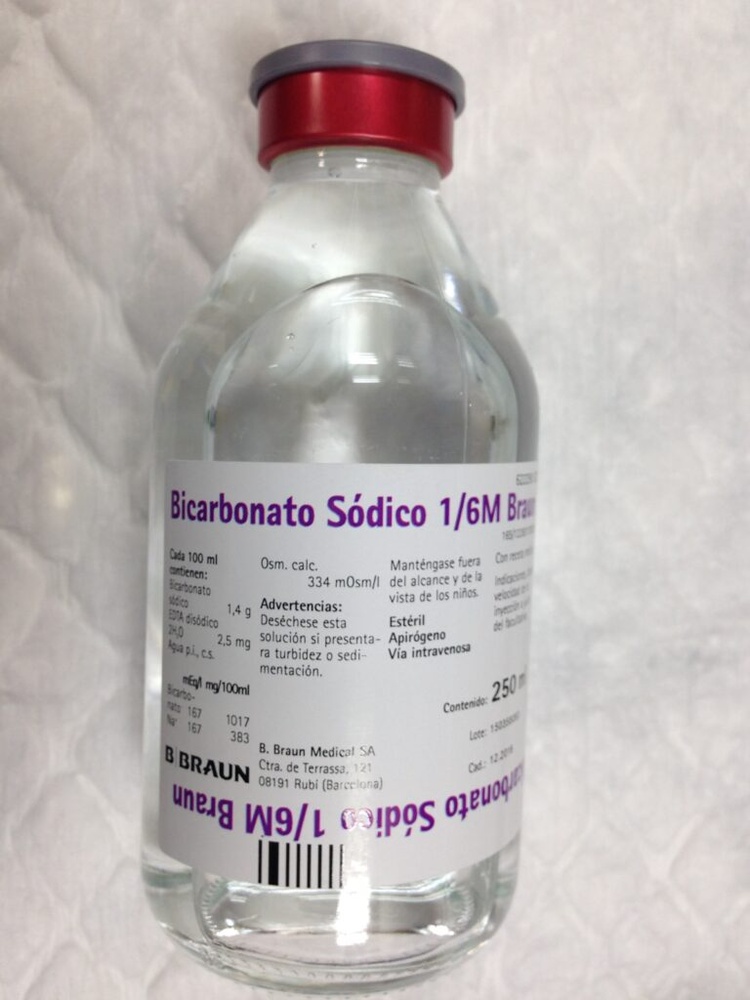
- Country of registration
- Dosage formINJECTABLE PERFUSION, 21 g sodium bicarbonate
- ATC codeB05XA02
- Active substance
- Prescription requiredYes
- Manufacturer
- CompositionEDETATO SODICO (0,025 mg mg)
- This information is for reference only and does not constitute medical advice. Always consult a doctor before taking any medication. Oladoctor is not responsible for medical decisions based on this content.
- Alternatives to VENOFUSIN SODIUM BICARBONATE 1 M SOLUTION FOR INFUSIONDosage form: INJECTABLE INFUSION, 100 mlActive substance: sodium bicarbonateManufacturer: Fresenius Kabi España, S.A.U.Prescription requiredDosage form: INJECTABLE, 0.840 g sodium bicarbonate/10 mlActive substance: sodium bicarbonateManufacturer: Laboratorios Grifols S.A.Prescription requiredDosage form: INJECTABLE PERFUSION, 1.4%Active substance: sodium bicarbonateManufacturer: Baxter S.L.Prescription required
Online doctors for VENOFUSIN SODIUM BICARBONATE 1 M SOLUTION FOR INFUSION
Discuss questions about VENOFUSIN SODIUM BICARBONATE 1 M SOLUTION FOR INFUSION, including use, safety considerations and prescription review, subject to medical assessment and local regulations.









Frequently Asked Questions
VENOFUSIN SODIUM BICARBONATE 1 M SOLUTION FOR INFUSION requires a prescription in Spain. You can check with a doctor online whether this medicine may be appropriate for your situation.
The active ingredient in VENOFUSIN SODIUM BICARBONATE 1 M SOLUTION FOR INFUSION is sodium bicarbonate. This information helps identify medicines with the same composition but different brand names.
VENOFUSIN SODIUM BICARBONATE 1 M SOLUTION FOR INFUSION is manufactured by Fresenius Kabi España, S.A.U.. Pharmacy brands and packaging may differ depending on the distributor.
Doctors such as Family doctors, Psychiatrists, Dermatologists, Cardiologists, Endocrinologists, Gastroenterologists, Pulmonologists, Nephrologists, Rheumatologists, Hematologists, Infectious disease physicians, Allergists, Geriatricians, Paediatricians, Oncologists may assess whether VENOFUSIN SODIUM BICARBONATE 1 M SOLUTION FOR INFUSION is appropriate, depending on your situation and local regulations. You can book an online consultation to discuss your symptoms and possible next steps.
The prescription is issued by a doctor after assessing your health. In Spain, VENOFUSIN SODIUM BICARBONATE 1 M SOLUTION FOR INFUSION is then dispensed in pharmacies with that prescription. An online consultation does not guarantee that a prescription will be issued: the decision always rests with the doctor.
To request a review, you can use Oladoctor:
Other medicines with the same active substance (sodium bicarbonate) include SODIUM BICARBONATE 1/6 M MEIN SOLUTION FOR INFUSION, SODIUM BICARBONATE 1M GRIFOLS INJECTABLE SOLUTION, VIAFLO SODIUM BICARBONATE 1.4%, SOLUTION FOR INFUSION. These may have different brand names or formulations but contain the same therapeutic ingredient. Always consult a doctor before switching or starting a new medicine.
