


Valsartan Mabo 160 mg comprimidos recubiertos con película

Prescription review online
A doctor will review your case and decide whether a prescription is medically appropriate.

Talk to a doctor about this medicine
Discuss your symptoms and possible next steps in a quick online consultation.



How to use VALSARTAN MABO 160 mg FILM-COATED TABLETS
Contents of the leaflet
- Introduction
- What is Valsartan Mabo and what is it used for
- What you need to know before you take Valsartan Mabo
- How to take Valsartan Mabo
- Possible side effects
- Storing Valsartan Mabo
- Packaging Content and Additional Information
Introduction
Package Leaflet: Information for the User
Valsartan Mabo 160mg Film-Coated Tablets EFG
valsartan
Read all of this leaflet carefully before you start taking this medicine because it contains important information for you.,keep this leaflet. You may need to read it again.
- Keep this leaflet, you may need to read it again.
- If you have any further questions, ask your doctor or pharmacist.
- This medicine has been prescribed for you only. Do not pass it on to others. It may harm them, even if their signs of illness are the same as yours.
- If you get any side effects, talk to your doctor or pharmacist. This includes any possible side effects not listed in this leaflet. See section 4.
Contents of the pack
- What is Valsartan Mabo and what is it used for
- What you need to know before you take Valsartan Mabo
- How to take Valsartan Mabo
- Possible side effects
- Storing Valsartan Mabo
- Contents of the pack and other information
1. What is Valsartan Mabo and what is it used for
This medicine contains the active substance: valsartan and belongs to a class of medicines known as angiotensin II receptor antagonists, which help to control high blood pressure. Angiotensin II is a substance in the body that causes blood vessels to narrow, leading to an increase in blood pressure. Valsartan works by blocking the effect of angiotensin II. As a result, the blood vessels relax and blood pressure decreases.
Valsartan Mabo 160mg film-coated tablets can be used for three different conditions:
- to treat high blood pressure in adults and in children and adolescents from6 toless than 18years of age.High blood pressure increases the workload on the heart and arteries. If not treated, it can damage the blood vessels in the brain, heart, and kidneys, and may lead to a stroke, heart failure, or kidney failure. High blood pressure increases the risk of heart attacks. Lowering the blood pressure to normal reduces the risk of developing these disorders.
- to treat adult patients after a recent heart attack(myocardial infarction). “Recent” means here between 12 hours and 10 days.
- to treat symptomatic heart failure in adult patients.Valsartan is used when it is not possible to use a group of medicines called Angiotensin-Converting Enzyme (ACE) Inhibitors (a medicine for heart failure), or it can be used in addition to ACE inhibitors when it is not possible to use other medicines for the treatment of heart failure. Symptoms of heart failure include shortness of breath and swelling of the feet and legs due to fluid retention. This is because the heart muscle is unable to pump blood with enough strength to supply the body with the blood it needs.

Not sure if this medicine is right for you?
Discuss your symptoms and treatment with a doctor online.
2. What you need to know before you take Valsartan Mabo
Do not take Valsartan Mabo:
- if you are allergic(hypersensitive) to valsartan or any of the other ingredients of this medicine (listed in section 6).
- if you have severe liver disease.
- if you are pregnantof more than 3 months(it is also better to avoid this medicine during the first months of pregnancy – see section Pregnancy).
- if you have diabetes or kidney problems and are being treated with a medicine to reduce blood pressure that contains aliskiren.
If any of the above applies to you, tell your doctor and do not takethis medicine.
Warnings and precautions:
Consult your doctor
- if you have liver disease.
- if you have severe kidney disease or are undergoing dialysis.
- if you have narrowing of the kidney artery.
- if you have recently had a kidney transplant (received a new kidney).
- if you have severe heart disease other than heart failure or heart attack.
- if you have experienced swelling of the tongue and face caused by an allergic reaction called angioedema when taking other medicines (including ACE inhibitors), inform your doctor. If you have these symptoms when taking this medicine, stop taking it immediately and never take it again. See also section 4 “Possible side effects”.
- if you are using medicines that increase the amount of potassium in the blood. These include potassium supplements or salt substitutes that contain potassium, potassium-sparing medicines, and heparin. It may be necessary to regularly check the amount of potassium in the blood.
- if you have aldosteronism, a disease in which the adrenal glands produce too much aldosterone hormone. In this case, it is not recommended to take this medicine.
- if you have lost a lot of fluid (dehydration) due to diarrhea, vomiting, or high doses of diuretics (medicines to increase urine production).
- if you are taking any of the following medicines used to treat high blood pressure:
- an angiotensin-converting enzyme inhibitor (ACE inhibitor) (e.g., enalapril, lisinopril, ramipril), especially if you have kidney problems related to diabetes
- aliskiren
- if you are being treated with an ACE inhibitor along with other specific medicines for the treatment of your heart failure, known as mineralocorticoid receptor antagonists (MRAs) (e.g., spironolactone, eplerenone) or beta-blockers (e.g., metoprolol).
Your doctor may check your kidney function, blood pressure, and electrolyte levels (e.g., potassium) in the blood at regular intervals.
- See also the information under the heading “Do not take Valsartan Mabo”.
You should inform your doctor if you think you are (or might become) pregnant. This medicine is not recommended at the start of pregnancy, and should not be taken if you are more than 3 months pregnant, as it may cause serious harm to your baby if used after the third month of pregnancy (see the section on pregnancy).
Consult your doctor if you experience abdominal pain, nausea, vomiting, or diarrhea after taking Valsartan Mabo. Your doctor will decide whether to continue treatment. Do not stop taking Valsartan Mabo on your own.
Using Valsartan Mabo with other medicines
Tell your doctor or pharmacist if you are using, have recently used, or might use any other medicines.
The effect of treatment with this medicine may be affected if taken with certain other medicines. Your doctor may need to change your dose and/or take other precautions, or in some cases, stop treatment with one of the medicines. This applies to both prescription and non-prescription medicines, especially:
- other medicines that lower blood pressure,especially diuretics(medicines to increase urine production), ACE inhibitors (such as enalapril, lisinopril, etc.), or aliskiren (see also the information under the headings “Do not take Valsartan Mabo” and “Warnings and precautions”).
- medicines that increase the amount of potassiumin the blood. These include potassium supplements or salt substitutes that contain potassium, potassium-sparing medicines, and heparin.
- certain pain-relieving medicinescalled non-steroidal anti-inflammatory drugs (NSAIDs).
- some antibiotics (of the rifampicin group), a medicine used to protect against rejection in a transplant (cyclosporin), or an antiretroviral medicine used to treat HIV/AIDS (ritonavir). These medicines may increase the effect of this medicine.
- lithium,a medicine used to treat certain types of psychiatric diseases.
In addition:
- if you are being treated after a heart attack,it is not recommended to combine with ACE inhibitors(a medication for heart attack).
- if you are being treated for heart failure,it is not recommended to combine with ACE inhibitors and other specific medicines for the treatment of your heart failure, known as mineralocorticoid receptor antagonists (MRAs) (e.g., spironolactone, eplerenone) orbeta-blockers(e.g., metoprolol).
Pregnancy and breastfeeding
- You must inform your doctor if you are pregnant(or if you think you might be pregnant).Your doctor will normally advise you to stop taking this medicine before you become pregnant or as soon as you know you are pregnant and will advise you to take another medicine instead of this one. This medicine is not recommended during the first trimester of pregnancy and should not be taken after the third month of pregnancy, as it may cause serious harm to your baby.
- Tell your doctor if you are breastfeeding or about to start breastfeeding. It is not recommended to use this medicine during breastfeeding, and your doctor will choose another treatment for you if you want to breastfeed, especially if your baby is newborn or premature.
Driving and using machines
Before driving a vehicle, using tools, or operating machinery, or carrying out other activities that require concentration, make sure you know how this medicine affects you. Like many other medicines used to treat high blood pressure, Valsartan Mabo can cause dizziness and affect your ability to concentrate.
.
3. How to take Valsartan Mabo
To get the best results and reduce the risk of side effects, always take this medicine exactly as your doctor has told you. If you are unsure, ask your doctor or pharmacist. People with high blood pressure often do not notice any symptoms; many feel normal. This makes it very important to attend your doctor's appointments, even if you feel well.
Adult patients with high blood pressure:the recommended dose is 80mg once daily. In some cases, your doctor may prescribe higher doses (e.g., 160mg or 320mg). Valsartan can also be combined with another medicine (e.g., a diuretic).
Use in children and adolescents from6 to less than18years of age with high blood pressure:
In patients who weigh less than 35kg, the recommended starting dose of valsartan is 40mg once daily.
In patients who weigh 35kg or more, the recommended starting dose of valsartan is 80mg once daily.
In some cases, your doctor may prescribe higher doses (the dose can be increased to 160mg and up to a maximum of 320mg).
Adult patients after a recent heart attack:after a heart attack, treatment is usually started at 12 hours, normally with a low dose of 20mg, given twice daily. The 20mg dose is obtained by dividing the 40mg tablet. Your doctor will gradually increase this dose over several weeks to a maximum of 160mg twice daily. The final dose will depend on your individual tolerance.
Valsartan can be given with other treatments for heart attack, and your doctor will decide what treatment is suitable for you.
Adult patients with heart failure:treatment is usually started with 40mg twice daily. Your doctor will gradually increase the dose over several weeks to a maximum of 160mg twice daily. The final dose will depend on your individual tolerance.
Valsartan can be given with other treatments for heart failure, and your doctor will decide what treatment is suitable for you.
You can take this medicine with or without food. Swallow the tablet with a glass of water.
Take this medicine at approximately the same time each day.
If you take more Valsartan Mabo than you should
If you experience severe dizziness and/or fainting, contact your doctor immediately and lie down. If you have accidentally taken too many tablets, contact your doctor, pharmacist, or hospital. You can also contact the Toxicological Information Service, telephone 91 562 04 20, indicating the medicine and the amount taken.
If you forget to take Valsartan Mabo
If you forget to take a dose, take it as soon as you remember. However, if it is almost time for your next dose, skip the missed dose.
Do not take a double dose to make up for forgotten doses.
If you stop taking Valsartan Mabo
If you stop taking this medicine, your condition may worsen. Do not stop taking the medicine unless your doctor tells you to.
If you have any further questions on the use of this medicine, ask your doctor or pharmacist.

Started taking the medicine and have questions?
Discuss your symptoms and treatment with a doctor online.
4. Possible side effects
Like all medicines, this medicine can cause side effects, although not everybody gets them.
Some side effects may be serious and may need immediate medical attention:
You may experience symptoms of angioedema (a specific allergic reaction), such as
- swelling of the face, lips, tongue, or throat
- difficulty breathing or swallowing
- hives, itching
If you experience any of these symptoms, stop taking this medicine and contact your doctor immediately (see also section 2 “Warnings and precautions”).
Other side effects include:
Common(may affect up to 1 in 10 people):
- dizziness
- low blood pressure with or without symptoms such as dizziness and fainting when standing up
- reduced kidney function (signs of kidney impairment)
Uncommon(may affect up to 1 in 100 people):
- angioedema (see section “Some symptoms need immediate medical attention”)
- sudden loss of consciousness (syncope)
- feeling of spinning (vertigo)
- marked reduction in kidney function (signs of acute kidney failure)
- muscle spasms, abnormal heart rhythm (signs of hyperkalemia)
- shortness of breath, difficulty breathing when lying down, swelling of the feet or legs (signs of heart failure)
- headache
- cough
- abdominal pain
- nausea
- diarrhea
- fatigue
- weakness
Frequency not known(cannot be estimated from the available data):
- blisters on the skin (sign of bullous dermatitis)
- allergic reactions may occur with skin rash, itching, and hives; symptoms of fever, swelling, and joint pain, muscle pain, swelling of the lymph nodes, and/or symptoms similar to those of the flu (signs of serum sickness)
- red spots, fever, itching (signs of vasculitis, also known as inflammation of the blood vessels)
- bleeding or bruising more often than usual (signs of thrombocytopenia)
- muscle pain (myalgia)
- fever, sore throat, or mouth ulcers due to infections (symptoms of low white blood cell count, also known as neutropenia)
- reduction in hemoglobin and reduction in the percentage of red blood cells in the blood (which, in severe cases, can lead to anemia)
- increase in potassium levels in the blood (which, in severe cases, can lead to muscle spasms and abnormal heart rhythm)
- elevation of liver function values (which may indicate liver damage), including an increase in bilirubin levels in the blood (which, in severe cases, can cause the skin and eyes to turn yellow)
- increase in blood urea nitrogen and increase in serum creatinine levels (which may indicate kidney function abnormalities)
- low sodium levels in the blood (which, in severe cases, can cause fatigue, confusion, muscle twitching, and/or convulsions)
Very rare(affects less than 1 in 10,000 patients):
- Intestinal angioedema: swelling in the intestine that presents with symptoms such as abdominal pain, nausea, vomiting, and diarrhea.
The frequency of some side effects may vary depending on your condition. For example, certain side effects such as dizziness and reduced kidney function were observed less frequently in adult patients treated for high blood pressure than in adult patients treated for heart failure or after a recent heart attack.
Side effects in children and adolescents are similar to those observed in adults.
Reporting of side effects
If you experience any side effects, talk to your doctor or pharmacist, even if it is possible that they are not listed in this leaflet. You can also report side effects directly through the Spanish Medicines Agency's website (www.notificaRAM.es). By reporting side effects, you can help provide more information on the safety of this medicine.
5. Storing Valsartan Mabo
Keep out of the sight and reach of children.
Do not use this medicine after the expiry date which is stated on the carton. The expiry date refers to the last day of the month shown.
Do not store above 25°C. Store in the original package to protect from moisture.
Medicines should not be disposed of via wastewater or household waste. Ask your pharmacist how to dispose of medicines no longer required. These measures will help protect the environment.
6. Packaging Content and Additional Information
Composition ofValsartán Mabo
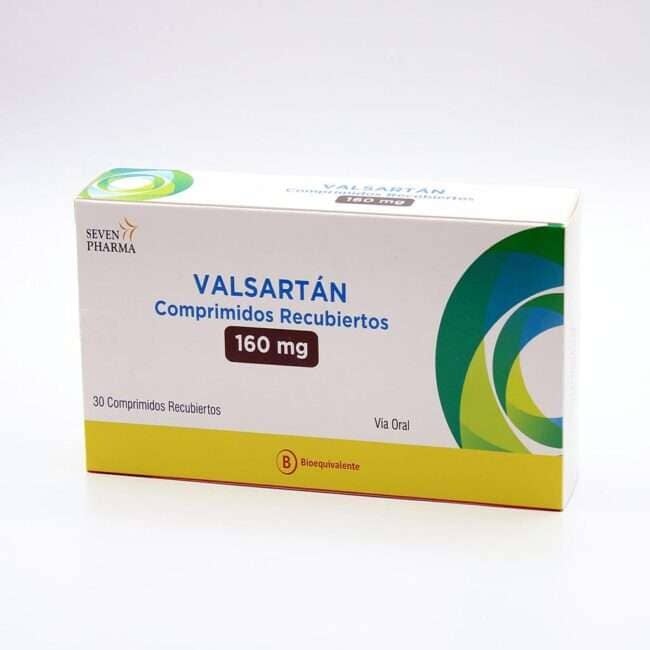
- The active ingredient is valsartan. Each film-coated tablet contains 160 mg of valsartan.
- The other components are microcrystalline cellulose, crospovidone, anhydrous colloidal silica, magnesium stearate. The tablet coating contains hypromellose 6 cp, hypromellose 5 cp, titanium dioxide (E-171), macrogol 8000, talc, red iron oxide (E-172), yellow iron oxide (E 172), and black iron oxide (E 172).
Product Appearance and Packaging Content
The film-coated tablets of Valsartán Mabo 160 mg are light brown, biconvex, oval, scored on one side, with the mark ”L” on one side and the mark “14” on the other side. The score serves only to facilitate breaking and swallowing but not to divide into equal doses.
The tablets are presented in blister packs (PVC/PE/PVDC/Alu) with 28 tablets.
Marketing Authorization Holder
MABO-FARMA S.A.
Vía de los Poblados 3,
Building 6, 28033, Madrid,
Spain.
Manufacturer
NETPHARMALAB CONSULTING SERVICES
Carretera de Fuencarral, 22
28108 Alcobendas (Madrid)
Spain
Date of the Last Revision of this Prospectus: February 2025
Detailed and updated information on this medication is available on the website of the Spanish Agency for Medicines and Health Products (AEMPS) http://www.aemps.gob.es/
- Country of registration
- Dosage formTABLET, 160 mg
- ATC codeC09CA03
- Average pharmacy price16.3 EUR
- Active substance
- Prescription requiredYes
- Manufacturer
- This information is for reference only and does not constitute medical advice. Always consult a doctor before taking any medication. Oladoctor is not responsible for medical decisions based on this content.
- Alternatives to VALSARTAN MABO 160 mg FILM-COATED TABLETSDosage form: TABLET, 160 mg valsartanActive substance: valsartanManufacturer: Novartis Farmaceutica S.A.Prescription requiredDosage form: TABLET, 320 mgActive substance: valsartanManufacturer: Novartis Farmaceutica S.A.Prescription requiredDosage form: ORAL SOLUTION/SUSPENSION, 3 mg/mlActive substance: valsartanManufacturer: Novartis Farmaceutica S.A.Prescription required
Online doctors for VALSARTAN MABO 160 mg FILM-COATED TABLETS
Discuss questions about VALSARTAN MABO 160 mg FILM-COATED TABLETS, including use, safety considerations and prescription review, subject to medical assessment and local regulations.
Frequently Asked Questions
VALSARTAN MABO 160 mg FILM-COATED TABLETS requires a prescription in Spain. You can check with a doctor online whether this medicine may be appropriate for your situation.
The active ingredient in VALSARTAN MABO 160 mg FILM-COATED TABLETS is valsartan. This information helps identify medicines with the same composition but different brand names.
The average pharmacy price for VALSARTAN MABO 160 mg FILM-COATED TABLETS is around 16.3 EUR. Prices may vary depending on the manufacturer and dosage form.
VALSARTAN MABO 160 mg FILM-COATED TABLETS is manufactured by Mabo Farma S.A.. Pharmacy brands and packaging may differ depending on the distributor.
Doctors such as Family doctors, Psychiatrists, Dermatologists, Cardiologists, Endocrinologists, Gastroenterologists, Pulmonologists, Nephrologists, Rheumatologists, Hematologists, Infectious disease physicians, Allergists, Geriatricians, Paediatricians, Oncologists may assess whether VALSARTAN MABO 160 mg FILM-COATED TABLETS is appropriate, depending on your situation and local regulations. You can book an online consultation to discuss your symptoms and possible next steps.
The prescription is issued by a doctor after assessing your health. In Spain, VALSARTAN MABO 160 mg FILM-COATED TABLETS is then dispensed in pharmacies with that prescription. An online consultation does not guarantee that a prescription will be issued: the decision always rests with the doctor.
To request a review, you can use Oladoctor:
Other medicines with the same active substance (valsartan) include DIOVAN 160 mg FILM-COATED TABLETS, DIOVAN 320 mg FILM-COATED TABLETS, DIOVAN 3mg/ml ORAL SOLUTION. These may have different brand names or formulations but contain the same therapeutic ingredient. Always consult a doctor before switching or starting a new medicine.
