


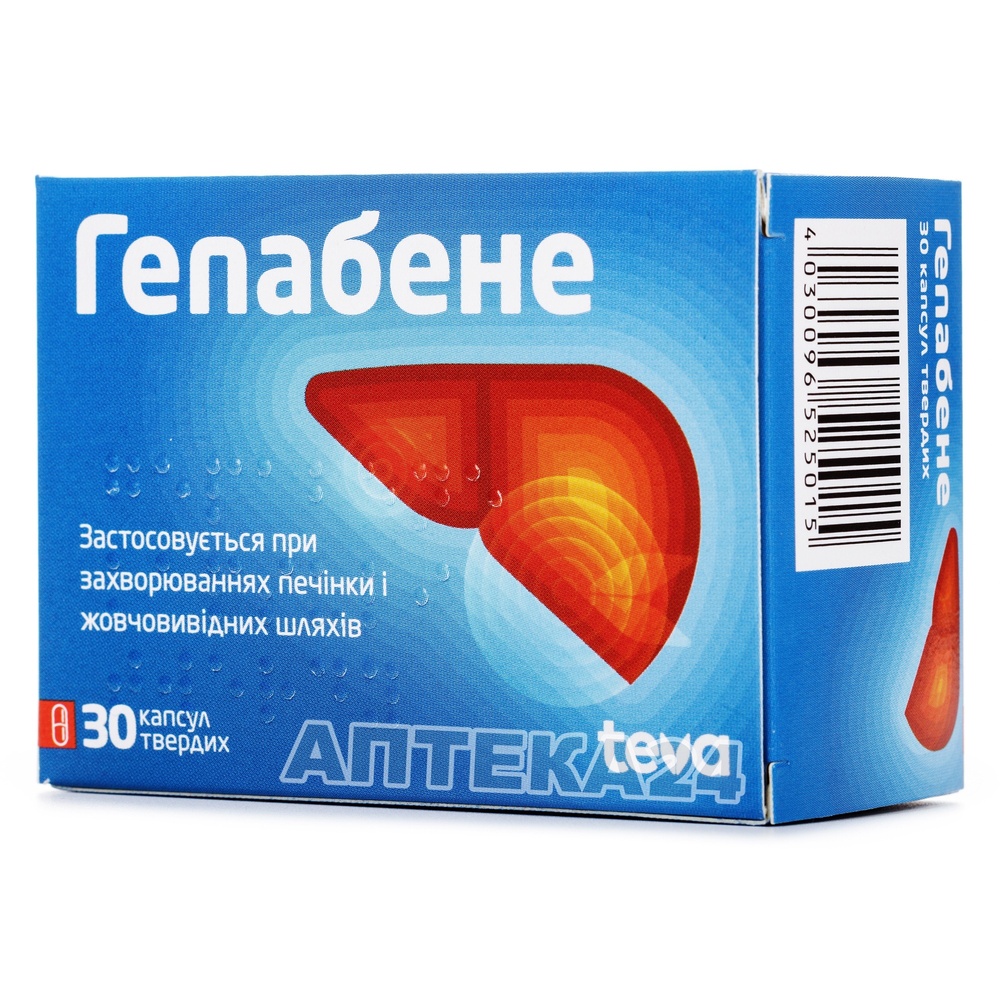
GEPABENE
Ask a doctor about a prescription for GEPABENE




How to use GEPABENE
INSTRUCTIONS for medical use of Bonviva®
Composition:
Active substance: ibandronic acid;
1 pre-filled syringe (3 ml solution) contains ibandronic acid 3 mg in the form of sodium ibandronate monohydrate 3.375 mg;
the concentration of ibandronic acid in the solution for injection is 1 mg / ml;
excipients: sodium chloride; glacial acetic acid; sodium acetate trihydrate; water for injection.
Pharmaceutical form.
Solution for injection.
Main physical and chemical properties:
clear colorless solution.
Pharmacotherapeutic group.
Agents that affect bone structure and mineralization. Bisphosphonates.
Ibandronic acid.
ATC code M05B A06.
Pharmacological properties.
Pharmacodynamics.
Ibandronic acid is a highly active nitrogen-containing bisphosphonate that selectively acts on bone tissue and specifically suppresses the activity of osteoclasts and does not have a direct effect on bone tissue formation. The drug does not affect the process of replenishing the pool of osteoclasts. In women during the menopause, it reduces the increased rate of bone tissue renewal to the premenopausal level, which leads to a progressive increase in bone mass and a decrease in the frequency of fractures.
Ibandronic acid suppresses bone resorption. In vivo, ibandronic acid prevents bone destruction caused by experimental blockade of sex gland function, retinoids, tumors, and tumor extracts. In young (fast-growing) rats, bone resorption was also observed, which led to an increase in normal bone mass compared to animals that did not receive treatment.
Animal models confirm that ibandronic acid is a highly potent inhibitor of osteoclast activity. In growing rats, no signs of mineralization disorders were observed even when using doses that exceeded more than 5000 times the dose required for the treatment of osteoporosis.
Long-term daily and periodic (at large intervals) use over a long period in rats, dogs, and monkeys was associated with the formation of new bone of normal quality with preserved or increased mechanical strength, even when used in the toxic range. The effectiveness of daily and periodic administration of ibandronic acid with an interval between doses of 9-10 weeks was confirmed in a clinical study (MF 4411) involving humans. In this study, ibandronic acid demonstrated efficacy in preventing the occurrence of fractures.
In animal models, ibandronic acid leads to biochemical changes that indicate dose-dependent suppression of bone tissue resorption, including a decrease in the level of biochemical markers of collagen degradation in urine (such as desoxypyridinoline, cross-linked N-telopeptide of type I collagen).
Daily and periodic (with an interval between doses of 9-10 weeks, quarterly) administration of ibandronic acid orally or intravenously to women in the postmenopausal period led to biochemical changes that indicate dose-dependent suppression of bone resorption.
Intravenous administration of the Bonviva®preparation leads to a decrease in serum levels of C-telopeptide of type I collagen alpha-chain within 3-7 days from the start of treatment and a decrease in osteocalcin levels within 3 months.
After stopping treatment, there is a return to pathological levels that existed before the start of treatment, increased bone resorption associated with postmenopausal osteoporosis.
Histological analysis of bone biopsy samples taken after 2 and 3 years of treatment of postmenopausal women with ibandronic acid orally at a dose of 2.5 mg daily and intravenously periodically at a dose of up to 1 mg every 3 months showed a normal state of bone tissue. Additionally, no evidence of mineralization disorders was found. After 2 years of treatment with Bonviva®injections at a dose of 3 mg, a expected decrease in bone metabolism was observed, as well as normal bone tissue quality and no mineralization defects.
Pharmacokinetics.
The primary pharmacological effect of ibandronic acid on bones is not directly related to the actual concentrations of ibandronic acid in plasma, as demonstrated in various studies in animals and humans.
The plasma concentration of ibandronic acid increases in proportion to the dose after intravenous administration of 0.5-6 mg.
Distribution
After primary systemic exposure, ibandronic acid quickly binds to bone tissue or is excreted in the urine. In humans, the apparent final volume of distribution is at least 90 liters, and approximately 40-50% of the circulating drug penetrates bone tissue and accumulates in it. About 85-87% of the drug binds to plasma proteins (determined in vitro using therapeutic concentrations of ibandronic acid), and therefore, there is a low potential for interaction with other drugs.
Metabolism
There is no data on the metabolism of ibandronic acid in animals and humans.
Excretion
Ibandronic acid is eliminated from the bloodstream by bone absorption (approximately 40-50% in postmenopausal women) and the rest is excreted unchanged by the kidneys.
The range of apparent half-life is wide and varies within 10-72 hours. Since the calculated values largely depend on the duration of the study, the dose used, the sensitivity of the analysis method, the final half-life is likely to be significantly longer, as with other bisphosphonates. The initial level of the drug in plasma quickly decreases and reaches 10% of the maximum value within 3 hours and 8 hours after intravenous or oral administration, respectively.
The total clearance of ibandronic acid is low and averages 84-160 ml/min. Renal clearance (about 60 ml/min in healthy postmenopausal women) is 50-60% of the total clearance and depends on creatinine clearance. The difference between the apparent, total, and renal clearance reflects the absorption of the drug by bone tissue.
Excretion pathways are unlikely to include known acid and basic transport systems involved in the excretion of other active substances (see "Interaction with other medicinal products and other types of interactions"). Additionally, ibandronic acid does not inhibit the main liver cytochrome P450 isoenzymes in humans and does not induce the cytochrome P450 system in rats.
Pharmacokinetics in special cases
Sex
Pharmacokinetic parameters of ibandronic acid do not depend on sex.
Race
There is no data on clinically significant ethnic differences between patients of Mongoloid and European races regarding the distribution of ibandronic acid. There is insufficient data on patients of Negroid race.
Patients with renal insufficiency
Renal clearance of ibandronic acid in patients with various stages of renal insufficiency linearly depends on creatinine clearance. Patients with mild and moderate renal insufficiency (creatinine clearance ≥ 30 ml/min) do not need to adjust the dose of the drug.
In patients with severe renal insufficiency (creatinine clearance <30 ml/min) who received oral ibandronic acid at a dose of 10 mg for 21 days, the plasma concentration was 2-3 times higher than in patients with normal kidney function, and the total clearance of ibandronic acid was 44 ml/min. After intravenous administration of 0.5 mg of ibandronic acid, total, renal, and non-renal clearance decreased by 67%, 77%, and 50%, respectively, in patients with severe renal insufficiency, but a decrease in the tolerability of the drug due to increased exposure was not observed. Due to limited clinical experience with the use of Bonviva®, it is not recommended for patients with severe renal insufficiency (see "Method of application and doses", "Pharmacokinetics"). The pharmacokinetics of ibandronic acid in patients with terminal renal insufficiency was evaluated only in a small number of patients undergoing hemodialysis, so the pharmacokinetics of ibandronic acid in patients who are not undergoing dialysis is unknown. Due to the limited data, ibandronic acid should not be used in patients with terminal renal insufficiency.
Patients with hepatic insufficiency (see "Method of application and doses")
There is no data on the pharmacokinetics of ibandronic acid in patients with hepatic insufficiency. The liver does not play a significant role in the clearance of ibandronic acid, which is not metabolized and is excreted by the kidneys and bone absorption. Therefore, in patients with hepatic insufficiency, dose adjustment is not required.
Patients of advanced age (>65 years) (see "Method of application and doses")
Dose adjustment is not required (see "Pharmacokinetics").
Children (see "Method of application and doses")
There is no relevant experience with the use of Bonviva®in children (under 18 years of age). The use of Bonviva®in children (under 18 years of age) has not been studied (see "Pharmacodynamics", "Pharmacokinetics").
Clinical characteristics.
Indications.
Treatment of osteoporosis in postmenopausal women with an increased risk of fractures. A decrease in the risk of vertebral fractures has been demonstrated, and the effectiveness in preventing hip fractures has not been established.
Contraindications.
Increased sensitivity to ibandronic acid or to any other component of the drug (see "Composition").
Hypocalcemia.
Interaction with other medicinal products and other types of interactions.
Metabolic interactions are unlikely, as ibandronic acid does not inhibit the main liver cytochrome P450 isoenzymes in humans and does not induce the cytochrome P450 system in rats (see "Pharmacokinetics"). Ibandronic acid is excreted by renal excretion and does not undergo biotransformation processes.
Special warnings and precautions for use.
Administration errors
Caution should be exercised and administration of Bonviva®intrarterially or into the perivenous space should be avoided, as this can cause tissue damage.
Hypocalcemia
The use of Bonviva®, as with other intravenously administered bisphosphonates, may lead to a temporary decrease in serum calcium levels. Before starting treatment with Bonviva®, existing hypocalcemia should be corrected. All other disorders of bone tissue metabolism and mineral metabolism should also be effectively treated. It is recommended to take sufficient calcium and vitamin D, as this is important for all patients.
Anaphylactic reaction/shock
Cases of anaphylactic reaction/shock have been observed in patients who received treatment with ibandronic acid intravenously, including fatal cases.
During intravenous administration of the drug, appropriate medical care and monitoring should be available. If an anaphylactic or other severe hypersensitivity reaction occurs, the injection should be stopped immediately and appropriate treatment started.
Renal insufficiency
Patients with concomitant diseases or those taking medications that may have an adverse effect on the kidneys should undergo regular examinations during treatment, in accordance with good medical practice.
Due to limited clinical experience with the use of Bonviva®, it is not recommended for patients with a creatinine level in the blood serum exceeding 200 μmol/l (2.3 mg/dl) or a creatinine clearance of less than 30 ml/min (see "Method of application and doses", "Pharmacokinetics").
Heart failure
Patients at risk of developing heart failure should avoid excessive hydration.
Osteonecrosis of the jaw
Osteonecrosis of the jaw has been very rarely observed during post-marketing use of Bonviva®for the treatment of osteoporosis (see "Adverse reactions").
Treatment should be postponed for patients with unhealed open soft tissue lesions in the oral cavity.
Before starting treatment with Bonviva®, patients with risk factors are recommended to undergo dental examination with appropriate preventive intervention and individual assessment of the benefit-risk ratio.
When assessing the risk of osteonecrosis of the jaw in a patient, the following risk factors should be considered:
- The activity of the medicinal product that inhibits bone resorption (the risk is higher in the case of using compounds with high activity); the method of administration (the risk is higher with parenteral administration) and the cumulative dose of bone-resorptive therapy.
- Malignant neoplasms, concomitant pathological conditions (including anemia, coagulopathy, infection), smoking.
- Concomitant treatment: corticosteroids, chemotherapy, angiogenesis inhibitors, radiation therapy to the head and neck.
- Inadequate oral hygiene, periodontal disease, poorly fitted dentures, history of dental disease, invasive dental interventions, such as tooth extraction.
All patients should maintain good oral hygiene during treatment with Bonviva®, undergo regular dental examinations, and immediately report any symptoms from the oral cavity, such as tooth mobility, pain, or swelling, non-healing ulcers, or discharge. Invasive dental interventions should only be performed after careful consideration and should be avoided during and shortly after administration of Bonviva®.
A plan for managing patients who have developed osteonecrosis of the jaw should be developed in close collaboration between the doctor and a dentist or maxillofacial surgeon experienced in the treatment of osteonecrosis of the jaw. The question of temporarily discontinuing treatment with Bonviva®until the condition improves and the risk factors decrease should be considered.
Osteonecrosis of the external auditory canal
Osteonecrosis of the external auditory canal has been reported in association with bisphosphonate therapy, mostly in relation to long-term therapy. Risk factors for osteonecrosis of the external auditory canal include the use of steroid hormones and chemotherapy, as well as local risk factors such as infection or trauma. The likelihood of osteonecrosis of the external auditory canal should be considered in patients receiving bisphosphonates who have symptoms from the ear, including chronic ear infections.
Atypical fractures of the femur
Atypical subtrochanteric and diaphyseal fractures of the femur have been reported in patients treated with bisphosphonates, primarily in patients who have received long-term treatment for osteoporosis. These transverse or short oblique fractures can occur anywhere along the femur, from just below the lesser trochanter to just above the supracondylar flare. These fractures occur after minimal trauma or in the absence of trauma, and some patients experience thigh or groin pain, often associated with characteristic features of stress fractures, for several weeks or months before the fracture becomes apparent as a complete fracture of the femur. Fractures are often bilateral, so the other femur should also be examined in patients receiving bisphosphonate treatment who have developed a diaphyseal fracture of the femur. There have also been reports of poor healing of these fractures.
Patients receiving bisphosphonate treatment should be advised to report thigh, hip, or groin pain; all patients with such symptoms should be examined for an incomplete fracture of the femur.
Ability to influence the reaction rate when driving vehicles or using other mechanisms.
Given the pharmacodynamics, pharmacokinetic profile, and reported adverse reactions, it is expected that Bonviva®has no or minimal effect on the ability to drive vehicles or operate other mechanisms.
Method of application and doses.
Dosing
The recommended dose of ibandronic acid is 3 mg as an intravenous injection over 15-30 seconds, every 3 months. The drug is intended only for intravenous administration (see "Special warnings and precautions for use").
Patients should also take calcium and vitamin D (see "Special warnings and precautions for use", "Interaction with other medicinal products and other types of interactions").
If a scheduled dose is missed, the injection should be given as soon as possible. Subsequent injections should be given every 3 months from the last administration of the drug.
The optimal duration of osteoporosis treatment with bisphosphonates has not been established. The need for continued treatment with Bonviva®should be periodically reviewed, taking into account the benefit and potential risk of the drug for each patient, especially after 5 or more years of treatment.
Special patient groups
Patients with renal insufficiency
Injections of Bonviva®are not recommended for patients with a creatinine level in the blood serum exceeding 200 μmol/l (2.3 mg/dl) or a creatinine clearance (determined or calculated) of less than 30 ml/min, as clinical data, including in this patient group, is limited (see "Special warnings and precautions for use", "Pharmacokinetics").
Dose adjustment is not required for patients with mild or moderate renal insufficiency, with a serum creatinine level of 200 μmol/l (2.3 mg/dl) or a creatinine clearance (determined or calculated) of 30 ml/min or more.
Patients with hepatic insufficiency
Dose adjustment is not required (see "Pharmacokinetics").
Patients of advanced age (>65 years)
Dose adjustment is not required (see "Pharmacokinetics").
Children
There is no relevant experience with the use of Bonviva®in children (under 18 years of age). The use of Bonviva®in children (under 18 years of age) has not been studied (see "Pharmacodynamics", "Pharmacokinetics").
Special instructions for use
If the medicinal product is administered through an existing infusion system for intravenous administration, the infusion solution (solution for infusion) should be either an isotonic solution or a 5% glucose solution (50 mg/ml). This also applies to solutions used for flushing catheters and other devices.
Any unused solution for injection, syringe, and needles for injection should be disposed of in accordance with local regulations. The release of the medicinal product into the environment should be minimized.
The following should be strictly followed regarding the use and disposal of syringes and other piercing and cutting instruments:
- Needles and syringes should never be used again.
- Place all used needles and syringes in a container for piercing and cutting instruments (puncture-resistant container for single use).
- This container should be kept out of the reach of children.
- The container for piercing and cutting instruments should not be thrown away with household waste.
- A filled container should be disposed of in accordance with local regulations or according to the doctor's instructions.
Overdose.
There is no specific information on the treatment of overdose with Bonviva®.
Given the existing knowledge of bisphosphonates, overdose during intravenous administration may lead to hypocalcemia, hypophosphatemia, and hypomagnesemia. Clinically significant decreases in serum calcium, phosphorus, and magnesium levels should be corrected by intravenous administration of calcium gluconate, potassium or sodium phosphate, and magnesium sulfate, respectively.
Adverse reactions.
Summary of safety profile
The most serious adverse reactions reported include anaphylactic reaction/shock, atypical fractures of the femur, osteonecrosis of the jaw, and eye inflammation (see "Description of individual adverse reactions" and "Special warnings and precautions for use").
The most common adverse reactions reported were arthralgia and flu-like symptoms. These symptoms were usually associated with the first dose, were generally short-term, mild or moderate in severity, and usually disappeared after continued treatment and did not require medical intervention (see "Description of individual adverse reactions").
Below is a complete list of known adverse reactions.
Disorders of the immune system
- Uncommon – exacerbation of asthma;
- Rare – hypersensitivity reactions;
- Very rare – anaphylactic reaction/shock*†.
Disorders of the nervous system
- Common – headache.
Disorders of the eye
- Rare – eye inflammation*†.
Vascular disorders
- Uncommon – phlebitis/thrombophlebitis.
Disorders of the gastrointestinal tract
- Common – gastritis, dyspepsia, diarrhea, abdominal pain, nausea, constipation.
Disorders of the skin and subcutaneous tissue
- Common – rash;
- Rare – angioedema, facial edema/swelling;
- Very rare – Stevens-Johnson syndrome†, toxic epidermal necrolysis†, bullous dermatitis†.
Disorders of the musculoskeletal system and connective tissue
- Common – arthralgia, myalgia, musculoskeletal pain, back pain;
- Uncommon – bone pain;
- Rare – atypical subtrochanteric and diaphyseal fractures of the femur†;
- Very rare – osteonecrosis of the jaw*†.
- Osteonecrosis of the external auditory canal (an adverse reaction characteristic of bisphosphonates as a class)†.
- Osteoarthritis, joint dysfunction.
General disorders and administration site conditions
- Common – flu-like illness*, fatigue;
- Uncommon – reactions at the injection site, asthenia.
Description of individual adverse reactions
Flu-like illness
Flu-like illness included symptoms such as acute phase reactions or symptoms, including myalgia, arthralgia, fever, chills, fatigue, nausea, loss of appetite, and bone pain.
Osteonecrosis of the jaw
Cases of osteonecrosis of the jaw have been reported, mostly in patients with malignant neoplasms who received treatment with bone-resorptive inhibitors, including ibandronic acid (see "Special warnings and precautions for use").
Eye inflammation
Eye inflammatory disorders have been reported with the use of ibandronic acid: uveitis, episcleritis, scleritis. In some cases, these inflammatory disorders disappeared only after discontinuation of bisphosphonates.
Anaphylactic reaction/shock
Cases of anaphylactic reaction/shock have been observed in patients who received treatment with intravenous ibandronic acid, including fatal cases.
Shelf life.
2 years.
Storage conditions.
Store in a place inaccessible to children at a temperature not exceeding 30°C.
Incompatibility.
Bonviva®should not be mixed with solutions containing calcium or other medicinal products for intravenous administration.
Packaging.
3 ml of solution in a pre-filled syringe.
1 pre-filled syringe with 1 sterile needle for injection in a plastic container in a cardboard box with labeling in Ukrainian.
Release category.
By prescription.
Manufacturer.
Roch Diagnostics GmbH
Weymouth PLC
Manufacturer's location and address.
Sandhofer Strasse 116, 68305 Mannheim, Germany
Sovereign House, Miles Gray Road, Basildon, SS14 3FR, UK
- Country of registration
- Prescription requiredNo
- Manufacturer
- This information is for reference only and does not constitute medical advice. Always consult a licensed doctor before taking any medication. Oladoctor is not responsible for medical decisions based on this content.
- Alternatives to GEPABENEDosage form: tablets, tablets 200mgActive substance: hymecromoneManufacturer: Адамед Фарма С.А.Prescription not requiredDosage form: tablets, 250 mgActive substance: ursodeoxycholic acidManufacturer: Фармасайнс Інк. (виробництво нерозфасованого продукту, первинне та вторинне пакування, контроль якості, випуск серії)Prescription requiredDosage form: tablets, 500 mgActive substance: ursodeoxycholic acidManufacturer: Фармасайнс Інк. (виробництво нерозфасованого продукту, первинне та вторинне пакування, контроль якості, випуск серії)Prescription required
Alternatives to GEPABENE in other countries
The best alternatives with the same active ingredient and therapeutic effect.
Alternative to GEPABENE in Spain
Online doctors for GEPABENE
Discuss dosage, side effects, interactions, contraindications, and prescription renewal for GEPABENE – subject to medical assessment and local rules.









Get updates and exclusive offers
Be the first to know about new services, marketplace updates, and subscriber-only promos.

