



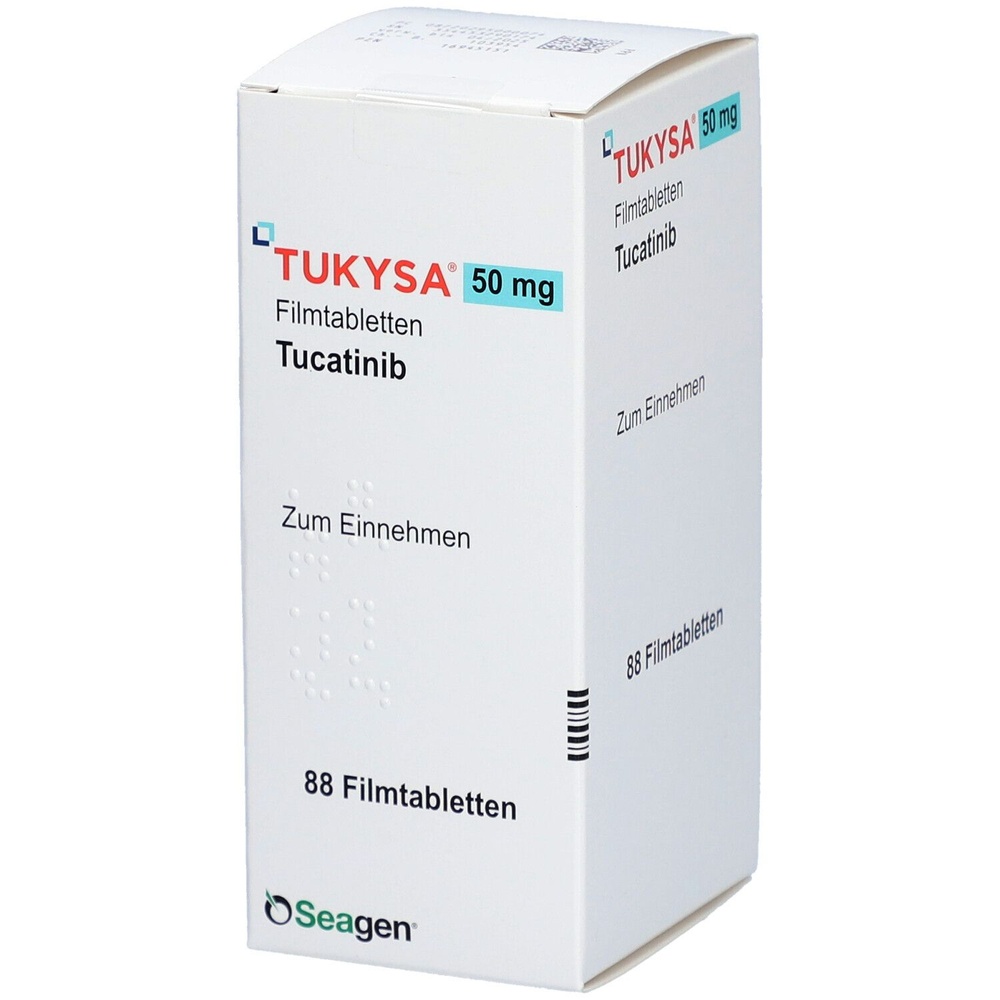
TUKYSA 50 mg Film-Coated Tablets

Prescription review online
A doctor will review your case and decide whether a prescription is medically appropriate.

Talk to a doctor about this medicine
Discuss your symptoms and possible next steps in a quick online consultation.



How to use TUKYSA 50 mg FILM-COATED TABLETS
Contents of the leaflet
- Introduction
- What is TUKYSA and what is it used for
- What you need to know before you take TUKYSA
- How to take TUKYSA
- Possible side effects
- Storage of TUKYSA
- Contents of the pack and other information
Introduction
Package Leaflet: Information for the Patient
TUKYSA 50mg film-coated tablets
TUKYSA 150mg film-coated tablets
tucatinib
This medicine is subject to additional monitoring, which will allow for quick identification of new safety information. You can help by reporting any side effects you may get. The last section of section 4 will tell you how to report side effects.
Read all of this leaflet carefully before you start taking this medicine, because it contains important information for you.
- Keep this leaflet, you may need to read it again.
- If you have any further questions, ask your doctor or pharmacist.
- This medicine has been prescribed for you only. Do not pass it on to others. It may harm them, even if their signs of illness are the same as yours.
- If you get any side effects, talk to your doctor or pharmacist. This includes any possible side effects not listed in this leaflet. See section 4.
Contents of the pack
- What is TUKYSA and what is it used for
- What you need to know before you take TUKYSA
- How to take TUKYSA
- Possible side effects
- Storage of TUKYSA
- Contents of the pack and other information
1. What is TUKYSA and what is it used for
What is TUKYSA
TUKYSA is a medicine for breast cancer. It contains the active substance tucatinib and belongs to a group of medicines called kinase inhibitors that prevent the growth of some types of cancer cells in the body.
What TUKYSA is used for
TUKYSA is used for adults who have breast cancer that:
- has a receptor (target) on cancer cells called human epidermal growth factor receptor 2 (HER2-positive breast cancer)
- has spread beyond the original tumor or to other organs such as the brain, or cannot be removed by surgery
- has been previously treated with other breast cancer treatments
TUKYSA is taken with two other cancer medicines, trastuzumab and capecitabine. There are separate package leaflets for patients about these medicines. Ask your doctorto tell you about them.
How TUKYSA works
TUKYSA works by blocking HER2 receptors on cancer cells. HER2 produces signals that can help cancer grow, and by blocking it, the growth of cancer cells can be slowed down or stopped, or they can be killed completely.

Not sure if this medicine is right for you?
Discuss your symptoms and treatment with a doctor online.
2. What you need to know before you take TUKYSA
Do not take TUKYSA
- if you are allergic to tucatinib or any of the other ingredients of this medicine (listed in section 6).
Warnings and precautions
- Tell your doctor before starting TUKYSA if you have liver problems. During treatment, your doctor will do tests to check that your liver is working properly.
- TUKYSA can cause severe diarrhea. Tell your doctor immediately if you have the first sign of diarrhea (loose stools) and if diarrhea persists with nausea and/or vomiting.
- TUKYSA can harm the fetus when taken by a pregnant woman. Tell your doctor before starting TUKYSA if you think you might be pregnant or plan to become pregnant. See the section on “Pregnancy and breastfeeding” below.
Children and adolescents
TUKYSA should not be used in children under 18 years of age. The safety and efficacy of TUKYSA in this age group have not been established.
Other medicines and TUKYSA
Tell your doctor or pharmacist if you are taking, have recently taken, or might take any other medicines.
Some medicines may affect how TUKYSA works. In turn, TUKYSA may affect how these medicines work. These medicines include some of the following groups:
- St. John's Wort: a herbal product used to treat depression
- itraconazole, ketoconazole, voriconazole, posaconazole: used to treat fungal infections
- rifampicin: used to treat bacterial infections
- darunavir, saquinavir, tipranavir: used to treat HIV
- phenytoin, carbamazepine: used to treat epilepsy or a painful condition of the face called trigeminal neuralgia or to control a severe mood disorder when other medicines do not work
- buspirone: used to treat certain mental health problems
- sirolimus, tacrolimus: used to control the body's immune response after a transplant
- digoxin: used to treat heart problems
- lomitapide, lovastatin: used to treat abnormal cholesterol levels
- alfentanil: used for pain relief
- avanafil, vardenafil: used to treat erectile dysfunction
- darifenacin: used to treat urinary incontinence
- midazolam, triazolam: used to treat seizures, anxiety disorders, panic, agitation, and insomnia
- repaglinide: used to treat type 2 diabetes
- ebastine: an antihistamine used to treat seasonal and perennial allergic rhinitis and rhinoconjunctivitis.
- everolimus, ibrutinib: used to treat some cancers
- naloxegol: used to treat constipation
Pregnancy and breastfeeding
TUKYSA may harm the fetus when taken by a pregnant woman. Your doctor will do a pregnancy test before you start taking TUKYSA.
- If you are pregnant,think you might be pregnant or plan to become pregnant, tell your doctorbefore taking this medicine. Your doctor will weigh the potential benefits for you and the risks for the fetus.
- Use a reliable method of contraceptionto prevent pregnancy while taking TUKYSA and for at least 1 week after the last dose.
- If you are a male and have a female partner who can become pregnant, use a reliable method of contraceptionto prevent pregnancy while taking TUKYSA and for at least 1 week after the last dose.
- If you become pregnantduring treatment with TUKYSA, tell your doctor. Your doctor will assess the potential benefits for you to continue with the medicine and the risks for the fetus.
It is not known if TUKYSA is excreted in breast milk.
- If you are breastfeedingor plan to breastfeed, tell your doctorbefore taking this medicine. Do not breastfeed during treatment with TUKYSA and for at least 1 week after the last dose. Ask your doctor for the best way to feed your baby during treatment.
If you have any questions, ask your doctor or pharmacistbefore taking TUKYSA.
Driving and using machines
TUKYSA is not expected to affect your ability to drive or use machines. However, you are responsible for deciding whether you can drive a car or perform other tasks that require increased attention.
TUKYSA contains sodium and potassium
This medicine contains 55.3 mg of sodium (main component of cooking/table salt) per 300 mg dose. This is equivalent to 2.75% of the maximum recommended daily intake of sodium for an adult.
This medicine contains 60.6 mg of potassium per 300 mg dose, which should be taken into consideration in patients with renal impairment or in patients with low potassium diets.
3. How to take TUKYSA
Always take this medicine exactly as your doctor or pharmacist has told you. If you are not sure, check with your doctor or pharmacist.
Dosage
The recommended dose is 300 mg (two 150 mg tablets) orally twice a day.
Your doctor may change the dose of TUKYSA if you experience certain side effects. To take a lower dose, your doctor may prescribe 50 mg tablets.
Method of administration
TUKYSA can be taken with or without food.
- Swallow the tablets whole, one after the other.
- Take each dose with an interval of about 12 hours, at the same times every day.
- Do not chew or crush the tablet.
- Do not take an extra dose if you vomit after taking TUKYSA and continue with the next scheduled dose.
If you take more TUKYSA than you should
Consult a doctor or pharmacist immediately. If possible, show them the pack.
If you forget to take TUKYSA
Do not take a double doseto make up for forgotten doses. Simply take the next dose at the scheduled time.
If you stop taking TUKYSA
TUKYSA is a long-term treatment and you should take it continuously. Do not stop taking TUKYSAwithout consulting your doctor.
While taking TUKYSA
- Depending on the side effects you have, your doctor may recommend reducing the dose or temporarily stopping treatment.
- Your doctor will also check your liver function during treatment with TUKYSA.

Started taking the medicine and have questions?
Discuss your symptoms and treatment with a doctor online.
4. Possible side effects
Like all medicines, this medicine can cause side effects, although not everybody gets them. The following side effects may occur with this medicine.
Very common(may affect more than 1 in 10 people):
- diarrhea;
- nausea;
- vomiting;
- mouth sores, mouth inflammation, mouth ulcers;
- liver problems, which can cause itching, yellowing of the eyes and skin, dark urine, and pain or discomfort in the upper right stomach area;
- rash;
- joint pain;
- weight loss;
- nosebleeds.
Tell your doctor or pharmacistif you notice any side effects.
Reporting of side effects
If you experience any side effects, talk to your doctor or pharmacist. This includes any possible side effects not listed in this leaflet. You can also report side effects directly via the national reporting system listed in the Yellow Card Scheme: www.mhra.gov.uk/yellowcard. By reporting side effects, you can help provide more information on the safety of this medicine.
5. Storage of TUKYSA
Keep this medicine out of the sight and reach of children.
Do not use this medicine after the expiry date which is stated on the blister and carton. The expiry date refers to the last day of the month shown.
This medicine does not require any special storage conditions.
Medicines should not be disposed of via wastewater or household waste. Ask your pharmacist how to dispose of medicines no longer required. These measures will help protect the environment.
6. Contents of the pack and other information
What TUKYSA contains
The active substanceis tucatinib. Each film-coated tablet contains 50 mg or 150 mg of tucatinib.
The other ingredients are:
- Tablet core: copovidone, crospovidone, sodium chloride, potassium chloride, sodium hydrogen carbonate, colloidal anhydrous silica, magnesium stearate, microcrystalline cellulose (see section 2 “TUKYSA contains sodium and potassium”).
- Film coating: polyvinyl alcohol, titanium dioxide, macrogol, talc, yellow iron oxide.
Appearance of TUKYSA and pack contents
The TUKYSA 50 mg film-coated tablets are round, yellow, and engraved with “TUC” on one side and “50” on the other.
The TUKYSA 150 mg film-coated tablets are oblong, yellow, and engraved with “TUC” on one side and “150” on the other.
TUKYSA is supplied in aluminum blister packs. Each pack contains:
TUKYSA 50 mg film-coated tablets
- 88 tablets (11 blisters of 8 tablets each).
TUKYSA 150 mg film-coated tablets
- 84 tablets (21 blisters of 4 tablets each).
Not all pack sizes may be marketed.
Marketing authorization holder
Pfizer Europe MA EEIG
Boulevard de la Plaine 17
1050 Brussels
Belgium
Manufacturer
Seagen B.V.
Evert van de Beekstraat 1-104
1118CL Schiphol
Netherlands
For further information about this medicine, contact the local representative of the marketing authorization holder:
BelgiumLuxembourg Pfizer NV/SA Tel: +32 (0)2 554 62 11 | Latvia Pfizer Luxembourg SARL, Latvian Branch Tel: +371 670 35 775 |
| Lithuania Pfizer Luxembourg SARL, Lithuanian Branch Tel: +370 5 251 4000 |
Czech Republic Pfizer, s.r.o. Tel: +420 283 004 111 | Hungary Pfizer Kft. Tel: +36 1 488 37 00 |
Denmark Pfizer ApS Tel: +45 44 20 11 00 | Malta Genesis Pharma (Cyprus) Ltd (Cyprus) Tel: +357 22 765715 |
Germany PFIZER PHARMA GmbH Tel: +49 (0)30 550055-51000 | Netherlands Pfizer B.V. Tel: +31 (0)800 63 34 636 |
Estonia Pfizer Luxembourg SARL, Estonian Branch Tel: +372 666 7500 | Norway Pfizer AS Tel: +47 67 52 61 00 |
Greece Pfizer Hellas A.E. Tel: +30 210 6785800 ΓΕΝΕΣΙΣ ΦΑΡΜΑ Α.Ε. Tel: +30 210 87 71 500 | Austria Pfizer Corporation Austria Ges.m.b.H. Tel: +43 (0)1 521 15-0 |
Spain Pfizer, S.L. Tel: +34 91 490 99 00 | Poland Pfizer Polska Sp. z o.o. Tel: +48 22 335 61 00 |
France Pfizer Tel: +33 (0)1 58 07 34 40 | Portugal Laboratórios Pfizer, Lda. Tel: +351 21 423 5500 |
Croatia Pfizer Croatia d.o.o. Tel: +385 1 3908 777 | Romania Pfizer Romania S.R.L. Tel: +40 (0) 21 207 28 00 |
Ireland Pfizer Healthcare Ireland Unlimited Company Tel: 1800 633 363 (toll free) +44 (0)1304 616161 | Slovenia Pfizer Luxembourg SARL, Slovenian branch Pfizer, consulting branch for pharmaceutical activities, Ljubljana Tel: +386 (0)1 52 11 400 |
Iceland Icepharma hf. Tel: +354 540 8000 | Slovakia Pfizer Luxembourg SARL, organizational unit Tel: +421 2 3355 5500 |
Italy Pfizer S.r.l. Tel: +39 06 33 18 21 | Finland Pfizer Oy Tel: +358 (0)9 430 040 |
Cyprus Genesis Pharma (Cyprus) Ltd Tel: +357 22 765715 | Sweden Pfizer AB Tel: +46 (0)8 550 520 00 |

Date of last revision of this leaflet:
Detailed information on this medicine is available on the European Medicines Agency website: http://www.ema.europa.eu.
- Country of registration
- Dosage formTABLET, 50 mg
- ATC codeL01EH03
- Active substance
- Prescription requiredYes
- Manufacturer
- CompositionCLORURO DE SODIO (19,25 mg mg), CLORURO POTASICO (19,25 mg mg), HIDROGENOCARBONATO DE SODIO (6 mg mg)
- This information is for reference only and does not constitute medical advice. Always consult a doctor before taking any medication. Oladoctor is not responsible for medical decisions based on this content.
- Alternatives to TUKYSA 50 mg FILM-COATED TABLETSDosage form: TABLET, 150 mgActive substance: tucatinibManufacturer: Pfizer Europe Ma EeigPrescription requiredDosage form: TABLET, 250 mgActive substance: lapatinibManufacturer: Laboratorio Stada S.L.Prescription requiredDosage form: TABLET, 40 mgActive substance: neratinibManufacturer: Pierre Fabre MedicamentPrescription required
Online doctors for TUKYSA 50 mg FILM-COATED TABLETS
Discuss questions about TUKYSA 50 mg FILM-COATED TABLETS, including use, safety considerations and prescription review, subject to medical assessment and local regulations.
Get TUKYSA 50 mg FILM-COATED TABLETS Prescription Online
Fill in a 2-min form
Tell us your symptoms, history, and what medicine you're requesting.
Pick a doctor or let us assign
Choose a specialist or we'll match you with the next available doctor.
Doctor reviews your case
Usually within 30 minutes. They may ask follow-up questions via chat.
Collect from any pharmacy
Electronic prescription sent to your email — valid across Spain.
Frequently Asked Questions
TUKYSA 50 mg FILM-COATED TABLETS requires a prescription in Spain. You can check with a doctor online whether this medicine may be appropriate for your situation.
The active ingredient in TUKYSA 50 mg FILM-COATED TABLETS is tucatinib. This information helps identify medicines with the same composition but different brand names.
TUKYSA 50 mg FILM-COATED TABLETS is manufactured by Pfizer Europe Ma Eeig. Pharmacy brands and packaging may differ depending on the distributor.
Doctors such as Family doctors, Psychiatrists, Dermatologists, Cardiologists, Endocrinologists, Gastroenterologists, Pulmonologists, Nephrologists, Rheumatologists, Hematologists, Infectious disease physicians, Allergists, Geriatricians, Paediatricians, Oncologists may assess whether TUKYSA 50 mg FILM-COATED TABLETS is appropriate, depending on your situation and local regulations. You can book an online consultation to discuss your symptoms and possible next steps.
Spain has a well-developed healthcare infrastructure across major cities such as Madrid, Barcelona, Valencia, and Seville. Pharmacies are widely available and operate under strict regulations, ensuring access to prescribed medications.
You can buy TUKYSA 50 mg FILM-COATED TABLETS in Madrid, Barcelona, Seville, or Valencia at any local pharmacy with a valid prescription.
To obtain a prescription, you can use Oladoctor:
Other medicines with the same active substance (tucatinib) include TUKYSA 150 mg FILM-COATED TABLETS, LAPATINIB STADA 250 mg FILM-COATED TABLETS, NERLYNX 40 mg FILM-COATED TABLETS. These may have different brand names or formulations but contain the same therapeutic ingredient. Always consult a doctor before switching or starting a new medicine.
