



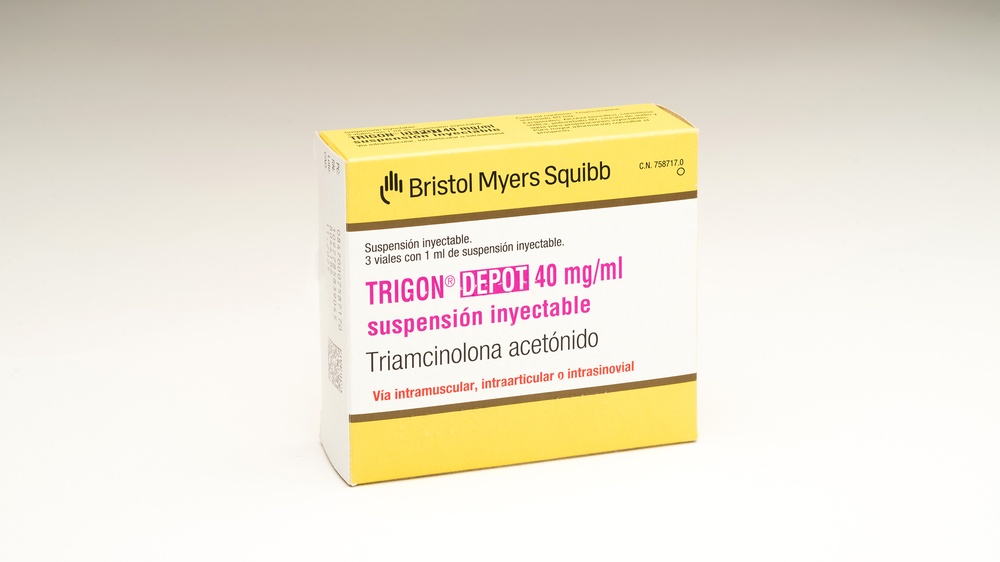
TRIGON 40 mg /Ml Injectable Suspension

Prescription review online
A doctor will review your case and decide whether a prescription is medically appropriate.

Talk to a doctor about this medicine
Discuss your symptoms and possible next steps in a quick online consultation.



How to use TRIGON DEPOT 40 mg/ml INJECTABLE SUSPENSION
Contents of the leaflet
- Introduction
- What is Trigon Depot and what is it used for
- What you need to know before you use Trigon Depot
- How to use Trigon Depot
- Possible Adverse Effects
- Storage of Trigon Depot
- Package Contents and Additional Information
Introduction
Package Leaflet: Information for the User
TRIGON DEPOT 40 mg/ml injectable suspension
Triamcinolone, acetonide
Read all of this leaflet carefully before you start using this medicine because it contains important information for you.
- Keep this leaflet, you may need to read it again.
- If you have any further questions, ask your doctor or pharmacist.
- This medicine has been prescribed for you only. Do not pass it on to others. It may harm them, even if their signs of illness are the same as yours.
- If you experience any side effects, talk to your doctor, pharmacist or nurse. This includes any possible side effects not listed in this leaflet. See section 4.
Contents of the package leaflet:
- What is Trigon Depot and what is it used for
- What you need to know before you use Trigon Depot
- How to use Trigon Depot
- Possible side effects
- Storing Trigon Depot
- Contents of the pack and other information
1. What is Trigon Depot and what is it used for
Trigon Depot is a corticosteroid with intense anti-inflammatory effect administered by intramuscular, intra-articular, and intra-synovial routes.
This medicine must not be used for intravenous, intradermal, intraocular, epidural, or intrathecal use.
Intramuscular route:
Trigon Depot is indicated for hormonal disorders, rheumatic and collagen diseases, skin disorders, allergic reactions, eye diseases, gastrointestinal diseases, respiratory diseases, blood diseases, cancerous conditions, and edematous states.
Intra-articular route:
Trigon Depot is indicated as short-term adjuvant therapy for intra-articular (inside the joints) or intra-synovial (in bags near the joints) administration, and for injection into the tendon sheath, in inflammatory conditions such as synovitis of osteoarthritis, rheumatoid arthritis, acute and subacute bursitis, acute gouty arthritis, epicondylitis (tennis elbow), non-specific acute tenosynovitis, and post-traumatic osteoarthritis.

Not sure if this medicine is right for you?
Discuss your symptoms and treatment with a doctor online.
2. What you need to know before you use Trigon Depot
Do not use Trigon Depot
- If you are allergic (hypersensitive) to triamcinolone acetonide or any of the other ingredients of this medicine (listed in section 6).
- If you have a systemic infection (generalized).
- If you have a decrease in the number of platelets known as idiopathic thrombocytopenic purpura (in intramuscular administration).
Warnings and precautions
Consult your doctor, pharmacist, or nurse before starting to use Trigon Depot.
This medicine should be administered by deep intramuscular or intra-articular route, excluding any other route of administration. In case of non-deep intramuscular administration, local skin atrophy may appear.
Administration of Trigon Depot by other routes such as intranasal, subconjunctival, sub-tendinous, retrobulbar, or intraocular (intravitreal) is not authorized. After intravitreal administration, eye disorders such as endophthalmitis, inflammation, increased pressure, fluid accumulation under the retina, including macular degeneration, viral retinitis (mainly due to cytomegalovirus), and vision loss have been reported. Several cases of blindness have been described after injection of corticosteroids into the nasal cavities and scalp.
This medicine should not be administered by epidural or intrathecal route, as serious adverse effects have been described when using these routes.
In intra-articular administration, accidental injection of the medicine into the soft tissues surrounding a joint may lead to the appearance of systemic effects (general), and is the most common cause of lack of local desired effects.
After intra-articular treatment, excessive use of the joints in which symptomatic benefits have been obtained should be avoided.
Repeated intra-articular injections may cause instability in the joint by themselves. In certain cases, your doctor will perform follow-up with X-rays. In rare cases, an increase in joint discomfort has occurred. In case of increased pain accompanied by local swelling, limitation of joint mobility, fever, and discomfort, go to the nearest medical center to find out if you have septic arthritis, in which case the administration of this medicine will be discontinued.
This medicine should be used with caution in patients with certain diseases such as ocular herpes simplex infection, non-specific chronic ulceration of the colon, inflammation of a diverticulum (usually of the colon), communication between two segments of the intestine (recent intestinal anastomosis), active or latent peptic ulcer, kidney failure, chronic inflammatory kidney disease, or acute with glomerular damage, hypertension, congestive heart failure, inflammation of the blood vessel wall, or occlusion of a vessel by a thrombus, osteoporosis, skin eruptions or spots, Cushing's syndrome, diabetes, convulsive disorders, metastatic cancer, and muscle weakness (myasthenia gravis), as well as during periods of stress such as trauma, surgery, or severe illness.
Contact your doctor if you experience blurred vision or other visual disturbances.
An intensification of the effect of the medicine may occur in patients with hypothyroidism or cirrhosis.
If administered to patients with latent or active tuberculosis, careful observation is necessary, and these patients should receive chemoprophylaxis (medicines for prevention). The use in patients with active tuberculosis is restricted to certain cases.
During treatment with corticosteroids, mental changes such as euphoria, sleep loss, mood changes, and personality changes, depression (sometimes severe), and psychotic manifestations may appear. Pre-existing psychotic states and emotional instability may also be exacerbated. The use of antidepressant medications does not imply an improvement and may increase these mental disorders.
Prolonged administration of corticosteroids may produce cataracts or glaucoma (a disease characterized by increased intraocular pressure), with possible damage to the optic nerve, in addition to increasing the possibility of eye infections.
The development of children under prolonged treatment with corticosteroids should be carefully monitored, as corticosteroids may suppress growth. Corticosteroids may also affect the natural production of steroids.
Corticosteroids may mask some signs of infection, and during their use, new infections may appear. Chickenpox and measles may have a more severe or even fatal course in patients treated with corticosteroids, so during treatment with this medicine, special precautions should be taken to avoid exposure to these and other contagious diseases.
Patients under treatment with corticosteroids, especially if they receive high doses, should not be vaccinated due to the lack of immune response, which may lead to neurological complications.
Menstrual irregularities may occur, and vaginal bleeding has been observed in postmenopausal women. Any unexpected bleeding or significant change in withdrawal bleeding should be reported immediately.
In prolonged treatments, an adequate intake of proteins is necessary, as in many cases, there is a loss of weight associated with a decrease in protein components. Menstrual irregularities may also appear.
Diabetic patients may need an increase in the dose of insulin or oral antidiabetics.
This medicine may cause an increase in blood pressure, water and salt retention, and an increase in potassium and calcium excretion, making a salt-restricted diet and potassium intake necessary. In case of renal impairment, edema (fluid retention) may occur.
Use in athletes
Athletes are informed that this medicine contains a component that may produce a positive result in doping tests.
Other medicines and Trigon Depot
Tell your doctor or pharmacist if you are taking, have recently taken, or might take any other medicines.
Administration of Trigon Depot and amphotericin B injectable or medications that eliminate potassium may decrease potassium levels in the blood. It may also block the effect of anticholinesterase medications, enhance or diminish the effect of oral anticoagulants, increase blood glucose levels in patients treated with antidiabetics or insulin, decrease blood concentrations of antitubercular medications, increase the activity of cyclosporin (immunosuppressant), and the toxicity of digitalis glycosides (cardiac medications), and decrease the effect of antihypertensive medications.
This medicine decreases its effect when administered together with sedatives (barbiturics), anticonvulsants (phenytoin, carbamazepine), and the antibiotic rifampicin, and increases its effect when administered together with estrogens (including oral contraceptives). It also interacts with human growth hormone, certain muscle relaxants, non-steroidal anti-inflammatory drugs, and salicylates (e.g., acetylsalicylic acid), medications used for thyroid disorders, and vaccines.
Some medications may increase the effects of Trigon Depot, so your doctor will perform thorough checks if you are taking these medications (including some for HIV: ritonavir, cobicistat).
Concomitant therapy with this medicine and medications used in rhythm and heartbeat disorders such as disopyramide, quinidine, procainamide, amiodarone, bepridil, and sotalol is not recommended.
This medicine will be administered with extreme caution, evaluating its use, in patients who are taking medications for psychosis (phenothiazines, sultopride), depression (tricyclic antidepressants), allergy (terfenadine, astemizole), increased cerebral blood flow (vincamine), and certain infections (intravenous erythromycin, pentamidine, halofantrine).
Association of Trigon Depot with medications that produce changes in electrolytes (salts such as sodium, potassium...) such as certain diuretics and laxatives is not recommended.
Use in elderly patients
Elderly patients should have close medical supervision when using this medicine.
Use in children
This medicine is not recommended in children under 6 years of age.
If you observe any alteration in the growth and development of children under prolonged treatment with this medicine, or any other worrying reaction, consult your doctor as soon as possible.
Pregnancy and breastfeeding
Consult your doctor or pharmacist before using any medicine.
This medicine should not be used during pregnancy and breastfeeding, or in women who may become pregnant, unless the doctor considers that the expected benefits outweigh the possible risks.
Driving and using machines
No data are available on the effects of the medicine on the ability to drive and use machines.
Important information about some of the ingredients of Trigon Depot
This medicine contains less than 1 mmol (23 mg) of sodium per vial; i.e., it is essentially "sodium-free".
This medicine contains 9.9 mg of benzyl alcohol in each vial. Benzyl alcohol may cause allergic reactions.
Consult your doctor or pharmacist if you are pregnant or breastfeeding or if you have liver or kidney disease. This is because large amounts of benzyl alcohol may accumulate in your body and cause adverse effects (metabolic acidosis).
Benzyl alcohol has been associated with the risk of serious adverse effects, including respiratory problems ("gasping syndrome") in children.
3. How to use Trigon Depot
Follow exactly the administration instructions of this medicine indicated by your doctor or pharmacist. In case of doubt, consult your doctor or pharmacist again.
The recommended dose is variable depending on the disease being treated and the patient's response. Your doctor will use the lowest possible dose for your case.
Method of administration:
THE MOST STRICT ASEPSIS TECHNIQUES ARE MANDATORY: To ensure a uniform suspension, shake the vial before use. Before extracting, inspect the suspension for accumulation or granular appearance (agglomeration). Agglomeration occurs when the medicine substance separates from the solution and appears as a white precipitate in the vial. An agglomerated product should be discarded and not used. After extracting the suspension, inject it without delay to avoid sedimentation in the syringe.
The initial dose of Trigon Depot may vary from 2.5 to 60 mg daily depending on the disease being treated. The usual dose is:
Intramuscular route:
Adults and children over 12 years: the recommended initial dose is 60 mg, in deep injection into the gluteal muscle. Normally, your doctor will adjust the dose within the range of 40 to 80 mg. As the dose depends on the patient's response and the duration of the improvement, there may be situations in which doses of 20 mg or less are sufficient. For the treatment of pollen allergy, doses of up to 100 mg may be necessary.
Children from 6 to 12 years: the recommended initial dose is 40 mg, although the dosage depends more on the severity of the symptoms than on age or weight.
Intra-articular or intra-synovial route and injection into the tendon sheath:
The initial dose is 2.5 to 5 mg in small joints and 5 to 15 mg in large joints. In adults, doses of up to 10 mg in small areas and up to 40 mg in larger areas are usually sufficient to relieve symptoms. A single injection can also be administered in several joints, up to a total dose of 80 mg.
The duration of the effects is variable, and in some patients, it may be permanent or sustained for several weeks.
Your doctor will indicate the duration of your treatment with this medicine. Do not stop treatment before, as the desired effect may not be achieved.
If treatment with this medicine is discontinued after prolonged therapy, your doctor will do so gradually.
It is essential that your doctor performs continuous monitoring after discontinuing treatment with this medicine.
If you think the action of this medicine is too strong or too weak, tell your doctor or pharmacist.
If you use more Trigon Depot than you should
In case of administration of more doses than prescribed, and although it is unlikely that you will suffer from severe poisoning, go to the doctor as soon as possible or contact the Emergency Service of the nearest hospital.
In case of overdose or accidental ingestion, consult your doctor or pharmacist or call the Toxicology Information Service. Phone: 91 562 04 20.

Started taking the medicine and have questions?
Discuss your symptoms and treatment with a doctor online.
4. Possible Adverse Effects
Like all medicines, this medicine can cause adverse effects, although not all people suffer from them. The following adverse effects may occur:
Frequent Adverse Effects (may affect up to 1 in 10 people):
- Infection
- Headache
- Cataracts
- Reactions at the injection site.
Uncommon Adverse Effects (may affect up to 1 in 100 people)
- Inflammation without infection (sterile abscess at the injection site), worsening or masking of infections
- Allergic reactions, anaphylactic shock
- Development of a Cushingoid state (symptoms similar to a hormonal disorder called Cushing's syndrome), lack of hormonal response (adrenocortical), growth delays in children and adolescents
- Sodium and fluid retention, hypokalemic alkalosis, hyperglycemia (high blood sugar levels), diabetes mellitus, inadequate control of diabetes mellitus
- Psychiatric symptoms, depression, euphoria, mood changes, psychotic disorders, personality changes, insomnia
- Seizures, loss of consciousness (syncope), elevated intraarterial pressure, neuritis (inflammation of the nerves), paresthesia (tingling, numbness)
- Blindness, glaucoma, exophthalmos (bulging eyes), corneal perforation
- Dizziness
- Congestive heart failure, arrhythmia
- Hypertension, embolism (blockage of a vessel by a thrombus), inflammation of the vessel wall (thrombophlebitis), inflammation of the blood vessels (necrotizing vasculitis)
- Peptic ulcer, with possible perforation or hemorrhage, pancreatitis (inflammation of the pancreas), abdominal distension, ulcerative esophagitis (inflammation of the esophagus accompanied by an ulcer)
- Urticaria, rash, increased or decreased skin pigmentation, atrophy or fragility of the skin
- Petechiae (skin spots formed by blood leakage), ecchymosis (subcutaneous lesion characterized by deposits of extravasated blood under intact skin), increased sweating, purpura, skin striae, hirsutism (exaggerated hair growth), acneiform dermatitis, lesions similar to systemic lupus erythematosus
- Osteoporosis, osteonecrosis, pathological fractures of long bones, delayed fracture healing, musculoskeletal disorders, muscle weakness, myopathy (muscle pain), muscle mass loss, growth delay, neuropathic arthropathy
- Glycosuria (high sugar levels in urine)
- Menstrual irregularities, absence of menstruation, vaginal hemorrhage in postmenopausal women
- Synovitis (inflammation of the synovial membrane), pain, irritation, and discomfort at the injection site, fatigue, healing disorders
- Potassium loss, electrocardiographic changes, decreased carbohydrate tolerance, negative nitrogen balance, increased intraocular pressure
- Interference with laboratory tests
- Vertebral compression fractures
Adverse Effects with Unknown Frequency (cannot be estimated from available data):
- Blurred vision
- Visual impairment
Reporting Adverse Effects:
If you experience any type of adverse effect, consult your doctor, pharmacist, or nurse, even if it is a possible adverse effect that is not listed in this prospectus. You can also report them directly through the Spanish Pharmacovigilance System for Human Use Medicines: https://www.notificaRAM.es. By reporting adverse effects, you can contribute to providing more information on the safety of this medicine.
5. Storage of Trigon Depot
Store between 15 °C and 25 °C. Do not refrigerate or freeze. Keep in the original packaging to protect from light. Shake before use. See section 3.
Keep this medicine out of the sight and reach of children.
Do not use this medicine after the expiration date shown on the packaging after CAD. The expiration date is the last day of the month indicated.
Medicines should not be disposed of via wastewater or household waste. Deposit the packaging and unused medicines at the SIGRE point in the pharmacy. In case of doubt, ask your pharmacist how to dispose of the packaging and unused medicines. This will help protect the environment.
6. Package Contents and Additional Information
Composition of Trigon Depot
- The active ingredient is triamcinolone acetonide. Each vial contains 40 mg of triamcinolone acetonide.
- The other components are benzyl alcohol, sodium carmellose, polysorbate 80, sodium chloride, and water for injectable preparations.
Appearance of Trigon Depot and Package Contents
Glass vial with 1 ml of injectable aqueous suspension. Each package contains 3 vials.
Marketing Authorization Holder:
Bristol-Myers Squibb, S.A.
Quintanadueñas Street, 6
28050 Madrid
Manufacturer:
CATALENT ANAGNI S.R.L.
Loc.Fontana del Ceraso snc
Strada Provinciale 12 Casilina N. 41
03012 ANAGNI (FR)
Italy
Swords Laboratories Unlimited Company T/A Bristol-Myers Squibb Pharmaceutical Operations,
External Manufacturing Plaza 254
Blanchardstown Corporate Park 2,
Dublin 15, D15 T867,
Ireland
Date of the Last Revision of this Prospectus:08/2024
Detailed information about this medicine is available on the website of the Spanish Agency for Medicines and Health Products (AEMPS) http://www.aemps.gob.es/.
This information is intended only for healthcare professionals:
Instructions for Correct Administration
This medicine should be administered under aseptic conditions. To restore the homogeneity of the suspension, shake the vial before use. Agglomeration occurs when the medicine substance separates from the solution and appears as a white precipitate in the vial. An agglomerated product should be discarded and not used. Once the syringe is loaded, it should be injected immediately to avoid sedimentation.
This formulation should not be used for intravenous, intradermal, intraocular, epidural, or intrathecal use.
Before administration, appropriate precautions should be taken, especially in patients with a history of allergy to any medicine, as severe allergic reactions and anaphylactic shock have been reported after injection of this medicine, regardless of the administration route.
For intramuscular administration, the injection should be deep into the gluteal muscle and not into the deltoid area. In adults, needles with a minimum length of 3.8 cm are recommended; in obese patients, longer needles may be necessary.
For intra-articular administration, the medicine should not be injected into the surrounding tissues, as this may cause atrophy of the tissues. Similarly, excessive distension of the joint capsule and deposition of the steroid in the needle tract should be avoided, as they may lead to subcutaneous atrophy.
In the treatment of acute nonspecific tenosynovitis, precautions should be taken to ensure that the medicine is injected into the tendon sheath rather than into the tendon itself.
During handling of this medicine, contact with the skin and eyes, as well as inhalation of the medicine, should be avoided.
- Country of registration
- Dosage formINJECTABLE, 40 mg/ml
- ATC codeH02AB08
- Average pharmacy price18.34 EUR
- Availability in pharmaciesSupply issue reported
- Active substance
- Prescription requiredYes
- Manufacturer
- CompositionALCOHOL BENCILICO (9,9 mg mg), CARMELOSA SODICA (6,3 mg mg), CLORURO DE SODIO (6,6 mg mg), POLISORBATO 80 (0,4 mg mg)
- This information is for reference only and does not constitute medical advice. Always consult a doctor before taking any medication. Oladoctor is not responsible for medical decisions based on this content.
- Alternatives to TRIGON DEPOT 40 mg/ml INJECTABLE SUSPENSIONDosage form: INJECTABLE, 373 mgActive substance: hydrocortisoneManufacturer: Cheplapharm Arzneimittel GmbhPrescription requiredDosage form: INJECTABLE, 75 mgActive substance: hydrocortisoneManufacturer: Cheplapharm Arzneimittel GmbhPrescription requiredDosage form: ORAL SOLUTION/SUSPENSION, 40 mg/mlActive substance: vamoroloneManufacturer: Santhera Pharmaceuticals GmbhPrescription required
Online doctors for TRIGON DEPOT 40 mg/ml INJECTABLE SUSPENSION
Discuss questions about TRIGON DEPOT 40 mg/ml INJECTABLE SUSPENSION, including use, safety considerations and prescription review, subject to medical assessment and local regulations.

Get TRIGON DEPOT 40 mg/ml INJECTABLE SUSPENSION Prescription Online
Fill in a 2-min form
Tell us your symptoms, history, and what medicine you're requesting.
Pick a doctor or let us assign
Choose a specialist or we'll match you with the next available doctor.
Doctor reviews your case
Usually within 30 minutes. They may ask follow-up questions via chat.
Collect from any pharmacy
Electronic prescription sent to your email — valid across Spain.
Frequently Asked Questions
TRIGON DEPOT 40 mg/ml INJECTABLE SUSPENSION requires a prescription in Spain. You can check with a doctor online whether this medicine may be appropriate for your situation.
The active ingredient in TRIGON DEPOT 40 mg/ml INJECTABLE SUSPENSION is triamcinolone. This information helps identify medicines with the same composition but different brand names.
The average pharmacy price for TRIGON DEPOT 40 mg/ml INJECTABLE SUSPENSION is around 18.34 EUR. Prices may vary depending on the manufacturer and dosage form.
TRIGON DEPOT 40 mg/ml INJECTABLE SUSPENSION is manufactured by Bristol Myers Squibb S.A.. Pharmacy brands and packaging may differ depending on the distributor.
Doctors such as Family doctors, Psychiatrists, Dermatologists, Cardiologists, Endocrinologists, Gastroenterologists, Pulmonologists, Nephrologists, Rheumatologists, Hematologists, Infectious disease physicians, Allergists, Geriatricians, Paediatricians, Oncologists may assess whether TRIGON DEPOT 40 mg/ml INJECTABLE SUSPENSION is appropriate, depending on your situation and local regulations. You can book an online consultation to discuss your symptoms and possible next steps.
Spain has a well-developed healthcare infrastructure across major cities such as Madrid, Barcelona, Valencia, and Seville. Pharmacies are widely available and operate under strict regulations, ensuring access to prescribed medications.
You can buy TRIGON DEPOT 40 mg/ml INJECTABLE SUSPENSION in Madrid, Barcelona, Seville, or Valencia at any local pharmacy with a valid prescription.
To obtain a prescription, you can use Oladoctor:
Other medicines with the same active substance (triamcinolone) include ACTOCORTINA 373 mg POWDER FOR INJECTABLE SOLUTION, ACTOCORTINA 75 mg POWDER AND SOLVENT FOR INJECTABLE SOLUTION, AGAMREE 40 mg/mL ORAL SUSPENSION. These may have different brand names or formulations but contain the same therapeutic ingredient. Always consult a doctor before switching or starting a new medicine.
