



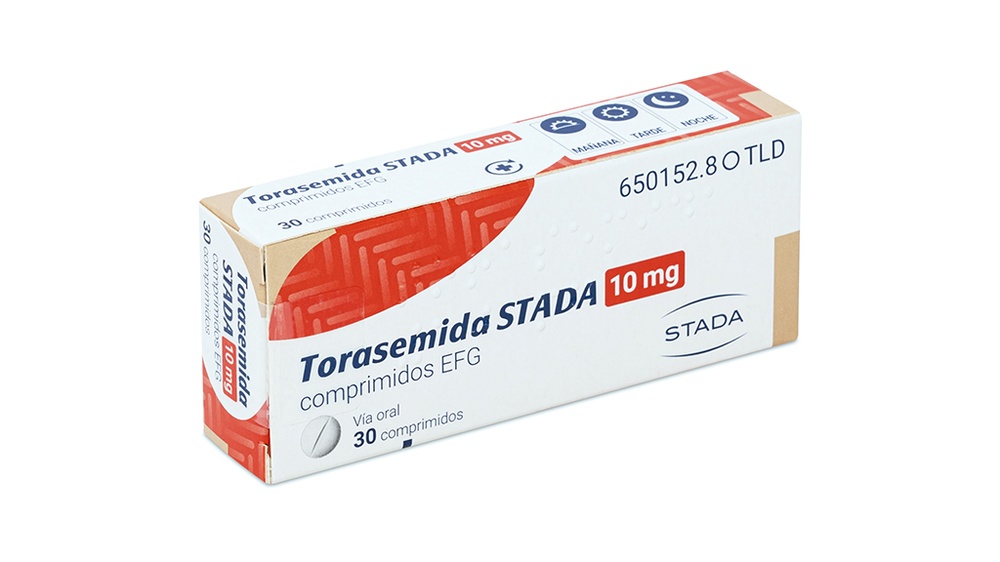
TORASEMIDA 10 mg Tablets

Prescription review online
A doctor will review your case and decide whether a prescription is medically appropriate.

Talk to a doctor about this medicine
Discuss your symptoms and possible next steps in a quick online consultation.



How to use TORASEMIDE STADA 10 mg TABLETS
Contents of the leaflet
- Introduction
- What TORASEMIDA STADA 10 MG TABLETS EFG are and what they are used for
- BEFORE TAKING TORASEMIDA STADA 10 MG TABLETS
- HOW TO TAKE TORASEMIDA STADA 10 MG TABLETS EFG
- Possible Side Effects
- Storage of TORASEMIDA STADA 10 MG TABLETS EFG
- ADDITIONAL INFORMATION
Introduction
Package Leaflet: Information for the User
TORASEMIDA STADA 10 MG TABLETS EFG
Read the entire package leaflet carefully before starting to take the medicine
- Keep this package leaflet, as you may need to read it again.
- If you have any questions, ask your doctor or pharmacist.
- This medicine has been prescribed to you and should not be given to others, even if they have the same symptoms, as it may harm them.
- If you consider any of the side effects you are suffering from to be serious or if you notice any side effect not mentioned in this package leaflet, inform your doctor or pharmacist.
Contents of the package leaflet:
- What Torasemida STADA 10 mg tablets EFG are and what they are used for
- Before taking Torasemida STADA 10 mg tablets EFG
- How to take Torasemida STADA 10 mg tablets EFG
- Possible side effects
- Storage of Torasemida STADA 10 mg tablets EFG
- Additional information
1. What TORASEMIDA STADA 10 MG TABLETS EFG are and what they are used for
Torasemida STADA is a diuretic medicine (increases urine elimination) and belongs to the group of so-called "High-ceiling diuretics: sulfonamides, monodrugs".
Torasemida STADA is indicated for the treatment of:
- edema (fluid retention) due to congestive heart failure, kidney or liver disease,
- hypertension.

Not sure if this medicine is right for you?
Discuss your symptoms and treatment with a doctor online.
2. BEFORE TAKING TORASEMIDA STADA 10 MG TABLETS
EFG Do not take Torasemida STADA:
- if you are allergic (hypersensitive) to torasemida or any of the other components of Torasemida STADA
if you are allergic to sulfonilureas
- if you have anuria (absence of urine production).
Be careful with Torasemida STADA:
- if you have severe liver disease, as the use of torasemida may precipitate a coma,
- if you have low sodium or potassium levels in your blood or low blood volume,
- if you have heart problems, especially if you are being treated with digitalis glycosides, as it increases the risk of cardiac arrhythmias,
- if you have gout or diabetes mellitus,
- if you have kidney failure or problems urinating,
- if you have low blood pressure (hypotension).
Use of other medicines
Tell your doctor or pharmacist if you are using or have recently used other medicines, including those obtained without a prescription.
You should also inform your doctor if you are taking any of the following medicines that may interact with torasemida:
- cardiac glycosides such as digoxin (heart medicines), antihypertensives (especially ACE inhibitors), theophylline (asthma medicine): the effect of these medicines may be increased,
- mineralocorticoids, glucocorticoids, and laxatives: may increase potassium elimination caused by these medicines,
- aminoglycoside antibiotics: may increase kidney or ear toxicity,
- cisplatin (cancer medicine), lithium (antidepressant), salicylates, ethacrynic acid: may increase the toxicity of these medicines,
- non-steroidal anti-inflammatory medicines (e.g., ibuprofen, indomethacin), probenecid (gout medicine), cholestyramine (cholesterol-lowering medicine): may decrease the effect of torasemida,
- diabetes medicines: may decrease the effect of these medicines.
Taking Torasemida STADA with food and drinks
The tablets can be taken with or without food.
Pregnancy and Breastfeeding
Consult your doctor or pharmacist before using any medicine.
Torasemida is not recommended during pregnancy.
It is not known whether torasemida passes into breast milk, so its use is not recommended during breastfeeding.
Use in Children
Since the safety and efficacy of torasemida in children have not been established, the use of Torasemida is not recommended in children.
Driving and Using Machines
This medicine may affect your ability to drive and use machines, especially if taken simultaneously with alcohol.
Important information about some of the components of Torasemida STADA:
This medicine contains lactose. If your doctor has told you that you have an intolerance to certain sugars, consult with them before taking this medicine.
This medicine contains less than 23 mg of sodium (1 mmol) per tablet; it is essentially "sodium-free".
3. HOW TO TAKE TORASEMIDA STADA 10 MG TABLETS EFG
Follow the administration instructions of Torasemida STADA indicated by your doctor. Consult your doctor or pharmacist if you have any doubts.
The normal dose in adults (including the elderly) is:
- Treatment of edema associated with congestive heart failure, kidney or liver disease
The initial dose ranges from 5 mg to 20 mg per day, but your doctor may increase it to approximately double if necessary.
- Hypertension
The usual initial dose is 2.5 to 5 mg per day, but your doctor may increase it to 10 mg per day or prescribe another additional antihypertensive.
Torasemida STADA is administered orally.
Swallow the tablets whole, without chewing, with a sufficient amount of liquid in the morning. The tablets can be taken with or without food.
If you take more Torasemida STADA than you should
If you have taken more Torasemida STADA than you should, it may cause increased urine production and drowsiness, confusion, weakness, and dizziness.
In case of overdose or accidental ingestion, consult your doctor or pharmacist immediately or call the Toxicology Information Service, phone: 91 562 04 20, indicating the medicine and the amount taken.
If you forget to take Torasemida STADA
Do not take a double dose to make up for forgotten doses.
Take your dose as soon as you remember and the next day take it at the corresponding time.
If you stop taking Torasemida STADA
Your doctor will indicate the duration of your treatment with Torasemida STADA. Do not stop treatment before your doctor tells you to, as it may worsen your condition.
If you have any other questions about the use of this product, ask your doctor or pharmacist.

Started taking the medicine and have questions?
Discuss your symptoms and treatment with a doctor online.
4. Possible Side Effects
Like all medicines, Torasemida STADA 10 mg can cause side effects, although not everyone gets them.
The following side effects have been reported:
- With prolonged treatment, electrolyte balance disorders may appear.
- Occasionally, especially at the start of treatment, headache, dizziness, fatigue, weakness, muscle cramps, and gastrointestinal disorders (e.g., loss of appetite, stomach pain, nausea, vomiting, diarrhea, constipation) may occur.
- In rare cases, dry mouth and limb discomfort may appear, and in individual cases, visual disturbances and allergic reactions (e.g., itching, redness, photosensitivity) may be observed.
- In patients who have difficulty urinating (e.g., due to prostate hypertrophy), the increased urine flow may lead to urinary retention.
- Due to increased urine production, a decrease in blood pressure, confusion, and exceptionally, thrombosis, cardiac arrhythmias, angina pectoris, acute myocardial infarction, sudden loss of consciousness (syncope), and circulatory collapse may occur, especially if large amounts of fluid and salts have been lost.
- Occasionally, increases in blood uric acid, sugar, triglycerides, and cholesterol have been observed.
If you consider any of the side effects you are suffering from to be serious or if you notice any side effect not mentioned in this package leaflet, inform your doctor or pharmacist.
5. Storage of TORASEMIDA STADA 10 MG TABLETS EFG
Keep out of the reach and sight of children.
Do not store above 30°C. Store in the original package.
Do not use Torasemida STADA after the expiration date stated on the package after
EXP. The expiration date is the last day of the month indicated.
Medicines should not be disposed of via wastewater or household waste. Ask your pharmacist how to dispose of the package and any unused medicines. This will help protect the environment.
6. ADDITIONAL INFORMATION
Composition of Torasemida STADA
- The active ingredient is Torasemida
- The other ingredients are: lactose monohydrate, cornstarch, sodium carboxymethyl starch (type A) (potato), colloidal anhydrous silica, and magnesium stearate.
Appearance of the product and package contents
Torasemida STADA 10 mg are biconvex, round, white or almost white tablets, scored on one side and marked with 916 on the other.
They are available in packages of 30 tablets.
Marketing authorization holder
Laboratorio STADA, S.L. Frederic Mompou, 5
08960 Sant Just Desvern (Barcelona)
Spain
Manufacturer
STADA ARZNEIMITTEL AG
Stadastrasse 2-18, Bad Vilbel
D-61118 Germany
This package leaflet was approved in April 2010
- Country of registration
- Dosage formTABLET, 10 mg
- ATC codeC03CA04
- Average pharmacy price5.29 EUR
- Active substance
- Prescription requiredYes
- Manufacturer
- CompositionLACTOSA HIDRATADA (116.88 mg mg), CARBOXIMETILALMIDON SODICO (1.60 mg mg)
- This information is for reference only and does not constitute medical advice. Always consult a doctor before taking any medication. Oladoctor is not responsible for medical decisions based on this content.
- Alternatives to TORASEMIDE STADA 10 mg TABLETSDosage form: TABLET, 10 mgActive substance: torasemideManufacturer: Viatris Healthcare LimitedPrescription requiredDosage form: TABLET, 5 mgActive substance: torasemideManufacturer: Viatris Healthcare LimitedPrescription requiredDosage form: TABLET, 2.5 mgActive substance: torasemideManufacturer: Viatris Healthcare LimitedPrescription required
Online doctors for TORASEMIDE STADA 10 mg TABLETS
Discuss questions about TORASEMIDE STADA 10 mg TABLETS, including use, safety considerations and prescription review, subject to medical assessment and local regulations.
Get TORASEMIDE STADA 10 mg TABLETS Prescription Online
Fill in a 2-min form
Tell us your symptoms, history, and what medicine you're requesting.
Pick a doctor or let us assign
Choose a specialist or we'll match you with the next available doctor.
Doctor reviews your case
Usually within 30 minutes. They may ask follow-up questions via chat.
Collect from any pharmacy
Electronic prescription sent to your email — valid across Spain.
Frequently Asked Questions
TORASEMIDE STADA 10 mg TABLETS requires a prescription in Spain. You can check with a doctor online whether this medicine may be appropriate for your situation.
The active ingredient in TORASEMIDE STADA 10 mg TABLETS is torasemide. This information helps identify medicines with the same composition but different brand names.
The average pharmacy price for TORASEMIDE STADA 10 mg TABLETS is around 5.29 EUR. Prices may vary depending on the manufacturer and dosage form.
TORASEMIDE STADA 10 mg TABLETS is manufactured by Laboratorio Stada S.L.. Pharmacy brands and packaging may differ depending on the distributor.
Doctors such as Family doctors, Psychiatrists, Dermatologists, Cardiologists, Endocrinologists, Gastroenterologists, Pulmonologists, Nephrologists, Rheumatologists, Hematologists, Infectious disease physicians, Allergists, Geriatricians, Paediatricians, Oncologists may assess whether TORASEMIDE STADA 10 mg TABLETS is appropriate, depending on your situation and local regulations. You can book an online consultation to discuss your symptoms and possible next steps.
Spain has a well-developed healthcare infrastructure across major cities such as Madrid, Barcelona, Valencia, and Seville. Pharmacies are widely available and operate under strict regulations, ensuring access to prescribed medications.
You can buy TORASEMIDE STADA 10 mg TABLETS in Madrid, Barcelona, Seville, or Valencia at any local pharmacy with a valid prescription.
To obtain a prescription, you can use Oladoctor:
Other medicines with the same active substance (torasemide) include DILUTOL 10 mg TABLETS, DILUTOL 5 mg TABLETS, DILUTOL HTA 2.5 mg TABLETS. These may have different brand names or formulations but contain the same therapeutic ingredient. Always consult a doctor before switching or starting a new medicine.
