


TIOBARBITAL B. BRAUN 0.5 g POWDER FOR INJECTABLE SOLUTION
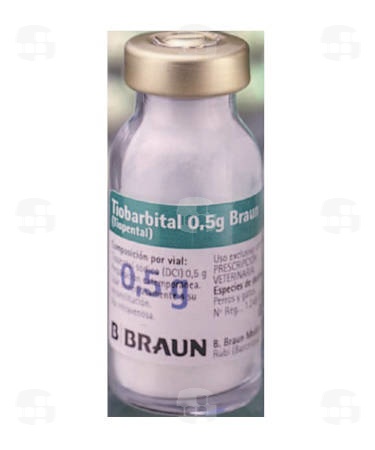



How to use TIOBARBITAL B. BRAUN 0.5 g POWDER FOR INJECTABLE SOLUTION
Translated with AI
This page provides general information and does not replace a doctor’s consultation. Always consult a doctor before taking any medication. Seek urgent medical care if symptoms are severe.
Show originalContents of the leaflet
Introduction
Package Leaflet: Information for the User
Tiobarbital B. Braun 0.5 g Powder for Solution for Injection
tiopental sodium
Read all of this leaflet carefully before you start using this medicine because it contains important information for you.
|
Contents of the Package Leaflet
- What is Tiobarbital B. Braun 0.5 g and what is it used for
- What you need to know before you start using Tiobarbital B. Braun 0.5 g
- How to use Tiobarbital B. Braun 0.5 g
- Possible side effects
- Storage of Tiobarbital B. Braun 0.5 g
- Contents of the pack and further information

1. What is Tiobarbital B. Braun 0.5 g and what is it used for
This medicine contains the active substance tiopental sodium in the form of tiopental sodium and sodium carbonate. It is a thiobarbiturate with rapid onset for intravenous administration.
Tiobarbital B. Braun is used in adults:
- in short surgical interventions as a single anesthetic agent for the induction and maintenance of anesthesia.
- in combination with other agents used in general anesthesia for the induction and maintenance of anesthesia.
- to control convulsions that may occur with some types of anesthesia or due to other causes.
- to induce emergency coma during a prolonged epileptic crisis (refractory status epilepticus).
- to induce and maintain barbiturate coma intended to reduce intracranial pressure in patients where pressure has increased and other therapeutic measures have failed.
Tiobarbital B. Braun is used in children:
- in short surgical interventions as a single anesthetic agent for the induction and maintenance of anesthesia.
- in combination with other agents used in general anesthesia for the induction and maintenance of anesthesia.
- to control convulsions that may occur with some types of anesthesia or due to other causes.
to induce emergency coma during a prolonged epileptic crisis (refractory status epilepticus).
2. What you need to know before you start using Tiobarbital B. Braun 0.5 g
Do not use Tiobarbital B. Braun:
- if you are allergic to barbiturates or to any of the components of this medicine (listed in section 6).
- if you have a respiratory obstruction (respiratory obstruction).
- if you have acute asthma (severe asthma attack).
- if you suffer from hereditary muscular dystrophy (myotonic dystrophy).
- if you are in severe shock.
- if you have a metabolic disorder called porphyria (hereditary disease, caused by a deficiency in the enzymes involved in the synthesis of a component of hemoglobin found in red blood cells).
Warnings and precautions:
Consult your doctor or pharmacist before starting to use Tiobarbital B. Braun, especially if you have:
- increased intracranial pressure.
- asthma or other severe respiratory disease.
- inflammation in the mouth, jaw, and throat, which could lead to respiratory problems during the use of tiopental.
- any heart or blood vessel disease or high blood pressure.
- inflammation of the sac around the heart.
- dehydration or decreased total blood volume circulating through the body (hypovolemia).
- severe bleeding or burns.
- severe myasthenia (disorder in which muscles become easily fatigued and weakened).
- reduced function of the adrenal gland, even when treated with cortisone.
- weakness, malnutrition, and weight loss.
- increased levels of urea, toxins, or potassium in the blood.
- severe anemia.
- shock.
- liver or kidney problems.
- any metabolic disorder, such as thyrotoxicosis, myxedema, and diabetes.
- alcohol or drug addiction.
Using Tiobarbital B. Braun with other medicines:
Tell your doctor or pharmacist if you are using, have recently used, or might use any other medicines.
The medicines that may affect or interact with tiopental are the following:
- Aminophylline (for the treatment of asthma).
- Midazolam (a sedative medicine).
- Opioid analgesics (medicines for treating severe pain).
- Probenecid (a medicine for treating gout).
- Fentanyl (a medicine for treating pain)
- Muscle relaxants.
- Monoamine oxidase inhibitor and tricyclic antidepressant medicines (used for treating depression), such as citalopram, amitriptyline.
- Central nervous system depressants.
- Metoclopramide and droperidol (medicines for treating nausea and vomiting).
- Medicines containing St. John's Wort or valerian.
- Androgens (for treating male infertility).
- Medicines for treating epilepsy.
- Corticosteroids (medicines that reduce inflammation and allergic reactions).
- Medicines for treating bacterial infections such as metronidazole, sulfafurazol, isoniazid, and vancomycin.
- Estrogen (for treating menopause).
Medicines for treating diabetes, administered orally
- Antihypertensives (medicines administered to lower blood pressure), such as captopril, enalapril, terazosin, felodipine, bisoprolol, hydralazine, losartan, methyldopa, moxonidine, nitrates, and diuretics.
- Acetylsalicylic acid (aspirin) and other medicines for pain.
- Antipsychotic medicines such as lithium, promethazine, or quetiapine.
- Diazoxide (for treating low blood sugar levels).
- Oral anticoagulants (medicines that thin the blood and prevent clot formation).
Using Tiobarbital B. Braun with alcohol
Before and even after anesthesia, you should not consume any drink or food containing alcohol in any case.
If you are dependent on alcohol or regularly take large amounts of alcohol, it may be necessary to increase the dose of tiopental.
Pregnancy, breastfeeding, and fertility
If you are pregnant or breastfeeding, or think you may be pregnant, or are planning to have a baby, ask your doctor for advice before taking this medicine.
Pregnancy
Tiopental crosses the placental barrier. There are some data in pregnant women indicating that tiopental does not produce malformations or fetal/neonatal toxicity. If you are pregnant, you will receive this medicine only if your doctor considers it appropriate.
Breastfeeding
Tiopental is excreted in breast milk, therefore breastfeeding should be temporarily suspended (at least 12 hours after the use of tiopental) or breast milk should be expressed before using this medicine.
Fertility
There are no data on the effect of tiopental on human fertility.
Driving and using machines
The influence of tiopental on the ability to drive and use machines is significant. You may experience dizziness (vertigo), disorientation, and sedation. Do not drive or use machines, especially during the first 24 to 36 hours after injection.
Tiobarbital B. Braun contains sodium
This medicine contains 46 mg of sodium per vial, equivalent to 2.3% of the maximum daily intake of 2 g of sodium recommended by the WHO for an adult.

3. How to use Tiobarbital B. Braun 0.5 g
Follow exactly the administration instructions of the medicine contained in this leaflet or as indicated by your doctor or pharmacist. In case of doubt, ask your doctor or pharmacist.
This medicine will be administered to you by specialized personnel experienced in the use of general anesthetics, who will be constantly available during administration, as well as resuscitation equipment.
This medicine will be administered directly into one of the blood vessels, a vein (intravenously).
You will be given a test dose of 25 to 75 mg to adjust the dose according to your needs.
Adults
General anesthesia
Your individual dose will be determined by your doctor and will be based on your age, sex, body weight, and general condition. You will receive an induction dose of 50 to 75 mg at intervals of 20 to 40 seconds and additional injections to maintain anesthesia of 25 to 50 mg.
Convulsive crises
The injection of tiopental is 50 to 125 mg and should be administered as soon as possible after the convulsion begins. Other doses may be necessary to control the convulsions.
Cerebral hypertension
You will receive a dose of 1.5 to 3.5 mg per kg of body weight to reduce intracranial pressure (providing controlled ventilation).
Alteration of renal or hepatic function
Your doctor may reduce the dose of the tiopental injection if you have altered renal or hepatic function.
Elderly patients
A greater effect is expected in elderly patients, therefore the dose should be reduced.
Pediatric population
General anesthesia
The individual dose is adjusted according to the age, maturity, and general condition of the pediatric patient. You will receive an induction dose of approximately 3 to 6 mg per kg of body weight and additional injections to maintain anesthesia of 1 mg per kg of body weight.
Convulsive crises
An initial dose of 2 mg per kg of body weight is administered and then individually assessed until the desired effect is achieved. Do not exceed the maximum dose of 5 mg/kg/h.
Cerebral hypertension
The safety and efficacy of tiopental in pediatric populations for treating increased cerebral pressure have not yet been established.
If you use more Tiobarbital B. Braun than you should
It is unlikely that this will happen, as your doctor will determine the necessary dose for you.
The most severe symptoms of overdose may occur within the first six hours and up to five days after sudden withdrawal of the drug. These symptoms are:
- severe drop in blood pressure
- severe breathing difficulties
- severe slow or irregular breathing
There are other less severe effects that may appear between eight and twelve hours after the last dose, with less frequent incidence:
- prolonged drowsiness,
- headache,
- nausea, vomiting, and constipation.
In case of appearance of these effects, your doctor will immediately stop the use and treat you according to the symptoms that appear.
The most indicated treatment for overdose consists of maintaining correct ventilation with assisted breathing and even administering oxygen if necessary. It is advisable to monitor vital signs and, if renal function allows, induce diuresis by alkalizing the urine in order to eliminate the drug.
In case of overdose or accidental ingestion, consult your doctor or pharmacist immediately or call the Toxicology Information Service, phone: 91 562 04 20, indicating the medicine and the amount ingested.
4. Possible side effects
Like all medicines, this medicine can cause side effects, although not everybody gets them.
Consult your doctor immediately if you experience any of the following symptoms, you may need urgent medical treatment:
Frequency not known(cannot be estimated from the available data)
- Difficulty breathing, wheezing, skin rash, itching, urticaria, and dizziness. This could be a severe allergic reaction.
Other side effects that may occur:
Common(may affect up to 1 in 100 people)
- Cardiac arrhythmias (alteration of the normal heart rhythm).
- Heart problems (such as myocardial depression).
- Low blood pressure.
- Drowsiness.
- Delayed awakening from anesthesia.
- Breathing difficulties.
- Slow or insufficient breathing.
- Difficulty swallowing, breathing, or speaking (laryngospasm)
- Cough.
- Sneezing.
- Shivering.
- Formation of clots within blood vessels.
- Inflammation of a vein.
- Pain at the injection site.
Rare(may affect up to 1 in 1,000 people)
- Severe allergic reaction.
Frequency not known(cannot be estimated from the available data)
- Increased potassium levels in the blood (hyperkalemia).
- Decreased potassium levels in the blood (hypokalemia).
- Lack of appetite (anorexia).
- General malaise.
- Fatigue.
- Headache.
- Dizziness.
- Confusion.
- Memory loss.
- Allergic reactions, skin reactions, hypersensitivity.
Initially, when this medicine is administered, laryngospasm, cough, and sneezing may occur. After the operation and the use of this medicine, vomiting is uncommon, but persistent drowsiness, confusion, memory loss (amnesia), and shivering may occur.
Reporting of side effects
If you experience any side effect, talk to your doctor or pharmacist, even if it is not listed in this leaflet. You can also report them directly through the Spanish Medicines Monitoring System: www.notificaRAM.es. By reporting side effects, you can help provide more information on the safety of this medicine.
5. Storage of Tiobarbital B. Braun 0.5 g
Keep this medicine out of the sight and reach of children.
No special storage conditions are required. Store in the original packaging to protect from light.
Do not use this medicine after the expiry date which is stated on the packaging after EXP. The expiry date is the last day of the month shown.
The contents of the vials should be used immediately after opening. Once the packaging is opened, discard the unused portion.
Medicines should not be disposed of via wastewater or household waste. Ask your pharmacist how to dispose of medicines no longer required. This will help protect the environment.
6. Container Content and Additional Information
Composition of Tiobarbital B. Braun 0.5 g
- The active ingredient is thiopental sodium in the form of thiopental sodium and sodium carbonate. Each vial contains 0.5 g of thiopental sodium in the form of thiopental sodium and sodium carbonate.
Appearance of the Product and Container Content
Tiobarbital B. Braun 0.5 g is a powder for injectable solution. It is a white or yellowish-white crystalline powder packaged in glass vials.
It is presented packaged in boxes of 1 and 50 vials.
Marketing Authorization Holder and Manufacturer
Marketing authorization holder:
- Braun Medical, S.A.
Ctra. de Terrassa, 121
08191-Rubí (Barcelona)
Spain
Manufacturer:
- Braun Medical, S.A.
Ronda de los Olivares, Parcela 11
Polígono Industrial Los Olivares
23009-Jaén (Jaén)
Spain
Date of the Last Revision of this Prospectus: April 2021
Detailed information about this medication is available on the website of the Spanish Agency for Medicines and Health Products (AEMPS) (http://www.aemps.gob.es/).
----------------------------------------------------------------------------------------------
This information is intended solely for doctors or healthcare professionals:
Solutions must be prepared aseptically with one of the following three diluents:
- sterile water for injectable preparations
- 0.9% sodium chloride solutions
- 5% dextrose solution
The clinical concentrations used for intermittent intravenous administration vary between 2.0% and 5.0%.
A 2.0% or 2.5% solution is most frequently used. A concentration of 3.4% in sterile water for injection is isotonic; concentrations below 2.0% in this diluent are not used because they cause hemolysis. For continuous intravenous drip administration, concentrations of 0.2% or 0.4% are used. Solutions can be prepared by adding thiopental to a 5% dextrose solution or to a 0.9% sodium chloride solution.
CALCULATIONS FOR VARIOUS CONCENTRATIONS
Desired Concentration | Quantities to Use | ||
% | mg/ml | g of Thiopental | ml of Solvent |
0.2 | 2 | 0.5 | 250 |
0.4 | 4 | 0.5 | 125 |
2.0 | 20 | 0.5 | 25 |
2.5 | 25 | 0.5 | 20 |
5.0 | 50 | 0.5 | 10 |
The dissolution of Tiobarbital B. Braun must be carried out extemporaneously and aseptically.
Once the extemporaneous solution is prepared, it must be administered within a maximum period of 24 hours between 2°C and 8°C. Discard the residual volume of the solution.
This medication is administered only by the intravenous route. Extravasation or intra-arterial injection should be avoided. A person qualified in the use of anesthetics must be constantly available during the administration of the medication. Intubation equipment, oxygen, and resuscitation equipment should be available.
The following corrective measures have been suggested in case of intra-arterial injection:
- Dilute the injected thiopental by removing the tourniquet and any restrictive clothing.
- Leave the intravenous cannula in place, if possible.
- Inject a diluted solution of papaverine or lidocaine into the artery to inhibit smooth muscle spasm.
- If necessary, perform a sympathetic block of the brachial plexus and/or the stellate ganglion to relieve pain and help open collateral circulation. Papaverine can be injected into the subclavian artery, if desired.
- Unless contraindicated, treat with heparin to prevent thrombus formation.
- Consider local infiltration of an alpha-adrenergic blocking agent such as phentolamine in the vasospastic area.
- Provide additional symptomatic treatment as necessary.
The solution should only be used if the container closure is not damaged and the solution is clear.
Incompatibilities
This medication should not be mixed with other medications, except those mentioned in section 6.6 of the technical sheet.
Solutions reconstituted with Tiobarbital may cause an alkaline reaction and are incompatible with volume replacement solutions and acidic solutions of anesthetic adjuvants, as this may lead to precipitation and blockage of the injection needle; similarly, chemical changes in the resulting solution cannot be ruled out.
- Country of registration
- Dosage formINJECTABLE, 500 mg
- ATC codeN01AF03
- Active substance
- Prescription requiredYes
- Manufacturer
- This information is for reference only and does not constitute medical advice. Always consult a doctor before taking any medication. Oladoctor is not responsible for medical decisions based on this content.
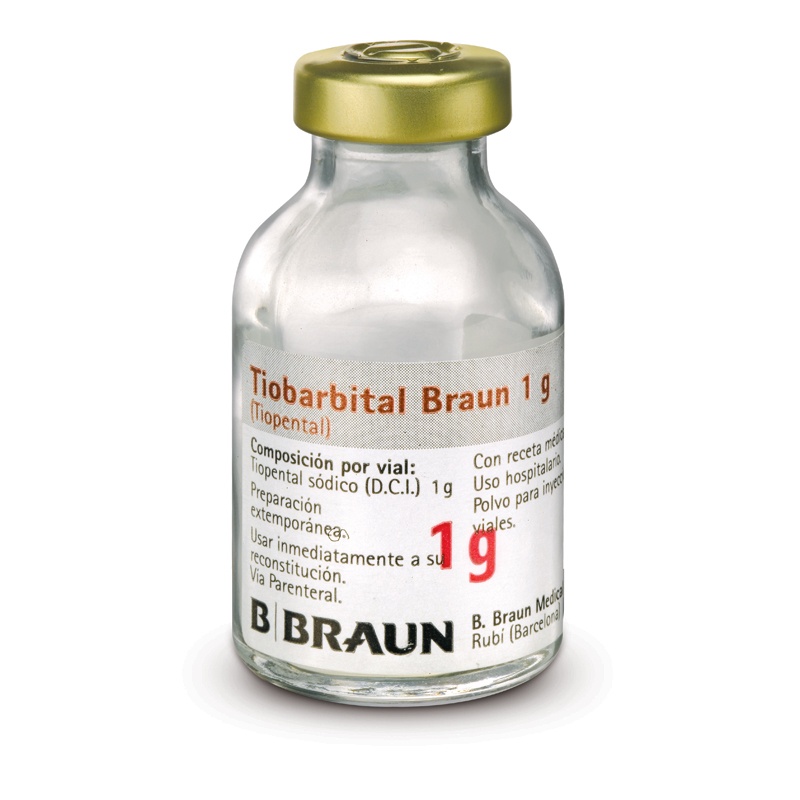
- Alternatives to TIOBARBITAL B. BRAUN 0.5 g POWDER FOR INJECTABLE SOLUTIONDosage form: INJECTABLE, 1000 mgActive substance: thiopentalManufacturer: B Braun Medical S.A.Prescription requiredDosage form: PULMONARY INHALATION, 50% / 50% v/vActive substance: nitrous oxide, combinationsManufacturer: Sociedad Española De Carburos Metalicos S.A.Prescription requiredDosage form: PULMONARY INHALATION, 250 ml isofluraneActive substance: isofluraneManufacturer: Baxter S.L.Prescription required


Online doctors for TIOBARBITAL B. BRAUN 0.5 g POWDER FOR INJECTABLE SOLUTION
Discuss questions about TIOBARBITAL B. BRAUN 0.5 g POWDER FOR INJECTABLE SOLUTION, including use, safety considerations and prescription review, subject to medical assessment and local regulations.











Get TIOBARBITAL B. BRAUN 0.5 g POWDER FOR INJECTABLE SOLUTION Prescription Online
Fill in a 2-min form
Tell us your symptoms, history, and what medicine you're requesting.
Pick a doctor or let us assign
Choose a specialist or we'll match you with the next available doctor.
Doctor reviews your case
Usually within 30 minutes. They may ask follow-up questions via chat.
Collect from any pharmacy
Electronic prescription sent to your email — valid across Spain.
Frequently Asked Questions
