


Targocid 400 mg injectable

Prescription review online
A doctor will review your case and decide whether a prescription is medically appropriate.

Talk to a doctor about this medicine
Discuss your symptoms and possible next steps in a quick online consultation.



How to use TARGOCID 400 mg POWDER AND SOLVENT FOR INJECTION AND INFUSION SOLUTION
Contents of the leaflet
- Introduction
- What is Targocid and what is it used for
- What you need to know before you use Targocid
- How to use Targocid
- Possible side effects
- Storage of Targocid
- Container Contents and Additional Information
Introduction
Package Leaflet: Information for the User
Targocid 400 mg powder and solvent for solution for injection and infusion
Teicoplanin
Read all of this leaflet carefully before you start using this medicine because it contains important information for you.
- Keep this leaflet, you may need to read it again.
- If you have any further questions, ask your doctor, pharmacist or nurse.
- If you get any side effects, talk to your doctor, pharmacist or nurse. This includes any possible side effects not listed in this leaflet. See section 4.
Contentsofthepackageleaflet:
- What is Targocid and what is it used for
- What you need to know before you use Targocid
- How to use Targocid
- Possible side effects
- Storage of Targocid
- Contents of the pack and other information
1. What is Targocid and what is it used for
Targocid is an antibiotic. It contains a medicine called “teicoplanin”. It works by killing the bacteria that cause infections in your body.
Antibiotics are used to treat bacterial infections and will not work for viral infections such as the common cold or flu.
It is important that you follow the instructions regarding dose, administration interval and treatment duration as indicated by your doctor.
Do not store or reuse this medicine. If you have any leftover antibiotic after finishing treatment, return it to the pharmacy for proper disposal. Do not throw away medicines via wastewater or household waste.
Targocid is used in adults and children (including newborns) totreatinfections in:
- the skin and under the skin - sometimes called “soft tissues”
- bones and joints
- the lung
- the urinary tract
- the heart - sometimes called “endocarditis”
- the abdominal wall - peritonitis
- the blood, when caused by any of the conditions mentioned above.
Targocid can be used to treat some infections caused by “Clostridium difficile”, a bacteria in the intestine. In this case, the solution should be taken by mouth.

Not sure if this medicine is right for you?
Discuss your symptoms and treatment with a doctor online.
2. What you need to know before you use Targocid
Do not usethismedicineif:
- you are allergic to teicoplanin or any of the other ingredients of this medicine (listed in section 6).
Warnings and precautions
Talk to your doctor, pharmacist or nurse before you are given Targocid if:
- you are allergic to an antibiotic called “vancomycin”
- you have had a reddening of the upper body (red man syndrome)
- you have a low platelet count (thrombocytopenia)
- you have kidney problems
- you are taking other medicines that may cause hearing and/or kidney problems.
You may have regular tests to check if your kidneys and/or liver are working properly (see “Using Targocid with other medicines”).
If any of the above applies to you (or if you are not sure), tell your doctor, pharmacist or nurse before you are given Targocid.
Severe skin reactions have been reported with the use of teicoplanin, including Stevens-Johnson syndrome, toxic epidermal necrolysis, drug reaction with eosinophilia and systemic symptoms (DRESS) and acute generalized exanthematous pustulosis (AGEP). If you develop a severe rash or other skin symptoms as described in section 4, stop taking Targocid and contact your doctor or seek medical attention immediately.
Tests
During treatment, you may have tests to check your blood, kidneys, liver and/or hearing. This is more likely if:
- your treatment is going to last a long time
- you need to be treated with high loading doses (12 mg/kg twice a day)
- you have kidney problems
- you are taking or may take other medicines that may affect your nervous system, kidneys and hearing.
In people who are being treated with Targocid for a long time, bacteria that are not affected by the antibiotic may grow more than usual – your doctor will check for this.
Using Targocid with other medicines
Tell your doctor, pharmacist or nurse if you are using, have recently used or might use any other medicines. This is because Targocid may affect how well other medicines work. Also, some medicines may affect how well Targocid works.
In particular, tell your doctor if you are taking any of the following medicines:
- Aminoglycosides, as they must not be mixed with Targocid in the same injection. They may also cause hearing and/or kidney problems
- amphotericin B - a medicine that treats fungal infections that may cause hearing and/or kidney problems
- ciclosporin - a medicine that affects the immune system that may cause hearing and/or kidney problems
- cisplatin - a medicine that treats malignant tumours that may cause hearing and/or kidney problems
- tablets to make you urinate (such as furosemide) also called “diuretics” that may cause hearing and/or kidney problems.
If any of the above applies to you (or if you are not sure), tell your doctor, pharmacist or nurse before you are given Targocid.
Pregnancy, breast-feeding and fertility
If you are pregnant, think you may be pregnant or are planning to have a baby, ask your doctor, pharmacist or nurse for advice before taking this medicine. They will decide whether you should be given this medicine while you are pregnant. There may be a potential risk of problems in the inner ear and kidneys.
Tell your doctor if you are breast-feeding before you are given this medicine. He/she will decide whether you can continue to breast-feed while you are being given Targocid.
Animal studies have not shown any problems with fertility.
Driving and using machines
You may have headaches or feel dizzy while you are being treated with Targocid. If this happens, do not drive or use tools or machines.
Targocidcontainssodium
This medicine contains less than 23 mg of sodium (1 mmol) per vial; this is essentially “sodium-free”.
3. How to use Targocid
The recommended dose is
Adults and children (12 years or older) with no kidney problems
Infections of the skin and soft tissues, lung and urinary tract
- Initial dose (for the first three doses): 6 mg per kilogram of body weight, given every 12 hours, by injection into a vein or muscle.
- Maintenance dose: 6 mg per kilogram of body weight, given once a day, by injection into a vein or muscle.
Infections of the bones and joints, and heart
- Initial dose (for the first three to five doses): 12 mg per kilogram of body weight, given every 12 hours, by injection into a vein.
- Maintenance dose: 12 mg per kilogram of body weight, given once a day, by injection into a vein or muscle.
Infection caused by the bacteria “Clostridium difficile”
The recommended dose is 100 to 200 mg by mouth, twice a day for 7 to 14 days.
Adults and elderly patients with kidney problems
If you have kidney problems, it will normally be necessary to reduce your dose after the fourth day of treatment:
- For people with mild to moderate kidney problems - the maintenance dose will be given every two days, or half of the maintenance dose will be given once a day.
- For people with severe kidney problems and on haemodialysis - the maintenance dose will be given every three days, or one-third of the maintenance dose will be given once a day.
Treatment ofperitonitis in patients on peritoneal dialysis
The initial dose is 6 mg per kilogram of body weight, as a single injection into a vein, followed by:
- Week one: 20 mg/l in each dialysis bag.
- Week two: 20 mg/l in alternate dialysis bags.
- Week three: 20 mg/l in the dialysis bags used at night.
Babies (from birth to 2 months of age)
- Initial dose (on day one): 16 mg per kilogram of body weight, as an infusion into a vein through a drip.
- Maintenance dose: 8 mg per kilogram of body weight, given once a day, as an infusion into a vein through a drip.
Children(from 2 months to 12 years of age)
- Initial dose (for the first three doses): 10 mg per kilogram of body weight, given every 12 hours, by injection into a vein.
- Maintenance dose: 6 to 10 mg per kilogram of body weight, given once a day, by injection into a vein.
How Targocid is given
This medicine will normally be given to you by a doctor or nurse.
- It will be given by injection into a vein (intravenously) or into a muscle (intramuscularly).
- It can also be given by infusion into a vein through a drip.
Infusion into a vein should only be given to babies from birth to two months of age.
To treat certain infections, the solution may be given by mouth (orally).
If you use more Targocid than you should
It is unlikely that your doctor or nurse will give you too much medicine. However, if you think you have been given too much Targocid or if you are worried, talk to your doctor or nurse immediately.
In case of overdose or accidental ingestion, consult your doctor or pharmacist immediately or call the Toxicology Information Service, telephone: 915 620 420, indicating the medicine and the amount taken. You may need to go to hospital. It is recommended to take the package and the package leaflet of the medicine to the healthcare professional.
If you forget to use Targocid
Your doctor or nurse will have instructions on when to give you Targocid. It is unlikely that they will not give you the medicine as prescribed. However, if you are worried, talk to your doctor or nurse.
If you stop treatment with Targocid
Do not stop this treatment without talking to your doctor, pharmacist or nurse first.
If you have any further questions on the use of this medicine, ask your doctor, pharmacist or nurse.

Started taking the medicine and have questions?
Discuss your symptoms and treatment with a doctor online.
4. Possible side effects
Like all medicines, this medicine can cause side effects, although not everybody gets them.
Serious side effects
Stop taking Targocid immediately and contact a doctor or nurse, if you notice any of the following serious side effects - you may need urgent medical treatment:
Uncommon(may affect up to 1 in 100 people)
- sudden life-threatening allergic reaction - the signs may include: difficulty breathing or wheezing, swelling, skin rash, itching, fever, chills.
Rare(may affect up to 1 in 1,000 people)
- reddening of the upper body.
Frequency not known(cannot be estimated from the available data)
- appearance of blisters on the skin, mouth, eyes or genitals - these could be signs of a condition called “toxic epidermal necrolysis” or “Stevens-Johnson syndrome”
blistering skin rash, skin peeling, mouth sores, and low blood pressure (toxic epidermal necrolysis)
- red, scaly, and crusty skin rash on the palms and soles, and blisters in the mouth, eyes, and other areas of the body, accompanied by fever (Stevens-Johnson syndrome)
- drug reaction with eosinophilia and systemic symptoms (DRESS). DRESS appears initially as flu-like symptoms and a rash on the face, the rash then spreads with fever, high levels of liver enzymes in the blood, high levels of eosinophils and swollen lymph nodes.
Tell your doctor or nurse immediately if you experience any of the above side effects.
Tell your doctor or nurse immediately if you experience any of the following serious side effects - you may need urgent medical treatment:
Uncommon(may affect up to 1 in 100 people)
- inflammation and clot in a vein
- difficulty breathing and wheezing (bronchospasm)
- if you get more infections than usual - these could be signs of a low white blood cell count.
Frequency not known(cannot be estimated from the available data)
- low white blood cell count - the signs may include: fever, severe chills, sore throat or mouth ulcers (agranulocytosis)
- kidney problems or changes in kidney function - shown by blood tests. The frequency or severity of kidney problems may increase if you receive higher doses.
- seizures.
Tell your doctor or nurse immediately if you experience any of the above side effects.
Other side effects
Talk to your doctor, pharmacist or nurse if you get any of the following side effects:
Common(may affect up to 1 in 10 people)
- skin rash, redness, itching
- pain
- fever.
Uncommon(may affect up to 1 in 100 people)
- low platelet count
- high levels of liver enzymes in the blood
- high levels of creatinine in the blood (to check your kidney function)
- hearing loss, ringing in the ears or the feeling that you or your surroundings are spinning
- nausea or vomiting, diarrhoea
- dizziness or headache.
Rare(may affect up to 1 in 1,000 people)
- infection (abscess).
Frequency not known(cannot be estimated from the available data)
- problems at the injection site - such as redness of the skin, pain or swelling
- low levels of all types of blood cells.
Reporting of side effects:
If you get any side effects, talk to your doctor, pharmacist or nurse. This includes any possible side effects not listed in this leaflet. You can also report side effects directly via the Spanish Pharmacovigilance System for Human Use Medicines: https://www.notificaram.es. By reporting side effects, you can help provide more information on the safety of this medicine.
5. Storage of Targocid
Keep this medicine out of the sight and reach of children.
Do not use this medicine after the expiry date which is stated on the carton and vial label after EXP. The expiry date is the last day of the month shown.
This medicine does not require any special storage conditions.
Information about the storage and the time to use Targocid once it is reconstituted and ready to use is detailed in “Practical information for healthcare professionals for the preparation and handling of Targocid”.
Medicines should not be disposed of via wastewater or household waste. Ask your pharmacist how to dispose of medicines no longer required. These measures will help to protect the environment.
6. Container Contents and Additional Information
Targocid Composition
- The active ingredient is teicoplanin. Each vial contains 400 mg of teicoplanin.
- The other components are sodium chloride and sodium hydroxide in the powder and water for injectable preparations in the solvent.
Appearance of the Product and Container Contents
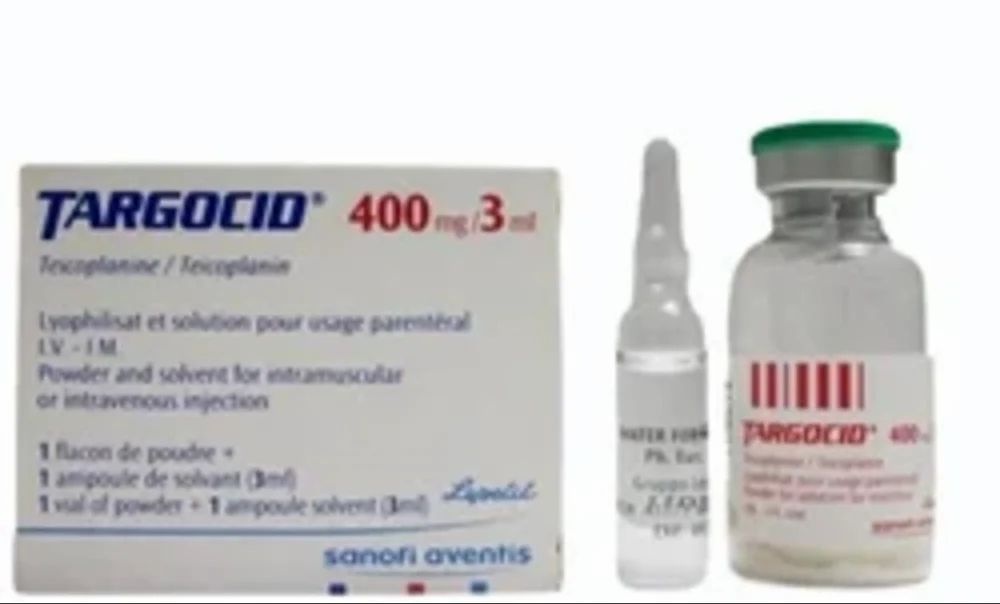
Targocid is a powder and solvent for injectable solution and for perfusion. The powder is a homogeneous, spongy mass of ivory color. The solvent is a clear, colorless solution.
The powder is packaged:
- in a 22ml useful volume colorless glass vial type I for 400 mg, closed with a bromobutyl rubber stopper and a green plastic flip-off cap and an aluminum seal.
The solvent is packaged in a colorless glass ampoule type I.
Presentation:
- 1 vial with powder with 1 ampoule of solvent
- 5x1 vials with powder with 5x1 ampoules of solvent
- 10x1 vials with powder with 10x1 ampoules of solvent
- 25x1 vials with powder with 25x1 ampoules of solvent
Only some package sizes may be marketed.
Marketing Authorization Holder and Manufacturer
Marketing Authorization Holder:
sanofi-aventis, S.A.
C/ Rosselló i Porcel, 21
08016 Barcelona
Spain
Manufacturer:
Sanofi S.r.l.
Via Valcanello, 4
03012 Anagni (FR)
Italy
or
Sanofi-Aventis Deutschland GmbH
65926 Frankfurt am Main,
Germany
This medicinal product is authorized in the Member States of the European Economic Area under the following names:
Austria, Belgium, Czech Republic, Croatia, Germany, Hungary, Ireland, Luxembourg, Malta, Poland, Slovak Republic, Slovenia: Targocid
Bulgaria, France, Greece, Netherlands, Romania, Spain: TARGOCID
Italy: TARGOSID
Portugal: Targosid
Date of the last revision of this leaflet: October 2022
Detailed information on this medicinal product is available on the website of the Spanish Agency for Medicines and Health Products (AEMPS) http://www.aemps.gob.es/
This information is intended only for healthcare professionals:
Practical information for healthcare professionals on the preparation and handling of Targocid.
This medicinal product is for single use.
Method of administration
The reconstituted solution can be injected directly or alternatively in a diluted form.
The injection will be administered either as a bolus over 3-5 minutes or by perfusion over 30 minutes.
In infants from birth to two months, it will only be administered by perfusion.
The reconstituted solution can also be administered orally.
Preparation of the reconstituted solution
- Slowly inject the entire contents of the provided solvent into the powder vial.
- Gently rotate the vial between the hands until the powder is completely dissolved. If the solution becomes foamy, it should be left to stand for 15 minutes.
The reconstituted solutions will contain 400 mg in 3.0 ml.
Only clear solutions should be used. The color of the solution may vary from yellowish to dark yellow.
The final solution is isotonic with plasma and has a pH of 7.2-7.8.
Nominal teicoplanin content per vial | 400 mg |
Volume of the vial with powder | 22ml |
Extractable volume of the solvent ampoule for reconstitution | 3.14 ml |
Volume containing the nominal dose of teicoplanin (extracted using a 5 ml syringe and 23 G needle) | 3.0 ml |
Preparation of the diluted solution before perfusion
Targocid can be administered in the following perfusion solutions:
- Sodium chloride 9 mg/ml (0.9%) solution
- Ringer's solution
- Ringer-lactate solution
- 5% glucose injection
- 10% glucose injection
- Solution with 0.18% sodium chloride and 4% glucose
- Solution with 0.45% sodium chloride and 5% glucose
- Peritoneal dialysis solution containing 1.36% or 3.86% glucose solution.
Validity period of the reconstituted solution
Chemical and physical stability has been demonstrated for 24 hours at 2-8°C for the reconstituted solution prepared as recommended.
From a microbiological point of view, the medicinal product should be used immediately. If not used immediately, the in-use storage times and conditions are the responsibility of the user and normally should not exceed 24 hours at 2-8°C, unless the reconstitution has been carried out under controlled and validated aseptic conditions.
Validity period of the diluted medicinal product
Chemical and physical stability has been demonstrated for 24 hours at 2-8°C for the reconstituted solution prepared as recommended.
From a microbiological point of view, the medicinal product should be used immediately. If not used immediately, the in-use storage times and conditions are the responsibility of the user and normally should not exceed 24 hours at 2-8°C, unless the reconstitution/dilution has been carried out under controlled and validated aseptic conditions.
Elimination
Disposal of the unused medicinal product and waste materials should be carried out in accordance with local regulations.
- Country of registration
- Dosage formINJECTABLE, 400 mg teicoplanin
- ATC codeJ01XA02
- Active substance
- Prescription requiredYes
- Manufacturer
- CompositionCLORURO DE SODIO (24,8 mg mg), HIDROXIDO DE SODIO (E 524) (- C.S mg)
- This information is for reference only and does not constitute medical advice. Always consult a doctor before taking any medication. Oladoctor is not responsible for medical decisions based on this content.
- Alternatives to TARGOCID 400 mg POWDER AND SOLVENT FOR INJECTION AND INFUSION SOLUTIONDosage form: INJECTABLE, 200 mgActive substance: teicoplaninManufacturer: Accord Healthcare S.L.U.Prescription requiredDosage form: INJECTABLE, 400 mgActive substance: teicoplaninManufacturer: Accord Healthcare S.L.U.Prescription requiredDosage form: INJECTABLE, 200 mgActive substance: teicoplaninManufacturer: Altan Pharmaceuticals SaPrescription required
Online doctors for TARGOCID 400 mg POWDER AND SOLVENT FOR INJECTION AND INFUSION SOLUTION
Discuss questions about TARGOCID 400 mg POWDER AND SOLVENT FOR INJECTION AND INFUSION SOLUTION, including use, safety considerations and prescription review, subject to medical assessment and local regulations.









Frequently Asked Questions
TARGOCID 400 mg POWDER AND SOLVENT FOR INJECTION AND INFUSION SOLUTION requires a prescription in Spain. You can check with a doctor online whether this medicine may be appropriate for your situation.
The active ingredient in TARGOCID 400 mg POWDER AND SOLVENT FOR INJECTION AND INFUSION SOLUTION is teicoplanin. This information helps identify medicines with the same composition but different brand names.
TARGOCID 400 mg POWDER AND SOLVENT FOR INJECTION AND INFUSION SOLUTION is manufactured by Sanofi Aventis S.A.. Pharmacy brands and packaging may differ depending on the distributor.
Doctors such as Family doctors, Psychiatrists, Dermatologists, Cardiologists, Endocrinologists, Gastroenterologists, Pulmonologists, Nephrologists, Rheumatologists, Hematologists, Infectious disease physicians, Allergists, Geriatricians, Paediatricians, Oncologists may assess whether TARGOCID 400 mg POWDER AND SOLVENT FOR INJECTION AND INFUSION SOLUTION is appropriate, depending on your situation and local regulations. You can book an online consultation to discuss your symptoms and possible next steps.
The prescription is issued by a doctor after assessing your health. In Spain, TARGOCID 400 mg POWDER AND SOLVENT FOR INJECTION AND INFUSION SOLUTION is then dispensed in pharmacies with that prescription. An online consultation does not guarantee that a prescription will be issued: the decision always rests with the doctor.
To request a review, you can use Oladoctor:
Other medicines with the same active substance (teicoplanin) include TEICOPLANIN ACCORD 200 mg POWDER FOR INJECTABLE SOLUTION AND FOR INFUSION, TEICOPLANIN ACCORD 400 mg POWDER FOR INJECTION AND INFUSION SOLUTION, TEICOPLANIN ALTAN 200 mg POWDER FOR INJECTABLE SOLUTION AND FOR INFUSION. These may have different brand names or formulations but contain the same therapeutic ingredient. Always consult a doctor before switching or starting a new medicine.
