






How to use SUPRANE 100% LIQUID FOR INHALATION
Translated with AI
This page provides general information and does not replace a doctor’s consultation. Always consult a doctor before taking any medication. Seek urgent medical care if symptoms are severe.
Show originalContents of the leaflet
Introduction
Package Leaflet: Information for the User
Suprane 100% Liquid for Inhalation Vapor
Desflurane
Read this entire leaflet carefully before you start using this medication, as it contains important information for you.
- Keep this leaflet, as you may need to read it again.
- If you have any questions, ask your doctor or nurse.
- If you experience side effects, consult your doctor or nurse, even if they are not listed in this leaflet. See section 4.
Contents of the Package Leaflet
- What is Suprane and what is it used for
- What you need to know before using Suprane
- How to use Suprane
- Possible side effects
- Storage of Suprane
- Package Contents and Additional Information
1. What is Suprane and what is it used for
Suprane is a medication that contains desflurane and belongs to the group of halogenated hydrocarbons.
It is used as a general anesthetic and is administered in the form of vapor for inhalation. Breathing this vapor puts you into a deep, painless sleep (general anesthesia) during which you can undergo surgery.
In adults, Suprane is used for the induction and maintenance of anesthesia. In infants and children, it is used only for the maintenance of anesthesia.

2. What you need to know before using Suprane
Suprane should only be administered by healthcare professionals with adequate training in the application of general anesthesia under the supervision of an anesthesiologist or by the anesthesiologist themselves.
Your anesthesiologist (doctor) will not administer Suprane to you:
- if you are allergic to desflurane or other inhalation anesthetics.
- If you have a known or suspected susceptibility to malignant hyperthermia (a sudden and dangerous increase in body temperature during or shortly after surgery).
- If you have a confirmed history of liver inflammation (hepatitis) caused by Suprane or other inhalation anesthetics, or a history of unexplained liver problems with jaundice (yellowing of the skin and whites of the eyes), fever, and an increase in a certain type of white blood cell.
- If there are medical reasons why you should not receive general anesthesia.
Suprane should not be administered to induce anesthesia if:
- you are at risk of developing coronary artery disease. Coronary artery disease occurs when the blood vessels that supply your heart muscle do not provide enough blood and oxygen.
Your doctor considers that the potential side effects of Suprane are undesirable, for example:
- an increase in heart rate,
- an increase in blood pressure.
- it is to be used with a child.
Tell your anesthesiologist (doctor) before they administer this medication to you if any of the above conditions apply to your case.
Warnings and Precautions
Consult your doctor or nurse before starting to use Suprane if:
- You have been administered an inhalation anesthetic, especially if it has been on more than one occasion in a short period (repeated use).
- In the rare and unexpected event that you develop malignant hyperthermia (a sudden and dangerous increase in body temperature during or shortly after surgery). In this case, the anesthesiologist (doctor) will stop the administration of Suprane, give you a medication to treat malignant hyperthermia (known as dantrolene), and provide other maintenance therapy.
Death due to malignant hyperthermia has been reported with the use of Suprane.
- You have a neuromuscular disease, such as Duchenne muscular dystrophy.
- You are pregnant, breastfeeding, or when this medication is administered for obstetric anesthesia (childbirth) (see also the section titled "Pregnancy and Breastfeeding").
- You have had liver problems in the past, such as hepatitis (inflammation of the liver) or jaundice.
If you have been treated with medications that can cause liver problems.
- There is a risk of increased intracranial pressure.
- You have acute coronary artery disease.
- You have low blood pressure (hypotension)
- You have hypovolemia (reduced blood volume) or are weak.
- You have an alteration in the electrical activity of your heart called "prolongation of the QT interval".
Pain after your operation
You will be able to recover from anesthesia with Suprane quickly. If you expect to have pain after your operation, your doctor will give you pain-relieving medications. This will be done at the end of your operation or when you are recovering from it.
Children
Children under 6 years of age should not receive Suprane to maintain anesthesia unless they have been intubated. Intubation is when a tube is placed in the airways to help with breathing. In these cases, caution should be exercised when removing the laryngeal mask after deep anesthesia to avoid side effects, such as coughing or a muscle spasm of the vocal cords called laryngospasm.
Consult with your doctor, nurse, or pharmacist if any of the above conditions apply to your case or that of your child. You may need to undergo a thorough examination and change treatment.
Using Suprane with other medications:
Tell your doctor, pharmacist, surgeon, or anesthesiologist if you are taking, have recently taken, or may need to take any other medication.
Medications or active ingredients that are listed in the following list may alter their effects when administered together with Suprane. Some of these medications will be administered by the anesthesiologist during the procedure, as indicated in the description.
- Muscle relaxants (e.g., succinylcholine, pancuronium, atracurium, vecuronium): These medications are used during general anesthesia to relax the muscles. Your anesthesiologist may need to adjust the dose of these medications.
- Opioids (e.g., morphine, fentanyl, remifentanil): These are very potent pain-relieving medications that are often used during general anesthesia.
- Benzodiazepines (e.g., midazolam, diazepam, nitracepam): These are sedative medications that have a calming effect. They are used when the patient is nervous before a procedure.
- Nitrous oxide: This medication is used during general anesthesia to induce sleep and relieve pain.
Using Suprane with food and drink
Suprane is a medication used to induce sleep in the patient for surgery. Consult with your doctor, surgeon, or anesthesiologist about when and what you can eat or drink after waking up.
Pregnancy, Breastfeeding, and Fertility
If you are pregnant or breastfeeding, or think you may be pregnant or plan to become pregnant, consult your doctor, surgeon, or anesthesiologist before they administer this medication to you.
Driving and Using Machines
Suprane significantly affects your ability to drive and operate tools. Do not drive or operate tools or machinery until your doctor tells you it is safe. The administration of anesthesia can influence attention for several days. This can affect your ability to perform tasks that require a state of wakefulness.
Consult your anesthesiologist about when it will be safe to drive and operate machines again.
3. How to use Suprane
An anesthesiologist will administer Suprane to you, and they will decide on the amount and frequency of administration. The dose will vary depending on age, weight, the type of surgery you need, and other medications administered during the procedure.
Suprane is a liquid for inhalation vapor that is administered using a specially calibrated vaporizer for this product, so that the released concentration can be controlled exactly.
If you receive more Suprane than you should
A healthcare professional will administer Suprane to you, and it is unlikely that you will receive an excessive dose of the medication. If this happens, the anesthesiologist will take the necessary measures.
In case of overdose or accidental ingestion, consult the Toxicological Information Service, phone 91.562.04.20, indicating the medication and the amount ingested.

4. Possible side effects
Like all medications, this medication can cause side effects, although not everyone will experience them.
Most side effects are mild to moderate in severity and are temporary, although serious side effects can occur.
The following side effects may also occur during treatment. The assessment of side effects is based on the following frequencies:
Very common (affects more than 1 in 10 patients):
- Nausea (feeling of discomfort) and vomiting. These have occurred during the induction and maintenance of anesthesia with Suprane.
Common (affects between 1 and 10 in 100 patients):
- Inflammation of the throat (pharyngitis).
- Retention of breathing. This has occurred during the induction and maintenance of anesthesia with Suprane.
- Headache.
- Inflammation of the conjunctiva of the eyelid (conjunctivitis).
- Irregular heartbeat (nodal arrhythmia).
- Slow heartbeat (bradycardia).
- Fast heartbeat (tachycardia).
- High blood pressure (hypertension).
- Suspension of breathing (apnea), cough, production of more saliva than usual (sialorrhea). These have occurred during the induction and maintenance of anesthesia with Suprane.
- Muscle spasm of the vocal cords (larynx) called laryngospasm. This has occurred during the induction of anesthesia with Suprane.
- Increased levels of an enzyme called creatine phosphokinase in the blood
- Abnormal heart test results (abnormal ECG).
Uncommon (affects between 1 and 10 in 1,000 patients):
- Restlessness (agitation).
- Dizziness.
- Heart attack (myocardial infarction).
- Lack of blood flow to the heart muscle (myocardial ischemia).
- Irregular heartbeat (arrhythmia).
- Widening of blood vessels (vasodilation).
- Lack of adequate oxygen supply (hypoxia). This has occurred during the induction and maintenance of anesthesia with Suprane.
- Muscle pain (myalgia).
Frequency not known (frequency cannot be estimated from available data):
- Blood clotting disorder (coagulopathy).
- High potassium levels (hyperkalemia).
- Low potassium levels (hypokalemia).
- Production of too much acid by the body (metabolic acidosis).
- Seizures (convulsions).
- Yellowing of the eyes (ocular jaundice).
- Cardiac arrest (cardiac arrest).
- A heart conduction disorder (Torsade de Pointes).
- Inability of two of the heart's chambers to perform their functions (ventricular insufficiency).
Malfunction of two of the heart's chambers (ventricular hypokinesia).
- A heart rhythm disorder (atrial fibrillation)
- Very high blood pressure (malignant hypertension).
- Bleeding (hemorrhage).
- Low blood pressure (hypotension).
- Inadequate blood supply to the body's tissues (shock).
- Stoppage of breathing (respiratory arrest).
- Decreased ability to take oxygen for the body (respiratory failure/difficulty breathing).
Sudden narrowing of the airways (bronchospasm).
- Coughing up blood (hemoptysis).
- Sudden inflammation of the pancreas (acute pancreatitis).
- Abdominal pain (abdominal pain).
- Death of liver tissue (liver necrosis).
- Inflammation of the liver (cytolytic hepatitis).
- Incorrect flow of bile (cholestasis).
- Yellowing of the skin or eyes (jaundice).
- Abnormal liver function (abnormal liver function).
- Liver disorder (liver failure).
- Hives (urticaria).
- Redness (erythema).
- A muscle disease (rhabdomyolysis).
- Malignant hyperthermia, when the body temperature suddenly becomes dangerously high during or shortly after surgery. Symptoms include:
- Too much carbon dioxide in the blood (hypercapnia).
- Muscle stiffness (rigidity).
- Increased heart rate (tachycardia).
- Increased respiratory rate (tachypnea).
- Blue-tinged skin (cyanosis).
- Irregular heartbeats (arrhythmias).
- Increases or decreases in blood pressure.
- Fever.
- Weakness (asthenia).
- General discomfort (malaise).
- Abnormal heart test results (ST-T change on electrocardiogram).
- Abnormal heart test results (inversion of T wave on electrocardiogram).
- Increases in liver enzymes (increase in alanine aminotransferase and aspartate aminotransferase).
- Abnormal blood clotting (abnormal coagulation test).
- Increased ammonia levels.
- Confusion (confusional state).
The following side effects have occurred after Suprane was accidentally administered to patients for whom it was not intended.
- Dizziness.
- Severe headache (migraine).
- Irregular and rapid heartbeats (tachyarrhythmias).
- Sensations of heartbeats (palpitations).
- Burning sensation in the eyes.
- Temporary blindness (transient blindness).
- Brain disorder (encephalopathy).
- Corneal ulcer of the white of the eye (ulcerative keratitis).
- Redness of the eyes (ocular hyperemia).
- Vision problems (reduced visual acuity).
- Irritation of the eyes.
- Eye pain.
- Fatigue (fatigue).
- Burning sensation on the skin.
Reporting side effects
If you experience any side effects, consult your doctor, pharmacist, or nurse, even if they are not listed in this leaflet. You can also report them directly through the Spanish Medicines and Healthcare Products Agency's website: www.notificaRAM.es. By reporting side effects, you can help provide more information on the safety of this medication.
5. Storage of Suprane
Keep this medication out of sight and reach of children.
This medication should be stored in an upright position with the cap firmly in place.
Do not use this medication after the expiration date stated on the label after CAD. The expiration date is the last day of the month indicated.
Disposal of unused medication and all materials that have come into contact with it will be carried out in accordance with local regulations.
6. Package Contents and Additional Information
Composition of Suprane
The active ingredient is desflurane 100%.
It does not contain other ingredients.
Appearance of the product and package contents
Suprane is a clear liquid for inhalation vapor.
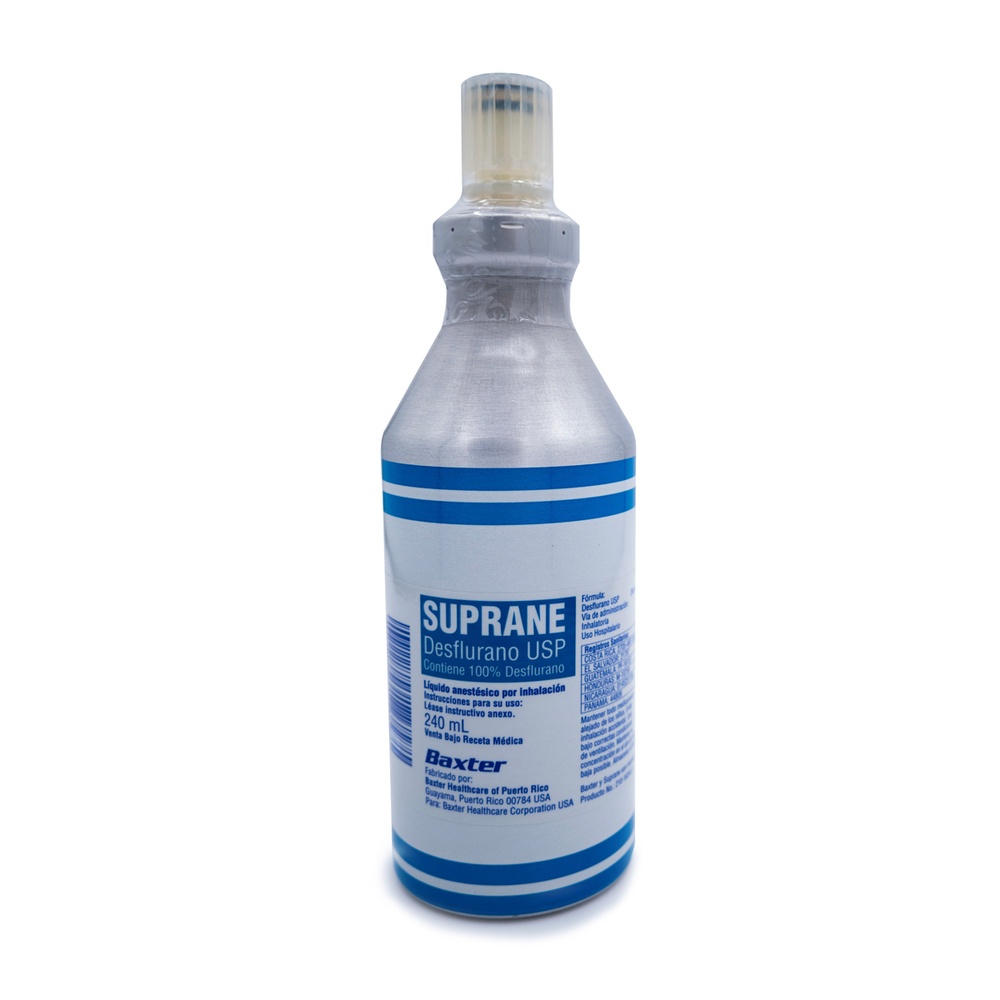
It is available in 240 ml amber glass bottles or aluminum bottles with a protective PVC layer. The bottle may be closed with:
- a resin and a plastic cap, or
- a valve for connection to the vaporizer.
The presentations are:
6 bottles of 240 ml per box.
1 bottle of 240 ml
Not all pack sizes may be marketed.
Marketing Authorization Holder and Manufacturer
Marketing Authorization Holder
Baxter S.L.
Pouet de Camilo 2,
46394 Ribarroja del Turia (Valencia)
Manufacturer
Baxter SA,
Boulevard Rene Branquart 80,
B-7860 Lessines, Belgium
Date of last revision of this leaflet: November 2023
Detailed and updated information on this medication is available on the website of the Spanish Agency for Medicines and Healthcare Products (AEMPS) http://www.aemps.gob.es/
-

- Country of registration
- Dosage formPULMONARY INHALATION, 240 ml desflurane
- ATC codeN01AB07
- Active substance
- Prescription requiredYes
- Manufacturer
- This information is for reference only and does not constitute medical advice. Always consult a doctor before taking any medication. Oladoctor is not responsible for medical decisions based on this content.
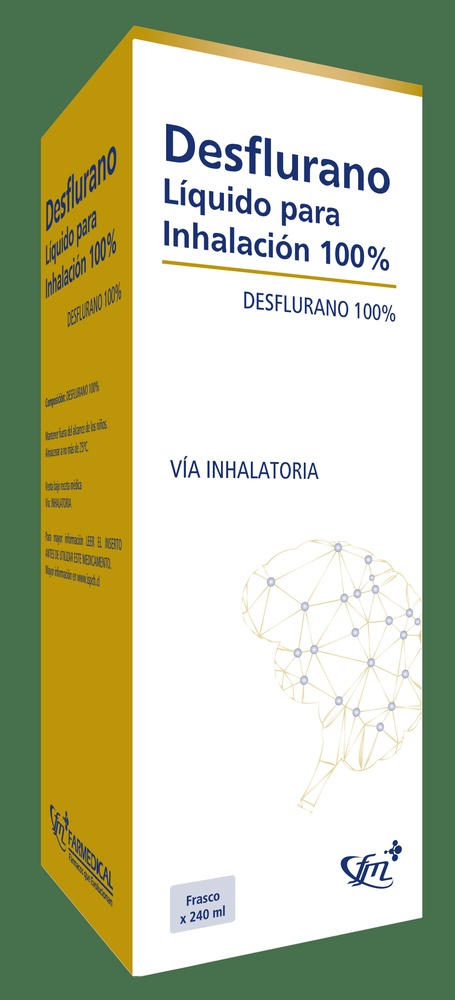
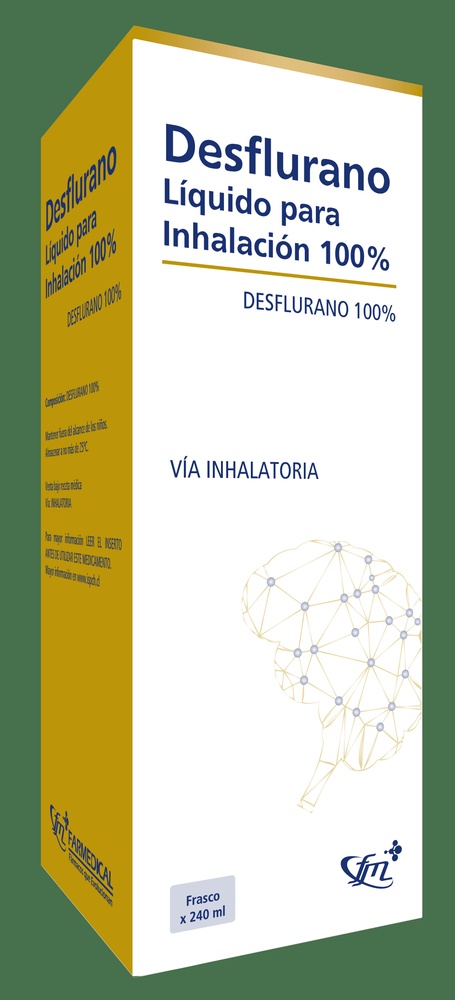
- Alternatives to SUPRANE 100% LIQUID FOR INHALATIONDosage form: PULMONARY INHALATION, 100 % (V/V)Active substance: desfluraneManufacturer: Baxter S.L.Prescription requiredDosage form: PULMONARY INHALATION, 1 ml/mlActive substance: desfluraneManufacturer: Piramal Critical Care B.V.Prescription requiredDosage form: PULMONARY INHALATION, 250 ml isofluraneActive substance: isofluraneManufacturer: Baxter S.L.Prescription required
Online doctors for SUPRANE 100% LIQUID FOR INHALATION
Discuss questions about SUPRANE 100% LIQUID FOR INHALATION, including use, safety considerations and prescription review, subject to medical assessment and local regulations.


Get SUPRANE 100% LIQUID FOR INHALATION Prescription Online
Fill in a 2-min form
Tell us your symptoms, history, and what medicine you're requesting.
Pick a doctor or let us assign
Choose a specialist or we'll match you with the next available doctor.
Doctor reviews your case
Usually within 30 minutes. They may ask follow-up questions via chat.
Collect from any pharmacy
Electronic prescription sent to your email — valid across Spain.
Frequently Asked Questions
SUPRANE 100% LIQUID FOR INHALATION requires a prescription in Spain. You can check with a doctor online whether this medicine may be appropriate for your situation.
The active ingredient in SUPRANE 100% LIQUID FOR INHALATION is desflurane. This information helps identify medicines with the same composition but different brand names.
SUPRANE 100% LIQUID FOR INHALATION is manufactured by Baxter S.L.. Pharmacy brands and packaging may differ depending on the distributor.
Doctors such as Family doctors, Psychiatrists, Dermatologists, Cardiologists, Endocrinologists, Gastroenterologists, Pulmonologists, Nephrologists, Rheumatologists, Hematologists, Infectious disease physicians, Allergists, Geriatricians, Paediatricians, Oncologists may assess whether SUPRANE 100% LIQUID FOR INHALATION is appropriate, depending on your situation and local regulations. You can book an online consultation to discuss your symptoms and possible next steps.
Spain has a well-developed healthcare infrastructure across major cities such as Madrid, Barcelona, Valencia, and Seville. Pharmacies are widely available and operate under strict regulations, ensuring access to prescribed medications.
You can buy SUPRANE 100% LIQUID FOR INHALATION in Madrid, Barcelona, Seville, or Valencia at any local pharmacy with a valid prescription.
To obtain a prescription, you can use Oladoctor:
Other medicines with the same active substance (desflurane) include DESFLURANE BAXTER 100% LIQUID FOR INHALATION, DESFLURANE PIRAMAL 100% LIQUID FOR INHALATION, AERRANE 100% LIQUID FOR INHALATION. These may have different brand names or formulations but contain the same therapeutic ingredient. Always consult a doctor before switching or starting a new medicine.
