



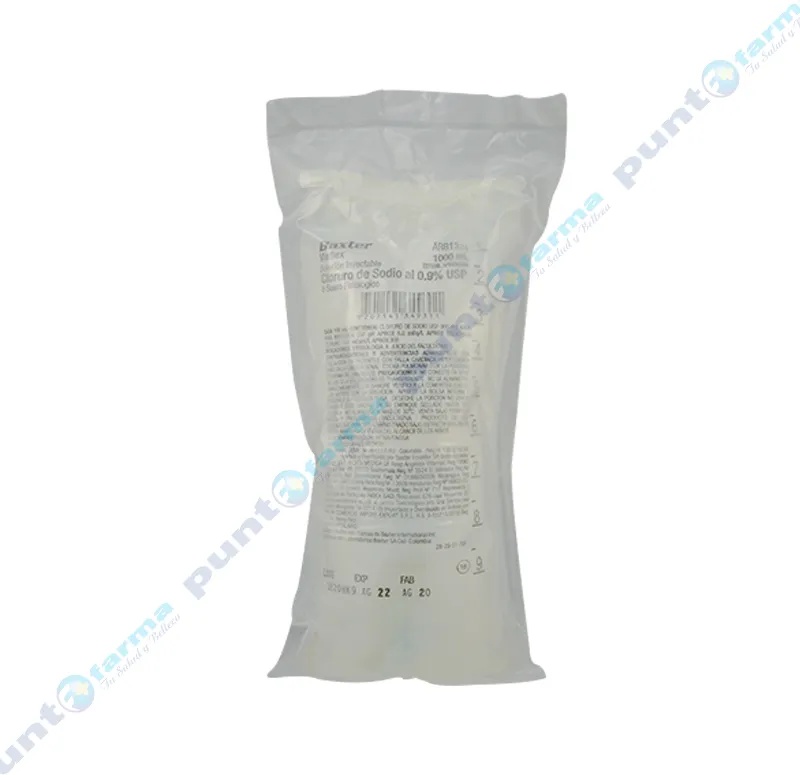
SUERO 9 mg /Ml Injectable Infusion

Prescription review online
A doctor will review your case and decide whether a prescription is medically appropriate.

Talk to a doctor about this medicine
Discuss your symptoms and possible next steps in a quick online consultation.



How to use PHYSIOLOGICAL SALINE BAXTER 9 mg/ml, SOLUTION FOR INFUSION
Contents of the leaflet
- Introduction
- What is Physiological Serum 9 mg/ml and what is it used for
- What you need to know before you are given Physiological Serum 9 mg/ml
- How you will be given Physiological Serum 9 mg/ml
- Possible side effects
- Storage of Physiological Serum 9 mg/ml
- Container Contents and Additional Information
Introduction
Leaflet: Information for the user
Baxter Physiological Serum 9 mg/ml solution for infusion
Active ingredient: sodium chloride
Read the entire leaflet carefully before starting to use this medicine, as it contains important information for you.
- Keep this leaflet, as you may need to read it again.
- If you have any questions, consult your doctor or nurse.
- If you experience side effects, consult your doctor or nurse, even if they are side effects not listed in this leaflet. See section 4.
This medicine is called "Baxter Physiological Serum 9 mg/ml solution for infusion", but it will be referred to as Physiological Serum 9 mg/ml in the rest of this leaflet.
Contents of the leaflet:
- What is Physiological Serum 9 mg/ml and what is it used for
- What you need to know before you are given Physiological Serum 9 mg/ml
- How you will be given Physiological Serum 9 mg/ml
- Possible side effects
- Storage of Physiological Serum 9 mg/ml
- Contents of the pack and further information
1. What is Physiological Serum 9 mg/ml and what is it used for
Physiological Serum 9 mg/ml is a solution of sodium chloride in water. Sodium chloride is a chemical substance (commonly called salt) that is found in the blood.
Physiological Serum 9 mg/ml is used to treat:
- loss of body water (dehydration),
- loss of sodium from the body (sodium depletion),
The situations that can cause loss of water and sodium include:
- when you cannot eat or drink due to illness or after surgery,
- excessive sweating caused by high fever,
- extensive skin loss, such as in severe burns.
Physiological Serum 9 mg/ml can also be used to administer or dilute other medicines for infusion.

Not sure if this medicine is right for you?
Discuss your symptoms and treatment with a doctor online.
2. What you need to know before you are given Physiological Serum 9 mg/ml
YOU WILL NOT BE GIVEN Physiological Serum 9 mg/ml IF YOU HAVE ANY OF THE FOLLOWING CLINICAL SITUATIONS:
- If your blood contains high levels of chlorides above normal (hyperchloremia).
- If your blood contains high levels of sodium above normal (hypernatremia).
If another medicine has been added to Physiological Serum 9 mg/ml, you should consult its leaflet to determine if you can receive the solution.
Warnings and precautions
Tell your doctor or nurse if you have or have had any of the following clinical situations:
- Any type of heart disease or impaired heart function.
- Impaired kidney function.
- Acidification of the blood (acidosis).
- When the volume of blood in the blood vessels is greater than it should be (hypervolemia).
- High blood pressure (hypertension).
- Fluid accumulation under the skin, particularly under the ankles (peripheral edema).
- Fluid accumulation in the lungs making breathing difficult (pulmonary edema).
- Liver disease (cirrhosis).
- High blood pressure during pregnancy (preeclampsia).
- Increased production of the hormone aldosterone (aldosteronism).
- Any other condition associated with sodium retention (when the body retains too much sodium), such as treatment with steroids (see also Other medicines and Physiological Serum 9 mg/ml).
- If you have a condition that could cause high levels of vasopressin, a hormone that regulates body fluid. You may have too much vasopressin in your body because, for example:
- you have had a sudden and severe illness,
- you have pain,
- you have had surgery,
- you have infections, burns, or head injury
- you have diseases related to your heart, liver, kidneys, or central nervous system,
- you are taking certain medications (see below Other medicines and Physiological Serum 9 mg/ml).
This may increase the risk of low sodium levels in the blood and can cause headache, nausea, seizures, lethargy, coma, brain inflammation, and death. Brain inflammation increases the risk of death and brain damage. People at higher risk of brain inflammation are:
- children
- women (particularly if they are of childbearing age)
- people who have problems with their brain fluid levels, for example, due to meningitis, bleeding in the skull, or head injury.
When you are being given this solution, your doctor may take blood and urine samples to monitor:
- The amount of fluid in your body
- Your vital signs
- The amount of chemical substances such as sodium and potassium in your body (your plasma electrolytes)
This is especially important in children and babies (premature babies), as they may retain too much sodium due to their immature kidney function.
Your doctor will consider whether you are receiving parenteral nutrition (nutrition given by infusion into a vein). During prolonged treatment with Physiological Serum 9 mg/ml, you may need to receive extra nutrition.
Other medicines and Physiological Serum 9 mg/ml
Tell your doctor or nurse if you are using, have recently used, or may need to use any other medicine.
It is especially important that you inform your doctor if you are taking:
- Corticosteroids (anti-inflammatory medicines)
These medicines can cause the body to accumulate sodium and water, leading to tissue inflammation due to fluid accumulation under the skin (edema) and high blood pressure (hypertension).
- Lithium (used to treat psychiatric diseases). Some medicines act on the vasopressin hormone. These may include:
- antidiabetic medication (chlorpropamide)
- cholesterol medication (clofibrate)
- certain anticancer medicines (vincristine, ifosfamide, cyclophosphamide)
- selective serotonin reuptake inhibitors (used to treat depression)
- antipsychotics
- opioids for severe pain relief
- medicines for pain and/or inflammation (also known as NSAIDs)
- medicines that mimic or enhance the effects of vasopressin, such as desmopressin (used to treat increased thirst and urination), terlipressin (used to treat esophageal bleeding), and oxytocin (used to induce labor)
- antiepileptic medicines (carbamazepine and oxcarbazepine)
- diuretics
Using Physiological Serum 9 mg/ml with food and drinks
Ask your doctor about what you can eat or drink.
Pregnancy, breastfeeding, and fertility
If you are pregnant or breastfeeding, think you may be pregnant, or plan to become pregnant, consult your doctor or nurse.
However, if another medicine is added to the infusion solution during pregnancy or breastfeeding, you should:
- Consult your doctor.
- Read the leaflet of the medicine to be added.
Driving and using machines
Ask your doctor or nurse for advice before driving or using machines.
3. How you will be given Physiological Serum 9 mg/ml
Physiological Serum 9 mg/ml will be given to you by a doctor or nurse. Your doctor will decide how much you need and when you will be given it. This will depend on your age, weight, clinical condition, the reason for your treatment, and whether the infusion is used to administer or dilute another medicine.
The amount you receive may also be influenced by other treatments you are receiving.
YOU MUST NOT BE GIVEN Physiological Serum 9 mg/ml IF THERE ARE PARTICLES FLOATING IN THE SOLUTION OR IF THE CONTAINER IS DAMAGED IN ANY WAY.
Physiological Serum 9 mg/ml will usually be given to you through a plastic tube connected to a needle in a vein, usually in your arm; however, your doctor may use another method to give you the medicine.
Before and during the infusion, your doctor will monitor:
- the amount of fluid in your body
- the acidity of the blood and urine
- the amount of electrolytes in your body (particularly sodium, in patients with high levels of vasopressin, or those taking other medicines that increase the effect of vasopressin).
Any unused solution should be discarded. YOU MUST NOT BE GIVEN Physiological Serum 9 mg/ml FROM A VIAL THAT HAS BEEN PARTIALLY USED.
If you are given too much Physiological Serum 9 mg/ml
If you are given too much Physiological Serum 9 mg/ml (overdose), the following symptoms may occur:
- Nausea (discomfort).
- Vomiting.
- Diarrhea (loss of stools).
- Stomach cramps.
- Thirst.
- Dry mouth.
- Dry eyes.
- Sweating.
- Fever.
- Fast heart rate (tachycardia).
- High blood pressure (hypertension).
- Kidney failure (renal failure).
- Fluid accumulation in the lungs making breathing difficult (pulmonary edema).
- Fluid accumulation under the skin, particularly under the ankles (peripheral edema).
- Shortness of breath (respiratory arrest).
- Headache.
- Dizziness.
- Restlessness.
- Irritability.
- Weakness.
- Muscle twitching and numbness.
- Seizures.
- Acidification of the blood (acidosis) leading to fatigue, confusion, lethargy, and increased respiratory rate.
- High levels of sodium in the blood, which can cause seizures, coma, brain inflammation (cerebral edema), and death.
If you notice any of these symptoms, you should inform your doctor immediately. Your infusion will be stopped and you will be treated depending on the symptoms.
If another medicine has been added to Physiological Serum 9 mg/ml before the overdose, that medicine may also cause symptoms. You should read the list of possible symptoms in the leaflet of the added medicine.
If you stop the infusion of Physiological Serum 9 mg/ml
Your doctor will decide whether you should stop receiving this infusion.
If you have any further questions about the use of this product, ask your doctor or nurse.
In case of overdose or accidental ingestion, consult the Toxicology Information Service. Telephone 915.620.420

Started taking the medicine and have questions?
Discuss your symptoms and treatment with a doctor online.
4. Possible side effects
Like all medicines, this medicine can cause side effects, although not everyone gets them. The frequency of these effects is unknown.
- Tremor,
- low blood pressure (hypotension),
- hives (urticaria),
- skin rash,
- itching (pruritus).
Low sodium levels in the blood that can be acquired during hospitalization (hospital-acquired hyponatremia) and related neurological disorder (acute hyponatremic encephalopathy).
- Hyponatremia can cause irreversible brain damage and death due to swelling (cerebral edema/inflammation) (see also section 2 "Warnings and precautions").
Side effects that may occur due to the administration technique include:
- infection at the injection site,
- local pain or reaction (redness or swelling at the administration site),
- irritation and inflammation of the vein in which the solution is infused (phlebitis). This can cause redness, pain, or burning and swelling along the vein in which the solution is infused,
- formation of a blood clot (thrombosis) at the infusion site, which can cause pain, swelling, or redness in the area of the clot,
- leakage of the infusion solution into the tissues surrounding the vein (extravasation), which can damage the tissues and cause scarring,
- excess fluid in the blood vessels (hypervolemia),
- itching at the infusion site (urticaria),
- fever (pyrexia),
- chills.
Other side effects that have been reported with similar products (other solutions containing sodium) include:
- High levels of sodium in the blood (hypernatremia),
- Low levels of sodium in the blood (hyponatremia),
- Acidification of the blood related to high levels of chloride in the blood (metabolic acidosis with hyperchloremia).
Reporting side effects
If you experience any side effects, consult your doctor, pharmacist, or nurse, even if they are side effects not listed in this leaflet. You can also report them directly through the Spanish Pharmacovigilance System for Human Use Medicines: www.notificaRAM.es
By reporting side effects, you can help provide more information on the safety of this medicine.
If any of these occur, the infusion should be stopped.
5. Storage of Physiological Serum 9 mg/ml
Keep this medicine out of the sight and reach of children.
No special storage conditions are required.
DO NOT USE THIS MEDICINE AFTER THE EXPIRY DATEthat appears on the vial after EXP. The expiry date is the last day of the month indicated.
You must not be given this medicine if there are particles floating in the solution or if the container is damaged in any way.
6. Container Contents and Additional Information
Composition of Physiological Serum 9 mg/ml
The active ingredient is sodium chloride: 9 g per liter.
The only excipient is water for injectable preparations.
Appearance of the Product and Container Contents
Physiological serum 9 mg/ml is a clear, particle-free solution. It is presented in type II glass vials. Each vial is closed with a type I chlorobutyl stopper, which is covered with an aluminum cap.
Vial sizes: 50, 100, 250, 500, or 1000 ml.
The vials are supplied in boxes, each containing the following quantities:
- 25 vials of 50 ml.
- 25 vials of 100 ml.
- 30 vials of 250 ml.
- 10 vials of 500 ml.
- 10 vials of 1000 ml.
Only some package sizes may be marketed.
Marketing Authorization Holder and Manufacturer
Holder
Baxter S.L.
Pouet de Camilo 2, 46394 Ribarroja del Turia (Valencia), Spain.
Manufacturer:
BIEFFE MEDITAL, S.P.A.
Via Nuova Provinciale.
23034 Grosotto (SO), Italy.
Date of the Last Revision of this Prospectus: November 2018
Detailed and updated information about this medication is available on the website of the Spanish Agency for Medicines and Health Products (AEMPS) http://www.aemps.gob.es/.
--------------------------------------------------------------------------------------------------------------------
This information is intended only for healthcare professionals.
Handling and Preparation
Use only if the solution is clear, free of visible particles, and the container is intact. Administer immediately after connecting the perfusion equipment.
Do not connect in series. This type of use can produce gas embolisms due to residual air dragged from the primary container before the administration of the liquid contained in the secondary container is completed.
The solution must be administered with sterile equipment using an aseptic technique. The equipment must be primed with the solution to prevent air from entering the system.
When adding medications, verify isotonicity before parenteral administration. A complete and careful aseptic mixture of any medication is necessary. Solutions containing medications should be used immediately and not stored.
The addition of other medications or the use of an incorrect administration technique can cause the appearance of febrile reactions due to the possible introduction of pyrogens. In the event of an adverse reaction, the perfusion should be interrupted immediately.
Discard after a single use.
Discard any remaining portion.
Do not reconnect partially used vials.
1- To Open
- Remove the aluminum cap that protects the closure.
- Check the transparency of the solution and the absence of foreign particles. Discard the solution if it is not transparent or contains foreign particles.
2- Preparation for Administration
Use sterile material for preparation and administration.
- Hang the container by the hanger that accompanies the shipping box.
- Use an aseptic technique to prepare the perfusion.
- Connect the administration equipment. Consult the instructions accompanying the equipment for connection, priming, and administration of the solution.
3- Techniques for Injecting Added Medication
Warning: Added medications may be incompatible.
To Add Medication Before Administration
- Disinfect the injection point.
- Using a syringe with a 19-gauge (1.10 mm) to 22-gauge (0.70 mm) needle, puncture the resealable injection point and inject.
- Mix the medication and solution carefully. For high-density medications, such as potassium chloride, gently move the tubes while they are in a vertical position and mix.
Precaution: Do not store vials with added medication.
To Add Medication During Administration
- Close the equipment clamp.
- Disinfect the injection point.
- Using a syringe with a 19-gauge (1.10 mm) to 22-gauge (0.70 mm) needle, puncture the resealable injection point and inject.
- Remove the container from the IV support and/or rotate it to put it in a vertical position.
- Mix the solution and medication carefully.
- Put the container back in the operating position, reopen the clamp, and continue administration.
- Expiry Date for Use (Added Medications)
Before use, the physical and chemical stability of any additional medication must be established at the pH of the Physiological Serum 9 mg/ml solution in the glass vial.
From a microbiological point of view, the diluted product must be used immediately unless the addition of medications has been carried out under aseptic and validated conditions. If it is not used immediately, the conditions and storage times used before its use are the responsibility of the user.
5- Incompatibilities of Added Medications
As with all parenteral solutions, the incompatibility of added medications to the solution in the glass vial must be verified before addition.
In the absence of compatibility studies, this solution should not be mixed with other medications.
It is the physician's responsibility to judge the incompatibility of the added medication to Physiological Serum 9 mg/ml by examining any eventual color change and/or precipitate, appearance of insoluble complexes or crystals. The prospectus of the medication to be added should be consulted.
Before adding a medication, verify that it is soluble and stable in water at the pH of Physiological Serum 9 mg/ml.
Medications that are known to be incompatible should not be used.
- Country of registration
- Dosage formINJECTABLE INFUSION, 0.9 g sodium chloride
- ATC codeB05BB91
- Active substance
- Prescription requiredYes
- Manufacturer
- This information is for reference only and does not constitute medical advice. Always consult a doctor before taking any medication. Oladoctor is not responsible for medical decisions based on this content.
- Alternatives to PHYSIOLOGICAL SALINE BAXTER 9 mg/ml, SOLUTION FOR INFUSIONDosage form: INJECTABLE INFUSION, 100 mlActive substance: Solutions affecting the electrolyte balanceManufacturer: Fresenius Kabi España, S.A.U.Prescription requiredDosage form: INJECTABLE INFUSION, 900 mg sodium chloride / 100 mlActive substance: Solutions affecting the electrolyte balanceManufacturer: B Braun Medical S.A.Prescription requiredDosage form: INJECTABLE INFUSION, 100mlActive substance: Solutions affecting the electrolyte balanceManufacturer: Fresenius Kabi España, S.A.U.Prescription required
Online doctors for PHYSIOLOGICAL SALINE BAXTER 9 mg/ml, SOLUTION FOR INFUSION
Discuss questions about PHYSIOLOGICAL SALINE BAXTER 9 mg/ml, SOLUTION FOR INFUSION, including use, safety considerations and prescription review, subject to medical assessment and local regulations.









Get PHYSIOLOGICAL SALINE BAXTER 9 mg/ml, SOLUTION FOR INFUSION Prescription Online
Fill in a 2-min form
Tell us your symptoms, history, and what medicine you're requesting.
Pick a doctor or let us assign
Choose a specialist or we'll match you with the next available doctor.
Doctor reviews your case
Usually within 30 minutes. They may ask follow-up questions via chat.
Collect from any pharmacy
Electronic prescription sent to your email — valid across Spain.
Frequently Asked Questions
PHYSIOLOGICAL SALINE BAXTER 9 mg/ml, SOLUTION FOR INFUSION requires a prescription in Spain. You can check with a doctor online whether this medicine may be appropriate for your situation.
The active ingredient in PHYSIOLOGICAL SALINE BAXTER 9 mg/ml, SOLUTION FOR INFUSION is Solutions affecting the electrolyte balance. This information helps identify medicines with the same composition but different brand names.
PHYSIOLOGICAL SALINE BAXTER 9 mg/ml, SOLUTION FOR INFUSION is manufactured by Baxter S.L.. Pharmacy brands and packaging may differ depending on the distributor.
Doctors such as Family doctors, Psychiatrists, Dermatologists, Cardiologists, Endocrinologists, Gastroenterologists, Pulmonologists, Nephrologists, Rheumatologists, Hematologists, Infectious disease physicians, Allergists, Geriatricians, Paediatricians, Oncologists may assess whether PHYSIOLOGICAL SALINE BAXTER 9 mg/ml, SOLUTION FOR INFUSION is appropriate, depending on your situation and local regulations. You can book an online consultation to discuss your symptoms and possible next steps.
Spain has a well-developed healthcare infrastructure across major cities such as Madrid, Barcelona, Valencia, and Seville. Pharmacies are widely available and operate under strict regulations, ensuring access to prescribed medications.
You can buy PHYSIOLOGICAL SALINE BAXTER 9 mg/ml, SOLUTION FOR INFUSION in Madrid, Barcelona, Seville, or Valencia at any local pharmacy with a valid prescription.
To obtain a prescription, you can use Oladoctor:
Other medicines with the same active substance (Solutions affecting the electrolyte balance) include SODIUM CHLORIDE MEIN 0.9% SOLUTION FOR INFUSION, FISIOLOGICO B. BRAUN 0.9% SOLUTION FOR INFUSION, FREEFLEX 0.9% SODIUM CHLORIDE. These may have different brand names or formulations but contain the same therapeutic ingredient. Always consult a doctor before switching or starting a new medicine.
