



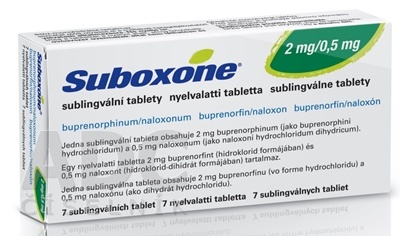
SUBOXONE 2 mg /0.5 Mg Sublingual Tablets

Prescription review online
A doctor will review your case and decide whether a prescription is medically appropriate.

Talk to a doctor about this medicine
Discuss your symptoms and possible next steps in a quick online consultation.



How to use SUBOXONE 2 mg/0.5 mg SUBLINGUAL TABLETS
Contents of the leaflet
- Introduction
- What is Suboxone and what is it used for
- What you need to know before you take Suboxone
- How to take Suboxone
- Possible Adverse Effects
- Storage of Suboxone
- Package Contents and Additional Information
Introduction
Package Leaflet: Information for the User
Suboxone 2 mg/0.5 mg sublingual tablets
Suboxone 8 mg/2 mg sublingual tablets
Suboxone 16 mg/4 mg sublingual tablets
buprenorphine/naloxone
Read all of this leaflet carefully before you start taking this medicine because it contains important information for you.
- Keep this leaflet, you may need to read it again.
- If you have any further questions, ask your doctor or pharmacist.
- This medicine has been prescribed for you only. Do not pass it on to others. It may harm them, even if their signs of illness are the same as yours.
- If you get any side effects, talk to your doctor or pharmacist. This includes any possible side effects not listed in this leaflet. See section 4.
Contents of the pack
- What is Suboxone and what is it used for
- What you need to know before you take Suboxone
- How to take Suboxone
- Possible side effects
- Storing Suboxone
- Contents of the pack and other information
1. What is Suboxone and what is it used for
Suboxone is used to treat opioid dependence (addiction to narcotic drugs) such as heroin or morphine, in addicts who have agreed to be treated for their addiction. Suboxone is used in adults and adolescents over 15 yearswho are also receiving medical, social, and psychological support.

Not sure if this medicine is right for you?
Discuss your symptoms and treatment with a doctor online.
2. What you need to know before you take Suboxone
Do not take Suboxone
- if you are allergic to buprenorphine, naloxone or any of the other ingredients of this medicine (listed in section 6);
- if you have severe respiratory problems;
- if you have severe liver problems;
- if you are suffering from alcoholic intoxicationor if you have tremors, sweating, anxiety, confusion or hallucinations caused by alcohol;
- if you are taking naltrexoneor nalmefenefor the treatment of alcohol or opioid dependence.
Warnings and precautions
Tell your doctor before you start taking Suboxone if you have:
- asthma or other respiratory problems;
- liver problems such as hepatitis;
- low blood pressure;
- a recent head injury or a recent brain disease;
- a urinary disorder (especially associated with an enlarged prostate in men);
- kidney disease;
- thyroid problems;
- a disorder of the adrenal gland (e.g. Addison's disease);
- depression or other diseases that are treated with antidepressants. The use of these medicines with Suboxone may cause serotonin syndrome, a potentially life-threatening disease (see "Other medicines and Suboxone").
Important things to bear in mind:
- In case of accidental ingestion or suspected ingestion, contact an emergency unit immediately.
- Additional monitoring
If you are over 65 years old, your doctor may monitor you more closely.
- Misuse and abuse
This medicine may be targeted by people who abuse prescription medicines and should be kept in a safe place to protect it from theft (see section 5). Do not give this medicine to anyone else. It may cause them to die or have other serious problems.
- Respiratory problems
Some people have died from respiratory failure (inability to breathe) because they have misused buprenorphine or taken it with other central nervous system depressants, such as alcohol, benzodiazepines (tranquilizers) or other opioids.
This medicine can cause severe respiratory depression (difficulty breathing) that can be life-threatening in children and non-dependent persons if they ingest it accidentally or intentionally.
- Sleep-related breathing disorders
Suboxone may cause sleep-related breathing disorders such as sleep apnea (pauses in breathing during sleep) and sleep-related hypoxemia (low oxygen levels in the blood). Symptoms may include pauses in breathing during sleep, nighttime awakenings due to difficulty breathing, difficulty maintaining sleep, or excessive daytime sleepiness. Contact your doctor if you or someone else observes these symptoms. Your doctor may consider a dose reduction.
- Dependence
This medicine can cause dependence.
- Withdrawal symptoms
This medicine can cause opioid withdrawal symptoms if you take it too soon after using opioids. You should wait at least 6 hours after using a short-acting opioid (e.g. morphine, heroin) or at least 24 hours after using a long-acting opioid, such as methadone, before taking Suboxone.
This medicine can also cause withdrawal symptoms if you stop taking it suddenly. See section 3 "If you stop taking Suboxone".
- Liver damage
There have been reports of liver damage after taking Suboxone, especially when the medicine is misused. It may also be due to viral infections (e.g. chronic hepatitis C), alcohol abuse, anorexia, or the use of other medicines that can damage the liver (see section 4). Your doctor may perform regular blood tests to monitor your liver function. Tell your doctor if you have any liver problems before starting treatment with Suboxone.
- Blood pressure
This medicine can cause a sudden drop in blood pressure, making you feel dizzy if you stand up too quickly after sitting or lying down.
- Diagnosis of unrelated medical conditions
This medicine may mask the symptoms of pain that could help in the diagnosis of some diseases. You should tell your doctor that you are taking this medicine.
Children and adolescents
Do notgive this medicine to children under 15 years. If you are between 15 and 18 years old, your doctor may monitor you more closely during treatment due to the lack of data in this age group.
Other medicines and Suboxone
Tell your doctor if you are taking, have recently taken or might take any other medicines.
Some medicines may increase the adverse effects of Suboxone, and may be severe. Do not take other medicines at the same time as Suboxone without consulting your doctor first, especially:
- Benzodiazepines(used to treat anxiety or sleep disorders) such as diazepam, temazepam or alprazolam. The concomitant use of Suboxone and sedatives such as benzodiazepines or related medicines increases the risk of drowsiness, difficulty breathing (respiratory depression) and coma, and may be potentially life-threatening. For this reason, concomitant use should only be considered when other treatment options are not possible. However, if your doctor prescribes Suboxone with sedatives, your doctor should limit the dose and duration of concomitant treatment. Tell your doctor about all sedatives you are taking and strictly follow your doctor's dosage recommendation. It may be helpful to inform your friends or family to be alert to the signs and symptoms mentioned above. Contact your doctor if you experience these symptoms.
- Other medicines that can cause drowsinessand are used to treat diseases such as anxiety, insomnia, seizures/epileptic fits or pain. These types of medicines can reduce your level of alertness, making it difficult to drive and use machines. They can also cause central nervous system depression, which is very serious. The following is a list of examples of these types of medicines:
- other medicines that contain opioids such as methadone, some painkillers or cough suppressants;
- antidepressants (used to treat depression) such as isocarboxazid, phenelzine, selegiline, tranylcypromine and valproate may enhance the effects of this medicine;
- sedating H1 receptor antagonists (used to treat allergic reactions) such as diphenhydramine and chlorphenamine;
- barbiturates (used to produce sleep or sedation) such as phenobarbital or secobarbital;
- tranquilizers (used to produce sleep or sedation) such as chloral hydrate.
- Antidepressantssuch as moclobemide, tranylcypromine, citalopram, escitalopram, fluoxetine, fluvoxamine, paroxetine, sertraline, duloxetine, venlafaxine, amitriptyline, doxepin or trimipramine. These medicines may interact with Suboxone and you may experience symptoms such as involuntary muscle contractions, including the muscles that control eye movement, agitation, hallucinations, coma, excessive sweating, tremors, exaggerated reflexes, increased muscle tension, body temperature above 38°C. Contact your doctor if you experience these symptoms.
- Clonidine (used to treat high blood pressure) may prolong the effects of this medicine.
- Antiretrovirals (used to treat HIV) such as ritonavir, nelfinavir or indinavir may enhance the effects of this medicine.
- Certain antifungals (used to treat fungal infections) such as ketoconazole, itraconazole or certain antibiotics may prolong the effects of this medicine.
- Some medicines may reduce the effect of Suboxone. These include medicines used to treat epilepsy (carbamazepine and phenytoin) and medicines used to treat tuberculosis (rifampicin).
- Naltrexone and nalmefene (medicines used to treat addictive disorders) may block the therapeutic effects of Suboxone. They should not be taken at the same time as Suboxone treatment as you may experience a sudden onset of prolonged and intense withdrawal.
Using Suboxone with food, drinks and alcohol
Do not drink alcoholwhile you are being treated with this medicine. Alcohol may increase drowsiness and the risk of respiratory failure if taken with Suboxone. Do not swallow or consume food or drinks until the tablet has dissolved completely.
Pregnancy and breast-feeding
If you are pregnant or breast-feeding, think you may be pregnant or are planning to have a baby, ask your doctor for advice before taking this medicine. The risks of using Suboxone in pregnant women are not known. Your doctor will decide whether you should continue your treatment with another medicine.
When taken during pregnancy, especially in the last months, medicines like Suboxone may cause withdrawal symptoms in the newborn, including respiratory problems. This may occur several days after birth.
Do not breast-feed while you are taking this medicine, as buprenorphine is excreted in breast milk.
Driving and using machines
Do notdrive or ride a bike, do not use tools or machines, or engage in hazardous activities until you know how this medicine affects you. Suboxone may cause drowsiness, dizziness or impaired thinking. This may occur more frequently in the first few weeks of treatment, when the dose is being changed, but may also occur if you drink alcohol or take other sedative medicines at the same time as taking Suboxone.
Suboxone contains lactose and sodium.
This medicine contains lactose. If your doctor has told you that you have an intolerance to some sugars, consult your doctor before taking this medicine.
This medicine contains less than 1 mmol of sodium (23 mg) per tablet; this is, essentially "sodium-free".
3. How to take Suboxone
Follow the instructions for administration of this medicine exactly as told by your doctor or pharmacist. If you are unsure, consult your doctor or pharmacist again.
Treatment is prescribed and supervised by doctors with experience in the treatment of drug addiction.
Your doctor will determine the best dose for you. During treatment, your doctor may adjust your dose based on your response to treatment.
Starting treatment
The recommended initial dose in adults and adolescents over 15 years is normally 2 Suboxone 2 mg/0.5 mg sublingual tablets.
This dose may be repeated on two more occasions on Day 1, depending on your needs.
Before taking your first dose of Suboxone, you must have clear signs of withdrawal. Your doctor will tell you when to take your first dose.
- Starting treatment with Suboxone if you have heroin dependence
- If you have heroin or short-acting opioid dependence, the first dose should be taken when signs of withdrawal appear, at least 6 hours after the last time you used opioids.
- Starting treatment with Suboxone if you have methadone dependence
If you have been taking methadone or a long-acting opioid, it is recommended to reduce the methadone dose to less than 30 mg/day before starting treatment with Suboxone. The first dose of Suboxone should be taken when signs of withdrawal appear and at least 24 hours after the last time you used methadone.
How to take Suboxone
- Take the dose once a day, placing the tablets under your tongue.
- Keep the tablets under your tongue until they have completely dissolved. This may take between 5 and 10 minutes.
- Do not chew or swallow the tablets, as the medicine will not work and you may experience withdrawal symptoms.
Do not consume food or drinks until the tablets have dissolved completely.
How to remove the tablet from the blister pack
| 1 ? Do not push the tablet through the aluminum foil. |
| 2 ? Remove only one unit from the blister pack by tearing it along the perforated line. |
| 3 ? From the edge where the seal is raised, pull the aluminum foil from the back to remove the tablet. |


If the blister pack is damaged, discard the tablet.
Dose adjustment and maintenance treatment:
During the days following the start of treatment, your doctor may increase the dose of Suboxone you take according to your needs. If you think the effect of Suboxone is too strong or too weak, tell your doctor or pharmacist. The maximum daily dose is 24 mg of buprenorphine.
After a period of satisfactory treatment, you may agree with your doctor to gradually reduce the dose to a lower maintenance dose.
Stopping treatment
Depending on your condition, the dose of Suboxone may be further reduced under close medical supervision until you can eventually stop taking it.
Do not change your treatment in any way or stop it without the authorization of the doctor who is treating you.
If you take more Suboxone than you should
If you or someone else takes too much of this medicine, you or they should go immediately to the emergency department or hospital for treatment, as an overdose of Suboxone can cause serious and potentially life-threatening breathing problems.
Symptoms of overdose may include drowsiness and disorientation with slow reflexes, blurred vision and/or difficulty speaking. You may not be able to think clearly and may breathe much more slowly than usual.
If you forget to take Suboxone
If you forget to take a dose, tell your doctor as soon as possible.
If you stop taking Suboxone
Do not change your treatment in any way or stop it without the authorization of the doctor who is treating you. Sudden stopping of treatment may cause withdrawal symptoms.
If you have any further questions on the use of this medicine, ask your doctor or pharmacist.

Started taking the medicine and have questions?
Discuss your symptoms and treatment with a doctor online.
4. Possible Adverse Effects
Like all medicines, this medicine can cause adverse effects, although not all people suffer from them.
Report immediately to your doctor or seek urgent medical attentionif you experience adverse effects such as:
- Swelling of the face, lips, tongue, or throat, which can cause difficulty swallowing or breathing; intense urticaria/hives. These can be signs of a potentially life-threatening allergic reaction.
- Feeling of drowsiness and discoordination, blurred vision, difficulty speaking, inability to think clearly, or breathing much slower than normal for you.
Also, report immediately to your doctorif you experience adverse effects such as:
- Intense fatigue, itching with yellowish skin or eye discoloration. These can be signs of liver damage.
- Seeing or hearing things that do not really exist (hallucinations).
Adverse Effects Reported with Suboxone
Very Common Adverse Effects (may affect more than 1 in 10 people): |
Insomnia (inability to sleep), constipation, nausea, excessive sweating, headache, drug withdrawal syndrome. |
Common Adverse Effects (may affect up to 1 in 10 people): |
Weight loss, swelling of hands and feet, drowsiness, anxiety, nervousness, tingling, depression, decreased sexual desire, increased muscle tension, abnormal thinking, increased tear production (tearful eyes) or other tear disorders, blurred vision, hot flashes, increased blood pressure, migraines, runny nose, sore throat and difficulty swallowing, increased cough, stomach discomfort or other stomach problems, diarrhea, liver function abnormalities, flatulence, vomiting, skin rash, itching, urticaria, pain, joint pain, muscle pain, leg cramps (muscle spasms), difficulty getting or maintaining an erection, urinary abnormalities, abdominal pain, back pain, weakness, infection, chills, chest pain, flu-like symptoms, general feeling of discomfort, accidental injury due to loss of alertness or coordination, fainting, and dizziness. |
Uncommon Adverse Effects (may affect up to 1 in 100 people): |
Inflamed glands (lymph nodes), agitation, tremors, abnormal dreams, excessive muscle activity, depersonalization (not feeling like oneself), drug dependence, amnesia (memory disorder), loss of interest, exaggerated feeling of well-being, convulsions (epileptic seizures), speech disorders, small pupils, difficulty urinating, eye inflammation or infection, rapid or slow heartbeat, low blood pressure, palpitations, heart attack, chest tightness, shortness of breath, asthma, yawning, mouth pain and sores, tongue discoloration, acne, skin nodules, hair loss, dry or flaky skin, joint inflammation, urinary tract infection, abnormal blood tests, blood in the urine, abnormal ejaculation, menstrual or vaginal problems, kidney stones, protein in the urine, pain or difficulty urinating, sensitivity to heat or cold, heat stroke, loss of appetite, hostile feelings. |
Frequency Not Known (cannot be estimated from the available data): |
Sudden withdrawal syndrome caused by taking Suboxone too soon after consuming illegal opioids, drug withdrawal syndrome in newborns, slow or difficult breathing, liver damage with or without jaundice, hallucinations, swelling of the face and throat or potentially life-threatening allergic reactions, drop in blood pressure when changing position from sitting or lying down to standing. |
Misuse of this medicine by injection can cause withdrawal symptoms, infections, other skin reactions, and potentially serious liver problems (see "Warnings and Precautions").
Reporting of Adverse Effects
If you experience any type of adverse effect, consult your doctor or pharmacist, even if it is an adverse effect not listed in this leaflet. You can also report them directly through the national reporting system included in Appendix V. By reporting adverse effects, you can contribute to providing more information on the safety of this medicine.
5. Storage of Suboxone
Keep this medicine out of the sight and reach of children and other family members.
Do not use this medicine after the expiration date shown on the box. The expiration date is the last day of the month indicated.
This medicine does not require special storage conditions. However, Suboxone can be a target for people who abuse prescription medicines. Keep this medicine in a safe place to protect it from theft.
Store the blister pack safely.
Never open the blister pack before its time.
Never take this medicine in front of children.
In case of accidental ingestion or suspected ingestion, contact an emergency unit immediately.
Medicines should not be disposed of via wastewater or household waste. Ask your pharmacist how to dispose of the packaging and any unused medicines. This will help protect the environment.
6. Package Contents and Additional Information
Composition of Suboxone
- The active ingredients are buprenorphine and naloxone.
Each 2 mg/0.5 mg sublingual tablet contains 2 mg of buprenorphine (as hydrochloride) and 0.5 mg of naloxone (as dihydrate hydrochloride).
Each 8 mg/2 mg sublingual tablet contains 8 mg of buprenorphine (as hydrochloride) and 2 mg of naloxone (as dihydrate hydrochloride).
Each 16 mg/4 mg sublingual tablet contains 16 mg of buprenorphine (as hydrochloride) and 4 mg of naloxone (as dihydrate hydrochloride).
- The other ingredients are lactose monohydrate, mannitol, cornstarch, povidone K30, anhydrous citric acid, sodium citrate, magnesium stearate, potassium acesulfame, and natural lemon and lime flavor.
Appearance of the Product and Package Contents
Suboxone 2 mg/0.5 mg sublingual tablets are white, hexagonal, and biconvex, 6.5 mm in size, with "N2" engraved on one side.
Suboxone 8 mg/2 mg sublingual tablets are white, hexagonal, and biconvex, 11 mm in size, with "N8" engraved on one side.
Suboxone 16 mg/4 mg sublingual tablets are white, round, and biconvex, 10.5 mm in size, with "N16" engraved on one side.
Packaged in packs of 7 and 28 tablets.
Only certain pack sizes may be marketed.
Marketing Authorization Holder and Manufacturer
Indivior Europe Limited
27 Windsor Place
Dublin 2
D02 DK44
Ireland
You can request more information about this medicine by contacting the local representative of the marketing authorization holder:
België/Belgique/Belgien Indivior Europe Limited Tel: 0800 780 41 e-mail: [email protected] | Lietuva Indivior Europe Limited Tel: 88003079 e-mail: [email protected] |
Indivior Europe Limited Τel: 00800 110 4104 e-mail: [email protected] | Luxembourg/Luxemburg Indivior Europe Limited Tel: 800 245 43 e-mail: [email protected] |
Ceská republika Indivior Europe Limited Tel: 800 143 737 e-mail: [email protected] | Magyarország Indivior Europe Limited Tel.: 6800 19301 e-mail: [email protected] |
Danmark Indivior Europe Limited Tlf: 80826653 e-mail: [email protected] | Malta Indivior Europe Limited Tel: 80062185 e-mail: [email protected] |
Deutschland Indivior Europe Limited Tel: 0 800 181 3799 e-mail: [email protected] | Nederland Indivior Europe Limited Tel: 0800 022 87 83 e-mail: [email protected] |
Eesti Indivior Europe Limited Tel: 8000041004 e-mail: [email protected] | Norge Indivior Europe Limited Tlf: 80016773 e-mail: [email protected] |
Ελλáδα Indivior Europe Limited Τηλ: 800 206 281 901 e-mail: [email protected] | Österreich Indivior Europe Limited Tel: 800 296551 e-mail: [email protected] |
España Indivior Europe Limited Tel: 900 994 121 e-mail: [email protected] | Polska Indivior Europe Limited Tel.: 0800 4111237 e-mail: [email protected] |
France Indivior Europe Limited Tél: 0800 909 972 e-mail: [email protected] | Portugal Indivior Europe Limited Tel: 800 841 042 e-mail: [email protected] |
Hrvatska Indivior Europe Limited Tel: 0800 222 899 e-mail: [email protected] | România Indivior Europe Limited Tel: 800 477 029 e-mail: [email protected] |
Ireland Indivior Europe Limited Tel: 1800554156 e-mail: [email protected] | Slovenija Indivior Europe Limited Tel: 080080715 e-mail: [email protected] |
Ísland Indivior Europe Limited Sími: 8009875 Netfang: [email protected] | Slovenská republika Indivior Europe Limited Tel: 800110286 e-mail: [email protected] |
Italia Indivior Europe Limited Tel: 800 789 822 e-mail: [email protected] | Suomi/Finland Indivior Europe Limited Puh/Tel: 0800417489 e-mail: [email protected] |
Κúπρος Indivior Europe Limited Τηλ: 80091515 e-mail: [email protected] | Sverige Indivior Europe Limited Tel: 020791680 e-mail: [email protected] |
Latvija Indivior Europe Limited Tel: 800 05612 e-mail: [email protected] | United Kingdom (Northern Ireland) Indivior Europe Limited Tel: 0808 234 9243 e-mail: [email protected] |
Date of the Last Revision of this Leaflet:
Detailed information on this medicine is available on the European Medicines Agency website: http://www.ema.europa.eu/.
- Country of registration
- Dosage formSUBLINGUAL TABLET, 2 mg/0.5 mg
- ATC codeN07BC51
- Active substance
- Prescription requiredYes
- Manufacturer
- CompositionMANITOL (E-421) (- mg mg), LACTOSA MONOHIDRATO (- mg mg), ACESULFAMO POTASICO (- mg mg), CITRATO DE SODIO (E-331) (- mg mg)
- This information is for reference only and does not constitute medical advice. Always consult a doctor before taking any medication. Oladoctor is not responsible for medical decisions based on this content.
- Alternatives to SUBOXONE 2 mg/0.5 mg SUBLINGUAL TABLETSDosage form: SUBLINGUAL TABLET, 2 mg/0.5 mgActive substance: buprenorphine, combinationsManufacturer: Aurovitas Spain, S.A.U.Prescription requiredDosage form: SUBLINGUAL TABLET, 8 mg/2 mgActive substance: buprenorphine, combinationsManufacturer: Aurovitas Spain, S.A.U.Prescription requiredDosage form: SUBLINGUAL TABLET, 12 mg/3 mgActive substance: buprenorphine, combinationsManufacturer: Indivior Europe LimitedPrescription required
Online doctors for SUBOXONE 2 mg/0.5 mg SUBLINGUAL TABLETS
Discuss questions about SUBOXONE 2 mg/0.5 mg SUBLINGUAL TABLETS, including use, safety considerations and prescription review, subject to medical assessment and local regulations.









Get SUBOXONE 2 mg/0.5 mg SUBLINGUAL TABLETS Prescription Online
Fill in a 2-min form
Tell us your symptoms, history, and what medicine you're requesting.
Pick a doctor or let us assign
Choose a specialist or we'll match you with the next available doctor.
Doctor reviews your case
Usually within 30 minutes. They may ask follow-up questions via chat.
Collect from any pharmacy
Electronic prescription sent to your email — valid across Spain.
Frequently Asked Questions
SUBOXONE 2 mg/0.5 mg SUBLINGUAL TABLETS requires a prescription in Spain. You can check with a doctor online whether this medicine may be appropriate for your situation.
The active ingredient in SUBOXONE 2 mg/0.5 mg SUBLINGUAL TABLETS is buprenorphine, combinations. This information helps identify medicines with the same composition but different brand names.
SUBOXONE 2 mg/0.5 mg SUBLINGUAL TABLETS is manufactured by Indivior Europe Limited. Pharmacy brands and packaging may differ depending on the distributor.
Doctors such as Family doctors, Psychiatrists, Dermatologists, Cardiologists, Endocrinologists, Gastroenterologists, Pulmonologists, Nephrologists, Rheumatologists, Hematologists, Infectious disease physicians, Allergists, Geriatricians, Paediatricians, Oncologists may assess whether SUBOXONE 2 mg/0.5 mg SUBLINGUAL TABLETS is appropriate, depending on your situation and local regulations. You can book an online consultation to discuss your symptoms and possible next steps.
Spain has a well-developed healthcare infrastructure across major cities such as Madrid, Barcelona, Valencia, and Seville. Pharmacies are widely available and operate under strict regulations, ensuring access to prescribed medications.
You can buy SUBOXONE 2 mg/0.5 mg SUBLINGUAL TABLETS in Madrid, Barcelona, Seville, or Valencia at any local pharmacy with a valid prescription.
To obtain a prescription, you can use Oladoctor:
Other medicines with the same active substance (buprenorphine, combinations) include BUPRENORPHINE/NALOXONE AUROVITAS 2 mg/0.5 mg SUBLINGUAL TABLETS, BUPRENORPHINE/NALOXONE AUROVITAS 8 mg/2 mg SUBLINGUAL TABLETS, SUBOXONE 12 mg/3 mg SUBLINGUAL FILM-COATED TABLETS. These may have different brand names or formulations but contain the same therapeutic ingredient. Always consult a doctor before switching or starting a new medicine.
