


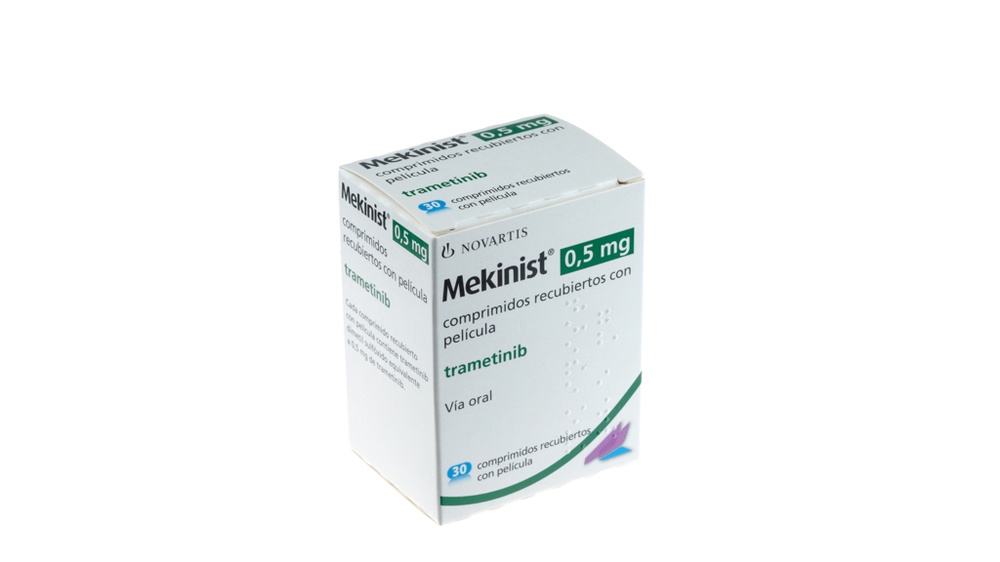
MEKINIST 0.5 mg FILM-COATED TABLETS



How to use MEKINIST 0.5 mg FILM-COATED TABLETS
Translated with AI
This page provides general information and does not replace a doctor’s consultation. Always consult a doctor before taking any medication. Seek urgent medical care if symptoms are severe.
Show originalContents of the leaflet
Introduction
Package Leaflet: Information for the Patient
Mekinist®0.5mg film-coated tablets
Mekinist®2mg film-coated tablets
trametinib
Read all of this leaflet carefully before you start taking this medicine because it contains important information for you.
- Keep this leaflet, you may need to read it again.
- If you have any further questions, ask your doctor, pharmacist, or nurse.
- This medicine has been prescribed for you only. Do not pass it on to others. It may harm them, even if their signs of illness are the same as yours.
- If you experience any side effects, talk to your doctor, pharmacist, or nurse. This includes any possible side effects not listed in this leaflet. See section 4.
Contents of the pack
- What is Mekinist and what is it used for
- What you need to know before you take Mekinist
- How to take Mekinist
- Possible side effects
- Storage of Mekinist
- Contents of the pack and other information
1. What is Mekinist and what is it used for
Mekinist is a medicine that contains the active substance trametinib. It is used alone or in combination with another medicine that contains dabrafenib to treat a type of skin cancer called melanoma that has spread to other parts of the body or cannot be removed by surgery.
Mekinist in combination with dabrafenib can also be used to prevent the return of melanoma after it has been removed by surgery.
Mekinist in combination with dabrafenib is also used to treat a type of lung cancer called non-small cell lung cancer (NSCLC).
Both types of cancer have a specific change (mutation) in a gene called BRAF at position V600. This mutation in the gene may have caused the development of cancer. This medicine works on the proteins produced by the mutated gene and slows down or stops the development of cancer.

2. What you need to know before you take Mekinist
Mekinist can only be used to treat melanomas and NSCLC that have a BRAF mutation. Therefore, before starting treatment, your doctor will check if you have this mutation.
If your doctor decides that you should take the combination treatment of Mekinist and dabrafenib, read the package leaflet of dabrafenib carefully, as well as this leaflet.
If you have any further questions on the use of this medicine, ask your doctor, pharmacist, or nurse.
Do not take Mekinist
- if you are allergic to trametinib or any of the other ingredients of this medicine (listed in section 6).
Talk to your doctor if you think this may apply to you.
Warnings and precautions
Talk to your doctor before starting to take this medicine. Your doctor needs to know if you:
- have liver problems. While you are taking this medicine, your doctor may take blood samples to check how well your liver is working.
- have or have had kidney problems.
- have or have had breathing or lung problems.
- have heart problems such as heart failure (which can cause shortness of breath, difficulty breathing when lying down, swelling of the feet or legs) or problems with the way your heart beats. Your doctor should check your heart function before and during treatment.
- have eye problems, such as blockage of the veins that supply the eye (retinal vein occlusion) or swelling of the eye that may be due to a blockage of fluid (chorioretinopathy).
Before taking Mekinist in combination with dabrafenib, your doctor needs to know if you:
- have had another type of cancer other than melanoma or NSCLC, as you may be at a higher risk of developing other non-skin cancers while taking Mekinist.
Talk to your doctorif you think any of the above applies to you.
Conditions to look out for
Some people taking Mekinist develop other conditions that can be serious. You need to know what symptoms to look out for while taking this medicine.
Bleeding
Taking Mekinist or Mekinist in combination with dabrafenib can cause serious bleeding in the brain, digestive system (such as stomach, rectum, or intestine), lungs, and other organs, which can be life-threatening. The symptoms can be:
- headache, dizziness, or feeling weak
- passing blood in your stools or black stools
- passing blood in your urine
- stomach pain
- coughing up or vomiting blood
Tell your doctor as soon as possibleif you experience these symptoms.
Fever
Treatment with Mekinist or the combination of Mekinist with dabrafenib can cause fever, although it is more likely if you take the combination (see also section 4). In some cases, people with fever develop low blood pressure, dizziness, and other symptoms.
Tell your doctor immediatelyif your temperature is over 38°C or if you feel feverish while taking this medicine.
Heart problems
Mekinist can cause heart problems or make existing heart problems worse (see section 4 of this leaflet, "Heart problems") in people taking Mekinist in combination with dabrafenib.
Tell your doctor if you have any heart problems. Before starting treatment and during treatment with this medicine, your doctor will perform tests to check if your heart is working properly. Tell your doctor immediately if you feel that your heart is beating strongly, racing, or beating irregularly, if you feel dizzy, tired, faint, short of breath, or if your legs swell. If necessary, your doctor may decide to interrupt or stop treatment.
Changes in the skin that may indicate a new skin cancer
Your doctor will check your skin before starting treatment with this medicine and regularly while you are taking it. Tell your doctor immediatelyif you notice any changes in your skin while taking this medicine or after treatment (see also section 4).
Eyel problems
Your doctor should examine your eyes while you are taking this medicine.
Talk to your doctor immediatelyif you have redness and irritation of the eyes, blurred vision, eye pain, or other changes in vision during treatment (see also section 4).
Mekinist can cause eye problems, including blindness. Mekinist is not recommended if you have ever had a blockage in the veins that drain the eyes (retinal vein occlusion). Tell your doctor immediately if you experience any of the following symptoms related to eye problems during treatment: blurred vision, loss of vision, or other changes in vision, if you see colored dots or halos (blurred vision around objects). If necessary, your doctor may decide to interrupt or stop treatment.
Liver problems
Mekinist, or the combination with dabrafenib, can cause liver problems that can develop into diseases such as hepatitis or liver failure, which can be fatal. Your doctor will monitor you regularly. Signs that your liver is not working properly are:
- loss of appetite
- feeling unwell (nausea)
- feeling sick (vomiting)
- stomach pain (abdomen)
- yellowing of your skin or the whites of your eyes (jaundice)
- dark-colored urine
- itching of the skin
Tell your doctor as soon as possibleif you experience these symptoms.
Breathing or lung problems
Tell your doctor if you have breathing or lung problems, including frequent difficulty breathing accompanied by dry cough, shortness of breath, and fatigue. Your doctor may ask you to have your lung function checked before starting to take this medicine.
Muscle pain
Mekinist can cause muscle damage (rhabdomyolysis). Tell your doctor as soon as possibleif you notice any of these symptoms:
- muscle pain
- dark urine due to kidney damage
If necessary, your doctor may decide to interrupt or stop treatment.
- Read the information on 'Serious side effects' in section 4 of this leaflet.
Perforation of the stomach or intestine
Taking Mekinist or Mekinist in combination with dabrafenib can increase the risk of developing a perforation in the wall of the intestine. If you feel severe abdominal pain, tell your doctor as soon as possible.
Severe skin reactions
Severe skin reactions have been reported in people taking Mekinist in combination with dabrafenib. Tell your doctor immediately if you notice any changes in your skin (see section 4 for symptoms to look out for).
Inflammatory disease that mainly affects the skin, lungs, eyes, and lymph nodes
An inflammatory disease that mainly affects the skin, lungs, eyes, or lymph nodes (sarcoidosis). Common symptoms of sarcoidosis may include cough, shortness of breath, swelling of the lymph nodes, vision problems, fever, fatigue, pain, joint inflammation, or painful swellings (bumps) on the skin. If you experience any of these symptoms, contact a doctor.
Immune system disorders
Mekinist in combination with dabrafenib can rarely cause a disease (hemophagocytic lymphohistiocytosis or HLH) in which the immune system produces too many cells to fight infections, called histiocytes and lymphocytes. The symptoms can include enlargement of the liver or spleen, skin rash, enlargement of the lymph nodes, breathing problems, tendency to bruise, kidney problems, and heart problems. Tell your doctor immediately if you experience several symptoms, such as fever, swelling of the lymph nodes, bruising, or skin rash, at the same time.
Tumor lysis syndrome
If you experience the following symptoms, tell your doctor immediately, as it may be a life-threatening condition: nausea, difficulty breathing, irregular heartbeat, muscle cramps, seizures, cloudy urine, decreased urine production, and fatigue. These can be caused by a group of metabolic complications that can occur during cancer treatment and are caused by the breakdown products of dying cancer cells (tumor lysis syndrome or TLS) and can cause changes in kidney function (see also section 4).
Children and adolescents
Mekinist is not recommended in children and adolescents because the effects of Mekinist in people under 18 years of age are not known.
Other medicines and Mekinist
Before starting treatment, tell your doctor, pharmacist, or nurse if you are taking, have recently taken, or might take any other medicines. This includes medicines obtained without a prescription. Make a list of the medicines you are taking and show it to your doctor, pharmacist, or nurse if you start taking a new medicine.
Using Mekinist with food and drinks
It is important to take Mekinist on an empty stomachbecause food can affect the absorption of this medicine (see section 3).
Pregnancy, breastfeeding, and fertility
The use of Mekinist is not recommended during pregnancy.
- If you are pregnant or breastfeeding, think you may be pregnant, or plan to become pregnant, consult your doctor before using this medicine. Mekinist can cause harm to the fetus.
- If you are a woman of childbearing age, you must use a reliable contraceptive method while taking Mekinist and for at least 16 weeks after stopping treatment.
- Hormonal contraceptives (birth control pill, injections, or patches) may not be effective during treatment with Mekinist in combination with dabrafenib. It is recommended to use another effective contraceptive method to avoid becoming pregnant during treatment with this combination of medicines. Consult your doctor, pharmacist, or nurse for advice.
- If you become pregnant during treatment with Mekinist, tell your doctor immediately.
Mekinist is not recommended during breastfeeding
It is not known whether the components of this medicine can pass into breast milk.
If you are breastfeeding or plan to breastfeed, tell your doctor. It is recommended not to breastfeed while taking Mekinist. You and your doctor will decide whether to take this medicine or to breastfeed.
Fertility in men and women
Mekinist can affect the fertility of men and women.
If you take Mekinist with dabrafenib: dabrafenib can permanently reduce fertility in men. Also, men taking dabrafenib may have a reduced sperm count, and their sperm may not return to normal levels until they have stopped taking this medicine.
Talk to your doctor about options for having children in the future before starting treatment with dabrafenib.
If you have further questions on the effects of this medicine on fertility, ask your doctor, pharmacist, or nurse.
Driving and using machines
Mekinist can cause side effects that affect your ability to drive or use machines.
Avoid driving or using machines if you feel tired, weak, have vision problems, or feel lacking in energy.
The description of these side effects can be found in other sections of this leaflet (see sections 2 and 4). Read all the information included in this leaflet.
If you are not sure, talk to your doctor, pharmacist, or nurse. Your ability to drive or use machines may be affected by your disease, symptoms, or treatment.
Mekinist contains sodium
This medicine contains less than 1 mmol sodium (23 mg) per tablet; this is essentially "sodium-free".
3. How to take Mekinist
Follow exactly the administration instructions of this medication indicated by your doctor, pharmacist, or nurse. In case of doubt, consult your doctor, pharmacist, or nurse again.
How much to take
The recommended dose of Mekinist, whether used alone or in combination with dabrafenib, is 1 tablet of 2 mg once a day. The recommended dose of dabrafenib, when used in combination with Mekinist, is 150 mg twice a day.
Your doctor will decide if it is necessary to reduce the dose based on the adverse effects you have.
Do not take more Mekinist than your doctor has recommended,as this could increase the risk of having adverse effects.
How to take it
Swallow the tablets whole with the help of a full glass of water.
Take Mekinist once a day, on an empty stomach (at least 1 hour before a meal or 2 hours after a meal). That is:
- once you have taken Mekinist, you must wait at least 1 hour before eating.
Take Mekinist at the same time of day, every day.
If you take more Mekinist than you should
If you take too many Mekinist tablets, contact your doctor, pharmacist, or nurse. If possible, show them the Mekinist packaging along with this leaflet.
If you forget to take Mekinist
If less than 12 hours have passed since the usual time you should have taken Mekinist, take it as soon as you remember.
If more than 12 hours have passed since the usual time you should have taken Mekinist, skip this dose and take the next one at the usual time. Then, continue taking the tablets at the usual time.
Do not take a double dose to make up for forgotten doses.
If you interrupt treatment with Mekinist
Take Mekinist for the time your doctor has recommended. Do not stop taking this medication unless your doctor recommends it.
If you have any other questions about the use of this medication, ask your doctor, pharmacist, or nurse.
How to take Mekinist in combination with dabrafenib
- Take Mekinist in combination with dabrafenib exactly as your doctor, pharmacist, or nurse has told you. Do not change the dose or stop taking Mekinist or dabrafenib unless your doctor, pharmacist, or nurse indicates it.
- Take Mekinist once a dayand take dabrafenib twice a day. It would be good for you to have the habit of taking both medications together every day. You must take Mekinist with either the morning dose of dabrafenib orthe evening dose of dabrafenib. The doses of dabrafenib should be taken 12 hours apart.
- Take Mekinist and dabrafenib on an empty stomach, at least 1 hour before or 2 hours after a meal. Swallow them whole with a full glass of water.
- If you forget a dose of Mekinist or dabrafenib, take it as soon as you remember. Do not make up for the forgotten dose and take the next dose when it is due:
- If there are less than 12 hours until the next dose of Mekinist, which is taken once a day
- If there are less than 6 hours until the next dose of dabrafenib, which is taken twice a day
- If you take more Mekinist or dabrafenib, contact your doctor, pharmacist, or nurse immediately. Bring the Mekinist tablets and dabrafenib capsules if you can. If possible, show the packaging of Mekinist and dabrafenib with the leaflet.
- If you experience adverse effects, your doctor may decide to give you a lower dose of Mekinist and dabrafenib. Take the dose of Mekinist exactly as your doctor, pharmacist, or nurse has told you.

4. Possible Adverse Effects
Like all medicines, this medicine can cause adverse effects, although not all people suffer from them.
Possible Serious Adverse Effects
Heart Conditions
Mekinist may affect your heart's functioning. It is more likely to affect people with an existing heart problem. During treatment with Mekinist, you will undergo heart tests. Among the signs and symptoms related to heart problems are:
- palpitations, increased heart rate, or irregular heartbeats
- dizziness
- fatigue
- feeling dizzy
- shortness of breath
- swollen legs
If you experience any of these symptoms, inform your doctoras soon as possible, whether you experience them for the first time or if you think they are worsening.
High Blood Pressure
Mekinist may increase blood pressure (hypertension) or worsen it. Your doctor or nurse should check your blood pressure during treatment with Mekinist. Contact your doctor or nurse immediately if you have high blood pressure, if your blood pressure worsens, or if you have severe headaches, feel dizzy, or feel faint.
Bleeding Problems
Mekinist may cause serious bleeding problems, especially in the brain or stomach. Contact your doctor or nurse and seek immediate medical attention if you have unusual signs of bleeding, including:
- headache, dizziness, or weakness
- coughing up blood or coughing up blood clots
- vomiting blood or if your vomit looks like "coffee grounds"
- having red or black, tar-like stools
Eyelid Problems (Vision)
Mekinist may cause eye problems. It is not recommended to take Mekinist if you have ever had a blockage in the veins that drain the eyes (retinal vein occlusion). Your doctor will advise you to have an eye check before starting treatment with Mekinist and during treatment. Your doctor may ask you to stop taking Mekinist or refer you to a specialist if you experience signs and symptoms in your vision, including:
- vision loss
- redness and irritation in the eyes
- seeing colored spots
- seeing a halo (blurred vision around objects)
- blurred vision
Skin Changes
Severe skin reactions have been reported in people taking Mekinist in combination with dabrafenib (frequency not known). If you notice any of the following:
- red patches on the torso that are circular or target-shaped, with central blisters. Skin peeling. Ulcers in the mouth, throat, nose, genitals, and eyes. These severe skin rashes can be preceded by fever and flu-like symptoms (Stevens-Johnson syndrome)
- widespread rash, fever, and swollen lymph nodes (DRESS or drug hypersensitivity syndrome)
- Stop taking the medicine and seek immediate medical attention.
Up to 3 in 100 people who take Mekinist in combination with dabrafenib may develop a different type of skin cancer called Squamous Cell Carcinoma (SCC). Others may develop a type of cancer called Basal Cell Carcinoma (BCC). Normally, these changes only affect the skin locally and can be removed with surgery, and treatment with Mekinist and dabrafenib can continue without interruption.
Some people who take Mekinist in combination with dabrafenib may also notice that they have new melanomas. These melanomas are usually removed by surgery, and treatment with Mekinist and dabrafenib can continue without interruption.
Your doctor will examine your skin before starting treatment with dabrafenib, then monthly while taking dabrafenib, and during the 6 months after treatment ends. The reason for these reviews is to look for new skin lesions that could be cancerous.
Your doctor will also examine your head, neck, mouth, and lymph nodes and will regularly perform a scan (Computed Tomography) of your chest and abdominal area. You may also have blood tests. These reviews serve to detect if you have developed other cancers, including squamous cell carcinoma. It is recommended that both at the beginning and at the end of treatment, a pelvic exam (in women) and anal exam be performed.
Mekinist, both as monotherapy and in combination with dabrafenib, may cause a rash or acne-like rash. Follow your doctor's instructions on what to do to prevent the appearance of a rash. If you experience any of these symptoms for the first time or if they worsen, inform your doctor or nurse as soon as possible.
Contact your doctor immediatelyif you experience severe skin rash with any of the following symptoms: blisters on the skin, blisters or sores in the mouth, skin peeling, fever, redness, or swelling in the face, blisters on the soles of the feet.
If you have a skin rash or if it worsens, inform your doctor or nurse as soon as possible.
Muscle Pain
Mekinist may cause muscle damage (rhabdomyolysis). Inform your doctor or nurse if you feel a new symptom or if any of the following symptoms worsen:
- muscle pain
- dark-colored urine due to kidney damage
Respiratory or Lung Problems
Mekinist may cause inflammation of the lungs (pneumonitis or interstitial lung disease). Inform your doctor or nurse if you have new symptoms or worsening of symptoms associated with breathing problems or lung problems, including:
- shortness of breath
- cough
- fatigue
Immune System Disorders
If you experience several symptoms simultaneously, such as fever, swollen lymph nodes, bruising, or skin rash, inform your doctor immediately. It may be a sign of a disease in which the immune system produces too many cells to fight infections, called histiocytes and lymphocytes, which can cause various symptoms (known as hemophagocytic lymphohistiocytosis); see section 2 (rare frequency).
Tumor Lysis Syndrome
Inform your doctor immediately if you experience the following symptoms: nausea, difficulty breathing, irregular heartbeats, muscle cramps, seizures, cloudy urine, decreased urine production, and fatigue. These may be signs of a condition resulting from the rapid breakdown of cancer cells that in some people can be life-threatening (tumor lysis syndrome or TLS), see section 2 (unknown frequency).
Possible Adverse Effects in Patients Taking Mekinist Alone
Adverse Effects that May be Observed While Taking Only Mekinist:
Very Common Adverse Effects (may affect more than 1 in 10 people):
- high blood pressure (hypertension)
- bleeding in different parts of the body, which can be mild or severe
- cough
- shortness of breath
- diarrhea
- feeling of dizziness (nausea), discomfort (vomiting)
- constipation
- stomach pain
- dry mouth
- skin rash, acne-like rash, redness in the face, dry skin, or itching of the skin (see also in section 4 "Skin Changes")
- unusual hair loss or thinning hair
- lack of energy, weakness, fatigue
- swelling of the hands or feet (peripheral edema)
- fever
Very Common Adverse Effects that May Appear in Blood Tests:
- blood tests with altered liver function results
Common Adverse Effects (may affect up to 1 in 10 people):
- inflammation of the hair follicles on the skin
- disorders of the nails, such as changes in the nail bed, nail pain, infection, and swelling of the cuticles
- skin infection (cellulitis)
- skin rash with pus-filled blisters (see also at the beginning of section 4 "Skin Changes")
- allergic reaction (hypersensitivity)
- dehydration (low water or fluid levels)
- blurred vision
- swelling around the eyes
- vision problems (see also in section 4 "Eye Problems (Vision)")
- changes in how the heart pumps blood (left ventricular dysfunction) (see also in section 4 "Heart Conditions")
- heart rate is lower than normal and/or decreased heart rate
- localized tissue inflammation
- lung inflammation (pneumonitis or interstitial lung disease)
- ulcers or sores in the mouth, inflammation of the mucous membranes
- redness, cracks, or fissures in the skin
- redness, pain in hands and feet
- swelling in the face
- mucous membrane inflammation
- feeling of weakness
- nerve problems that can cause pain, numbness, or tingling in the hands and feet and/or muscle weakness (peripheral neuropathy)
Common Adverse Effects that May Appear in Blood Tests:
- decreased red blood cells (anemia), abnormal creatine phosphokinase results, an enzyme found mainly in the heart, brain, and skeletal muscle
Uncommon Adverse Effects (may affect up to 1 in 100 people):
- swelling in the eyes caused by fluid loss (chorioretinopathy) (see also at the beginning of section 4 "Eye Problems (Vision)")
- inflammation of the nerves in the back of the eye (papilledema) (see also at the beginning of section 4 "Eye Problems (Vision)")
- separation of the light-sensitive membrane from the back of the eye (retinal detachment) (see also at the beginning of section 4 "Eye Problems (Vision)")
- blockage of the veins that drain the eyes (retinal vein occlusion) (see also in section 4 "Eye Problems (Vision)")
- the heart pumps blood less efficiently, causing difficulty breathing, extreme fatigue, and swelling in the ankles and legs (heart failure)
- a hole (perforation) in the stomach or intestinal wall
- inflammation of the intestines (colitis)
- muscle damage that can cause muscle pain and kidney damage (rhabdomyolysis)
Adverse Effects of Unknown Frequency (cannot be estimated from available data):
- irregular heartbeats (atrioventricular block)
Adverse Effects when Mekinist is Taken with Dabrafenib
When Mekinist is taken with dabrafenib, you may experience any of the adverse effects listed earlier, although their frequency may change (increase or decrease)
You may also experience new adverse effects due to taking dabrafenibat the same time as Mekinist, which are listed below.
Inform your doctor as soon as possible if you notice that symptoms appear for the first time or if they worsen.
Read the dabrafenib package insert for more information on adverse effects that may occur while taking this medicine.
The adverse effects that may occur while taking Mekinist in combination with dabrafenib are as follows:
Very Common Adverse Effects (may affect more than 1 in 10 people):
- inflammation of the nose and throat
- decreased appetite
- headache
- dizziness
- high blood pressure (hypertension)
- bleeding in different parts of the body, which can be mild or severe (hemorrhage)
- cough
- stomach pain
- constipation
- diarrhea
- feeling of dizziness (nausea), discomfort (vomiting)
- rash, dry skin, itching, redness of the skin
- joint pain, muscle pain, or pain in hands or feet
- muscle spasms
- lack of energy, feeling weak
- chills
- swollen hands and feet (peripheral edema)
- fever
- flu-like symptoms
Very Common Adverse Effects that May Appear in Blood Tests:
- abnormal liver function test results in blood
Common Adverse Effects (may affect up to 1 in 10 people):
- urinary tract infection
- skin effects, including skin infection (cellulitis), inflammation of the hair follicles on the skin, nail disorders, such as changes in the nail bed, nail pain, infection, and swelling of the cuticles, skin rash with pus-filled blisters, squamous cell carcinoma (a type of skin cancer), papilloma (a type of non-cancerous tumor), wart growth, increased sensitivity of the skin to the sun (see also in section 4 "Skin Changes")
- dehydration (low water or fluid levels)
- blurred vision, vision problems, eye inflammation (uveitis)
- less efficient heart pumping
- low blood pressure (hypotension)
- localized tissue swelling
- shortness of breath
- dry mouth
- ulcers or pain in the mouth, mucous membrane inflammation
- acne-like rash
- thickening of the outer layer of the skin (hyperkeratosis), patches of thickened skin with scales or hardening (actinic keratosis), cracked or fissured skin
- increased sweating, night sweats
- unusual hair loss or thinning hair
- redness, pain in hands and feet
- inflammation of the fatty tissue under the skin (panniculitis)
- mucous membrane inflammation
- swelling in the face
- nerve problems that can cause pain, numbness, or tingling in the hands and feet and/or muscle weakness (peripheral neuropathy)
Common Adverse Effects that May Appear in Blood Tests:
- low white blood cell count
- decreased red blood cells (anemia), platelets in blood (cells that help blood clot), and a type of white blood cell (leukopenia)
- low sodium (hyponatremia) or phosphate (hypophosphatemia) levels in blood
- increased blood sugar levels
- increased creatine phosphokinase, an enzyme found mainly in the heart, brain, and skeletal muscle
- increased levels of certain substances (enzymes) produced by the liver
Uncommon Adverse Effects (may affect up to 1 in 100 people):
- development of a new skin cancer (melanoma)
- skin marks
- allergic reactions (hypersensitivity)
- eye changes, such as swelling due to fluid accumulation (chorioretinopathy), separation of the light-sensitive membrane from the back of the eye (retinal detachment), and swelling around the eyes
- heart rate is lower than normal and/or decreased heart rate
- lung inflammation (pneumonitis)
- pancreas inflammation
- inflammation of the intestines (colitis)
- kidney failure
- kidney inflammation
- inflammatory disease that mainly affects the skin, lungs, eyes, and lymph nodes (sarcoidosis)
- irregular heartbeats (atrioventricular block)
- raised, painful, red to dark purple skin patches or sores that appear mainly on the arms, legs, face, and neck, with fever (signs of acute febrile neutrophilic dermatosis)
Rare Adverse Effects (may affect up to 1 in 1,000 people):
- a hole (perforation) in the stomach or intestinal wall
Adverse Effects of Unknown Frequency (cannot be estimated from available data):
- inflammation of the heart muscle (myocarditis) that can cause difficulty breathing, fever, palpitations, and chest pain
- inflamed, scaly skin (exfoliative dermatitis)
Reporting Adverse Effects
If you experience any type of adverse effect, consult your doctor, pharmacist, or nurse, even if it is a possible adverse effect that is not listed in this package insert. You can also report them directly through the national reporting system included in Appendix V. By reporting adverse effects, you can contribute to providing more information on the safety of this medicine.
5. Storage of Mekinist
Keep this medicine out of the sight and reach of children.
Do not use this medicine after the expiration date stated on the label and carton, after the abbreviation EXP. The expiration date is the last day of the month indicated.
This medicine does not require any special storage temperature.
Store in the original packaging to protect it from light and moisture.
Keep the container tightly closed with the desiccant inside (small cylindrical container).
Once opened, the bottle can be stored for 30 days at a temperature below 30°C.
Medicines should not be disposed of via wastewater or household waste. Ask your pharmacist how to dispose of the packaging and any unused medicine. This will help protect the environment.
6. Container Contents and Additional Information
Mekinist Composition
- The active ingredient is trametinib. Each film-coated tablet contains trametinib dimethyl sulfoxide equivalent to 0.5 mg or 2 mg of trametinib.
- The other ingredients are:
- Tablet: mannitol (E421), microcrystalline cellulose (E460), hypromellose (E464), sodium croscarmellose (E468), magnesium stearate (E470b), sodium lauryl sulfate, and anhydrous colloidal silica (E551).
- Film coating: hypromellose (E464), titanium dioxide (E171), polyethylene glycol, yellow iron oxide (E172) (for the 0.5 mg tablets), polysorbate 80 (E433), and red iron oxide (E172) (for the 2 mg tablets).
Product Appearance and Container Contents
Mekinist 0.5 mg: The film-coated tablets are yellow, oval, biconvex, marked with the company logo on one side and 'TT' on the opposite side.
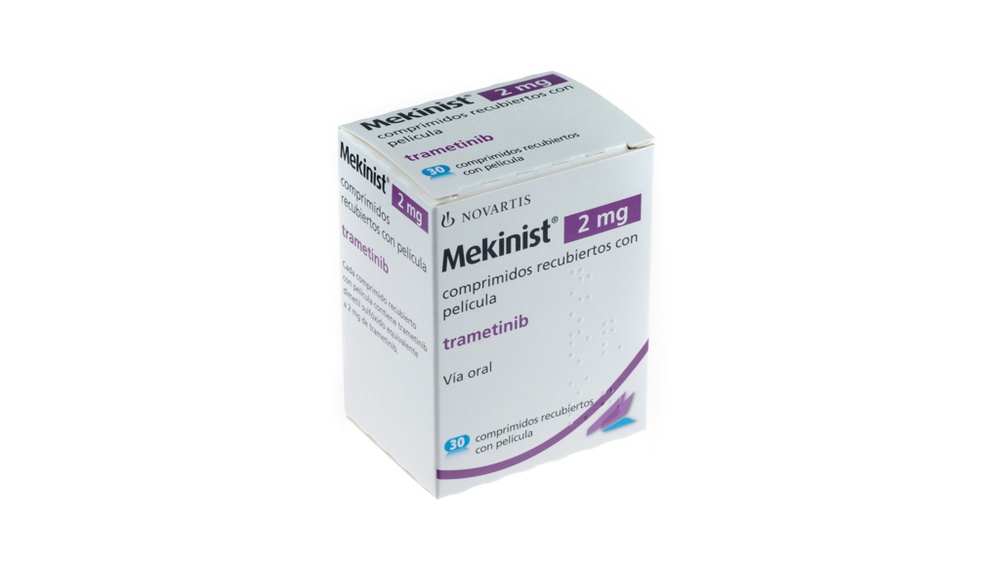
Mekinist 2 mg: The film-coated tablets are pink, round, biconvex, marked with the company logo on one side and 'LL' on the opposite side.
The film-coated tablets are supplied in white opaque plastic bottles with plastic screw caps. A bottle contains 7 or 30 tablets.
The bottles include a silica gel desiccant in a small cylindrical container. The desiccant should be kept inside the bottle and should not be ingested.
Marketing Authorization Holder
Novartis Europharm Limited
Vista Building
Elm Park, Merrion Road
Dublin 4
Ireland
Manufacturer
Lek Pharmaceuticals d.d.
Verovskova ulica 57
1526, Ljubljana
Slovenia
Novartis Pharmaceutical Manufacturing LLC
Verovskova ulica 57
1000, Ljubljana
Slovenia
Novartis Pharma GmbH
Roonstraße 25
D-90429 Nuremberg
Germany
Glaxo Wellcome, S.A.
Avda. Extremadura, 3
09400, Aranda de Duero
Burgos
Spain
Novartis Pharma GmbH
Sophie-Germain-Strasse 10
90443 Nürnberg
Germany
You can request more information about this medication by contacting the local representative of the marketing authorization holder:
Belgium Novartis Pharma N.V. Tel: +32 2 246 16 11 | Lithuania SIA Novartis Baltics Lietuvos filialas Tel: +370 5 269 16 50 |
Novartis Bulgaria EOOD. Tel: +359 2 489 98 28 | Luxembourg Novartis Pharma N.V. Tel: +32 2 246 16 11 |
Czech Republic Novartis s.r.o. Tel: +420 225 775 111 | Hungary Novartis Hungária Kft. Tel: +36 1 457 65 00 |
Denmark Novartis Healthcare A/S Tel: +45 39 16 84 00 | Malta Novartis Pharma Services Inc. Tel: +356 2122 2872 |
Germany Novartis Pharma GmbH Tel: +49 911 273 0 | Netherlands Novartis Pharma B.V. Tel: +31 88 04 52 555 |
Estonia SIA Novartis Baltics Eesti filiaal Tel: +372 66 30 810 | Norway Novartis Norge AS Tel: +47 23 05 20 00 |
Greece Novartis (Hellas) A.E.B.E. Tel: +30 210 281 17 12 | Austria Novartis Pharma GmbH Tel: +43 1 86 6570 |
Spain Novartis Farmacéutica, S.A. Tel: +34 93 306 42 00 | Poland Novartis Poland Sp. z o.o. Tel: +48 22 375 4888 |
France Novartis Pharma S.A.S. Tel: +33 1 55 47 66 00 | Portugal Novartis Farma - Produtos Farmacêuticos, S.A. Tel: +351 21 000 8600 |
Croatia Novartis Hrvatska d.o.o. Tel: +385 1 6274 220 | Romania Novartis Pharma Services Romania SRL Tel: +40 21 31299 01 |
Ireland Novartis Ireland Limited Tel: +353 1 260 12 55 | Slovenia Novartis Pharma Services Inc. Tel: +386 1 300 75 50 |
Iceland Vistor hf. Tel: +354 535 7000 | Slovakia Novartis Slovakia s.r.o. Tel: +421 2 5542 5439 |
Italy Novartis Farma S.p.A. Tel: +39 02 96 54 1 | Finland Novartis Finland Oy Tel: +358 (0)10 6133 200 |
Cyprus Novartis Pharma Services Inc. Tel: +357 22 690 690 | Sweden Novartis Sverige AB Tel: +46 8 732 32 00 |
Latvia SIA Novartis Baltics Tel: +371 67 887 070 |
Date of Last Revision of this Leaflet:
Other Sources of Information
Detailed information on this medication is available on the European Medicines Agency website: https://www.ema.europa.eu.
The European Medicines Agency website provides this leaflet in all languages of the European Union/European Economic Area.
- Country of registration
- Active substance
- Prescription requiredYes
- Manufacturer
- This information is for reference only and does not constitute medical advice. Always consult a doctor before taking any medication. Oladoctor is not responsible for medical decisions based on this content.
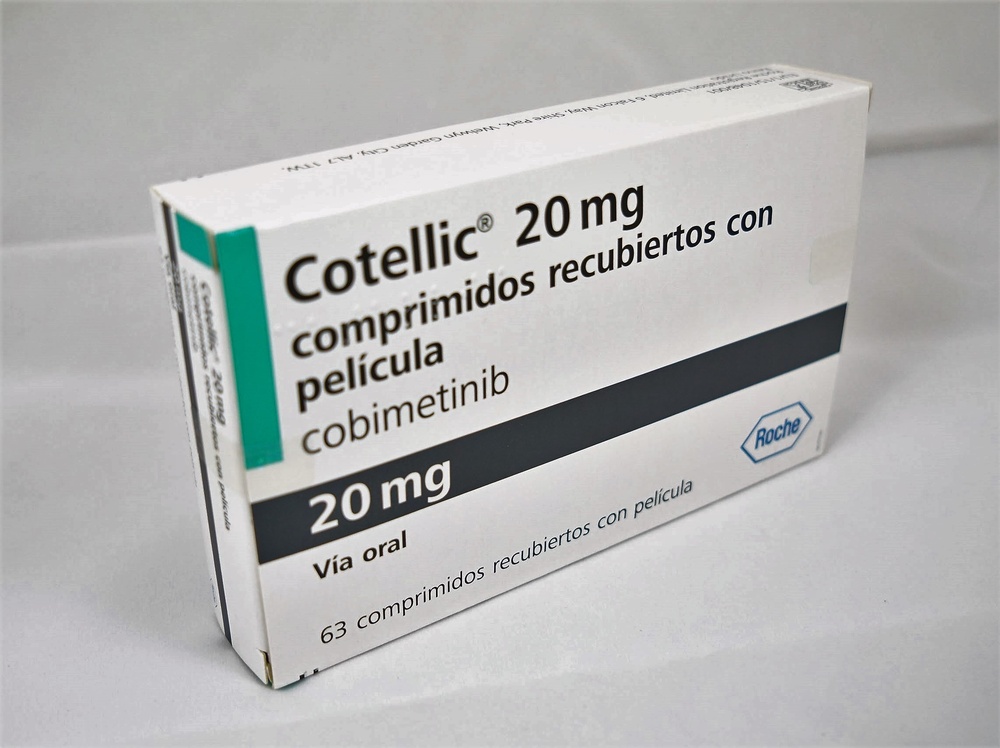
- Alternatives to MEKINIST 0.5 mg FILM-COATED TABLETSDosage form: TABLET, 2 mgActive substance: trametinibManufacturer: Novartis Europharm LimitedPrescription requiredDosage form: ORAL SOLUTION/SUSPENSION, 4.7 mgActive substance: trametinibManufacturer: Novartis Europharm LimitedPrescription requiredDosage form: TABLET, 20 mgActive substance: cobimetinibManufacturer: Roche Registration GmbhPrescription required
Online doctors for MEKINIST 0.5 mg FILM-COATED TABLETS
Discuss questions about MEKINIST 0.5 mg FILM-COATED TABLETS, including use, safety considerations and prescription review, subject to medical assessment and local regulations.


Frequently Asked Questions
