


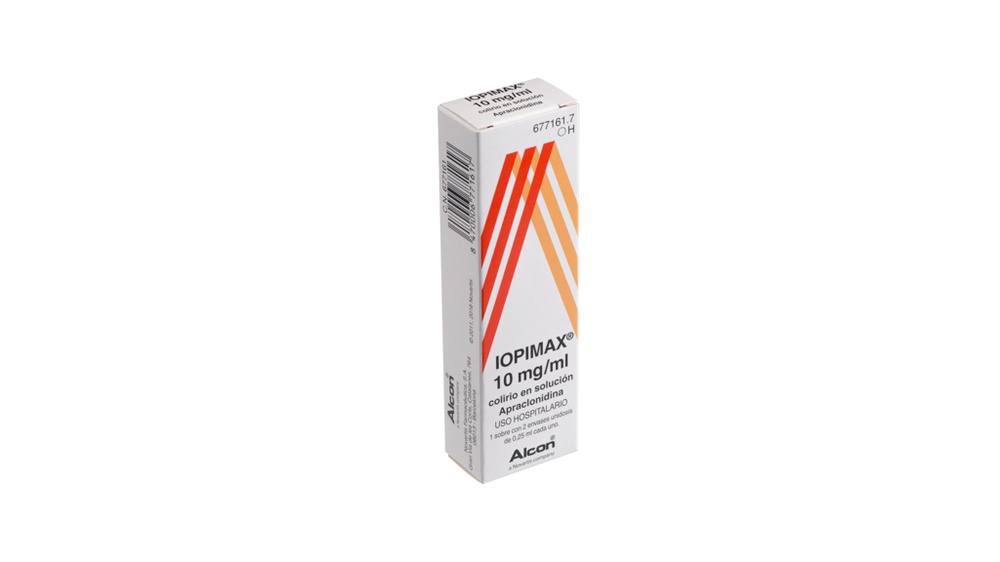
IOPIMAX 10 mg/ml EYE DROPS SOLUTION



How to use IOPIMAX 10 mg/ml EYE DROPS SOLUTION
Translated with AI
This page provides general information and does not replace a doctor’s consultation. Always consult a doctor before taking any medication. Seek urgent medical care if symptoms are severe.
Show originalContents of the leaflet
Introduction
PACKAGE LEAFLET: INFORMATION FOR THE USER
IOPIMAX 10 mg/ml eye drops, solution
Apraclonidine hydrochloride
Read this leaflet carefully before you start using this medicine because it contains important information for you.
- Keep this leaflet, you may need to read it again.
- If you have any further questions, ask your doctor or pharmacist.
- If you experience any side effects, talk to your doctor or pharmacist. This includes any possible side effects not listed in this leaflet. See section 4.
Contents of the pack
- What IOPIMAX is and what it is used for
- What you need to know before you are given IOPIMAX
- How IOPIMAX is given
- Possible side effects
- Storing IOPIMAX
- Contents of the pack and other information
Your doctor will give you IOPIMAX eye drops. This leaflet is intended to provide you with information about the medicine.
1. What IOPIMAX is and what it is used for
IOPIMAX eye drops contain apraclonidine, which is used to control or prevent increased pressure inside the eye after laser surgery

2. What you need to know before you are given IOPIMAX
This medicine may not be suitable for you. It is important that you review all the following points, as your doctor may decide to prescribe you a different medicine if any of them apply to you:
IOPIMAX should not be given
- to children (this medicine is not indicated for children under 18 years of age)
- if you are allergicto clonidine, apraclonidine, or any of the other ingredients of this medicine (listed in section 6)
- if you have a historyof any uncontrolled, unstable, or severe heart disease (including chest pain, angina, heart attacks, or heart failure)
- if you are taking monoamine oxidase inhibitors (used to treat depression)
If you think any of the above points apply to you or you have doubts, consult your doctor before you are given this medicine.
Be cautious with IOPIMAX. Consult your doctor if:
- You have or are taking medication for:
- heart disease (including chest pain, angina, heart attacks, or heart failure)
- high blood pressure
- circulatory problems (including stroke, Raynaud's disease, or Buerger's disease)
- vasovagal attacks (fainting episodes)
- reduced liver or kidney function
If any of these points apply to you, you may be at greater risk of effects on your heart or circulatory system, and your blood pressure and heart rate will be closely monitored.
? You suffer from depression, as clonidine and its derivatives can cause depression
? You suffer from diabetesor have low blood sugar levels, as this medicine can mask the signs and symptoms of a sudden drop in blood sugar, such as rapid heartbeat or tremors
? You regularly drink alcohol, as IOPIMAX can increase its effects
? You have had an exaggerated response to other medicinesthat lower eye pressure, in which case your eye pressure will be closely monitored.
If any of the above points apply to you or you have doubts, consult your doctor before you are given this medicine.
Other medicines and IOPIMAX
IOPIMAX should not be given
? If you are takingmonoamine oxidase inhibitors (used to treat depression), e.g., phenelzine, isocarboxazid, tranylcypromine, moclobemide
? If you are takingtricyclic antidepressants (frequently used to treat depression), e.g., amitriptyline, imipramine, doxepin, mianserin, trazodone, dosulepin, lofepramine
? If you are takingmedicines containing sympathomimeticsused to treat various diseases, including asthma (e.g., salbutamol, terbutaline, bambuterol), Parkinson's disease, and heart disease, and which may also be present in cough and cold medicines.
Be cautious with IOPIMAX
? If you are takingeye drops for glaucomathat contain sympathomimetics, e.g., phenylephrine, brimonidine, dipivefrine, as your blood pressure may increase
? If you are takingsleeping pills, pain relievers, or sedatives, as IOPIMAX can increase their effects
? If you are taking or have takenneuroleptics(very potent tranquilizers used to treat some mental illnesses, e.g., chlorpromazine, flupentixol, haloperidol), as your blood pressure may drop too low.
In case of potential effects on your blood pressure, it will be closely monitored, along with your heart rate.
Before you are given IOPIMAX, inform your doctor if you are taking, have recently taken, or might take any other medicine.
Using IOPIMAX with food and drinks
IOPIMAX should be used with caution if you have recently drunk alcohol or do so regularly.
Pregnancy, breastfeeding, and fertility
IOPIMAX should not be used if you are pregnant, think you may be pregnant, or are breastfeeding.
Your doctor should have informed you about this. If not, consult your doctor before using any medicine.
Driving and using machines
This type of medicine can cause drowsiness. If this happens, do not drive or operate tools or machines.
3. How IOPIMAX is given
Adults and elderly patients
IOPIMAX comes in a specially designed single-use container. Your doctor will give you one drop one hour before laser surgery and another drop immediately after surgery.
After you are given IOPIMAX, you will be instructed to press the edge of your eye, next to your nose, with your finger. This helps prevent IOPIMAX from entering the rest of your body.
If you are using other eye medicines, wait at least 5 minutes between giving this eye drop and the other eye medicines. Eye ointments should be given last.
Use in children
This medicine should not be used in children.

4. Possible side effects
Like all medicines, this medicine can cause side effects, although not everybody gets them.
When used before and after laser surgery,you may experience some or all of the following side effects in your eyes:
Common(may affect up to 1 in 10 people treated)
- redness in one or both eyes
- increased pupil size
- inability to close the eye
- eye disorder (white appearance of the eye surface)
- unusual or uncomfortable sensation in the eye
- dry eye sensation
Uncommon(may affect up to 1 in 100 people treated)
- bleeding on the eye surface (conjunctival hemorrhage)
- eye inflammation (which may include pain, burning, redness, or swelling of the eye)
eye
- retraction or lifting of the upper eyelid
- extremely low pressure inside the eye (your doctor will notice this during eye checks)
eye
- blurred or reduced vision
- bleeding on the eye surface
- blurred vision
- eye allergy
- eye itching
- eye irritation
You may also experience side effects in other parts of your body:
Common(may affect up to 1 in 10 people treated)
- dryness in the nose
- unpleasant taste
Uncommon(may affect up to 1 in 100 people treated)
- irregular heartbeats
- difficulty sleeping
- disturbed dreams
- fainting episodes
- burning or tingling sensations
- decreased libido
- feeling irritable
- slow or rapid heartbeats
- feeling of fainting or dizziness when sitting or standing up
- diarrhea
- nausea or vomiting
- stomach pain or discomfort
- headaches
- fatigue
Rare(may affect up to 1 in 1,000 people treated)
- reduced sensitivity or numbness (tingling sensation)
- difficulty breathing
- runny nose or excessive saliva
- dryness or burning sensation in the nose
- dry mouth
- increased sweating
- skin itching
- pain in arms or legs
- chest tightness or pain
- feeling hot or cold
Frequency not known(cannot be estimated from the available data)
- low blood pressure
- high blood pressure
If you experience an allergic reaction, unusual dizziness, or delirium, or have irregular heartbeats, inform your doctor immediately.
Reporting side effects
If you experience any side effects, talk to your doctor or pharmacist. This includes any possible side effects not listed in this leaflet. You can also report side effects directly through the Spanish Pharmacovigilance System for Human Use Medicines: https://www.notificaRAM.es. By reporting side effects, you can help provide more information on the safety of this medicine.
5. Storing IOPIMAX
- Do not use IOPIMAX after the expiry date stated on the outer packaging and on the container after "EXP". The expiry date is the last day of the month shown.
- Do not store above 25°C. Store in the outer packaging to protect from light.
- Keep out of the reach and sight of children.
- Use immediately after opening.
6. Contents of the pack and other information
Composition of IOPIMAX
- The active ingredient is apraclonidine 10 mg/ml (as hydrochloride).
- The other ingredients are sodium acetate, sodium chloride, and purified water. Small amounts of hydrochloric acid or sodium hydroxide may be added to make the drops more suitable for your eyes.
Appearance and packaging of the product
IOPIMAX 10 mg/ml eye drops, solution is pale yellow and comes in a 0.25 ml container.
Marketing authorization holder:
Essential Pharma Limited,
Vision Exchange Building
Triq it-Territorjals, Zone 1,
Central Business District,
Birkirkara, CBD 1070,
Malta
Manufacturer:
Alcon Couvreur N.V.
Rijksweg, 14
B-2870 Puurs, Belgium
Date of last revision of this leaflet:April 2018
- Country of registration
- Active substance
- Prescription requiredYes
- Manufacturer
- This information is for reference only and does not constitute medical advice. Always consult a doctor before taking any medication. Oladoctor is not responsible for medical decisions based on this content.
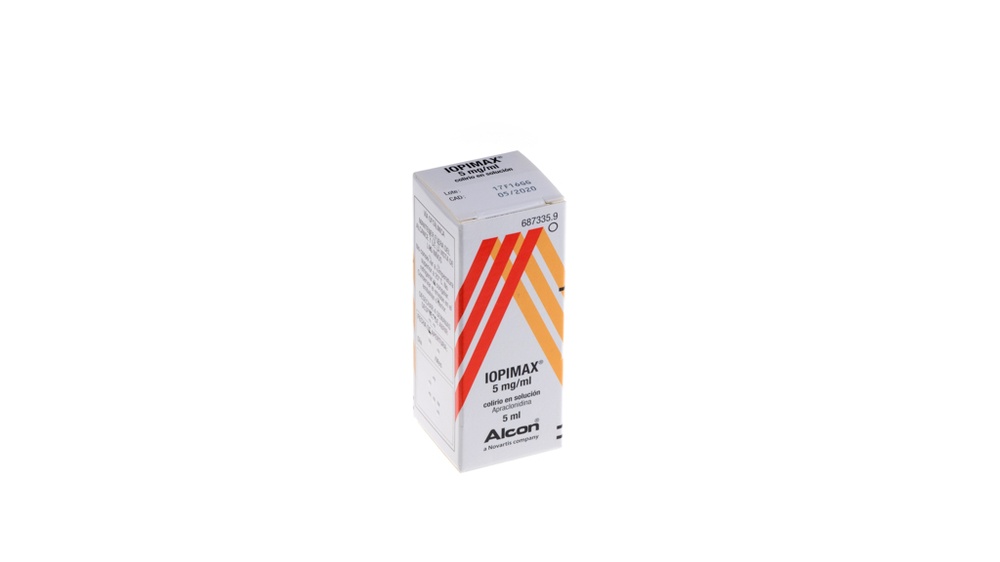
- Alternatives to IOPIMAX 10 mg/ml EYE DROPS SOLUTIONDosage form: EYEDROP, 5mg/mL of ApraclonidineActive substance: apraclonidineManufacturer: Essential Pharma LimitedPrescription requiredDosage form: EYE DROP, 2 mg/mlActive substance: brimonidineManufacturer: Tiedra Farmaceutica S.L.Prescription requiredDosage form: EYEDROP, 2 mg/ml of brimonidine tartrateActive substance: brimonidineManufacturer: Abbvie Spain, S.L.U.Prescription required

Online doctors for IOPIMAX 10 mg/ml EYE DROPS SOLUTION
Discuss questions about IOPIMAX 10 mg/ml EYE DROPS SOLUTION, including use, safety considerations and prescription review, subject to medical assessment and local regulations.





Frequently Asked Questions
