



ALPHAGAN 2 mg /Ml Eye Drops Solution

Prescription review online
A doctor will review your case and decide whether a prescription is medically appropriate.

Talk to a doctor about this medicine
Discuss your symptoms and possible next steps in a quick online consultation.



How to use ALPHAGAN 2 mg/ml EYE DROPS SOLUTION
Contents of the leaflet
- Introduction
- What is Alphagan and what is it used for
- What you need to know before you use Alphagan
- How to use Alphagan
- Possible side effects
- Storing Alphagan
- Contents of the pack and other information
Introduction
Package Leaflet: Information for the User
Alphagan 2 mg/ml
eye drops, solution.
brimonidine tartrate
Read all of this leaflet carefully before you start using this medicine because it contains important information for you.
- Keep this leaflet. You may need to read it again.
- If you have any further questions, ask your doctor or pharmacist.
- This medicine has been prescribed for you only. Do not pass it on to others. It may harm them, even if their signs of illness are the same as yours.
- If you get any side effects, talk to your doctor or pharmacist. This includes any possible side effects not listed in this leaflet. See section 4.
Contents of the pack and other information
- What is Alphagan and what is it used for
- What you need to know before you use Alphagan
- How to use Alphagan
- Possible side effects
- Storing Alphagan
- Contents of the pack and other information
1. What is Alphagan and what is it used for
Alphagan is used to lower high pressure in the eye. The active substance in Alphagan, brimonidine tartrate, belongs to a group of medicines called alpha-2 adrenergic agonists and works by reducing the amount of fluid produced in the eye.
It can be used on its own, when beta-blocker eye drops are not suitable, or with other eye drops, when Alphagan alone is not enough to lower the pressure in the eye in the treatment of open-angle glaucoma or ocular hypertension.

Not sure if this medicine is right for you?
Discuss your symptoms and treatment with a doctor online.
2. What you need to know before you use Alphagan
Do not use Alphagan
- If you are allergic (hypersensitive) to brimonidine tartrate or any of the other ingredients of this medicine (listed in section 6)
- If you are taking monoamine oxidase inhibitors (MAOIs) or certain other antidepressants. You should tell your doctor if you are taking any antidepressant medication.
- If you are breast-feeding.
- In children/babies (up to 2 years of age).
Warnings and precautions
Tell your doctor before using Alphagan:
- If you have or have had depression, reduced mental ability, reduced blood flow to the brain, heart problems, poor circulation to your hands or feet, or a blood pressure disorder.
- If you have or have had kidney or liver problems.
Children and adolescents
Alphagan is not recommended for use in children between 2 and 12 years old.
Alphagan should not be used in adolescents from 12 to 17 years old, as no clinical studies have been conducted in this age group.
Other medicines and Alphagan
Tell your doctor or pharmacist if you are using or have recently used any other medicines, including those obtained without a prescription.
Tell your doctor if you are using any of the following medicines:
- Painkillers, sedatives, opioids, barbiturates, or if you are regularly drinking alcohol.
- Anaesthetics.
- Medicines for heart conditions or to lower blood pressure.
- Medicines that can affect metabolism, such as chlorpromazine, methylphenidate, and reserpine.
- Medicines that act on the same receptor as Alphagan, such as isoprenaline and prazosin.
- MAOIs and other antidepressants.
- Medicines for any condition, including those not related to your eye condition.
- Or if the dose of any of your current medicines changes.
These may affect your treatment with Alphagan.
Pregnancy and breast-feeding
If you are pregnant or breast-feeding, think you may be pregnant or are planning to have a baby, ask your doctor or pharmacist for advice before using this medicine. Do not use Alphagan if you are pregnant unless your doctor considers it necessary.
Alphagan should not be used during breast-feeding.
Driving and using machines
- Alphagan may cause blurred or abnormal vision. This effect may be increased in the dark or with reduced lighting.
- Alphagan may also cause drowsiness or fatigue in some patients.
- If you experience any of these symptoms, do not drive or use machines until the symptoms have resolved.
Alphagan contains benzalkonium chloride
This medicine contains 0.25 mg of benzalkonium chloride in every 5 ml of solution, equivalent to 0.05 mg/ml.
Benzalkonium chloride may be absorbed by soft contact lenses and change their colour. Remove contact lenses before using this medicine and wait 15 minutes before putting them back.
Benzalkonium chloride may cause eye irritation, especially if you have dry eyes or other corneal diseases (the transparent layer on the front of the eye). Talk to your doctor if you feel any unusual sensation, itching, or pain in the eye after using this medicine.
3. How to use Alphagan
Use Alphagan exactly as your doctor has told you. Ask your doctor or pharmacist if you are not sure.
Adults
The recommended dose is one drop twice a day in the affected eye(s), approximately 12 hours apart. Do not change the dose or stop using Alphagan without talking to your doctor.
Children under 12 years
Alphagan should not be used in children under 2 years of age.
Alphagan is not recommended for use in children between 2 and 12 years old.
Instructions for use
Alphagan comes as eye drops. Always wash your hands before applying the eye drops. Your prescription will tell you how many drops to use for each dose. If you use Alphagan with another eye drop, wait 5-15 minutes before applying the second eye drop.
Apply your eye drops as follows:
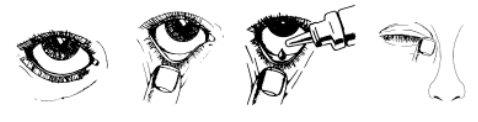
- Tilt your head back and look up at the ceiling.
- Gently pull down the lower eyelid to make a small pocket.
- Squeeze the bottle gently to release one drop into your eye.
- Keep the affected eye closed and press your finger against the corner of your closed eye (where the eye meets the nose) for 1 minute.
If the drop falls outside the eye, try again.
To avoid contamination, do not let the tip of the bottle touch the eye or any other surface.
Put the cap back on and close the bottle immediately after use.
If you use more Alphagan than you should
Adults
In adults who applied more drops than prescribed, the adverse effects reported were those already known with Alphagan.
Adults who accidentally ingested Alphagan experienced a decrease in blood pressure, which in some patients was followed by an increase in blood pressure.
Children
Serious adverse effects have been reported in children who accidentally ingested Alphagan. The signs included drowsiness, hypotonia, low body temperature, pallor, and breathing difficulties. If this happens, contact your doctor immediately.
Adults and children
If you have accidentally ingested Alphagan or used more Alphagan than you should, contact your doctor immediately.
If you forget to use Alphagan
If you forget to apply a dose, use it as soon as you remember. However, if it is almost time for your next dose, you should skip the missed dose and continue with your regular schedule. Do not use a double dose to make up for missed doses.
If you stop using Alphagan
To be effective, Alphagan must be used every day. Do not stop using Alphagan without talking to your doctor.
If you have any questions about using this product, ask your doctor or pharmacist.

Started taking the medicine and have questions?
Discuss your symptoms and treatment with a doctor online.
4. Possible side effects
Like all medicines, this medicine can cause side effects, although not everybody gets them.
The following side effects may occur with Alphagan.
Affecting the eye
Very common (affects more than 1 in 10 people):
- Eye irritation (redness of the eye, burning, stinging, feeling of something in the eye or itching) Follicles or white spots on the transparent layer covering the surface of the eye)
- Blurred vision
- An allergic reaction in the eyes
Common (affects up to 1 in 10 people):
- Local irritation (inflammation and swelling of the eyelid, sticky eyes, swelling of the eyelid or the transparent layer covering the surface of the eye, pain and tearing)
- Sensitivity to light
- Erosion on the surface of the eye and discoloration
- Dry eye
- Whitening of the transparent layer covering the surface of the eye.
- Abnormal vision
- Inflammation of the transparent layer covering the surface of the eye.
Very rare (affects up to 1 in 10,000 people):
- Inflammation in the eye
- Reduced pupil size.
Frequency not known (frequency cannot be estimated from the available data):
- Itching of the eyelids
Affecting the body:
Very common (affects more than 1 in 10 people):
- Headache,
- Dry mouth
- Fatigue/drowsiness.
Common (affects up to 1 in 10 people):
- Dizziness
- Cold symptoms
- Symptoms affecting the stomach and digestion
- Altered taste
- General weakness.
Uncommon (affects up to 1 in 100 people):
- Depression
- Palpitations or changes in heart rate
- Dry nose
- General allergic reactions.
Rare (affects up to 1 in 1,000 people):
- Respiratory failure.
Very rare (affects up to 1 in 10,000 people):
- Insomnia
- Fainting
- High blood pressure.
- Low blood pressure.
Frequency not known (frequency cannot be estimated from the available data):
- Skin reactions including redness, inflammation of the face, itching, rash, and dilation of blood vessels.
Reporting of side effects
If you experience any side effects, talk to your doctor or pharmacist. This includes any possible side effects not listed in this leaflet. You can also report side effects directly to the Spanish Medicines and Healthcare Products Agency (AEMPS) at www.notificaRAM.es. By reporting side effects, you can help provide more information on the safety of this medicine.
5. Storing Alphagan
- Keep this medicine out of the sight and reach of children.
- Do not store above 25°C.
- Do not use this medicine if you notice that the security seal of the bottle is broken before the first use.
- Do not use Alphagan after the expiry date which is stated on the carton after EXP. The expiry date is the last day of the month stated.
- Discard the bottle 28 days after opening, even if there is solution left.
Medicines should not be disposed of via wastewater or household waste. Ask your pharmacist how to dispose of medicines no longer required. This will help protect the environment.
6. Contents of the pack and other information
What is in Alphagan
- The active substance is brimonidine tartrate. One ml of solution contains 2.0 mg of brimonidine tartrate, equivalent to 1.3 mg of brimonidine.
- The other ingredients are benzalkonium chloride as a preservative, poly(vinyl alcohol), sodium chloride, sodium citrate, citric acid monohydrate, purified water, and sodium hydroxide or hydrochloric acid for pH adjustment.
What Alphagan looks like and contents of the pack
Alphagan is a clear, greenish-yellow to light greenish-yellow eye drop solution in a plastic bottle.
Each bottle contains 2.5 ml, 5 ml, or 10 ml of the medicine.
Alphagan is available in packs of 1, 3, or 6 bottles.
Not all packs may be marketed.
Marketing authorisation holder and manufacturer
Marketing authorisation holder:
AbbVie Spain, S.L.U.
Avenida de Burgos 91
28050, Madrid
Spain
Manufacturer:
Allergan Pharmaceuticals Ireland,
Westport, Co. Mayo,
Ireland
This medicine is authorised in the Member States of the European Economic Area under the following names:
Austria | Alphagan 0,2% Augentropfen |
Germany | Alphagan 0,2 % m/V (2 mg/ml) Augentropfen |
Belgium, Finland, Greece, Iceland, Luxembourg, Norway, Portugal | Alphagan |
Denmark, Ireland, Italy, Netherlands, Sweden, United Kingdom | Alphagan 0.2% |
France | ALPHAGAN 0,2% (2mg/ml), collyre en solution |
Spain | Alphagan 2 mg/ml eye drops, solution |
This leaflet was approved in 09/2020
Detailed and up-to-date information on this medicine is available on the website of the Spanish Medicines and Healthcare Products Agency (AEMPS) http://www.aemps.gob.es
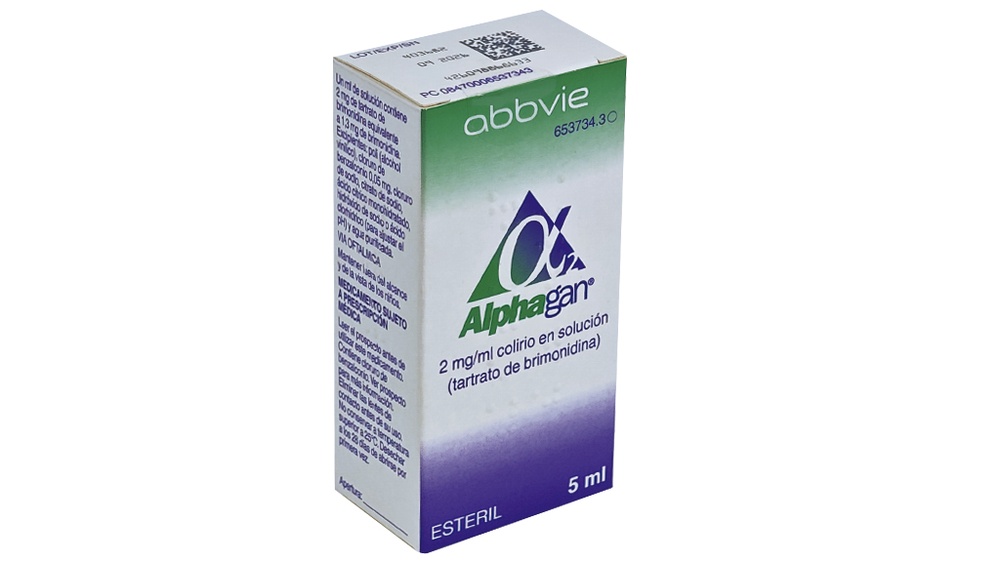
- Country of registration
- Dosage formEYEDROP, 2 mg/ml of brimonidine tartrate
- ATC codeS01EA05
- Average pharmacy price7.31 EUR
- Active substance
- Prescription requiredYes
- Manufacturer
- CompositionCITRATO DE SODIO (E-331) (4,5 mg mg), BENZALCONIO, CLORURO DE (0,05 mg mg), CLORURO DE SODIO (7 mg mg), HIDROXIDO DE SODIO (E 524) (6,3-6,5 mg mg)
- This information is for reference only and does not constitute medical advice. Always consult a doctor before taking any medication. Oladoctor is not responsible for medical decisions based on this content.
- Alternatives to ALPHAGAN 2 mg/ml EYE DROPS SOLUTIONDosage form: EYE DROP, 2 mg/mlActive substance: brimonidineManufacturer: Tiedra Farmaceutica S.L.Prescription requiredDosage form: EYEDROP, 2 MG/MLActive substance: brimonidineManufacturer: Viatris LimitedPrescription requiredDosage form: EYEDROP, 2 MG/MLActive substance: brimonidineManufacturer: Industria Quimica Y Farmaceutica Vir S.A.Prescription required
Online doctors for ALPHAGAN 2 mg/ml EYE DROPS SOLUTION
Discuss questions about ALPHAGAN 2 mg/ml EYE DROPS SOLUTION, including use, safety considerations and prescription review, subject to medical assessment and local regulations.









Get ALPHAGAN 2 mg/ml EYE DROPS SOLUTION Prescription Online
Fill in a 2-min form
Tell us your symptoms, history, and what medicine you're requesting.
Pick a doctor or let us assign
Choose a specialist or we'll match you with the next available doctor.
Doctor reviews your case
Usually within 30 minutes. They may ask follow-up questions via chat.
Collect from any pharmacy
Electronic prescription sent to your email — valid across Spain.
Frequently Asked Questions
ALPHAGAN 2 mg/ml EYE DROPS SOLUTION requires a prescription in Spain. You can check with a doctor online whether this medicine may be appropriate for your situation.
The active ingredient in ALPHAGAN 2 mg/ml EYE DROPS SOLUTION is brimonidine. This information helps identify medicines with the same composition but different brand names.
The average pharmacy price for ALPHAGAN 2 mg/ml EYE DROPS SOLUTION is around 7.31 EUR. Prices may vary depending on the manufacturer and dosage form.
ALPHAGAN 2 mg/ml EYE DROPS SOLUTION is manufactured by Abbvie Spain, S.L.U.. Pharmacy brands and packaging may differ depending on the distributor.
Doctors such as Family doctors, Psychiatrists, Dermatologists, Cardiologists, Endocrinologists, Gastroenterologists, Pulmonologists, Nephrologists, Rheumatologists, Hematologists, Infectious disease physicians, Allergists, Geriatricians, Paediatricians, Oncologists may assess whether ALPHAGAN 2 mg/ml EYE DROPS SOLUTION is appropriate, depending on your situation and local regulations. You can book an online consultation to discuss your symptoms and possible next steps.
Spain has a well-developed healthcare infrastructure across major cities such as Madrid, Barcelona, Valencia, and Seville. Pharmacies are widely available and operate under strict regulations, ensuring access to prescribed medications.
You can buy ALPHAGAN 2 mg/ml EYE DROPS SOLUTION in Madrid, Barcelona, Seville, or Valencia at any local pharmacy with a valid prescription.
To obtain a prescription, you can use Oladoctor:
Other medicines with the same active substance (brimonidine) include ABRADEL 2 mg/ml EYE DROPS SOLUTION, BRIMONIDINE VIATRIS 2 mg/ml EYE DROPS SOLUTION, BRIMONIDINE VIR 2 mg/ml EYE DROPS SOLUTION. These may have different brand names or formulations but contain the same therapeutic ingredient. Always consult a doctor before switching or starting a new medicine.
