


Solsint 100 Micrograms Oral Solution

Prescription review online
A doctor will review your case and decide whether a prescription is medically appropriate.

Talk to a doctor about this medicine
Discuss your symptoms and possible next steps in a quick online consultation.



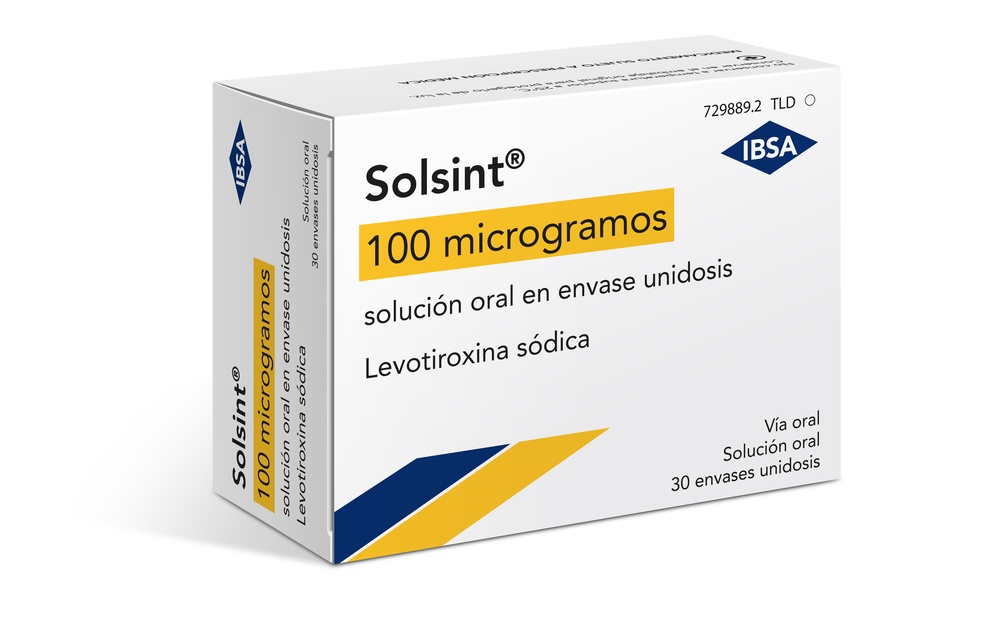
How to use SOLSINT 100 micrograms oral solution in single-dose containers
Contents of the leaflet
- Introduction
- What Solsint is and what it is used for
- What you need to know before you take Solsint
- How to take Solsint
- Possible side effects
- Storage of Solsint
- Container contents and additional information
Introduction
PACKAGE LEAFLET: Information for the user
Solsint 13 micrograms oral solution in a single-dose container
Solsint 25 micrograms oral solution in a single-dose container
Solsint 50 micrograms oral solution in a single-dose container
Solsint 75 micrograms oral solution in a single-dose container
Solsint 88 micrograms oral solution in a single-dose container
Solsint 100 micrograms oral solution in a single-dose container
Solsint 112 micrograms oral solution in a single-dose container
Solsint 125 micrograms oral solution in a single-dose container
Solsint 137 micrograms oral solution in a single-dose container
Solsint 150 micrograms oral solution in a single-dose container
Solsint 175 micrograms oral solution in a single-dose container
Solsint 200 micrograms oral solution in a single-dose container
Sodium levothyroxine
Read all of this leaflet carefully before you start taking this medicine because it contains important information for you.
- Keep this leaflet, you may need to read it again.
- If you have any further questions, ask your doctor or pharmacist.
- This medicine has been prescribed for you only. Do not pass it on to others. It may harm them, even if their symptoms are the same as yours.
- If you experience any side effects, talk to your doctor or pharmacist. This includes any possible side effects not listed in this leaflet. See section 4.
Contents of the pack
- What Solsint is and what it is used for
- What you need to know before you take Solsint
- How to take Solsint
- Possible side effects
- Storing Solsint
- Contents of the pack and other information
1. What Solsint is and what it is used for
The active substance of Solsint is the synthetic thyroid hormone levothyroxine sodium (T4), whose action and structure are identical to the naturally produced thyroid hormone.
Solsint is used as:
- treatment for thyroid hormone deficiency in cases of underactive thyroid gland (hypothyroidism);
- prevention of recurrence of goiter after surgery in patients with normal thyroid function;
- treatment of benign goiter in patients with normal thyroid function;
- treatment of malignant thyroid tumors, especially after surgery to suppress the growth of a new tumor, and as a supplement for the lack of thyroid hormones;
- concomitant therapy during treatment for an excess of thyroid hormones (hyperthyroidism);
- diagnostic use for the thyroid suppression test.

Not sure if this medicine is right for you?
Discuss your symptoms and treatment with a doctor online.
2. What you need to know before you take Solsint
Do not take Solsint
- if you are allergic to levothyroxine sodium or any of the other ingredients of this medicine (listed in section 6);
- if you have recently suffered a heart attack, acute myocardial inflammation (myocarditis) or acute inflammation of all the membranes of the heart wall (pancarditis);
- if you are pregnant and taking medication for the treatment of hyperthyroidism (antithyroid drugs) at the same time (see section "Pregnancy and breastfeeding");
- if you have untreated adrenal insufficiency or untreated functional disorders of the pituitary gland (pituitary insufficiency) and/or overactive thyroid gland.
Be cautious with Solsint
Consult your doctor or pharmacist before starting to take this medicine.
Be especially cautious with this medicine if you have any of the following heart conditions:
- high blood pressure;
- arrhythmias or tachycardias;
- fat accumulation in the arteries (arteriosclerosis);
- chest pain with a feeling of oppression (angina pectoris);
- inadequate blood flow in the coronary arteries (coronary insufficiency).
These conditions must be treatedwith medication before takingthis medicineand, while taking this medicine, you should undergo more frequent checks of your thyroid hormone levels.
Consult your doctor if you are unsure whether you have any of these conditions or if you have any of them but are not yet receiving treatment.
If you are going to have laboratory tests to check your thyroid hormone levels, you should inform your doctor or the laboratory staff that you are taking or have recently taken biotin (also known as vitamin H, vitamin B7 or vitamin B8). Biotin can affect the results of laboratory tests. Depending on the test, the results may be falsely elevated or falsely reduced due to biotin. Your doctor may instruct you to stop taking biotin before performing the tests. You should also be aware that other products you may be taking, such as multivitamins or supplements for hair, skin, and nails, may also contain biotin. This could affect the results of laboratory tests. Inform your doctor or the laboratory staff if you are taking these products (note the information in the section Other medicines and Solsint).
Before starting treatment
- Your doctor will perform tests to determine if you have a disorder in the functioning of the adrenal, pituitary, or thyroid gland due to uncontrolled overproduction of thyroid hormones (thyroid autonomy), as you will need to receive medical treatment before taking this medicine.
- Inform your doctor if you are currently experiencing symptoms of menopause or are postmenopausal. Due to the risk of osteoporosis, thyroid function should be monitored more frequently.
- Inform your doctor if you have symptoms of psychotic disorders(you may need closer monitoring and dose adjustment).
- Inform your doctor before starting or stopping orlistat, or changing treatment with orlistat (a medication for treating obesity; you may need closer monitoring and dose adjustment).
- Certain heart conditionsmust be treated before taking this medicine. Read the information in the section "Be cautious with Solsint" carefully.
- If you have high blood sugar levels (diabetes)or if you are being treated with certain anticoagulant agents, note the information provided in the section "Other medicines and Solsint".
- A thyroid imbalance may occur if you need to switch from your current medication to one that contains levothyroxine. Consult your doctor if you have any doubts about changing treatment. It is necessary to perform thorough checks (clinical and biological) during the transition period. You should inform your doctor if you experience any side effects, as this may indicate that the dose needs to be increased or decreased.
- Do not take this medicine to lose weight.Taking thyroid hormones will not reduce your weight if you have a normal level of thyroid hormone. If you increase the dose of thyroid hormones without special medical supervision, serious side effects or even life-threatening conditions may occur, especially if taken with other medications intended for weight loss.
- Be cautious if you have epilepsy. Seizures may rarely occur in patients with a known history of epilepsy when starting treatment with levothyroxine.
Elderly people:
In elderly patients, doses should be carefully calculated and frequent medical checks should be performed.
Preterm infants
Blood pressure will be periodically monitored when starting treatment with levothyroxine in premature newborns with very low birth weight, as a rapid drop in blood pressure (known as circulatory collapse) may occur.
Using Solsint with other medicines
Taking other medicines while taking levothyroxine sodium may affect the functioning of this or the other medicine. Make sure your doctor knows what other medicines you are taking.
Do not take any other medicine while taking Solsint, unless you have consulted your doctor or pharmacist,including medicines obtained without a prescription.
Consult your doctorif you are taking one of the following medicines:
- Medicines to reduce blood sugar levels (antidiabetics):
This medicine may reducethe hypoglycemic effect of antidiabetic medicines. You may need additional checks of your blood sugar levels, especially at the start of treatment with this medicine, and if necessary, the dose of antidiabetic medicines will be adjusted during treatment with this medicine.
- Anticoagulant medicines (coumarin derivatives):
This medicine may increasethe effect of these medicines. You may need frequent monitoring of blood coagulation, especially at the start of treatment with this medicine, and if necessary, the dose of your coumarin medicine will be adjusted during treatment with this medicine.
- Propylthiouracil(a medicine used to treat hyperthyroidism).
- Glucocorticoids(medicines used to treat allergies and as anti-inflammatory agents).
- Betablockers(medicines to reduce blood pressure, also used to treat heart diseases).
- Sertraline(a medicine to treat depression).
- Chloroquine or proguanil(a medicine used to prevent or treat malaria).
- Medicines used to treat epilepsy, such as carbamazepine, phenytoin, phenobarbital, or primidone.
- Medicines containing estrogensused in hormone replacement therapy during and after menopause or to prevent pregnancy.
- Salicylates(medicines used to relieve pain and reduce fever).
- Dicumarol(a medicine used to prevent blood clotting).
- Furosemidein high doses of 250 mg or more (a diuretic medicine).
- Clofibrate(a medicine used to reduce blood fat levels).
- Amiodarone(a medicine used to treat heart rhythm disorders).
- Ritonavir, indinavir, lopinavir(medicines used to control HIV infection and chronic hepatitis C infection).
- Sevelamer(a medicine used in patients with dialysis or chronic kidney disease without dialysis).
- Tyrosine kinase inhibitors(medicines to treat cancer and inflammation).
- Orlistat(a medicine used for weight loss).
- Products containing hypericum(a plant-based medicine).
- Proton pump inhibitors: proton pump inhibitors (such as omeprazole, esomeprazole, pantoprazole, rabeprazole, and lansoprazole) are used to reduce the amount of acid produced by the stomach, which may reduce the intestinal absorption of levothyroxine and make it less effective. If you are taking levothyroxine at the same time as receiving a proton pump inhibitor, your doctor should monitor your thyroid function and may need to adjust the dose of Solsint.
- Biotin: if you are taking or have recently taken biotin, you should inform your doctor or the laboratory staff when they are going to perform laboratory tests to check your thyroid hormone levels. Biotin can affect the results of laboratory tests (see Be cautious with Solsint).
Make sure tofollow the recommended intervalsif you need to take one of the following medicines:
- Antacids(medicines to relieve stomach symptoms and acidity), sucralfate(used to treat peptic ulcers), and medicines containing aluminum, iron, or calcium: Take this medicine at least 2hours beforetaking these medicines, as they may reduce the effect of levothyroxine sodium.
- Medicines for bile acid binding and cholesterol treatment (such as cholestyramineand colestipol):
Take this medicine 4-5hoursbefore taking these medicines, as they may inhibit the absorption of levothyroxine sodium in the intestine.
What else you should know if you take Solsint with other medicines:
If you need to undergo an X-ray examinationor any other diagnostic testthat uses contrast media, inform your doctor that you are taking this medicine, as they may inject a substance that can affect thyroid function.
Solsint with food and drinks
Inform your doctor if you consume soy products, especially if you modify the proportion of soy products in your diet. Products containing soy may reduce the absorption of levothyroxine in the intestine, so it may be necessary to adjust your dose of this medicine.
Pregnancy and breastfeeding
Consult your doctor or pharmacist before taking any medicine.
Pregnancy
- Treatment withthis medicine is especially important during pregnancy and, therefore, should not be interrupted. It is essential for the proper development of the fetus. Consult your doctor, as the dose may need to be adjusted, as the need for levothyroxine may increase during pregnancy. Close monitoring of thyroid function is necessary.
- This medicine should not be used at the same time as other medicines for treating hyperthyroidism (antithyroid drugs) during pregnancy.During pregnancy, hyperthyroidism should be treated only with low-dose antithyroid drugs (see section "Do not take Solsint").
Breastfeeding
- This medicine can be used during breastfeeding.There is no information to suggest that the use of this medicine in a breastfeeding woman harms the baby with normal thyroid function.
Driving and using machines
There is no sufficient evidence to indicate that this medicine affects the ability to drive and use machines, as levothyroxine is identical to the naturally produced thyroid hormone.
This medicine contains less than 23 mg of sodium (1mmol) per 1 ml of oral solution; it is essentially "sodium-free".
3. How to take Solsint
Follow the administration instructions of this medication exactly as indicated by your doctor. If in doubt, consult your doctor or pharmacist again.
Your doctor will determine your individual dose based on the exams and laboratory tests that have been performed on you.
Dose:
For individual treatment, Solsint single-dose containers are available in different doses of 13-200 micrograms of sodium levothyroxine. In most cases, only one single-dose container will be taken per day.
Adults:
- Treatment for hypothyroidism:
Adult patients will start with 25-50 micrograms of sodium levothyroxine per day. This dose will be increased following the doctor's instructions in 25-50 microgram increments of sodium levothyroxine at intervals of 2 to 4 weeks, until reaching a daily dose of 100-200 micrograms of sodium levothyroxine (equivalent to 1-2 single-dose containers of Solsint).
- Prevention of recurrence of goiter after surgical removal and treatment of benign goiter: The daily dose is 75-200 micrograms of sodium levothyroxine.
- Concomitant therapy during antithyroid treatment of hyperthyroidism: The daily dose is 50-100 micrograms of sodium levothyroxine.
- After thyroid surgery to remove a malignant tumor from the thyroid gland: The daily dose is 150-300 micrograms of levothyroxine.
- For diagnostic use in the thyroid suppression test: The daily dose is 200 micrograms of sodium levothyroxine for the 14 days prior to the radiological examination (scintigraphy).
Elderly, patients with coronary artery disease, and patients with severe or chronic hypothyroidism:
Treatment with thyroid hormones will be started with special caution. This means that initially, a lower dose will be administered, which will be gradually increased at prolonged intervals with frequent monitoring through laboratory tests.
Children:
The dose in children depends on the age, weight of the child, and the disorder to be treated. The doctor will monitor the treatment of your child to ensure that they take the appropriate dose.
- Congenital hypothyroidism in babies: Initially 10 to 15 micrograms/kg of body weight per day during the first 3 months. Once this period has passed, the dose will be adjusted based on the response to treatment.
- Acquired hypothyroidism in children: Initially 13 to 50 micrograms per day. The dose should be gradually increased at intervals of 2-4 weeks based on the response to treatment.
Consult your doctor or pharmacist if you think the effects of this medication are too strong or too weak.
Method of administration:
- Take a complete daily dose on an empty stomach in the morning, at least half an hour before breakfast, as the active ingredient is better absorbed on an empty stomach than before or after meals.
- Children should take the entire daily dose at least half an hour before the first meal of the day.
- This medication can be taken: • by diluting or mixing it first with water or • by pouring the contents of the container directly into the mouth or onto a spoon.
- Do notdilute or mix this medication with any liquid other than water.
- Open the single-dose container and prepare the solution immediately before taking this medication.
- After diluting or mixing this medication, it must be taken or discarded.
- Open the aluminum pouch by pulling on the edge along the dotted line.
- Remove a single-dose container from the strip and use it immediately. Put the unused containers back into the pouch before storing the medication.
- Hold the container vertically (with the cap facing up) between your index finger and thumb without squeezing it. Open the container by unscrewing the cap.
Administration of Solsint with dilution or mixing:
- Place the single-dose container upside down.
- Squeeze with your index finger and thumb in the middle of the container, in the softest part, to slowly release the liquid into a glass with water; then stop squeezing and wait a few seconds.
- Keep the container upside down and repeat this step at least 5 times, until no more liquid remains in the container.
- Mix the solution.
- Drink immediatelyall the medicinal liquid.
- Rinse the glass with more water and drink its contents again to ensure that all the medication has been taken.
Administration of Solsint directly into the mouth or with a spoon:
- Place the single-dose container upside down.
- Squeeze with your index finger and thumb in the middle of the container, in the softest part, to slowly release the liquid into the mouth or onto a spoon; then stop squeezing and wait a few seconds.
- In neonates and children, pour the contents of the single-dose container into the cheek or onto a spoon.
- Keep the container upside down and repeat this step at least 5 times, until no more liquid remains in the container.
Discard the empty container.
Duration of treatment:
You should take this medication for the time indicated by your doctor.
- If you have hypothyroidism or have undergone surgical intervention for a malignant tumor in the thyroid, you will take this medication for the rest of your life.
- To treat benign goiter and prevent the recurrence of goiter after surgery, the duration of treatment with this medication may vary from several months to years or for the rest of your life.
- In concomitant treatment of hyperthyroidism, you should take this medication during the period in which the antithyroid medication is administered.
- For the treatment of benign goiter with normalized thyroid function, the necessary duration of treatment is 6 months to 2 years. If treatment with this medication does not produce the expected result within this time period, other treatments should be considered.
If you take more Solsint than you should
If you ingest a dose greater than prescribed, you may experience symptoms of hyperthyroidism, such as palpitations, anxiety, agitation, excessive sweating, or tremors (see section "4. Possible side effects"). Contact your doctor if these effects occur.
If you forget to take Solsint
If you forget to take a dose, do not take it when you remember and continue taking your regular dose the next day.
If you interrupt treatment with Solsint
For the treatment to be successful, you must regularly take the dose of Solsint prescribed by your doctor. Do not change, suspend, or interrupt treatment without consulting your doctor. Symptoms may recur if you suspend or interrupt treatment.
If you have any other questions about the use of this medication, consult your doctor or pharmacist.

Started taking the medicine and have questions?
Discuss your symptoms and treatment with a doctor online.
4. Possible side effects
Like all medications, Solsint can cause side effects, although not everyone will experience them.
The risk of experiencing side effectsis insignificant if you follow the instructions and undergo the prescribed laboratory tests, as the levothyroxine, the active ingredient of this medication, is equivalent to the natural thyroid hormone.
The following side effects occur with an unknown frequency: angioedema, skin rash, urticaria.
In case of hypersensitivity, allergic reactions can affect the skin and respiratory tract. Contact your doctor immediatelyif you observe these effects.
If you take more Solsint than prescribed or do not tolerate the intensity of the dose(for example, if the dose is too high for your needs), typical symptoms of hyperthyroidism may occur, such as:
- weight loss and increased appetite;
- tremors, agitation, difficulty sleeping, headache, increased intracranial pressure with eye swelling (especially in children);
- palpitations, heart rhythm disorders, especially tachycardia, chest pain with a feeling of constriction (angina pectoris);
- high blood pressure;
- vomiting, diarrhea;
- muscle weakness and muscle cramps;
- irregular menstruation;
- excessive sweating, hair loss, feeling of burning (flushing), fever.
Consult your doctor if you observe any of these effects.Your doctor will decide whether to interrupt treatment for several days or reduce the dose until the side effects have disappeared.
Reporting side effects
If you experience side effects, consult your doctor or pharmacist, even if they are side effects not listed in this leaflet. You can also report them directly through the Spanish Pharmacovigilance System for Human Use Medicines: https://www.notificaRAM.es. By reporting side effects, you can contribute to providing more information on the safety of this medication.
5. Storage of Solsint
Keep this medication out of the sight and reach of children.
Do not store at a temperature above 25°C.
Store in the original packaging to protect it from light.
After opening the first pouch: use the single-dose containers within the next 15 days.
After opening a single-dose container or diluting its contents: use immediately.
Do not use this medication after the expiration date shown on the label after EXP. The expiration date is the last day of the month indicated.
Medications should not be thrown away through wastewater or household waste. Deposit the containers and medications you no longer need at the SIGRE collection point in the pharmacy. If in doubt, ask your pharmacist how to dispose of the containers and medications you no longer need. This will help protect the environment.
6. Container contents and additional information
Composition of Solsint
The active ingredient is sodium levothyroxine.
1 ml of Solsint 13 microgram oral solution contains 13 micrograms of sodium levothyroxine.
1 ml of Solsint 25 microgram oral solution contains 25 micrograms of sodium levothyroxine.
1 ml of Solsint 50 microgram oral solution contains 50 micrograms of sodium levothyroxine.
1 ml of Solsint 75 microgram oral solution contains 75 micrograms of sodium levothyroxine.
1 ml of Solsint 88 microgram oral solution contains 88 micrograms of sodium levothyroxine.
1 ml of Solsint 100 microgram oral solution contains 100 micrograms of sodium levothyroxine.
1 ml of Solsint 112 microgram oral solution contains 112 micrograms of sodium levothyroxine.
1 ml of Solsint 125 microgram oral solution contains 125 micrograms of sodium levothyroxine.
1 ml of Solsint 137 microgram oral solution contains 137 micrograms of sodium levothyroxine.
1 ml of Solsint 150 microgram oral solution contains 150 micrograms of sodium levothyroxine.
1 ml of Solsint 175 microgram oral solution contains 175 micrograms of sodium levothyroxine.
1 ml of Solsint 200 microgram oral solution contains 200 micrograms of sodium levothyroxine.
The other component is 85% glycerol.
Appearance of the product and container contents
Transparent and colorless solution that tends slightly to yellow, supplied in a 1 ml single-dose container of non-transparent white color. Each single-dose container has a label with a color indicating the dose concentration and the product name (Solsint).
Concentration [micrograms] | Color |
13 | Green |
25 | Orange |
50 | White |
75 | Purple |
88 | Olive |
100 | Yellow |
112 | Pink |
125 | Brown |
137 | Turquoise |
150 | Blue |
175 | Lilac |
200 | Pink |
This medication is supplied in polyethylene terephthalate/aluminum/polyethylene (PET/Alu/PE) pouches with 5 single-dose containers each.
This medication is available in 30 single-dose containers of 1 ml.
Only some pack sizes may be marketed.
Marketing authorization holder and manufacturer
IBSA Farmaceutici Italia Srl
Via Martiri di Cefalonia, 2,
26900 Lodi
Italy
You can request more information about this medication by contacting the local representative of the marketing authorization holder:
Instituto Bioquimico Iberico IBSA S.L.
Avenida Diagonal 605,
Planta 8, Local 1,
08028 Barcelona (Spain)
This medication is authorized in the member states of the European Economic Area under the following names:
Germany, Netherlands, Poland: Tirosint SOL Austria: Syntroxine SOL
Denmark, Norway, Sweden, Slovakia: Tirosintsol Spain: Solsint
Greece: Tirosol
Hungary, Czech Republic: Synotirex Italy: Levotirsol
Date of the last revision of this leaflet: February 2023
Detailed information about this medication is available on the website of the Spanish Agency for Medicines and Health Products (AEMPS) (http://www.aemps.gob.es)
- Country of registration
- Dosage formORAL SOLUTION/SUSPENSION, 100 micrograms
- ATC codeH03AA01
- Active substance
- Prescription requiredYes
- Manufacturer
- CompositionGLICEROL (E 422) (1.222 mg mg)
- This information is for reference only and does not constitute medical advice. Always consult a doctor before taking any medication. Oladoctor is not responsible for medical decisions based on this content.
- Alternatives to SOLSINT 100 micrograms oral solution in single-dose containersDosage form: TABLET, 100 mcg sodium levothyroxineActive substance: levothyroxine sodiumManufacturer: Merck S.L.Prescription requiredDosage form: TABLET, 112 mcg sodium levothyroxineActive substance: levothyroxine sodiumManufacturer: Merck S.L.Prescription requiredDosage form: TABLET, 125 mcg levothyroxine sodiumActive substance: levothyroxine sodiumManufacturer: Merck S.L.Prescription required
Online doctors for SOLSINT 100 micrograms oral solution in single-dose containers
Discuss questions about SOLSINT 100 micrograms oral solution in single-dose containers, including use, safety considerations and prescription review, subject to medical assessment and local regulations.

Frequently Asked Questions
SOLSINT 100 micrograms oral solution in single-dose containers requires a prescription in Spain. You can check with a doctor online whether this medicine may be appropriate for your situation.
The active ingredient in SOLSINT 100 micrograms oral solution in single-dose containers is levothyroxine sodium. This information helps identify medicines with the same composition but different brand names.
SOLSINT 100 micrograms oral solution in single-dose containers is manufactured by Ibsa Farmaceutici Italia S.R.L.. Pharmacy brands and packaging may differ depending on the distributor.
Doctors such as Family doctors, Psychiatrists, Dermatologists, Cardiologists, Endocrinologists, Gastroenterologists, Pulmonologists, Nephrologists, Rheumatologists, Hematologists, Infectious disease physicians, Allergists, Geriatricians, Paediatricians, Oncologists may assess whether SOLSINT 100 micrograms oral solution in single-dose containers is appropriate, depending on your situation and local regulations. You can book an online consultation to discuss your symptoms and possible next steps.
The prescription is issued by a doctor after assessing your health. In Spain, SOLSINT 100 micrograms oral solution in single-dose containers is then dispensed in pharmacies with that prescription. An online consultation does not guarantee that a prescription will be issued: the decision always rests with the doctor.
To request a review, you can use Oladoctor:
Other medicines with the same active substance (levothyroxine sodium) include EUTIROX 100 micrograms TABLETS, EUTIROX 112 micrograms TABLETS, EUTIROX 125 micrograms TABLETS. These may have different brand names or formulations but contain the same therapeutic ingredient. Always consult a doctor before switching or starting a new medicine.
