



SITAGLIPTINA 50 mg/850 mg Film-Coated Tablets

Prescription review online
A doctor will review your case and decide whether a prescription is medically appropriate.

Talk to a doctor about this medicine
Discuss your symptoms and possible next steps in a quick online consultation.



How to use SITAGLIPTIN/METFORMIN HYDROCHLORIDE SUN 50 mg/850 mg FILM-COATED TABLETS
Contents of the leaflet
- Introduction
- What Sitagliptin/Metformin Hydrochloride SUN is and what it is used for
- What you need to know before you take Sitagliptin/Metformin Hydrochloride SUN
- How to take Sitagliptin/Metformin Hydrochloride SUN
- Possible Adverse Effects
- Storage of Sitagliptin/Metformin Hydrochloride SUN
- Package Contents and Additional Information
Introduction
Package Leaflet: Information for the User
Sitagliptin/Metformin Hydrochloride SUN 50 mg/850 mg Film-Coated Tablets
Sitagliptin/Metformin Hydrochloride SUN 50 mg/1000 mg Film-Coated Tablets
sitagliptin/metformin hydrochloride
Read all of this leaflet carefully before you start taking this medicine because it contains important information for you.
- Keep this leaflet, you may need to read it again.
- If you have any further questions, ask your doctor, pharmacist, or nurse.
- This medicine has been prescribed for you only. Do not pass it on to others. It may harm them, even if their signs of illness are the same as yours.
- If you get any side effects, talk to your doctor, pharmacist, or nurse. This includes any possible side effects not listed in this leaflet. See section 4.
Contents of the pack
- What Sitagliptin/Metformin Hydrochloride SUN is and what it is used for
- What you need to know before you take Sitagliptin/Metformin Hydrochloride SUN
- How to take Sitagliptin/Metformin Hydrochloride SUN
- Possible side effects
- Storage of Sitagliptin/Metformin Hydrochloride SUN
- Contents of the pack and other information
1. What Sitagliptin/Metformin Hydrochloride SUN is and what it is used for
Sitagliptin/Metformin Hydrochloride SUN contains two different medicines called sitagliptin and metformin.
- Sitagliptin belongs to a class of medicines called DPP-4 inhibitors (dipeptidyl peptidase-4 inhibitors)
- Metformin belongs to a class of medicines called biguanides.
They work together to control blood sugar levels in adult patients with a form of diabetes called “type 2 diabetes mellitus”. This medicine helps to increase the amount of insulin produced after a meal and reduces the amount of sugar produced by your body.
Together with diet and exercise, this medicine helps to lower your blood sugar levels. This medicine can be used alone or with certain other medicines for diabetes (insulin, sulfonylureas, or glitazones).
What is type 2 diabetes?
Type 2 diabetes is a disease in which your body does not produce enough insulin and the insulin it does produce does not work as well as it should. Your body may also produce too much sugar. When this happens, sugar (glucose) builds up in the blood. This can lead to serious medical problems, such as heart diseases (cardiac), kidney diseases (renal), blindness, and amputations.

Not sure if this medicine is right for you?
Discuss your symptoms and treatment with a doctor online.
2. What you need to know before you take Sitagliptin/Metformin Hydrochloride SUN
Do not take Sitagliptin/Metformin Hydrochloride SUN
- if you are allergic to sitagliptin, metformin, or any of the other ingredients of this medicine (listed in section 6)
- if you have severe kidney problems
- if you have uncontrolled diabetes with, for example, severe hyperglycemia (high blood sugar), nausea, vomiting, diarrhea, rapid weight loss, lactic acidosis (see “Risk of lactic acidosis” below), or ketoacidosis. Ketoacidosis is a condition in which substances called “ketone bodies” build up in the blood, which can lead to a pre-diabetic coma. Symptoms include stomach pain, rapid and deep breathing, drowsiness, or an unusual fruity odor to your breath
- if you have a severe infection or are dehydrated
- if you are going to have an X-ray where you will be injected with a contrast agent. You will need to stop taking Sitagliptin/Metformin Hydrochloride SUN at the time of the X-ray and for 2 or more days after, as directed by your doctor, depending on your kidney function
- if you have recently had a heart attack or have severe circulatory problems, such as “shock” or breathing difficulties
- if you have liver problems (hepatic)
- if you drink excessive amounts of alcohol (either every day or only occasionally)
- if you are breast-feeding.
Do not take Sitagliptin/Metformin Hydrochloride SUN if you are affected by any of these conditions and consult your doctor about other ways to control your diabetes. If you are not sure, consult your doctor, pharmacist, or nurse before taking Sitagliptin/Metformin Hydrochloride SUN.
Warnings and precautions
There have been reports of pancreatitis (inflammation of the pancreas) in patients treated with sitagliptin/metformin (see section 4).
If you notice blisters on your skin, it may be a sign of a disease called bullous pemphigoid. Your doctor may ask you to stop taking Sitagliptin/Metformin Hydrochloride SUN.
Risk of lactic acidosis
Sitagliptin/Metformin Hydrochloride SUN may cause a very rare but very serious side effect called lactic acidosis, especially if your kidneys are not working properly. The risk of developing lactic acidosis is also increased with uncontrolled diabetes, severe infections, prolonged fasting, or alcohol intake, dehydration (see more information below), liver problems, and any medical condition in which a part of your body has a reduced supply of oxygen (such as severe and acute heart diseases).
If any of the above applies to you, consult your doctor for further instructions.
Stop taking Sitagliptin/Metformin Hydrochloride SUN for a short period of time if you have a condition that may be associated with dehydration(significant loss of body fluids), such as severe vomiting, diarrhea, fever, heat exposure, or if you drink less fluid than usual. Consult your doctor for further instructions.
Stop taking Sitagliptin/Metformin Hydrochloride SUN and contact a doctor or the nearest hospital immediately if you experience any of the symptoms of lactic acidosis, as this condition can lead to coma.
The symptoms of lactic acidosis include:
- vomiting
- stomach pain (abdominal pain)
- muscle cramps
- general feeling of discomfort, with intense fatigue
- difficulty breathing
- reduction in body temperature and heart rate
Lactic acidosis is a medical emergency and must be treated in a hospital.
Consult your doctor promptly to find out how to proceed if:
- You know you have a genetic disorder that affects the mitochondria (the energy-producing components within cells), such as MELAS syndrome (mitochondrial encephalomyopathy, lactic acidosis, and stroke-like episodes) or maternally inherited diabetes and deafness (MIDD).
- You experience any of the following symptoms after starting treatment with metformin: seizures, cognitive impairment, difficulty with body movements, symptoms indicating nerve damage (e.g., pain or numbness), migraine, and hearing loss.
Consult your doctor or pharmacist before taking Sitagliptin/Metformin Hydrochloride SUN:
- if you have or have had pancreatitis (inflammation of the pancreas)
- if you have or have had gallstones, alcohol dependence, or high levels of triglycerides (a type of fat) in your blood. These medical conditions may increase your risk of developing pancreatitis (see section 4)
- if you have type 1 diabetes. This disease is also known as insulin-dependent diabetes
- if you have had an allergic reaction to sitagliptin, metformin, or Sitagliptin/Metformin Hydrochloride SUN (see section 4)
- if you are taking a sulfonylurea or insulin, other diabetes medicines, as you may experience low blood sugar levels (hypoglycemia). Your doctor may need to reduce the dose of the sulfonylurea or insulin you are taking
If you need to undergo major surgery, you should stop taking Sitagliptin/Metformin Hydrochloride SUN during the procedure and for some time after. Your doctor will decide when you should stop taking Sitagliptin/Metformin Hydrochloride SUN and when you can start taking it again.
If you are not sure if any of the above applies to you, consult your doctor or pharmacist before taking Sitagliptin/Metformin Hydrochloride SUN.
During treatment with Sitagliptin/Metformin Hydrochloride SUN, your doctor will check your kidney function at least once a year or more frequently if you are an elderly person and/or if your kidney function is worsening.
Children and adolescents
Children and adolescents under 18 years of age should not use this medicine. It is not effective in children and adolescents aged between 10 and 17 years. It is not known if this medicine is safe and effective when used in children under 10 years of age.
Other medicines and Sitagliptin/Metformin Hydrochloride SUN
If you need to be given an injection of a contrast agent that contains iodine, for example, in the context of an X-ray or scan, you should stop taking Sitagliptin/Metformin Hydrochloride SUN before or at the time of the injection. Your doctor will decide when you should stop taking Sitagliptin/Metformin Hydrochloride SUN and when you can start taking it again.
Tell your doctor or pharmacist if you are taking, have recently taken, or might take any other medicines. You may need more frequent blood glucose and kidney function tests, or your doctor may need to adjust the dose of Sitagliptin/Metformin Hydrochloride SUN. It is especially important to mention the following:
- medicines (taken orally, inhaled, or injected) used to treat diseases that cause inflammation, such as asthma and arthritis (corticosteroids)
- medicines that increase urine production (diuretics)
- medicines used to treat pain and inflammation (NSAIDs and COX-2 inhibitors, such as ibuprofen and celecoxib)
- certain medicines used to treat high blood pressure (ACE inhibitors and angiotensin II receptor antagonists)
- medicines used to treat bronchial asthma (beta-sympathomimetics)
- iodinated contrast agents or medicines that contain alcohol
- certain medicines used to treat stomach problems, such as cimetidine
- ranolazine, a medicine used to treat angina pectoris
- dolutegravir, a medicine used to treat HIV infection
- vandetanib, a medicine used to treat a specific type of thyroid cancer (medullary thyroid cancer)
- digoxin (for treating irregular heartbeat and other heart problems). Your doctor may need to check the level of digoxin in your blood if you are taking Sitagliptin/Metformin Hydrochloride SUN.
Taking Sitagliptin/Metformin Hydrochloride SUN with alcohol
Avoid excessive alcohol intake while taking Sitagliptin/Metformin Hydrochloride SUN, as this may increase the risk of lactic acidosis (see section “Warnings and precautions”).
Pregnancy and breast-feeding
If you are pregnant or breast-feeding, think you may be pregnant, or are planning to have a baby, ask your doctor or pharmacist for advice before taking this medicine. You should not take this medicine during pregnancy. Do not take this medicine if you are breast-feeding. See section 2, “Do not take Sitagliptin/Metformin Hydrochloride SUN”.
Driving and using machines
The effect of this medicine on your ability to drive or use machines is negligible or non-existent. However, there have been reports of dizziness and drowsiness during treatment with sitagliptin, which may affect your ability to drive or use machines.
Taking this medicine with sulfonylureas or insulin may cause low blood sugar levels (hypoglycemia), which may affect your ability to drive or use machines or work without a secure support.
Sitagliptin/Metformin Hydrochloride SUN contains hydrogenated castor oil
This medicine may cause stomach upset and diarrhea because it contains hydrogenated castor oil.
3. How to take Sitagliptin/Metformin Hydrochloride SUN
Take this medicine exactly as your doctor has told you. If you are not sure, ask your doctor or pharmacist.
- Take one tablet:
- twice a day by mouth
- with food to reduce the chance of stomach upset
- Your doctor may need to increase the dose to control your blood sugar levels.
- If you have reduced kidney function, your doctor may prescribe a lower dose.
You should continue with the diet recommended by your doctor during treatment with this medicine and be careful to distribute your carbohydrate intake evenly throughout the day.
It is unlikely that treatment with this medicine alone will cause you to have low blood sugar levels (hypoglycemia). Low blood sugar levels can occur when this medicine is taken with a sulfonylurea or insulin, so your doctor may need to reduce the dose of your sulfonylurea or insulin.
If you take more Sitagliptin/Metformin Hydrochloride SUN than you should
If you take more than the prescribed dose of this medicine, contact your doctor immediately. Go to the hospital if you have symptoms of lactic acidosis such as feeling cold or unwell, nausea or vomiting, stomach pain, unexplained weight loss, muscle cramps, or rapid breathing (see section “Warnings and precautions”).
If you forget to take Sitagliptin/Metformin Hydrochloride SUN
If you miss a dose, take it as soon as you remember. If you do not remember until it is time for your next dose, skip the missed dose and continue with your regular schedule. Do not take a double dose of this medicine.
If you stop taking Sitagliptin/Metformin Hydrochloride SUN
Keep taking this medicine for as long as your doctor recommends. If you stop taking Sitagliptin/Metformin Hydrochloride SUN, your blood sugar levels may increase again.
If you have any further questions on the use of this medicine, ask your doctor or pharmacist.

Started taking the medicine and have questions?
Discuss your symptoms and treatment with a doctor online.
4. Possible Adverse Effects
Like all medicines, this medicine can cause adverse effects, although not all people suffer from them.
STOP taking Sitagliptin/Metformin Hydrochloride SUN and consult your doctor immediately if you notice any of the following serious adverse effects:
- Severe and persistent abdominal pain (stomach area) that can reach the back with or without nausea and vomiting, as these can be signs of pancreatitis (inflammation of the pancreas).
Sitagliptin/Metformin Hydrochloride may cause a very rare (may affect up to 1 in 10,000 people) but very serious adverse effect called lactic acidosis (see section "Warnings and Precautions"). If this happens to you, you must stop taking Sitagliptin/Metformin Hydrochloride SUN and contact a doctor or the nearest hospital immediately, as lactic acidosis can lead to coma.
If you have a severe allergic reaction (frequency not known), including skin rash, hives, blisters on the skin/exfoliative skin and swelling of the face, lips, tongue, and throat that can cause difficulty breathing or swallowing, stop taking this medicine and consult your doctor immediately. Your doctor will prescribe a medicine to treat the allergic reaction and change the medicine for the treatment of diabetes.
Some patients who took metformin have experienced the following adverse effects after starting treatment with sitagliptin:
Frequent (may affect up to 1 in 10 people): low blood sugar, nausea, gas, vomiting
Infrequent (may affect up to 1 in 100 people): stomach pain, diarrhea, constipation, drowsiness
Some patients have experienced diarrhea, nausea, gas, constipation, stomach pain, or vomiting when starting treatment with the combination of sitagliptin and metformin (frequency classified as frequent).
Some patients have experienced the following adverse effects when taking this medicine with a sulfonylurea such as glimepiride:
Very frequent (may affect more than 1 in 10 people): low blood sugar levels
Frequent: constipation
Some patients have experienced the following adverse effects while taking this medicine in combination with pioglitazone:
Frequent: swelling of hands or feet
Some patients have experienced the following adverse effects while taking this medicine in combination with insulin:
Very frequent: low blood sugar levels
Infrequent: dry mouth, headache
Some patients have experienced the following adverse effects during clinical studies while taking sitagliptin alone (one of the medicines that contains Sitagliptin/Metformin Hydrochloride SUN) or during use after the approval of Sitagliptin/Metformin Hydrochloride or sitagliptin alone or with other diabetes medicines:
Frequent: low blood sugar, headache, upper respiratory tract infection, nasal congestion or nasal discharge and sore throat, arthritis, pain in the arm or leg
Infrequent: dizziness, constipation, itching
Rare: reduction in platelet count
Frequency not known: kidney problems (which sometimes require dialysis), vomiting, joint pain, muscle pain, back pain, interstitial lung disease, bullous pemphigoid (a type of skin blister)
Some patients have experienced the following adverse effects after taking metformin alone:
Very frequent: nausea, vomiting, diarrhea, stomach pain, and loss of appetite. These symptoms may appear when you start taking metformin and usually disappear.
Frequent: metallic taste, decreased or low vitamin B12 levels in the blood (symptoms may include extreme fatigue, pain and redness of the tongue, tingling, or pale or yellowish skin). Your doctor may request tests to determine the cause of your symptoms because some of them can also be caused by diabetes or other unrelated health problems.
Very rare: hepatitis (liver problem), hives, skin redness (rash), or itching.
Reporting Adverse Effects
If you experience any type of adverse effect, consult your doctor, pharmacist, or nurse, even if it is a possible adverse effect that is not listed in this prospectus. You can also report them directly through the national notification system included in Appendix V http://www.notificaRAM.es. By reporting adverse effects, you can contribute to providing more information on the safety of this medicine.
5. Storage of Sitagliptin/Metformin Hydrochloride SUN
Keep this medicine out of sight and reach of children.
Do not use this medicine after the expiration date that appears on the label and packaging after CAD. The expiration date is the last day of the month indicated.
Do not store at a temperature above 25°C.
Medicines should not be thrown down the drain or into the trash. Deposit the packaging and medicines you no longer need in the SIGRE collection point at the pharmacy. Ask your pharmacist how to dispose of the packaging and medicines you no longer need. This will help protect the environment.
6. Package Contents and Additional Information
Composition of Sitagliptin/Metformin Hydrochloride SUN
- The active ingredients are sitagliptin and metformin.
- Each film-coated tablet of Sitagliptin/Metformin Hydrochloride SUN 50 mg/850 mg contains sitagliptin phosphate equivalent to 50 mg of sitagliptin and 850 mg of metformin hydrochloride.
- Each film-coated tablet of Sitagliptin/Metformin Hydrochloride SUN 50 mg/1,000 mg contains sitagliptin phosphate equivalent to 50 mg of sitagliptin and 1,000 mg of metformin hydrochloride.
- The other ingredients are:
- Tablet core: hydroxypropylcellulose (E463), calcium hydrogen phosphate (E341), crospovidone (E1202), hydrogenated ricin oil, glycerol dibehenate, magnesium stearate (E470b).
- Film coating: hypromellose, hydroxypropylcellulose (E463), titanium dioxide (E171), talc (E553b), stearic acid, red iron oxide (E172), and yellow iron oxide (E172).
Appearance of the Product and Package Contents
- The film-coated tablets of Sitagliptin/Metformin Hydrochloride SUN 50 mg/850 mg are oval, pink, approximately 20 mm x 10 mm x 6 mm in size, and have the inscription "SC1" on one side.
- The film-coated tablets of Sitagliptin/Metformin Hydrochloride SUN 50 mg/1,000 mg are oval, brown to reddish-brown, approximately 22 mm x 11 mm x 7 mm in size, and have the inscription "SC7" on one side.
High-density polyethylene (HDPE) bottles with silica gel/desiccant.
Packaging of 28 and 56 film-coated tablets in a child-resistant closure bottle or 200 tablets in a screw-cap bottle.
Only some package sizes may be marketed.
Marketing Authorization Holder
Sun Pharmaceutical Industries Europe B.V.
Polarisavenue 87
2132JH Hoofddorp
Netherlands
Manufacturer
Sun Pharmaceutical Industries Europe B.V.
Polarisavenue 87
2132JH Hoofddorp
Netherlands
Terapia S.A.
Str. Fabricii nr. 124
Cluj-Napoca, 400632
Romania
You can request more information about this medicine by contacting the local representative of the marketing authorization holder:
België/Belgique/Belgien//Ceská republika/
Danmark/Eesti/Ελλáδα/Hrvatska/Ireland/Ísland/
Κúπρος/Latvija/Lietuva/Luxembourg/Luxemburg/Magyarország/
Malta/Nederland/Norge/Österreich/Portugal/
Slovenija/Slovenská republika/Suomi/Finland/Sverige
Sun Pharmaceutical Industries Europe B.V.
Polarisavenue 87
2132 JH Hoofddorp
Nederland/Pays-Bas/Niederlande//Nizozemsko/
Nederlandene/Holland/Ολλανδíα/Nizozemska/The Netherlands/Holland/
Ολλανδíα/Niderlande/Nyderlandai/Pays-Bas/Niederlande/Hollandia/
L-Olanda/Nederland/Nederland/Niederlande/Países Baixos/
Nizozemska/Holandsko/Alankomaat/Nederländerna/Nederländerna
Tel./teπ./tlf./τηλ./Sími/τηλ./Tlf./Puh./
+31 (0)23 568 5501
Deutschland
Sun Pharmaceuticals Germany GmbH
Hemmelrather Weg 201
51377 Leverkusen
Deutschland
Tel. +49 (0) 214 40399 0
España
Sun Pharma Laboratorios, S.L.
Rambla de Catalunya 53-55
08007 Barcelona
España
tel. +34 93 342 78 90
France
Sun Pharma France
31 rue des Poissonniers
92200 Neuilly-sur-Seine
France
Tel. +33 1 41 44 44 50
Italia
Sun Pharma Italia Srl
Viale Giulio Richard, 3
20143 Milano
Italia
tel. +39 02 33 49 07 93
Polska
Ranbaxy (Poland) Sp. z o. o.
ul. Idzikowskiego 16
00-710 Warszawa
Polska
Tel. +48 22 642 07 75
România
Terapia S.A.
Str. Fabricii nr 124
Cluj-Napoca, Judetul Cluj
România
Tel. +40 (264) 501 500
Date of the Last Revision of this Prospectus:
Detailed information about this medicine is available on the European Medicines Agency website: http://www.ema.europa.eu.
- Country of registration
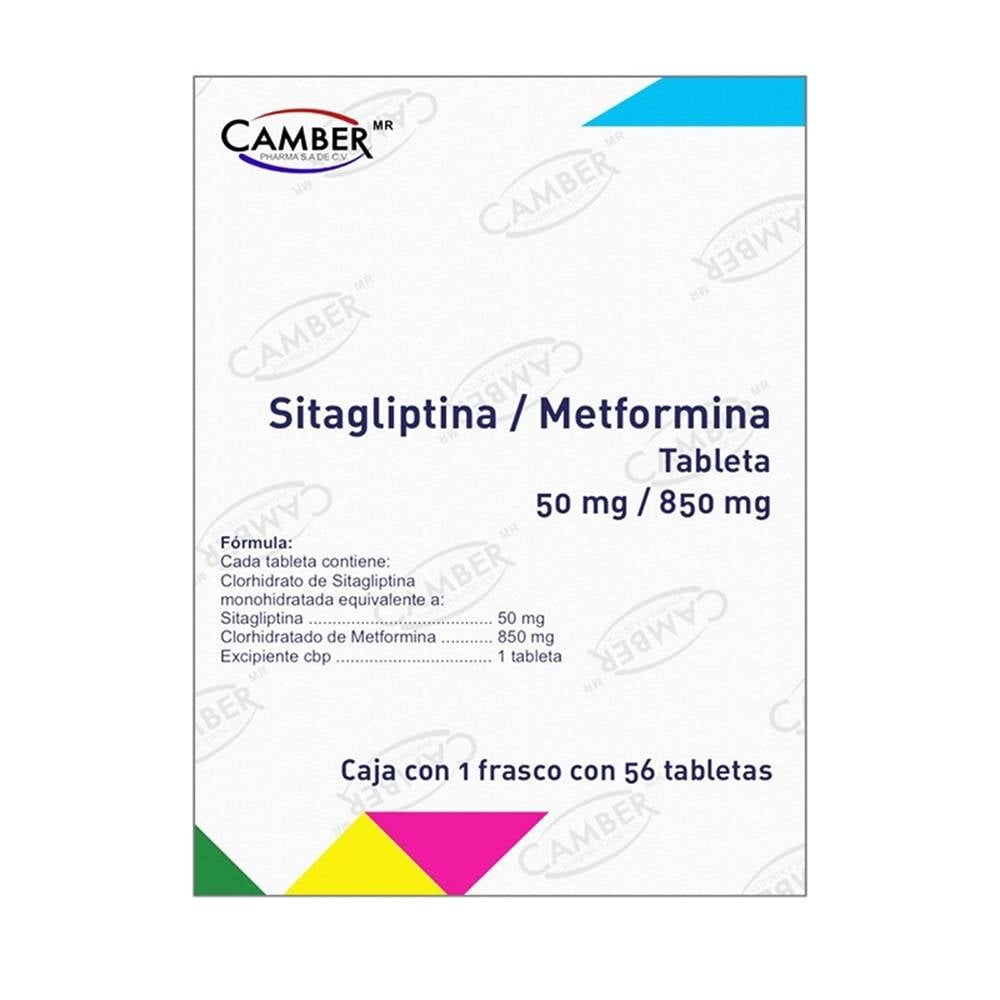
- Dosage formTABLET, 50 mg/850 mg
- ATC codeA10BD07
- Active substance
- Prescription requiredYes
- Manufacturer
- CompositionBEHENATO DE GLICEROL (6,900 mg mg)
- This information is for reference only and does not constitute medical advice. Always consult a doctor before taking any medication. Oladoctor is not responsible for medical decisions based on this content.
- Alternatives to SITAGLIPTIN/METFORMIN HYDROCHLORIDE SUN 50 mg/850 mg FILM-COATED TABLETSDosage form: TABLET, 50 mg/1000 mgActive substance: metformin and sitagliptinManufacturer: Laboratorios Alter S.A.Prescription requiredDosage form: TABLET, 50/1000 mgActive substance: metformin and sitagliptinManufacturer: Merck Sharp & Dohme B.V.Prescription requiredDosage form: TABLET, 50/1000 mgActive substance: metformin and sitagliptinManufacturer: Merck Sharp & Dohme B.V.Prescription required
Online doctors for SITAGLIPTIN/METFORMIN HYDROCHLORIDE SUN 50 mg/850 mg FILM-COATED TABLETS
Discuss questions about SITAGLIPTIN/METFORMIN HYDROCHLORIDE SUN 50 mg/850 mg FILM-COATED TABLETS, including use, safety considerations and prescription review, subject to medical assessment and local regulations.

Get SITAGLIPTIN/METFORMIN HYDROCHLORIDE SUN 50 mg/850 mg FILM-COATED TABLETS Prescription Online
Fill in a 2-min form
Tell us your symptoms, history, and what medicine you're requesting.
Pick a doctor or let us assign
Choose a specialist or we'll match you with the next available doctor.
Doctor reviews your case
Usually within 30 minutes. They may ask follow-up questions via chat.
Collect from any pharmacy
Electronic prescription sent to your email — valid across Spain.
Frequently Asked Questions
SITAGLIPTIN/METFORMIN HYDROCHLORIDE SUN 50 mg/850 mg FILM-COATED TABLETS requires a prescription in Spain. You can check with a doctor online whether this medicine may be appropriate for your situation.
The active ingredient in SITAGLIPTIN/METFORMIN HYDROCHLORIDE SUN 50 mg/850 mg FILM-COATED TABLETS is metformin and sitagliptin. This information helps identify medicines with the same composition but different brand names.
SITAGLIPTIN/METFORMIN HYDROCHLORIDE SUN 50 mg/850 mg FILM-COATED TABLETS is manufactured by Sun Pharmaceutical Industries (Europe) B.V.. Pharmacy brands and packaging may differ depending on the distributor.
Doctors such as Family doctors, Psychiatrists, Dermatologists, Cardiologists, Endocrinologists, Gastroenterologists, Pulmonologists, Nephrologists, Rheumatologists, Hematologists, Infectious disease physicians, Allergists, Geriatricians, Paediatricians, Oncologists may assess whether SITAGLIPTIN/METFORMIN HYDROCHLORIDE SUN 50 mg/850 mg FILM-COATED TABLETS is appropriate, depending on your situation and local regulations. You can book an online consultation to discuss your symptoms and possible next steps.
Spain has a well-developed healthcare infrastructure across major cities such as Madrid, Barcelona, Valencia, and Seville. Pharmacies are widely available and operate under strict regulations, ensuring access to prescribed medications.
You can buy SITAGLIPTIN/METFORMIN HYDROCHLORIDE SUN 50 mg/850 mg FILM-COATED TABLETS in Madrid, Barcelona, Seville, or Valencia at any local pharmacy with a valid prescription.
To obtain a prescription, you can use Oladoctor:
Other medicines with the same active substance (metformin and sitagliptin) include DISIMET 50 MG/1000 MG FILM-COATED TABLETS, EFFICIB 50 mg/1000 mg FILM-COATED TABLETS, EFFICIB 50 mg/1000 mg FILM-COATED TABLETS. These may have different brand names or formulations but contain the same therapeutic ingredient. Always consult a doctor before switching or starting a new medicine.
