






How to use SEVOFLURANE PIRAMAL 100% LIQUID FOR INHALATION
Translated with AI
This page provides general information and does not replace a doctor’s consultation. Always consult a doctor before taking any medication. Seek urgent medical care if symptoms are severe.
Show originalContents of the leaflet
Introduction
PACKAGE LEAFLET: INFORMATION FOR THE USER
Sevoflurane Piramal 100% Liquid for inhalation vapor EFG
Read all of this leaflet carefully before you start using this medicine because it contains important information for you.
- Keep this leaflet, you may need to read it again.
- If you have any further questions, ask your doctor or pharmacist.
- If you get any side effects, talk to your doctor, pharmacist or nurse. This includes any possible side effects not listed in this leaflet. See section 4.
Contents of the pack:
- What is Sevoflurane Piramal and what is it used for
- What you need to know before you use Sevoflurane Piramal
- How to use Sevoflurane Piramal
- Possible side effects
- Storage of Sevoflurane Piramal
- Contents of the pack and other information
1. What is Sevoflurane Piramal and what is it used for
The active substance in Sevoflurane Piramal is sevoflurane, a general anesthetic used in surgical operations and other procedures.
This is an inhaled anesthetic that is administered to you in the form of vapor to breathe, which makes you fall into a deep sleep (induction of anesthesia). It also maintains a deep sleep during which you can undergo surgery (maintenance of anesthesia). You should talk to a doctor if you do not feel better or if you feel worse.

2. What you need to know before you use Sevoflurane Piramal
Sevoflurane should only be administered by a healthcare professional who is properly trained in the administration of general anesthesia by an anesthesiologist or under their supervision.
Do not use Sevoflurane Piramal
Warnings and precautions
Talk to your doctor before you start using Sevoflurane Piramal
In this case, your anesthesiologist (doctor) will stop the administration of sevoflurane and you will be given a medication to treat malignant hyperthermia (known as dantrolene) and you will receive other complementary treatment. Fatal outcomes of malignant hyperthermia with sevoflurane have been reported.
Children
The following effects may occur during or after the administration of Sevoflurane 100% Inhalation Vapor:
- During the period when you are anesthetized (induction phase), sevoflurane, like similar medications (halogenated anesthetics), may induce coughing. This should be taken into account.
- As with other anesthetics, minor mood changes may occur for several days after the administration of sevoflurane.
- Young children under six years of age are more likely to experience acute confusion (delirium) when waking up from anesthesia. Additionally, children under six years of age are more likely to experience agitation/anxiety when waking up from anesthesia.
- In sensitive patients, inhaled anesthetics (inhalation anesthetics) can cause an increase in the metabolic state (hypermetabolic) of skeletal muscles. This leads to high oxygen requirements from their muscles due to excessively high CO2 levels in the blood (hypercapnia). In this case, you may experience muscle stiffness (muscle rigidity), increased heart rate (tachycardia), increased breathing rate (tachypnea), bluish discoloration of the lips, tongue, skin, and mucous membranes (cyanosis), cardiac rhythm disturbances (arrhythmia), and/or unstable blood pressure.
- In rare cases, the use of inhaled anesthetics (inhalation anesthetics) has been associated with an increase in potassium levels in the blood (hyperkalemia) that has led to cardiac rhythm disturbances (arrhythmias) and death in children after surgery.
- Sevoflurane may cause respiratory depression, which may increase with narcotic premedication or other medications that cause respiratory depression. Breathing should be monitored and, if necessary, supported.
Using Sevoflurane Piramal with other medicines
Tell your doctor or nurse if you are using, have recently used, or might use any other medicines, even those without a prescription.
Medicines or active substances contained in the medicines listed below may influence each other when used together with Sevoflurane Piramal. Some of these medicines are administered during surgery by the anesthesiologist, as indicated in the description.
- Amphetamines (stimulants) used to treat attention deficit hyperactivity disorder (ADHD) or narcolepsy.
- Medicines that affect the heart, such as adrenaline or epinephrine.
- Beta-blockers (e.g., atenolol, propranolol): these are heart medicines, often given to treat high blood pressure.
- Alcohol.
- Barbiturates (depressants).
- St. John's Wort (a medicinal plant used to help with depression).
- Decongestants (ephedrine).
- Non-selective monoamine oxidase inhibitors (MAOIs) (a type of antidepressant).
- Calcium channel blockers.
- Verapamil: this is a heart medicine, given to treat high blood pressure or when you have an irregular heart rhythm.
- Tranquilizers (benzodiazepines, e.g., diazepam, lorazepam): these are sedative medicines, which have a calming effect. They are used when you feel nervous, for example, before surgery.
- Potent analgesics such as morphine or codeine.
- Non-depolarizing muscle relaxants (such as vecuronium, pancuronium, atracurium, and depolarizing agents, such as succinylcholine): these medicines are used during general anesthesia to relax the muscles.
- Isoniazid, which is used to treat tuberculosis (TB).
- Isoprenaline.
- Other anesthetics, e.g., nitrous oxide: this is a medicine used during general anesthesia, which will make you sleep and relieve your pain; propofol, opioids (e.g., alfentanil and sufentanil: these medicines are strong analgesics and are often used during general anesthesia), since sevoflurane may affect their way of acting if administered at the same time.
Tell your doctor or nurse if you are taking or have recently taken any other medicines, even those without a prescription. This also applies to herbal medicinal products, vitamins, and minerals.
Using Sevoflurane Piramal with food and drinks
Sevoflurane Piramal is a medicine to induce and maintain sleep, so you can undergo surgery. You should ask your doctor, surgeon, or anesthesiologist when and what you can eat or drink after waking up.
Pregnancy and breastfeeding
The use of sevoflurane for anesthesia during a cesarean section is safe for you and your baby. The safety of sevoflurane during contractions and natural childbirth has not been demonstrated. Like other anesthetics, sevoflurane may reduce breathing in newborns. Your doctor will determine if you can use sevoflurane.
Driving and using machines
Sevoflurane Piramal strongly affects your ability to drive and use tools. Do not drive or operate tools or machines until your doctor tells you it is safe. Receiving an anesthetic can affect your alertness for several days. This may affect your ability to perform tasks that require mental alertness.
Ask your anesthesiologist when it will be safe for you to drive and use machines again.
3. How to use Sevoflurane Piramal
Sevoflurane Piramal will be administered to you by a trained anesthesiologist during an operation or in a hospital. The anesthesiologist will decide the amount of sevoflurane you need and when it will be administered. The dose will vary according to your age, weight, the type of surgery you need, and other medicines you have been given during surgery.
Sevoflurane Piramal goes from liquid to vapor (gas) in a vaporizer. You will breathe it in as vapor.
It can be used to put you to sleep before the operation or, if you are put to sleep with an injectable anesthetic, to maintain anesthesia during the operation.
Once the anesthesiologist stops the inhalation of sevoflurane, you will wake up in a few minutes.
Sevoflurane Piramal will be administered to you by a healthcare professional and it is unlikely that you will receive too much Sevoflurane Piramal. If you are given too much Sevoflurane Piramal, your anesthesiologist will take all necessary measures.
In case of overdose or accidental ingestion, consult your doctor or pharmacist immediately or call the Toxicology Information Service, phone 915 620 420, indicating the medicine and the amount ingested.

4. Possible side effects
Like all medicines, this medicine can cause side effects, although not everybody gets them. However, it is important to talk to your doctor, nurse, or anesthesiologist if you feel unwell.
Serious side effects: (can be fatal):
- anaphylactic and anaphylactoid reactions (see section on unknown side effects for more information).
The following side effects are serious and you may need immediate medical attention.
Tell your doctor or nurse immediately if you have any of the following side effects:
- Allergic reactions, which can be severe, with swelling of the face, tongue, and throat, and difficulty breathing.
- Malignant hyperthermia (very high temperature), which may require intensive care and can be fatal. This condition can be hereditary.
- Increased potassium levels in the blood (hyperkalemia), which can result in abnormal heart rhythms and can be fatal in children during the postoperative phase. This has been observed in patients with neuromuscular disease, particularly Duchenne muscular dystrophy.
Tell your doctor or nurse if you experience any of the following side effects:
Very common side effects(may affect more than 1 in 10 people)
- Restlessness (agitation) in children
- Slow heart rate
- Low blood pressure
- Cough
- Nausea and vomiting
Common side effects(may affect up to 1 in 10 people)
- Restlessness (agitation) in adults
- Headache
- Drowsiness
- Dizziness
- Fast heart rate
- Increased blood pressure
- Respiratory disorder
- Airway obstruction
- Shallow and slow breathing
- Throat spasms, respiratory problems
- Excessive salivation
- Decreased body temperature, chills
- Fever
- Abnormal blood sugar levels, liver function tests, or white blood cell count, i.e., increased susceptibility to infections.
- Increased fluoride levels in the blood
Uncommon side effects(may affect up to 1 in 100 people)
The frequency may change due to:
- Seizure
- Abnormal heart rhythm
- AV block (a disorder of the heart's electrical conduction)
- Asthma, respiratory arrest, low oxygen levels
- Urinary retention, presence of glucose in urine
- Increased or decreased white blood cell count
- Abnormal blood enzyme levels
- Increased creatinine levels in the blood (an indicator that kidney function is altered), detected by blood sample analysis
Other side effects with unknown frequency(cannot be estimated from the available data)
- Fluid in the lungs
- Allergic reactions, such as:
- Skin rash
- Redness of the skin
- Hives (urticaria)
- Itching
- Swelling of the eyelids, difficulty breathing
- Anaphylaxis and anaphylactoid reactions. These allergic reactions occur rapidly and can be potentially fatal. The symptoms of anaphylaxis include:
- Malignant hyperthermia
- Angioedema (swelling of the skin of the face, limbs, lips, tongue, or throat)
- Difficulty breathing
- Low blood pressure
- Hives (urticaria)
- Pseudo-epileptic seizures
- Sudden muscle spasms
- Cardiac arrest
- Spasm of the airways
- Difficulty breathing or wheezing
- Respiratory arrest
- Shortness of breath
- Reduced liver function or hepatitis (inflammation of the liver), characterized, for example, by loss of appetite, fever, nausea, vomiting, abdominal discomfort, jaundice, and dark urine
- Dangerously high body temperature
- Chest discomfort
- Increased pressure inside the skull
- Irregular heartbeat or palpitations
- Pancreatitis
- Increased potassium levels in the blood, as detected by blood sample analysis
- Muscle stiffness
- Yellowish skin
- Kidney inflammation (symptoms may include fever, confusion, or drowsiness, skin rash, swelling, more or less urine than normal, and blood in the urine)
- Swelling
Sometimes, seizures (attacks) have been observed. This can occur when receiving Sevoflurane Piramal or up to a day later during recovery. This occurs mainly in children and young adults.
In children with Down syndrome who receive sevoflurane, a decrease in heart rate may occur.
Blood fluoride levels may rise slightly during anesthesia and immediately after, but these levels are not considered harmful and will return to normal soon.
Reporting of side effects
5. Storage of Sevoflurane Piramal
Keep this medicine out of the sight and reach of children.
Do not use this medicine after the expiry date which is stated on the label of the vial and on the carton of the product after EXP. The expiry date is the last day of the month stated.
Do not store above 25 °C.
Keep the vial in an upright position.
Once opened, the contents of the bottle should be used within 8 weeks. Do not refrigerate.
Keep the vial tightly closed due to the volatile nature of the anesthetic.
6. Container Content and Additional Information
Composition of Sevoflurano Piramal
- The active ingredient is sevoflurane (100%).
- There are no other components.
This medication contains fluorinated greenhouse gases.
Each container contains 380 g of sevoflurane, which corresponds to 0.0741 tons of CO2 equivalent (global warming potential GWP = 195).
Appearance of the Product and Container Content
Sevoflurano Piramal is a colorless liquid packaged in 250 ml amber glass bottles (with or without an external PVC coating) with a screw cap or an integrated closure adapter.
Packaging of 1 and 6 bottles.
Only certain package sizes may be authorized.
Marketing Authorization Holder and Manufacturer
Marketing Authorization Holder
Piramal Critical Care B.V.
Rouboslaan 32 (ground floor),
2252 TR
Voorschoten
Netherlands
Manufacturer
Piramal Critical Care B.V.
Rouboslaan 32 (ground floor),
2252 TR
Voorschoten
Netherlands
You can request more information about this medication by contacting the local representative of the marketing authorization holder:
Euromed Pharma Spain, S.L.
C/Eduard Maristany, 430-432
08918 Badalona
Barcelona - Spain
Tel: + 34 932 684 208
Fax: + 34 933 150 469
This medication is authorized in the member states of the European Economic Area under the following names:
Austria - Sevofluran Piramal 100 % Liquid for the Production of an Inhalation Vapor
Bulgaria - Sevoflurane Piramal 100 % Inhalation Vapor, liquid
Cyprus - Sevoflurane – Piramal
Czech Republic - Sojourn 100 % Liquid for the Preparation of Inhalation Vapor
Denmark - Sojourn TM
Estonia - Sevoflurane- Piramal, Inhalation Vapor, liquid 100%
Germany - Sevofluran Piramal 100 % Liquid for the Production of an Inhalation Vapor
Greece - Sojourn TM Sevoflurane 100 % Inhalation Vapor, liquid
Hungary - Sevoflurane Piramal liquid for the production of inhalation vapor
Iceland - Sevoflurane Piramal 100 % inhalation vapor, liquid
Ireland - Sevoflurane 100 % Inhalation Vapor, liquid
Italy - Sevoflurane Piramal
Latvia - Sevoflurane Piramal 100 % inhalation vapor, liquid
Lithuania - Sevoflurane Piramal 100 % inhalation vapor, liquid
Luxembourg - Sevoflurane 100 %
Malta - Sevoflurane 100 % Inhalation Vapor, liquid
Netherlands - Sevoflurane 100 % (Piramal), Liquid for Inhalation Vapor
Norway - Sevoflurane Piramal liquid for inhalation vapor
Poland - Sojourn
Portugal - Sevoflurano Ojourn 100 % liquid for inhalation by vaporization
Slovenia - Sevofluran Piramal 250 ml for inhalation, liquid
Spain - Sevoflurano Piramal 100 % liquid for inhalation vapor
Sweden - Sevoflurane Piramal 100 % inhalation vapor, liquid
United Kingdom - Sevoflurane 100 % Inhalation Vapor, liquid
Date of the Last Revision of this Prospectus:May 2023
Detailed information about this medication is available on the website of the Spanish Agency for Medicines and Health Products (AEMPS) (http://www.aemps.gob.es/).
<--------------------------------------------------------------------------------------------------------------------------->
The technical data sheet of the product includes additional information for doctors or other healthcare professionals.
-

- Country of registration
- Dosage formPULMONARY INHALATION, 100% v/v
- ATC codeN01AB08
- Active substance
- Prescription requiredYes
- Manufacturer
- This information is for reference only and does not constitute medical advice. Always consult a doctor before taking any medication. Oladoctor is not responsible for medical decisions based on this content.
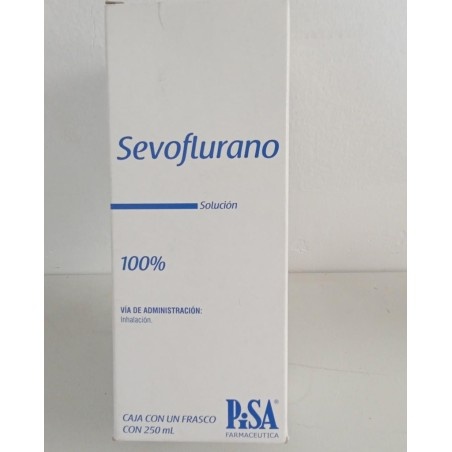
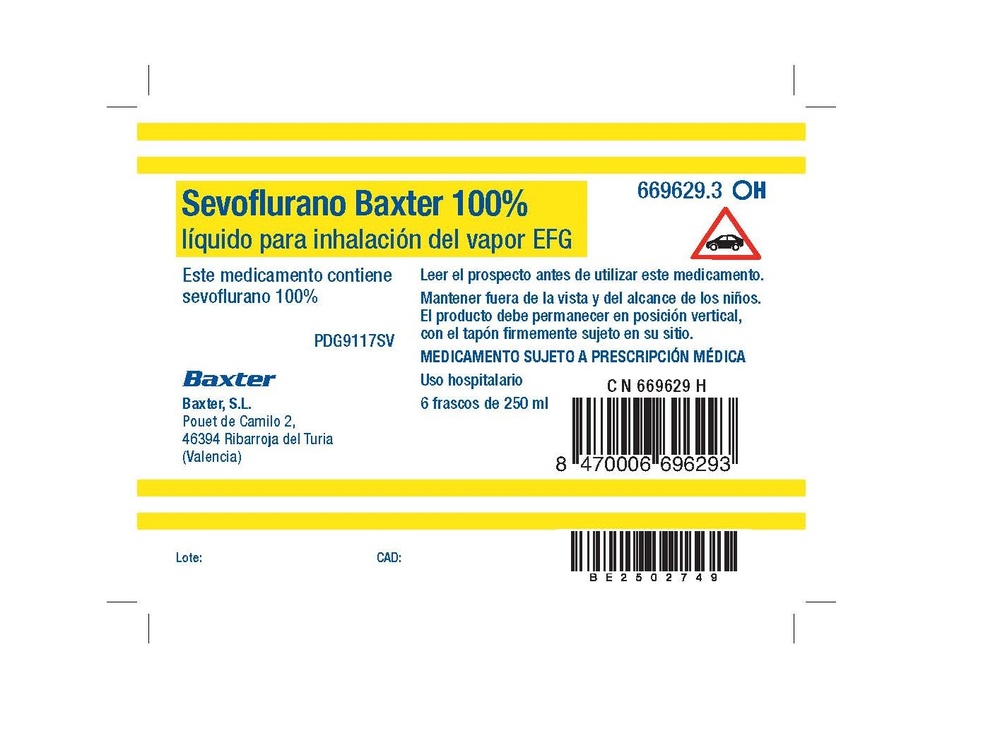
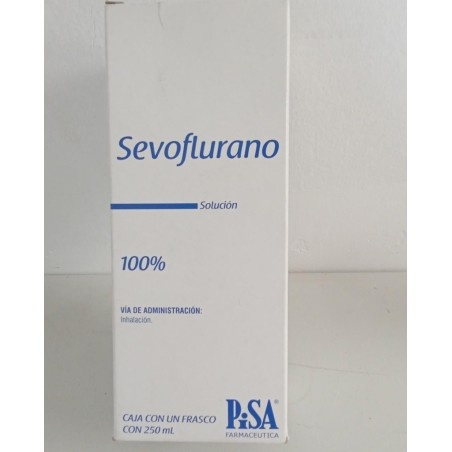
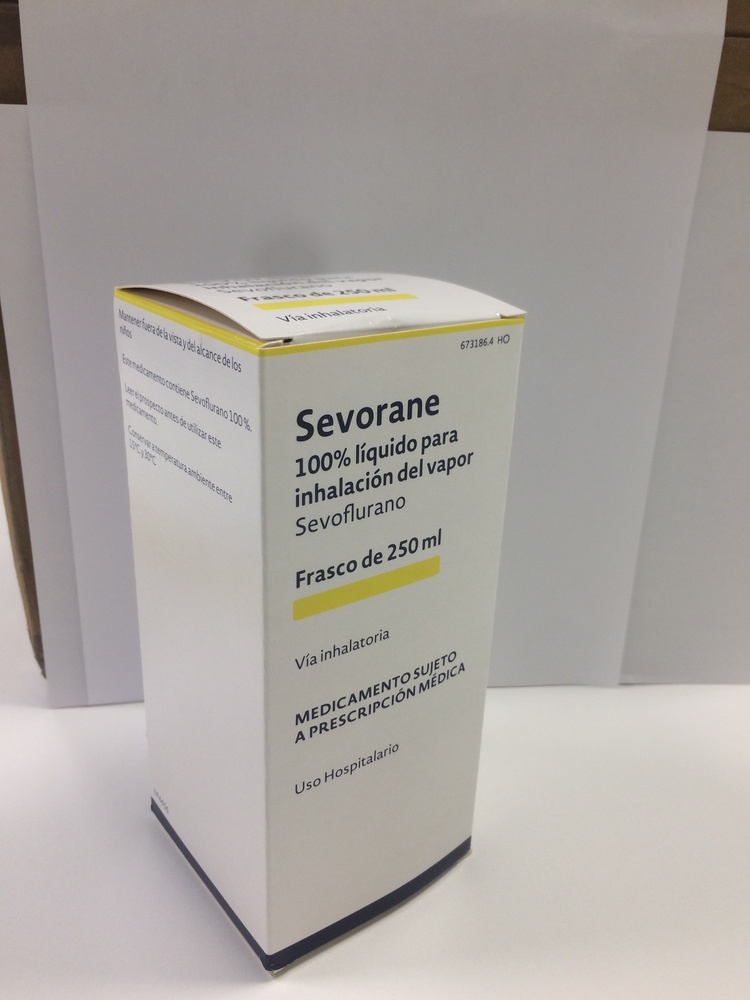
- Alternatives to SEVOFLURANE PIRAMAL 100% LIQUID FOR INHALATIONDosage form: PULMONARY INHALATION, 1 ml/mlActive substance: sevofluraneManufacturer: Baxter S.L.Prescription requiredDosage form: PULMONARY INHALATION, 100 % (V/V)Active substance: sevofluraneManufacturer: Elc Group S.R.O.Prescription requiredDosage form: PULMONARY INHALATION, 1 ml sevoflurane/mlActive substance: sevofluraneManufacturer: Abbvie Spain, S.L.U.Prescription required
Online doctors for SEVOFLURANE PIRAMAL 100% LIQUID FOR INHALATION
Discuss questions about SEVOFLURANE PIRAMAL 100% LIQUID FOR INHALATION, including use, safety considerations and prescription review, subject to medical assessment and local regulations.







Get SEVOFLURANE PIRAMAL 100% LIQUID FOR INHALATION Prescription Online
Fill in a 2-min form
Tell us your symptoms, history, and what medicine you're requesting.
Pick a doctor or let us assign
Choose a specialist or we'll match you with the next available doctor.
Doctor reviews your case
Usually within 30 minutes. They may ask follow-up questions via chat.
Collect from any pharmacy
Electronic prescription sent to your email — valid across Spain.
Frequently Asked Questions
SEVOFLURANE PIRAMAL 100% LIQUID FOR INHALATION requires a prescription in Spain. You can check with a doctor online whether this medicine may be appropriate for your situation.
The active ingredient in SEVOFLURANE PIRAMAL 100% LIQUID FOR INHALATION is sevoflurane. This information helps identify medicines with the same composition but different brand names.
SEVOFLURANE PIRAMAL 100% LIQUID FOR INHALATION is manufactured by Piramal Critical Care B.V.. Pharmacy brands and packaging may differ depending on the distributor.
Doctors such as Family doctors, Psychiatrists, Dermatologists, Cardiologists, Endocrinologists, Gastroenterologists, Pulmonologists, Nephrologists, Rheumatologists, Hematologists, Infectious disease physicians, Allergists, Geriatricians, Paediatricians, Oncologists may assess whether SEVOFLURANE PIRAMAL 100% LIQUID FOR INHALATION is appropriate, depending on your situation and local regulations. You can book an online consultation to discuss your symptoms and possible next steps.
Spain has a well-developed healthcare infrastructure across major cities such as Madrid, Barcelona, Valencia, and Seville. Pharmacies are widely available and operate under strict regulations, ensuring access to prescribed medications.
You can buy SEVOFLURANE PIRAMAL 100% LIQUID FOR INHALATION in Madrid, Barcelona, Seville, or Valencia at any local pharmacy with a valid prescription.
To obtain a prescription, you can use Oladoctor:
Other medicines with the same active substance (sevoflurane) include SEVOFLURANE BAXTER 100% LIQUID FOR INHALATION, SEVOFLURANE ELC 100% LIQUID FOR INHALATION, SEVORANE 100% LIQUID FOR INHALATION. These may have different brand names or formulations but contain the same therapeutic ingredient. Always consult a doctor before switching or starting a new medicine.
