



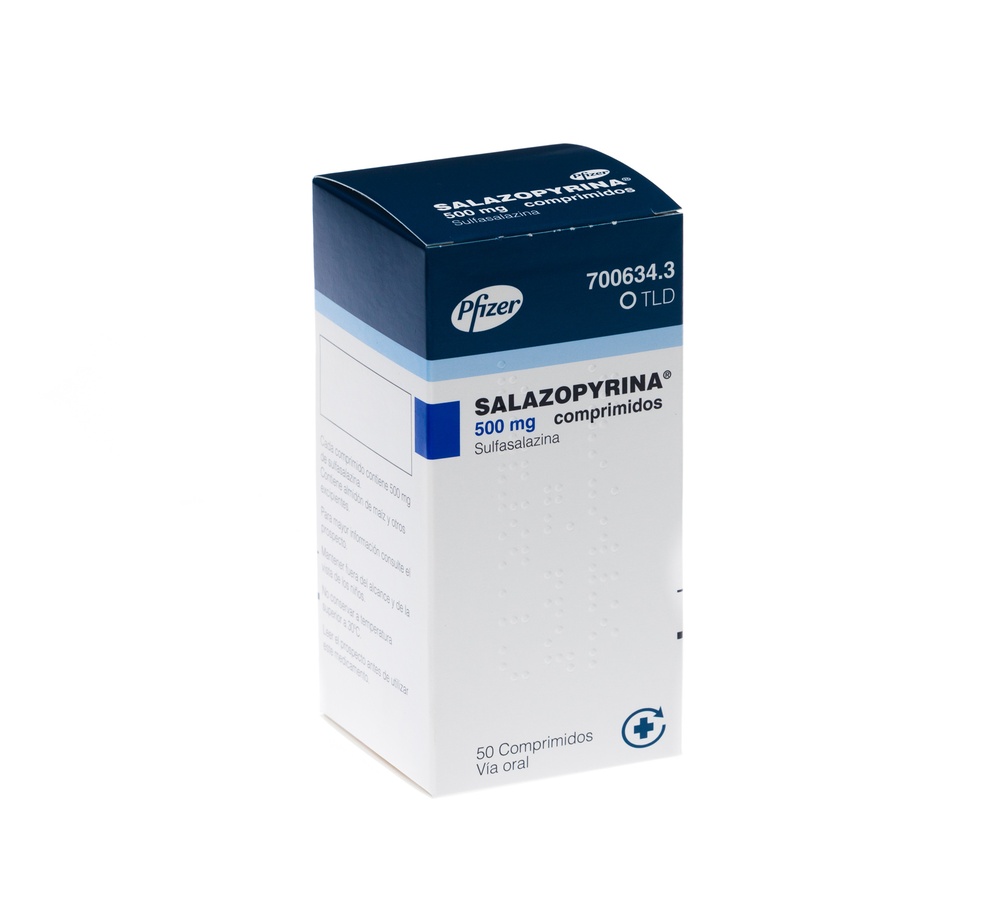
SALAZOPYRINA 500 mg Tablets

Prescription review online
A doctor will review your case and decide whether a prescription is medically appropriate.

Talk to a doctor about this medicine
Discuss your symptoms and possible next steps in a quick online consultation.



How to use SALAZOPYRINE 500 mg TABLETS
Contents of the leaflet
- Introduction
- What Salazopyrine 500 mg Tablets are and what they are used for
- What you need to know before you take Salazopyrine 500 mg Tablets
- How to take Salazopyrine 500 mg Tablets
- Possible Adverse Effects
- Storage of Salazopyrina 500 mg Tablets
- Package Contents and Additional Information
Introduction
Package Leaflet: Information for the User
Salazopyrine 500 mg Tablets
Sulfasalazine
Read all of this leaflet carefully before you start taking this medicine because it contains important information for you.
- Keep this leaflet, you may need to read it again.
- If you have any further questions, ask your doctor or pharmacist.
- This medicine has been prescribed for you only. Do not pass it on to others. It may harm them, even if their signs of illness are the same as yours.
- If you get any side effects, talk to your doctor or pharmacist. This includes any possible side effects not listed in this leaflet. See section 4.
Contents of the pack and other information
- What Salazopyrine 500 mg Tablets are and what they are used for.
- What you need to know before you take Salazopyrine 500 mg Tablets.
- How to take Salazopyrine 500 mg Tablets.
- Possible side effects.
- Storage of Salazopyrine 500 mg Tablets.
- Contents of the pack and other information
1. What Salazopyrine 500 mg Tablets are and what they are used for
Salazopyrine 500 mg Tablets are indicated for the treatment of acute episodes and maintenance of remission of ulcerative colitis, as well as for the treatment of active Crohn's disease.
The active ingredient of Salazopyrine 500 mg Tablets is sulfasalazine. Sulfasalazine belongs to a group of medicines called intestinal anti-inflammatory agents, which have anti-inflammatory, immunosuppressive, and antibacterial activities. It is used to inhibit inflammatory conditions, particularly those related to the intestinal mucosa.

Not sure if this medicine is right for you?
Discuss your symptoms and treatment with a doctor online.
2. What you need to know before you take Salazopyrine 500 mg Tablets
Do not take Salazopyrine
- if you are allergic to sulfasalazine, its metabolites, sulfonamides, salicylates, or any of the other components of this medicine (listed in section 6).
- if you have acute intermittent porphyria.
- if you have intestinal or urinary obstruction.
- if the patient is under 2 years of age.
Warnings and precautionsConsult your doctor or pharmacist before starting to take Salazopyrine
- tell your doctor if you are taking or have recently taken Salazopyrine or any other product containing sulfasalazine, as they may affect the results of blood and urine tests.
- if you have a history of recurrent or chronic infections or any underlying condition that may predispose you to infections.
- if you have liver, kidney, heart, or blood disorders. Before starting treatment, your doctor should perform blood and urine tests to check that your liver and kidney function is not decreased, and that the cells in your blood are normal. Additionally, your doctor should repeat these tests regularly while you are taking this medicine.
- if during treatment you experience a sore throat, fever, pallor, bruising, or yellowing of the skin and the white part of the eyes, you should stop treatment and consult your doctor immediately. Your doctor will perform blood tests to determine if the treatment is causing toxic effects on the bone marrow (tissue inside the bone where blood cells are produced), liver, or red blood cells. Depending on the test results, your doctor will decide if you can restart treatment with sulfasalazine.
- if you have a hereditary disease called glucose-6-phosphate dehydrogenase deficiency (also known as favism), which causes destruction of red blood cells when certain infections occur or when taking certain foods and medicines, including sulfasalazine. If you have a severe allergy or asthma, sulfasalazine should be administered with caution if you have any of these conditions.
- while taking sulfasalazine, you should drink sufficient amounts of liquid to avoid the formation of kidney stones.
- sulfasalazine can cause infertility in men. Although these effects may disappear after stopping treatment, you should consider this if you are planning to have children.
- sulfasalazine may cause a deficiency of folic acid (also known as vitamin B9). This should be taken into account, especially in pregnant or breastfeeding women, as this vitamin helps prevent alterations in the fetus's brain and spinal cord (see section "Pregnancy and breastfeeding").
- sulfasalazine may cause an orange-yellow discoloration of urine and skin, which should not concern you.
- With the use of sulfasalazine, serious skin reactions have been reported that can be life-threatening (known as Stevens-Johnson syndrome (SJS) and toxic epidermal necrolysis (TEN) and exfoliative dermatitis). These reactions start with the appearance of red spots or circles on the body, often with a blister in the center. Other signs and symptoms that may appear are ulcers in the mouth, throat, nose, or genital area and conjunctivitis (redness and inflammation of the eyes). These skin eruptions are often accompanied by flu-like symptoms. The eruption can progress to the appearance of large blisters or peeling of the skin. In general, this type of reaction is more frequent during the first weeks of treatment. Patients who develop this type of reaction during the use of sulfasalazine should not use this medicine again. If you experience any of these reactions or symptoms, you should seek immediate medical attention and inform your doctor that you are using this medicine.
- if during treatment you experience fever or alterations in lymph nodes such as swelling, increased volume, or inflammation, with or without skin rash, you should stop treatment and consult your doctor immediately, as this could be an allergic reaction that affects the whole body and can be life-threatening.
Using Salazopyrine with other medicines
Tell your doctor or pharmacist that you are using or have recently used or may need to use any other medicine.
Some medicines may affect how Salazopyrine works, or Salazopyrine may affect how other medicines work. Tell your doctor if you are taking any of the following medicines:
- Folic Acid (also known as vitamin B9, used to treat deficiency of this vitamin in the body or as a supplement in case of pregnancy)
- Digoxin (used to treat heart problems)
- Cyclosporin (used to control the body's immune response after an organ transplant and prevent rejection of the transplanted organ)
- Anticoagulants, such as phenprocoumon, dicumarol, and others (used to decrease blood coagulation)
- Antibiotics, such as ampicillin, neomycin, rifampicin, ethambutol, and others (used to treat infections)
- Iron (used to treat iron deficiency)
- Calcium (used to treat calcium deficiency)
- Anion exchange resins, such as colestipol, cholestyramine, and others (used to decrease cholesterol levels in the blood)
- Azathioprine and 6-mercaptopurine (used as immunosuppressants)
- Diuretics, such as hydrochlorothiazide, indapamide, and others (used to eliminate fluids from the body)
- Oral antidiabetics, such as glipizide, gliclazide, glibenclamide, tolbutamide, chlorpropamide, and others (used to reduce glucose levels in the blood in diabetic patients)
- Medicines that, after administration, bind intensely to proteins in the blood, such as methotrexate (used to treat rheumatoid arthritis and other inflammatory diseases), phenylbutazone (used to relieve pain and reduce inflammation and fever), sulfinpyrazone (used to treat gout), and others.
- Medicines known to cause liver damage
Pregnancy, breastfeeding, and fertility
If you are pregnant or breastfeeding, think you may be pregnant, or are planning to have a baby, ask your doctor or pharmacist for advice before taking this medicine.
Salazopyrine should only be used during pregnancy when clearly necessary and if, after careful assessment, your doctor considers that the expected benefit for you outweighs the potential risks for the fetus. In case your doctor considers that you should start or continue treatment with Salazopyrine during pregnancy, it will be under close medical supervision, as Salazopyrine may cause a deficiency of folic acid (also known as vitamin B9) that could affect the fetus.
It has been shown that the active component of Salazopyrine (sulfasalazine) passes into breast milk. Therefore, the use of Salazopyrine is not recommended during breastfeeding, especially if the baby is premature or has a congenital disease called glucose-6-phosphate dehydrogenase deficiency.
There have been reports of bloody stools or diarrhea in breastfed babies whose mothers were taking sulfasalazine. In the cases where the outcome was reported, the bloody stools or diarrhea resolved after the mother stopped treatment with sulfasalazine.
It has been shown that sulfasalazine can cause infertility in men. Although these effects may disappear after stopping treatment, you should consider this if you are planning to have children.
Driving and using machines
The effect of Salazopyrine on the ability to drive and use machines has not been studied.
3. How to take Salazopyrine 500 mg Tablets
Follow exactly the administration instructions of this medicine given by your doctor. If you are unsure, consult your doctor or pharmacist again.
Your doctor will determine the appropriate dose for you, depending on the characteristics of your disease, and will indicate the duration of your treatment.
The tablets should be taken every day at approximately the same time, preferably after meals. They can be swallowed whole or dissolved in water or another liquid, provided that a complete tablet is dissolved.
Dosing recommendations:
- Acute attacks:
Adult use:
Severe attacks: 1,000 - 2,000 mg (2-4 tablets) divided into 2-4 doses per day.
Moderate and mild attacks: 1,000 mg (2 tablets) divided into 2 doses per day.
Use in elderly patients:
No dose adjustment is necessary, using the same doses as in adults
Use in children (from 6 years old):
The recommended dose in children is 40-60 mg/kg/day divided into 3-6 doses. This dose can be administered provided that it can be dosed in the form of complete tablets (without breaking).
- Prevention of relapses:
Adult use:
1,000 mg (2 tablets) divided into 2 doses per day. Treatment with this dose should continue indefinitely, unless side effects appear. In case of worsening, the dose can be increased to 1,000 - 2,000 mg (2-4 tablets) divided into 2-4 doses per day.
Use in elderly patients:
No dose adjustment is necessary, using the same doses as in adults
Use in children (from 6 years old):
The recommended dose in children is 20-30 mg/kg/day divided into 3-6 doses per day.
This dose can be administered provided that it can be dosed in the form of complete tablets (without breaking).
The score line is only for breaking the tablet if you find it difficult to swallow it whole.
If you take more Salazopyrine than you should
The most frequent symptoms of overdose are nausea and vomiting. Patients with impaired renal function have a higher risk of developing toxicity.
In case of overdose or accidental ingestion, consult your doctor or pharmacist immediately or call the Toxicology Information Service on 91 562 04 20, indicating the medicine and the amount taken. You may need measures to help eliminate the medicine from your body (stomach lavage, intestinal evacuation, urine alkalization, abundant water intake) and/or specific treatment to alleviate the possible symptoms of the overdose.
If you forget to take Salazopyrine
Do not take a double dose to make up for forgotten doses. Take the forgotten dose as soon as possible or, if it is close to the time of the next dose, wait and continue treatment as usual, as directed by your doctor.
If you have any further questions on the use of this medicine, ask your doctor or pharmacist.

Started taking the medicine and have questions?
Discuss your symptoms and treatment with a doctor online.
4. Possible Adverse Effects
Like all medicines, Salazopyrina can cause adverse effects, although not all people suffer from them.
The most frequent adverse effects associated with Salazopyrina treatment are: nausea, loss of appetite, stomach discomfort, and occasionally a slight increase in body temperature. In most cases, treatment can be continued, either by reducing the dose or after a few days without taking the treatment.
The adverse effects reported during clinical trials and in post-marketing experience are:
Very Common (affecting more than 1 in 10 patients):Stomach discomfort, nausea.
Common (affecting less than 1 in 10 patients):
- Decrease in the number of white blood cells in the blood (leucopenia),
- Diarrhea, vomiting, abdominal pain
- Loss of appetite, alteration of taste
- Dizziness, headache, ringing in the ears (tinnitus)
- Cough,
- Itching
- Red or blue spots on the skin (purpura)
- Joint pain
- Fever
- Presence of proteins in urine
Uncommon (affecting less than 1 in 100 patients):
- Decrease in the number of platelets in the blood (thrombocytopenia)
- Depression
- Difficulty breathing
- Hair loss
- Urticaria, swelling of the face (facial edema)
- Abnormal liver function test results
- Yellowish discoloration of the skin and mucous membranes (jaundice)
Frequency Not Known (cannot be estimated from the available data):
- Worsening of chronic inflammatory bowel disease (ulcerative colitis), inflammation of the final portion of the intestine (pseudomembranous colitis), inflammation of the pancreas (pancreatitis), inflammation of the mouth mucosa (stomatitis), inflammation of the salivary glands (parotiditis)
- Inflammation of the liver (hepatitis), decreased liver function (liver failure), sudden and severe deterioration of liver function (fulminant hepatitis)
- Inflammation of the membrane surrounding the heart (pericarditis), inflammation of the heart muscle (myocarditis)
- Lung lesions, sore throat.
- Inflammation of blood vessels
- Lesions in the white part of the eye and in the transparent membrane covering the outer surface of the eye.
- Swelling around the eyes
- Alteration of the glands that produce tears and saliva
- Inflammation of the membranes surrounding the brain (aseptic meningitis)
- Hallucinations, insomnia, brain alteration (encephalopathy), alteration of peripheral nerves, alteration of smell, loss of movement coordination, convulsions, transient lesion in the posterior part of the vertebrae, inflammation of the spinal cord that causes weakness and numbness of the limbs
- Decrease in the number of white blood cells in the blood (agranulocytosis), decrease in the number of red blood cells in the blood (anemia), presence in the blood of red blood cells larger than normal (macrocytosis), decrease in the number of all cells that make up the blood (pancytopenia), decrease in the ability of red blood cells to transport oxygen to tissues (methemoglobinemia)
- Decrease in the amount of protein in the blood
- Decrease in folate
- Severe allergic reaction throughout the body, abnormal immune system reaction similar to an allergy (serum sickness)
- Bluish discoloration of the skin and mucous membranes
- Whitish discoloration of the skin (pallor)
- Skin reactions of various types, some of which can be life-threatening to the patient (Stevens-Johnson syndrome, toxic epidermal necrolysis, exfoliative dermatitis) (see section 2: Before using Salazopyrina).
- Allergic reactions such as drug rash with eosinophilia and systemic symptoms. This syndrome is characterized by skin rash, fever, presence of an abnormally high amount of a type of white blood cell (eosinophils) in the blood (eosinophilia) and other symptoms that may include general discomfort, fatigue, muscle and joint pain, blisters, mouth lesions, conjunctivitis, and liver inflammation (see section 2: Before using Salazopyrina).
- Abnormal skin response to sun exposure, yellowish discoloration of the skin and body fluids, bruising
- Rapid inflammation of the skin and mucous membranes due to fluid accumulation (angioedema).
- Chronic disease of the connective tissue (systemic lupus erythematosus)
- Appearance of crystals and blood in the urine, inflammation, injury, and stones in the kidneys,
- Decrease in the number of sperm recovered after stopping treatment, infertility in men
- Drug-induced fever
- Formation of antibodies directed against one's own body
If you experience adverse effects, consult your doctor or pharmacist, even if they are adverse effects that do not appear in this prospectus.
Reporting of Adverse Effects:
If you experience any type of adverse effect, consult your doctor or pharmacist, even if it is an adverse effect that does not appear in this prospectus. You can also report them directly through the Spanish Pharmacovigilance System for Human Use Medicines: https://www.notificaram.es. By reporting adverse effects, you can contribute to providing more information on the safety of this medicine.
5. Storage of Salazopyrina 500 mg Tablets
Do not store above 30°C.
Keep this medicine out of sight and reach of children.
Do not use this medicine after the expiration date stated on the packaging. The expiration date is the last day of the month indicated.
Medicines should not be disposed of via wastewater or household waste. Deposit the packaging and unused medicines in the pharmacy's SIGRE point. In case of doubt, ask your pharmacist how to dispose of the packaging and unused medicines. This will help protect the environment.
6. Package Contents and Additional Information
Composition ofSalazopyrina
- The active ingredient is sulfasalazine. Each tablet contains 500 mg of sulfasalazine.
- The other components are: povidone, cornstarch, magnesium stearate, and colloidal silicon dioxide.
Appearance of the Product and Package Size
Salazopyrina 500 mg tablets are yellow-orange, round, convex, with the letters "KPh" printed on one side and the other side notched and with the product code "101" printed.
The notch is only for the purpose of being able to fractionate and facilitate swallowing, but not for dividing into equal doses.
The tablets are packaged in polyethylene bottles with a polypropylene screw cap. The package contains 50 tablets.
Marketing Authorization Holder and Manufacturer
Marketing authorization holder: Pfizer, S.L. Avda. de Europa, 20-B. Parque Empresarial La Moraleja. 28108, Alcobendas (Madrid). Spain
Manufacturer: Recipharm Uppsala AB. Bjökgatan, 30. Uppsala. Domkyrkofors. Uppsala, 753 23. Sweden
This prospectus was approved in November 2022
Detailed and updated information on this medicine is available on the website of the Spanish Agency for Medicines and Health Products (AEMPS) http://www.aemps.es/
- Country of registration
- Dosage formTABLET, 500 mg sulfasalazine
- ATC codeA07EC01
- Average pharmacy price5.06 EUR
- Active substance
- Prescription requiredYes
- Manufacturer
- This information is for reference only and does not constitute medical advice. Always consult a doctor before taking any medication. Oladoctor is not responsible for medical decisions based on this content.
- Alternatives to SALAZOPYRINE 500 mg TABLETSDosage form: SUPPOSITORY, 1 gActive substance: mesalazineManufacturer: Tillotts Pharma Spain S.L.U.Prescription requiredDosage form: TABLET, 1600 mgActive substance: mesalazineManufacturer: Tillotts Pharma Spain S.L.U.Prescription requiredDosage form: TABLET, 400 mgActive substance: mesalazineManufacturer: Tillotts Pharma Spain S.L.U.Prescription required
Online doctors for SALAZOPYRINE 500 mg TABLETS
Discuss questions about SALAZOPYRINE 500 mg TABLETS, including use, safety considerations and prescription review, subject to medical assessment and local regulations.









Get SALAZOPYRINE 500 mg TABLETS Prescription Online
Fill in a 2-min form
Tell us your symptoms, history, and what medicine you're requesting.
Pick a doctor or let us assign
Choose a specialist or we'll match you with the next available doctor.
Doctor reviews your case
Usually within 30 minutes. They may ask follow-up questions via chat.
Collect from any pharmacy
Electronic prescription sent to your email — valid across Spain.
Frequently Asked Questions
SALAZOPYRINE 500 mg TABLETS requires a prescription in Spain. You can check with a doctor online whether this medicine may be appropriate for your situation.
The active ingredient in SALAZOPYRINE 500 mg TABLETS is sulfasalazine. This information helps identify medicines with the same composition but different brand names.
The average pharmacy price for SALAZOPYRINE 500 mg TABLETS is around 5.06 EUR. Prices may vary depending on the manufacturer and dosage form.
SALAZOPYRINE 500 mg TABLETS is manufactured by Pfizer S.L.. Pharmacy brands and packaging may differ depending on the distributor.
Doctors such as Family doctors, Psychiatrists, Dermatologists, Cardiologists, Endocrinologists, Gastroenterologists, Pulmonologists, Nephrologists, Rheumatologists, Hematologists, Infectious disease physicians, Allergists, Geriatricians, Paediatricians, Oncologists may assess whether SALAZOPYRINE 500 mg TABLETS is appropriate, depending on your situation and local regulations. You can book an online consultation to discuss your symptoms and possible next steps.
Spain has a well-developed healthcare infrastructure across major cities such as Madrid, Barcelona, Valencia, and Seville. Pharmacies are widely available and operate under strict regulations, ensuring access to prescribed medications.
You can buy SALAZOPYRINE 500 mg TABLETS in Madrid, Barcelona, Seville, or Valencia at any local pharmacy with a valid prescription.
To obtain a prescription, you can use Oladoctor:
Other medicines with the same active substance (sulfasalazine) include ASACOL 1 G SUPPOSITORIES, ASACOL 1600 mg GASTRO-RESISTANT TABLETS, ASACOL 400 mg GASTRO-RESISTANT TABLETS. These may have different brand names or formulations but contain the same therapeutic ingredient. Always consult a doctor before switching or starting a new medicine.
